The world loses with Smith & Carney’s MOU; it’s not to build a pipeline, it’s massive deregulation for LNG, frac’ers and tarshitters to divide and conquer Canada for giving us to Nazi USA, and turn greedy stupid white racist humans more hateful against Indigenous, and will increase rapes of women and kids. The MOU is massive theft of the public purse for Carbon Capture (which greatly increases pollution and CO2 emissions). Carney betrays life and abuses Indigenous to serve Americans, polluters, the rich, Trump and his Nazi Regime, and is going to make taxpayers pay for industry’s requirement to consult with Indigenous! Shantell Powell: “Fuck that guy. What a colonizing dick.”
Just one week after signing an MOU with the federal govt agreeing to strengthen industrial carbon pricing, Alberta has changed its regulations, making the agreement harder to achieve.
Read our full statement from Principal Economist @enveco.bsky.social:
“Decarbonizing” oil, gas, bitumen and coal (which is impossible) is the polluters’ new religion, loudly lied about to the masses by Mark Carney and polluter enablers, including Pembina Institute and media. And of course, the world’s greedy fools are falling for it.
If one person believes something illogical, he is called a fool – but if ten million people believe the same illogical thing, it is called religion.
-Voltaire
@sashafury.blackskycomra.de:
The Smith and Carney governments are just mirrors of each other.
It’s hilarious how much Alberta nationalism just looks like Carney’s Canadian nationalism.
There is no centre to either of them, and nor to any nationalism.
Researchers have determined that the large-scale adoption of technologies designed to capture carbon dioxide from industrial emissions and the atmosphere would be significantly more costly and environmentally harmful than a global transition to renewable energy sources for electricity and heating.
Switching entirely to clean energy sources like wind, solar, geothermal, and hydropower by 2050 could transform the future for most countries. A recent study published in Environmental Science & Technology finds that this shift would not only cut energy costs and reduce overall energy demand but also dramatically improve air quality and slow the pace of climate change.
The researchers report that these benefits could be achieved at a much lower cost compared to relying on expensive technologies designed to capture carbon dioxide (CO2) from the air or from industrial smokestacks.
“If you spend $1 on carbon capture instead of on wind, water, and solar, you are increasing CO2, air pollution, energy requirements, energy costs, pipelines, and total social costs,” said lead study author Mark Jacobson, a professor of civil and environmental engineering in the Stanford Doerr School of Sustainability and Stanford School of Engineering.
This holds true even if zero-emission energy systems power the technology deployed to extract carbon dioxide, Jacobson added. “It’s always an opportunity cost to use clean, renewable energy for direct air capture instead of replacing a fossil-fuel CO2 source, just like it’s an opportunity cost to use it for AI or bitcoin mining. You’re preventing renewables from replacing fossil fuel sources because you’re creating more demand for those renewables,” he said.
Comparing two extremes
Jacobson and co-authors compared the annual energy costs, emissions, public health impacts, and social costs associated with implementing either of two extremes across all sectors in 149 countries over the next 25 years.
One extreme would see a complete switch to use heat and electricity generated by wind, solar, geothermal, and hydropower for all energy needs, as well as some advances in energy efficiency; cuts to energy demand through improved public transit, increased biking, and telecommuting; and commercialization of hydrogen fuel cells for long-distance air travel and shipping. For this case, the researchers assume hydrogen would be produced using water and electricity from renewable sources, not with fossil fuels, which is the way most hydrogen is made today.
The other extreme would see countries maintain their current reliance on fossil fuels with some renewables, nuclear, and biomass – while improving energy efficiency by the same amount as in the all-renewable case. In this second extreme, all 149 countries would also add equipment to capture carbon dioxide from industrial flues and use technology known as synthetic direct air carbon capture to pull CO2 from ambient air.
Comparing these two “unrealistically extreme cases,” the authors write, distills the climate, health, and social costs associated with investing money in carbon capture and direct air capture that might otherwise go toward electrification and wind, water, and solar power. Neither case considers the potential costs or benefits of efforts to enhance carbon sequestration in natural carbon sinks like wetlands, forests, soil, and oceans.
Benefits of eliminating combustion
Jacobson and co-authors found that if the 149 studied countries successfully eliminated fossil fuels and biomass combustion through renewables and efficiency gains by 2050, they could reduce their end-use energy needs by more than 54%. Annual energy costs, the authors concluded, would decline by nearly 60%. Hundreds of millions of illnesses and 5 million deaths per year related to air pollution from energy – whether from woodburning cookstoves and kerosene lamps or from gas-fired power stations – would be avoided.
“When you add wind turbines to replace a coal plant, you’re eliminating not only the CO2 but also the pollution from the coal,” said Jacobson, who is also a senior fellow at the Stanford Woods Institute for the Environment.Alberta’s tarsands are much more toxic, polluting, water destroying and harmful than coal.
Widespread electrification reduces energy demand in part because electric heat pumps and vehicles are more efficient than gas heaters and appliances, conventional air conditioners, and internal combustion engines, Jacobson said. Other energy savings come from eliminating energy needed to extract, transport, and refine oil, gas, coal, and uranium.
“You can have the most efficient way of removing CO2 from the air, but that does not change the efficiency of combustion. You’re keeping that inefficient energy infrastructure the same,” said Jacobson. “It’s much cheaper and more efficient just to replace the fossil source with electricity or heat provided by a renewable source.”
Climate policies that promote expansion of renewables as well as carbon capture and direct air capture to deal with emissions from fossil fuels and biomass “do not distinguish between good and poor solutions,” and any policy promoting carbon capture and direct air capture “should be abandoned,” the authors write in the study. They add, “The only way to eliminate all air-pollutant and climate-warming gases and particles from energy is to eliminate combustion.”
Reference: “Energy, Health, and Climate Costs of Carbon-Capture and Direct-Air-Capture versus 100%-Wind-Water-Solar Climate Policies in 149 Countries” by Mark Z. Jacobson, Danning Fu, Daniel J. Sambor and Andreas Mühlbauer, 10 February 2025, Environmental Science & Technology. DOI: 10.1021/acs.est.4c10686
Sambor’s work on this research was supported by the U.S. Army Corps of Engineers Engineer Research and Development Center.
“CCS is risky, costly and has failed to deliver for decades. It primarily serves to enable polluting industries to continue business as usual while pocketing subsidies. That’s why fossil fuel lobbyists are pushing for CCS – and the EC is recklessly embracing it.”oilchange.org/news/big-pol…
“CCS is risky, costly and has failed to deliver for decades. It primarily serves to enable polluting industries to continue business as usual while pocketing subsidies. That’s why fossil fuel lobbyists are pushing for CCS – and the EC is recklessly embracing it.”
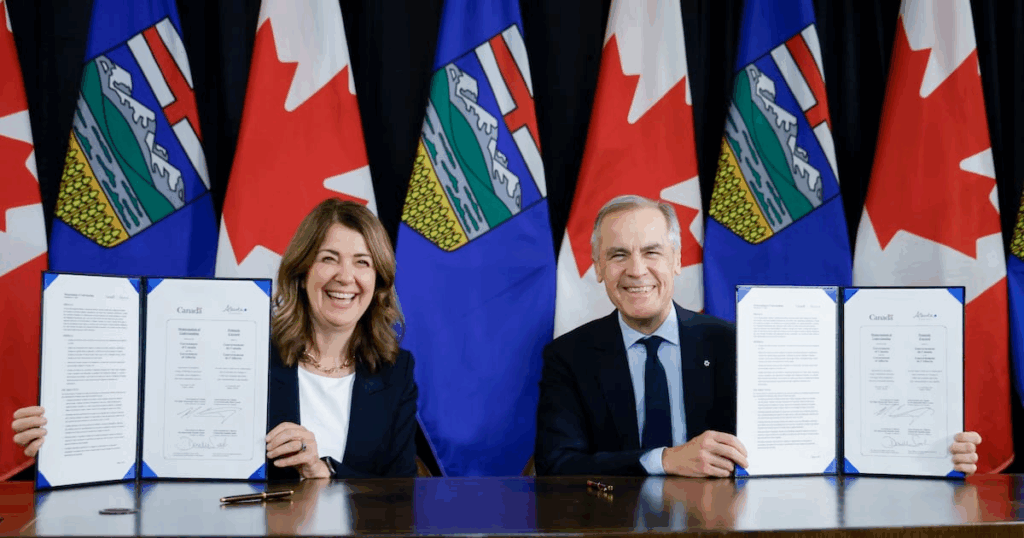
On a darker note…what really griped my ass this week was watching Carney and Smith holding up their signed agreements LIKE TRUMP ALWAYS DOES… the big flourish!!
@amandafollett.bsky.social:
I think it’s bad, actually, to play political chess with Indigenous rights.
I don’t see Dani and Carney as Cats & Dogs as they are both born raised and trained by the same Calgary cartel that is now running the country. The pipeline talk is a scam to cover the real theft, Carbon capture. Now that they have scammed the coin from the taxpayers, they are calling it enhanced oil recovery. No need to lie now and say it’s green. Billions of tax dollars so the corps can increase profits. Carney should cross the floor where he belongs.
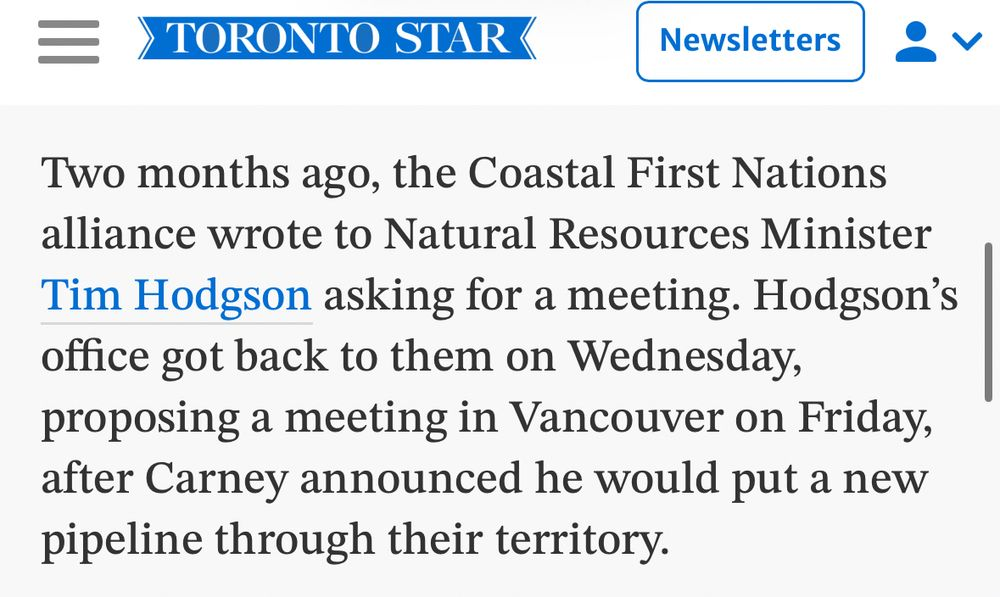
David Cochrane asks about the fact that it would’ve been impossible for the coastal First Nations to travel from their communities to meet the feds on the timeline the govt offered.“It’s called Zoom,” Natural Resources Minister Tim Hodgson responds.Jesus CHRIST.(Video: Scott Robertson/Twitter)
Batman! We found the biggest dick in the Liberal caucus!
He’s going to smirk a lot less once those First Nations sue his government. You can bet his emails and texts would be delightful to see in litigation.
Steven Guilbault would make an excellent NDP leader. As anyone who heard the others try to speak French would know.
Jesus Fucking Roosevelt Christ! Indigenous chiefs and communities require in person consultation – notably as they face horrendous impacts from racist Carney’s traitorous rude MOU with vile racist Danielle Smith, not fucking Zoon you arrogant racist stupid old white man prick
@kirstenscrimshaw.bsky.social:
So part of the “nation building” strategy here is to show contempt for reconciliation and the duty to consult FN? Got it.Trump and his kid-raping regime are racist. Carney’s racist, Hodgson’s racist, serving up a fucking racist MOU to trample Indigeous rights, serving racist AmeriKKKan rich and Trump. Carney and Hodgson are ghastly old snotty white men.
@christina55.bsky.social:
This guy came across as extremely arrogant & dismissive. Very sad to see this coming from the Canadian government.
@tryangregory.bsky.social:
Some of us could see who he was early on. @woodsideful.bsky.social:
The way to read the Canada-Alberta MOU is that Carney is using the Trump effect as political cover to pursue the deregulatory agenda he’s long wanted.
@wendyguelph.bsky.social:
OMG – appalling – absolutely disgusting
@geomatt19.bsky.social:
It is quite apparent that Tim is a asshat. I was in public service for close to 38 years, and face to face meetings were always preferred.
People who care about climate change are “dreaming nostalgically about the past.” – Minister HodgsonGotcha. That explains a lot.
Good morning to Elizabeth May, who propped up the Liberals budget vote for this.
Further, the available evidence is that Tim Hodgson is a giant dick:
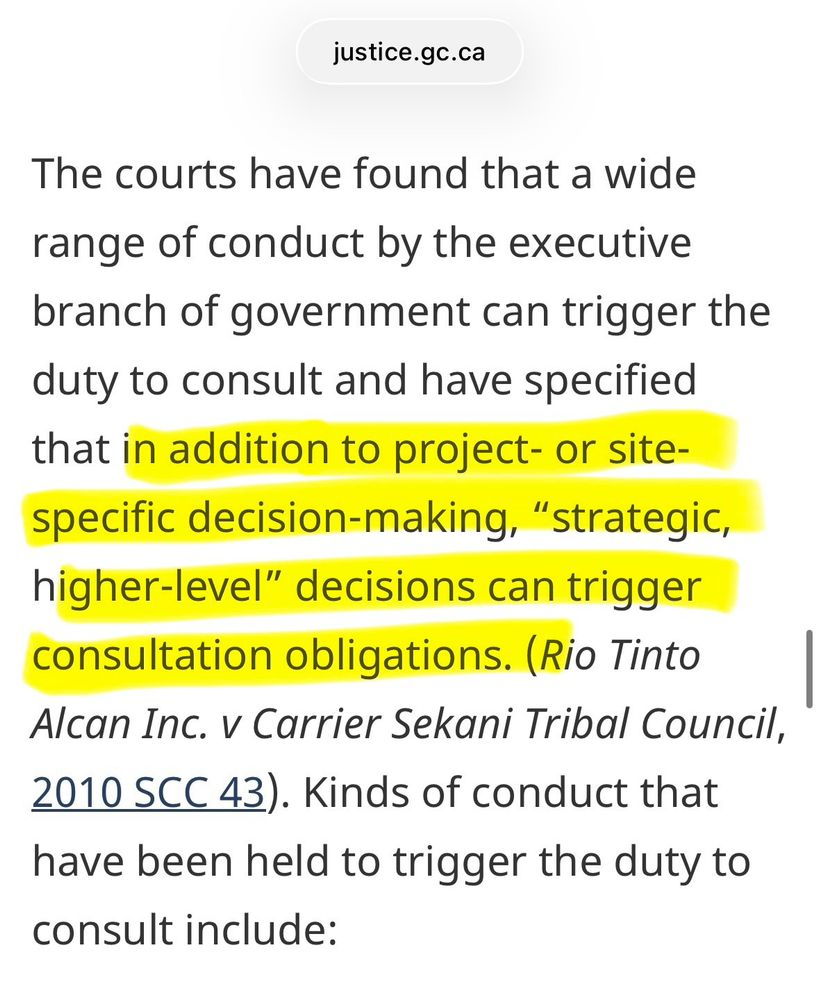
… This deal is ready to die in court. The law is government MUST consult First Nations on “high level” planning decisions. Wasn’t done here. Perfect lawsuits await.
The Union of B.C. Indian Chiefs (UBCIC) says it’s against the memorandum of understanding that Canada and Alberta Thursday morning.
The MOU explicitly endorses the construction of a massive new bitumen pipeline from Alberta to the B.C. coast.https://t.co/8XN4FYNEqb
“How to describe the laundry list of climate-killing gifts to Alberta that the MOU spells out? The depth of the betrayal goes beyond words. I felt ill as I read it,” writes @arnokopecky.bsky.social
"How to describe the laundry list of climate-killing gifts to Alberta that the MOU spells out? The depth of the betrayal goes beyond words. I felt ill as I read it," writes @arnokopecky.bsky.social
A detail that is also being missed is that the MOU outlines allowing carbon capture tax incentives to go towards enhanced recovery. Meaning we’ll allowing companies to leverage legal frameworks meant to store carbon into paying them to pump more oil.
@heathermcpherson.bsky.social:
Mark Carney’s announcement helps Danielle Smith distract from her attacks on public health care, workers, trans kids, and education.
He should be standing up against these attacks, not working to appease Danielle Smith
@mynamesnotgordy:
The Liberals cancelled the consumer carbon tax and now want to build a pipeline to the BC coast; so why do we even need a Canadian Conservative Party now?
Seriously. What can Pierre and his cabal offer now that’s different? National Christian Heritage Month?That wouldn’t even be different. Carney’s a catholic, and I fully expect him to criminalize abortion and birth control in Canad to please his head cheese in the vatican.
@stewartprest.ca:
A government that plans to balance carbon budgets in 25 years using hypothetical technology like carbon capture, while removing regulatory hurdles for new Alberta energy projects. Canada’s partying like it’s 2009.
This afternoon, I informed the Prime Minister of my decision to resign as Minister of Canadian Identity and Culture, Minister responsible for Official Languages, Minister of Nature and Parks Canada, as well as his Lieutenant in Quebec. You can find my full statement below.
If Carney had good intentions he would have taken Eby aside to fill him in. Instead we got a knife in the back.
@nigelb.bsky.social:
One of the stunning things about the MoU is the absence of a clear commitment by AB to scheduled increases in the price of carbon. Instead this:
The TIER system will ramp up to $130/tonne. When?Knowing the excessively greedy polluting oil and gas industry, the deeply dirty Smith & Carney quisling duo: NEVER! Issues to be addressed include “effective price and the price increases over time” Gulp.
And here’s another thing – from the Preamble. Whereas Canada and Alberta remain committed to achieving net zero greenhouse gas emissions by 2050; Last I heard this was just an aspiration for AB & this doesn’t change that.
Where’s AB’s Net Zero Accountability Act? Nowhere. Smoke and mirrors
And one more thing. Lots of talk about Indigenous engagement and even the duty to consult and “where appropriate” accommodate. But no reference to the UN Declaration on the Rights of Indigenous Peoples or FPIC.
Where is AB’s UNDRIP implementation legislation? You guessed it – nowhere.
Eric:
The lack of respect by excluding us demands a unity crisis. They need to know we can play at that game as well.
Steven:
I suspect that the next step will be for the Alberta government to offer itself as a proponent and to set up a crown corporation to do this. Them once the project gets in trouble, the federal tax payer will be asked to invest. If the pipeline is built, operations will be turned over to a private company to skim off the profits. The taxpayer will be expected to pay for decommissioning and clean up. BC will also be expected to take all of the environmental risk.
Hobo:
Aside from the fact that this runs counter to every single bit of current environmental science, Alberta is going to SHARE revenues? Hahahhahhhahaaahahhahaa…..puhlease. Barbarian peasants in the west in 2025.
Barry:
To all those former NDP supporters who voted Carney to stop Poilievre, please turn around so I can pull the knife out of your back! The Cheshire grin on Danielle’s faceand on Carney’s says it all.
Jay:
am I regretting my vote? yes. carney is a goddamned conservative. I’m ashamed of voting for the destruction of this country. …
SeanBurton:
[Carney] should be forced to cross the floor where he belongs.
apollyon:
Wait till corney he molests your pension….
@bhaggart.bsky.social:
If I understood Althea Raj correctly on last night’s CBC At Issue panel, Environment Canada has calculated that the industrial carbon price would have to go up to $400/tonne, not $130, to offset the elimination of other policies. … She also pointed out that linking CCS to a new pipeline is also a step back: no pipeline (with its increased emissions), no CCS. And that’s without getting into CCS’s extreme dodginess, an unproven technology at scale.
kellyblack.ca:
It’s amazing, really. The Prime Minister is looking for big bold ideas to nation build and he came up with paying for an outdated technology to supply an energy source (bitumen) the world does not want.
@greenprofgreen.bsky.social:
The Carney/Smith #MOU is a climate dumpster fire. We knew it was coming, but boy howdy, it really sucks.
1/ “one or more private sector constructed and financed pipelines.” This is such a risky investment for private $$ I don’t see it happening. But still, we obviously shouldn’t even be talking about building pipelines. It’s the energy equivalent investing in VHS tapes in 2025. 2/ The biggest CCUS project in the world to make Alberta’s exceedingly dirty and expensive oil, less dirty and more expensive. Tax credits to incentivize private $$ investments in CCUS, and… wait for it… including for enhanced oil recovery. WTAF? 3/ More power for AI for Canada and its allies. 4/ Development of a nuclear strategy. 5/ Commitment to reduce methane to 75% below 2014 levels by 2035. (this is good)It’s only a commitment which in the law violating profit raping oil and gas patch means nothing reliable. 6/ Removal of oil and gas emissions cap. Suspension of clean electricity regs, to be supplanted by industrial carbon pricing, which will be increased and put into place in Apr 2026) 7/ ‘Simplifying’ regulatory processes, including a 2 year time limit on permits and approvals. Fast tracking will likely come at the cost of substantive consultations with indigenous groups. 8/ Tho the MOU states its commitment to net zero by 2050, but almost nothing in it will further that goal. There is nothing about phasing out fossil fuels, or even reducing their extraction / use at all (nuclear notwithstanding).
9/ This is reckless climate and economic policy. And magical thinkingI don’t think Carney and Smith are doing magical thinking, they both know damned well their MOU is full of polluting shit, and harms Canadians and Canada while serving Americans and the rich. Net zero doesn’t happen without reducing fossil fuel supply. At least the US has the cojones to say it doesn’t give a shit about climate.
@mark-carney.bsky.social is still pretending that Canada does. FIN
@mfair.bsky.social:
VHS is a good analogy.
What a hypocrite Carney is.
@jeff.doctor:
Redwashing: “urging companies and governments to make First Nations “equity partners” in natural resources projects on their territories, in the hopes that a higher share of revenues would convince some [FN] groups to become vocal supporters of oil and gas projects” drilled.media/news/trfst-a…
Partnering with the same networks that promote residential school denialism, cool cool www.cbc.ca/news/canada/…
shastingssimon.bsky.social:
Another night to sleep on this and I’m solidifying this take
There is a reason industry/govt sees a [big] win in trading the regulations that would have forced real emissions reductions (oil and gas cap and CER) for vauge future carbon pricing promises that some are claiming will achieve the same
After some time for reflection I think this is one of the biggest open questions that has a big impact on how much climate action we will see in Canada – unless I’m reading this wrong (?) it doesn’t say the carbon floor will be $130 by April. It says there will be an agreement by April 1 and that reason (I believe) is that a watering down of the industrial carbon price (I predict slow and low ramp, high free allocations, and generous interpretation of compliance through internal spend), the lack of business case for CCS in oil sands, plus no pressure to act quickly on things needed for electricity sector decarbonization (industrial heat, more demand response, intRA provincial transmission) will all add up to much more emissions in both sectors than the regulatory policies would have brought. I guess I should see if someone will let me write up and print a formal version of this. I’m of two minds because in some sense – yes in the case of everything but then for some things (AB electricity) it has actually worked quite well.
I guess the question is really are you doing real carbon pricing because you want real climate policy or are you doing it to pretend you are. And then carbon pricing is more dangerous in terms of failure because it’s easier to make it look like you are doing climate policy when you are not because of all the little details that have to be right.
@silasxuereb.bsky.social:
As the federal gov inconceivably lifts regulations on oil and gas and lays the groundwork for a new pipeline, a reminder that our recent research found “Canada’s” O&G industry’s recent expansion increased payouts to foreign shareholders without adding any new jobs
This is craven and beyond contempt. There’s no justification. Carney is using the perceived threats from the US to justify slashing commitments, checks, and balances as they pertain to environment, labour, and basically everything else.I think Carney, Smith, Harper, industry and Trump are working together, Team Fuck Life on Earth. Just wait til Carney approves Smith’s demands for more than half of all Canadians’ CPP which Harper will plunk into Carbon Capture, never to be seen making a penny.
This is a corporate power grab and an attack on everyone.
@APTNNews:
Slett says her group has faced a “wall of silence” from the federal government on a possible pipeline deal with Alberta.
Slett says her group has faced a "wall of silence" from the federal government on a possible pipeline deal with Alberta.https://t.co/nBFbK27QvM
Heiltsuk Nation Chief Marilyn Slett, seen here at a news conference in Vancouver in February, says she’s faced a ‘wall of silence’ from Canada on a possible pipeline deal with Alberta. Photo: Darryl Dyck/The Canadian Press.
The president of the Coastal First Nations in British Columbia says an oil pipeline linking Alberta to the province’s north coast “will never happen.”
In a news release issued Wednesday morning, Marilyn Slett says her group — which represents nearly a dozen First Nation groups along the B.C. coast — has faced a “wall of silence” from the federal government on a possible pipeline deal with Alberta.
The group is not the only voice in B.C. to raise concerns this week about a pipeline agreement between Ottawa and Alberta, which is expected to be announced Thursday when Prime Minister Mark Carney is in Calgary.
B.C. Premier David Eby says he told Carney on Monday that it was “unacceptable” for Ottawa and Alberta to negotiate a possible pipeline project in his province without involving his government.
Speaking to reporters this week, federal Energy Minister Tim Hodgson said the federal government would speak with B.C. “in short order” and that B.C. has benefited from Ottawa’s push for major projects more than any other province.
Carney said Tuesday in the House of Commons that B.C. and First Nations have to agree to construction of a pipeline to the Pacific coast.
@race2extinct.bsky.social:
Money often masquerades as intelligence. The climate doesn’t care about wealth—it demands humility, and that’s the one thing the ultra-rich can’t scale.
@bigcountryfooty.bsky.social:
Rewarding Smith the week after suspending the charter rights of Canadians in her province.I bet Carney coached Smith on violating the charter rights of Albertans. He’s not a liberal, he’s a Thatcher Con, hates the charter, hates the environment, hates clean air, water, land and food, hates non whites. He’s a despicable racist anti Indigenous piece of shit fascist ass, handing over our rights to Nazi USA tech billionaires and destroying our country while making American rich richer.We need a better government than this.
@okori7.bsky.social: The people, the owners of Canada will fight against this. we are not on board! Beyond disappointing
amirattaran.bsky.social:
Carney’s done great politics for the Liberals by muting tensions with Alberta…
… and severely exploited First Nations, who he knows bear the brunt of saying “No” when he won’t.
Indigenous people should not forgive or forget.
@charlieangus104.bsky.social:
This is a very concerning story. Cold Lake First Nation is living in 3rd world conditions. They have been completely frozen out by Mark Carney/Danielle Smith’s plan to drive a 400 km pipeline carbon capture facility on their land. This won’t end well Mark.
nationalobserver.com:
The Pathways project is a major part of the new pipeline deal between Carney and Smith, appearing 17 times in the memo’s text.
But much like the pipeline itself, First Nations in its path don’t want the megaproject.
Carney-Smith deal will bring carbon capture to Cold Lake. They don't want it | Canada's National Observer: Climate News https://t.co/As5D1CkGHY
“Carney, both during his campaign and later in Ottawa, promised to visit Cold Lake before any decisions were made — a visit that still hasn’t happened.
“How can we trust this?” he said.”
Indeed
In a written statement, Coastal First Nations say they are going to use all tools available to them to stop the pipeline from being built. https://t.co/Jfg6mmkWNz
In a written statement, Coastal First Nations say they are going to use all tools available to them to stop the pipeline from being built.
@MarkMe60:
Not even Encana and their very deep pockets could bribe their way across Northern BC. It would cost billions in bribe money, and Encana finally gave up. The same thing will likely happen this time, too.
@barbarafriesen:
The most dangerous body of water in Canada should never have oil tankers! Full stop!
CFN member Nations will use every tool in their toolbox to keep oil tankers and the risk of a catastrophic oil spill out of BC’s Northern coastal waters.
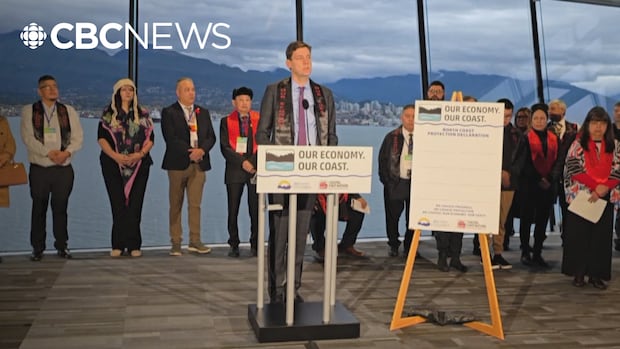
COAST SALISH TERRITORY, VANCOUVER (Nov. 26, 2025) – Marilyn Slett, President of the Coastal First Nations-Great Bear Initiative and elected Chief of the Heiltsuk Nation, issued the following statement in reaction to the upcoming MOU between Alberta and the federal government that purportedly includes a path forward for a pipeline to the North Coast of BC:
“As the Rights and Title Holders of the Central and North Coast and Haida Gwaii, we are here to remind the Alberta government, the federal government, and any potential private proponent that we will never allow oil tankers on our coast, and that this pipeline project will never happen.
“While the details of this MOU remain to be seen, under no circumstances can it override our inherent and constitutional Rights and Title, or deter our deep interconnection of mutual respect for the ocean.
“Throughout this process we have been met with a wall of silence from the federal government. Such conduct is not honourable and is fundamentally at odds with Canada’s constitutional, legislative, and international obligations to coastal First Nations.
“We have made repeated calls to the federal government to uphold Bill C-48, the Oil Tanker Moratorium Act, as it is foundational to the successful conservation economy we have built on the North Coast. Coastal First Nations, along with the province of BC, have made it clear through our joint declaration that the tanker ban is not up for negotiation, and no MOU will change that.
“Our Nations understand the economic challenges Canada is facing. This is why we much prefer to work with the federal government on truly nation-building, forward-looking projects and initiatives that are built in partnership with Indigenous peoples. We should be working together to protect our environment, diversify our economy, and create jobs that support our communities, instead of squandering everyone’s time on politically-motivated MOU’s that are only dividing our country further.
“We will reserve further comment on the MOU until it has been formally announced.”
About Coastal First Nations
For 25 years, Coastal First Nations has focused on building a sustainable conservation economy, delivering over 1400 jobs and 140 new businesses to date. In the past 15 years, this economy has generated nearly $2 billion in economic value for British Columbia and Canada.
Media Contact: Caitlin Thompson Director of Communications Coastal First Nations-Great Bear Initiative email hidden; JavaScript is required
Eye on the ball folks! It seems the pipeline piece may well be a distraction. While a pipeline remains very unlikely, the practical impact of this deal are all the immediate concessions to oil & gas industry & the federal abandonment of core climate policies.www.nationalobserver.com/2025/11/27/n…
Eye on the ball folks! It seems the pipeline piece may well be a distraction. While a pipeline remains very unlikely, the practical impact of this deal are all the immediate concessions to oil & gas industry & the federal abandonment of core climate policies.
Here’s one possible unexpected outcome from today’s fed-Alberta deal: perhaps the federal NDP will regain official party status, as a few Liberal MPs realize this is not what they were signing up for.
What we have witnessed tday in this new federal-Alberta agreement is a complete abandonment of core federal climate policy and a complete abdication to the MAGA-aligned govt of Alberta and to oil & gas corporations that send huge chunks their profits to the US.
Here's reaction from the @ubcic.bsky.social:www.ubcic.bc.ca/ubcic_strong…
UBCIC Strongly Rejects Canada–Alberta Pipeline MOU that Ignores First Nations Rights and Threatens Environment
(xʷməθkʷəy̓əm (Musqueam), Sḵwx̱wú7mesh (Squamish) and səlilwətaɬ (Tsleil Waututh)/ Vancouver, B.C. – November 27, 2025) The Union of B.C. Indian Chiefs (UBCIC) is loudly objecting to the Memorandum of Understanding that Canada and Alberta signed this morning, which explicitly endorses the construction of a massive new bitumen pipeline from Alberta to the B.C. coast, proposes lifting or amending the federal tanker ban, and proposes Indigenous “co-ownership” of the pipeline, all negotiated without involvement of B.C. coastal First Nations or adequate environmental, climate and rights safeguards.
Grand Chief Stewart Phillip, UBCIC President, stated “This MOU is nothing less than a high risk and deeply irresponsible agreement that sacrifices Indigenous peoples, coastal communities, and the environment for political convenience. By explicitly endorsing a new bitumen pipeline to B.C.’s coast and promising to rewrite the Oil Tanker Moratorium Act, the federal government is resurrecting one of the most deeply flawed and divisive ideas in Canadian energy politics. British Columbians and First Nations have been crystal clear: crude oil tankers do not belong in the Great Bear Sea. We will not stand by while the Carney government and Alberta attempt to bulldoze our rights and disregard the catastrophic risks of a spill in the corporate profit interests of the global fossil fuel industry. No bilateral deal can extinguish our inherent title and rights, and no federal legislation can erase the Crown’s obligation to obtain free, prior, and informed consent. The answer is still no and always will be. We will not stand idly by.”
Chief Marilyn Slett, UBCIC Secretary-Treasurer, added “Any attempt to use a federal–provincial agreement to sidestep Indigenous consent is fundamentally unlawful. The federal government cannot negotiate away our rights, nor can it use new legislation or political deals to avoid its obligations under the United Nations Declaration on the Rights of Indigenous Peoples Act and the Impact Assessment Act. I cannot overstate how alarming it is to see the federal government signaling a willingness to dismantle or weaken the Oil Tanker Moratorium Act. Our communities have fought for generations to keep crude oil tankers out of these dangerous and ecologically critical waters, and we secured the tanker ban because the risks of a spill are simply too great to bear. This MOU was negotiated without the involvement of the very Nations who would shoulder those risks, and to suggest ‘Indigenous co-ownership’ of a pipeline while ignoring the clear opposition of Coastal First Nations is unacceptable. The federal government must unequivocally reaffirm the tanker ban, respect our stewardship authority, and abandon any plan that would bring bitumen tankers into the Great Bear Sea. We are grateful that the Province of B.C. has listened to us, and we were honoured to sign the North Coast Protection Declaration with Premier Eby several weeks ago. We urge Canada to realize that this MOU is a waste of time, and join us in protecting our precious lands and waters.”
Several weeks ago, UBCIC stresses that no federal-provincial agreement can diminish or override the constitutional protections that safeguard First Nations title and rights. Coastal First Nations have made their position clear for decades: crude oil tankers are not welcome in their territories, and any attempt to force a pipeline through B.C.’s coast will face unified resistance. The federal government risks repeating the failures of Northern Gateway, where inadequate consultation, environmental concerns, and powerful Indigenous opposition ultimately led to its downfall.
UBCIC is calling on the federal government to immediately clarify its intentions regarding the tanker ban, to retract any commitment to weakening or amending the Oil Tanker Moratorium Act, and to confirm publicly that no pipeline will advance without the free, prior, and informed consent of the First Nations whose territories would be affected, and to ensure that British Columbia and First Nations are full partners in any future discussions regarding energy corridors.
-30-
Media inquiries:
Grand Chief Stewart Phillip, President, 250-490-5314 Chief Marilyn Slett, Secretary-Treasurer, 250-957-7721
UBCIC is an NGO in Special Consultative Status with the Economic and Social Council of the United Nations.
“Rather than reinvesting those profits in the Canadian economy, the four companies paid out $79.7 billion in dividends and share buybacks, nearly ¾ of which went to foreign shareholders, including 62% to American shareholders.”www.theenergymix.com/u-s-owned-oi…
That building on the left was the Petro-Canada office, The Canadian owned producer that kept profits for Canadians.
Federal Conservatives sold that off, it was a money maker for Canadians
@sethdklein.bsky.social:
US-Owned Oil Sands Giants Send Profits Out of Canada Despite Public Support for Resource Sovereignty
“Lead members of the Pathways Alliance—Canadian Natural Resources, Cenovus, Imperial Oil & Suncor—are behaving like a Trojan horse for Trump’s anti-climate politics”
“Rather than reinvesting those profits in the Canadian economy, the four companies paid out $79.7 billion in dividends and share buybacks, nearly ¾ of which went to foreign shareholders, including 62% to American shareholders.”
“Imperial Oil has announced it will eliminate 20% of its workforce by the end of 2027, with most of the positions based in Calgary.” Remember, we are extracting and exporting more oil than ever before.
“Imperial Oil has announced it will eliminate 20% of its workforce by the end of 2027, with most of the positions based in Calgary.”Remember, we are extracting and exporting more oil than ever before.www.hcamag.com/ca/news/gene…
Super cool that we’ve got a deal for a path towards a pipeline that’s tied to a carbon capture project, as if that makes it okay
when carbon capture one of the most expensive and least effective options for addressing climate change, and oil companies often use it to EXTRACT MORE OIL!!!!
fuck man
@woodsideful.bsky.social:
Carney caved on virtually all of Smith’s demands. Caved or teamwork?
@tryangregory.bsky.social:
You’ll note that there is zero talk of nationizing fossil fuel revenues for actual nation-building that benefits citizens (a la Norway), it’s just corporate profit. @queerandangry.com:
Also crucially, even if oil wasn’t killing the planet and costing us billions, this doesn’t create that many jobs anymore.
Its literally a give away of our environment to raise some stocks.
@climatekeith.bsky.social:
This federal-Alberta pipeline MOU is even worse than I expected. Even before we get to the pipeline:
exempts AB from net zero electricity reg (AB produces 44% of all electricity-related GHGs in Canada).
delays methane reg by 5 years (75% redn by 2035 rather than 2030.
Pipeline MOU also:
allows oil sands companies to use captured carbon to extract more oil (enhanced oil recovery), which previously wasn’t allowed
promotes expensive nuclear (i.e. keep using natural gas for 15 years) rather than cheaper, available-now wind and solar
On the pipeline:
it’s a 1M bpd pipeline ON TOP of 3-400K bpd expansion of Trans Mountain
the goal for CCS is make the oil being exported ” best in class in terms of the average for heavy oil by 2050.” That’s a bar so low a worm can’t fit under it
More bad stuff
lifting oil tanker ban (Coastal First Nations will not let that one go without a fight).
Weakening industrial carbon price (now goes to $130/tonne rather than $170)
New transmission lines between BC, AB & SK are for fossil fuel expansion rather than climate solutions @dariussnieckus.bsky.social: Is there Carney kompromat we don’t know about? @204queenb0574.bsky.social: He pushed out Trudeau so he could so exactly this. We’ve been played by a slick banker with connections to Alberta and Harper.
British Columbia’s finance minister may be set to delay a proposal that would slash the assessed value of pipelines, giving pipeline companies a massive tax break at the expense of rural property owners. @tyolsen.bsky.social reports. #bcpoli
There is no political, economic or environmental case for even pretending to consider Northern Gateway pipeline. Mark Carney has given a huge with to Danielle Smith while reviving the environmental conflicts of Stephen Harper.This is a huge mistake.My latest.substack.com/home/post/p-…
There is no political, economic or environmental case for even pretending to consider Northern Gateway pipeline. Mark Carney has given a huge [win] to Danielle Smith while reviving the environmental conflicts of Stephen Harper. This is a huge mistake.
The Liberals could build 20 pipelines for Alberta, they’d still vote for short pants Pierre.
***
stewartprest.ca:
It’s not hard to imagine the Liberals bleeding enough support to hand significant chunks of BC to the Conservatives in the next federal election. And unlike in Alberta, the Liberals have significant ground to lose in BC.
@ianmosby.bsky.social:
Notable that Carney gets nothing in return: this will hurt the liberals in BC, they won’t make any gains in Alberta, Smith won’t stop and of her bullshit, and it will likely tear apart the Liberal caucus.
The only reasonable conclusion is that Carney is a climate change denialist and a fool. @jflevin.bsky.social:
The federal-AB agreement is a love letter to fossil fuels
-cancelation of critical policies (OG emissions cap & clean electricity rules) -public $$ for a pipeline (via Indigenous loan program) -more $$ for CCS, incl. enhanced oil production
only mention of electricity is for fossil fuels
@ianmosby.bsky.social:
Also notable that Carney’s first big deal is with a provincial leader with a nearly infinite supply of incompetence, mendacity and cruelty. And he gave her literally everything she wanted, with nothing to show for it except for pissed off premiers in provinces where he actually gets votes. 5D chessIt’s not fucking chess, Carney’s a Nazi, just like Smith is. They’re Herr Hideous Harperites. And, they hate Canada, hate all not white, non male, non rich Canadians and our charter.
If Carney is relying on First Nations to stop a pipeline he doesn't actually want so he can manipulate Alberta, that is *even worse* than him just being a banker working for extractive industry shareholders.
I think he’s more autocratic & short-term, bumping up shareholder value, and doesn’t give a damn about long-term.
He’s not even looking at what is best for Canada, & lied about his intentions during the election. He still wants deals with Drumpf on trade & security.
Mark Carney is looking for short-term solutions to long-term problems (US instability, climate change, the digital revolution). That's why he's raiding the policy cabinet for every half-baked idea he can find. The biggest of these are tripling down on resource extraction, followed by AI FOMO.
Mark Carney is looking for short-term solutions to long-term problems (US instability, climate change, the digital revolution). That’s why he’s raiding the policy cabinet for every half-baked idea he can find. The biggest of these are tripling down on resource extraction, followed by AI FOMOFear of missing out while wasting massive amounts of frac’d gas polluting electricity and massive amounts of water during extreme droughts
Follow those with slashing government, when we’ve never more needed a highly capable, well-resourced public sector. And of course defence spending undertaken without clearly identifying in which direction we’re meant to be pointing the guns, or how they will contribute to greater US autonomy. Addressing innovation, the digital economy, the climate emergency, national identity, autonomy from the US: these are all long-term issues that demand relationship-building. They can’t be done on the cheap, and they will take a lot of effort. They require attention to governance and a positive vision for the country: two things Carney has utterly failed to provide.
And his economic policies themselves are not great. As Markham Hislop’s post suggests, Carney’s policies will place us on the bottom of the global economic ladder. Being good (even exceptional) at one thing doesn’t mean you’ll be any good at other things. And the more you specialize in one thing, the less time you’ll have spent honing other skills. Being good at targeting inflation doesn’t mean you’ll have a clue about industrial or energy policy.
There is at least one massive inconsistency in the MOU. On the one hand it speaks of “private sector constructed & financed pipelines” & on the other “AB commits to: act as proponent for advancing the development of a bitumen pipeline”. Which is it? AB taxpayers want to knowNo private company on earth wants that pipeline, it’s an uneconomic endless hole of lies, fraud, pollution, and cruelty.
The UCP website says that Alberta will be the proponent.unitedconservative.ca/danielle-smi…
The UCP website says that Alberta will be the proponent.
unitedconservative.ca/danielle-smi…
@jhm1959.bsky.social:
They cannot commit until they get their hands on the CPP funds.Which with Nazi Carney’s evil help, Smith will steal shortly and hand over to Herr Hideous Harper, Chair of AIMCo
The Governments of Canada and Alberta have signed a new agreement to more than double oil exports to Nazi USAAsian markets, address investment uncertainty and reduce emissions.amplify greed in billionaires and dramatically increase life threatening pollution, toxic waste lakes in the vulgar stupid tarsands, and massively increase frac’ing to feed the greed, which will destroy massive land areas, including public lands Smith has opened up in Alberta, to silica sand mining; pollute and abuse communities, harm public health, and permanently remove vital water from the hydrogeological cycle
This new energy partnership is a critical step towards achieving Alberta’s and Canada’s shared goal of turning our country into a world energy superpower super polluter and life destroyerand building a stronger and more vibrantdestroying oureconomyso as to better and faster turn us into the 51st slave state to the kid-raping Nazi USA regime.
The new energy agreement includes:
A declaration by the federal government that an Indigenous co-owned Alberta bitumen pipeline to AsianNazi USA markets is a project of national interest.
Agreement that the parties will work together to facilitate the application, approval and construction of a privately financed and constructed 1 million+ barrel per day, Indigenous co-owned bitumen pipeline to AsianNazi USAmarkets through a strategic deep-water port.
Commitment by the federal government that it will not be implementing the federal oil and gas emissions cap.Disgusting douche fuckers Smith and Carney, and Carney has kids FFS
An immediate suspension of the federal Clean Electricity Regulations, and agreement the parties will work towards the construction of thousands of megawatts of AI computing power, with a large portion dedicated to sovereign computing forNazi kid raping USA Canada and its allies.
Commitment by both governments to partner with the Pathways companies to finance and construct the world’s largest carbon capture utilization and storage (CCUS) project for the purpose of making Alberta bitumen amongst the lowest emission intensity barrel of heavy oil in the world.CCUS does not work to decrease pollution, it increases it! This filthy project that Nazis Carney and Smith want to make ordinary Canadians pay for, is to feed CO2 for enhanced oil recovery, not to reduce emissions of any fucking Alberta pollution
In order to achieve net zero greenhouse gas emissions by 2050, the Alberta and federal governments will design and commit to globally competitive, long-term carbon pricing and sector-specific stringency factors by Apr. 1, 2026, for large Alberta emitters in both the oil and gas and electricity sectors through Alberta’s TIER system.
Entering into a methane equivalency agreement by Apr. 1, 2026, with a 2035 target date and a 75 per cent reduction target relative to 2014 methane emissions levels.
Agreement to immediately consult and work with Indigenous partners and the Government of British Columbia to ensure their peoples enjoy substantial economic and financial benefit from the pipeline.Too fucking late! Any consultation ought to have happened for a few years prior to the signing of this abusive polluting frac-frenzying MOU
Significantly decrease regulatory uncertainty through a variety of changes to various legislation, regulation and policy.DEREGULATE DEREGULATE DEREGULATE so that rich fucking assholes in Nazi Amerikkkan USA AI and Military and the oil and gas industry can destroy life on earth
The new agreement also demonstrates that both Alberta and Canada are focused on ways to increase the production and export of Alberta oil and gas, maximize growth in AI datacentre and related industries in Alberta, assist Canada in achieving its national security goals, create hundreds of thousands of new jobs,In Korea and Texas, not in Canada all while reducingquadrupling the emissions intensity of Canadian oil, gas and electricity through the development and implementation of CCUS, nuclear and other emissions reducing technologies.
“This is Alberta’s moment of opportunity to take the first steps toward being a global energy superpower and show the nation that resource development and sustainability can coexist.
There is much hard work ahead of us, but today is a new starting point for nation building as we increase our energy production for the benefit of millionsof a few Nazi Amerikkans and forge a new relationship between Alberta and the federal government.” Danielle Smith, Premier of Alberta
Oil pipeline
An Indigenous co-owned bitumen pipeline to Asian Nazi USA markets will ensure the province and country are no longeralways dependent on just one customer to buy their most valuable resource. It is agreed this new pipeline would be in addition to the expansion of the Trans Mountain pipeline for an additional 300,000 to 400,000 barrels per day destined for Asian Nazi USA markets.
This agreement also allows for needed adjustments toobliterating the tanker ban when the new pipeline to Asia Nazi USAis approved by the major projects office, as well as amendments thatdestroying the purpose of Trudeau’s Anti Greenwashing law toensure Alberta’s energy companies can advertise their environmental leadership and efforts throughoutlie brazenly and loudly to the world without fear of penalty.
“This pipeline is an excellent opportunity to demonstrate partnership and progress. My hope is that it will create lasting economic benefits for First Nations and strengthen the relationships that matter most — government-to-government and community-to-community. Indigenous equity ownership is shaping Canada’s economy, and when our voices help guide every decision, we build trust and a future that will support generations to come.” George Arcand Jr, Chief, Alexander First NationHow much did the fucking nazis buy you off with?Your hopes and dreams are foolish farts that will never materialize. Carney and Smith’s Nazis are rabid racists
Oil and gas emissions cap
The federal government has also committed to not implementing the oil and gas emissions cap, allowing for a massive increase inlife-destroying pollution and AI driven, and automation ofoil production and private sector jobs and moving Alberta towards its goal of reaching six million barrels per day of oil production by 2030 and eight million barrels per day by 2035.
“The Energy Accord signed today by Prime Minister Carney and Premier Smith sends an important signal that Canada’s oil and gas development is integral to the economy and is open for business. This agreement shows that Canada is taking action to address regulations and policy that are impacting competitiveness and investment.” Liar Liar!Tristan Goodman, president and CEO, The Explorers and Producers Association of Canada
“The Business Council of Alberta is delighted to see the removal of the oil and gas emissions cap, which was a cap on production and prosperity in Canada. Now, without the cap, Canada truly can grow energy production, export globally, and generate the investments and jobs that will help deliver a better quality of life for all Canadians.” Liar Liar!Adam Legge, president, Business Council of Alberta
Clean Electricity Regulations
The agreement also includes the immediate suspension of the Clean Electricity Regulations in Alberta, which will stabilize Alberta’s power grid and enable massive investments in AI data centres in the province.
Instead, Alberta will work with the federal government and industry on a new industrial carbon pricing agreement, to be administered through Alberta’s TIER program.
Pathways and emissions reduction
Both governments are committed to working together with the Pathways companies to advance the completion of the world’s largest CCUS infrastructure project.
This will make Alberta a world leader in the development and implementation of emissions reductionincreaseinfrastructure – particularly in carbon capture utilization and storage. Alberta bitumen will be the cleanestcontinue being the most invasive, harmful, filthiest most toxic heavy oil on the planet displacing heavier emitting oil from Russia, Venezuela and Iran, and bringing better environmental and geopolitical outcomes.JFC, all these fucking douches do is lie.
Alberta’s fucking tarsands will become much more toxic, and much more polluting with CCUS, which dramatically increases pollution.
“The Pathways Alliance appreciates the leadership of both Prime Minister Carney and Premier Smith in entering this important Memorandum of Understanding which supports the growth of an industry that is critical to Nazi AmeriKKKan billionairesCanada’s economy. We look forward to working on the details with both the federal and Alberta governments in the coming months with our shared goal of Canada being an energy superpower.” Kendall Dilling, president, Pathways Alliance
As the federal gov inconceivably lifts regulations on oil and gas and lays the groundwork for a new pipeline, a reminder that our recent research found "Canada's" O&G industry's recent expansion increased payouts to foreign shareholders without adding any new jobs www.taxfairness.ca/en/resources…
And therein lies the problem. Turning northern Alberta into a toxic waste dump for heavily subsidized oil companies and enriching their shareholders with taxpayer funds.
A historic oil pipeline deal between the federal and Alberta governments — set to be announced on Thursday — could lead to more production in the oilsands, cementing Canada’s position as one of the world’s largest fossil fuel producers, while pushing its climate targets even further out of reach.
At the same time, the deal couldbut won’t help strengthen the crown jewel of Canada’s climate plan: the industrial carbon pricing system, which is considered by experts to be Canada’s strongest tool to push companies to drive down their emissions, bring new efficiencies to the oilpatchfuck that shit, companies are only interested in rape and pillage and profitand spur investmentare you fucking kidding me? Carney’s going to make the citizenry pay for the con job of carbon not captured, the oil and gas industry knows damned well CCUS do not reduce emissions and is far too expensive for their tastes, which is why they make poor and ordinary Canadians pay into expensive carbon capture projects.
“It has the potential to work. This could actually be a watershed moment for decarbonization,” said Michael Bernstein, president of Clean Prosperity, a research non-profit that studies decarbonization policies that can grow the economy.it is impossible to decarbonize oil, gas, coal, or bitumen, you fucking douche liar. And anything that grows the economy means massive more life threatenging pollution
“Industrial carbon pricing is at the heart of a strong climate policy, and it can drive many tens of millions of tonnes of emissions reductions, but only if the design is really done carefully and properly.”
Why is it important to fix Alberta’s carbon pricing system?
Analysts have been warning that the pricing system is not working as it should be in Alberta, hampering low-carbon investment.
Like in other provinces, industrial facilities in Alberta have to gradually bring down their emissions over time. The provincial government gives them sector- and facility-specific emissions standards; companies invest in technology to help meet them.
Companies that outperform the standards get awarded carbon credits, which they can sell to others. On the other hand, those that go over their limits have to pay a carbon price (currently $95 per tonne of carbon) or buy those credits from other companies.
The issue, analysts say, is that over the past few years, too many of those credits have been circulating in Alberta. They’re now trading at around $25 per tonne of carbon.
Bernstein says a big reason companies spend millions of dollars on reducing emissions “is actually to generate credits that they can then sell to other companies, and therefore earn revenue that helps them recover their investment in decarbonization.”
If those credits drop in price too much, there really isn’t a business case to invest in decarbonizationTHERE IS NO SUCH FUCKING THING AS DECARBONIZATION IN THE OIL AND GAS INDUSTRY! NOT UNTIL IT’S A DEAD INDUSTRY, he said. The solution to that is something called a carbon contract for difference, he said, through which the government guarantees a minimum price for a carbon credit.
This would give companies “the confidence that if the market price is too low, well, the government will come in and make up the difference and compensate them,” he said.
A contract like this would also motivate both levels of government to make sure the carbon pricing system remains strong, and the value of the credits is maintained, guaranteeing the system will survive even if the party in power changes.
The deal being negotiated by Prime Minister Mark Carney and Alberta Premier Danielle Smith could include federal support for a new oil pipeline to the West Coast, allowing Canadian oil to be exported to new markets in Asia on tankers. (At the moment, almost all of it is exported to the U.S.and, any new tarshit pipeline will also go to Nazi USA for near peanuts.)
Alberta wants the pipeline to have a capacity of one million barrels of oil per day. Current production in the oilsands is around 4.7 million barrels a day.
Apart from the carbon price, CBC News has reported it could include commitments on the Pathways carbon capture project, a $16.5-billion project to capture and store away the carbon emitted by oilsands production.Bullshit! It’ll create massively more emissions, and any CO2 sequestered or injected for enhanced oil recovery (the more likely reason for the fucking project) will never stay put. All wells, leak eventually, and every carbon capture project humans have create, fail, badly. AI will makethose failures much worse
But it won’t be enough to offset the increase in emissions from all the additional oil that will be produced to fill the new pipeline, according to an analysis from the Pembina Institute energy think-tank.
“We need about eight more Pathways projects if you actually wanted to achieve a decarbonized barrel of oil in the pipeline,” said Ian Sanderson, senior analyst with the Pembina Institute’s oil and gas program.
Fucking disgusting polluter synergizer Pembina Institute yammering on, enabling the big “decarb” lie. Douche fuckers just like Smith and Carney. PS When I was speaking out against Encana/Ovintiv illegaly frac’ing my community’s drinking water aquifers, Pembina Institute worked hard for Encana, trying to shut me up. Unforgivable Fuckers
Pembina’s analysis suggests that even if a new oil pipeline were built along with the new carbon capture facility, oilsandstarshitemissions would still be higher than the current levels, where there is no pipeline or carbon capture.
Sanderson says the Pathways project, on its own, is a great opportunity for Alberta as it would drive billions of dollars of investment and bring down emissions from Canada’s highest emitting sector.Liar! It will increase emissions! Massively
But it was proposed before discussions of a new pipeline began, he said.
“The fact that now they’ve been tied together, I think that that scenario should never have existed.”
While the federal and Alberta governments have agreed on conditional approval for a bitumen pipeline to B.C.’s northwest coast, B.C. Premier David Eby said it doesn’t deal with the reasons he opposes the project.
“The bottom line for us is that we need to make sure that this project doesn’t become an energy vampire,” Eby said.
The proposed pipeline has “no proponent, no route, no money, no First Nations support,” he said.
But it will be a distraction that draws limited federal, provincial and Indigenous resources away from more advanced projects such as the second phase of LNG Canada’s facility in Kitimat that will employ people and bring in much needed revenue, Eby said.
Prime Minister Mark Carney and Alberta Premier Danielle Smith released the memorandum of understanding together this morning in Calgary.
As reports circulated in recent weeks that a deal between Ottawa and Alberta was close, Eby and other B.C. officials had complained about being left out of discussions that directly affected the province.
The agreement includes various commitments Alberta had sought, including the federal government scrapping its plan to cap oil and gas emissions, alongside renewed commitments by Alberta on carbon pricing and to pursue carbon capture.
It also commits Canada and Alberta to working together on a new private sector pipeline through British Columbia that would be co-owned with Indigenous people. It sets a deadline of July 1 for an application to the federal Major Projects Office for the proposed pipeline.
The pipeline would carry at least a million barrels a day of “low emission Alberta bitumen”
and be on top of expanding capacity of the Trans Mountain pipeline by as much as 400,000 barrels a day. In both cases the goal is to get more oil to Asian markets.That’s what they wrote and say, but I bet it’s all for Nazi USA. Smith and Carney are frequent liars.
Alberta will “collaborate with B.C. to ensure British Columbians share substantial economic and financial benefits of the proposed pipeline,” the agreement says. It promises to include the B.C. government in trilateral discussions with Alberta and the federal government, as well as to consult with First Nations in B.C. and Alberta.
If necessary, the agreement says, Canada will make “an appropriate adjustment to the Oil Tanker Moratorium Act,” which bans tanker traffic in an area of B.C.’s northwest coast.
It also calls for the “construction of large transmission interties with British Columbia and Saskatchewan to strengthen the ability of the western power markets to supply low carbon power to oil, LNG, critical minerals, agricultural, data centres and [carbon capture, utilization and storage] industries in support of their sustainability goals.”JFC
Speaking in Calgary, Carney stressed the need for Indigenous participation and said a new pipeline would bring substantial benefits for people in B.C.
Smith said the agreement is a first step and acknowledged there is more work to be done to build support for a proposed pipeline across northern B.C.
“I hope we can make pipelines boring again because it’s just a way to get our product to people who need it,” she said.Nobody fucking needs it. This hideously racist anti-Canada gong show is to make American billionares richer and make Nazis Carney & Smith best pals with kid raping Adolf Orange
When she spoke with Eby on Wednesday he was supportive of part of the plan, Smith said, including the expansion of the Trans Mountain pipeline and the export of liquefied natural gas.
A few hours later, Steven Guilbeault, the former environment minister who came to federal politics from environmental activism, resigned as minister of Canadian identity and culture in Carney’s cabinet. Guilbeault remains a Liberal MP.Gather up your courage, and cross the floor to the NDP. Lead the way far from shit head traitor con man Carney
In Victoria Eby’s response was muted, though he reiterated his government’s reasons for opposing the proposed pipeline.
The pipeline has neither a proponent nor a route, he said. “The third thing it doesn’t have is something the prime minister said he believed was core… that First Nations agree and support projects before they will go forward through the Major Projects Office. This project does not have the support of Coastal First Nations.”
Eby ruled out taking legal action against the proposal, saying B.C. had gone that route with the previous Trans Mountain expansion and lost in court.Wise decision. Canada’s rape and pillage protecting legal-judicial industry always serves the rich, never harmed Canadians.
… Rob Botterell, the MLA for Saanich North and the Islands and the BC Green Party’s house leader, said the pipeline proposal is “nation dividing” despite claims that it will be nation building. “You have the Haisla and First Nations who are very clear in their opposition to any sort of oil pipeline going through this area. Just that stands fundamentally in the way.”
It’s clear the project can’t move ahead without First Nations support, said Botterell. “I don’t know how many times we have to go through this, and apparently the Alberta premier is planning to go through it again, to figure out you’ve got to respect First Nations’ rights, title and interest.”
The waters off the northwest coast are among the most dangerous in the world and a bitumen spill would be very damaging, he said. “Holy smokes, here we go again in dialing back to 1950s’ type of project,” he added. “There’s a need to focus on the future economy, not the past economy. This is a huge carbon bomb if it ever happens.”
The reaction from environmental groups and First Nations was swift.
The Union of BC Indian Chiefs released a statement “loudly objecting” to the memorandum of understanding between Canada and Alberta.
“This MOU is nothing less than a high risk and deeply irresponsible agreement that sacrifices Indigenous peoples, coastal communities, and the environment for political convenience,” it quoted Grand Chief Stewart Phillip, the UBCIC president, as saying.
“By explicitly endorsing a new bitumen pipeline to B.C.’s coast and promising to rewrite the Oil Tanker Moratorium Act, the federal government is resurrecting one of the most deeply flawed and divisive ideas in Canadian energy politics,” I think that’s Carney’s and Smith’s intent – they want to divide to conquer and destroy Canada and give the dregs to Nazi USA, and I believe they are both vile racists that hate Canadian Indigenous and want to turn greedy stupid old white men violent, raping and murdering more Indigenoushe said, adding that First Nations and British Columbians have been clear there should be no crude oil tankers in the Great Bear Sea.
“We will not stand by while the Carney government and Alberta attempt to bulldoze our rights and disregard the catastrophic risks of a spill in the corporate profit interests of the global fossil fuel industry,” said Phillip. “No bilateral deal can extinguish our inherent title and rights, and no federal legislation can erase the Crown’s obligation to obtain free, prior, and informed consent. The answer is still no and always will be.”
Coastal First Nations, a coalition of nations that includes the Gitga’at, Gitxaała, Haida, Heiltsuk, Kitasoo Xai’xais, Metlakatla, Nuxalk and Wuikinuxv First Nations, declared in a statement this morning that a north coast oil pipeline was “never going to happen.”
“Coastal First Nations, along with the province of B.C., will never allow our coast to be put at risk of a catastrophic oil spill,” president Marilyn Slett, who is also Chief of the Heiltsuk Nation, said in the statement. “We have made repeated calls to the federal government to uphold Bill C-48, the Oil Tanker Moratorium Act, as it is foundational to the vibrant and growing conservation economy we have built on the North Coast.”
SkeenaWild, a Terrace-based salmon conservation organization, issued a statement calling today’s agreement “nation-dividing.”
“As defenders of wild salmon, we stand in solidarity with Coastal First Nations and northwest B.C. residents in strong opposition to Alberta’s proposal to bring oil tankers to the North Coast,” SkeenaWild executive director Julia Hill said. “Our home region has a long history of standing up against the risks of oil spills and we don’t intend to back down.”
The David Suzuki Foundation described the deal as a “fossil fuel fantasy” that would deal a devastating blow to the climate.
Sierra Club Canada said there is “no economic case” for a new pipeline given and called the proposed project a “pipeline to nowhere.”
Its provincial counterpart, Sierra Club BC, said the announcement was an attempt to “spin a narrative” despite the lack of route, proponent or First Nations support for the project. “The federal government’s closed-door negotiations with the Premier of Alberta do not serve the people of B.C., First Nations or Canada,” associate director Shelley Luce said in a statement.
In another statement, lawyers with West Coast Environmental Law expressed “outrage” over the agreement, calling it “a slap in the face to B.C., Coastal First Nations and all Canadians who care about making meaningful progress on the climate crisis.”
A pipeline would create “an unacceptable risk of a catastrophic spill that would irreparably harm the marine environment and the coastal economies that depend on it,” staff lawyer Anna Johnston said.
Haisla Chief Maureen Nyce and Kitimat Mayor Phil Germuth spoke with Smith on Wednesday and said they made it clear they opposed the proposed pipeline.
Speaking to CBC’s Daybreak North on Thursday morning, former Skeena-Bulkley Valley MP Taylor Bachrach, a New Democrat, described a “strong social consensus” against oil tankers in the northwest and said the federal government’s approach is “disappointing” and “deeply troubling.”
mikev:
Alberta already has a pipeline to the BC coast, The Transmountain Pipeline, and we all paid dearly for it. If they want another pipeline, build it across the flat land to Churchill and export out of Hudson Bay. Another pipeline over The Rocky Mountains is madness.
Better yet, build refining capacity in the oil sands and send actual gasoline to BC through Transmountain for domestic consumption, so that we here in BC don’t need to buy fuel for our vehicles from Washington state refineries.
Exporting bitumen is exactly the same as exporting raw logs.
David J. Climenhaga is an award-winning journalist, author, post-secondary teacher, poet and trade union communicator. He blogs at AlbertaPolitics.ca. Follow him on X @djclimenhaga.
Alberta Premier Danielle Smith doesn’t need a pipeline to Prince Rupert, she just needs Prime Minister Mark Carney to promise she can have one, with sketchy details to follow.
Then, just like that, the premier could call an early election and get her United Conservative Party re-elected based on her success pushing Canada’s new Liberal PM around with her sly threats of sovereignty association.
As an added bonus, that would give her a way to defuse the embarrassing grassroots recall campaign that’s been making some of her UCP MLAs so nervous.
Love that scenario or hate it, you have to admit it’s a possibility.
Smith and Carney made their “grand bargain” official today, with smiles and handshakes all round.
Lots of people won’t like it.
The UCP wing of the Alberta separatist movement will hate it. They’re already sore at the premier for ensuring none of them get to talk about a glorious Alberta republic at the party’s annual general meeting, which starts tomorrow at Edmonton’s EXPO Centre convention hall across the street from the crumbling Northlands Coliseum, home to the Oilers in the days they were champions.
The bad-tempered federal Conservative Leader Pierre Poilievre hadn’t even seen the pipeline agreement when he called it “a meaningless so-called memorandum of understanding.”
Carney “will sign on to a public relations stunt while planning to hide behind the premier of B.C.,” Poilievre told Calgary Sun columnist Rick Bell, who is now playing an unfamiliar role as a medium for a snarky attack on Smith.
British Columbia Premier David Eby is furious. He feels — accurately enough, by the sound of it — like he’s been sidelined.
“Just the idea that Carney and Smith have been talking about a pipeline was enough to set Eby off,” wrote columnist Les Leyne Wednesday in the Victoria Times Colonist.
“I underlined for the prime minister how unacceptable it was to me to have Saskatchewan and Alberta speaking about matters in B.C. without B.C. at the table,” Eby said. “This is not something that would happen in Quebec. I don’t know why the thought was that it would be OK for it to happen in B.C.”
Team Canada? Forget about it, Leyne suggested. The pipeline announcement is likely to fracture that noble idea once and for all.
Voters in coastal British Columbia will not be happy either. There are 20 Liberals from British Columbia in the House of Commons. If the Alberta deal goes ahead as predicted, there will be about five after the next federal election, retired Mount Royal University political scientist Keith Brownsey predicted Wednesday.
So that’s probably good news at least for the federal New Democratic Party, which did so badly in the April 28 federal election that it elected only seven MPs and lost party status. Carney may just have created the conditions for the revival of the federal NDP, Brownsey suggested. Voters may throw in some more Greens, too.The Greens are betrayors of Canada! And vicious pro genocide racist zionists, and most of them aren’t green at all, they’re Harper Cons and now Carney Cons.
This may even prompt a B.C. separatist party to start organizing on the theory that leaving Canada is the only way to prevent a bitumen pipeline from being built to the North Coast. Presumably this is not what Carney had in mind when he talked about nation building.
It certainly explains why some of Carney’s B.C. Liberal MPs are said to be “seething” at their leader.I’ve been disgusted and furious w him since before the election. He lied to and conned Canadians. Unforgivable Con Fuck.
Yeah, yeah. I know there’s an Angus Reid poll that says British Columbians now love pipelines too.
It depends where they live and it’s unlikely they live where the Liberals have seats. Eby has pollsters too, and it sure doesn’t sound as if they’re telling him the same thing.
Heaven only knows what the weirdly passive Alberta NDP will do, if anything. I wouldn’t put it past them to have nothing bad to say about the deal, or the lack of details. We’ll wait for their three-sentence press release tomorrow, I guess.AB NDP are also cons, hideous pro polluter, pro rich fucker cons.
Voters in Alberta and Saskatchewan, meanwhile, are likely to continue to be allergic to voting Liberal, although a pipeline deal may briefly reduce local sales of black F**k Carney flags somewhat.
It’s hard to say what voters in Quebec will see in this, but they have to know that the pipeline to Prince Rupert won’t be the UCP’s last territorial demand in Canada. Well, they may get a chance to vote on sovereignty again soon too.
The Asian market for diluted bitumen from Alberta, of course, remains highly suspect. If the pipeline gets built, this is why taxpayers are going to have to pay for it.
Hold on to your hats and fasten your seatbelts. These are going to be interesting times. The grand pipeline bargain is just the start.
SeanBurton:
If there is a market for this pipeline then build it with corp money. If the corps won’t pay for it, you know it’s a bad investment. Instead of promoting and supporting a dying industry we should invest in the future of renewables not more failures of the past.
Eric:
She and Carney just started a new national unity crisis.They did it intentionally. They’re both traitors, Nazi Trump Regime worshippers and are working to help him get our riches and country.
Sarah:
This situation kind of reminds me of Donny’s recent unilateral deal with Putin that excluded the leader of Ukraine. We could very easily be the injured party here, no matter if we are First Nations or the rest of us in this province. It would be our waters that could be forever damaged.
You don’t exclude us in discussions re an agreement that only impacts our province!
My thoughts depend on whether I keep on thinking that Carney is as smart as I thought he was,… or not. Does he realize that he has just happily jumped into the same bed as Premier Vampire?I think Carney is equally as evil and monstrours as Smith and Trump. He knows the evil he’s feeding. Vile fucking traitor Carney is and he fucking knows it.
1) Is this LOU intended to shut Smith up, keep her happy, and let her think that she won, even though he likely knows full well that First Nations and the current BC government will never accept an pipeline that will cause huge tankers to rove around our sensitive and often stormy northern coastal waters? I know from experience here.
2) Will many Con voters likely change their votes to Liberal? I sincerely doubt it. Will the loss of Liberal votes in BC cause the Libs to lose the next federal election? More than likely, the 2nd option. And if this were to go ahead, my vote will most likely return to the Fed NDP. Carney is going to pay a price for what he has done.
3) Carney seems to have changed his tune in regards to the environmentI think his past tune was fake, just like him claiming to be liberal; he’s con man Nazi, trashing Indigenous, Canada, and ordinary Canadians to feed himself and his rich American pals, and definitely seems to have in his head that the only way we as a country can get ahead and be more independent is by resource extraction and exporting secondary manufacturing to the countries that we export our resources to. We need to be building our manufacturing base and exporting less unrefined resources.
4) I agree with Eby and his list of reasons why this is a non-starter, and could likely become the vampire in the room, deflecting attention from already funded and approved projects in BC. I find this agreement to be dishonest, unethical, and not how federalism is supposed to work. Alberta just obtained a tripling of pipeline capacity this year. But that is obviously not enough. Smith is just a bully and pipeline-aholic! I hope we end up having the last laugh.
Barry:
“And the Trans Mountain pipeline was $ 34 billion and took near 10 years, so a new one would be the same or more money?”
Also, “Shovels in the ground by 2029”. That makes 14 years before any pipeline is completed. Given the fact that her government is facing a possible 14 recall petitions right now, how good are Danielle’s chances (or her party’s chances) of still being in power when any oil starts flowing?Thanks to Hideous Herr Harper, rural Albertans are hugely hate-filled and own the vote, most are still worshipping Smith just like the millions of racist hate-filled Americans loving Trump. Voters love Smith because she nurtures their hate against everything not married white male hetero bigot cruel evangelical Chrisitan. I bet she’ll remain in majority power, election after election, like criminal Doug Ford. Canadian rural voters are mighty hatefilled, stupid and love to vote for that which abuses them, and steals from them. I’ve only seen that stupidity and hatred get worse over my lifetime.
light_echo:
Carney saying the deal would require including carbon capture is just greenwashing.That’s why Carney had to undo our anti greenwashing law – he lies and greenwashes as evilly as the rich American polluters. He doesn’t even have the fucking integrity or courage to tell Canadians he’s a Thatcher-Harper Con, not a liberal. CCS, carbon capture and sequestration, is an old technology that has never been successfully scaled up to make any meaningful difference.
***
Lavoie is also correct to note that Carney is simply recycling Harper-era ideas. Does this blast from the past make sense in 2025? I don’t think so, but more to the point, Canadians need to debate the issue. The stakes couldn’t be higher. We need a Royal Commission.
Carney will never allow something as democratic as a royal commission. He’s a dictator, an eager Nazi, which is why he’s giving Trump, Amerikkkan AI and other US tech companies, war mongerers, and polluters whatever they demand, while decimating pollution regulations/rules and laws, and cutting foreign aid, and Indigenous and women’s programs in Canada.
This is who Carney outsourced his innovation policy development to.
You think wealth inequality is bad now? In two years, this planet will be economically unrecognizable, as AI tech wealth is streamlined into a handful of pockets while hundreds of millions of people are suddenly rendered unemployable.Carney’s paying Amerikkkan AI asshole billionaires to kill 5000 Canadian jobs to start. Just wait til he gets his hideous budget bill and Bill C-2 passed. Fuck you forever NDP and Elizabeth MayYes, two years. The “Big Compression” is coming: 2028-2033.
And of course, Nazi Carney will have RCMP/CSIS do same to us in Canada.
@jansplanet.bsky.social:
Canadians the Ksi Lisims liquified natural gas project in British Columbia is selling us out. There is still time to tell PM @mark-carney.bsky.social to put our public money into projects that truly benefit Canadians …not Trump’s inner circle of US billionaires. #CdnPoli #BCPoli #LNG #ClimateBomb
Act now, tell PM Carney & Ministers: no taxpayer subsidies for American billionaires!
Ksi Lisims LNG is no “nation-building project”. & it’s not Indigenous-owned. It’s a Trojan Horse for the same Wall Street private equity giants buying up Canadian real estate, telecoms & energy infrastructure.
We've fallen into an anti-immigration, anti-climate, short-sighted economic doofus era, brought to you by the guy who we thought was a smart policy wonk.
With Prime Minister Mark Carney expected to lay out a path forward for an oil pipeline to northwest B.C. on Thursday, senior people around him have had to assuage skittish MPs and at least one cabinet minister about the virtues of the forthcoming “grand bargain” with Alberta.
One dynamic at play in this discussion is the future of Steven Guilbeault, the minister of Canadian identity and culture.
Sources told CBC News there have been ongoing conversations between Guilbeault and the Prime Minister’s Office, with the lifelong environmental activist expressing concern about the compromises being made on the government’s climate policies to get to a deal with Alberta.
There have been internal concerns that Guilbeault, who served as the environment minister in the last Liberal government, could resign over this.
But as of right now, sources said Guilbeault is staying due to the belief he can do more at the table than by walking away.
WATCH | Carney asked about nervous caucus members:
Carney asked about caucus members hesitant about supporting oil pipeline to B.C. coast4 hours ago|
Duration 1:46
Speaking to reporters on Wednesday, Prime Minister Mark Carney says the Liberal caucus is diverse and features ‘open and engaged dialogue,’ adding that the government’s forthcoming memorandum of understanding with Alberta is about ‘much more than one thing.’
Natural Resources Minister Tim Hodgson also briefed B.C Liberal MPs Wednesday on the content of Ottawa’s forthcoming memorandum of understanding with Alberta Premier Danielle Smith — an agreement that has rattled some politicians even before it has been released publicly.
A government source told CBC News that Hodgson had a “good” and “substantive” discussion with caucus, some of whom have said they are skeptical of building a new pipeline to the Pacific.
The meeting was lengthy as the minister fielded questions about what exactly Ottawa is proposing for Alberta — and what sort of commitments the federal government will get in turn, the source said.
One B.C. MP inside the room, however, described the meeting with the minister as quite candid and at times tense, saying Hodgson seemed dismissive of the possible political consequences for Liberal MPs in B.C.
Hodgson used words like “naive” and “ideological” when responding to MP concerns, the parliamentarian said.
Another MP described the briefing as useful — and something that should have been done earlier than the day before the details are to be revealed publicly.
Asked about tension in his caucus at a news conference on relief for tariff-affected industries like steel and lumber, Carney said he’s “blessed to be a member of a fantastic” team of MPs and there has been “very open and engaged dialogue” on what’s to come with the Canada-Alberta agreement.
He said this memorandum is “about much more than one thing” — a pipeline — and he is working with Smith build up the Canadian economy in the face of U.S. trade aggression.
“It’s about making Canada independent and it’s about making Canada more sustainable,” he said.
Still, not all MPs are sold.
Nova Scotia Liberal MP Darren Fisher told reporters on Tuesday he’s “never been a huge pipeline guy.” Another Liberal, B.C. MP Gurbux Saini, said the pipeline must have affected Indigenous peoples and B.C. Premier David Eby’s “consent” before any shovels hit the ground.
B.C. Liberal MP Wade Grant, the parliamentary secretary to the environment minister, was noncommittal on the prospect of Ottawa sanctioning an oil pipeline despite the Trudeau-era tanker ban.
“I know that as a First Nations person that the title and rights of First Nations and Indigenous communities are of the utmost importance, and to ensure that as much consultation and agreement with First Nations is the most important for anything to go forward,” he said.
Asked if he supports a pipeline like the one Smith has lobbied to get built, the Vancouver MP said he would confer with constituents before taking a stand.|
Duration 1:14B.C.’s minister of energy and climate solutions says there are consequences if Ottawa and Alberta go forward with a pipeline that runs through British Columbia.
The Coastal First Nations, an alliance of nine First Nations opposed to a pipeline to the B.C. coast, released a statement Wednesday saying the proposed pipeline could lead to spills, and it will fight it tooth and nail.
“We are here to remind the Alberta government, the federal government and any potential private proponent that we will never allow oil tankers on our coast, and that this pipeline project will never happen,” said Marilyn Slett, the group’s president.
Smith, meanwhile, has urged Carney to unleash Alberta’s natural resources sector — to potentially add tens of billions of dollars into a tariff-hit economy and diversify Canada’s trading relationships by sending more oil to Asian markets.
Former Alberta premier Jason Kenney told CBC News that a pipeline carrying about a million barrels of oil a day to the B.C. coast for export would generate about $25 billion for the economy — and some $5 billion a year in taxes and royalties for the federal and provincial governments.
“With the big trade challenges coming from south of the border, I think we have to do things like this,” he said in an interview with CBC’s Rosemary Barton Live.
The Trans Mountain pipeline expansion, which was built at huge expense using taxpayer dollars, is profitable.
According to the company’s filings, in the first three months of 2025 alone, Trans Mountain generated some $568 million in earnings.
Indeed, not all B.C. Liberals are opposed to what Carney has negotiated with Smith.
Liberal MP Sukh Dhaliwal, who represents the Vancouver-area suburb of Surrey, said he “stands behind the prime minister on this.”
“There will be good news coming out tomorrow. The prime minister has a vision and something really good will come out of this,” he said.
Liberal MP James Maloney, the party’s caucus chair, said what’s going on are “healthy” conversations with people who have some divergent views.
“I have no caucus management problem whatsoever,” he told reporters, when asked if approving a pipeline could throw the caucus into turmoil.
“I think we have a caucus which we should be very proud of, which has diverse views on a lot of topics. It’s not disagreement, it’s not dissension, it’s discussion.”
Conservative MP Aaron Gunn, who represents the B.C. riding of North Island-Powell River, said Carney must greenlight a new Pacific pipeline to “end the U.S. monopoly on Canadian oil” and anything less would be akin to “selling out to the Americans.”
“Failing to act is a betrayal of our national interest, it’s a betrayal of our workers,” Gunn said in question period. “As long as the world needs these resources, as long as the world needs oil and gas — as much of those resources should come from right here in Canada.”
For the Canadian oil industry, there are growing reasons for optimism about the push to build a new export pipeline and to increase production to fill it.
A memorandum of understanding (MOU) between the Carney government and Alberta that involves a pathway for a new oil pipeline, along with addressing other outstanding energy issues, is expected to be unveiled in the city on Thursday, according to sources.
“I think it will be a good day for Canada,” said one source.
Across the industry, news surrounding the pact between the two levels of government — first reported by Postmedia’s Rick Bell on Saturday, with further details of the MOU revealed by CBC on Monday — has been watched closely in recent weeks.
“It signals to the world that Canada is, once again, open for business, and bring your capital. We’ve got the resources, let’s see the projects — and let’s go,” said Surge Energy CEO Paul Colborne on Monday.
“I’m thrilled by this news.”
Over the past week, Prime Minister Mark Carney and Premier Danielle Smith both indicated their governments were close to reaching an MOU that would see Alberta propose a new oil pipeline to the Pacific coast. The province wants the development included on Ottawa’s list of major nation-building projects to be expedited for approval.
As part of a “grand bargain” pitched earlier this year by Smith, it would also include a carbon capture and storage network, proposed by the Pathways Alliance group of oilsands operators, moving forward, helping decarbonize its production.It’s impossible to decarbonize the tarsands, any oil, gas or coal pollution. Carbon capture is an industry scam to steal from the citizenry for PR and propaganda purposes to let polluters keep polluting. It does not work as promised by our endless streams of toxic corrupt politicians, Carney the most evil and corrupt so far to con and rot Canada, and polluters. It dramatically increases emissions and our corrupto politicos and industry fucking well know it
The MOU is expected to include an understanding about key federal energy and environmental policies — such as the Clean Electricity Regulations — and the province’s industrial carbon levy, which is frozen at $95 per tonne. Ottawa has plans in place to raise the national carbon price to $170 a tonne by the end of this decade.
The agreement will have to include some give and take for both sides, but it’s hoped the energy pact could mark the end — or at least a temporary truce — of a multi-year struggle over resource development between both levels of government.
The Smith government and more than 100 industry CEOsDouche fuckers, all of them with Smith the most vile. They know humans must stop polluting. Pronto. Not spew more toxic shit have also been pressing for Ottawa to change or ditch several federal policies adopted by the Trudeau government, such as the oil and gas emissions cap and the tanker ban off the northern B.C. coast.
“That would be very positive,”for the rich to get fucking more rich, while being deadly for all life on earth Tristan Goodman, president of the Explorers and Producers Association of Canada, said Monday about the prospect of building a new export pipeline.
“I don’t think it’s going to immediately affect production but it will at least provide a strong signal that things are changing in Canada.”
Officials from both sides have been talking for months about the memorandum of understanding and finding a path forward for a new pipeline and strategicSatanic-serve-the-fucking-USA-billionaireschanges in policies.
“The entire industry is waiting for an announcement on additional egress certainty and improved climate policy on things like (the) emissions cap, carbon taxes, tanker bans. Not just positive sentiment, actual certainty,” Athabasca Oil CEOdouche fucker polluterRob Broen said in an e-mail Monday.
“The only time when you can call it a turning point or declare victory is when that pipe is in the ground,” added Hal Kvisle, former CEO of TransCanada Corp. and Talisman Energy.
“But anything that looks like we’re getting support for the industry from the federal government . . . it’s got to be very positive,”Nope. It’s fucking terrible for air, land, water, and all lifehe said. “This is like night and day compared to where we were 12 months ago.”
Oil producers in Western Canada have faced pipeline bottlenecks at several points over the past 15 years as output has climbed, while several proposed projects — such as Northern Gateway — failed to launch. This congestion has led to the discount on Canadian oil widening.
The Trans Mountain expansion project began operating last year and provided excess transporation capacity, although production is climbing and existing pipelines are projected to fill later this decade.
Trans Mountain Corp. and Enbridge are planning expansions to increase the capacity of their pipeline systems. A report released Monday by ScotiabankBoycott Scotia Bank! said it sees the potential for almost 800,000 barrels per day of incremental capacity by 2030, even without a new greenfield pipeline being built.
The Alberta government wants to double oil output, hitting eight million barrels per day by 2035, but that will require more egress.and kill many globally and create one hell of a lot of toxic pollution and massive expansion of deadly tarsands waste lakes – I bet Herr Thatcher Carney will say dumping that waste into the watershed is needed as a nation building project, and give the approval.
Earlier this year, Smith proposed the idea of a greenfield pipeline, capable of carrying one million barrel per day (bdp), running from Alberta to the B.C. coast — an idea opposed by B.C. Premier David Eby.
Speaking to reporters on Sunday, Carney said the federal government is looking to advance nation-building projects that will make the country more independent from the United States, that are consistent with Canada’s climate goals and have the support of Indigenous communities.Then why the fuck is he allowing LNG that only profits American Nazis, and provides nearly jobs for Canadians, just for Koreans and Americans?
The prime minister is slated to speak at a Calgary Chamber of Commerce event on Thursday, to outline “a clear path to strengthen Canada’s greedy insane goals to destroy life on eartheconomic competitiveness and productivity,” according to a media advisory from the organization.
Kvisle, who was the head of TransCanada when it completed the first phase of the original Keystone pipeline, believes it could take between five and 10 years to see a new pipeline constructed, if it advances through the process.
“The MOU is very significant because it signals a real changing of attitude among the federal government,” ya, it shows the world Canada is led by Thatcher Nazissaid Kvisle. “But it’s step one or two in a very long process.”
Aside from the economic benefits of building a new pipeline for the country, there is also an important geopolitical trade aspect to supplying more Canadian heavy crude to customers in Asia, noted Robert Johnston, director of energy and natural resources policy at the University of Calgary’s School of Public PolicyThe fucking tarshit won’t go to Asia, it’ll all go to Fucking Nazi USA, just like the foul gunk in TM pipeline.
“I don’t dismiss any of the barriers, but I certainly think there’s a chance for success,” he said last week.
There are challenges ahead, including opposition from the B.C. government and some coastal First Nations, the lack of private-sector pipeline proponent backing the development, and low commodity prices.I bet Carney will steal from Canadians (Indigenous, women and girls, trans, gay, etc, and the poor) to give the money to the fucking rich Tar Nazis.
In the short term, the province is acting as the project’s proponent. Smith wants to have the pipeline proposal ready for submission to the federal government’s Major Projects Office by next spring.
Mentioning a greenfield oil pipeline proposal within the MOU indicates the prime minister is willing to spend some political capital on the agreement, added Heather Exner-Pirot, director of natural resources, energy and environment at the Macdonald-Laurier Institute
“What they’re saying is there will be a way that we can thread the needle,” she said.
“I just feel like the stars are aligning.”And, as life on earth expires. Fucking greedy lying propagandists
BC First Nations denounce reported Alberta-Ottawa agreement | Canada's National Observer: Climate News https://t.co/DCVPvMr3NP
At the same time that Prime Minister Mark Carney was announcing a new tranche of major projects his government wants to fast-track, including a new gas export terminal, Canada’s representatives were trying to shore up the country’s climate reputation amongst the international community.
They face a very different reception this year at the COP30 UN climate summit in Belém, Brazil, trying to convince the world that despite recent rollbacks of some key climate policies, Canada is still committed to bringing emissions down and meeting its long-term targets.
“We were seeing emissions decline, but that’s unfortunately been rolled back because we are seeing weakening of policies,” said Anna Kanduth, senior policy analyst at the research organization Climate Analytics, which recently downgraded Canada’s climate plan to “highly insufficient.”
The government has rolled back or suspended certain policies like the consumer carbon price and the electric vehicle sales mandate, while other policies like an oil and gas emissions cap are up in the air.
“We are seeing the government start to be more open to expanding fossil fuel production and that obviously is worsening the climate crisis.”
Kanduth’s organization rates every country’s climate plan on the basis of whether it is doing enough to limit global warming to 1.5 C, the goal of the 2015 Paris Agreement. Canada is not alone amongst Western nations and major oil and gas producers to have a poor rating, but Kanduth said it is uncommon for a country to slide backwards.
In September, the Canadian Climate Institute said for the first time that Canada will not meet its 2030 emissions target — a 40-45 per cent emissions reduction by 2030 — and that progress on reducing emissions has stalled. But Environment Minister Julie Dabrusin says Canada is sticking to its targets despite looming challenges.
“Our country’s targets … we always knew that they were going to be ambitious. That’s why they were set, because if you don’t set an ambitious target, then you aren’t going to meet ambition,” Dabrusin said in an interview with CBC News in Belém.
Dabrusin was appointed environment minister by Carney after the 2025 general election, succeeding Steven Guilbeault, who was Trudeau’s environment minister from 2021 to 2025 and oversaw the development of a large part of Canada’s climate plan.
Guilbeault is now the minister of Canadian identity and culture, and in this role retains some responsibility for the government’s nature strategy, including being the minister responsible for Parks Canada.
“I think obviously that the targets are important. What we have done over the last 10 years is also very important,” Guilbeault told CBC News in Belém, where he is also attending COP30.
“Billions of dollars of investment in electrification, in clean electricity, in clean technology, billions of dollars investment to start adapting to the impacts of climate change … this is not nothing, but I understand that there’s more that needs to be done.”
Challenges from the U.S.
“With what’s happening south of the border, it’s making it more challenging for everyone, including Canada. We used to have cooperation with the U.S. Environmental Protection Agency on electricity, on vehicles, on methane pollution from the oil and gas sector,” Guilbeault said.
“That collaboration is gone. It’s not happening anymore.”
This Saturday, Just Asking wants to know: What questions do YOU have about Canada’s role in the global fight against climate change? Fill out this form and send us your questions
U.S. President Donald Trump is pulling the U.S. out of the Paris Agreement and has not sent even lower-level representatives to COP30. But pressure from the U.S. has not dampened the shift to clean energy in other parts of the world.
“Europe, where I am from in Germany, has also had tremendous challenges with the Trump administration,” said Jennifer Morgan, a German American climate diplomat and a former special representative for international climate policy for the German government.
“Europe just adopted a 90 per cent binding reduction target by 2040 and is moving forward on renewables, also because of the competition that’s coming from China.”
At the COP30 climate conference in Brazil, Environment and Climate Change Minister Julie Dabrusin announced that Canada would pledge $392 million for global climate action projects as part of the federal government’s 2021 climate fund.
Catherine Abreu, a longtime Canadian environmental campaigner and member of Canada’s Net-Zero Advisory Body, a legally-mandated group that provides advice to the government on climate policies, said that the country has had a low profile at the talks in Brazil this year.
“There are often questions about whether Canada is actually going to follow through on its climate commitments,” she said.
Abreu said the disappointment is compounded by the fact that Carney has a long history of climate-related work. As a central banker, Carney spearheaded sustainability initiatives in the financial sector, which Abreu said led climate advocates like herself to be hopeful when he became prime minister.
“Instead, we’re seeing him double down on an approach that we’ve seen Canadian government after Canadian government take, which is just increasing subsidies to the oil and gas sector and thinking that building pipelines is somehow going to save Canadian prosperity,” she said.
Canada has so far made a $392 climate finance announcement at COP30, and its other priorities at the conference include supporting nature conservation and efforts to cut methane emissions. The conference runs until Nov. 21.
Prime Minister Mark Carney on Thursday announced seven more initiatives he’s recommending for fast-tracked approval by the government’s Major Projects Office (MPO) — including multibillion-dollar energy and natural resources proposals that Ottawa hopes will deliver a jolt to the tariff-hit economy.
Carney said this latest round of projects will help the country become more economically self-sufficient, in the face of U.S. aggression, and a powerhouse player in high-demand critical minerals.
The seven initiatives, along with the five Carney recommended for approval in September, are worth a combined $116 billion to the economy, according to government figures.
Carney said each of the projects are “transformational” and will help Canada realize its “full potential as an energy superpower” while creating new economic and trade corridors to steer the country away from the U.S.
“Many of Canada’s strengths — based on close trade ties with the U.S. — have become our vulnerabilities,” Carney said. “With the world changing rapidly, Canada must change our economic strategy dramatically.”
WATCH | ‘This is real work,’ PM says:
‘This is real work:’ PM says Major Projects Office will increase success, speed of federal projects November 13|Duration 2:30
Prime Minister Mark Carney announced on Thursday a second tranche of federal projects to be referred to the newly created Major Projects Office (MPO). Carney said the MPO, which aims to fast-track project approvals, creates ‘a huge opportunity’ for local regions.
The MPO, created by Carney’s government this summer, will help shepherd the projects across the finish line, said Dawn Farrell, the federal body’s president and CEO.
The MPO team will streamline the environmental assessment and approvals process, help proponents with the necessary Indigenous consultations, work to attract investor dollars to get these projects through to completion and co-ordinate labour supply, among other tasks, which will vary from project to project, Farrell said.
Here are the six projects and one concept being referred to the MPO:
The Sisson Mine, for critical minerals, in New Brunswick.
The Northwest Critical Conservation Corridor in northwest B.C. and Yukon., which could include critical minerals and clean power transmission developments in the area.
The transmission line in B.C. is designed to deliver low-cost, clean electricity and better telecommunications to communities along the West Coast. It also includes a possible B.C.-Yukon link, to connect that territory to the larger Canadian electricity grid.
The Canadian Infrastructure Bank will loan B.C. Hydro, the line’s proponent, some $139 million to help get the project built.
That transmission line will also be used to deliver electricity to Ksi Lisims LNG on Pearse Island, B.C., an Indigenous-led $30-billion liquified natural gas (LNG) facility.
That project, which is being co-developed by the Nisga’a Nation, will produce some 12 million tonnes of LNG per year to be shipped to clients mostly in Asia.
The proponents, which include the Nisga’a’s U.S.-based partner Western LNG, say the project will employ about 800 construction workers and roughly 350 personnel when operational while also contributing about $3 billion to the economy.
They also maintain the project will be cleaner than other liquefaction plants elsewhere because it will be largely powered by hydro-electricity — allowing it to be net-zero by 2030.
Still, environmentalists panned Carney’s decision to back this project. Environmental Defence called it a “harmful and unnecessary project” that has not earned the consent of some of other Indigenous peoples in the area. The David Suzuki Foundation said LNG facilities like this one “fuels the climate crisis.”
Among the other projects moving to the MPO is Canada Nickel’s Crawford Project in Timmins, Ont., a new mine that will produce some 240,000 tonnes of ore per day, integral to making batteries and steel.
The mine, which the Ontario government recommended Carney put on his list, sits on one of the largest nickel reserves in the world.
It will be cleaner than other projects like it — the projected emissions are 90 per cent below the global average — and it’s expected to create “4,000 new careers,” according to a government backgrounder.
Ontario Premier Doug Ford welcomed Ottawa’s decision to fast-track the project — the mine is still only in the early stages of the federal approvals process so the MPO could help it along — but said the federal government still needs to do more to clear the way for other development.
WATCH | Carney wants new projects to be fast-tracked:
Carney’s new major project list includes mines, LNG and hydro developmentNovember 13|
Duration 5:19
Prime Minister Mark Carney announced seven projects the federal government will fast-track for approval. Carney said this latest round of projects will help the country become more economically self-sufficient in the face of U.S. aggression and a powerhouse player in high-demand critical minerals.
“It’s great that they’re doing the Crawford nickel project,” Ford said, “but let’s get out of our way on everything else. Let’s get out of our way when it comes to the Ring of Fire, make sure we have one project, one process until we don’t have duplication from the federal government.”
Farrell told reporters in Terrace, B.C., that’s exactly what the MPO hopes to achieve.
“For projects like Crawford, we’re working to come up with processes where we can run all the permitting in parallel, so that we’re not doing it sequentially,” she said.
So far, none of the announced projects have received a national interest designation under Carney’s C-5 legislation, which would give it special treatment — such as exemptions from certain environmental laws — to help it move forward. Those include the Fisheries Act, the Species At Risk Act and the Impact Assessment Act.
But Canada Nickel’s CEO, Mark Selby, said just referring his mine to the MPO “puts us in the fast lane.”
“We probably won’t be designated, we’ll be just referred, and work through the permitting process, but it should put us at the front of the line to work through specific permits and issues that may come up,” he said.
Another initiative, Nouveau Monde Graphite’s Matawinie Mine, in Saint-Michel-des-Saints, Que., is a $1.8-billion graphite mine that will provide important inputs for defence applications and battery supply chains.
There’s also Northcliff Resources’ Sisson Mine in Sisson Brook, N.B., which will produce tungsten, a critical mineral essential for high-strength steel production, defence and industrial applications.
The Iqaluit Nukkiksautiit Project will be Nunavut’s first entirely Inuit-owned hydro energy project, meant to replace the territory’s reliance on 15 million litres of imported diesel each year, much of it from the U.S.
The Northwest Critical Conservation Corridor, meanwhile, is not a specific project but is nonetheless being referred to the MPO because the government wants it to explore the corridor’s potential for economic development given the huge deposits of critical minerals in the area.
Just more bureaucracy, Poilievre says
Conservative Leader Pierre Poilievre said Canada’s permitting process is “uncompetitive,” with mines and LNG plants taking years, sometimes decades, to build because of a tangle of red tape — and Carney’s stated commitment to fast-track development won’t help.
“Mark Carney’s solution? Add another bureaucracy. He’s created yet another bureaucracy, a new bureaucratic hurdle for miners and oil and gas enterprises and other resource companies to jump through in order to get anything approved,” Poilievre told reporters in Kelowna, B.C.
“And yet again, today, instead of getting things done, Mark Carney was standing up doing photo ops announcing that he’s going to approve a bunch of projects that were already going to happen,” he said.
@jbroschek.bsky.social:
So the PM intended to inform B.C.’s premier once the negotiations with Alberta have been finalized?
Regardless of whether this pipeline will ever be built, the process itself is profoundly damaging.In my view of how deeply Nazi Carney is, I believe divide and destroy is his plan – to hand over shattered Canada to Nazi USA.
@tryangregory.bsky.social:
Well there you go. Surely those who put their hopes in him finally realize who is actually is.
Prime Minister Mark Carney and Alberta Premier Danielle Smith have agreed to the broad outlines of a memorandum of understanding that would give Alberta special exemptions from federal environmental laws and offer political support to a new oil pipeline to the B.C. coast, CBC News has learned.
The deal is set to be formally announced at a joint Carney-Smith news conference in Calgary on Thursday.
It would be contingent on Alberta embracing a stricter industrial carbon pricing regime and a multibillion-dollar investment in carbon capture from the Pathways Alliance of oilsands companies, according to sources who spoke to CBC News.
CBC News spoke with multiple sources with knowledge of the plan or who had been briefed on it, but were not authorized to speak publicly before the memorandum of understanding (MOU) is released.
The historic agreement could reset the relationship between the two levels of government, which have been at odds with each other for some time. The announcement is expected to come with a major public relations push, including an event involving the Calgary Chamber of Commerce, the prime minister, the province’s premier and other Albertan politicians.
The deal is expected to include carve-outs for Alberta on federal greenhouse gas regulations that it has long opposed, including Ottawa’s net-zero clean electricity regulations. The deal would see Ottawa suspend those regulations if Alberta agrees to strengthen its industrial carbon price.
Placing an effective carbon price on large emitters, such as the oil and gas industry, is widely acknowledged among climate policy experts as one of the most effective tools to reduce harmful emissions.
All of this could make the federal government’s proposed oil and gas emissions cap unnecessary, paving the way for its removal. The Carney government argued the cap would be obsolete if those conditions were met when it outlined its Climate Competitiveness Strategy in the 2025 budget.
The budget also announced the federal government will tweak rules in the Competition Act that crack down on companies engaging in misleading advertising on environmental claims, what’s known as greenwashing. The Alberta government and industry groups have called for a repeal of those laws.
WATCH | Concerns over lifting tanker ban:
First Nations, experts warn of catastrophic risk in lifting B.C. oil tanker ban November 24|
Duration 2:16
A potential new oil pipeline from Alberta to B.C. is shedding light on the dangerous B.C. waters that tankers would have to navigate if it’s built. CBC’s Janella Hamilton dives into the implications and the worries.
Thursday’s agreement is expected to contain language around the need for Alberta to negotiate with the B.C. government as it advances work on a pipeline to ship oil to the northwest coast.
CBC News and others have already reported that the energy accord is expected to contain wording on a path forward on an Alberta to northwest B.C. oil pipeline and exemptions to a ban on oil tankers from the northern tip of Vancouver Island to the Alaska border.
The MOU is also expected to include language around the need for Indigenous ownership and equity, along with the need for tripartite engagement with B.C.
B.C. Premier David Eby told reporters that he spoke with the prime minister on Monday morning, who told him the details were not finalized.
The agreement will also include an emphasis on getting the $16.5-billion Pathways Alliance carbon capture and storage project done. The proposal by the consortium of oilsands companies would involve trapping greenhouse gas emissions from facilities in northern Alberta and transporting them by pipeline to an underground storage hub near Cold Lake, Alta.
This is a stunning story. I've been tracking the "greenhushing" narrative for a while now: this is the idea that strict regulations on fake climate claims spooks companies into total silence; therefore we shouldn't regulate them. @meyer.bsky.social asked for examples and the Carney gov't failed:
This is a stunning story. I’ve been tracking the “greenhushing” narrative for a while now: this is the idea that strict regulations on fake climate claims spooks companies into total silence; therefore we shouldn’t regulate them.
@meyer.bsky.social asked for examples and the Carney gov’t failed:
This is the first time I’ve seen the “greenhushing” deregulation narrative being formally used by a government – and of COURSE it’s the Carney gov’t screaming around the corner to protect the fossil fuel industry.
also see: FOBCO (ffs)
ALSO an important reminder: the fossil fuel industry is in a time where it feels bold and doesn’t need to pretend as much as normal, but it will never not need to lie, and so it’s going to keep at this stuff even when media and politics tends to skew in their favour
@ketanjoshi.co 9/18/2023:
FOBCO!!!fear of being called out
From @prashantrao.bsky.social’s latest in the Semafor newsletter -> www.semafor.com/newsletter/0…
@meyer.bsky.social:
Carney’s budget claims Canada’s anti-greenwashing law led to “some parties slowing or reversing efforts to protect the environment.” The government couldn’t name any examples when I asked. Experts say the risks are exaggerated and the law could be working as intended thenarwhal.ca/greenwashing…
@larryneufeldsk.bsky.social
The perception of Canada has soured as news about fossil fuel subsidies, an LNG project, a gas pipeline and even reports about a new bitumen pipeline all landed during the climate negotiations.
British Columbia’s jobs minister says ending a tanker ban to service a pipeline from Alberta to B.C.’s northern coast would put billions of dollars’ worth of other projects at risk by defying the wishes of First Nations.
Ravi Kahlon says the province’s NDP government also remains opposed to the pipeline project, while B.C. Liberal MPs said Wednesday the tanker ban on the northern B.C. coast can’t change without provincial and First Nations consent.
It comes as Prime Minister Mark Carney and Alberta Premier Danielle Smith are moving closer to reaching a deal on the future of Alberta’s energy sector, according to a senior government official who spoke to CBC News, and it’s likely to include some language about a path forward for the northwest B.C. oil pipeline that Smith has long demanded.
WATCH | People speak up about proposed pipeline:
Oil pipeline supporters, opponents in B.C. sound off on potential projectNovember 19|
Duration 1:28
Another proposed oil pipeline to B.C.’s coast has plenty of vocal skeptics, including the premier, as well as supporters. CBC’s Katie DeRosa has the reaction from Coastal First Nations and provincial officials.
But Kahlon said the B.C. government’s position was unchanged.
“[First Nations] don’t believe it’s in the interest of their region,” Kahlon said.
“We made our position clear that we have billions of dollars of investments right now, real projects that are ready to go, and we don’t want to put any of those projects at risk.”
WATCH | B.C.-Alberta tensions mount over pipeline:
Tensions mount between B.C. and Alberta over pipelines October 7|
Duration 2:10
Tensions have ramped up between B.C. and Alberta over the idea of an oil pipeline to B.C.’s North Coast, with Danielle Smith accusing David Eby of being “un-Canadian” and Eby slamming Smith for advancing what he calls a fictional pipeline. Katie DeRosa has more on a battle that’s pitting western provinces against each other.
The provincial government has said the tanker ban guarantees a “fragile consensus” among First Nations when it comes to resource projects in northwestern B.C., and Kahlon said his government wants to push those projects across the finish line.
Kahlon also pointed out that the project, which Premier David Eby has called Alberta’s “imaginary pipeline,” still lacked a private sector proponent.
“So we continue to urge the federal government, if they want to increase the capacity [to ship oil], to look at the existing pipeline that the taxpayers of Canada already own, and support projects that are ready to go.”
WATCH | Indigenous leaders, B.C. premier want to uphold tanker ban:
Indigenous leaders and Premier Eby sign declaration to uphold coastal oil tanker ban November 5|
Duration 2:28
Premier David Eby and Coastal First Nations are doubling down on their support for the oil tanker ban off B.C.’s north coast and are calling on Ottawa to do the same. But as CBC’s Katie DeRosa reports, some Indigenous communities are open to another pipeline.
Kahlon suggested his government appeared caught off-guard by Wednesday’s reports.
“I think it’s always better to have governments be open, and having conversations,” Kahlon said. “We are learning some of this stuff from the media.”
The Heiltsuk Nation also said in a statement that a potential memorandum on a carve-out to the tanker ban “could not come at a worse time,” and a ban is not a ban if it includes exceptions.
The First Nation in northern B.C. is currently responding to a freight barge stacked high with shipping containers and taking on water.
“This ongoing marine emergency shows once again that coastal First Nations are ground zero for the dangers of marine accidents, including oil spill, and we shoulder the burden of risk of expanded marine traffic,” it said.
Heiltsuk Nation Elected Chief Marilyn Slett told CBC News that she had yet to meet with Carney or federal Energy Minister Tim Hodgson about pipeline proposals or lifting the tanker ban.
“They talk about Indigenous consent, they talk about support for their projects. Yet, you know, they continue to sidestep us,” she told CBC’s Radio West, on Wednesday.
“The confidence I have is our communities will always support the tanker ban and will always advocate and fight to have it remain in place,” she added. “The confidence that I have in the government, whether or not they’re going to maintain it — you know, I just feel a level of mistrust.”
Liberal MPs react
Jonathan Wilkinson, a B.C. Liberal MP and a former federal environment minister, said that “a number of things” would need to happen before the tanker ban could change, including discussions with the B.C. government and coastal First Nations.
“The prime minister was pretty clear that the projects would need the support of the jurisdictions in which they’re being built. So I think there’s got to be some conversations with the premier,” Wilkinson said.
“In terms of First Nations, I mean, there needs to be significant support. It doesn’t necessarily have to be unanimous. It wasn’t in the case of Trans Mountain. But there needs to be significant support and at present I don’t think there is.”
Gurbux Saini, another B.C. Liberal MP, said before Wednesday’s weekly caucus meeting that “there will be no pipeline” unless First Nations and the B.C. government give their consent.
Ellis Ross, a B.C. Conservative MP whose riding includes the Port of Prince Rupert, said the talk of changes to the oil tanker ban is “interesting.”
“Canada has the constitutional authority to do this, and it’s quite interesting that the province of B.C. seems to feel they’re exempt from the constitutional accommodation duties of First Nations,” Ross said before question period Wednesday.
“If this project does take hold, there’s permits that B.C. will have to address, and so they’ll have to consult and accommodate First Nations as well.”
Ross said that while he hasn’t heard much discussion in his riding about the future of the tanker ban, that likely would change if a project description is filed with the Impact Assessment Agency of Canada.
With files from the CBC’s JP Tasker and Sarah Penton
Prime Minister Mark Carney came close to telling a Bay Street audience today that he will secure a new pipeline for Alberta, offering his strongest endorsement yet of the idea.
“So far Prime Minister Mark Carney hasn’t revealed his cards, saying ‘it depends’ when asked if that’s something he’d be willing to do.” it depends on what bro?
“Conservative MP Branden Leslie asked Major Projects Office CEO Dawn Farrell about the tanker ban, saying he was told that government officials are ‘quietly telling stakeholders’ that Bill C-5 could be used to bypass it.”
the full interview for context, don’t worry it gets even more ridiculous. After his awkward quip about pipelines coming he goes on to hype up data centres and “intelligence infrastructure” as having a “much bigger impact” on “productivity” and “our standard of living”
ugh he later jokes about Canada being better than the US because it has “rule of law” and the crowd goes wild. What a ridiculous farce this “country” is
Man camps at resource extraction sites have been linked to violence against Indigenous women. Photo: APTN file.
A social justice activist from British Columbia is calling for criminal record checks for anyone hired to work on any federally approved “major project.”
Gladys Radek, the co-founder of Walk4Justice and an advocate for justice for Missing and Murdered Indigenous Women and Girls (MMIWG) in Canada, says the criminal records of people hired directly by an LNG company or their sub-contractors should be considered before they’re brought on board.
“I don’t care how much it costs you,” Radek says in a telephone interview with APTN News. “I know…going for custody for my granddaughter, I had to do a criminal record check, and it cost me fifty bucks. If you want to go into an area that is unknown to you, you need to get that criminal record check.”
The issue is top of mind for Radek with the recent visit of Prime Minister Mark Carney to Terrace, B.C. where he announced two more potential “nation-building” projects in the region. They’ve been referred to the federal Major Projects Office to be considered for fast-track approval.
One is Ksi Lisims LNG project on Pearse Island, along the northwest coast of B.C., close to the Alaska border. The Nisga’a First Nation is a partner in the project along with Texas-based Western LNG and Rockies LNG Limited. The other is the North Coast Transmission Line.
Of Ksi Lisims, Carney says the floating export facility could add $4 billion a year to the nation’s GDP, while B.C. Premier David Eby touts the creation of “800 jobs during construction, more than 200 jobs ongoing at the site, (and) $17 billion in contribution to the Canadian economy over the lifetime of the project.”
It’s the influx of workers, mostly men, that concerns Radek most.
“We’ve got Kitimat LNG (operated by LNG Canada) here too, and yet we still have, you know, young girls that are hitchhiking to Kitimat to meet their so-called boyfriends that are working at Kitimat LNG. You know, there’s no protection for us,” Radek says.
She points to the hiring of Curtis Sagmoen by LNG Canada for the Kitimat project in 2018. Sagmoen who died April 8, 2025, was convicted in a number of cases for violent crimes against sex workers in British Columbia’s Shuswap and North Okanagan areas.
“…he was like Teflon, but he got hired up in Kitimat. He got hired for LNG, and when I got wind of that, we ended up having him sent back home because we were telling LNG and their so-called subcontractors that they need to do criminal record checks on these people that are going to these camps.” Radek says.
“And LNG tried to blow it off and say, well, it wasn’t us. It was subcontractors. And I’m saying, you know what? I don’t care if there’s subcontractors… they still need to get criminal record checks to send these men into our communities.”
“Man-camps” set up by LNG and extraction companies to temporarily house workers have long been a concern of organizations such as Amnesty International, the Firelight Group and those who work with exploited women and girls.
Firelight, an Indigenous-led research company, published a report in 2017 that studied the effects of industrial camps in remote areas near First Nations in different parts of Canada.
An overview of the report says social and cultural risks of “close location of industrial camps” to communities often falls under the radar of planning processes. The report was based on key informant interviews. It found women and children are subject to what it calls “a risk pile up” combined with existing socio-economic and historical factors.
It said victims reported increased rates of sexual assault, addictions, sexually transmitted infections and family violence when a construction camp operated nearby.
The referral of Ksi Lisims to the federal government’s Major Projects Office for consideration does not ultimately mean it will be approved. But, it’s still concerning to Radek.And, it’s an entirely Nazi USA owned and operated piece of shit polluting project. It neerds to be refused, but Carney’s on Team Nazi USA, so it won’t be.
“It’s just leaving us really uncomfortable, and it’s getting scary now too…this is going to be bringing in thousands of men, you know, from different areas. And there’s no training. There’s nothing that can protect us,” she says.
The taxpayer-owned Trans Mountain pipeline is not expected to break even for decades, so maybe it’s not surprising that no proponents have stepped forward to invest in a new one. Pathways Alliance has been holding out for subsidies and lobbying for relaxation of regulations, also casting doubt on project feasibility.
“Nation-building” should not become shorthand for wealth transfers from taxpayers to CEOs, banks and shareholders. Canadians may feel nostalgic about the oilpatch but – in a time of market volatility, slowing oil and gas demand, a climate crisis and affordability struggles – nostalgia is not a strategy.
S. Chris CrawleyVictoria
Columnist Gary Mason believes “oil tankers can safely set sail out of the port of Prince Rupert and down the Hecate Strait,” yet a letter-writer (“Detour” – Nov. 24) points out that the Hecate Strait is “turbulent with a rocky, articulated coastline.”
Perhaps “oil moves in rougher seas around the world every day,” but that’s no reason to risk an oil tanker catastrophe in a delicate ecosystem that is the lifeblood of First Nations in the region and a vital part of British Columbia’s economy.
Bruce BaughKamloops, B.C.
British Columbia has every right to try and prevent a pipeline from Alberta to cross its border. But unless things have changed, we remain a federation and as such the federal government has the right to decide, in the best interest ofrich Americans, polluting oil and gas companies, AI tech billionaires (mostly American) and Trump all Canadians, what is needed.
There will likely be no complete agreement, regardless of any decision the Prime Minister forwards, but his government has legal authority. I believe that is how a federation is supposed to work?
Alberta and its oil companies would get most of the benefit from this project and bear little of the risk. B.C., on the other hand, would take on almost all the risk and only a small amount of financial gain.if any gain is obtained, it would be quickly obliterated by a spill, explosion, etc, and or wildlife species exterpated. Oil and gas companies (most American owned and operated) never responsibly and appropriately clean up and make things right for the many they harm, enabled by their self regulators, AER and BCER and our politicos.
Alberta received the Trans Mountain pipeline at the expense of Canadian taxpayers. This was also despite vigorous opposition from B.C.
David Eby has offered to increase the flow of oil through Trans Mountain, and BC Hydro would add additional power to this project. This should be seen by Danielle Smith as a generous compromise.
That she seems to want more feels like just plain greed. As an Albertan, I’m ashamed of Ms. Smith’s lack of respect for the people of B.C.Me too. Smith is as disgusting as Trump, minus the kid raping part, mind you, with her so deeply in love with Trump, I would not be surprised if she also rapes kids
Garnet Ostercamp Edmonton
Let us imagine the reaction if British Columbia proposed a secret solar or wind farm project of national interest in, say, Canmore, Alta., that would send electricity back to B.C.
The howls of protest would be heard far and wide from Lethbridge through Edmonton to Fort McMurray. No project that impacts the territory of another province should ever be considered in isolation of that province’s interests.
While it can be argued that a pipeline from Alberta to a northern B.C. port is of national interest, all affected parties should be at the table from the outset and be full participants in talks. The trampling of one province’s interests by another does not contribute to national unity.
Jan Conradi Kelowna, B.C.
Saving the Elizabeth May like traitorous Alberta NDP shit for last; Nenshi’s a more evil lying pollution-enabling douche fucker than Carney and Smith combined!
Naheed Nenshi, Leader of the Official Opposition of Alberta, issued the following statement in response to the Canada-Alberta MOU signed Thursday:
“This MOU is good for Alberta. We need more pipeline capacity, energy exports, and the oil and gas jobs that come with it.
“I am happy to see that this MOU comes with investment commitments for Pathways, the world’s largest capture, utilization, and storage project. I am also happy to see it includes a more stringent industrial carbon pricing agreement as well as emissions reduction measures that reaffirm net-zero 2050, and that it highlights the essential role of partnerships on this project.
“We have a huge opportunity to unleash new energy investment in this province, and pipelines are a very important component of that. This will take a lot of hard work, and in the end, success for our province will be measured on a pipeline getting built.
“Alberta needs an all-of-the-above energy strategy: ‘Yes’ to more production and export capacity for oil and gas, and also to expanding electricity inter-ties with BC and other jurisdictions, developing a critical minerals supply chain, expanding advanced manufacturing, and reversing regressive laws on renewable energy.
“Alberta’s New Democrats have had success building pipelines with TMX—we know what it takes. It’s time for everyone to roll up their sleeves and do the hard work to get it done.”
This website stores cookies on your computer. These cookies are used to provide a more personalized experience and to track your whereabouts around our website in compliance with the European General Data Protection Regulation. If you decide to to opt-out of any future tracking, a cookie will be setup in your browser to remember this choice for one year.


 Alberta’s tarsands are much more toxic, polluting, water destroying and harmful than coal.