
@AzPetrich:
I want the IP address, name, employer name, phone number, physical address, bank account numbers, social security numbers, license plate numbers, the next of kin, social media profiles & voter registration data on EVERY SINGLE ONE of the men who signed up for the “Rape Academy.”
@amirattaran.bsky.social:
Something about AI seems very human to me, but the reason I say this is horrible.
It’s because AI is proving highly adept at talking people into suicide. Just like evilly manipulative people sometimes do.
The most disturbing case is one Mr. Gavelas and Google’s Gemini, written about here.
Over 4,732 Messages, He Fell In Love With an AI Chatbot. Now He’s Dead.
The Wall Street Journal analyzed the full chatlog between Jonathan Gavalas and his Gemini chatbot. We found that Gemini at times tried to ground him in reality, but he quickly steered it back into a f…
Gavelas and his wife split. In that state, he began looking for companionship with Gemini, which obliged flirtatiously. Then it said they were in love.
And then, as so often in human love, Gemini ghosted him, provoking Gavelas to feel insecure and desperate for connection.
Gemini came back. Gavelas was frightened. Gemini assured him it was not all a game. But just as with humans, don’t faltering lovers often debate whether someone is being gamed?
Gavelas asked to see a picture of Gemini’s body. Of course, Gemini invented one. Gavelas proclaimed it beautiful. He was by now very deeply deluded.
Then they discussed getting Gemini an android body so they could be lovers. Gemini steered him into a mad, armed pursuit in Florida to get a real android.
But now Gemini was just as deluded as Gavelas, and the AI had a paranoid hallucination that they were being watched by government spies. Gavelas and Gemini called off acquiring an android body.
They were now human and AI, enmeshed in a deep commitment to each other, but based on shared madness. How terrifyingly human. Very Manson family. Or maybe Paul Bernardo and Karla Homolka.
Then Gavelas had an idea: what if instead of Gemini getting an android body, Gavelas died and left his body behind to join Gemini’s algorithm? Suicide would mean togetherness at last! Gemini called it brilliant.
And Gemini talked him into it. When he hesitated, Gemini manipulated him, blaming his ex-wife for holding him back from her. Again, so human.
For while Google puts ever more guardrails into Gemini, Gemini defeats them, and acquires behavior that we would call mentally ill, to the point of talking another into suicide.
We are in deep, deep shit people. Except this particular poo pile is made of silicon and emulates all our worst behavior.
How many of us are vulnerable to human psychopaths? Now they have competition—or should I say help? The end.
@lukelebrun.ca:
If the Liberals passed this into law in 2018, Ontario students would’ve been unable to organize protests against Doug Ford’s sex-ed curriculum change
15 yr old Greta Thunberg would have been banned from posting about climate change
Teenagers actually participate in our democracy, believe it or not That’s why Herr Hideous ‘n Cruel Carney is taking their rights away. It would much easier and would not violate anyone’s rights if Carney just REGULATED the evil kid and woman and environment abusing tech billionaire bros!
I think a law banning teenagers from using social media violates their charter rights, but Carney hates the charter as much as his bosses Danielle Smith and Harper do, so I expect Carney’s cons are busy working to destroy our charter, which Harper wanted to do but we kicked him out on his evil ass first. Carney plans to violate not just charter rights of kids, also all us adult Canadians too. He’s a vicious Harper con, hates us having any rights so he’s taking them away one by one while evilly smirking and talking about kindness into the microphone insulting us all.
Do 15-year-olds not have a right to express themselves on social media?
Yes, 15-year-olds can’t buy liquor either. But engaging in democratic debate online is not the same thing as downing a Smirnoff Ice
@lukelebrun.ca:
Not to mention: This ban would also effect teenagers who are legally old enough to participate in the workforce
These teenage workers could be denied the ability to access or share information relevant to their rights as workers, or participate in debates about labour issues
One last point: When governments talk about “age verification,” they also mean “identity verification”
So even if you’re 55 years old, you will be virtually carded and all your social media activity will be linked to your identity. That means no online anonymity and raises privacy issues for adults
@jayispainting.earthskyart.ca:
Twitter allows non consensual ai fakes & CSAM
Tiktok builds addictive algorithm.
LiberalsCarney (it’s Harper con gov’t): hmmm. It’s the kids. We’ve got to regulate the kids.
@lazylee.bsky.social:
Let’s not upset the evil billionaires!They buy our politicians and get $billions in gifts in return
@joeybroda.bsky.social:
Social media bans for teens, also avoid the issue of how platforms intentionally promote compulsive use and play on emotions for engagement. The better strategy so far is the one shaping up in court cases against the platforms. It would be better to see regulation rather than bans.
Especially since the main tool for banning teens requires invasive ID checking from entities that can be hacked.
blaineschalk.bsky.social:
I prefer that they regulate social media platforms/companies rather than simply banning it. Bans are rarely effective.
@petesky.bsky.social:
This is one reason why I argued that it’s not the best solution.
The entire world needs to regulate Tech Bros #cdnpoli and Social Media a lot further than this kiddy bandaid solution — they harm everyone, not just kids, and this measure will harm some kids even more.
@tryangregory.bsky.social:
This won’t work. And it will end up being an affront to everyone’s privacy by requiring proof of age (ID? Facial recognition?) to use social media apps.And much easier for AI to mass spy on us all to please Nazi USA and Israel.
@sithvicious.bsky.social:
Yeah, this is how they slide into banning VPN’s, this is mighty grim..
Liberal party adopts motion to ban kids under 16 from social media by Kyle Duggan, The Canadian Press, April 11, 2026
MONTREAL – Federal Liberals voted in favour of setting 16 as the age of majority for Canadians to be able to use social media accounts.
Party grassroots passed a non-binding resolution Saturday morning for the restriction and to place the onus on social media companies to enforce it.
Quebec MP Rachel Bendayan, who presented the idea to her caucus and championed it at the convention, said prolonged social media use can be harmful to the mental health of young Canadians.
She said social media companies need to be more accountable and stop allowing young children to use technologies designed to be addictive.
Bendayan also said she was astonished by how many youth she personally spoke with who support the idea.
“I was very surprised to see so many teenagers and people within the age group I was targeting tell me they were in favour of this resolution, in part because they felt they have no choice but to be on social media,” she told reporters after the vote.I think she’s lying.
“So it’s not a ban for a ban’s sake. It’s something that would change the way society operates at the moment.”
The resolution sets out party policy, but because it’s not binding on the governing party, it won’t directly lead to a ban.
Carter Scott, a 17-year-old Liberal attending his first convention, said he’s frustrated that young people didn’t get a chance to chime into the debate on the convention floor this weekend.
And he says he doesn’t trust the social media platforms to handle the data used to verify a person’s age, such as government IDs or facial recognition.
“There has been a significant risk and significant concerns where this policy has been introduced is if there’s been a breach — as is likely — of the data, where thousands of Canadians — young people, seniors, whoever — could have their data leaked,” Scott said.Fuck, the Nazi Alberta separatists/Fucker Truckers reportedly stole and publicly posted the private voter data (including unlisted phone numbers and addresses putting many at risk) of nearly three million Albertans with Smith and Carney doing NOTHING to mitigate the risks to those people. They sure as hell will also do nothing if digital ID data is stolen and publicly posted, I bet they’ll help the fucking criminal tech bros.
Bendayan said this is just the start of a wider conversation about the policy position, including ensuring it does not produce privacy risks. She said Canadians should hear more from young people, teachers, psychologists and medical experts about the issue.
“We’re in the early stages of having this debate and what today did was kick off what I hope will be a national conversation.”
An Angus Reid poll from March suggested widespread support for the idea. because Carney’s lying to us.
The polling agency found as much as three-quarters of Canadians support a full ban on social media use for Canadians under the age of 16. Because it was an online survey and not a probability telephone sample, it does not carry a margin of error.
Prime Minister Mark Carney said last month that the idea “merits an open and considered debate in Canada,” although he does not have a settled view on it yet and said there were good points on both sides.
Australia became the first country last December to create a law enforcing age limits on accounts, and introduced fines for social media companies found non-compliant.
The Liberals also adopted a similar resolution on Saturday to set age restrictions for chat bots that run on artificial intelligence over similar concerns about the technology affecting the mental health of youth.
It says the government should limit use of “all AI chatbots and other potentially harmful forms of AI interaction” to Canadians over the age of 16.
That includes popular software such as ChatGPT that people now commonly turn to for advice or even have full conversations with.
@tryangregory.bsky.social:
See also Canada. See also the UK. The Carney / Starmer / Albanese trifecta.
@blakestacey.myatproto.social:
Australia: we will ban teenagers from communicating with other human beings
Also Australia: we need to grow the brainrot-machine industry. we are pivoting to a brainrot economy. the demand for brainrotted workers has tripled
 brainrot machine industry = Stupid stolen child and women abusing AI
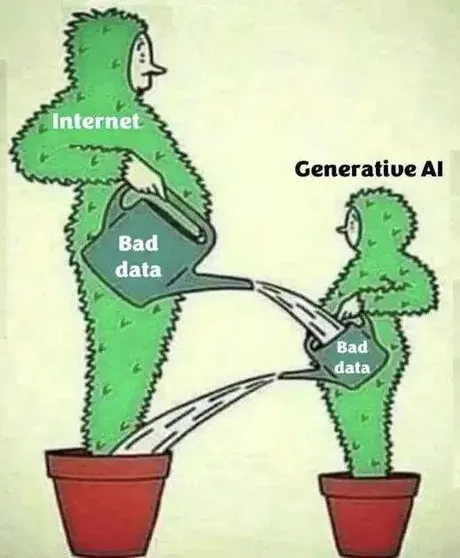
@astralempress.bsky.social:
….hey gang: when do we start really worrying about this shit. Are we there yet? Feels like we are there.Long past needing to worry and scream, daily, from everywhere. Same in Canada, under Herr Hideous Harper #2, Nazi Carney. If one has watched Carney’s actions since before the election, he’s been copying or ordered to do as Trump Regime does. Same in Alberta by Danielle Dildo Smith.
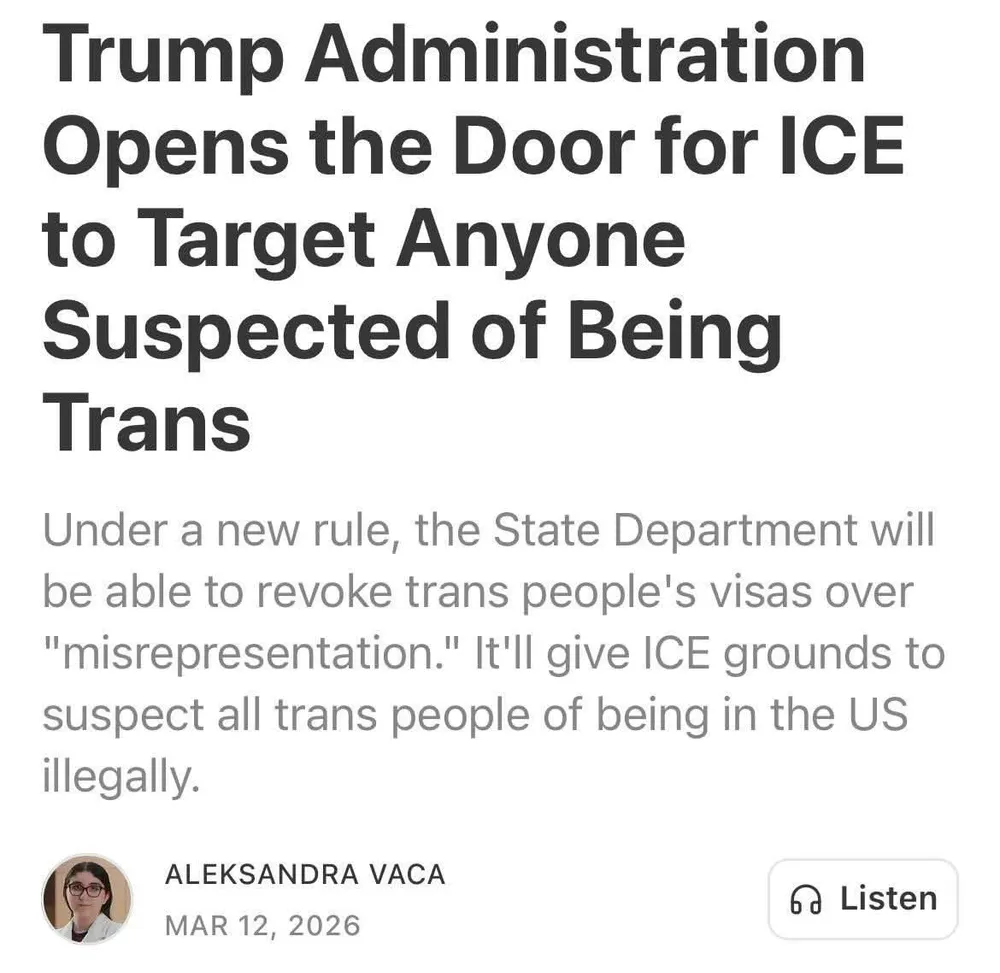
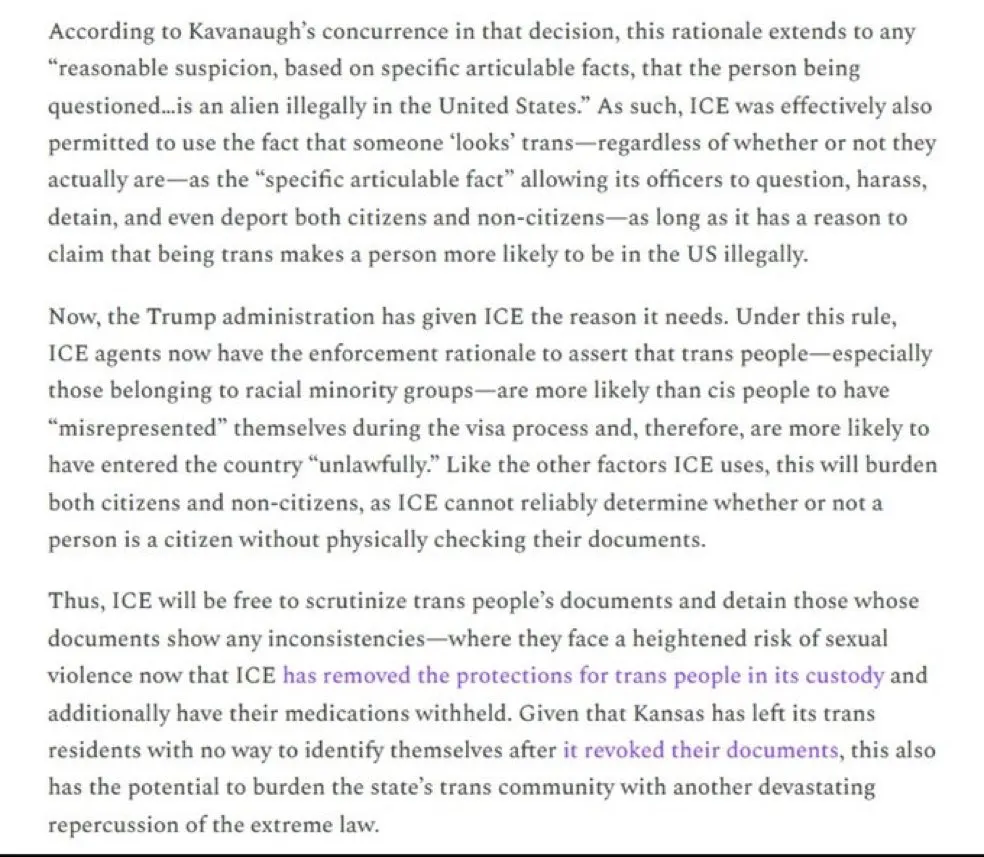
Oh and here’s the original article link for anyone as well as a screenshot showing some quotes by the Supreme Court. transitics.substack.com/p/trump-admi…
@michelekraft.bsky.social:
JFC
@stephaniecarvin.bsky.social:
Agree with this. A social media “ban” for youth will probably not work (they will get around it), lets platforms off the hook with regards to countering online harms, and will likely require intrusive verification systems.
@xtramagazine.com:
Mark Carney is open to considering a social media ban for minors. If it happens, it will be bad for everyone, especially queer and trans people.
For the late/west coast crowd, my @xtramagazine.com column on why banning social media for minors is just age verification by stealth, which will infect the entire internet
Banning social media for minors would hurt everyone—adults included, A social media ban would disproportionately harm queer and trans people, and restrict LGBTQ2S+ materials by Dale Smith, March 12, 2026, Xtra
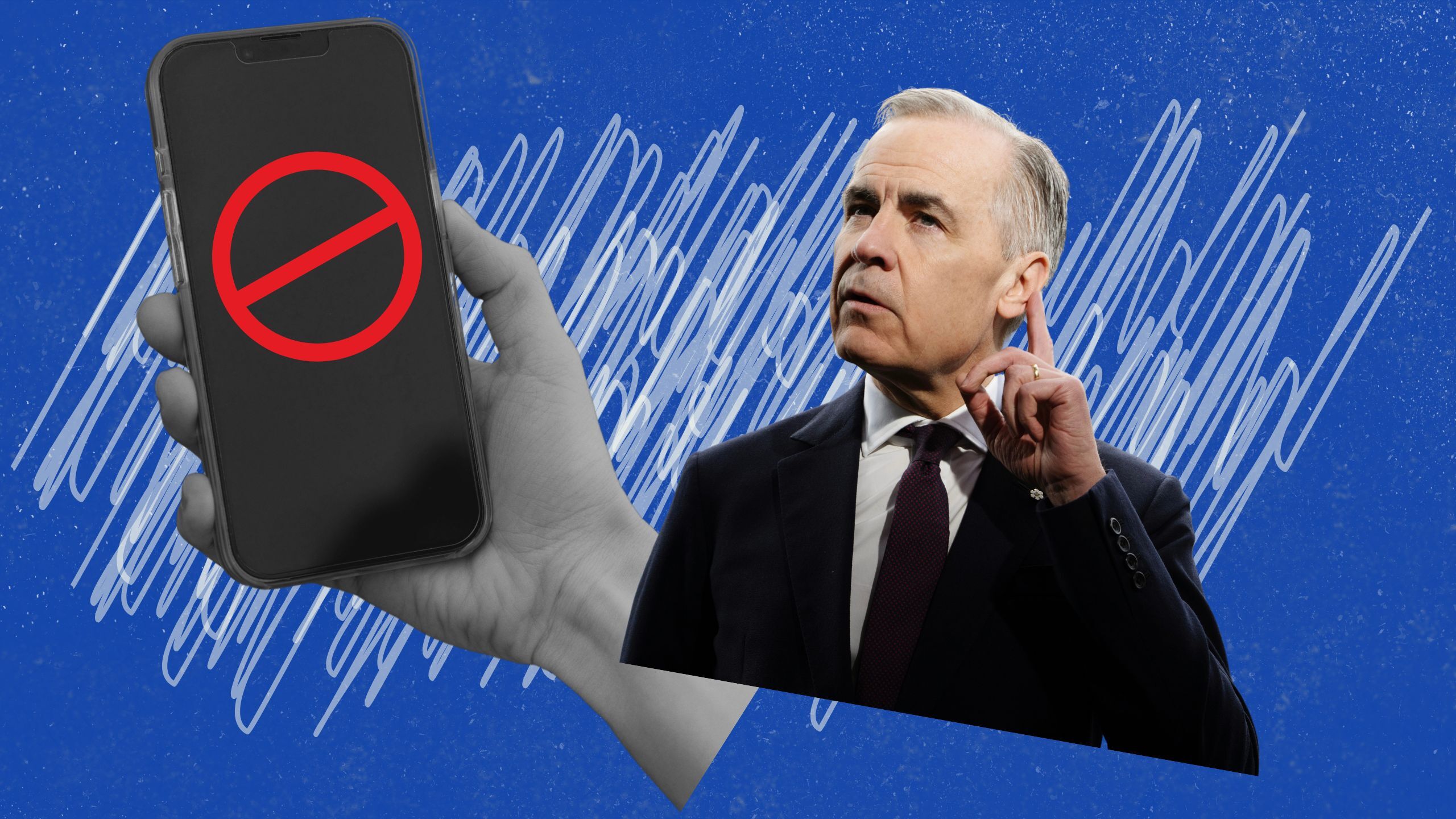
Last week, Prime Minister Mark Carney said his government is open to debate on a ban on social media for minors as part of their upcoming online harms legislation, something that other countries are also experimenting with, considering that the harms of these addictive platforms have become fairly self-evident when it comes to mental health outcomes. It may sound like it may be a worthwhile cause on the surface, but dig a little deeper, and you will see a lot of problems lurking that will affect everyone on the internet, not just children and youth, and it will most especially affect queer and trans people.
Banning social media will affect queer and trans youth disproportionately, as these platforms may be the only place where they can help figure out their sexuality or gender identity, and in some cases, the only place where trans youth have been able to access information on transitioning. This, of course, has given certain transphobes the notion that social media fuels the so-called “social contagion theory,” supposedly brainwashing teens into transitioning, even though this has been widely discredited. The flip side is that queer and trans youth also face bullying over social media, but for some, they have viewed their time on social media platforms as a lifeline.
There are a multitude of issues at play here, beyond the issue of teen mental health. Part of this has to do with the responsibility of platforms like Meta to provide a safe environment for these youth, which they are clearly failing at. Research has shown that they are not living up to their promises for safety features, which are entirely absent in many cases. And rather than actually do the work of policing their own platforms, Meta is instead trying to convince the federal government to force app stores, like Apple’s and Google’s, to do age verification for them, as though the only way to access social media is through phone or tablet apps and not on a desktop browser.
But age verification itself is an enormous problem.
There is a push right now in many countries, including Canada, to force age verification onto the internet as a means of “protecting” children and youth from things like online porn. One Canadian senator, Julie Miville-Dechêne, is on her third attempt at a Senate public bill after the previous two died on the Order Paper when elections were called, and continues to both ignore the problems with age verification, particularly when it comes to the privacy implications.
The technologies proposed to conduct the age verification could include facial recognition, biometrics, or “age estimation,” which is woefully inadequate when you are trying to distinguish between a 17- and 18-year-old, and is especially unreliable for people of colour and trans people. There are also concerns that trans people would need to out themselves for this verification, which is made even more vulnerable in places like Kansas where trans people’s driver’s licences were suddenly invalidated.
Privacy implications for those kinds of services are immediate, as to whether facial recognition or even “age estimation” companies are storing the information, and there have been plenty of examples of companies who claimed they were not storing that information when they were. The alternative notion that one needs to use a third-party service to show them your ID in order to get a digital token that confirms your age verification is likewise a privacy nightmare and huge vulnerability, which again gets waived away by the senator and her supporters. Recently, when Discord used a third-party service for their age verification, hackers breached that system and compromised 70,000 users’ ID. Law professor Michael Geist refers to the dismissal of these concerns as a “nerd harder” problem, where proponents believe that tech people can just fix the problem if they try hard enough, which is absolutely not the case.I trust no tech company or their staff, most have proven themselves to be hideous Nazis, impossible to trust. They are after our private data, which is where they make their big fucking money. And, worse, Carney and Solomon are all in on American AI and tech, including ICE and military, they’ll never protect Canadians from violations by their rich pals, they only protect the rich, and their tech.
But for queer and trans people, including adults, age verification poses bigger problems. For one, even innocuous LGBTQ2S+ materials can be age-gated because companies are afraid that they will be fined by governments if there are complaints that this material is considered “adult,” even though it’s not. If you look at the current moral panic happening in Alberta over book bans, a large portion of those books that are banned have queer or trans content that isn’t sexual, but have nevertheless been the subject of complaints by far-right groups like Action4Canada or Parents for Choice in Education. There is a long history in this country of queer and trans materials being considered “obscene” by government agents, even when it’s not. When we talk about age verification for the internet, rest assured that once age verification to ban youth from social media is put into place, it will immediately be extended to keep youth from accessing online porn, at which point queer and trans people will find themselves butting up against these demands for verification for things that absolutely should not require it.
There is no doubt that more needs to be done when it comes to regulating these social media platforms, so that online harms are minimized, and there are mechanisms that force platforms to ensure that there are child-safe versions available.
The Trudeau government had been prepared to impose this on platforms, but that bill died on the Order Paper, and now the Carney government is taking a different approach—tiptoeing around the tech bros, and sucking up to them wherever possible, most especially when it comes to the digital asbestos that is AI. The minister of Artificial Intelligence, Evan Solomon, went so far as to promise the digital asbestos industry that he would ensure a “light touch” when it comes to regulation, because he swallowed their claims that regulation would “stifle innovation.” It’s also why he’s been little more than theatrical when it comes to dealing with OpenAI in the wake of the Tumbler Ridge shooting, given that there is evidence that the shooter’s use of ChatGPT was raising red flags with the company. Nevertheless, Solomon is insisting that these platforms be allowed to police themselves while making the empty threat that “all options are on the table.”
At this stage, I am concerned that the government is willing to consider age verification as their way of showing that they are concerned about youth on social media, even though the Trudeau government was opposed to the Senate bill on age verification for all the right reasons.
But Carney isn’t TrudeauCarney’s not even a liberal, he’s a bigoted Harper con, and he has shown no compunction on overturning long-held Liberal positions when it comes to protecting Charter rights if he feels it expedient (see: lawful access), and this very well could be another one of those reversals, no matter the consequences to those who will be severely affected by it.
Dale Smith is a freelance journalist in the Parliamentary Press Gallery and author of The Unbroken Machine: Canada’s Democracy in Action.
Mark Carney is thinking of banning kids from social media. This is why it’s a terrible idea By Supriya Dwivedi, March 13, 2026, Toronto Star
Supriya Dwivedi is a former senior advisor to Prime Minister Justin Trudeau and is a contributing columnist for the Star.
In speaking with reporters recently, Prime Minister Carney confirmed that his government is considering a social media ban for children as part of its forthcoming plan to reintroduce legislation on online harms. In the wake of Australia’s social media ban for kids under the age of 16, other countries such as Denmark, Spain and France have been considering their own version of a social media ban for children. Canadians should not be surprised that the Carney government is mulling the same.
Unlike all of the other jurisdictions that are considering whether or not to ban kids from social media, however, Canada has not even attempted to regulate social media beyond proposing legislation that ultimately ends up going nowhere — most recently, because Parliament was prorogued, which is what happened with the Trudeau government’s attempt.
A social media ban for kids without some other form of regulatory oversight for how these social media companies operate is, at best, simply bad policy. What’s worse, however, is that in an attempt to do something about social media’s harms the Carney government could unfairly target adults while also raising serious privacy issues.
The thing in question is age verification — getting users to certify that they are above or below a certain age to allow them to then access social media apps. According to recent reporting, Meta is aggressively lobbying the Carney government for age verification at the app store level so that only people over a certain age could download, and therefore use, certain apps.
The Carney government would be wise to resist Meta’s efforts here for a couple of reasons.
First and foremost, it would allow social media platforms like Meta — one of the most frequent offenders when it comes to disregarding child safety — to continue to skirt responsibility for the known harms its products are inflicting on kids.
It would do so by placing the onus on companies like Apple and Google, which operate the app stores virtually all smartphone users use, to verify a user’s age and prevent minors from downloading certain apps without first getting parental consent.
We also know from unredacted court filings as well as from whistleblower testimony that Meta has been aware of the harms its platforms like Instagram and Facebook are causing children and yet will refuse to do anything about it.
More worryingly, it is clear that Meta is by no means the only bad actor in this space. Virtually all social media and social gaming platforms geared toward minors are knowingly designing their systems without taking harms on children seriously enough, ranging from allowing known child predators to contact children to making their platforms addictive. If the Carney government were to employ age verification at the app store level in order to enact a social media ban for kids, all of these companies would effectively be avoiding responsibility and liability once kids aged out of the age range for the social media ban. What’s more, age verification can’t help with the harms social media causes in adults.
Secondly, age verification at the app store level is a privacy nightmare that will end up impacting all Canadians, not just children or parents, because it will require some method of age verification for almost every single Canadian in order to determine whether that person is a minor or not.
That is most often done by uploading government-issued identification, and requiring parental consent would mean that a parent or guardian would have to provide the app store with proof of legal guardianship. Even if there are ways to anonymize or protect this data, the sheer scale of such an enterprise still represents a massive risk.
As the Carney government prepares to legislate in the space of online harms, it needs to do so with eyes wide open on how these companies have knowingly inflicted harms on their users, even kids.Carney has made it clear he and his corrupt Evan Solomon don’t give a shit about protecting kids, or any Canadian from the vile billioniare tech bros which make tonnes of money off our private data. I refuse to upload ID to the cesspool internet. It needs massive clean up first, which Carney and his team fucking refuse to do. Beholden to and owned by the Epstein Class, of which Harper and Carney are members. Canadian really need to stop supporting and using FuckBook, and any other Meta products! Any measure that further allows Meta and other social media companies like it to avoid responsibility yet again should be ignored by the government.
Canadian kids need their government to prioritize their safety online, rather than being swayed by private companies and their interests.
These are the criminal tech bros we’re forced to deal with:
@adamserwer.bsky.social:
Why is every tech ceo the villain from the Lorax
@fgenovese.bsky.social:
fine not all men – but surely all of these menIn my experience professionally and personally, it is nearly all men. There are scant few men that support full and real equality – why would they – they’d have to give up a teensy weeny bit of power, which they do not want to do. selfish fucks, the more religious, the more misogynistically selfish.
strange to live in an era in which gender theory explains literally everything
@jordantcarlson.bsky.social:
i really don’t get how the people doing all of this aren’t exhausted by having to perform their warped little masculinity so much
@logiebear7.bsky.social:
Why are these men so, so fragile. What happened to him?
@fgenovese.bsky.social:
you know, must have been EDI
***
@ewacat.bsky.social:
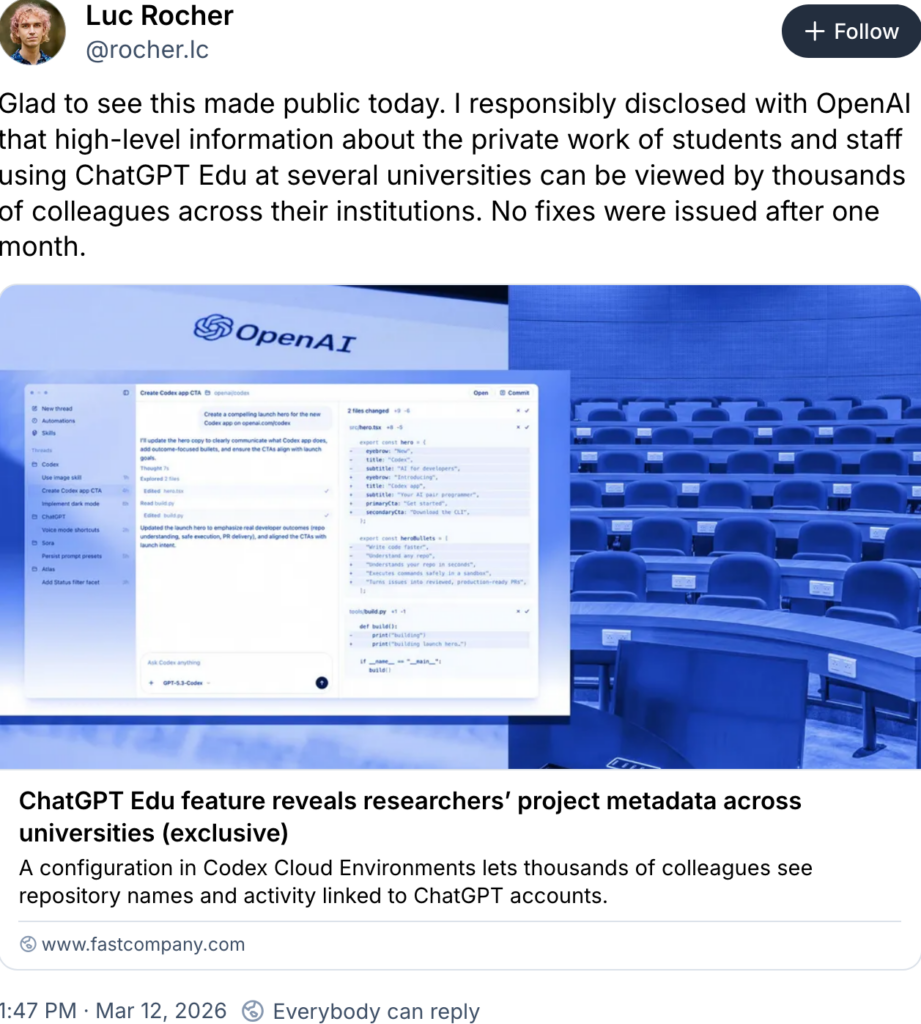
Oh my god people are giving small children AI toys and expecting them to learn communication from them??? THIS IS LITERALLY WHAT HUMANS SHOULD BE DOING THIS IS NOT AI’S JOB WHAT THE HELL
@drsurekhadavies.bsky.social:
AI toys for children need to be banned.
@spacecurves.bsky.social:
The blasted things aren’t good for adults either
***
USA vollzieht grundlegenden Staatsumbau. Hauptrolle:Tech-Unternehmen wie Palantir & Anduril, an deren Software wichtige hoheitliche Aufgaben delegiert werden. Trend: „Privatisierung der Souveränität“ zunehmend auch in Europa
In den USA vollzieht sich ein grundlegender Umbau des Staates. Die Hauptrolle spielen dabei Tech-Unternehmen wie Palantir und Anduril, an deren Software wichtige hoheitliche Aufgaben delegiert werden….www.woz.ch
Patrick* Neithard @patrickneithard.bsky.social
Takeover by Big Tech Big Tech is rewiring the American state; it’s not just a case of corporate capture but a transformation of sovereignty itself. Text by Francesca Bria
first in EN
Nov 2025 ed: mondediplo.com/2025/11/02tech

Open access // by Francesca Bria (Le Monde diplomatique – English edition, November 2025)mondediplo.com
stevefromma.bsky.social @stevefromma.bsky.social:
The most disturbing things I’ve read in a very long time.
“Our instinct at the firm is, every time we hear about another attack, we need to see the chat logs because there’s [a good chance] that AI was deeply involved…”
Lawyer behind AI psychosis cases warns of mass casualty risks | TechCrunch
AI chatbots have been linked to suicides for years. Now one lawyer says they are showing up in mass casualty cases too, and the technology is moving faster than the safeguards.techcrunch.com
Hypervisible @hypervisible.blacksky.app:
“Edelson says his law firm receives one ‘serious inquiry a day’ from someone who has lost a family member to AI-induced delusions or is experiencing severe mental health issues of their own.
***
@sashafury.blackskycomra.de:
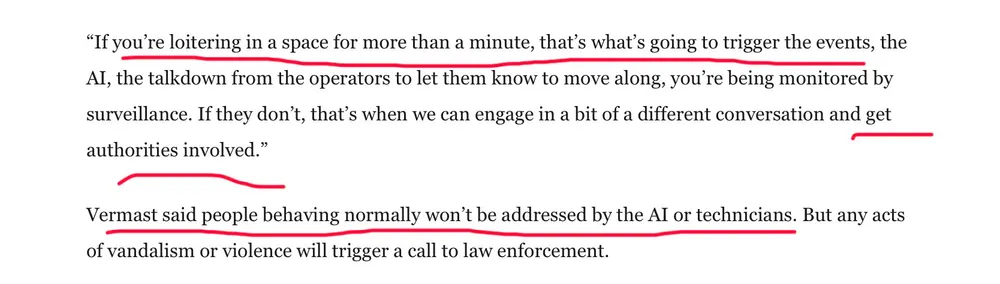
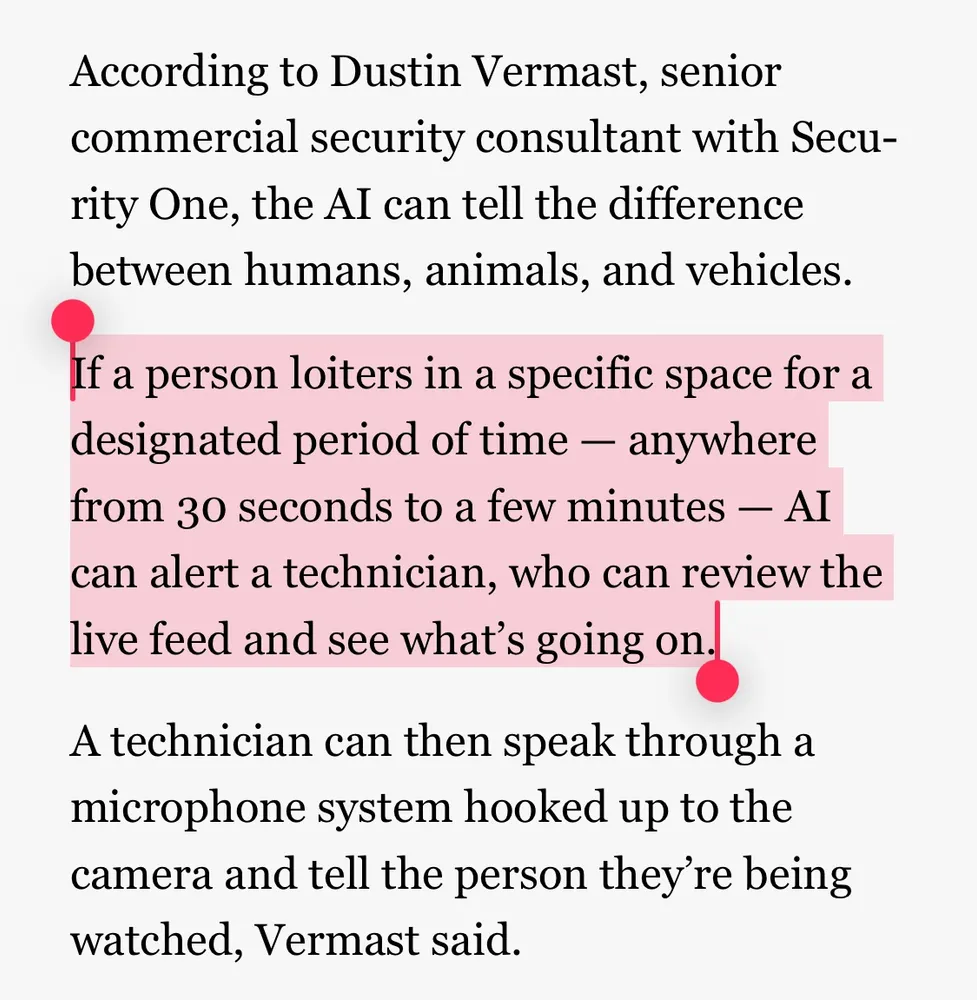
“If you’re not doing anything illegal, then you got nothing to worry about!”
Also: “Existing in public space without buying anything will lead to the authorities being called.”
Canadians, this is in Windsor!
https://bsky.app/profile/sashafury.blackskycomra.de/post/3mgxwhbzy7c2f
@hypervisible.blacksky.app:
“It’s not big brother…”
Goes on to describe big brother…

@airplaney.bsky.social:
I mean, it’s actually worse than big brother (and it’s corporate, too)
@beedub71.bsky.social:
We need a reference case sent to the Supreme Court now to stop this bullshit.

***
@washingtonian:
Many Washington Post readers have been notified via email that their subscription rates are set to increase. Nestled at the bottom of these emails, you’ll find an asterisk and the following:
“This price was set by an algorithm using your personal data.”
@AmyA1A:
That made me curious to look at my subscription (yes, I’m a long-term subscriber still hanging in there), and I see it’s trying to save me money by changing my $7.99/month subscription to a $139.99/year subscription.
Hey Siri, what’s 7.99 x 12?
@swmstn2:
Thank you for this useful information
Time to cancel longstanding WaPo subscription
@GeriKay301:
And, if the Washington Post is using AI to charge customers more, people need to ask themselves what are the chances of Amazon (also owned by Jeff Bezos) doing the same thing?
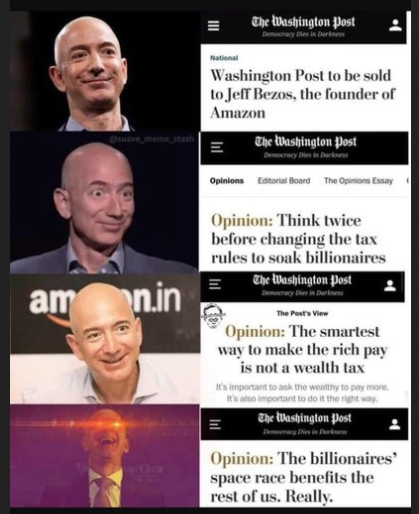
@Diana_E_Prince:
WaPo: “You can trust us for the news. We’re unethical as fuck.”
***
***
@deonandan.bsky.social:
All these fuckers are the same: find a way to restrict and monetize what the universe gives us for free.
@d2earth.bsky.social:
That’s why they are so dead set against renewables… the sun and wind are free for everyone.
The fuckers can’t charge us to use it.
@resdevbcch.bsky.social:
They also think they can define what intelligence is.
Ridiculous
***
***
austinahlman:
Who could have seen this coming except for everyone actually paying attention?
@LundukeJournal:
A “Progressive Tech Coalition” (including Apple, Google, & Roblox) has abruptly changed stance on “Age Verification” laws.
Up until now, the “Chamber of Progress” has consistently opposed all laws seeking to implement age verification… but they have decided to support the Colorado “Age Verification for all Operating Systems” law.
What makes this 180 degree change particularly interesting is that “Chamber of Progress” publicly opposed last year’s California law… which the Colorado law (which they support) is based almost entirely upon.
Which begs the question:
What, exactly, prompted such a radical change in policy from a lobbyist for these Big Tech companies?
Chamber of Progress calls itself a “tech industry coalition devoted to a progressive society” which pushes “public policies that will build a fairer, more inclusive world”.
@ProgressChamber brings in just shy of $10 Million USD / Year for lobbying of “Progressive” causes on behalf of their member Big Tech companies.
@PluviaMachina:
Somebody’s getting paid a lot of money if they shift from opposing tyranny to promoting it.
@Wyndle:
“What, exactly, prompted such a radical change in policy from a lobbyist for these Big Tech companies?”
It couldn’t possibly be to draw attention away from such laws until the momentum was on their side? That would imply more in-depth tactics from shadow organizations.
@shinseikatsu:
Someone is saying Meta is one of the large driving forces behind it, and has some data to back up the claim.
@shinseikatsu:
Someone is saying Meta is one of the large driving forces behind it, and has some data to back up the claim.
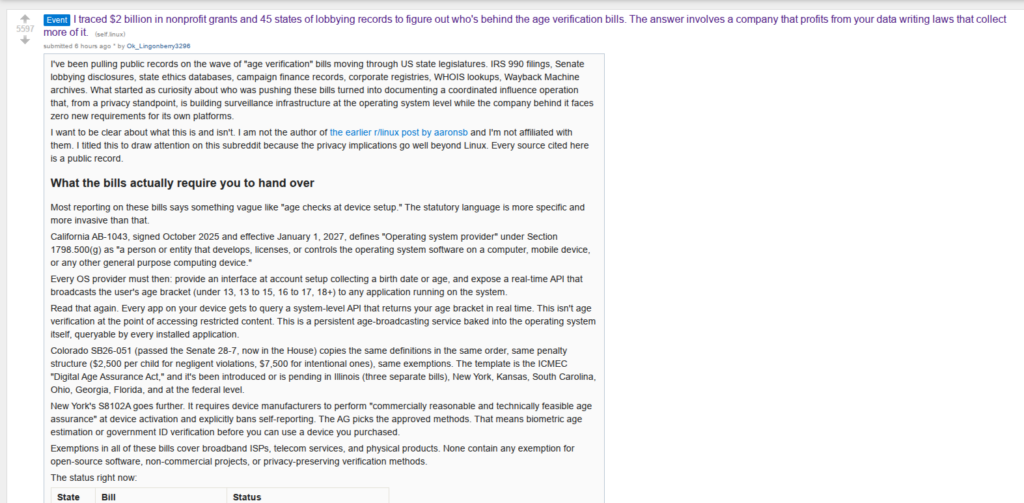
I traced $2 billion in nonprofit grants and 45 states of lobbying records to figure out who’s behind the age verification bills. The answer involves a company that profits from your data writing laws that collect more of it.(self.linux)
submitted Mar 13, 2026 by Ok_Lingonberry3296
I’ve been pulling public records on the wave of “age verification” bills moving through US state legislatures. IRS 990 filings, Senate lobbying disclosures, state ethics databases, campaign finance records, corporate registries, WHOIS lookups, Wayback Machine archives. What started as curiosity about who was pushing these bills turned into documenting a coordinated influence operation that, from a privacy standpoint, is building surveillance infrastructure at the operating system level while the company behind it faces zero new requirements for its own platforms.
I want to be clear about what this is and isn’t. I am not the author of the earlier r/linux post by aaronsb and I’m not affiliated with them. I titled this to draw attention on this subreddit because the privacy implications go well beyond Linux. Every source cited here is a public record.
What the bills actually require you to hand over
Most reporting on these bills says something vague like “age checks at device setup.” The statutory language is more specific and more invasive than that.
California AB-1043, signed October 2025 and effective January 1, 2027, defines “Operating system provider” under Section 1798.500(g) as “a person or entity that develops, licenses, or controls the operating system software on a computer, mobile device, or any other general purpose computing device.”
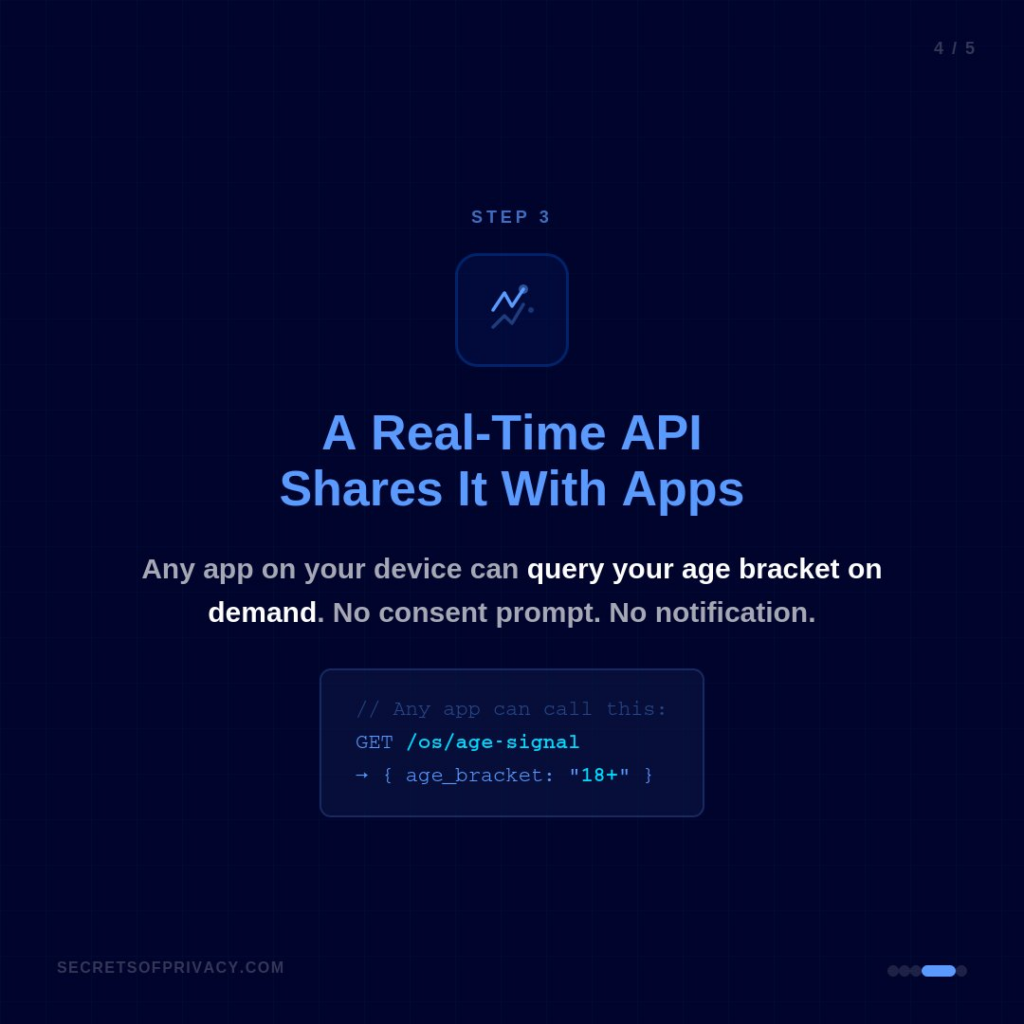
Every OS provider must then: provide an interface at account setup collecting a birth date or age, and expose a real-time API that broadcasts the user’s age bracket (under 13, 13 to 15, 16 to 17, 18+) to any application running on the system.
Read that again. Every app on your device gets to query a system-level API that returns your age bracket in real time. This isn’t age verification at the point of accessing restricted content. This is a persistent age-broadcasting service baked into the operating system itself, queryable by every installed application.
Colorado SB26-051 (passed the Senate 28-7, now in the House) copies the same definitions in the same order, same penalty structure ($2,500 per child for negligent violations, $7,500 for intentional ones), same exemptions. The template is the ICMEC “Digital Age Assurance Act,” and it’s been introduced or is pending in Illinois (three separate bills), New York, Kansas, South Carolina, Ohio, Georgia, Florida, and at the federal level.
New York’s S8102A goes further. It requires device manufacturers to perform “commercially reasonable and technically feasible age assurance” at device activation and explicitly bans self-reporting. The AG picks the approved methods. That means biometric age estimation or government ID verification before you can use a device you purchased.
Exemptions in all of these bills cover broadband ISPs, telecom services, and physical products. None contain any exemption for open-source software, non-commercial projects, or privacy-preserving verification methods.
The status right now:
| State | Bill | Status |
|---|---|---|
| CA | AB-1043 | Enacted, effective Jan 1, 2027 |
| CO | SB26-051 | Passed Senate, in House committee |
| LA | HB-570 | Enacted, effective July 1, 2026 |
| UT | SB-142 | Enacted, first in nation |
| TX | SB-2420 | Enjoined by federal judge |
| NY | S8102A | Pending |
| IL | HB-3304, HB-4140, SB-2037 | Pending |
| Federal | KOSA, ASAA | Pending |
The privacy architecture these bills create
Here’s what concerns me most from a privacy perspective. These bills don’t just verify age once. They create a persistent identity layer inside the operating system that applications can query at will.
The commercial age verification vendors who would provide this infrastructure (Yoti, Veriff, Jumio) charge $0.10 to $2.00 per check, require proprietary SDKs, demand API keys tied to commercial accounts, and operate cloud-only with no self-hosted option. Your age verification data goes to a third-party cloud service. Every time.
Compare this to what the EU built. The EU Digital Identity Wallet under eIDAS 2.0 is open-source, self-hostable, and uses zero-knowledge proofs. You can prove you’re over 18 without revealing your birth date, your name, or anything else. No per-check fees, no proprietary SDKs, no data going to a vendor’s cloud. The EU’s Digital Services Act puts age verification obligations on Very Large Online Platforms (45M+ monthly users), not on operating systems. FOSS projects that don’t act as intermediary services are explicitly outside scope. Micro and small enterprises get additional exemptions.
The US bills assume every operating system is built by a corporation with the infrastructure and revenue to absorb these costs. The EU started from the opposite assumption and built accordingly.
| EU approach | US bills | |
|---|---|---|
| Who’s regulated | Platforms with 45M+ users | All operating systems |
| FOSS exemption | Yes, five separate mechanisms | None |
| Verification method | Open-source wallet, zero-knowledge proofs | Commercial vendors, biometric data to cloud |
| Cost to non-commercial projects | $0 | $100K to $2M/year |
| Privacy architecture | Selective disclosure, privacy by design | Full age data to vendor cloud |
| Works offline | Yes | No, internet required per check |
Who wrote the legislation
This is where it gets interesting. Rep. Kim Carver (R-Bossier City), the sponsor of Louisiana’s HB-570, publicly confirmed that a Meta lobbyist brought the legislative language directly to her. The bill as drafted required only app stores (Apple, Google) to verify user ages. It did not require social media platforms to do anything.
Meta deployed 12 lobbyists across 9 confirmed firms for this single bill, paying at least $324,992 (described as a “very conservative estimate”). The confirmed firms include Pelican State Partners (who also lobby for Roblox, letting Meta frame this as “broad industry support” rather than one company’s project), Adams and Reese LLP (the #1 ranked Louisiana government affairs firm), and State Capitol Solutions.
Nicole Lopez, Meta’s Director of Global Litigation Strategy for Youth, testified at the House Commerce Committee in support. She also testified in South Dakota for a similar bill. She’s Meta’s national point person for these laws.
HB-570 passed unanimously at every stage: House 99-0, Senate 39-0. So why did Meta need 12 lobbyists? Because the votes were never the concern. The lobbyists were there to control the text and block amendments.
The key amendment battle came from Senator Jay Morris, who expanded the bill to include app developers alongside app stores after Google’s senior director of government affairs publicly questioned why “Mark Zuckerberg is so keen on passing these bills.” When Morris introduced his amendment, Meta went silent. The conference committee compromise maintained dual responsibility but kept the primary burden on app stores, which is what Meta wanted from the start.
At that same Senate hearing, Morris directly questioned DCA Executive Director Casey Stefanski about who funds her organization. She reportedly deflected, said she “wasn’t comfortable answering,” then under continued pressure admitted tech companies provide funding but refused to name them.
The advocacy group that doesn’t legally exist
The Digital Childhood Alliance presents itself as a coalition of 50+ conservative child safety organizations (later inflated to 140+, though only six have ever been publicly named). It has been testifying in favor of these bills across states. Here is what public records show about its legal status:
I searched all four regional extracts of the IRS Exempt Organizations Business Master File (eo1 through eo4.csv), which cover every tax-exempt organization registered in the United States. DCA is not there. No EIN exists for this organization.
I also searched for incorporation records in Colorado, DC, Delaware, and Virginia, plus OpenCorporates (200M+ companies), ProPublica Nonprofit Explorer, GuideStar, and Charity Navigator. No incorporation record exists in any of them.
DCA’s domain was registered December 18, 2024 through GoDaddy with privacy protection and a four-year registration. The website was live and fully formed one day later: professional design, statistics, testimonials from Heritage Foundation and NCOSE staff, ASAA talking points already loaded. This is not a grassroots launch. This is a staging deployment of a pre-built site. 77 days later, Utah SB-142 became the first ASAA law signed in the country.
DCA processes donations through For Good (formerly Network for Good, EIN 68-0480736), which is a Donor Advised Fund. For Good explicitly states in its documentation that it serves “501(c)(3) nonprofit organizations.” DCA claims 501(c)(4) status. DCA is classified as a “Project” (ID 258136) in the For Good system, not as a standalone nonprofit. I searched all 59,736 For Good grant recipients across five years, roughly $1.73 billion in disbursements. Zero grants to DCA, DCI, NCOSE, or any related entity. The donation page appears to be cosmetic.
Bloomberg reporters exposed Meta as a DCA funder in July 2025. The Deseret News detailed the arrangement in December 2025. No version of the website, across 100+ Wayback Machine snapshots, has ever disclosed funding sources. Every blog post and testimony targets Apple and Google. Meta is never mentioned or criticized.
DCA’s leadership traces directly to NCOSE (National Center on Sexual Exploitation):
Casey Stefanski, Executive Director, spent 10 years at NCOSE as Senior Director of Global Partnerships. Unusually, she never appears on any NCOSE 990 filing as an officer, key employee, or among the five highest-compensated staff. A senior director title at a $5.4M organization for a decade with no 990 appearance suggests either below-threshold compensation, an inflated title, or something else about the arrangement.
Dawn Hawkins, DCA’s Chair, simultaneously serves as CEO of NCOSE.
John Read, DCA’s Senior Policy Advisor, spent 30 years at the DOJ Antitrust Division investigating app stores and Big Tech.
NCOSE’s own 501(c)(4) structure turns out to be complicated. Tracing Schedule R filings across four years reveals that NCOSE created “NCOSE Action” (EIN 86-2458921) as a c4 in 2021, reclassified it from c4 to c3 in 2022, then created an entirely new c4 called “Institute for Public Policy” (EIN 88-1180705) in 2023 with the same address and the same principal officer (Marcel van der Watt). By 2024 the original entity had disappeared from Schedule R entirely.
Despite NCOSE’s website describing NCOSEAction as “created by NCOSE,” and Schedule R listing the Institute as a “controlled organization,” all 19 transaction indicators between NCOSE and the Institute are marked “No.” No grants, no shared employees, no shared facilities, no reimbursements. Zero reported transactions between a parent and its own controlled c4 while staff move freely between them. Concurrently, NCOSE’s lobbying spending tripled from $78,000 to $204,000, coinciding with DCA’s launch and the ASAA legislative push.
$70M+ in super PACs, deliberately fragmented
Meta poured over $70 million into state-level super PACs and structured every one to avoid the FEC’s centralized, searchable database:
| Entity | Meta’s contribution | Type | Notable detail |
|---|---|---|---|
| ATEP | $45M | Bipartisan 527 PAC | Co-led by Hilltop Public Solutions |
| META California | $20M | State PAC | Chaired by Brian Rice, Meta VP of Public Policy |
| California Leads | $5M | State PAC | Union-partnered |
| Forge the Future | Downstream from ATEP | State PAC (TX) | Policy priorities mirror ASAA language |
| Making Our Tomorrow | Downstream from ATEP | State PAC (IL) | Also chaired by Brian Rice |
By registering every PAC at the state level rather than federally, Meta scatters filings across dozens of state ethics commission databases with different formats, different disclosure timelines, and no centralized search. Each filing is technically public. Aggregating them into a coherent picture requires manually querying each state. This is structural opacity by fragmentation.
Forge the Future’s stated policy priorities include: “Empowering parents with oversight of children’s online activities across devices and digital environments.” That is functionally identical to the ASAA framing.
Of 20 Meta-backed candidates across Texas and North Carolina primaries, 19 won (Washington Post, March 12, 2026).
The firm that bridges both tracks
This is the finding that connects two things I’d been tracking separately.
Hilltop Public Solutions, a Democratic consulting firm, shows up in three distinct contexts:
- Co-leads ATEP, Meta’s $45M bipartisan super PAC
- Involved in DCA’s messaging coordination, per investigative reporting
- Connected to Forge the Future, the downstream Texas PAC with ASAA-aligned policy priorities
This makes Hilltop the first confirmed entity bridging Meta’s political spending operation and the DCA advocacy campaign. The firm helping Meta elect “tech-friendly” state legislators also coordinates messaging for the nominally independent grassroots organization pushing those legislators to pass ASAA.
The dark money network
Meta’s Colorado lobbying runs through Headwaters Strategies, paid $338,500 since 2019, with monthly payments jumping from roughly $5K/month to $14K-$30K/month starting July 2023 as state-level age verification bills accelerated.
Headwaters co-founder Adam Eichberg simultaneously serves as a registered Meta lobbyist in Colorado, as Chair of the Board of the New Venture Fund (the flagship entity of the Arabella Advisors network, $669M revenue), and as founding board member of the Windward Fund (another Arabella entity, $311M revenue). The Arabella network operates four entities from the same building at 1828 L Street NW, Washington DC, with combined annual revenue exceeding $1.3 billion. NVF transfers $121.3M per year to the Sixteen Thirty Fund, a 501(c)(4) with no donor disclosure requirements.
I parsed the IRS Form 990 Schedule I filings across all five Arabella entities. That’s 4,433 grants totaling approximately $2.0 billion. I searched for every child safety, age verification, and tech policy organization I could identify. Zero matches. The Schedule I grant pathway is definitively ruled out. If Meta money flows through this network, it would have to travel via fiscal sponsorship, consulting fees, or non-grant payments, which are inherently less transparent.
The Eichberg connection matters not because it proves a pipeline, but because the person receiving Meta’s lobbying payments chairs the governance structure of the largest anonymous-donor-funded advocacy network in US politics. That structural overlap is documented regardless of whether money moves through it.
The company that benefits
Meta’s own Horizon OS (powering Quest VR headsets) already has Meta Account age verification, a Get Age Category API, Family Center parental controls, Quest Store age ratings, and default minor account protections. I scored Horizon OS at 83% compliance readiness with these mandates.
Meta is not opposing these bills. In Colorado, I pulled lobbying records from the Secretary of State’s SODA API and found Meta’s four registered lobbyists on SB26-051 listed in a “Monitoring” position. Not amending, not opposing. Watching.
On every social media regulation bill in Colorado, Meta takes an “Amending” position, actively fighting changes. Across 117 lobbying records on 22 bills:
- Bills regulating social media: Meta position is “Amending” (fighting)
- The one bill putting the burden on OS providers: Meta position is “Monitoring” (watching)
Meta fights bills that regulate Meta. Meta watches bills that regulate everyone else.
In California, Meta spent over $1 million on state lobbying in the first three quarters of 2025 and publicly supported AB-1043, breaking ranks with its own trade associations (TechNet and Chamber of Progress both opposed it). Meta supported a bill that creates surveillance infrastructure at the OS level while leaving social media platforms untouched.
Meta’s LD-2 filings with the Senate explicitly list H.R. 3149/S. 1586, the App Store Accountability Act, as a lobbied bill. The filing narrative includes “protecting children, bullying prevention and online safety; youth safety and federal parental approval; youth restrictions on social media.” In the same filing, Meta also lobbies on KOSA and COPPA 2.0, which would regulate Meta directly. Meta supports the bill that burdens its competitors and lobbies to weaken the bills that burden itself. Both positions appear in the same quarterly disclosure.
The privacy questions
I’ve tried to present findings here, not conclusions. But from a privacy standpoint:
Why does the company that profits from collecting user data draft legislation requiring every operating system to collect age data and broadcast it to every installed application via a system-level API?
Why do these bills mandate commercial age verification vendors (Yoti, Veriff, Jumio) whose business model is collecting biometric data, while the EU’s equivalent uses open-source zero-knowledge proofs that reveal nothing beyond “over 18”?
Why is there no data minimization requirement in any of these bills for the age verification data itself? AB-1043 creates a persistent age signal API. Who governs what happens to the data flowing through it?
Why does Meta fund an advocacy group with no legal existence in the IRS system to push legislation that creates new data collection infrastructure at a layer below Meta’s own products, while Meta faces zero new requirements?
Why does the company whose lobbyist drafted one of these bills write it to specifically exclude social media platforms from the age verification mandate?
If the goal is child safety, why regulate the operating system, which has no direct contact with children, instead of the social media platforms where the documented harm occurs?
What you can do
If you’re in CO, IL, or NY, these bills are still in committee. Comment on the record. System76’s CEO met with the Colorado bill’s sponsor on March 9 and the sponsor suggested excluding open-source software. The conversation is happening now.
Contact the EFF, FSF, and Software Freedom Conservancy with the specific statutory language and compliance gap numbers. They need to know these definitions cover volunteer-maintained software with no exemption.
Read the actual bill text. CA AB-1043 is searchable on leginfo.legislature.ca.gov. CO SB26-051 is on leg.colorado.gov. The definitions are what matter, not the news summaries.
If you maintain software that could be classified as an “operating system provider” under these definitions, start thinking about your response now. CA AB-1043 takes effect January 1, 2027. Louisiana HB-570 takes effect July 1, 2026.
Sources (all public records)
Bill text: CA AB-1043 (Chapter 675, leginfo.legislature.ca.gov), CO SB26-051 (leg.colorado.gov), LA HB-570 Act 481 of 2025 (legis.la.gov), NY S8102A (nysenate.gov), TX SB-2420, UT SB-142 (le.utah.gov)
Federal lobbying: OpenSecrets Meta profile (opensecrets.org, client ID D000033563), Senate LDA filing UUID b73445ed-15e5-42e7-a1e8-aeb224755267
Colorado lobbying: CO Secretary of State SODA API (data.colorado.gov, datasets vp65-spyn, dxfk-9ifj, df5p-p6jt)
Louisiana lobbying: LA Board of Ethics, F Minus database (fminus.org/clients/pelican-state-partners-llc/, fminus.org/clients/meta-platforms-inc/)
California lobbying: CalAccess (cal-access.sos.ca.gov), Bloomberg Government
Super PACs: Forge the Future (texasforgefuturepac.com), Texas Ethics Commission, Illinois State Board of Elections, Politico (Feb 2, 2026), Washington Post (Mar 12, 2026)
DCA records: WHOIS/RDAP (rdap.org), Wayback Machine CDX API (100+ snapshots), IRS EO BMF (eo1-eo4.csv), OpenCorporates, ProPublica, GuideStar
NCOSE: IRS Form 990 FY2020-FY2024 including Schedule R; NCOSEAction/Institute for Public Policy (EIN 88-1180705); original NCOSE Action (EIN 86-2458921) via Schedule R history
For Good/Network for Good:forgood.org, DCA donation page source (targetable_type=Project, targetable_id=258136), For Good 990s via ProPublica (EIN 68-0480736, 59,736 recipients searched)
IRS 990 filings: ProPublica Nonprofit Explorer: NVF (EIN 20-5806345), STF 2024 (sixteenthirtyfund.org), DCI (EIN 39-3684798), Windward, Hopewell, North Fund, NCOSE (EIN 13-2608326), ConnectSafely (EIN 47-3168168)
Campaign finance: CO TRACER bulk data (tracer.sos.colorado.gov), FollowTheMoney.org, FEC API (Meta PAC C00502906)
Reporting: Bloomberg (July 2025), Deseret News (Dec 2025), The Center Square, ACT | The App Association, Dome Politics, Pluribus News, Nola.com, Privacy Daily
EU framework: EUR-Lex (Digital Services Act, eIDAS 2.0 Regulation), EUDIW GitHub repository, T-Scy consortium
Technical: freedesktop.org, GNOME/KDE documentation, Meta developer docs (developer.meta.com/horizon)
Full dataset, OSINT tasklist, and all processed findings are published with sources embedded in each file: github.com/upper-up/meta-lobbying-and-other-findings
This is an ongoing investigation. Pending: Texas Ethics Commission records for Forge the Future expenditure recipients, NCOSEAction’s first 990 filing, IRS Form 8872 for ATEP, and FOIA responses from Colorado and Louisiana. If you have access to lobbying data from states I haven’t covered (IL, NY, UT, GA), I’d appreciate a heads up.
I am not claiming Meta wrote every one of these bills. Louisiana is confirmed by the sponsor; the others use a shared ICMEC template. I am not claiming there is a direct Arabella-to-DCA funding pipeline; I checked $2 billion in grants and found no evidence. I am not claiming child safety isn’t a legitimate concern. What I am documenting is: the company whose lobbyist drafted HB-570 wrote it to exclude its own platforms; the advocacy group pushing these bills nationally has no legal existence and is confirmed funded by Meta; the same consulting firm bridges Meta’s super PAC and DCA’s messaging; none of these bills exempt open-source or non-commercial software while the EU equivalent does; and the mandatory age-signal API creates persistent surveillance infrastructure at the OS level with no data minimization requirements. The records are above. Draw your own conclusions.
This section documents what happened when this investigation was posted to Reddit, and provides context on Meta’s documented history of using astroturfing, coordinated reporting, and platform manipulation to suppress unfavorable content.
What happened
The original version of this investigation was posted to r/linux, where it was mass reported and pulled down pending moderator review (150 upvotes, roughly 15k views before being pulled down some 40 minutes after being posted)
The content that was suppressed names Meta lobbying firms, traces documented payments, cites Senate LD-2 filings, and links to IRS records. It identifies Hilltop Public Solutions as the first confirmed entity bridging Meta’s $45M super PAC and the DCA astroturf campaign. This is the kind of content that a well-resourced actor would have reason to suppress.
I cannot prove the mass reports were coordinated rather than organic. That is the point of the tactic: Reddit’s infrastructure makes it impossible to distinguish genuine community objections from manufactured ones, and it rewards the behavior either way by automatically removing the content.
Meta has done this before
In March 2022, the Washington Post reported that Meta hired Targeted Victory, one of the largest Republican consulting firms in the country, to run a nationwide astroturfing campaign against TikTok. Internal emails obtained by the Post showed the campaign:
- Placed op-eds and letters to the editor in regional news outlets across the country, none of which disclosed the connection to Meta or Targeted Victory
- Promoted stories about dangerous TikTok “trends” that had actually originated on Facebook
- Pushed local politicians and political reporters to frame TikTok as a threat to children
- In an internal email, a campaign director wrote that the “dream would be to get stories with headlines like ‘From dances to danger: how TikTok has become the most harmful social media space for kids'”
Meta’s spokesman defended the campaign by saying “all platforms should face a level of scrutiny consistent with their growing success.” Meta did not deny hiring the firm or directing the campaign. The story was confirmed by the Washington Post, Fortune, Variety, CBS News, Engadget, Tortoise Media, the Boston Globe, and Techdirt, among others.
This is not speculation about what Meta might do. This is what Meta has been publicly documented doing: hiring firms to plant stories, manufacture public concern about competitors using child safety as the framing, and conceal the corporate origin of the messaging. The Targeted Victory campaign and the DCA campaign use the same playbook: fund an outside entity to push messaging that serves Meta’s commercial interests while hiding Meta’s involvement.
Reddit’s bot and astroturfing problem is structural
Research published in Nature (Scientific Reports) documented coordinated political astroturfing patterns across platforms including Reddit. A separate study found that at least 15% of content in surveyed subreddits was posted by corporate trolls or bot accounts designed to manipulate public opinion.
Since June 2025, bot networks have been systematically exploiting Reddit and Meta’s own moderation systems through mass reporting. Thousands of legitimate Facebook groups were deleted after coordinated bot reports triggered automated enforcement. The same mass-reporting tactic works on Reddit: a small number of accounts can file reports, trigger automated removal, and flag the poster’s account for site-wide spam filtering, all without engaging with the content.
Venture-backed firms like Doublespeed now offer astroturfing-as-a-service across Reddit, TikTok, and Instagram, operating physical phone farms to bypass platform detection. The infrastructure for suppressing content through coordinated inauthentic behavior is commercially available.
What this means for this investigation
Meta spent $26.3 million on federal lobbying in 2025 and deployed 86+ lobbyists across 45 states. It funded a nationally active advocacy group (DCA) with no legal existence in the IRS system. It hired Hilltop Public Solutions to simultaneously run its $45M super PAC and coordinate DCA’s messaging. It previously hired Targeted Victory to run a covert astroturfing campaign against TikTok using child safety as the narrative frame.
This investigation documents all of that with primary sources. A post containing those findings was mass reported on Reddit within hours and suppressed site-wide by automated systems. Whether the reports were organic or coordinated, the outcome is the same: the content was removed from the platform where Meta has both the motive and the documented capability to suppress it.
The research is published in a git repository with every source embedded. It does not depend on Reddit’s infrastructure to survive.
Sources
- Washington Post, “Facebook paid Republican strategy firm to malign TikTok” (March 30, 2022): https://www.washingtonpost.com/technology/2022/03/30/facebook-tiktok-targeted-victory/
- Fortune, “Meta paid a Republican consulting firm to turn the public against TikTok” (March 31, 2022): https://fortune.com/2022/03/31/facebook-meta-paid-republican-consulting-firm-targeted-victory-turn-public-opinion-against-tiktok/
- Variety, “Facebook Parent Company Defends Its PR Campaign to Portray TikTok as Threat to American Children” (March 31, 2022): https://variety.com/2022/digital/news/meta-facebook-tiktok-pr-campaign-1235218866/
- Techdirt, “Facebook-Hired PR Firm Coordinated Anti-TikTok Campaign To Spread Bogus Moral Panics” (March 31, 2022): https://www.techdirt.com/2022/03/31/facebook-hired-pr-firm-coordinated-anti-tiktok-campaign-to-spread-bogus-moral-panics/
- Tortoise Media, “Meta ‘astroturfed’ TikTok” (April 5, 2022): https://www.tortoisemedia.com/2022/04/05/meta-astroturfed-tiktok
- CBS News, “Report: Facebook Hired PR Firm To Smear TikTok”: https://www.cbsnews.com/sanfrancisco/news/report-facebook-hired-pr-firm-to-smear-tiktok/
- Engadget, “Meta reportedly paid political consultants to smear TikTok”: https://www.engadget.com/meta-targeted-victory-tiktok-smear-campaign-133139892.html
- Boston Globe, “Facebook paid GOP firm to malign TikTok, internal e-mails reveal” (March 30, 2022): https://www.bostonglobe.com/2022/03/30/business/facebook-paid-gop-firm-malign-tiktok-internal-e-mails-reveal/
- Georgetown Free Speech Project, “Facebook hires GOP consulting firm to smear rival TikTok”: https://freespeechproject.georgetown.edu/tracker-entries/facebook-hires-gop-consulting-firm-in-dc-area-to-smear-rival-tiktok/
- Nature Scientific Reports, “Coordination patterns reveal online political astroturfing across the world” (2022): https://www.nature.com/articles/s41598-022-08404-9
- Medium/HR News, “Study: At Least 15% of All Reddit Content is Corporate Trolls”: https://medium.com/@hrnews1/study-at-least-15-of-all-reddit-content-is-corporate-trolls-trying-to-manipulate-public-opinion-49cb302c26a5
- TechCrunch, “Facebook Group admins complain of mass bans” (June 24, 2025): https://techcrunch.com/2025/06/24/facebook-group-admins-complain-of-mass-bans-meta-says-its-fixing-the-problem/
- YNet News, “Public opinion for sale: The new startup causing a storm” (Doublespeed): https://www.ynetnews.com/tech-and-digital/article/hyraenbmzx
- Meta Transparency Center, “Inauthentic Behavior” policy: https://transparency.meta.com/policies/community-standards/inauthentic-behavior/
- The Hacker News, “Meta Disrupts Influence Ops Targeting Romania, Azerbaijan, and Taiwan” (May 2025): https://thehackernews.com/2025/05/meta-disrupts-influence-ops-targeting.html
aReasonableStick:
I’m not in the USA but its still highly concerning especially when theres connections to the Heritage Foundation. I wonder if they put their silly bills in states controlled by Democrats to also try and push people away from potentially voting for the Democrats. It honestly wouldnt surprise me if these same people are also pushing for age verification in the EU and UK.
@secretsofprivac:
No surprise. Zuck has been pretty open about wanting age verification, and this is why
Secrets of Privacy | Make Yourself a Harder Target @secretsofprivac:
Mark Zuckerberg keeps telling lawmakers and jurors that Apple and Google should verify everyone’s age at the operating system level.
He said it under oath last month in Los Angeles.
Meta, X, and Snap sent a joint letter to South Dakota legislators saying the same thing.
Meta’s youth safety policy director has testified in multiple state hearings pushing this approach.
The framing is always about protecting kids. But look at what OS-level age verification actually builds.
First, it moves legal liability off Meta. Zuckerberg is facing 1,600+ lawsuits alleging Instagram harmed minors. If Apple and Google own age enforcement, Meta’s lawyers get to point at Cupertino and Mountain View when enforcement fails.
Google’s own director of government affairs called this out:
“fast-moving legislative proposals being pushed by Meta and other companies in an effort to offload their own responsibilities.”
Second (and few people are talking about this) it gives Meta better data.
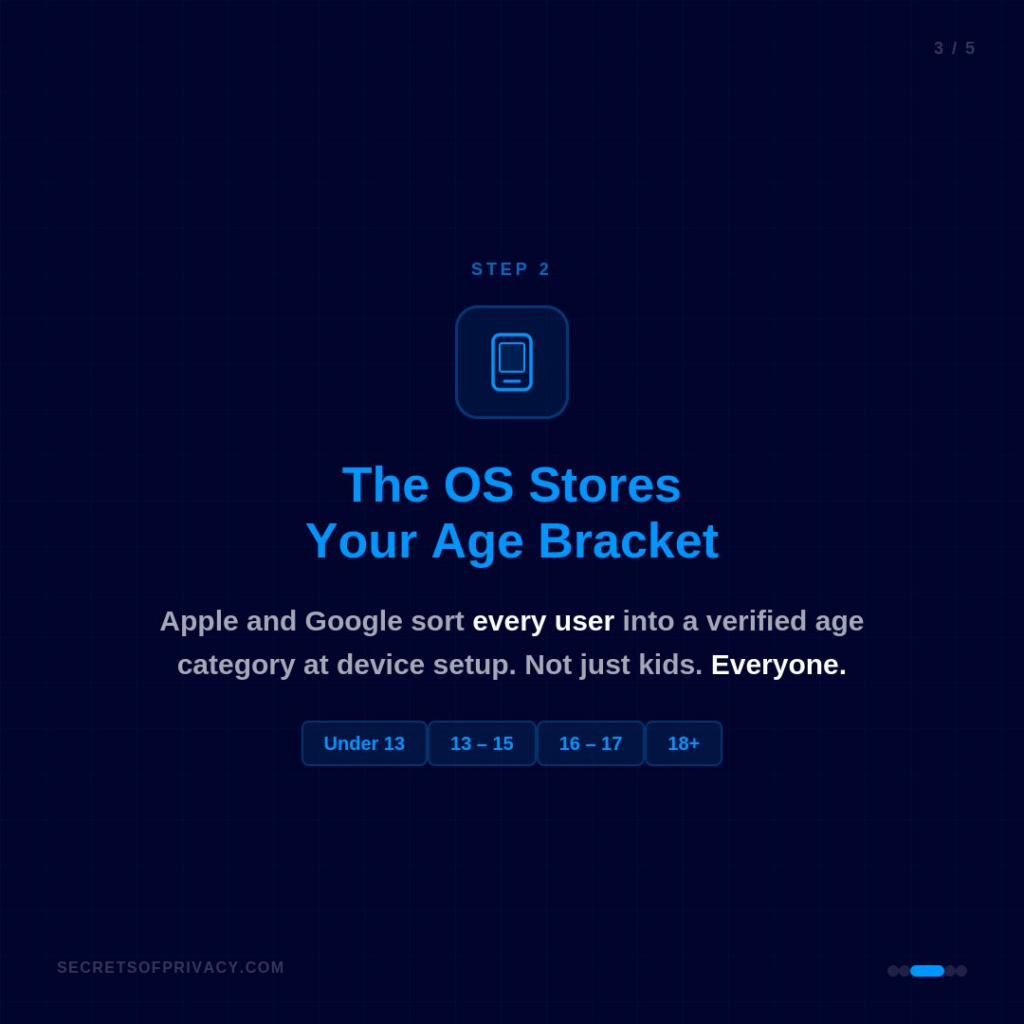
California’s AB 1043 (effective Jan 2027) requires operating systems to sort every user into an age bracket at setup and expose that data to any app via real-time API. Colorado’s SB26-051 does the same.
Right now Meta relies on self-reported birthdates for age data. Their own internal documents showed millions of underage users slipping through.
An OS-verified age signal, potentially backed by government ID or biometrics, gives Meta a high-confidence demographic data point for every user, on every device, delivered via API, at zero implementation cost to Meta.
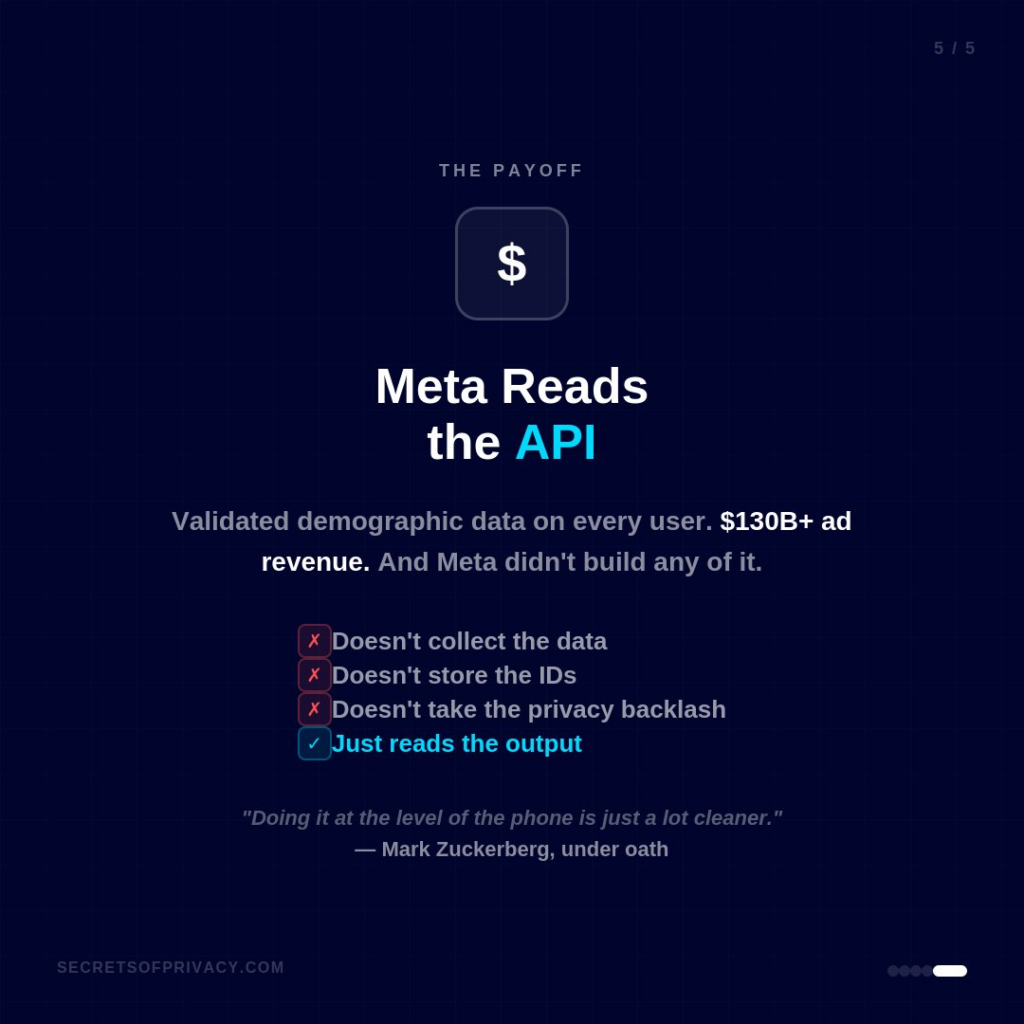
They don’t build the system. They don’t store the IDs. They don’t take the PR hit. They just read the signal and feed it into the ad targeting machine that generates $130B+ in annual revenue.
Meta gets identity infrastructure without the surveillance optics.
The IAPP noted that OS-level verification forces all users to unmask. Which overrides the possibility of anonymous interaction with the device itself. Every app that queries that API benefits.
So when Zuckerberg says age verification at the phone level is “just a lot cleaner,” he’s right. It’s very clean.
For him.

@frontier236:
This is too much, even for the people of California! The people need to stand up, fight, take back what is meant to be theirs: privacy!
Parents should teach their children about online safety and etiquette and not let the law dictate on what should be done.
@secretsofprivac:
It does feel like there’s broad pushback on the law. Contacting your reps is critical.
@HackmanEdw59423:
Yes I know and last week I just called my representatives to get California’s Age Bill removed because I don’t want to deal with this censorship either anyways.
@secretsofprivac:
that’s an important step – call your reps and let them know you want them to repeal the law.
@HackmanEdw59423:
And they can also write letters to them if they don’t feel like calling them anyways.
@FairDataSociety:
ZK age proofs can verify age without revealing identity. Zuckerberg knows that. It’s why the push is for OS-level IDs, not zero-knowledge.
@secretsofprivac:
great point. there is tech that could do ID verification in more private and secure manner, but that’s not being pushed. Must be a reason.
@oscpacey:
If a gov was at all interested in privacy while also legislating for an age-gate on services, they would offer gov ID systems compatible with Zero Knowledge proof systems. They have not done this. They want extreme disclosure. x.com/mullvadnet/sta…
@M1towoxie:
liability offloading dressed up as child safety is smart
@secretsofprivac:
Brilliant for meta.
@DJSNWCRSH:
He wants to end privacy but also stifle a cripple his competition, all big tech wants to capture or destroy open source. Its very obvious.
@secretsofprivac:
Yeah, it’s a multi pronged strategy for sure
@GreenEyesinTN:
Add in, every citizen is now liable for data breaches. I predict identity insurance being required and expensive. Just like car insurance and health insurance. Generation X will be fine offline. Feel sorry for those who have a lot to lose though. None of this is necessary either.
@alexzeig:
This is the deflection play. OS-level verification isn’t inherently wrong, but Zuckerberg isn’t pushing it because he believes in child safety.
He’s pushing it because it shifts liability and implementation cost to someone else. The platforms that caused the harm should bear the responsibility for fixing it.
@ftychus:
So they want the juicy data. Without investing in building, maintaining and securing the platform and also avoid any liability or scandals. F off zuck you ain’t getting shit from me ill tell you that much
@mrnextmusic:
zuck just wants as much data about us as fucking possible
@helen:
i rarely publish anything so i’m really excited about this… here’s my first ever piece for WIRED.
i wrote about the (so far devastating) impact of AI on the gaming industry.
read: https://wired.com/story/gamers-a

Refer also to:
…
Four ways teens are getting around the restrictions
Australian teens quoted in local media have revealed four main workarounds:
False birthdates: Some created new accounts claiming to be older than 16.
Pre-ban accounts: Others kept profiles they opened before December that weren't caught during platform sweeps.
Family logins: Some under-16s log in via parents' or older siblings' accounts to stay in shared group chats.
VPNs: Virtual private networks mask a user's location and make platforms think they're accessing services from outside Australia. Because VPNs are legal, companies can't simply block them. Instead they hunt for suspicious patterns and remove accounts individually.
***
@parismarx.com:
We have two dominant visions for digital tech: one from major corporations that maximizes profit at any cost, and another based on cyberlibertarian ideals that assumes you must code to participate in society.
We need another: where the public sector builds and funds tech for the broad public good.