Chief in Alberta teams up with environmental groups to try and stop carbon capture project by Chris Stewart, Nov 18, 2025, APN News
“Even if we get input, we are just totally ignored,” says chief.
The Chief of Cold Lake First Nations in northern Alberta is teaming up with a number of environmental groups to try and stop a tarsands project called the t.
That project would capture carbon dioxide from multiple tarsands sites and store the gas underground hundreds of kilometres away.
The tarsands produced the highest levels of Carbon dioxide, or CO2, in Canada. Carbon dioxide is one of the leading causes of greenhouse gas emissions that are causing the climate crisis.
“They talk about reconciliation but all this stuff happens,” said Chief Kelsey Jacko. “Bills passes without our consent or even our knowledge about it.
“Even if we get input, we are just totally ignored.”
One of the organizations Jacko is teaming up with is the Keepers of the Water, a non-profit environmental group.
The Pathways Alliance CCUS Project is a collaboration of five of the largest oil companies. The $16 billion project aims to build a 400 kilometre pipeline from Fort McMurray to areas around Cold Lake.
The pipeline would contain trapped carbon dioxide, transfer and store it underground.
The federal budget announced Nov. 4, allows for a 60 per cent tax cred for carbon capture investments. Even though our gov’ts, provincial and federal, know damn well that Carbon Capture is a con by polluters to steal money from the public and to keep polluting.
“Yes, there is a problem,” says Jesse Cardinal, executive director of Keepers of the Water. “Is the solution to use massive amounts of water, and pipe it down and store it underground in the Cold Lake, Elk Point, and Saint Paul area? NO. Because there are a lot of people in that region that have water wells.”
“They have ground water wells. So you cannot be mixing toxic liquid waste into underground reservoirs.”
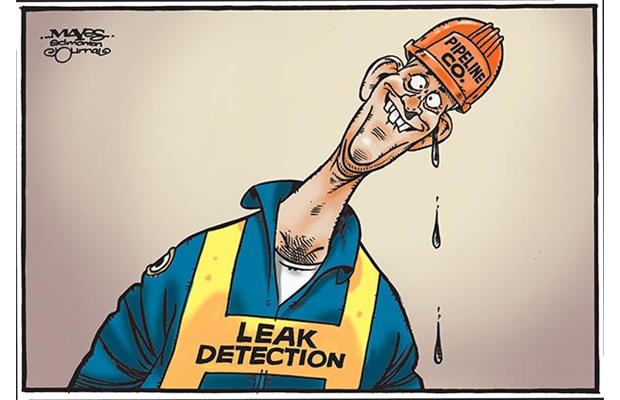
Mark Dorin, with the Coalition for Responsible Energy, has worked in the fossil fuel industry for decades. He says a leak in the pipeline is only a matter of time.
“It’s troubling to say the least, that all federal and provincial political parties support CCUS [the alliance project]. I question who their technical advisors are,” he says.
“I question the soundness of their decisions. And I know that the oil industry spends some $50 million heavily lobbying governments of all levels for subsidy of their industry with essentially no counter-lobbyists at all.”
APTN News requested an interview with the Pathways Alliance. A statement was received instead.
According to president Kendall Dilling, carbon capture and storage is a “provenfailedtechnology and used to great failures and massive costs around the world, including failinghere in Canada.”
“According to the Global CCS Institute’s 2025 report, there are 77 carbon capture and storage projects in operation, 47 under construction, 313 in early development, and 297 in advanced development.”
The office of Tim Hodson, federal minister of Energy and Natural Resources, tells APTN in a statement that the new federal government’s approach to building major projects is grounded in partnership with Indigenous rightsholders.
“We will always work with impacted Indigenous Peoples to ensure their concerns are heard and addressed in a meaningful way.”
And the Alberta office of the Minister of the Environment and Protected areas, Rebecca Schulz, also told APTN in a statement that groups like “Keepers of the Water” are trying to shut down Canada’s energy sectorMs. Anti Environment Minister Schulz is a disgusting liar and protector of polluters. Shutting down a failed tech will not shut down anything but that bad tech. FFS
“Claims that the Pathways project—or any other CCUS initiative—will lead to water shortages or create dangerous environmental risks are scientifically wrong. No water will be in this pipeline which will move CO2 as a compressed gas.”

Refer also to:
Pfffft Goes Promise of Pumping C02 Underground by Andrew Nikiforuk, January 12, 2011, The Tyee.ca
At the time EnCana Corporation (now Cenovus Energy) had started to flood the aging crude field with gallons of salt water and tonnes of CO2 piped from a North Dakota coal gasification plant nearly 320 miles away. … Around the same time Cameron and Jane Kerr, who own nine quarters of land in the midst of the project, started to notice some leaks.
For the record, the couple have 16 abandoned, producing or injecting wells within 1.6 kilometres of their land. Scientists have long noted that nearly 1,000 production and injection well sites on top of the project could act like wicks and draw up CO2 into the atmosphere. In 2003 the Kerrs dug a gravel pit to service EnCana’s oil roads. After the pit promptly filled with water, the Kerrs observed strange doings including foaming, discolouration and hissing bubbles. They also discovered the carcasses of dead ducks, a rabbit and a goat by the pit. When several gaseous explosions rocked the pond in 2007, the couple moved to Regina. “We have a problem and no [one] wants to properly investigate it,” Jane Kerr told Canadian Business at the time.
Although the Saskatchewan government promised to do a year-long study on the farm’s air, water and soil, the Kerrs say it never happened. What they got instead were a few ad hoc day-long tests and nothing more. … Unlike so-called government and industry experts intent on declaring the safety of carbon cemeteries before the evidence is in, Lafleur found lots of CO2. Using tried and true carbon sensors designed to detect oil deposits, Lafleur discovered dangerously high concentrations of the gas on the Kerr’s property. … In one location alone Lafleur detected concentrations as high as 110,607 parts per million (ppm), twice the amount needed to asphyxiate a person. Near the Kerr’s home he also recorded concentrations of 17,000 ppm, a level “that far exceed the threshold level for health concerns.”
As a consequence “CO2 could enter the home in dangerous concentrations through the crawl space due to negative pressures caused by a natural gas heating furnace.” Given that Cenovus’s closest injection well lies a mile away from the Kerr home, Lafleur concluded that the CO2 was probably seeping through open fractures and faults that intersect the Weyburn field. In other words, there were cracks in the cemetery. In addition a Saskatchewan lab confirmed that the CO2 found at Kerr’s place clearly originated from “the CO2 injected into the Weyburn reservoir.”
When the Kerrs and Ecojustice presented this information to the government and Cenovus nearly four months ago, they got a lot of silence.
A Case History of Tracking Water Movement Through Fracture Systems in the Barnett by P. Handren, March 2011, Shale EPA Workshop
“As well density increases it becomes increasingly probable that wells will communicate either through previously created fractures or through adjacent wellbores and then into previously created fractures.”
Scientific American: Can Fracking and Carbon Sequestration Coexist?
CO2 in Stream, Dead Ducks Prompt Wyo. DEQ Citation
2023: Scientists’ Warning: The 2023 state of the climate report: Entering uncharted territory. Welcome to hell by humanity.
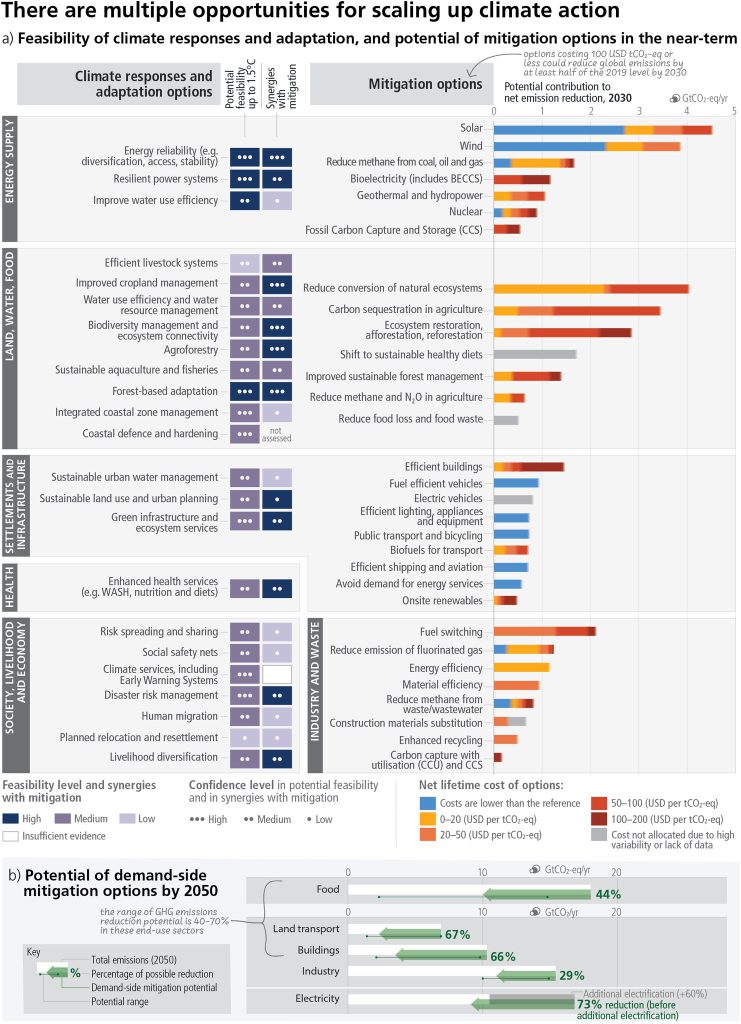
Check out Carbon Capture at the very bottom of this list of mitigations by the IPCC:
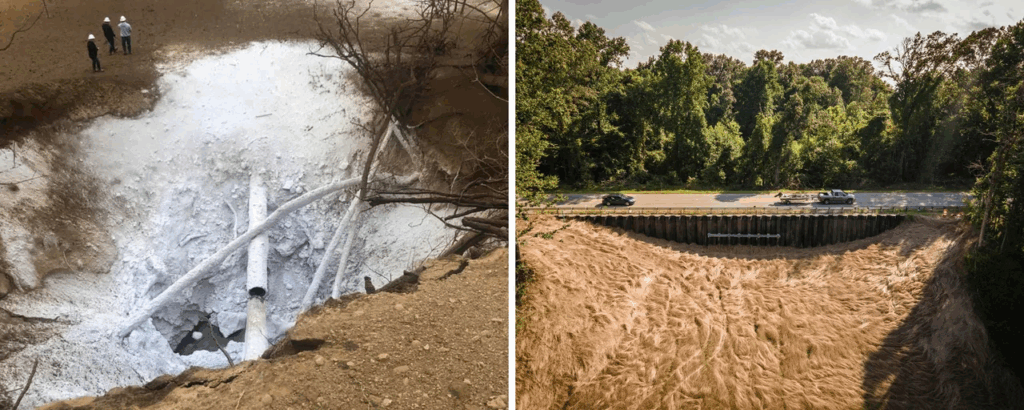
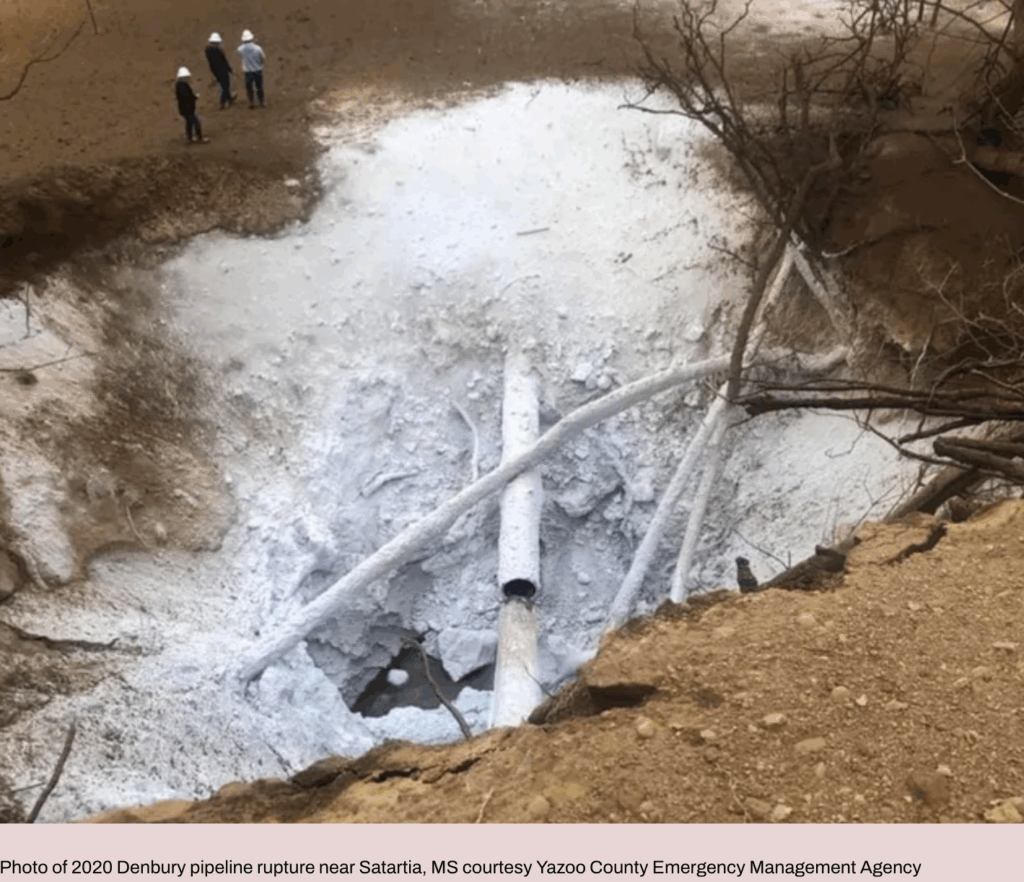
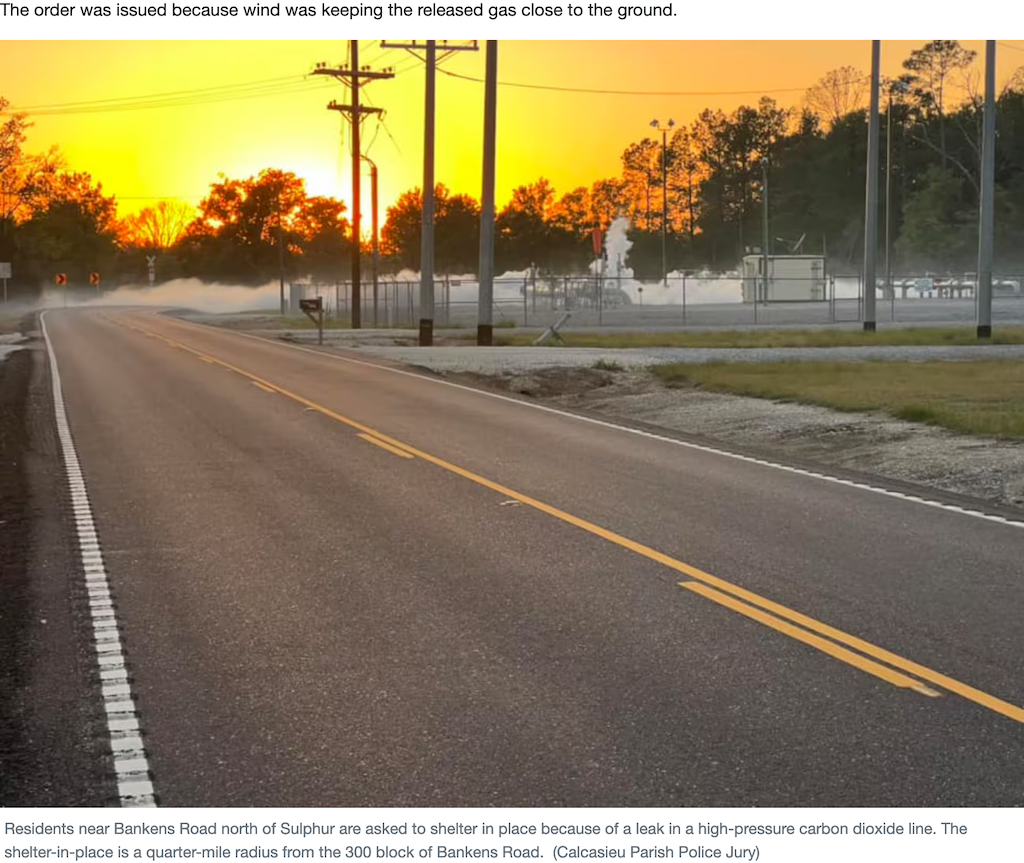
2021 Many cross references in this post: Satartia, Mississippi gassed by Denbury Inc., nearly killing dozens when CO2 P/L (contaminated with H2S) ruptured. Foreshadowing Canada’s Carbon Capture & Storage (that produces more pollution under guise of reducing it)? Deaths already reported in SK at Encana/Cenovus/Ovintiv’s CO2 injected oil recovery experiment.
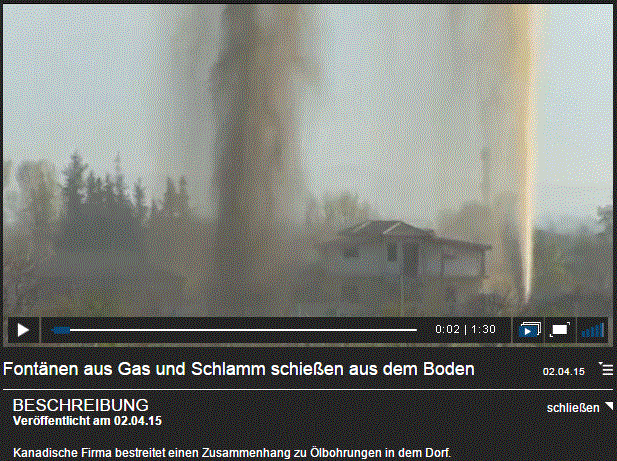
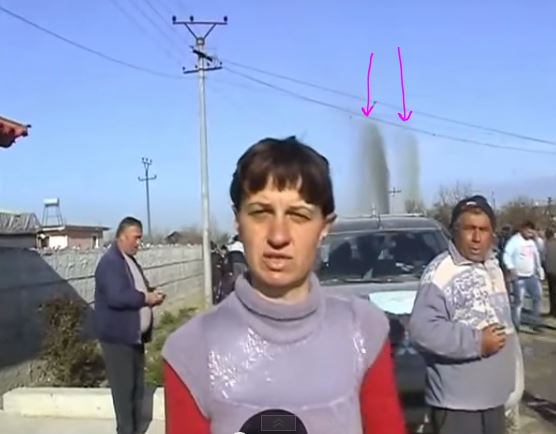
2012: Meanwhile in Alberta, ERCB is now AER:
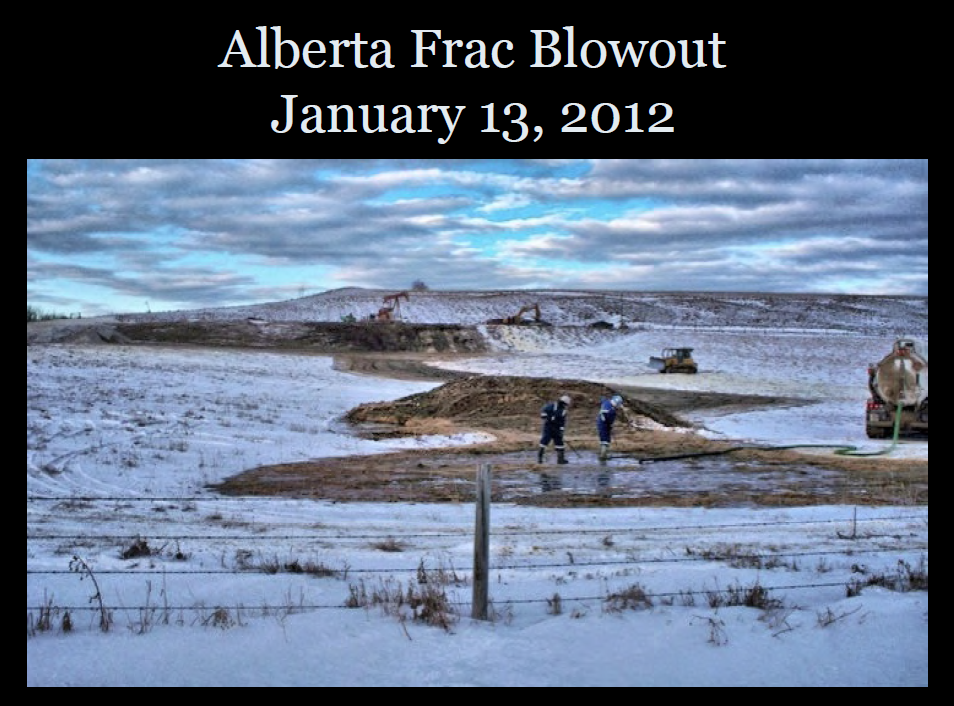
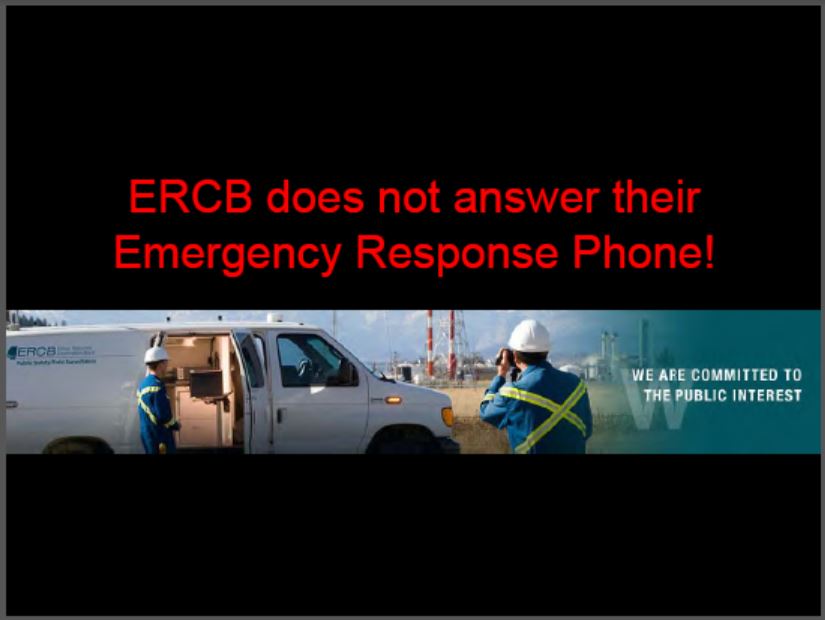
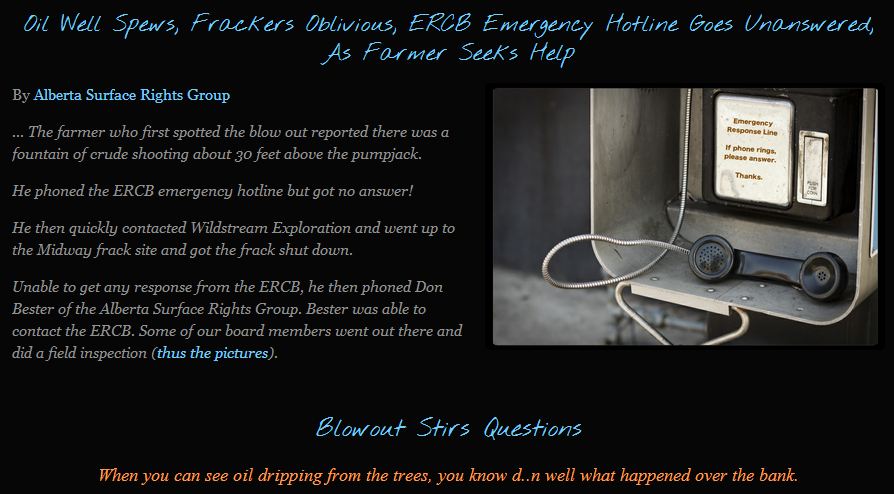
If AER doesn’t respond to a frac out as bad as the toxic frac blowout at Innisfail, I bet they’ll also not answer their emergency response phone if a CO2 pipeline fails.
Instead, they get Take Back Alberta’s David Parker to chant UCP’s Evangelical Extremist Fascist Christian lie as you and your loved ones die:
“CO2 is not a pollutant! It’s a foundational nutrient for all life on earth.”
Currently publicly available here: https://ags.aer.ca/publication/spe-092.
In case AER removes the report from public access (as occurs too often after I go public with damning data/reports/papers), I uploaded it to my website.
From Page 88:
Figure 59 shows the extent of the Acheson original Blairmore T and subsequent St. Albert-Big Lake Ostracod A pools, and of the Strathfield (undefined) gas reservoir in the context of lithofacies changes in the Lower Mannville Basal Quartz and Ellerslie formations. When approval was granted for acid gas injection at Acheson, the regulatory agency required the operator to file annually with EUB and each other operator in the Acheson Blairmore T and St. Albert-Big Lake Ostracod A pools progress reports that “shall include the impact of acid gas injection on the performance of offsetting producing wells”. In March 2004 the operator at Acheson reported that CO2 was detected in 2003 in well 10-22-53-26W4 in the St. Albert-Big Lake Ostracod A pool, located at 3,625 m north from the acid-gas injection well. No H2S has been detected in the produced gas. Since at Acheson the average composition of the acid gas is 87% CO2 and 11% H2S (Table 14), with H2S being denser and more viscous than CO2, it is expected that CO2 would show first at a producing well. In addition, diagenetic processes within the reservoir could have reduced the H2S concentration in the injected acid gas as a result of pyrite precipitation, if an iron source was available. The issue was brought to EUB’s attention and was heading to a hearing, but the operator at Acheson has indicated to the regulatory agency that it has initiated an Appropriate Dispute Resolution process  Anyone participating in AER’s ADR must sign a gag order as the first part of the regulator’s super secret evil “resolution” process with the operator of the offset producing well to address the issue of CO2 breakthrough, and that this situation “will be addressed pursuant to the terms of the Mediated Settlement Agreement”.
This case shows that, after 13 years of injection, CO2 has migrated northward a distance of [nearly 4 km] mostly under the combined drive of injection and production. The drive into the St. Albert-Big Lake Ostracod A gas pool has increased lately with the large spike in gas production from this pool (Figure 57b). There are five producing wells much closer to the acid-gas injection well (Figure 59) that did not report CO2 breakthrough, but these wells are owned by the same operator that operated until recently the Acheson acid-gas injection site. If acid gas broke through at any of these wells, it is most likely that the operator just stripped the acid gas from the sour reservoir gas and re-injected it, as the produced gas in this area is sour to begin with. Understanding the migration path and fate of the injected acid gas at Acheson requires a separate study that is beyond the scope of this report.
Below from the Abstract:
Lateral migration within the gas reservoir has been recorded in 2003 at Acheson, where, after 13 years of injection, CO2 has been detected at an offset producing well at 3,625 m distance in the same gas pool. However, migration within the same unit, particularly in a gas reservoir, is expected and its occurrence should not come as a surprise. …
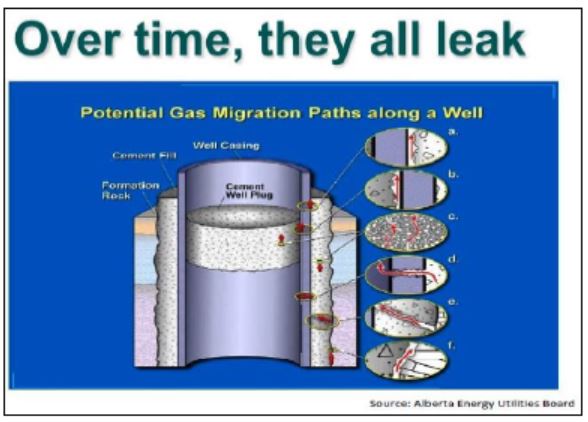
….the possibility for upward leakage of acid gas exists along wells that were improperly completed and/or abandoned, or along wells whose cement and/or tubing have degraded or may degrade in the future as a result of chemical reactions with formation brine and/or acid gas. A review of the status and age of wells that penetrate the respective injection unit at each site shows that most wells were drilled in the 1950s and 1960s, and that the majority of wells are abandoned. …
2006: The Role of the Upper Geosphere in Mitigating CO2 Surface Releases in Wellbore Leakage Scenarios
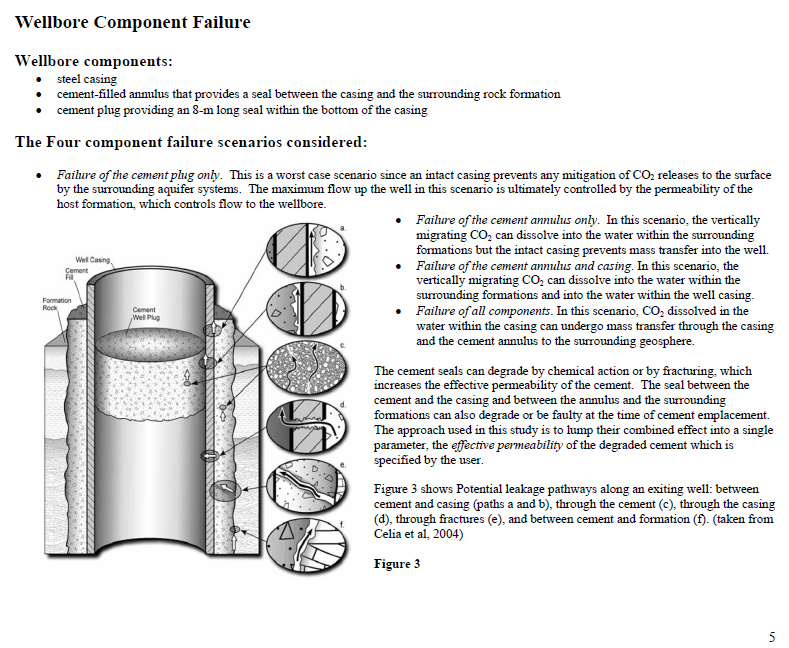
The cement seals can degrade by chemical action or by fracturing, which increases the effective permeability of the cement. The seal between the cement and the casing and between the annulus and the surrounding formations can also degrade or be faulty at the time of cement emplacement.