
@writerartisteh.bsky.social:
Carney = Trump = Carney = Trump. More for the rich, squat for the poor.
RussDiabo:
NDP says it will vote with government on first budget confidence vote
@PeterMcFar:
Why don’t they all just cross the floor and join the Liberals? Completely useless party. Worse than useless. If they disappeared, we might have a chance to build a real progressive party.
@DonDavies:
CORRECTION: the NDP has NOT decided to support the Liberals’ budget. We are voting NO today on a Conservative amendment that is totally unacceptable, calling for massive public service cuts, more pipelines & austerity.
@atomicker.bsky.social:
Alberta NDP MP Heather McPherson:
“I think this is a terrible budget (…) The things that we see in this budget are supports for big corporations and there is very little for people.”
”She added that she does not see a path in which she would be willing to abstain.”
Mark Carney’s budget is blind to the real causes of Canada’s problems by Emmett Macfarlane, Nov. 7, 2025, Toronto Star
 Two old Nazi white Thatcher Con (not Liberal) guys destroying ordinary Canadian and Indigenous lives to serve Adolf Kid-Raping Orange and the rich
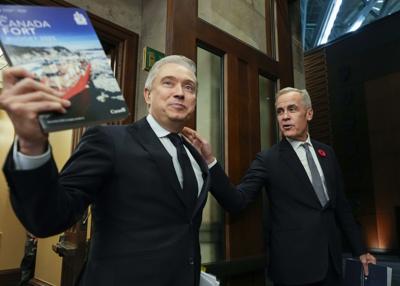
Emmett Macfarlane is a professor of political science at the University of Waterloo and co-author of the 2023 book Legislating Under the Charter: Parliament, Executive Power and Rights.
On November 4, François-Philippe Champagne described the 2025 federal budget as “generational.” In doing so, the finance minister offered a rare example of plausible political hype, without the usual hyperbole.
The challenges facing Canada are profound, and Prime Minister Mark Carney’s government has responded with a massive surge in military spending and a suite of significant investments in housing, infrastructure and AI — investments only partially offset by widespread cuts to other areas.
Yet Carney’s first budget is nowhere near as ambitious as it might seem. At a time when our country is faced with an authoritarian, anti-democratic United States intent on attacking our sovereignty, this budget is simply too modest, and in too many crucial ways.
The government has pulled back on major climate initiatives. On AI, it has leaned in to magical thinking, apparently having paid little attention to the technology’s obvious risks and limitations (or to the possibility that AI is another massive tech bubble). And while the budget pours money into infrastructure and emphasizes resource extraction, it fails to leverage our country’s most significant economic drivers: people, research and education.Carney is Thatcher’s evil brother. He fermented the Liberal Party into cowardly quisling cons, so of course people, research and education get zip
When it comes to long-term economic and social prosperity, many of our most pressing needs lie within overlapping spheres of federal and provincial jurisdiction. Federalism has always posed unique challenges for policymaking in Canada — but in these unprecedented times, this budget should have been a clarion call for action, not just at the federal level but also between Ottawa and the provinces.
What do we see instead? We see a budget that seeks to further limit the already drastically reduced number of international students in Canada, a policy tied to the belief that “temporary visitors” have played a major role in the housing crisis — as opposed to our generational failure to build enough housing. And while the Temporary Foreign Worker program was a clear area of abuse that needed to be addressed, international students were never a drain on Canada but a boon. With right-wing populist governments in wealthy countries foolishly seeking to turn their populations against immigration, Canada could have pressed its advantage and brought in talent from around the world.
Ironically, the budget does include major spending on exactly that: $1 billion to the tri-council research agencies, aimed at launching a research-chairs initiative to attract international talent. But in failing to account for the provincial role in university funding, it could end up doing more harm than good.Intentional?
Our provinces are actively squeezing post-secondary institutions into financial ruin. In Ontario, for example, Premier Doug Ford has driven fiscally healthy universities into budgetary crisis through lack of funding and a 10 per cent tuition cut and freeze. The federal slashing of student visas can only exacerbate this crisis.
Absent changes in operational funding or tuition policy, the new federal push to attract international researchers will put more pressure on a collapsing system. Chair programs can support the funding of international recruits only in the short term. In the long run, institutions will be burdened with the salary, benefits and pension costs of these recruits. That could mean further cuts to programs and student services.
It also means shutting out domestic talent amid university hiring freezes and downsizing.
Without stable financial support, our university sector — an economic driver orders of magnitude larger than any resource sector — is under existential threat.Gotta destroy it, to create obedient little stupid Nazis
A more ambitious approach, one accounting for both the challenges of federalism and the need for long-term thinking as it concerns human capital, would have seen Carney’s government induce the provinces to ensure stable post-secondary funding. Yet the obvious and clear lever for this receives zero mention in the budget: the Canada Social Transfer. The CST, along with the Canada Health Transfer, are the two main funds that shift money from the federal government to the provinces. But while the CHT has seen massive investment over the past two decades, the CST has seen much slower growth, with most new money going to early learning and child care.
Short-term thinking and wilful blindness to the real causes behind some of Canada’s problems will not help us through the current crisis. What we need is major new investment and a more proactive approach to post-secondary education — not only to save our universities but also to leverage them as a key pathway toward greater social and economic prosperity.
@greenpeaceca.bsky.social:
Did you know 80-90% of Canadians support a wealth tax on the rich, yet this budget just CUT taxes for middle- and upper-income earners.
40,000 job cuts, gutting Indigenous services, and cuts to environmental programs doesn’t really scream Canada strong…
@drted77.bsky.social:
Goddamnit.
Mark Carney was always a neoliberal plant. He was there to distract away from the maniac of Pierre Poilievre.
He got elected on false, progressive, promises; destroyed the biggest left leaning progressive party and is now a implementing austerity & measure that make Stephen Harper smile
@melody-fair.bsky.social:
He did the same in the UK with the right-wing crap we suffered here too.
@grumperator.bsky.social:
Well, NDP, get your act together, because you’re going to be the whole voice of the working class from now on. Do I regret my vote? I regret being forced into the position of making it.
Carney’s going to fuck the workers and the poor just as hard as Mulroney. Slowly moving back towards feudalism
@toasttea808.bsky.social:
This will pave the way for fascism to rise fast in Canada
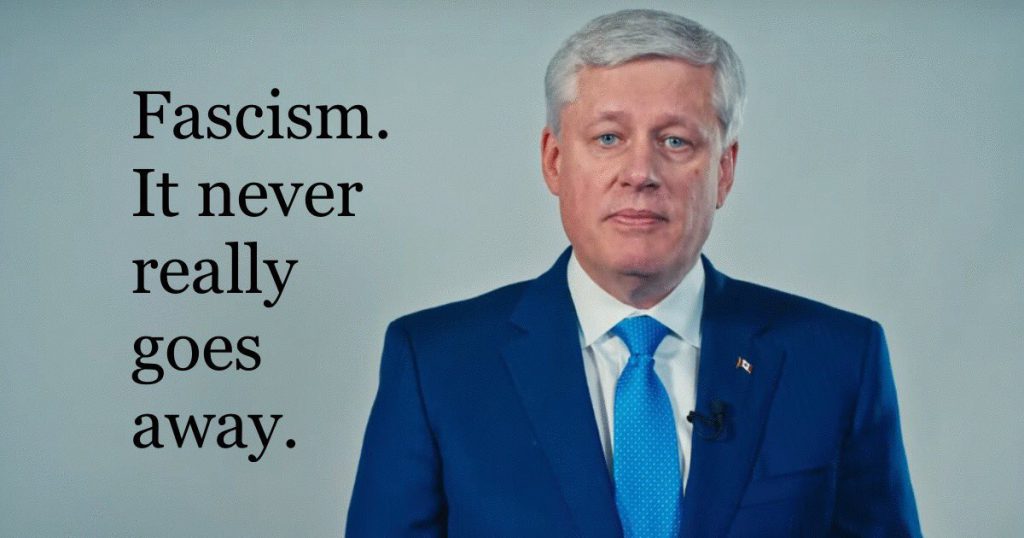
Ontario First Nations say it’s ‘now or never’ to stand up to resource extraction bills, Legal experts warn that laws are undemocratic and unconstitutional, while leaders across the north call for a united front to defend their lands and sovereignty by Jon Thompson, November 6 2025, Ricochet Media
Even as First Nations leaders across Ontario’s far north demand to meet with Canada and Ontario over new laws that enable lawless resource development in their territory, their Charter challenge is gathering steam, while other chiefs say the time to resist is “now or never.”
Nishnawbe Aski Nation chiefs in assembly unanimously passed a resolution in camera on Wednesday entitled, “Action Plan To Resist Priority Projects That Lack Free, Prior, and Informed Consent of NAN First Nations.” The content of that resolution is secret, but the preamble mentions both the federal Bill C-5 and Ontario’s Bill 5, which passed this summer.
The bills allow Cabinet to favour some industrial projects as being in the “national interest,” then designate land as “special economic zones,” where proponents become exempt from environmental and labour laws.
… “Let’s stand up now. This is about our rights,” said Attawapiskat First Nation Chief Sylvia Koostachin Metatawabin. “It doesn’t matter if you’re for development or against development. This is about who we are – our sovereignty. Our rights are on the line here. They’re proceeding without us, and it’s not right. They’re violating our jurisdiction. They’re violating the very essence of who we are. That’s what I’m saying with everything we’re doing. We have to fight the fight. It’s now or never.”
Eabametoong First Nation Chief Soloman Atlookan proposed declaring a stoppage on any development across the territory until Ontario accepts NAN’s terms.
“Can’t we do something more direct and more, I guess, as a group as to say no more of this? No more planning until such time as you sit down with us. What I’m saying is put a moratorium over the whole Treaty #9. I don’t know if it’s possible, but it could be if we were all together.”
“We heard Minister Rickford a few days ago at a committee hearing talk in a very condescending way with MPP Sol Mamakwa, which some of us can even describe as being racist – the supremacy attitude this government has when it comes to First Nations people.”
Mishkeegogamang First Nation Chief Merle Loon says the relationship between Ontario and First Nations has become so strained that even in meetings the province claims don’t count as consultation, his leadership holds to a strict script to defend itself from claims that the meetings may be legally-interpretable as consultation in the future.
“I said to the province, ‘At no time are we going to make a comment, ask any questions, or even entertain your questions. But we’ll listen. Once we complete that, you’ll listen to our statement and we’ll not accept any questions, nor entertain any of your comments. And we’ll keep it at that.’”
The resolution comes as First Nations who are asking Ontario’s courts to strike down Bill 5 as unconstitutional are attempting to bolster support.
In July, nine First Nations filed an application with the Superior Court of Justice, arguing Bill 5 violates their Charter rights to life, liberty, and security of the person.
Lawyer Kate Kempton from Woodward & Company LLP, who is representing those nine First Nations, told the chiefs that the bills are setting back decolonization and reconciliation efforts 40 years. While she believes the case can win, she believes First Nations will have no future recourse against the law if they fail to act now.
“This is the kind of power that dictators give themselves. I think people in Canada have just become so distracted by so much noise and information out there, because I don’t know why every Canadian isn’t jumping up and down, mortified by this,” Kempton said.
“It’s a move totally against democracy. But it’s absolutely a move against decolonization. You’ll be kept in the dark, your territories and things you’re trying to get your jurisdiction over will be subjected to unfettered, wild-west decision-making that will be very difficult to challenge in court because it’s made at the cabinet level.”
Aroland First Nation Chief Sonny Gagnon, whose community is among those nine, is leading an effort to double the number of First Nations signed on, by December 31. He said ideally, all NAN communities should show unity in the face
“You cannot fight a battle without having all 49 communities involved,” he said. “Bill 5 and C-5 are going to impact pretty-well all First Nations. I don’t see why we can’t fight this collectively. I didn’t hear any opposition to it. We’ll see in a couple of days who will be joining us.”
Jon Thompson is a Local Journalism Initiative reporter based in Thunder Bay. Contact him with tips and story ideas at email hidden; JavaScript is required.
@jeff.doctor:
“This is the kind of power that dictators give themselves. I think people in Canada have just become so distracted by so much noise and information out there, because I don’t know why every Canadian isn’t jumping up and down, mortified by this” – Lawyer Kate Kempton from Woodward & Company LLP
@emmettmacfarlane.com:
Abandoning our climate initiatives because of the US is putting the US ahead of our sovereignty and economy.
Carney’s budget eliminates the luxury tax on yachts.
In case you wanted a sense of priorities there.
@dylanmackayphd.bsky.social:
Private jets as well
@dianamould.bsky.social:
It’s the usual right wing budget. More tax breaks for corporations and fewer benefits for the working class. Sad. I was hoping for better from Carney. Also terrible for our poor earth.
@dchernushenko.bsky.social:
I’m at a loss for words. Well almost:
Pathetic, abysmal and suicidal come to mind.
@sashafury.blackskycomra.de:
Yesterday, Althia Raj and Chantal Hebert emphasized this is not a budget the Liberals planned on going to an election with. Hebert added that rather this seemed like a budget to attract Conservative MPs, implying that the budget was aimed at creating a majority govt, and I think that rings true.
@sashafury.blackskycomra.de:
Hard to say if the Liberals are trying to force an election with this budget.
OOH, the budget is brutal & unsupportable—a minority govt should understand that it requires support of others in Parliament would push it.
OTOH Carney is actually that heavy handed & hostile to difference in the House.
@climatekeith.bsky.social:
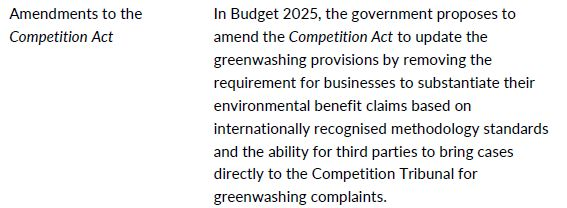
Carney is Making Greenwash Great Again. Serious question for the legal eagles: what (if anything?) is left of the anti-greenwashing law after they take this away? (text is from Annex 5 of yesterday’s budget document).
@tryangregory.bsky.social:
It’s very late, but not too late, for Carney’s supporters to recognize who [he] actually is and what it means to continue to defend and rationalize what he is doing.
@journodale.bsky.social:
Weakening the greenwashing rules is a direct gift to Pathways, who seem to have entranced Carney. He’s also giving them a major tax credit (but rest assured they still want more federal money to operate).
NAZI CARNEY CREATING DOGE CANADA, all the better to steal money from Canadians to give to the Amerikkkan rich:
‘Concerning’ cuts to justice system in federal budget, Financial roadmap includes billions in spending and plenty of trimming, including a 15 per cent cut to the Department of Justice to help make ends meet and no new judges by Dale Smith 5 Nov. 2025
The federal budget includes considerable cuts to the justice system. While the Canadian Bar Association is hoping to learn more about what they mean in concrete terms, at first glance, they’re “concerning.”
The budget notably proposes to cut more than $20 million over three years from support services for administrative tribunals, which Canadians rely on as a major part of our judicial process.
One of them, the Social Security Tribunal, deals with disputes related to programs such as Old Age Security and employment insurance. With fewer resources for support services, these tribunals may be less able to handle cases efficiently.
“As we’ve been saying for a long time, a well-resourced justice system is a fundamental element of a free, secure, and prosperous society,” the CBA said in a statement.
If the government plans to “spend less” and “invest more,” the justice system should definitely be on the investment side of the ledger, it added.
This fall, the CBA sounded the alarm that Canada’s creaking justice system is being starved of much-needed funds to fulfill its constitutional mandate.
In a submission to Finance Canada, the association said the federal courts are facing a structural funding gap amid a surge in immigration cases, cybersecurity risks, and new translation requirements. This has led to growing delays and could undermine the courts’ independence and effectiveness.
“When the justice system functions well, our economy can flourish,” the CBA said.
“When justice system institutions are overburdened, delays multiply, public confidence suffers, and it becomes much harder to meet our economic potential.”
The federal budget, tabled on Tuesday, includes billions in spending that could push the deficit to $78.3 billion, the largest deficit outside of a pandemic year.
There’s also plenty of trimming, including a 15 per cent cut to the Department of Justice (DOJ) over three years to help make ends meet.
The financial knife also fell on the Administrative Tribunals Support Services, the Canadian Human Rights Commission, the Law Commission of Canada, and the Office of the Director of Public Prosecutions.Nazis, like Herrs Carney and Harper, hate the rule of law and hate ordinary citizens having any rights. Best way to rule over the law and our rights, is to weaken the judicial industry financially.
The budget proposes a total of $57.8 million in cuts across the DOJ and the four other agencies. Kill the funding for AI, it’s stolen stupid shit we do not need or want, and it’s terribly water and energy devouring, polluting, ugly and noisy, and causes severe harm to those that use it.
In a statement, Law Commission President Shauna Van Praagh said they’re mindful of the fiscal circumstances and challenges facing the country.
“We look forward to pursuing our important work with energy, ambition, and resourcefulness, achieving high value for low cost and making necessary adjustments to the scope and scale of our programs in light of our revised budget.”
To meet the reduction targets, the DOJ plans to introduce process efficiencies and standardization, which includes amalgamating business units and leveraging AI.

The investments in AI are intended to include “advanced analytics and automation tools to streamline routine tasks, enhance decision-making and free employees to focus on higher-value strategic work.”Bad move
The department will also review the limits to the access to information procedure in the income tax and GST appeals at the Tax Court of Canada.
“Increasing these limits, which have not been updated since 2013, will promote cost-effective dispute resolutionThatcher Carney quashing yet more of our rights; access to information in Canada is already near dead, and lower litigation costsbullshit! It’ll increase costsfor Canadians and Canadian businesses and the federal government,” the budget notes.

Any such changes would require legislative amendments.
The Canadian Human Rights Commission is planning an organizational change to streamline its structure, which will consolidate the roles of chief and deputy chief commissioner. This will also require legislative amendments.
While no new judicial positions were announced, plans are in place to amend the Judges Act, which will result in the transfer of 10 judicial positions in Ontario. Eight will be transferred from the Ontario Superior Court to the Unified Family Courts (UFC), and two will move to the Ontario Court of Appeal.
“This measure is intended to directly benefit people and families who are involved with the family justice system, particularly women, since UFCs help improve access to justice in family matters, including conflict involving gender-based violence,” the budget states. Carney’s made it clear he’s a misogynist, as is his religion, I doubt women will get much help from his cruel Anti-Canadian budget.
“Low- or middle-income families who are unrepresented and family members who face language and cultural barriers would also benefit from UFCs, as they help increase accessibility to justice resources for these groups.”
During the opening of the courts in September, Ontario Superior Court Chief Justice Geoffrey Morawetz appealed to Ottawa to appoint more judges, as he said there are not enough to meet the system’s demands, given high caseloads and an increased number of self-represented litigants.
In a rare joint appeal, Court of Appeal for Ontario Chief Justice Michael Tulloch said Ontario’s judges are under-resourced compared to other provinces.
Ahead of tabling the budget, the government signalled it would not include increased judges’ salaries, despite calls by the Judicial Compensation and Benefits Commission for a seven per cent bump to ensure the bench can continue to attract high-quality candidates from high-powered law firms.Those are the last place judges ought to come from. Caveman Canada!
The government cited a deterioration in the country’s fiscal outlook and the fact that judges already have robust pensions.
“This decision reflects today’s economic reality and current overall financial conditions,” Lola Dandybaeva, spokeswoman for Justice Minister Sean Fraser, told reporters.
Trevor Farrow, dean of Osgoode Hall Law School at York University, hopes the issue of judicial compensation doesn’t become politicized, as that could impact the independence of the bench.We already don’t have judicial independence!
He says justice systems tend to be underserved by governments of all stripes, provincially and federally, despite the importance they play in society.
“It’s a long-standing systemic problem that we as Canadians under-value and therefore under-fund comparatively our justice system,” Farrow says. It’s simple: authoritarian politicos like Carney and Trump, want their judicial industry to be weak, to be better able to control them and direct rulings their way.
“The justice system creates a massive value proposition for society that we have taken for granted for too long, and I worry that in the give-and-take of all governments, we may be continuing to underfund our justice services.”
Ultimately, under-funding tends to cost the system overall. And while AI can have some significant benefits on routine tasks, such as addressing information flow issues, he hopes that it won’t lead to the elimination of a number of people across the system.
“We know that court administration and other services are already stretched,” Farrow says.
“AI is not necessarily going to fill those shoes—certainly not immediately.”
@bhaggart.bsky.social:
This feels like a fundamental realignment in Canadian politics.
The Conservatives are completing their regression, begun in the 2015 “barbaric cultural practices” election, to their Reform Party roots.
The Liberals now resemble not the Mulroney PCs but the Harper Conservatives.
And the NDP is MIA.
…
No idea how this plays out, but the reality is that if parties stand for anything more than empty identities, a lot of Canadians are now politically homeless.
…
As a Canadian researcher/academic, it’s beyond discouraging that the federal gov’t is rolling out the welcome mat for foreign assistant professors, doctoral students and postdocs, while cutting domestic research funding and doing nothing to support those of us who are already here, doing the work.
Why not just cut out the intermediary and donate that $1.7 billion to Oxford?
The contempt Mark Carney’s government is showing for Canadians and the Canadian education system with this announcement is staggering.
I’ve worked as an academic in Germany, Mexico and Australia. I’ve lectured throughout Europe. Canada’s university system ranks alongside the best in the world. It’s one thing to poach academics from the US. It’s another to do so in this most colonial, self-hating of ways.
Announcements like this make me think that Mark Carney really wanted to be Prime Minister of the UK, and Canada was a consolation prize.
@tryangregory.bsky.social:
As far as I can tell, Carney is “generously” “only” cutting research funding by 2%. The rest is Harper-ish plans for international recruitment (vs. funding those of us already here) and directing research funding toward industry needs (specifically, defence).
@chatbotte.bsky.social:
On the bright side, researchers may now find yachts more affordable
@lukelebrun.ca:
- Despite Pierre Poilievre’s partisan rhetoric, Conservative MPs feel ideologically at home in Mark Carney’s Liberal Party
- Despite the Liberal Party’s partisan rhetoric, Conservative MPs feel ideologically at home in Mark Carney’s Liberal Party
***
@tryangregory.bsky.social:
Lots of AI and weapons though!
@rjjago.bsky.social:
Looking at the budget, I can’t see anything that I’ve heard a Native leader highlight as a priority for them. This is like a post-Harper Tory budget plan, where Natives are only mentioned in the context of consultation for development.
And there’s the same freeze in Indigenous services. So a 10% cut once you factor in population growth.
… every year infrastructure spending for non-Native communities goes up, and at the same time spending for First Nations infrastructure goes down.
Pre-Trudeau, First Nations communities suffered under a 2% annual funding increase cap. That cap didn’t keep pace with population growth. Under Carney’s Liberals, it’s not just a 2% increase cap – it’s a ZERO percent cap, a freeze. Literally worse than Harper. www.cbc.ca/news/politic…
With the Major Projects Office wiping out environmental protections, with a spending freeze, correct me if I’m wrong, but this is what kicked off Idle-No-More, no?
This isn’t Trudeau light, it’s Harper plus.
Liberals pursue Conservative MPs after Chris d’Entremont joins Carney’s caucus, Party is now two seats away from a majority ahead of the budget voteDon’t be fooled, PeePee’s Party and Carney-Pee’s Party are the same fucking Harper Con Nazi party, which is why Danielle Smith loves Carney’s pro polluter, anti ordinary Canadian moves so much
@bhaggart.bsky.social:
Not sure what kind of plaudits Carney is expecting for bragging that asylum claims are down.
It’s grotesque. Ghoulish. Trumpian.
Some pages later (p. 96): “At the same time, Canada will continue its long tradition of welcoming those fleeing violence, persecution and displacement.”
But not too many, I guess.
@barrhavenist.bsky.social:
And not from certain places
@tryangregory.bsky.social:
This will surprise no one except Carney’s blinkered supporters.
@liamswiss.bsky.social:
Canada is retreating from its international assistance commitments in Budget 2025. Details are vague except for cutting $2.7 Billion in aid spending between 2026 and 2030.
A missed opportunity for Canada to redouble efforts in face of American abandonment of aid.Carney is pleasing his bosses, Trump and the billionaires.
budget.canada.ca/2025/report-…
@lucindacatchlove.bsky.social:
It’s all war and corporate interests, no peace and community building. It’s a neoliberal budget that’s paving the way for authoritarianism here too.
It also does nothing to protect our healthcare system.
It’s very worrying that he put his corrupt unqualified buddy in charge of the AI portfolio where lots of this money is going. That’s not real economic development, it’s feeding a fascist system and an economic bubble.
@AdameMedia:
NEW; Open AI seeks government backstop for new investments.
Basically the taxpayer takes their risk.
This is the socialism you should revolt against.

@deonandan.bsky.social:
Tech billionaires have no interest in democracy, rule of law, or protecting the lives, livelihoods, and wealth of the masses. They are driven by individual ego and the quest for increasing power. If you admire and support these fuck knobs, you are as much of the problem as they are

@deonandan.bsky.social:
Just had a horrible thought. What if Trump Co plans to move US debt into crypto? If denominated debt in crypto, that would be enormously destabilizing. But if they did it via tokenized treasuries on the blockchain? More reasonable. But both would tank the value of people’s savings.
@rockyuphill.bsky.social:
I’ve seen speculation about this on a few financial YT videos over the past month. You know that any decision implemented will optimize profit taking for the Trump family, and they don’t give a flying duck about people’s savings.
@deonandan.bsky.social:
Oh shit. If other people are thinking about this, its likelihood just increased.And I think Carney and his rich pals, with evil Amerikkkan AI plans on doing the same to Canadians’ savings.
@vortexegg.com:
AI is a tool for epistemicide
@jasonkoebler.bsky.social:
The long-running ideological war on libraries, education, and government workers is not separate from AI boosterism. It is the same ideological war on human knowledge and expertise. In some cases AI is being used to directly supercharge this effort:
@niemeyer04.bsky.social:
What a gorgeous business model! You steal every book, essay, film etc to train your AI and then you do everything to push the originals out of the market. But you’re to stupid to generate money with your AI.
@discordantmuse.bsky.social:
Increase our resource extraction, kill our emissions caps, close the doors to climate refugees. This government is an inhumane atrocity.
These Carney unwavering supporters can take their ‘Values’ and shove it. This government is an enemy of the planet and the people.
One of Trudeau’s most important climate policies is on the chopping block. Can Ottawa’s Plan B get buy-in? Budget 2025 signals there could be another way for Canada to hit emissions targets by Paula Duhatschek, Kyle Bakx, CBC News, Nov 05, 2025
Nazis Smith and Carney, both Harper cons: The vile smug look on Smith’s face, tells us all we need to know about her pal Not-a-Liberal Carney.

Four years after unveiling plans for a limit on all oil and natural gas industry emissions in Canada, the federal government is — in all likelihood — scrapping the cap.
The previous Liberal government said that its proposed oil and gas emissions cap, a centrepiece of its climate policy, was integral to this country hitting its climate targets.
But after years of arguments with industry and premiers over the policy, the latest federal budget says that, actually, Canada can get to net-zero by other means.
The country can instead “create the circumstances whereby the oil and gas emissions cap would no longer be required,” through a combination of effective carbon markets, oil and gas methane regulations and greater deployment of carbon capture and storage, Tuesday’s budget said.
That means the proposed emissions cap could die before it ever takes effect, a move celebrated by those in Western Canada who feared it was already killing investment and would limit the expansion of not only the oil industry, but the nascent liquified natural gas sector, too.
The pivot on the emissions cap also reinforces that Prime Minister Mark Carney is drawing a line in the sand between himself and his predecessor, Justin Trudeau, by putting more emphasis on economic growth and less on climate action — while still trying to achieve some sort of consensus around climate policy.
Policy hurt investment, industry says
The emissions cap was first announced by then-Prime Minister Trudeau four years ago at the UN climate summit in Glasgow, followed by the unveiling of key policy details at the summit in Dubai two years ago.
- This Saturday, Just Asking wants to know: What questions do you have about Mark Carney’s mandate so far? Fill out this form and send us your questions.
In Dubai, Steven Guilbeault, the environment minister at the time, said the cap was necessary because the oilpatch wasn’t moving fast enough to cut emissions. Of all the environmental policies unveiled by Trudeau, Guilbeault described the emissions cap as one of the most important.
But leaders in the Alberta oilpatch have said the policy unfairly targets the industry responsible for this country’s top export and a key economic driver for Canada as a whole.
“It does make people nervous around investing. It also didn’t help that it was proposed so you could never work out exactly what it would be,” said Tristan Goodman, CEO of the Explorers and Producers Association of Canada.
“I think the government has sort of said, ‘Look, we need some certain things done and that will get us to where we want to be without having an emissions cap.’ — that’s a positive step in the right direction.”
By indicating a willingness to scrap the cap, Carney is reinforcing that his top priority is the economy, said University of Calgary economist Trevor Tombe.
He’s also responding to changing priorities of Canadians.
During the 2021 federal election, climate change was listed as one of voters’ top priorities and all major parties had said they were committed to pursuing a net zero emissions target.
After years of rising inflation and amid a turbulent trade relationship with the U.S., data from political surveys suggest Canadians now see political relations and the economy as a greater priority.
In his first move as Prime Minister, Carney scrapped the consumer carbon tax, another central climate policy of Trudeau’s time in office.
But coming up with an alternative to these policies that will please groups with competing priorities will be a tough needle to thread, said Tombe.
Cautious optimism from environmental groups
The oil and gas industry’s Achilles heel has always been its emissions. The sector has made strides to be more efficient, but total emissions have continued to rise as production increases.
Still, in the first hours after the budget was released, there was a rare moment of tempered unity between industry and environmental groups that have long supported the proposed cap.
There’s more than one way to skin a cat, and a sector-specific emissions cap isn’t the only way to drive emissions down, said Chris Severson-Baker, executive director of the Pembina Institute, a Calgary-based environmental think-tank.
If Ottawa can indeed fix the industrial carbon pricing scheme — and get the provinces like Alberta on board — it could push industry to actually move forward with investment in emissions-reductions projects, he said.
Dale Beugin, vice-president of the Canadian Climate Institute, agreed.
“Industrial carbon pricing, when it’s working to its full potential, is the most powerful tool in the government’s toolkit,” said Beugin, who said he hopes to see the changes brought in quickly.
“Speed matters because in the absence of those changes, we have more uncertainty, and uncertainty scares away investment.”
What will Smith say?
One voice that was notably quiet following the release of the Liberal budget was Alberta Premier Danielle Smith. She’s typically one of the most vocal critics of the proposed oil and gas emissions cap.
In a statement, Smith said she’s reserving judgment for now as she works on a memorandum of understanding with the federal government to remove or carve out “bad laws chasing away private investment” in the energy sector, and to approve both a pipeline to the B.C. Coast and a major carbon capture and storage project near Cold Lake, Alta.
- Oilsands giants continue work on proposed $16.5B carbon capture project, despite lingering questions
“I expect the federal government to reach an agreement on this [memorandum] by Grey Cup so we can move on to the next step and begin attracting private capital back to Canada’s natural resource sector,” Smith said.
It’s hard to predict what the response will be from Smith and Carney when they emerge from those discussions, though in recent weeks both camps have signaled a greater willingness to work with one another.
At the end of the day, economist Tombe believes Carney’s top priority these days is to bolster the economy — and oil and gas is a significant money-maker.
It remains to be seen what each side will commit to in order to get there.
***
Cynic:
Do we want a strong Canada or not? Cuts in government spending weakens our country. Government ‘deficit’ equals more money in the private sector, ie in people’s pockets. It fosters economic growth. The Bank of Canada provides debt-free money for government spending, no taxes needed. carney knows this, but he’s a puppet of the elite and maintains the status quo. We need an end to this financial despotism. Let’s make Canada strong by properly funding an end to food banks, poverty, and homelessness.
Richard Cranium:
Hooray Finally, Trimming the fat is a good thing. If the private sector, you know the ones that actually provide income, can reduce their workforce to make a more streamlined company then why not streamline government.
Cynic to Richard Cranium:
Don’t compare government to a business or a household. Government is far more powerful and capable. The problem isn’t ‘fat’, it’s predatory capitalism instead of democracy.
Sean Burton:
The government is bloated and costly is the mantra of privatization.
The only result of cutting essential services is the creation of a market for private profit. Usually resulting in necessary services costing even more, then subsidized by tax dollars that could have been used to provide the service cheaper in the first place.
Increasing corp welfare, subsidizing fossil fuel profits while striking down the law requiring them to tell the truth is not leadership I am willing to support.. I am tempted to start a petition insisting the libs bounce this Harper trained petro cartel puppet.
madtaxpayer:
This budget does nothing except to throw so many tens of thousands of nessecary public service workers into the grinder. Pay billions in compensation instead of keeping people to service the growing poulation. Just brilliant. This can only seriously harm the public.That’s what Nazis, intentionally It’s a trickle down effect and it’s the part that the Carney politicians don’t talk about. All the hurt is out of sight and out of mind to them. The build housing thing is just the same old slogans and narrative politicians use over and over as a crutch for a little exta support, except that its all bull, and smoke and mirrors. The money saved if any in the end will disappear into the ether faster than a lightening flash. We must have caught on to it by now.
Carney has now proven as I always personally believed that he is not only a puppet of the elites and billionaire boys club, he is a product of that clique. The wall of protection sure went up for them in this budget, and the wall of protection for the regular public majority came down. This budget also absolutely shows he’s caving to Trumps demands for military expenditure all in one shot. He caved on the Ontario anti tarriff ads for Trumps benefit and now this over the top military expenditure because I’m scared of Trump budget. This is a nowhere Carneys budget that punishes Canadians across the board. Carney hates usNo asking for any financial aid or commitments from the billionaires and insanely rich families of the elite class. They only want to amass more wealth, because many just don’t know any better.
I kind of do like NDP Interim leader Don Davies and do give credit for the NDP being the lead on cheaper day care and the public dental plan despite the start up issues which is always expected in new programs of those proportions. But that could end up being up for grabs. I just wished they would hopefully not support this disgraceful budget that will be so hurtful to regular Canadians overall. I think,if the government falls, they can show themselves as a stronger party without giving any crutch of support to Carney or anyone else for that matter and not to need to hang onto anyone’s coat tails. I think they could bring themselves back much quicker and much stronger with the right stuff. We do need the extra balances of power.Quisling racist misogynist Carney needs to be punted out on his ass, permanently and pronto! He’s an evil servant of Amerikkka, Israel, and the rich.
This is not a for regular Canadians budget. This is just a cover banker Carneys big billionaire boys club and appeasement for Trump. Doesn’t Carney know that Trump doesn’t care what you do for him. He’s a nut that will go off and snap over anything even when things make zero sense at all.
Martin H.:
So with all those cuts, for example when you try to phone the Canada Revenue Agency, who is understaffed already, will you have to wait for days, instead of hours to talk to a person?
Or better yet, you may be talking to AI and it will give you bs?
And what about other federal services, some of them also understaffed, will wait times double , triple etc?
Or can cut be made to a big item, all those continues subsides to fossil fuels, and the related companies who have been posting record profits!
Get Ready for Harper-Style Public Service Cuts, Says Analyst, Budget 2025 proposes cutting 40,000 government jobs by Isaac Phan Nay, Nov 5, 2025, The Tyee
The federal Liberals’ new budget proposes to cut about 10 per cent of government jobs over the next four years in an effort to bring the public service to a “sustainable size” — reneging on its election promiseCarney proved himself a fraud, a liar, and a genocidaire before the election. He conned masses of Canadians who now refuse to admit he conned them, and refuse to UnCarney themselves, which is severely damaging Canada and will harm many ordinary Canadians.
Finance Minister François-Philippe Champagne tabled a budget Tuesday that promised a 15 per cent spending cut for most departments and a boost in defence spending over the next five years.
“People might characterize this as an austerity budget, and that’s true for some departments,” said David Macdonald, an economist with the Canadian Centre for Policy Alternatives..
“It’s really a trade of austerity for most departments and a payday for defenceand Trump and the Nazi Amerikkkan industrial military complex.”
Indigenous Services Canada, the Department for Women and Gender Equality and research granting councils will be spared the 15 per cent cuts. The Liberals also plan to maintain spending for existing social programs, including $10-a-day child care, workers’ benefits and disability credits.
The proposed budget also includes commitments to adopt artificial intelligence tools in the public service and launch an audit of government spending to reduce inefficiency and rein in spending.this is pure evil. Most of the AI money is being stolen from Canadians and their jobs, to give to fucking viciously cruel racist hideous Amerikkkan tech billionaires.
“It’s very much a Conservative budget,” Macdonald said. “It cuts about the same amount that Conservatives wanted to in their election platform six months ago, and it provides no olive branch to the NDP.”
Macdonald estimates the cuts to the public service are about 40 per cent higher than Prime Minister Mark Carney promised during the spring election campaign.Liar Liar Harper Con Carney
The federal Liberal party ran on a platform to cap, but not cut, public service employment.
The budget includes a commitment to cut 40,000 full-time employees from the federal public service over four years and launch the review of government spending.
Employee compensation is the federal government’s largest cost, according to the Office of the Parliamentary Budget Officer.
The PBO estimates personnel cost Ottawa about $71.1 billion last year — approximately 13 per cent of Budget 2024’s total $538-billion expenses.
Macdonald said the spending review would likely result in public service cuts enacted by former prime minister Stephen Harper’s government, rather than the drastic cuts made over the past year by the U.S. Department of Government Efficiency.
“They’re in line with the Stephen Harper cuts that happened in the early 2010s,” Macdonald said. “But it isn’t the same kind of capricious, chaotic cuts to the public service whose goal was not to cut some parts of service and move it to someplace else, but instead to cause chaos.”
The public service cuts are significantly higher than the Liberals proposed last year. Budget 2024 included a commitment to save $4.2 billion over four years through “natural attrition” of the public service.
The 2024 budget stated that Ottawa expected about 5,000 full-time employees to retire, be laid off or otherwise leave the public service over the next year, bringing the public service to about 368,000 employees by March 2024.
Budget 2025 says the federal public service peaked at about 368,000 employees in 2023 and 2024.
The Military Wins and Public Programs Lose in Carney’s Budget
Budget 2025’s cuts aim to have the public service reach a size of about 330,000 by 2029.
Canadian Labour Congress president Bea Bruske called on the government to reduce the cuts, arguing that investing in public services and programs will make Canada more resilient in the face of U.S. tariffs. The Canadian Labour Congress is made up of unions representing more than three million workers, including the largest in the federal public sector.
“You can’t create jobs by cutting thousands of them,” said Bruske. “You can’t grow the economy by shrinking public services. Workers need a budget that invests in people and public infrastructure.”Hideous Carney doesn’t give a shit about people or public infrastructure, he just cares about Stupid Stolen AI, genocide, Nazi Amerikkka, the rich – especially Amerikkkan rich like Palantir and Musk, and polluters, and companies profiting from genocide
Bruske said there are positive measures in the budget, like the infrastructure commitments.
Don Davies, the NDP’s finance critic and interim leader, said in an emailed statement that while the party opposes cuts to the public sector, it welcomes commitments to invest in housing and a cross-country clean energy grid.I believe those Carney “commitments” are lures, traps to keep Canadians believing his lies.
@scottdagostino.ca OCt 25, 2025:
Those of us struggling to pay bills hear Carney’s talk of “sacrifices” with fury.
WHAT IS GALEN WESTON SACRIFICING?
WHAT IS DAVID THOMSON SACRIFICING?
WHAT IS EDWARD ROGERS SACRIFICING?
WHAT IS CHIP WILSON SACRIFICING?
Carney says Canada should prepare for ‘sacrifices’ as he outlines plan for budget | CBC News
Prime Minister Mark Carney said Canadians should be ready for some “challenges” and “sacrifices” in a speech outlining some of his government’s priorities for the upcoming budget.
www.cbc.ca
@christoaivalis.bsky.social:
Carney cut their taxes BIG TIME when he slashed the capital gains tax
@ridiculousginger.bsky.social:
His term has been a nightmare for me already as a single parent. I don’t even want to imagine getting worse!
@cityscribe.bsky.social:
I didn’t watch because I was afraid my head would explode. I was probably right.
@numbcat9.bsky.social:
It’s always the same goddamned austerity shit over and over and over and over.
@goonda13.bsky.social:
Tax the rich and their companies.
@graezilla.bsky.social:
Like his rich pals Carney’s out of touch. He has no idea what it is to be an average Canadian.
@mark-carney.bsky.social
@saskboy.bsky.social:
Failed budget incoming.
@marwoodwithnail.bsky.social:
Carney is establishment. The absolute definition of corporate controlled and defo on the list.
@cowboycat13.bsky.social:
And PeePee would be better? Really?
@marwoodwithnail.bsky.social:
It shouldn’t be a choice between dog shit and cat shit.
@immortanflo.bsky.social:
wild that he’s essentially soft-launching austerity politics directly to college students.
@gogoxio.bsky.social:
Oh yikes yall also dealing with out of touch wealthy politicians in Canada too
we are loosing our Healthcare but hey they’re building a tacky ass 250mil ballroom during our government shutdown.
@janematheson.bsky.social:
As a nation with a fiat currency, we don’t need to sacrifice! Carney would know this even though most MP’s don’t understand or lie about gov’t debt equals money in the economy, i.e., in our hands (poorly distributed, but in our hands).
New study sparks outrage after revealing how US government funnels billions of dollars to industry giants: ‘Lining the pockets’, “What we’re choosing to support as a country.” by Matthew Swigonski, October 26, 2025, The Cooldown
Researchers have revealed that the U.S. government doles out over $30 billion in funding to support the fossil fuel industry every year.
What’s happening?
First reported by the Guardian, eye-popping amounts of government subsidies to the fossil fuel industry have continued to rise over the last several years. This is despite advancements in renewable energy technology and increased awareness of the detrimental impacts of carbon emissions on our planet.
In a recent analysis conducted by Oil Change International, researchers determined that fossil fuel firms receive around $31 billion in U.S. subsidies each year. This is more than double what firms received in 2017. The massive amount of money being funneled into the sector has raised several concerns.
As the environmental group noted, fossil fuel subsidies are government actions that financially support the production or consumption of coal, oil, and natural gas. These actions can include tax breaks, direct payments, or price controls that artificially lower the cost of fossil fuels.
Why are increasing fossil fuel subsidies important?
While fossil fuel subsidies can provide some relief to consumers, the bulk of the money mostly benefits the largest producers. In 2024, major fossil fuel companies ExxonMobil, Chevron, BP, Shell, and TotalEnergies collectively earned over $100 billion in profits.
“These subsidies allow for new production that would not otherwise occur,” said Collin Rees, U.S. program manager at Oil Change International and lead author of the analysis. “They also, to an enormous extent, go to lining the pockets of shareholders and investors and fossil fuel executives.”
The burning of fossil fuels releases carbon dioxide and other gases that can trap heat in our atmosphere, leading to a sharp increase in global temperatures. This can result in an uptick in extreme weather events and rising sea levels. The extraction process can also contaminate groundwater, while air pollutants can contribute to the formation of acid rain, smog, and poor air quality.
What’s being done about fossil fuel subsidies in the U.S.?
Reducing our reliance on fossil fuels can start with a large-scale transition to renewable energy sources such as solar and wind, which can improve energy efficiency in homes and transportation, and encourage policies that promote widespread electric vehicle adoption.
Other strategies include reforming government policies, such as ending fossil fuel subsidies or implementing carbon taxes. However, as Rees explained, this could involve a substantial shift in priorities for the country and its lawmakers.
“We’re dealing with technical legislative language and components of the tax code, but despite that, I think it’s important to understand that subsidies are political statements,” Rees added. “They are political choices about what we’re choosing to support as a country.”