
It’s well known but denied and grossly lied about by oil, gas and frac companies and their poison enablers, the “regulators” and our corrupt federal and provincial gov’ts.
Sour Gas damages the brain, even at very low levels:
1. Exposure to levels below 10 ppm permanently damage the human brain This was quickly removed after I posted it. It’s a dead link now.
2. Harm from levels below 10 ppm by Worksafe Alberta And, after me posting it, this now goes to UCP boasting about jobs economy trade.
3. Occupational Safety & Health Administration (OSHA) LOW LEVEL HEALTH HARM WARNINGS:
Sour Gas Concentration (ppm)/Symptoms/Effects
0.01-1.5 ppm/Odor threshold (when rotten egg smell is first noticeable to some). …
2-5 ppm/Prolonged exposure may cause nausea, tearing of the eyes, headaches or loss of sleep. Airway problems (bronchial constriction) in some asthma patients.
… The Canadian Union of Public Employees safety sheet for workers, for example, says “THE SAFEST EXPOSURE TO HYDROGEN SULFIDE IS NO EXPOSURE AT ALL.” …
By way of context, it points out that in a single recent five-year span there were 73 documented sour gas leaks in B.C. and that 34 workers have died as a result of sour gas exposure since 1983. …
Map of some of the Ontario energy wells (many of them leaking and or abandoned, including deadly sour gas) as of April 5, 2015. 3,600 of these have been frac’d as of that date (how many more since?) while Ontario gov’t lies publicly, claiming there has been/is no frac’ing there:
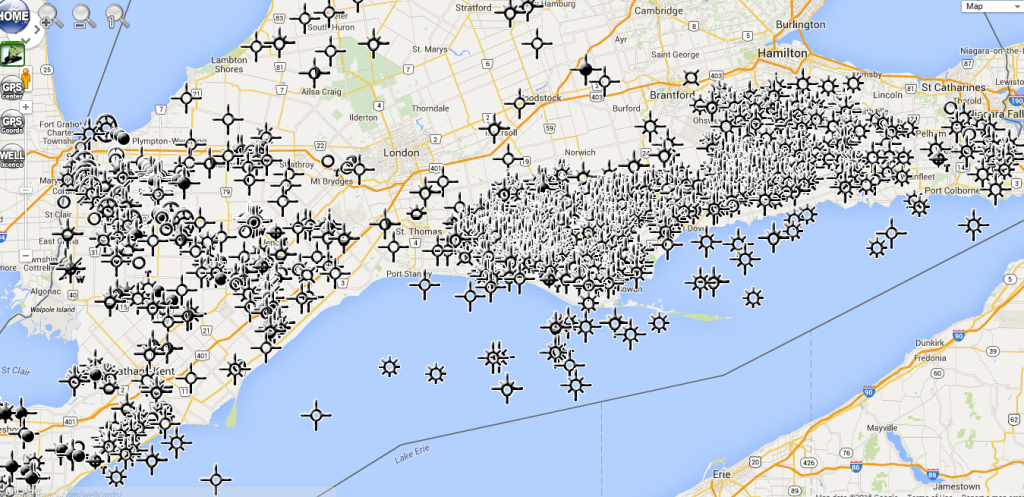
Ontario has “~3,600 records” for “Well treatments and stimulations. Includes details on the treatment type, treatment pressure, treatment volume, depth interval, and formation.”
What is it doing to our bodies?’: Norfolk residents urge fast action on toxic gas leaks in Ontario county, Geochemist says it’s ‘by far the largest problem in Ontario’ of its kind by Alessio Donnini, CBC News, Aug 05, 2025
Duration 1:57 John Spanjers and Paula Jongerden say it’s been difficult living beside a number of springs and wells that have been leaking hydrogen sulfide into the air and water for a decade. They explain how it’s impacted them in their daily lives.
Paula Jongerden says she and her neighbours have been living a nightmare for the last decade.
On days when the wind doesn’t co-operate, a thick rotten egg-like stench wafts up the valley bordering their Norfolk County properties — a putrid reminder of the inactive and unfiltered wells that have been pumping massive amounts of hydrogen sulfide and methane into the air and water since 2015.
“It’s nauseating. Burning eyes, sore throat, like rotten eggs but with a burn to it,” Jongerden said.
If it’s not the smell that reminds her, it’s the otherwise peaceful days that are interrupted by the staccato of distant alarms from a monitoring station that detects high concentrations of toxic gas.
It’s a problem locals call the Big Stink and an expert says is the worst of its kind in the province — one Jongerden says needs to be rectified now.
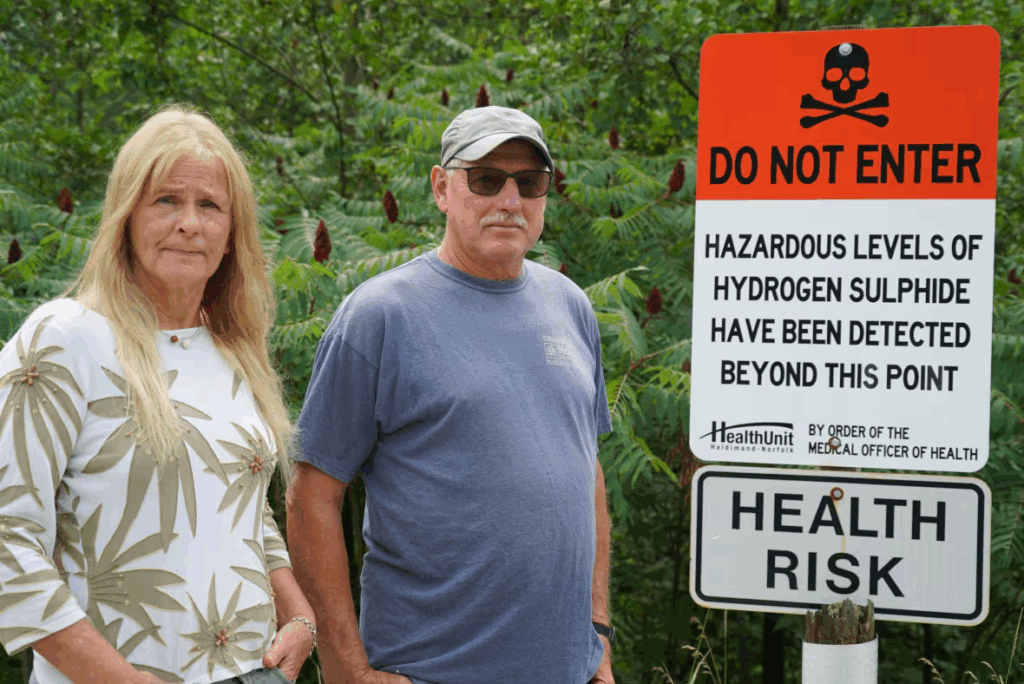
Paula Jongerden and John Spanjers, left to right, stand beside one of several signs in Norfolk County along Forestry Farm Road that warn of the serious threat looming just past the fenced off area. (Alessio Donnini/CBC News)
Big Creek, a watercourse that runs through Norfolk County and empties into Lake Erie, has been locked in a struggle with natural gas dating back to 1968. A well that had been open since 1910 was plugged, causing pressure to build and five new wells to erupt before a relief well was drilled to ease the pressure.
In 2015, the Ministry of the Environment ordered that the relief well be plugged, which caused a half-dozen new wells to open up. In 2017, the pressure and higher water levels caused gas to push its way through a layer of clay in the ground, causing it to bubble up through area waterways from newly formed gas springs.
The county used provincial money in 2024 to commission a study from environmental consulting firm Montrose Environmental.
The report was presented to council on July 22 by Montrose geochemist Stewart Hamilton, who said the situation unfolding along Big Creek, especially near Forestry Farm Road where the neighbours live, is “by far the largest problem in Ontario” of its kind.
He said the amount of hydrogen sulfide leaking into the environment from the wells on county-owned land is tens of thousands of times higher than what’s legally allowed.
Jongerden said she knew it all along.
“I have metal objects on my property that have turned black because of the corrosion,” Jongerden said. “If it’s doing that to metal, what is it doing to our bodies?”
She’s not the only one affected.
One of the springs that opened in 2017 is a stone’s throw away from John Spanjers’s home. Water near the creek behind his home is covered in a black film. Sometimes, he said, it can be seen bubbling up to the surface. It smells strongly of rotten eggs, but the smell isn’t the main concern.
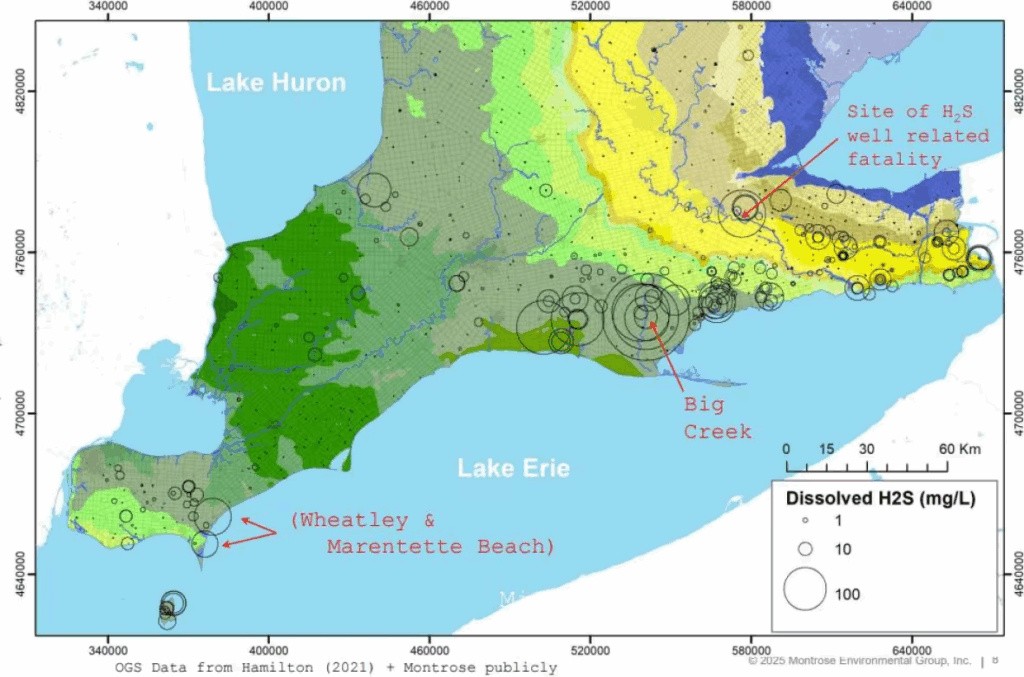
This map, presented by Stewart Hamilton to Norfolk Council on July 22, shows the scale of the hydrogen sulfide problem around Big Creek, compared to other known hotspots in southwestern Ontario. (Montrose Environmental Group)
The longtime resident of the property believes high concentrations of the chemical killed dozens of trees that once stood tall in the marsh behind his home. He also believes it’s affected his health directly.
“I’ve never had headaches. Now I wake up with them frequently. I have been very patient, but my patience is getting very thin,” said Spanjers.
But getting politicians to act, especially quickly, has been an uphill battle, the neighbours said.But companies, many of them foreign, get fast response from our federal and provincial gov’ts when they want to drill and frac, and refrac.
“The people in our local administration, they will disagree, but I don’t think they really care. If they did, something would have happened before now,” Spanjers said.
During the last meeting of county council, municipal politicians resolved to urge the provincial government to take the lead in dealing with the issue and paying for the solution. Among the recommendations in the Montrose report are measures like installing a temporary relief well at a cost near $500,000, and installing filters to improve air quality and to treat water, at a price near $1 million.I bet you that will not work, and might make the problem worse. I think the safe solution is to move the affected families, and have industry collectively pay for it and not ever allow people into those sour gas contaminated areas again. Of course, that will never happen because our politicos only serve polluters
While municipal politicians seek provincial support for the plan, Spanjers and Jongerden said they believe more urgent action is needed.
“I love Norfolk County. I don’t want to be a complainer, but this isn’t right,” Jongerden said. “Norfolk can afford the $1.5 million to make this right.”
Independent MPP and council at odds
Haldimand-Norfolk Independent MPP Bobbi Ann Brady said the wells will be her top priority when provincial politicians return to Queen’s Park in October.
“If [these wells] were on private property, it wouldn’t have taken 10 years.”Yes it would! I’ve been living with a dangerously contaminated water well for over 20 years with govt, regulators and courts only serving the polluters while bullying, lying about and harming me.
Brady accused councillors of “playing politics with a dangerous situation,” saying that for the past decade, multiple studies funded by provincial dollars have been done, but the gas still flows just the same.
“Monitoring is good, but it’s been ten years. I support this new call to the province, but it’s too little, too late,” Brady said.
Norfolk Mayor Amy Martin said the county has done what it can by securing over $1 million in provincial funding, much of which went to the recent study and the province’s Abandoned Works Program. $100 Million is not enough
She said gas wells are a provincial responsibility that require a response from multiple ministries and residential taxpayers shouldn’t have to foot the bill.
“Meanwhile, the Independent MPP has provided no solutions, no technical support — just theatrics at Queen’s Park and criticism of her municipal counterparts,” Martin wrote in a statement to CBC News.
“That certainly doesn’t help the residents of Forestry Farm Road or the taxpayers of Norfolk County but it is an easy position to take when you lack influence.”
County bureaucrats say meetings are scheduled with the province in August, and Martin said she will advocate for the issue during the Association of Municipalities of Ontario meeting this month.
Refer also to:
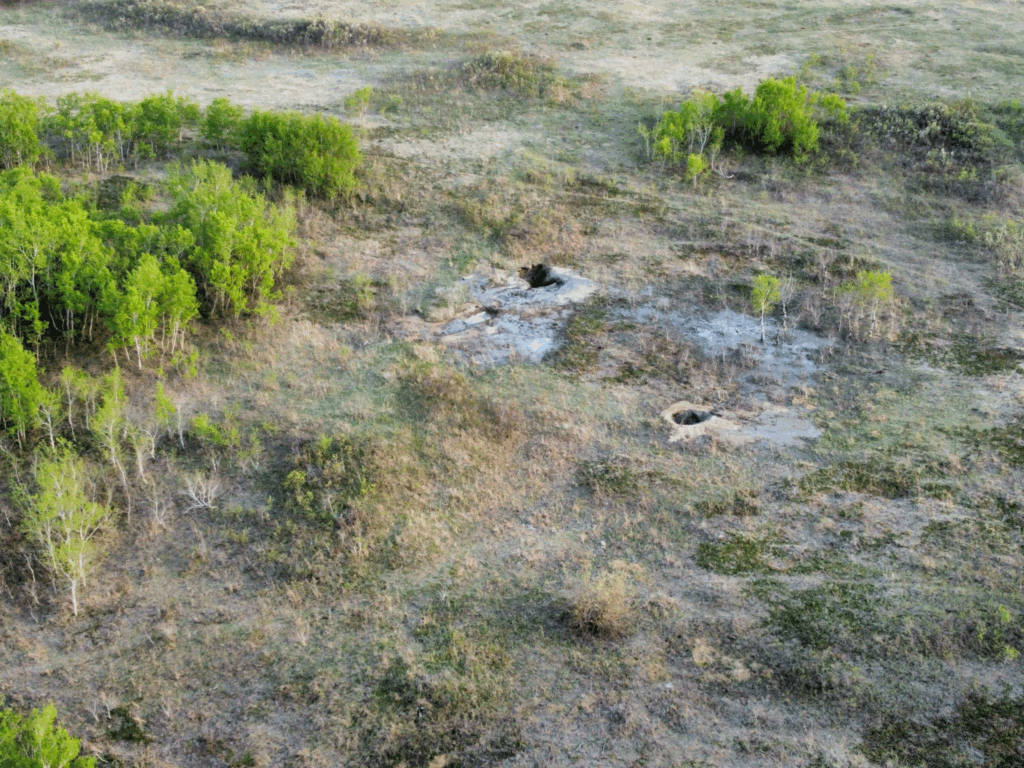
Submitted photo of a local pasture in the area with bubbling holes in the ground
Leaking sour gas from Cenovus frac’ing the caprock?
2021: New study: Canada overlooking (intentionally?) industry’s methane leaks.
2021: 2021 Ontario Canada: A year later, deadly house explosion remains a mystery
2020: Leamington Marentette Beach home blows up, kills two people and two dogs: Ontario Family in shock after home explosion kills ‘loving’ retirees Video clip at link.
2020: “Highly highly regulated” in the West? Why no criminal charges against the long list of law violating oil and gas companies in Alberta? Allenco Energy hit with criminal charges for failing to properly abandon wells in LA, “knowing that we still have to fight for the basic right to breathe clean air is really upsetting”
2019: Ontario’s Doug Ford gov’t bamboozling his base while giving industry big polluting free for all
Shortly after Will Koop posted his clip, Encana removed its Grand Prairie Emergency Response Plan (ERP) from the Internet. It’s vital that such important documents relating to public health and safety are accessible, so it has been uploaded here (takes time to load).
MANY DAMNING HISTORIC REPORTS IN THIS POST:
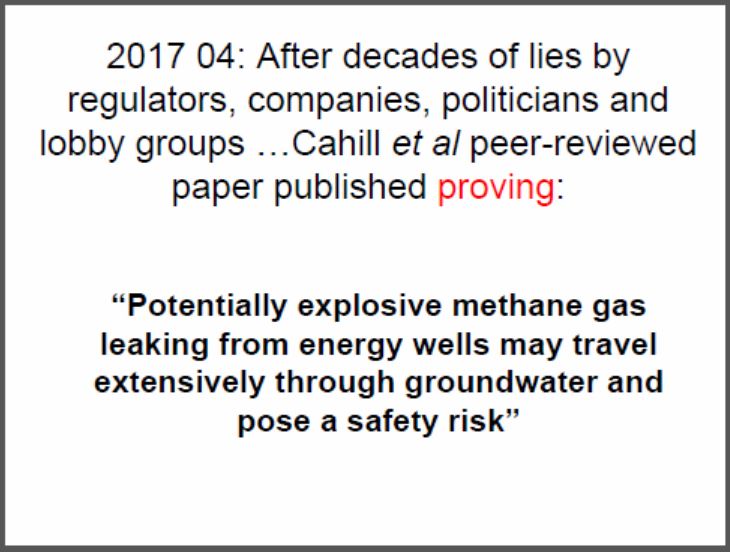
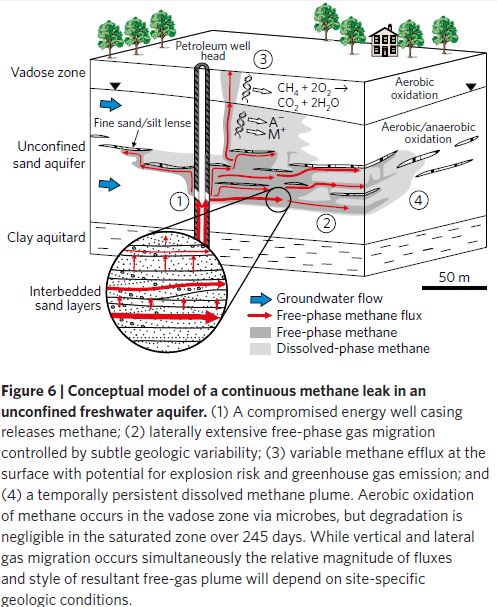
2017: New University of Guelph study on methane migration in sand aquifer in Ontario: “Potentially explosive methane gas leaking from energy wells may travel extensively through groundwater and pose a safety risk” Industry’s leaking or soured gas will do the same.
IMPORTANT, INCREDIBLY DAMNING GALLING POST:
2014: Hydraulic Fracturing Additives and the Delayed Onset of Hydrogen Sulfide in Shale Gas
As natural gas production has shifted further from deep prolific gas reservoirs to shale gas, several questions are being addressed regarding fracturing technologies and the fate of chemical additives. A less investigated issue is the unexpected increase in produced hydrogen sulfide (H2S) from hot shale gas reservoirs. Understanding the source of H2S in shale reservoirs and managing low-levels of recovered elemental sulfur affects plans for future treatment, corrosion mitigation, and fracture fluid formulations. In this work we demonstrate that some typical ingredients of hydraulic fracturing fluids are not as kinetically stable as one might expect. Surfactants and biocides such as sodium dodecyl sulfate and glutaraldehyde are shown to undergo hydrolysis and thermochemical sulfate reduction reactions under moderate reservoir conditions, with H2S as the final product accompanied with long chain alcohols and hydrogen sulfate as long-lived intermediate species.
This finding suggests that fracture fluid additives can be responsible for the delayed production of natural reservoir H2S.
Thanks Steve Harper for enabling deadly polluters and helping them keep secret how they are sickening (by the time you smell sour gas, it’s too late, damages to brain have been done) and killing Canadians.
In a single recent five-year span there were 73 documented sour gas leaks in B.C. and 34 workers died as a result of sour gas exposure since 1983. …
2013: Ontario Court of Appeal says innocent parties must pay for pollution clean-up
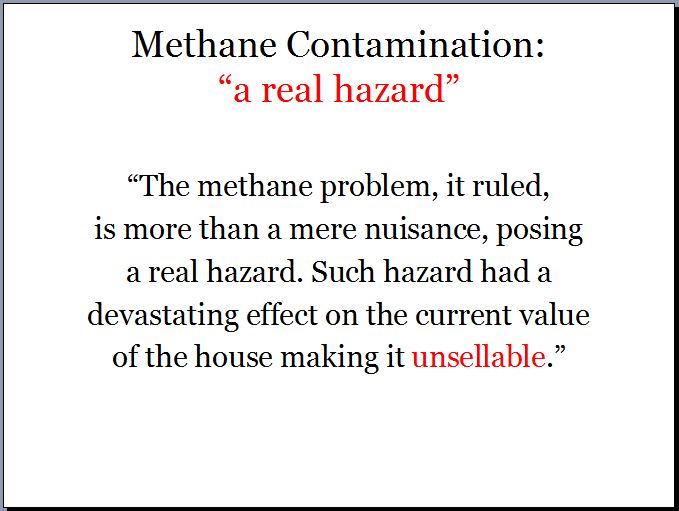
Much more unsellable, if that’s possible, when industry’s leaking gas is deadly sour with H2S
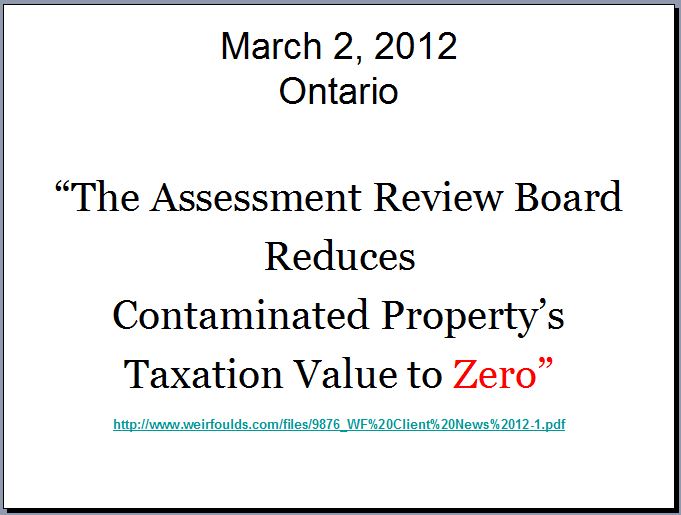
2012: Abandoned wells ‘time bombs’
2012: $250,000 in community safety projects following Encana’s deadly sour gas leak (to buy the company’s way out? How much is your life worth or that of your loved ones?)
2011: Understanding the Souring at Bakken Oil Reservoirs
Oil field reservoir souring is defined as occurring when increasing concentrations of H2S are observed in production fluids. This is a relatively well-known problem in the contemporary oil industry. …
The general causes of souring are geomechanical (fracturing and intrusion into another formation), thermochemical (e.g., mineral dissolution), biogenic (sulfur-reducing bacteria activity), or combinations thereof.
In all cases, the causes of excessive H2S production in previously nonsour environments are primarily anthropogenic and caused by certain operational practices.
2011: Company buys 23,000 acres of land in Ontario for fracking operations
2011: Planned protest targets fracking in SW Ontario
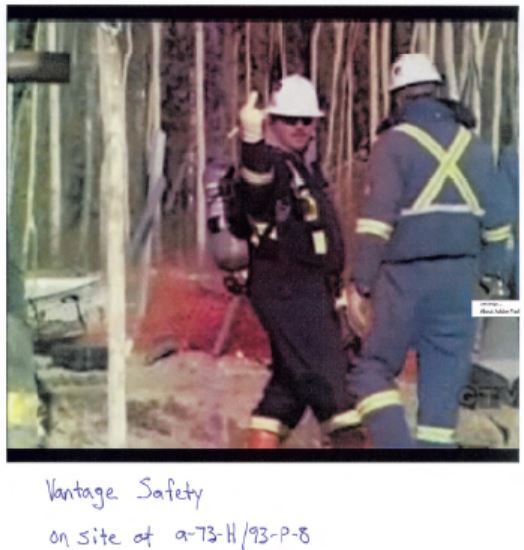
Encana contractors give the finger. This is what Encana thinks of you, your loved ones, home, health, livestock and pets, safety from risks to us from deadly sour gas:
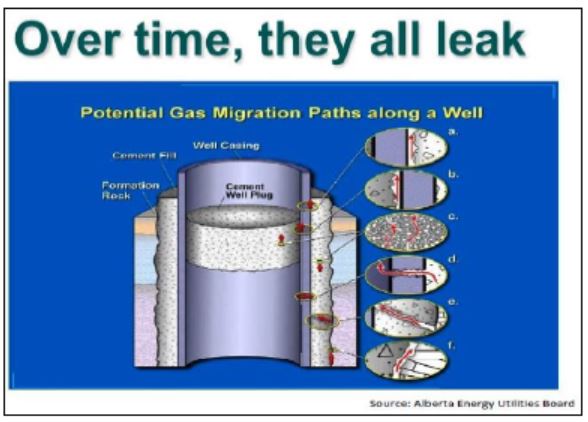
2007: Presentation by Alberta’s energy (de)regulator:
2005:
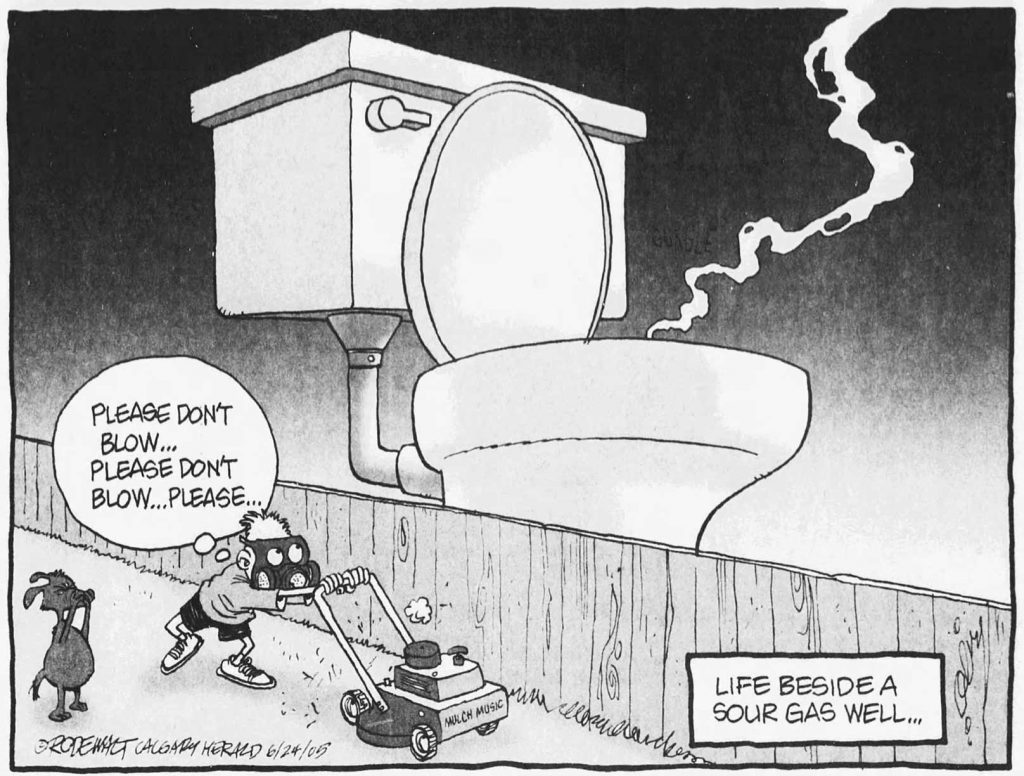
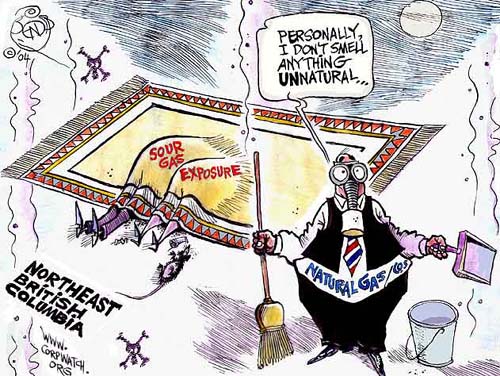
Cartoon above in Calgary Herald, June 24, 2005
2002: Groundwater Quality Workshop: Regulators and Canadian Ministers of the Environment attended, warning of serious harms ahead from 600,000 abandoned oil and gas wells, including in the “highly highly regulated” west. Did any appropriate responsible action take place afterwards? No. Only deregulation to benefit the polluters and legalize the harms, lies to con Canadians into accepting them, and Dr. John Cherry (author of a major chapter in the report) later ignoring his own 2002 warnings in his 2014 frac panel report for the Council of Canadian Academies.
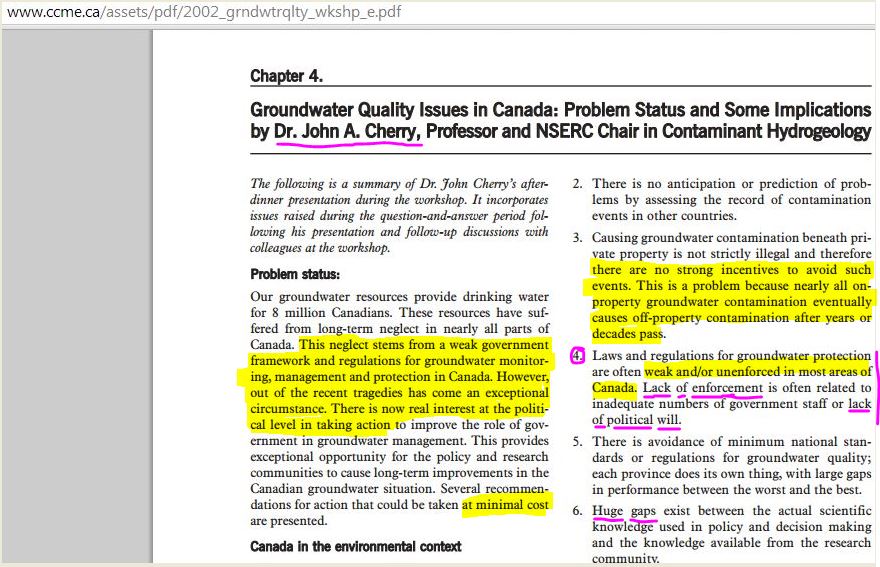
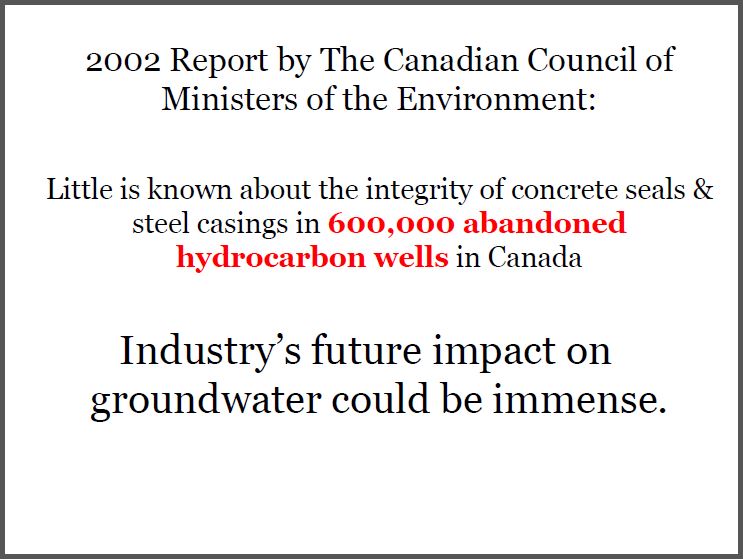
And that was before companies began destroying the subsurface and frac’ing the caprock with hydraulic fracturing.
1999: Petroleum Resources Centre (Ministry of Natural Resources):
“In the resulting rush of fortune-seekers, thousands of wells were drilled. As many as 50,000 wells may have been drilled in Ontario, although records are available for only 20,000.”
Many more posts on explosions, including fatal, caused by the oil and gas industry’s leaking gases on this site, and elsewhere. They go on and on and on and on.