@ljfawkes Jul 11, 2022:
Woman claims Quebec man groped her days after conditional discharge for sexual assault
Quebec court Judge Matthieu Poliquin is a Pro Sexual Harassment/ Rape. So the dude he sprung is doing it again in Cuba!
Quebec’s Sexual Violence Helpline: Call 1-888-933‑9007.
Crime Victims Assistance Centres (CAVAC): Call 1-866-532‑2822.
SOS violence conjugale: Call 1 -800-363‑9010.
CALACS: 1 -877-717‑5252.
Here is a list of sexual assault centres, crisis lines and support services elsewhere in Canada.
Vancouver mayor calling for ‘concrete action’ after 2 high-profile assaults in busy, public areas, Man charged after woman assaulted in Stanley Park washroom. Suspect in April seawall attack released by Courtney Dickson, CBC News, May 22, 2025
WARNING: This story includes details of sexual assault and may affect readers who have experienced sexual violence or know someone who has.
Vancouver Mayor Ken Sim is calling for “concrete action” from the provincial and federal governments after two high-profile assaults in the city in recent weeks.
Peterhans Nungu, 34, was arrested and charged with assault causing bodily harm, police said, in connection with an assault in Coal Harbour on April 15. On Tuesday, police said he was granted bail and released from police custody on April 23, but was transferred to a secure medical facility where he was under medical supervision.
Police said he was released from the facility this week and will be living under house arrest in Vancouver.
Meanwhile, convicted sex offender Hartley Ronald Duckhorn, 35, was arrested and charged after a woman was attacked, robbed and sexually assaulted by a stranger in a Stanley Park bathroom on Monday. The latest charges against Duckhorn have not been proven in court. His next scheduled appearance is May 23 in Vancouver provincial court.
After Sim’s plea went public, Vancouver police sent out a news release saying they had arrested high-risk sex offender Randall Hopley on Thursday, not long after he was released from prison.
“Law enforcement agencies have done their job in identifying suspects and making arrests, but the judicial system is repeatedly letting victims down by allowing those with a high risk to reoffend back into the public,” Sim said Thursday.
“The public deserves an answer from Attorney General Niki Sharma on why this continues to happen.”
In an interview with CBC’s The Early Edition Thursday morning, Sharma said she’s been trying to get the federal government on board with changes to the Criminal Code when it comes to repeat offenders.
Changes to the Criminal Code went into effect in 2024 that aim to make it harder for people accused of violent crimes to be released if they have a history of serious and violent offences involving a weapon, and also in cases involving intimate partner violence.
University of the Fraser Valley criminologist Amanda McCormick told CBC’s BC Today host Michelle Eliot that because Canada’s justice system moves so slowly, it’s hard to know what kind of impact that change has had on public safety.
“These days, we’re seeing it takes a year, a couple of years, depending on the nature of the offence, before these cases go before court, so we just don’t have that data at this point,” she said.
In 2023, B.C. launched the Repeat Violent Offending Intervention Initiative in several communities around the province, which brings together police, dedicated prosecutors and probation officers to provide early interventions in cases involving repeat violent offending and connect individuals with services that may help to break the cycle.
But Sharma said it isn’t enough, and that the law around repeat offenders needs to be even stronger. She said the province has ideas around how to accomplish this and will be presenting them to the feds, but did not specify what that might look like.
Sharma said bail reform is “completely essential” when it comes to improving public safety across B.C.
“When somebody is repeatedly breaching probation, repeatedly breaching court orders essentially … in my view, there should be an escalation in detention and punishment for that individual instead of a repeated cycle of release,” she said.
In an emailed statement to CBC News, a spokesperson for the federal Department of Justice said the government has committed to “going further” with bail reforms targeted at repeat offenders, and it needs provincial government co-operation.
“Even with strengthened bail reforms, we know that a lack of court and policing resources is leaving victims behind and compromising public safety,” the spokesperson said. “Underfunding not only makes it hard to properly administer bail, it can also cause delays that can jeopardize trials.”
If you’re in immediate danger or fear for your safety or that of others around you, please call 911. For support in your area, you can look for crisis lines and local services via the Ending Violence Association of Canada database.
@amykaufman84:
Whether you’re shocked by Judge Matthieu Poliquin’s decision or wish to see a change in our justice system, I’m urging you to write to your elected officials to try and right this wrong. Feel free to copy/paste the following message and to send to : email hidden; JavaScript is required
By this email sent on July 7, 2022, we file a complaint to the magistracy directed against judge Matthieu Poliquin concerning his decision in the file 400-01-093518-199.
We invite you to revise the judgment and opinion of the policing judge and their repercussions on public security and the protection of the victims who testify against their attackers. In our opinion, such a judgment undermines the credibility of our legal system.
The voice of the real victim was not only minimized, but what she endured as well as the consequences on her life were not taken into consideration when the judge rendered his decision. …
copie-coller dans un nouveau courriel, et change pour ton nom et adresse civile en bas. Puis envoie a : email hidden; JavaScript is required
Bonjour,
Par ce courriel envoyé le 7 juillet 2022, nous déposons une plainte à la magistrature dirigée à l’encontre du Juge Matthieu Poliquin concernant sa décision dans le dossier 400-01-093518-199.
Nous vous invitons à réviser le jugement et l’opinion du juge Poliquin et leurs répercussions sur la sécurité publique et la protection des victimes qui témoignent contre leurs agresseurs. Un tel jugement porte atteinte selon nous à la crédibilité de notre système juridique.
La voix de la réelle victime a non seulement été minimisée, mais ce qu’elle a enduré ainsi que les conséquences sur sa vie n’ont pas été prises en considération lorsque le juge Poliquin a rendu sa décision.
Cela remet en question l’équité de notre système de justice et la façon dont les victimes sont traitées, et cette décision démontre qu’il reste du chemin à faire pour améliorer l’accès à la justice pour les victimes d’agression sexuelle.
De plus, le juge souligne que l’ivresse de l’accusé, sans être une justification, permet d’expliquer un comportement.Nous demandons avec insistance au Conseil de réexaminer la manière dont le juge Poliquin est parvenu à sa décision et de prendre des mesures immédiates
Il a selon nous manqué à ses obligations déontologiques, plus particulièrement à son devoir de remplir son rôle avec intégrité, dignité et honneur, ainsi qu’à son droit de réserve.
Nous craignons ses futures décisions, la manière dont il applique la loi, le degré de latitude qu’il s’accorde dans ses jugements et l’impact qu’elles auront sur les prochaines victimes.
La manière dont il a rendu son jugement est contraire aux intérêts du public ainsi qu’à ceux des victimes qui viennent dénoncer des crimes. Si nous ne pouvons pas avoir confiance dans le système judiciaire lorsqu’une victime se présente courageusement, en sachant qu’une prompte..
condamnation ne sera pas prononcée, alors la société est vouée à l’échec. Cela aura certainement un impact sur les futures victimes et les découragera de recourir à la justice. Nous demandons au Conseil de réprimander le Juge Poliquin, car le comportement qu’il a adopté
ce jugement est sans intérêt pour le bien public, remet en question l’autorité de la cour et, surtout, nie l’importance de respecter les victimes d’actes criminels – particulièrement dans les cas où les faits sont incontestables.
Cette réprimande devrait être similaire, et en fait, plus sévère que celle infligée au Juge Jean-Paul Braun, qui dans une cause d’agression sexuelle a déconsidéré la réalité de la victime.
Nous vous prions d’agréer, l’expression de nos sentiments distingués.
Merci
@ToulasTake:
I hope Judge Matthieu Poliquin faces considerable blowback about this ridiculous decision. The more I look at Bowtie Boy smirking back at me this morning the angrier I get. And people still have the nerve to deny rape culture exists…
@Maxwild_hd:
This Rapist had an absolution from a Québec judge Matthieu Poliquin so he could keep his engineering job
@AngrySanta76:
Reminds me of Judge Matthieu Poliquin who granted a conditional discharged to a man who pleaded guilty to sexual assault — and citing concerns about the man’s career.

@cie1947:
Montrealers protest against man guilty of sexual abuse “inadequate” sentence
Judge Matthieu Poliquin in Trois-Rivières, Que., opted last week to give Simon Houle probation
@allthecdnpoli:
Judge Matthieu Poliquin in Trois-Rivières, Que., opted last week to give Simon Houle probation and a conditional discharge, partly because a conviction would make it hard for Houle to travel as an engineer:
Judge Matthieu Poliquin of Montreal, CAN; misogynistic loser by The Committee to Expose Dishonest and Incompetent Judges, Attorneys and Public Officials
Judge Matthieu Poliquin of Montreal, CAN; misogynistic loser The Law Society of Quebec provided Matthieu Poliquin with a law license in 1988 after he graduated from Wayne State University School Of Law. In one matter, Judge Poliquin was assigned to preside over the case of Simon Houle was charged and convicted of sexually assaulting an unnamed woman. Poliquin granted Houle probation and a conditional discharge so that it wouldn’t impede has travel for his job as an engineer. As one would suspect, Mr. Houle has been charged with an incident in Cuba where a Quebec woman accused him of making gestures of a sexual nature toward her. Sadly, she can than[k] Judge Poliquin for not sentencing the pervert to prison. After receipt of at least three ethical complaints regarding Judge Poliquin’s conduct in the matter, the Quebec Judicial Council  self regulator of judges!!ruled that he didn’t engage in any judicial misconduct. Put simply, they could not find anything wrong with Poliquin’s outrageous misogynistic behavior. As we speak (ca. December 2022), Poliquin continues to dispense his so-called brand of jurisprudence as a judge on the Provincial Court of Quebec in Montreal, Quebec, Canada. self regulator of judges!!ruled that he didn’t engage in any judicial misconduct. Put simply, they could not find anything wrong with Poliquin’s outrageous misogynistic behavior. As we speak (ca. December 2022), Poliquin continues to dispense his so-called brand of jurisprudence as a judge on the Provincial Court of Quebec in Montreal, Quebec, Canada. |
Petty Davis @avatart___ Mar 31, 2023:
“Trudeau agreed that is ok” — not even close. The case was appealed and Houle went to jail.
Conditional discharges in rape cases have actually gone down in Canadian law over recent years.
Judge Matthieu Poliquin was appointed by the Quebec justice minister, not a fed.
@VieilleCriss Dec 10, 2023:
Simon Houle, the long-handed engineer, is facing a hearing before the OIQ’s disciplinary council for failing to notify them that he was facing criminal charges… LOL
Huguette @VieilleCriss Dec 10, 2023:
Simon Houle, l’ingénieur aux mains longues, fait l’objet d’une audience au conseil de discipline de l’OIQ pour avoir omis de les aviser qu’il faisait l’objet d’accusations criminelles… LOL
@SpaceBiking:
Simon Houle, l’agresseur sexuel?
@VieilleCriss:
Oui.
C’est vraiment un gros criss de tata
Judge wrong not to sentence engineer to jail for sex assault: Quebec appeal court by Paul Cherry, January 26, 2023, Montreal Gazette
Simon Houle, the engineer who received a sentence for a sexual assault that shocked many people in Quebec during the summer, has been ordered to report to a detention centre by the end of this month after the Quebec Court of Appeal decided Wednesday that he should serve time behind bars.
On June 21, Simon Houle, 31, received a sentence that could have resulted in a conditional discharge after he pleaded guilty to sexual assault and voyeurism in a case heard in Trois-Rivières.
The sentence included probation, and Houle was ordered to make a $6,000 donation to a group that supports the victims of crime. If he had followed all of the conditions set out in that sentence, Houle would have been left with no criminal record.
The Crown appealed the sentence and, on Wednesday, the Quebec Court of Appeal ordered that Houle instead serve a 12-month prison term. The appellate court also ordered that Houle report to jail by Jan. 30, and it maintained the requirement that Houle make the $6,000 donation.
The judge who initially sentenced Houle, Judge Matthieu Poliquin, rejected a recommendation from the Crown that he serve at least a 15-month prison term. Poliquin felt the conditional discharge was appropriate because there was “one victim, one event and everything seemed to happen quickly.”Fucking douche judge, like so many, needs to be fired, pronto.
Poliquin said he also felt a criminal record would have an impact on Houle’s career as an engineer, because he would have difficulty travelling outside of Canada.
The Quebec Court of Appeal felt Poliquin did not properly weigh the aggravating factors in Houle’s case, including how the victim was impacted by being photographed nude while she was sleeping.
“The crimes committed by Mr. Houle are serious. He abused the vulnerability of the victim and seriously affected her physical and sexual integrity as well as her dignity and her private life. The consequences of the crimes on her life are serious,” the three judges wrote in their unanimous decision.
“When everything is weighed, the court is of the opinion that Mr. Houle deserves a prison term of 12 months for sexual assault and two months for voyeurism, to be served concurrently.”
During April 2019, Houle and the victim attended a party at a bar and knew other through mutual friends. When the bar closed for the night the group of friends continued the party at someone’s apartment. Houle and the woman struck up a conversation at the apartment that made her become emotional. The woman called her mother and talked to her. But she also turned down her mother’s offer of lift. Houle even spoke to the woman’s mother during the conversation. The woman then went to sleep on a bed in the apartment. She was later awakened by a flash of light and realized that Houle had inserted his fingers inside her vagina. Her top had been lifted and her bra was undone. The woman got up from the bed, put her bra back on, adjusted her top and headed to the kitchen to sleep on the floor. Houle followed her to the kitchen, picked her up by his arms and brought her back to the bed where she fell asleep.
When she woke up hours later she fully realized what had happened and confronted Houle, demanding to know if he had taken photos of her. He denied it and handed the woman his phone. She returned it to him without checking it. A few days later, a friend of Houle’s, who was aware of what had happened in the apartment, searched his phone and found photos of a woman’s genitals. The friend informed the woman and she filed a complaint with police.
When investigators searched Houle’s phone they found nine photos and showed them to the woman. She confirmed they were photos of her body.
In its decision, the appeal court wrote that Poliquin did not properly factor in a significant detail that emerged during the sentencing stage of the case.
Houle admitted to a psychotherapist he previously abused a woman in 2015 in a similar manner, but was never charged with anything. Poliquin considered his admission to be a sign of transparency, but the Quebec Court of Appeal felt it was evidence of Houle’s past, which also included a conviction for impaired driving.
@Global_Montreal July 16, 2022:
Quebec court Judge Matthieu Poliquin’s decision to grant Simon Houle a conditional discharge, in part because a conviction would have made it hard for him to travel for his job as an engineer, has caused an uproar in the province.
Quebec judicial council to examine complaint over judge’s sexual assault ruling by The Canadian Press, July 15, 2022, Global News
The Quebec judicial council Self regulator of judges (to ensure sure bad judges keep judging badly, serving the raping rich and patriarchy!)will examine a complaint regarding a judge who granted a conditional discharge to a young engineer who pleaded guilty to sexual assault and voyeurism stemming from a 2019 event.
Quebec court Judge Matthieu Poliquin’s June decision to grant Simon Houle probation and a conditional discharge, in part because a conviction would have made it hard for him to travel for his job as an engineer, has caused an uproar in the province.
The judicial council sent a letter to the author of a petition demanding Poliquin be removed from the bench, a copy of which was shared with The Canadian Press.
The council acknowledged receipt of the complaint and confirms that according to procedure, the members of the council will discuss it at a future meeting.
The note added that, initially, the members of the council will examine if the alleged facts in the case have constituted a breach of the judiciary’s code of ethics and whether there’s reason to investigate further.Aiding rapists of women, girls and environment, and ensuring they stay free to keep raping, while shaming, humiliating and abusing the victims, is the number one requirement in the code of patriarchal judicial conduct in Caveman Canada!
A spokesperson for the council refused to confirm the review as complaints are confidential.all the better to keep raping women, girls, aquifers, communities and environment!
The council is next expected to meet at the end of August when a decision will be made.
Kareen Emery, who posted the petition on July 7, collected more than 4,600 signatures in about a week. She said she’s satisfied that an assessment by the council will take place.
Houle pleaded guilty to sexual assault and voyeurism after assaulting an acquaintance and taking photos as she slept in 2019.
Poliquin, a judge in Trois-Rivières, Que., appointed to the bench last year, found that the victim suffered significant harm as a result of the assault, including anger, shame, fear of seeing the accused and consequences for her work and personal life.
However, he noted that the assault happened quickly, adding that Houle was a person with good morals who has taken therapy seriously and could become a useful person in his community.Once again, unfuckingbelievably disgusting cruelty by “justice” in Canada.
Quebec’s Crown prosecutors office has said it will appeal the judge’s sentence.
Woman claims Quebec man groped her days after conditional discharge for sexual assault, ‘I want judges to think twice before letting an attacker go free,’ alleged victim said by CBC News, Jul 11, 2022
Warning: This story contains disturbing details of sexual assault. A list of resources for people who have experienced sexual violence appears at the end of the article.
A Quebec man guilty of sexual assault, who received a conditional discharge in part because a judge wanted him to be able to travel for work, went on to allegedly grope a woman at a resort in Cuba, Radio-Canada has learned.
Simon Houle, an engineer from Trois-Rivières, admitted to sexually assaulting a woman in 2019 and, according to the judgment, taking intimate photographs of her while she slept.
Public outcry has been building since the news that Quebec court Judge Matthieu Poliquin granted Houle a conditional discharge last month, partly on the basis of his good behaviour. Houle will not have a criminal record so long as he follows a series of conditions for a probation period of three months.
But less than two weeks after receiving that discharge, a woman claims Houle groped her backside at a resort bar in Cayo Coco, Cuba.
Vickie Vachon was staying at the resort with a group when she says she met Houle, who was on vacation a few days after obtaining the discharge. Radio-Canada has obtained photos of Houle confirming his stay at the resort at the time.
Vachon said Houle “aggressively” grabbed her buttocks in front of a witness the night of July 3. It wasn’t until a few days later, when she returned to Quebec, that she recognized the man in the news.
“I want judges to think twice before letting an attacker go free,” Vachon told Radio-Canada.
Vachon, the alleged victim, would be Houle’s third. During the court proceedings, Houle admitted to sexually assaulting another woman in 2015 — an admission the judge described as “disturbing” but one that “demonstrates [Houle’s] desire for transparency” and his serious approach to rehabilitation.
Radio-Canada contacted Houle on Friday for comment. He did not respond and his lawyer, Pierre Spain, declined a request for an interview.
Touched in a ‘very intense’ way
Vachon said that she was with friends at the bar when a man, introducing himself as Simon, joined their conversation. She said they were enjoying talking with him.
Vachon, Houle and another person then walked one of her friends back to their room. It was on their return to the bar that the touching occurred, she said.
“As I walked, Simon grabbed my buttocks in a very, very intense, very aggressive way, a very big handful,” she described.
Vachon said she reacted immediately, getting angry, yelling and kicking him in the shins.
“Right away, I asked him: ‘Can you tell me what I did or what I said that made you believe that you had the right to touch me? Tell me!'” she recounted. “And then he was like, ‘I’m sorry, I’m sorry, it’s my hands. It’s not me, it’s my hands.'”
Vachon said they spoke for another 20 to 30 minutes and she explained to him why the touching was inappropriate. She said she thought she’d struck a nerve, as his eyes were watering, and she hoped he wouldn’t do it again.
“I said to him, looking him in the eye: ‘In Quebec, do you do that, touch girls’ buttocks? When you go into a bar, do you allow yourself to touch the girls like you just did with me?'”
After learning Houle had already pleaded guilty to sexual assault in Quebec, Vachon began to wonder how far the encounter in Cuba could have gone.
“What could have happened to me? I’m telling you, he’s a big guy,” Vachon said.
“These are the thoughts I’m having right now, realizing that something bad could have happened. Because this guy has no criminal record, because he can travel.”
A criminal complaint
Radio-Canada spoke with the third tourist who witnessed the alleged incident and confirmed Vachon’s account.
A second tourist, Josée Binette — who was travelling with Vachon — also identified Houle as the man at the bar. She was not there for the incident but said Vachon had told her about it immediately the next day.
After returning to Quebec, Vachon filed a complaint with the Lac des Deux-Montagnes police department, which serves the city of Deux-Montagnes and other suburbs located northwest of Montreal. A spokesperson for the police confirmed the complaint had been made and said an investigator has been assigned to the case.
The office of Quebec’s Director of Criminal and Penal Prosecutions said in a statement that it would not comment this specific case, but said there were precedents in Canadian law in the event that a probation order is violated abroad.
The Crown had previously said it planned to appeal Houle’s sentence, which included the conditional discharge, in the coming weeks.
“I’m thinking about other victims. How they must feel knowing that this guy can still do almost anything he wants? He can go anywhere, in any country,” Vachon said.
“The justice system let one get away.”
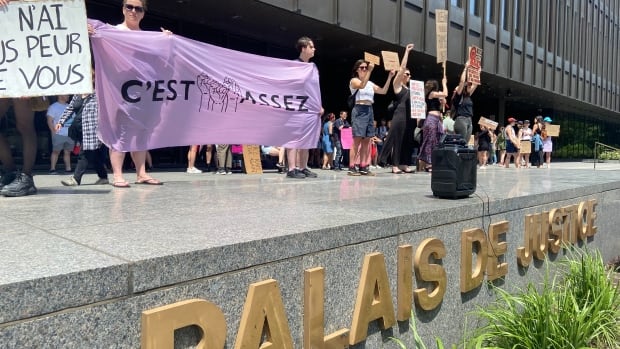
Protesters are demanding the resignation of a judge who was granted conditional release in a Quebec rape case by GTN News, 11/07/2022
Warning: This story contains disturbing details of sexual abuse. A list of resources for people who have experienced sexual violence appears at the end of the article.
The outcry over a Quebec court judge’s decision to grant conditional discharge to a man continued this weekend, when a group of protesters marched on a Montreal courthouse demanding the judge’s resignation.
Judge Matthieu Poliquin handed down the verdict last month after an engineer named Simon Hole, an engineer from Trois-Rivières, confessed to raping a woman in 2019 and, according to the ruling, found her asleep. Had taken pictures of intimacy.
Conditional discharge means that Houle will not have a criminal record unless he complies with a series of conditions for a probationary period of up to three months.
In his ruling, Polycan said the criminal record could have a “significant impact” on Hole’s career.
Mary Maxim Gamund, who helped organize the protest, said she was outraged when she first heard of the decision.
The justifications for forgiveness are absolutely offensive, and they don’t make sense. That such a decision is possible in 2022, it really sets a dangerous precedent, and I think it’s very important to understand that. That shouldn’t be the case, “said Gamond.
“We must first think about the victims and their safety,” he added.
Loose Point Ross, one of the protesters, said the sentence sends a message that rape is not a serious crime.
“You can bring someone to court, and get something out of it on a symbolic level, but there is no justice for their crimes,” Poissant-Ross said.
“If you don’t face any consequences for your actions, nothing will stop you from doing the same thing again.”
Cassandra-Kim Faset, for another participant, says the decision tells people they can ruin someone else’s life, but it doesn’t matter because “you matter more.”
“At first I thought it was a joke,” said Fiset, who was involved in the protest with her three young children.
“I was shocked when I realized it was true.”
The Quebec Office of the Director of Criminal and Panel Prosecution (DPCP) has said it will appeal Hole’s sentence in the coming weeks.
Why this Quebec court decision led to outrage over how to sentence those guilty of sexual assault, Outcry over Houle case underscores societal clash over how best to hold people accountable for sexual violence by Sabrina Jonas, CBC News · Posted: Jul 09, 2022
Warning: This story contains disturbing details of sexual assault. A list of resources for people who have experienced sexual violence appears at the end of the article.
A chorus of outrage from victims’ rights groups, politicians and other Quebecers crescendoed this week, in the wake of a Quebec court judge’s decision to grant a conditional discharge to a man who pleaded guilty to sexual assault and voyeurism.
Judge Matthieu Poliquin issued that ruling last month, after Simon Houle, an engineer from Trois-Rivières, admitted to sexually assaulting a woman in 2019 and, according to the judgment, taking photographs of her “private parts” while she slept.
In his decision, Poliquin said that a criminal record would “have a significant impact” on Houle’s career, leading many advocates for sexual assault survivors to say that the sentence minimizes the gravity of sexual assault and could contribute to making victims hesitant to come forward with their own complaints.
A conditional discharge means Houle will not have a criminal record if he follows a series of conditions for a period of probation, in this case three months.
Some legal experts are now calling into question the weight certain factors, such as a person’s professional status, bear on influencing a sentence and whether a conditional discharge can ever be the right call in a case of sexual assault.
Too lenient a message?
In his decision, the judge described how the victim, asleep at a party, was “awoken by the light from a camera. She felt fingers in her vagina moving back and forth.” Her camisole was hiked up and her bra detached from the front.
A few days later, a friend of the perpetrator who was aware of the event looked into Houle’s phone. “He then found, in the trash bin of the device, photos of a woman’s private parts,” the judge said.
Rachel Chagnon, a professor in the department of legal sciences at Université du Québec à Montréal (UQAM), says the role of a judge is to determine the most appropriate sentence for the individual case before him or her, by taking into consideration aggravating and mitigating factors.
“If the accused planned the crime, this is an aggravating factor. If the accused regrets his or her actions, this is a mitigating factor,” she said.
She said in this case, the judge concluded there were more mitigating factors than aggravating ones, therefore opting for a lighter sentence. However, Chagnon questions the message a conditional discharge for sexual assault sends to the public.
In sentencing, “the appearance of justice is as important as justice itself in order to ensure public confidence in the system,” she said.
“In a world where we recognize that historically we have not been severe enough, that we have not sent a clear enough message about the seriousness of sexual assault, does a sentence that appears at first glance to be relatively lenient send the message we want to send?” asked Chagnon, in an interview on Radio-Canada’s Midi info.
Not a popular decision, but fair: criminal lawyer
In his decision, the judge said Houle “greatly regrets his actions” and the repercussions of a criminal record “would have particularly negative and disproportionate consequences for him,” in part because it would make it hard for him to travel for his job as an engineer.
Poliquin noted that Houle also sought therapy, and he admitted to sexually assaulting another woman in 2015. This admission, while “disturbing,” according to Poliquin, also demonstrated his “desire for transparency” and Houle’s serious approach to rehabilitation.
In coming to his decision, Chagnon said the judge gave considerable weight to the specific reality of the perpetrator.
“This raises the question of whether we are leaving too much room for subjectivity in regard to the sympathy one can have for the aggressor — if we didn’t put too much emphasis on these elements.”
However, Eric Sutton, a criminal defence attorney in Montreal, said elements of Houle’s personal life are all relevant considerations that can’t be ignored.
“I think we as a community would value someone who pleads guilty, shows remorse … has undertaken therapy, is well-educated [and] wants to pursue a career as a professional,” Sutton said.
While the majority of people would agree that sexual assault is a very serious crime, according to Sutton, “that doesn’t mean that in no circumstances can someone get a discharge.” He pointed out such rulings are increasingly infrequent in cases of sexual assault in Canadian law.
Sutton said that while generally someone guilty of sexual assault would end up with a conviction, in his view, a discharge was warranted in this particular case.
“[The judge] explains his reasoning process; he applies the right principles, and I think it’s a very strong decision. It might not be a popular one, but I think it’s really a fair one.”
Avenues for appeal
Contrary to Chagnon, Sutton does not believe it’s a judge’s responsibility to teach or reassure the public. He said it’s a judge’s responsibility to make the right decision based on the facts they have before them.
The office of Quebec’s Director of Criminal and Penal Prosecutions (DPCP) has said it will appeal Houle’s sentence in the coming weeks.
Sutton says he agrees with critics who say Houle’s admission to having sexually assaulted another woman four years earlier should have been “a concern” for the judge in this case, but he doesn’t know if that alone will be enough for a higher court to quash Poliquin’s decision, leading to a conviction.
The duration of the assault, which Poliquin said happened “all in all, quickly,” might also be something a judge hearing the appeal would find to be an unworthy consideration, Sutton said.
- Sexual assault victims need more help navigating justice system, report says
- Liberals introduce bill to eliminate self-induced extreme intoxication as a legal defence
Cassandra Richards, a criminal lawyer and researcher on sexual violence at McGill University, said the outcry over Houle’s case underscores the clash in society over how best to hold people accountable for crimes of sexual violence.
“On the one hand, we have a movement that wants crimes of sexual violence to be taken seriously because they have, for way too long, not been taken seriously. And then on the other hand, we have a movement that’s pushing for an alternative to prisons, which recognizes that prisons don’t always keep our communities safer,” she said.
“I think that the question is, can a conditional discharge take into consideration the seriousness of sexual assault? And I think for some people it can, [for] some people it can’t.”
@GenevieveGaron July 5, 2022:
DERNIÈRE HEURE / Le DPCP confirme qu’il va porter en appel l’absolution obtenue par l’ingénieur Simon Houle après avoir agressé sexuellement une femme. La victime a été informée de l’intention du DPCP. Une requête pour permission d’appeler sera déposée avant le 21 juillet. #rcmtl
BREAKING NEWS / The DPCP confirms that it will appeal the absolution obtained by engineer Simon Houle after sexually assaulting a woman. The victim has been informed of the DPCP’s intention. A motion for leave to appeal will be filed before July 21. #rcmtl
@RichMous:
Comme dirait ma fille…no shit Sherlock….On lâche pas ça. Le gars doit payer. Y’a AUCUN MÉTIER qui peut te permettre de violer une femme. AUCUN.
As my daughter would say…no shit Sherlock…We’re not giving up. The guy has to pay. There’s NO JOB that allows you to rape a woman. NONE.
@MathieuBeaulieu:
J’émettrais un red flag à l’endroit du juge qui a tranché cette décision.
Il a de toute évidence un parti pris pour la manosphère.
I would issue a red flag to the judge who made this decision.
He clearly has a bias for the manosphere.
@Papouesse:
quelle honte! Ce juge devrait être démis de sa fonction dès maintenant avant qu’il ait fait plus de dégâts
What a disgrace! This judge should be removed from office immediately before he does any more damage.
@La_JusteBalance:
C’est complètement déplacé et inacceptable! Ce juge devrait être démis de ses fonctions!
This is completely inappropriate and unacceptable! This judge should be removed from office!
@France3Gail:
Est-ce que le juge accepterait que sa femme se fasse agresser pendant juste cinq minutes? On oublie ca mon chum c juste 5 minutes.
Would the judge accept that his wife was assaulted for just five minutes? Forget that, my friend, it was just five minutes.
@lano1106:
peu importe… je suis certain qu’ils ont plus que 3 juges corrompus. La seule raison pk ils voudraient renverser ce jugement est pour préserver l’apparence de justice avec eux…
Whatever… I’m sure they have more than 3 corrupt judges. The only reason they would want to overturn this judgment is to preserve the appearance of justice with them…
@GenevieveGaron July 5, 2022:
L’ingénieur absous après une agression sexuelle, Simon Houle, a perdu son emploi chez Canimex. Il a été informé alors qu’il se trouve à l’extérieur du pays. #rcmtl
Simon Houle, the engineer acquitted after a sexual assault, lost his job at Canimex. He was informed while he was out of the country. #rcmtl
@insoumis_2016 Jul 5, 2022:
Mais quand le juge va t-il perdre le sien?
But when will the judge lose his?
@iplante99:
Bon alors, il peut faire du temps maintenant. Il n’a plus a voyager pour son travail … il n’en n’a plus
Well then, he can do time now. He doesn’t have to travel for his work anymore… he doesn’t have any anymore
@AlexTheStone Jul 5, 2022:
Bravo à canimex de se dissocier de cet individu
@Elizwithaz:
Et puis le juge? Matthieu Poliquin ? Lui? Son jugement est illogique est dégueulasse
And then the judge? Matthieu Poliquin? Him? His judgment is illogical and disgusting.
@Cloclo65275775:
Ce gros porc Simon Houle me dégoûte et le juge devra démissionner. Quand est-ce que le ti-morveux Jolin Barrette va sortir de sa cachette ???
That fat pig Simon Houle disgusts me and the judge will have to resign. When will the little brat Jolin Barrette come out of hiding???
@Pablonorm:
Quand le juge sera-t-il informé de la perte de son emploi ?
When will the judge be informed of his loss of job?
@AndreeAnn_QC:
Excellente décision! Maintenant le juge!
Excellent decision! Now the judge!
@mario_morneau:
Vive le ministère des injustices du Québec.
Long live the Quebec Ministry of Injustices.
@jue_hey:
Quelle femme aimerait l’avoir comme collègue de travail?
Et le juge? Wtf?!?
What woman would like to have him as a coworker?
And the judge? Wtf?!?
@valerielauzon13:
L’Exemple de L’avocat de @Laval @maximechevalier qui a été accusé d’agression sexuel.Absolution,il exerce encore.Le Système de Justice penche sur les Prédateurs.
Example of @Laval @maximechevalier’s lawyer who was accused of sexual assault. Absolution, he still practices. The Justice System leans on Predators.
***
There are resources and supports available to anyone who has experienced sexual violence:
- Quebec’s Sexual Violence Helpline: Call 1-888-933‑9007.
- Crime Victims Assistance Centres (CAVAC): Call 1-866-532‑2822.
- SOS violence conjugale: Call 1 -800-363‑9010.
- CALACS: 1 -877-717‑5252.
- Here is a list of sexual assault centres, crisis lines and support services elsewhere in Canada.
Quebec man guilty of sexual assault gets conditional discharge so he can travel for work, Judge says perpetrator ‘greatly regrets his actions,’ has shown he’s a ‘person of good character’ Or because he’s a white man? Rich white man? Wanna bet this white man rapes again, soon? And, wanna bet the next judge will rule the same way: “He’s a good rapist! Not a bad one!” Canadian white men rape because they know our judges let them and worse, revictimize the victims. Even our “esteemed” Ex Chief Justice of Canada’s Supreme Court, Beverley McLachlin wagged her condescending fingers at rape victims. Judges brutalize the victims and protect the rapists, ‘Cause, you know, boys will be boys. “Ugga! Ugga!” says the Canadian judge, “Let em rape!” Based on reporting by Radio-Canada’s Geneviève Garon, with files from Sabrina Jonas, Jul 05, 2022, CBC News
Where to get help
Click here for a list of rape crisis centres accross Canada.
Kids Help Phone: 1-800-668-6868; Live Chat counselling at kidshelpphone.ca

Warning: This story contains disturbing details of sexual assault. A list of resources for people who have experienced sexual violence appears at the end of the article.
Victims’ rights advocates are denouncing a decision by a Quebec judge to grant a Trois-Rivières man convicted of sexually assaulting a woman and taking photographs of her private parts a conditional discharge, so that he can travel for his work as an engineer.
In April 2019, Simon Houle, then a 27-year-old mechanical engineering student at Université du Québec à Trois-Rivières, sexually assaulted a sleeping woman during a party in an apartment.
In his decision, Quebec court Judge Matthieu Poliquin described how the victim was “awoken by the light from a camera. She felt fingers in her vagina moving back and forth.” Her camisole was hiked up and her bra detached from the front. Nine photographs of the woman’s private parts were later found on Houle’s phone.
Houle pleaded guilty in 2021 to charges of sexual assault and voyeurism.
The Crown sought an 18-month sentence for Houle, however, in a decision released last month, Poliquin handed Houle a conditional discharge with three months’ probation.
Poliquin said for Houle, the consequences of a criminal record “would have particularly negative and disproportionate consequences for him, since he would have difficulty travelling outside the country, which could hamper his career as an engineer.”
Houle, who has worked for manufacturing company Canimex Group since 2018, has yet to be required to travel for his job.
On Monday, Canimex’s vice-president of human resources, Michel Goulet, said the company was “concerned” about the judgment and said Houle would be required to continue working from home and would be prohibited from participating in social activities with his colleagues. Why they doesn’t Mr. Goulet fire the fucking piece of shit? That might have some positive effect.
In a subsequent statement to Radio-Canada Tuesday, Goulet said Houle has been informed his employment at the company has been terminated for the moment. What the hell does that mean? For the duration of this article and any bad press for the company? What a bunch of rape-enabling cowards Canadians are, notably judges, lawyers and corporations.
‘Desire for transparency’
Houle, who was convicted of impaired driving in 2014, has no prior criminal record involving the use of force against others. Given our rape-enabling police, that means nothing.
He sought therapy shortly after the sexual assault and voyeurism charges were laid, said the judge in his sentencing ruling, and he admitted to sexually assaulting another woman in 2015, for which he was never charged.
This admission, although “disturbing,” according to Poliquin, “demonstrates [Houle’s] desire for transparency” and his serious approach to rehabilitation. How does that help the victim?
Poliquin noted that Houle pleaded guilty to the 2019 attack, that he “greatly regrets his actions” and was so ashamed of what he had done that he never told his father and brothers of the charges laid against him. OMG! Who believes that? I don’t. I expect the rapist doesn’t want to jeopardize any possible future inheritance(s).
Although the judge emphasized the “intrusive and serious nature of the crimes” committed against a victim “in a state of great vulnerability,” he said the assault was quick and Houle’s state of drunkenness, while not an excuse for his actions, partly explains his behaviour. “Quick?” FFS! Judge Poliquin’s rapist-enabling behaviour is Satanic. Or, is the judge just another rapist? By God, I feel sick for the victims in this story, for all rape/sexual assault victims in Canada, for myself as a victim of multiple rapes. This judge has no right being on the bench. He must be fired. And not given all kinds of chances at boasting about his good upbringing and privilege and behaviour. And he must not be given taxpayer-funded lawyers keeping him on the bench. The regulator of judges, the Canadian Judicial Council is a useless gang of judges enabling bad judges; they all need to be fired. Our judges (and lawyers) have made a mockery of the rule of law. They’ve proven they are unworthy of self-regulation, and do not deserve the citizenry’s trust until the rape-enabling shit is removed from of every bench and law society.
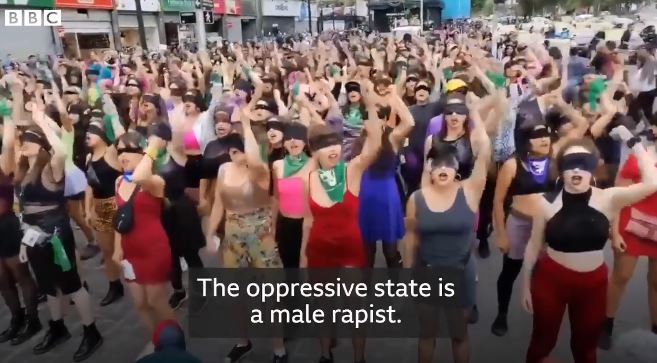
“It’s the judges!” enabling rape and murder of women. No kidding. In Canada too.
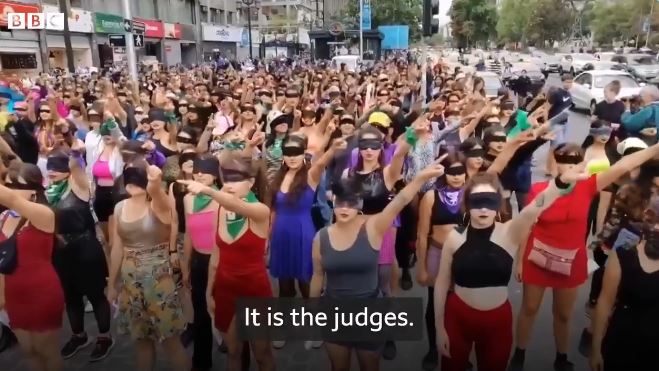
According to Poliquin, Houle has demonstrated that he is a “person of good character,” that he committed his crimes during a specific period of years! of his life and that those crimes do not represent the person he wants to be. Living as a frac’d senior hauling water, is not who I want to be either, it’s not the life I want, Encana/Ovintive and the self-regulating harmful abusive AER and polluting industry forced it on me. I do not go out harming others like Mr. Houle did.
In order “not to trivialize” what Houle did, Poliquin said, he ordered the perpetrator to donate $6,000 to the Trois-Rivières sexual assault centre, the Centre d’aide et de lutte contre les agressions à caractère sexuel (CALACS). What a fucking insult. Judge Poliquin, you reek of misogyny. Six years of doing dishes at the local prison, for no pay, would be a much more fitting token to give a rapist.
‘Angry’ and ‘saddened’ for all victims
A close friend of the victim, who has also known the perpetrator for several years, said he was “enraged” that Houle did not receive a harsher sentence.
“He has nothing. It’s unbelievable,” he said in an interview with Radio-Canada. The man requested anonymity in order not to identify the complainant, whose identity is subject to a publication ban.
A spokesperson for the Trois-Rivières CALACS, Camille Souza, said the centre is “disconcerted” by the decision, calling it unfair to the victim because it “once again” defends the attacker. For the love of love, for the love of all that is good, REFUSE THE MONEY! Do not accept it. Send it to Judge Poliquin, with “rapist-enabling” written on it. If the centre accepts it, the centre becomes just another rapist-enabler like the judge.
“We were angry. We were saddened for the victim — for all the victims,” said Souza.
- Quebec legislators vote unanimously to create special court for victims of domestic, sexual violence
A spokesperson for the local victims’ assistance service (CAVAC), Karine Gagnon, said she is concerned Poliquin’s decision will undermine victims’ confidence in the justice system.Wake Up! We victims haven’t had confidence in Caveman Canada’s misogynistic legal-judicial industry ever.
“When a victim hears these kinds of things … it can prevent them from [filing a complaint],” she said.
The judge described Houle as having had a “positive family background” and “the opportunity to become a useful person in the community.”
Lawyer and feminist researcher Suzanne Zaccour said Houle’s social status likely had a “subtle and pernicious” influence on the decision.
“If an accused came from a more disadvantaged background or had a less prestigious career, he would not have this card to say, ‘My career is important, and I cannot have a criminal record,’” she said.
Crown to appeal sentence
On Tuesday, Quebec’s Director of Criminal and Penal Prosecutions (DPCP) said it will appeal Houle’s sentence.
“A motion for permission to appeal is being drafted and will be filed with the Court of Appeal registry by July 21,” the DPCP said in a statement. Good. And don’t drop the appeal after you file it, as too often happens in rapists getting off. Don’t let anyone scare you away.
The victim has been notified, the DPCP said, adding it could not comment further on the case.
Contacted by Radio-Canada, Houle and his lawyer, Pierre Spain, declined to comment.
There are resources and supports available to anyone who has experienced sexual violence:
- Quebec’s Sexual Violence Helpline: Call 1-888-933‑9007.
- Crime Victims Assistance Centres (CAVAC): Call 1-866-532‑2822.
- SOS violence conjugale: Call 1 -800-363‑9010.
- CALACS: 1 -877-717‑5252.
- Here is a list of sexual assault centres, crisis lines and support services elsewhere in Canada.
***
Refer also to:
etc.
etc.
etc.
etc.
etc.
etc.
etc.
etc.
2016: The Robin Camp case: Who judges judges? – Macleans.ca
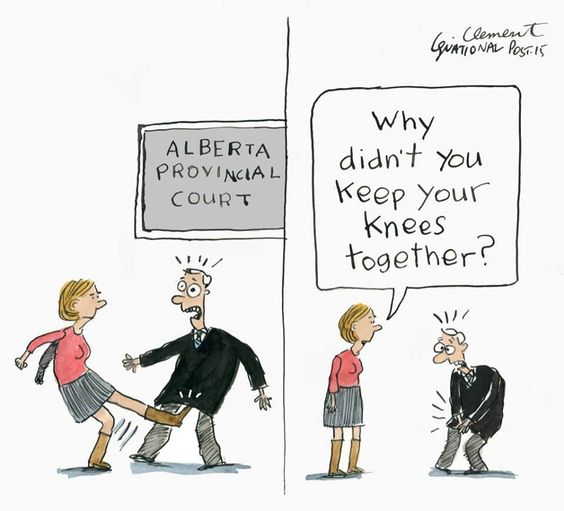
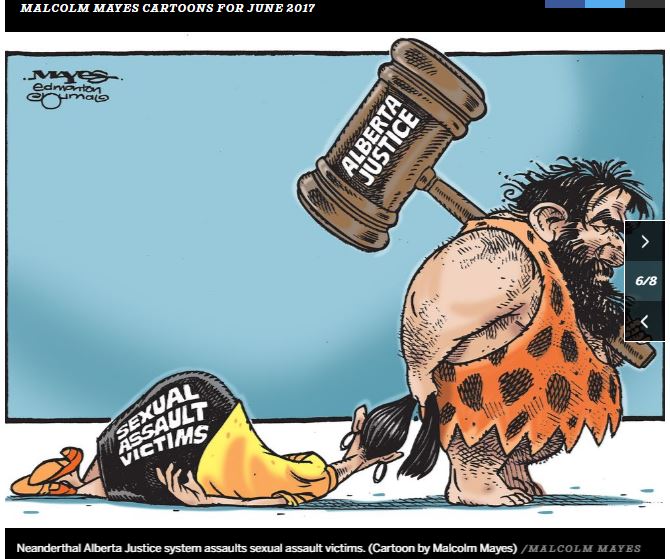
2017: Why does Canada not sack bad judges? Do bad judges fill a niche that Rape & Pillage Canada Needs?
Leap to the present on McLachlin:
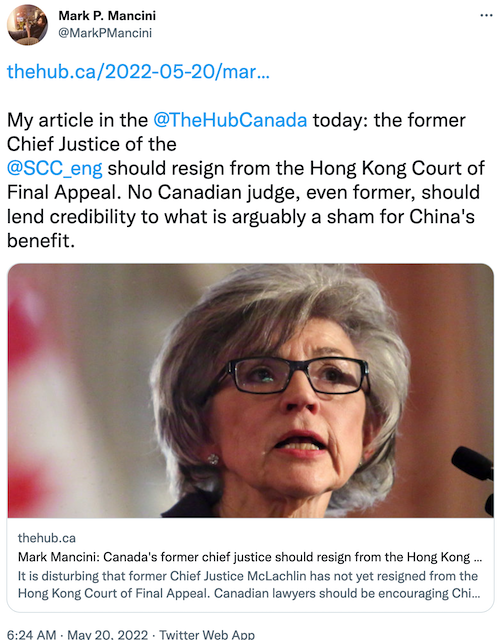
2019: “It’s the judges!” enabling rape and murder of women. No kidding. In Canada too.
2019: How prevalent is racism (and misogyny) among Canadian lawyers & judges?
2021: If rape-enabling shit sits atop the judicial industry, what runs through it?
***
Our criminal justice system still doesn’t take seriously one of the most heinous acts a person can commit by Lili Loofbourow, May 30, 2019, Slate
I started compiling a list of sexual assailants who got no prison time almost by accident. Twitter makes it easy: You stumble across a case where a man in Anchorage, Alaska, spent no time behind bars for strangling to unconsciousness a woman he masturbated on. You tweet it. Then you read about the Texas doctor who went free after assaulting a patient while she was sedated. You note similarities. Then you read about the high school girl who reported her rape immediately, to no avail—police never even spoke to the alleged attackers. You tack one story like this onto the other, you thread them, and suddenly you have a string of anecdotes that, without much system or method, seems to describe an America disinclined to punish sexual assault. It’s a list that leaves most people who read it terribly angry, including me.
But—and this is maybe the surprising thing—that anger started bugging me. Not because anger isn’t warranted, but because my list a) inflames it and b) seems to imply that the solutions are simple and obvious when they aren’t. Worse still, there’s something almost involuntary about the response: It’s hard notto rage at this collection of facts I’ve strung together. Especially if they’re taken in conjunction with the ongoing evidence of our broken criminal justice system. It’s just so easy to make comparisons: A rapist got no jail time, but a homeless man was sentenced to three to six years for attempting to buy toothpaste and food with a counterfeit $20 bill. Sit back and watch the retweets flow.
The trouble with the anger that a thread like mine provokes—which is ostensibly just pointing out the ways we fail to punish rape—is that it twists all too easily into a call for more punishment. Lists have a rhetoric. They tend asymptotically toward specific arguments, and the implication of mine gave me pause. We know what lies down that road because we’ve tried it: Stricter sentencing guidelines, for instance, always hit minorities and disadvantaged people first and hardest. If anger is an engine, the risk is always that even with good intentions it will power bad outcomes—especially when that anger feels justified by facts. My list represents a set of perfectly true facts. But it gives the impression that those facts are all you need to know about how our society deals with sexual crimes. The thread isn’t properly contextualized. It’s just a string of rage-inducing anecdotes, a random compilation of upsetting incidents that came to my attention precisely because they were scandalous. On its own, in other words, the list isn’t proof of anything.
But when it comes to sexual assault, ditching emotion and sticking to facts isn’t as easy as it sounds, for the simple reason that feelings have already clouded what we can know. Sympathy and suspicion—for suspects and victims, respectively—factor powerfully into every aspect of how law enforcement deals with sexual crimes, fogging up the numbers or erasing them altogether. When you look for facts, what you find is that the few we have are woefully insufficient. Sexual assault is massively underreported, and even when victims come forward, convictions are rare. According to RAINN, only 5 out of every 1,000 rapes committed—that’s 0.5 percent—ends in a felony conviction. The Washington Post puts the figure at 7 out of 1,000, but pretty much everyone agrees it’s under 1 percent. We usually try to make sense of this painfully low number by noting that many rapes aren’t reported, which is true, but the crime is also notoriously under-investigated.
If rape kits aren’t tested, suspects aren’t interviewed, investigators aren’t assigned, victims are labeled uncooperative …
And when it is investigated, it’s pretty tough to prove—not because of the crime’s high proof threshold, but because of how little evidence about it we bother to collect. There is, for example, a national backlog of hundreds of thousands of untested rape kits. And behind that big number are stories that don’t get told: Rather than heal or wash or even change after being attacked, these women went straight to the hospital, where they had to undress, subject themselves to intrusive physical exams, and get interrogated. And then nothing happened. No one did anything with the evidence they offered at great personal cost. (Actually, that’s not true: According to a CNN investigation, 25 law enforcement agencies in 14 states were found to be destroying rape kits in cases that could still be prosecuted. “This was a routine process, they said, done to make space in evidence rooms.”)
But it’s not just rape kits; this lack of investigative vigor seems to permeate every aspect of the system. The Minneapolis Star Tribune’s review of more than a thousand cases in Minnesota found that:
In almost a quarter of the cases, records show, police never assigned an investigator.
In about one-third of them, the investigator never interviewed the victim.
In half the cases, police failed to interview potential witnesses.
Most of the cases—about 75 percent, including violent rapes by strangers—were never forwarded to prosecutors for criminal charges.
Overall, fewer than one in 10 reported sexual assaults produced a conviction, records show.
Even the rape statistics we actually have are likely much too low, because—given a major incentive to lower caseloads and no reporting standard—law enforcement has a history of improperly clearing sexual assaults. For decades, police departments abused the “unfounded” classification reserved for false or baseless rape claims (a practice that helped to undergird the myth of prevalent false-rape claims). A scandal in late-1990s Philadelphia provoked real reform there, but a recent investigation by ProPublica, Newsy, and Reveal found that many police departments still have unusually high rates of cases they designate “unfounded.” As an oft-cited 2010 meta-analysis put it, “[M]isclassification of cases by law enforcement agencies is routine. Cases in which the victim is unable or unwilling to cooperate, in which evidence is lacking, in which the victim makes inconsistent statements, or in which the victim was heavily intoxicated frequently get classified as ‘unfounded’ or ‘no-crimed.’ ” Law enforcement also has a history of destroying the evidence with investigations designated “incomplete” not because they had no merit but because officers failed to follow through. CNN’s review of one police department in Springfield, Missouri, found that in dozens of cases “detectives did not attempt to contact witnesses and known suspects, didn’t have rape kits tested or stopped working cases within days or weeks of being assigned to investigate.”
If rape kits aren’t tested, suspects aren’t interviewed, investigators aren’t assigned, victims are labeled uncooperative, and law enforcement frequently mislabels reports from the small percentage of victims who do come forward, then the numbers aren’t giving us anything like a true description of the problem. We’re effectively blind to its magnitude.
So what explains this documented disinclination to investigate sexual assault? Some of it is no doubt due to resource and budget constraints. But there’s also the inescapable fact that prosecutors and investigators and judges are human, and their thinking isn’t immune to the biases about sexual assault that pervade every level of our society.
That miasma of unexamined prejudice can produce truly bizarre results. In its multipart investigation of sexual assault cases over the last 10 years, the Star Tribune found that, provided they knew their victims, only about half of defendants convicted of felony sex assaults in Minnesota got any prison time at all. Judges were “twice as likely to reduce a sentence when the attacker knew the victim,” and in 227 separate cases reduced the recommended sentences of men convicted of felony sex assault such that they spent less than a year behind bars. (Minnesota has relatively flexible sentencing guidelines for felony rape; many judges seem to be supplying a downward adjustment at their own discretion.)
If we translate these outcomes into judicial rankings of a crime’s severity, judges are sending a pretty clear message: It’s not as bad to rape someone you know. It’s a pattern that might be explained by outdated ideas of sexual assault, like the notion that “stranger rape” is serious and worth punishing whereas other kinds might not really be rape at all. Our society has, after all, registered extraordinary skepticism when it comes to the idea that men might rape people they know: Spousal rape was legal until quite recently; Minnesota only just repealed a provision that shielded spouses from prosecution for raping their spouses. And the concept of “acquaintance rape,” shot through as it is with rumored “misunderstandings” and female “regret,” has led to judges making all sorts of bizarre pronouncements prior to granting convicted rapists mercy. (Sexual assault seemed to be a greater threat to society—and was more quickly believed and more severely punished—when black men were being routinely accused of raping white women. The crime might not carry quite the same stigma when powerful white men are accused.)
One clarifying outcome of trying to see through the anger is realizing that, as observers, we aren’t the only ones in the grip of strong emotions. What’s different inside the precincts and courtrooms where these cases are being decided—by ostensibly impartial interpreters of laws and norms—is that the private feelings and assumptions of arbiters and investigators might be even less understood than they are acknowledged. And they’re having significant effects.
I started my list with the case of the Anchorage man who masturbated on a woman after strangling her unconscious while telling her he was going to kill her. According to the detective’s notes, Justin Schneider said that he “needed her to believe she was going to die so that he could be sexually fulfilled.” He pleaded guilty in September to one felony assault charge—not the four felony counts and one misdemeanor that he was indicted for by a grand jury—in exchange for a sentence of two years, one suspended and one considered time served. No jail time. No apology. Some might call that an extraordinarily lenient outcome. The district attorney commented that the strangler-masturbator’s having lost his government job was already tantamount to a “life sentence.”
Then there’s the judge who, in sentencing a man convicted of raping his 14-year-old student, remarked that the young girl, who had since died by suicide, was “as much in control of the situation” as her teacher was and “older than her chronological age.” He gave the guy—back in court after violating a sweetheart deal in which all charges would’ve been dropped if, among other requirements, he’d completed a sex offender treatment program (he didn’t)—a mere 31 days. (The defendant was resentenced to 10 years in prison after public outcry.)
Then there’s Robert H. Richards IV, the du Pont heir, who was convicted of raping his 3-year-old daughter. The judge suspended his eight-year sentence because he might “not fare well” behind bars. He got no time in prison at all.
In this worldview, some degree of sexual coercion is an inevitable side effect of the natural order.
Last year, a Texas judge allowed a Baylor University student charged with sexual assault—his accuser said he’d repeatedly raped her until she’d lost consciousness—to plead no contest to “unlawful restraint” and avoid jail time altogether; Jacob Walter Anderson got a $400 fine, counseling, and probation. The district attorney accepted the plea without informing his accuser; she found out about it in the paper.
Stephen Dalton Baril, the grandson of a former Virginia governor, agreed in July to an Alford plea deal that reduced the charges of felony rape and sodomy. The judge sentenced him to five years of probation (no prison) and, according to news reports, approved the plea as a fair compromise, per the Associated Press, “in part because neither party was happy.” The implication seemed to be that the rapist and the raped ought to find a middle ground.
Then there’s Nicholas Shumaker, whom a jury convicted of the felony sexual assault of Emma Top in 2017. The recommended sentence was four years in a state prison with other violent offenders. The judge gave him one year in a county jail. He was out in nine months. “The professionals in this case generally agree there is no purpose served by Mr. Shumaker going to prison, that it will not change him in any positive way, that it will not help Ms. Top,” said the judge. Top herself told the Star Tribune she felt differently: “I felt like for what he had done, he basically got a slap on the wrist.”
In the time since I started writing this, Michael Wysolovski, a Georgia man who groomed and abducted an anorexic teenage girl and kept her in a dog cage for over a year, pleaded guilty to “interstate interference with custody” and child cruelty, defined as “excessive physical pain during sexual intercourse.” He was sentenced to “ten years with eight months to serve.” He’d been in a detention center for eight months and he’ll be on probation for the rest. No prison. Shane Piche, a 26-year-old bus driver who pleaded guilty to raping a 14-year-old student, was sentenced to 10 years probation and must register as a sex offender on the lowest tier. No prison.
The lack of accountability for sexual assault in this country can’t be explained just by retrograde judges, or relaxed district attorneys, or reluctant prosecutors, or understaffed departments who don’t assign investigators. It’s not just a lack of evidence or the agnosticism bred of he said–she saids. And it’s not just a plague of plea deals. It’s investigators pressuring victims to sign statements that they won’t cooperate in the investigations of their own rapes. It’s grand juries: Last year, the Washington Post’s Elizabeth Bruenig published a feature about a years-old rape case from her high school. A police officer described to Bruenig a separate incident in which a “victim was sent the photographs of her own rape, which she turned over to police.” The outcome? The grand jury did not indict. The main subject of the piece, Amber Wyatt, said that in high school she was raped by two boys and immediately reported it. And yet, “despite [one of the alleged perpetrators’] semen found in Wyatt’s body and the injuries she sustained, neither of the boys were questioned by police.”
As I said, this set of examples is far from a complete description of the problem, but so is the picture we get from the little data we have. When you add up all we don’t know and all we refuse to know, the issue might not be that the presumption of innocence (which matters!) lets certain kinds of men—mostly men society doesn’t deem inherently suspicious—off the hook. It’s that in all too many cases, there was never a hook to begin with.
What rankles about my list, I think, is that as cherry-picked and clumsy as it is, it tells a real story about how unevenly distributed sympathy produces disproportionate consequences. Now, sympathy’s not a bad thing; our institutions could use more of it. A system that prioritized rehabilitating people rather than locking them up would be vastly preferable to the one we have. But those locked up for drug offenses—and that includes 47 percent of men in federal prison—don’t seem to be getting the understanding and consideration that convicted rapists are. No one seems worried about whether nonwhite drug offenders would “fare well” in prison.
So why, in a system that otherwise tends to overpunish, are sexual assailants eliciting so much extra consideration?
For one thing, it’s simply the case that plenty of people think a lot of rapes weren’t rape at all. Surely, these skeptics think, given how “difficult” it is to know when sex is truly involuntary, some context is missing in rape cases. That skepticism is baked into the way many of us have been raised to think; on hearing rape, many an American—including those who work in criminal justice—believes that what one party calls a rape might actually be a misunderstanding, or a miscommunication, or an oversexualized society’s fault. And these ideas are so deeply rooted they can keep hold even when the assailant has been convicted. “Sex was in the air,” said a Manitoban judge who gave a two-year conditional sentence (no prison) to a man who in 2006 forced a woman to have sex in the woods; the judge called the assailant a “clumsy Don Juan.” An Idaho judge blamed “social media” for a 20-year-old man’s rape of a 14-year-old girl. Sympathy and understanding flow toward a certain kind of accused man, proof be damned: He’s just a regular person. It couldn’t have been as bad as actual rape.
Even when convicted, some rapists can experience leniency because of the “unjust” burden men face as the sexual aggressors in traditional courtship. If you believe men must exclusively initiate and pursue, mishaps and mistakes are bound to happen. Sure, there’s something intrinsically predatory and gross in this model of male-female relations, but the danger this predatory aspect poses to women isn’t really what troubles those who subscribe to this model. They see it as a risk to men. “I want you to tell your friends, your male friends, that they have to be far more gentle with women,” said a male Canadian judge after acquitting a man accused of raping a woman over a sink. “They have to be far more patient. … To protect themselves, they have to be very careful.” (That judge is now in danger of losing his job.)
The unstated corollary of this worldview is that some degree of sexual coercion is an inevitable side effect of the natural order, and maybe instead of blaming men for going too far sometimes, we ought to accept that stuff happens. “Some sex and pain sometimes go together … that’s not necessarily a bad thing,” said that same judge. To object to the pain is cheating, unsportsmanlike. Men have needs, sex is a team sport where people get hurt, and if players from only one of the teams ever seem to get injured, well, them’s the breaks. It goes without saying, I hope, that these distortions are deeply unfair to male victims of sexual assault. (And the idea of a female rapist runs so counter to our ideas of masculinity—the victim should consider himself lucky!—that perpetrators who are women receive lower sentences than even white men.)
Rape being one of the most antisocial acts a person can commit, you’d think it’d be the kind of crime a system dedicated to safety would prioritize.
The effect is a telling blind spot in our culture’s ability to process and respond to assault. And it has a price: It means we’re more likely to believe that women will invent accusations for money than we are to believe that (white, straight, cis) men abuse or attack people for fun.
The result is a criminal justice system that shows an unexamined bias toward accused sexual predators—particularly those from the dominant race and class—by protecting them in advance from punishments that (in practice) very rarely materialize. And this is a hypercorrection that occurs again and again even though false claims remain statistically minuscule, and even though less than 1 percent of rapes result in a conviction.
What remains true is the obvious fact this protective mélange of distorted rationalizations tries to skirt: Sexual assault is the infliction of humiliation and trauma and pain on another human being for pleasure—a pleasure derived more from domination and power than the sex itself. It is not affectionate excess. It is not human need. It is cruelty. But what both the data and my anecdotes reflect is a long-standing reluctance to admit that and treat rape as what it is: a serious danger to society. The Department of Justice’s Sex Offender Management Assessment and Planning Initiative summarized a 2004 study as saying that “sexual recidivism estimates for rapists, based on new charges or convictions, of 14 percent at five years, 21 percent at 10 years, and 24 percent at 15 years.” A 1997 study based on a smaller sample and older data puts the recidivism rate at 39 percent over a 25-year period after initial arrest. Those numbers are not small, and they also mostly depend on new arrests when—as we know—arrests for sexual assault are exceptionally rare to begin with.
Rape being one of the most essentially antisocial acts a person can commit, you’d think it’d be the kind of crime a system dedicated to communal safety would prioritize. But when Brock Turner was caught raping an unconscious woman behind a dumpster, Judge Aaron Persky famously said in 2016, “I think he will not be a danger to others.” Persky may be right. But that’s a bold prediction that willfully ignores the full measure of the danger Turner already was, particularly to the survivor of his attack, as well as the data suggesting there is reason to worry about re-offense. There is nothing wrong with hoping that a person will reform; reform and rehabilitation should be major considerations across all America’s courtrooms. What’s telling here is the ease with which Persky had already credited Turner with reforming. These opportunities for redemption aren’t afforded to everyone. Seriously addressing sexual assault means recognizing the scope—and persistence—of the problem.
Much has been written about how Turner’s privilege and position might have influenced Persky’s leniency. But Persky has also been intelligently defended on different grounds by those, like Sajid A. Khan, who argue that the “culture of mass incarceration has warped our psyches into thinking that lengthy jail or prison terms are always the answer to criminal behaviors like sexual assault.” This is a fair critique of the outrage that got Persky removed from his bench. If anger and sympathy are the free radicals in affective jurisprudence, rape cases flood us with both. The legal system treats rape in inflammatory ways that hurt the defendant—victim impact statements are controversial for this exact reason, as Slate’s Mark Joseph Stern has argued, calling this liberal hypocrisy—and dismissive in ways that hurt the survivor (glossing losing one’s job as the equivalent of a “life sentence”). Public opinion isn’t much better. We are magnificently bad at talking about rape (I include myself here), and that’s why I’m telling you about what’s wrong with my list.
The criminal justice system all too frequently produces tautological outcomes: It defines as threats those who are already seen as threats. It is gentler with those who are generally not. These outcomes aren’t rational or just; hurricanes of bias produce them, and the results, rightly examined, can make no sense. While there are circumstances that explain why a man in Montana who repeatedly raped his daughter got 60 days in jail, but a man in Fresno, California who repeatedly raped his daughter got 1,503 years in prison, the disparity seems hard to justify.
Thinking about all of this can tie you up in knots. The anger that my list generates at an unjust system isn’t actually wrong. But it’s insufficient. So is data-hunting in search of a “dispassionate” solution. There isn’t one. And the other half of this—the half that I haven’t even begun to address in this essay—is how marginally the survivors figure in these gales of legal sympathy and rage.
It’s hard to imagine a system that sees and serves both survivor and rapist. It’s like trying to spot both the duck and the rabbit at once. The solution to my list of convicted sexual offenders who get no jail time can’t be just to holler “lock them up!” As Michelle Alexander notes, justice must take into account the extent to which brute punishment fails. In Until We Reckon, Danielle Sered writes, “We have championed incarceration with full knowledge of its unquestionable brutality. And we have expanded it in the face of clear and rising evidence of its failure to produce the results it promises.”
Progress might mean thinking more capaciously about ways to include survivors and their needs, while also considering the humanity (and potential for reform) of their assailants. That sexual assault is not boyish enthusiasm run amok doesn’t mean that it’s irredeemable sociopathy. Dealing with it means sustaining both the gravity of the crime and the possibility of reform or repair. A mechanism for that would ideally allow survivors to meaningfully participate. Long prison sentences have not historically served that function. As prison abolitionist Ruth Wilson Gilmore says, “[B]ehaving in a violent and life-annihilating way is not a solution.” Neither, however, is pretending—as our system has—that a gigantic problem we’ve sort of refused to meaningfully measure doesn’t exist.
#MeToo is a correction, and a dynamic and angry one. It’s yanking some societal sympathy back from its longtime tacit beneficiaries. It is raging, rightly, at a system that seems bizarrely disinclined to address sexual assault. It’s making survivors visible and beginning to excavate and describe the extraordinary extent of the physical, psychological, economic, and professional damage. This is painful and slow and hard. Real repair will require recognizing that distorted, selective sympathies have already made our legal system what it is, and that those distortions afflict judges and prosecutors and investigators alike. It will require expanding that sympathy to groups who have historically not received it.
It would not mean losing the presumption of innocence. Nor would it necessarily mean more prison. In fact, a next step might recognize, as Sered writes, that “survivors’ need for safety—their own and others’—should not be automatically equated with an appetite for incarceration.” Rather than presume to act on behalf of survivors, the justice system might ask them what they need and what they want. What repair looks like to them. What restitution means.
There are glimmers of a future that might give survivors more agency. Some of that progress is at the procedural level: In response to the plague of sexual assaults that go uninvestigated or unprosecuted—for reasons the victims never find out—Utah’s House Judiciary Committee just voted to pass a bill that would authorize rape survivors to ask the state attorney general to review cases their local prosecutors had rejected. Some efforts are even more ambitious: Restorative Justice for Oakland Youth in California is one among many groups that’s been working to change the communal response to violence—by offering perpetrators an opportunity to make amends according to the victim’s needs rather than submitting to the legal system’s punishment by proxy. Some of that progress simply adjusts what we consider “common sense” to be: Confusion after an assault, for instance, is not evidence that the victimized person is lying.
Simplest of all, though: Our ideas about rape’s inherent indeterminacy—who knows what really happened?—need to change. Michigan prosecutor Kym Worthy was able to connect 833 suspects to multiple sex crimes by testing 10,000 backlogged rape kits. In Colorado, DNA testing helped investigators find a serial rapist—and prove that one of his victims, who was thought to have lied, didn’t. We can know so much more than we think about what happened to survivors; all it takes is the moral and political will to really look. And to act, humanely but decisively, on what we find. If we would test the damn rape kits, assign investigators to cases, learn how to interview victims, talk to the suspects, collect the evidence, stop destroying what little evidence we have, and figure out what should actually happen next, we might discover that things aren’t quite as unknowable as we once believed.