Truck Drivers Exposed to Hazardous Oil and Gas Waste Fight for Their Rights — and Lives By Dustin Renaud & Robert Valencia, Jan 8, 2026, EarthJustice, Community Partnerships Program
Drivers exposed to several types of life-threatening oil and gas waste are now asking the Department of Transportation to enforce regulations to protect them.
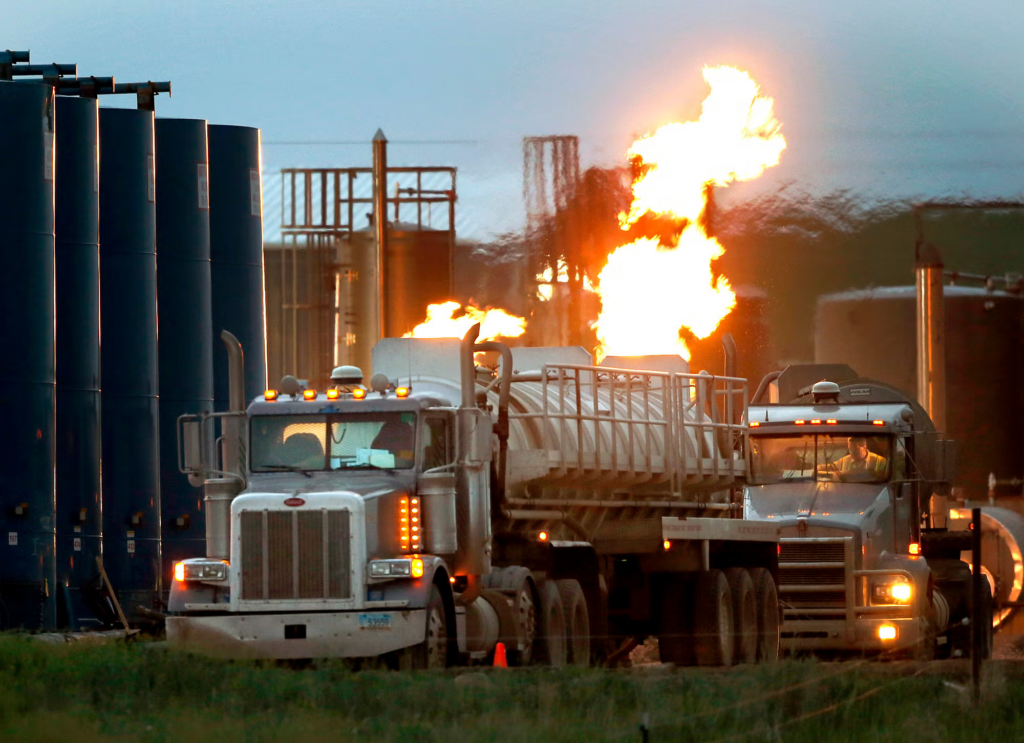
Drivers and their tanker trucks capable of hauling water and hydraulic fracturing liquid line up near a natural gas burn off flame and storage tanks in Williston, North Dakota. (Charles Rex Arbogast / AP)
January 8, 2025 (EarthJustice) On highways across the United States, truck drivers are hauling hazardous oil and gas waste materials without being given proper hazardous materials (HAZMAT) certification, putting communities and drivers in danger.
When companies frack to extract oil and gas, the process produces a tremendous amount of waste. Yet oil and gas companies often do not test their waste for hazardous materials before loading it onto trucks, as they are legally required to do. In some cases, a single truckload can contain more than 2,000 times the legal cargo limit for radioactive materials under Department of Transportation regulations.
Because these federal HAZMAT rules are not being enforced, truck drivers are not receiving the proper training, certification, and equipment before hauling hazardous materials. Sometimes, they don’t even know they are hauling toxic substances.
Earthjustice represents a coalition led by Truckers Movement for Justice (TMJ) — an organization of nearly 15,000 owner-operators and company drivers from Mexico and the U.S. — as they demand the Transportation Department enforce existing hazardous materials rules for hauling oil and gas waste.
For truck drivers like Jane*, who has been in the job for 12 years, the risks are personal. She regularly hauls fracking wastewater from oilfields in western Texas and southeastern New Mexico.
“I can tell you that personal protective equipment does not shield you from harm completely because [waste] goes through clothes and gloves,” Jane says. “I’m in touch with oil and gas waste all the time. There have been times when my skin has broken out, and when I blow my nose, there’s something black and brown that will come out.”
While the chemical composition of oil and gas waste depends on geographic locations, some of the hazardous materials fracking produces can include drilling fluids, brine, gas treatment residuals, and hydrocarbon bearing soil and debris.
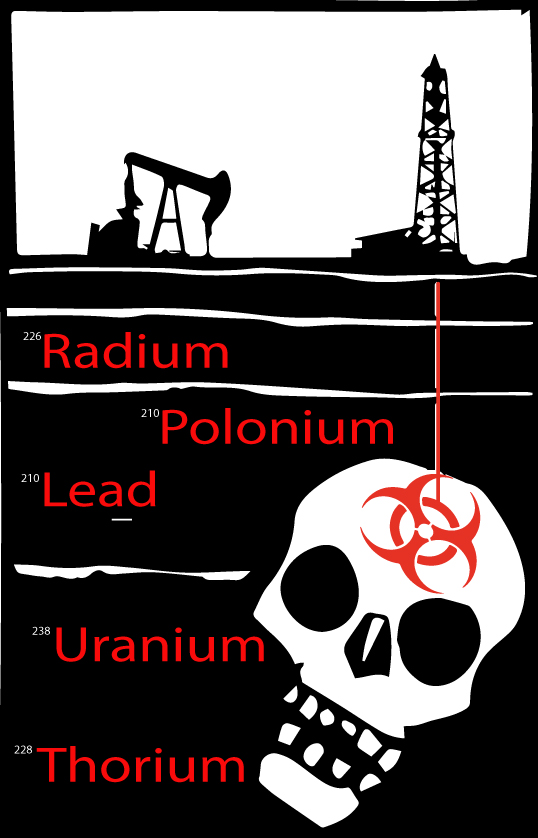
Government studies and peer-reviewed research have shown that oil and gas waste components can negatively impact human health and the environment. Some of these include high levels of salt, heavy metals, hydrocarbons, radioactive materials such as radium-226 and radium 228, and benzene — a known human carcinogen linked to increasing risk of cancers including lymphoma and Acute Myeloid Leukemia.
Other health impacts linked to oil and gas waste exposure include genetic and reproductive risks, bone cancer, chronic kidney disease and liver damage, and other forms of blood disorders, to name a few.
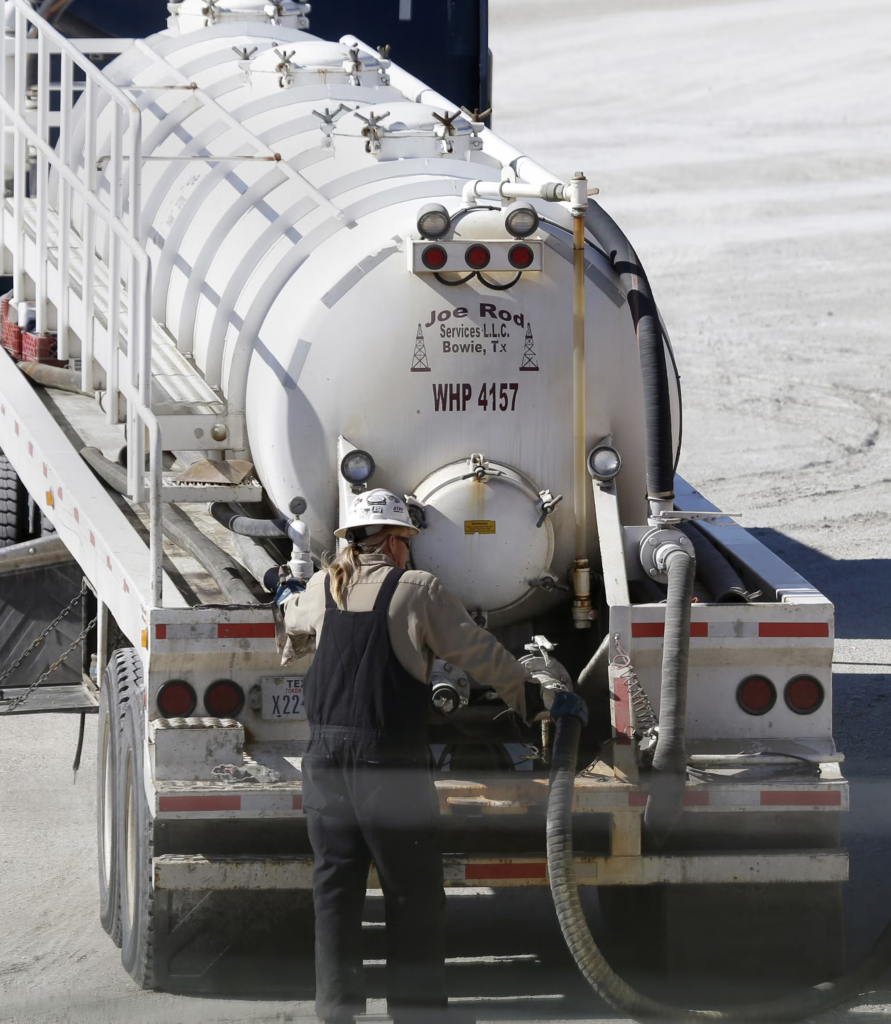
A truck driver connects his tanker truck to fracking waste water storage tanks at a facility outside the city limits of Reno, Texas. (LM Otero / AP)
New Mexico-based Pepe* has driven trucks for five years. Three of those have been spent hauling oil and gas waste in the same area where Jane operates.
“I used to haul sand, and I’ve been exposed to strong smells ever since. I’ve been feeling constant heartburn, but I endure these conditions because I am the sole breadwinner in my house,” says Pepe in Spanish, who is a husband and father of five, said.
In June, Earthjustice submitted a letter to the Department of Transportation on behalf of TMJ and Ohio Valley Allies, requesting that the department immediately enforce federal HAZMAT law for transportation of oil and gas waste. The letter also states that the Federal Motor Carrier Safety Administration must conduct a formal safety audit for all carriers operating in oilfields across the country.
The groups argue that shippers’ failure to properly class HAZMAT loads mean that truck drivers are not being given the training and licensing required to haul these materials. Furthermore, drivers often take routes — sometimes through neighborhoods, schoolgrounds, and other populated areas — that aren’t allowed under HAZMAT regulations.
Even though oil and gas waste has been exempt from the hazardous waste label since 1988, it still qualifies as a hazardous material and should be handled accordingly. The Pipeline and Hazardous Materials Safety Administration has determined that a substance does not need to be classified as “hazardous waste” to fall under federal HAZMAT rules.
According to the letter, drivers and community members have long raised alarms about exposure to hydrogen sulfide (H2S) gas in oil and gas production and waste. This type of gas is lethal in small amounts and has killed oil and gas workers and community members living in the vicinity of this infrastructure.
Active drivers are not alone in this fight. TMJ leader and retired driver Billy Randel, 73, was a HAZMAT hauler from 2003 until 2015. Due to health conditions and his age, he left the truck driving business a year ago. Throughout his profession, he witnessed the injustice some of his fellow truck drivers had to endure. This sparked his mission in 2005 to organize a strong group of drivers across the country.
In addition to health hazards, Randel underscored that the wages truckers receive do not measure up to the risks they face when hauling hazardous materials.
“Safety is an economic issue in our industry, and it’s an economic issue that is guided by the greed of the carriers and the industry itself. And that greed does not allow you to take proper precautions,” Randel says. “That is what causes a higher level of accidents and environmental issues. Because you’re not paying attention to what you do. You’re hustling for money, and when you hustle, you don’t give a damn about safety.”
Vehicle crashes are a leading cause of death in oilfields — accounting for two-thirds of worker fatalities in the Permian Basin, the nation’s highest-producing oil field, in 2023. Surges in heavy truck traffic are common in overburdened communities, from West Texas to Appalachia, jeopardizing public safety.
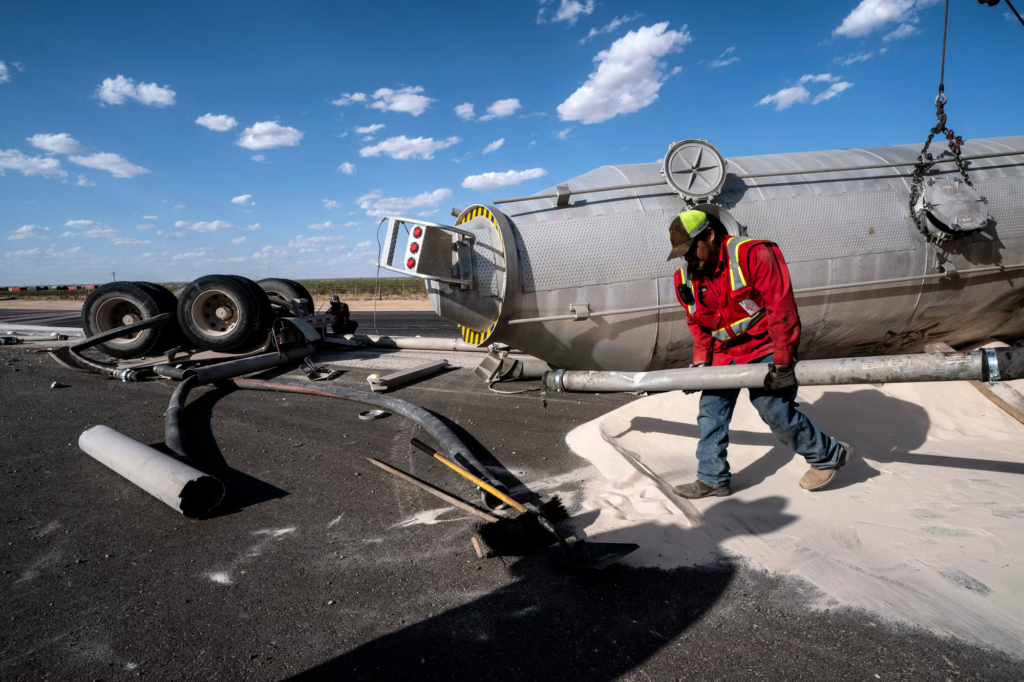
The aftermath of a truck crash that was hauling sand to a fracking site in the Permian Basin near Midland, Texas in 2018. (Benjamin Lowy / Getty Images)
Tom McKnight, also a retired HAZMAT driver who lives in central-eastern Ohio, spent six years of his life hauling oil and gas waste, until he was diagnosed with cancer in 2019. He learned about the TMJ and the Ohio Valley Allies, and so he joined forces with the groups to investigate locations that had been reported as particularly dirty oil and gas waste sites.
One common goal retired drivers, like McKnight, and active truckers share in this fight is described in one word: Transparency.
“I would like to see responsible steps taken to be able to still do the same work without a negative impact on people,” says McKnight. “There has to be a way.”
Editor’s note: Some of the names have been changed to protect truck drivers’ real identity.
 Refer also to:
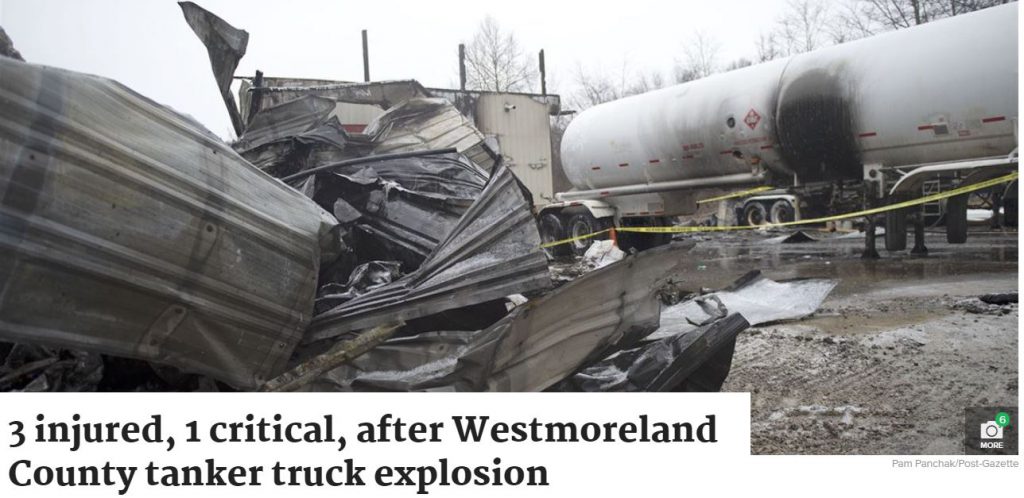
Updated Hartford Ohio: Brine tanker rolls, spills. Why call Hazmat if frac waste is perfectly safe?
Workplace Deaths Drop – But not in the Oil Industry
Fracking Injuries, deaths and dangers for workers and communities