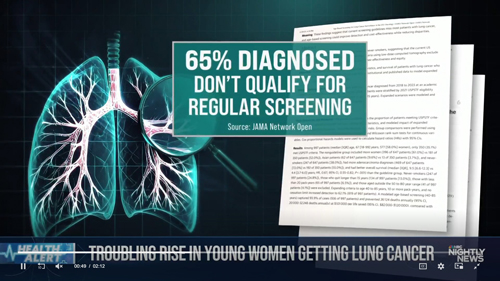
VIDEO: Troubling rise in young women getting lung cancer by Maggi Vespa, Nov 21, 2025
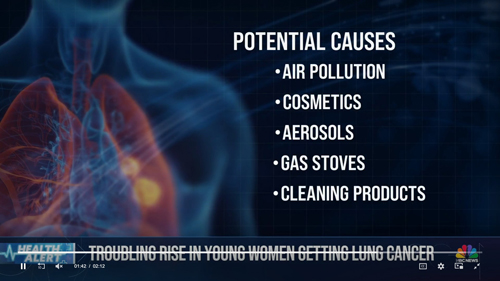
Doctors from around the country say they are seeing more cases of young women with no history of smoking being diagnosed with lung cancer. What’s behind the trend is unclear but the authors of a new study are calling for expanded screening guidelines to help catch more cases sooner.
More and more RADON released by fra’cing into homes, schools and businesses??
Wildfire smoke? Most people I observe during even thick wildfire smoke do no wear masks, and stupidly play with kids and walk babies in it.
***
Using Marcellus shale gas for cooking can present several health risks related to both the gas itself and the extraction process. Here’s an overview of the main concerns:
Health Risks of Cooking with Marcellus Shale Gas
Radiation Exposure
One of the significant concerns is radiation associated with the Marcellus shale. This gas can contain radon and other radioactive elements, which pose health risks, particularly when inhaled or ingested. Long-term exposure to these elements has been linked to serious health issues, including:
· Lung cancer from radon exposure
· Other cancers linked to ingested radium, including lymphoma and bone cancer
· Potential impacts on blood-forming organs, such as leukemia
Despite some studies claiming low radon levels in the gas, the presence of these radioactive elements remains a concern.
Chemical Contaminants
The hydraulic fracturing (fracking) process used to extract gas may introduce harmful chemicals into the environment. Many of these chemicals, often referred to as “forever chemicals” (like PFAS), can contaminate water supplies and accumulate in the human body, leading to:
· Hormonal disruptions
· Liver damage
· Increased cancer risk
The lack of transparency regarding the chemicals used in fracking amplifies these concerns.
Air Quality Issues
Burning gas for cooking can contribute to poor air quality indoors, as natural gas combustion can release pollutants, including nitrogen oxides and particulate matter. This can lead to:
· Respiratory issues, particularly in sensitive populations like children and the elderly
· Headaches, dizziness, and nausea from exposure to poor indoor air quality
Potential Health Effects from Proximity to Gas Wells
Living near fracking sites has been correlated with various health issues, including:
· Increased rates of childhood leukemia
· Higher incidences of respiratory illnesses
· Low birth weights in babies born to pregnant women near fracking operations
Psychological and Social Impacts
Fracking operations can also lead to stress and mental health issues due to environmental disruption and increased traffic, noise, and potential economic impact on local communities.
***
Evolving PFAS Regulations in Canada: What you need to know by Environment Journal, June 23, 2025
….Health Canada has released an updated drinking water objective, and both federal and provincial governments have published various non-regulated criteria to guide monitoring and management. …
PFAS Symposium – Edmonton, AB Nov 25, 2025, 8am – 5pm
PFAS Symposium – Calgary, AB Dec 4, 2025, 8am – 5pm
@ence.bsky.social:
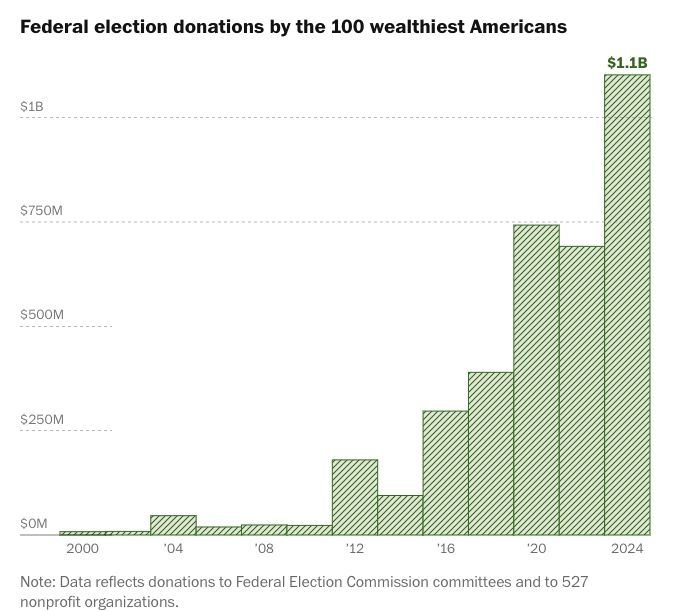
We spent a year investigating billionaires for @washingtonpost.com.
We found: the wealthiest 100 Americans gave $1.1 billion to influence the 2024 elections — 140x more than they did in 2000. And almost all of that giving boosted Republicans.
washingtonpost.com/politics/int…

EPA just approved new ‘forever chemical’ pesticides for use on food, Critics warn the EPA’s approvals of new PFAS pesticides could expose more Americans to “forever chemicals” through their food by Amudalat Ajasa, November 22, 2025, The NYT
The Environmental Protection Agency is moving forward with approvals for pesticides containing “forever chemicals” as an active ingredient, dismissing concerns about health and environmental impacts raised by some scientists and activists.
This month, the agency approved two new pesticides that meet the internationally recognized definition for per- and polyfluoroalkyl substances, also known as PFAS or fluorinated substances, and has announced plans for four additional approvals.
The authorized pesticides, cyclobutrifluram and isocycloseram, which was approved Thursday, will be used on vegetables such as romaine lettuce, broccoli and potatoes.

The agency also announced plans to relax a rule requiring companies to report all products containing PFAS and has proposed weakening drinking water standards for the chemicals.
“Many fluorinated compounds registered or proposed for U.S. pesticidal use in recent years offer unique benefits for farmers, users, and the public,” EPA spokeswoman Brigit Hirsch said in a statement.

 She’s as foul and shitty a liar as creepy cross-boasting show off Karoline Leavitt
Scientists and watchdog groups caution that much remains unknown about the health and environmental effects of fluorinated pesticides. PFAS have been linked to several kinds of cancer, birth defects, and damage to the liver and immune system, among other health problems.
The EPA approved at least one fluorinated pesticide during President Joe Biden’s administration, according to Hirsch. But beyond that, such applications were deprioritized under the Biden administration because of concerns about potential accumulation in the body and persistence in the environment, according to two former EPA officials, who spoke on the condition of anonymity to discuss internal deliberations. Worries about irreversible harm led to the more critical approach, one former official said.
“We made a deliberate decision to spend resources on other pesticides because of the PFAS concerns,” said the other former official.
Hirsch said criticisms of the approval of fluorinated pesticides was “just another example of partisan organizations pedaling mistruths.”Liar Hirsch tells us we’re the liars. Douche fucker queen, like mega liar Danielle Smith

“EPA has registered dozens of pesticides with fluorinated compounds spanning both Republican and Democratic administrations,” Hirsch said.
Manojit Basu, vice president of science policy and regulatory affairs at CropLife America, a group representing pesticide companies, praised the EPA’s commitment to “gold standard sciencepermanently poisoning everything on earth, including `all life”

“EPA’s scientifically rigorous and transparent fraudulent unscientific fabricated shit evaluation process for pesticides provides America’s farmers with access to innovative tools essential to delivering an affordable, abundant, and healthy legally poisoning America’s food supply,” Basu said in a statement.
An estimated 2.5 million pounds of pesticides containing forever chemicals are sprayed on California cropland annually, according to an Environmental Working Group analysis of state data released this week. The advocacy group found that between 2018 and 2023, nearly 15 million pounds of PFAS pesticides, from 52 fluorinated ingredients, were sprayed across the state on crops such as almonds, pistachios, tomatoes and grapes.
“We are creating new pathways for more PFAS to get into the environment when we already have so much,” said Melanie Benesh, vice president of government affairs at EWG. “We’re already inundated with PFAS.”
In the face of shifting federal regulations of forever chemicals, states such as Maine and Minnesota have moved to ban pesticides containing them. According to a 2025 report by Minnesota’s Department of Agriculture, PFAS pesticides made up 15 percent of all registered pesticide products across the state.
Manufacturers add PFAS to pesticides to make them more stable and more effective at lower concentrations, said Doug Van Hoewyk, a toxicologist at Maine’s Department of Agriculture, Conservation and Forestry. But this doesn’t make them inherently more toxic, he said.
“It is important to differentiate between the highly toxic PFAS such as PFOA and PFOS for which the EPA has set drinking water standards, versus less toxic PFAS in pesticides that help maintain food security,” Van Hoewyk said. He added that concerns about food residue depend on the PFAS and the quantity.
An estimated 22 million to 35 million pounds of PFAS pesticides are used each year, according to 2018 estimates by the U.S. Geological Survey.
“The data we have about the use of PFAS pesticides is already seven years old, and since there have been many new approvals during that time, those numbers are sure to underestimate the amount were using today,” said Nathan Donley, a senior scientist at the Center for Biological Diversity.
The Organization for Economic Cooperation and Development, which establishes evidence-based standards for its 38 member countries, defines PFAS as any chemical with at least one fully fluorinated carbon atom.
The EPA’s Office of Pollution Prevention and Toxics has adopted a more limited definition of PFAS as compounds with two or more fluorinated carbon atoms. But the Office of Pesticide Programs, which regulates pesticide approvals, has not adopted any definition of PFAS, “because it evaluates each substance individually using a comprehensive, science-basedprofit-raping corporate-controlled assessment process regardless of chemical structure,” Hirsch said.
Fluorinated active ingredients have been approved for pesticides by the EPA since the 1970s. But there has been an uptick in such approvals in the last decade, according to a comprehensive 2024 review of pesticide ingredients. As of 2021, 66 ingredients approved for use by the EPA meet the OECD definition.
“We’re consuming these chemicals,” said Bonnie Raindrop, program director of Maryland Pesticide Education Network. “What guardrails we have had are being taken apart systematically, and we are going to be exposed even more to these kinds of chemicals in our food or drinking water.”as is all non human life too
The PFAS pesticides awaiting approval by the EPA all contain fewer than four fluorinated carbon atoms. That makes them “ultrashort-chain” compounds, scientists say, which are highly mobile in the environment and hard to filter.
Linda Birnbaum, a toxicologist and former director of the National Institute of Environmental Health Sciences, said ultrashort-chain compounds do not accumulate in the body, but that doesn’t mean they aren’t toxic.
“My concern with the ultrashort-chains is that while they may not be biologically persistent, they are environmentally persistent,” Birnbaum said.
“If the levels get high enough, they will have an impact on us.”
Only one of the proposed pesticides, diflufenican, is approved for use in the European Union. It was one of six PFAS active ingredients recently banned by the Danish Environmental Protection Agency because of environmental concerns.
According to the EPA, two of the pesticides break down into TFA, a little-known PFAS commonly found in drinking water, food and the human body that has been linked to reproductive harms and liver damage.
But Hirsch dismissed concerns about TFA as “fearmongering” and said the agency’s review of the chemical found it “significantly less toxic than its parent molecule.”
Pesticides are the second-largest source of TFA in the environment behind refrigerants, according to research from the German Environment Agency. But while refrigerants spread TFA through the atmosphere, contamination from pesticides is more regional. Research has shown that TFA can accumulate in plants, said Helena Banning, a pesticide regulator and risk assessor at the German agency.
“There has to be some kind of accumulation mechanism, but this is not fully understood so far.
What we do know is that we have very high concentrations in our food,” Banning said. With “continuous emissions of TFA,” Banning added, “the concentrations in food and water will rise.”

Refer also to:
Rural Saint-Louis region, France: Tap water *banned* because of PFAS contamination
Australia Esso Longford plant: Toxic PFAS chemicals found in dam and groundwater