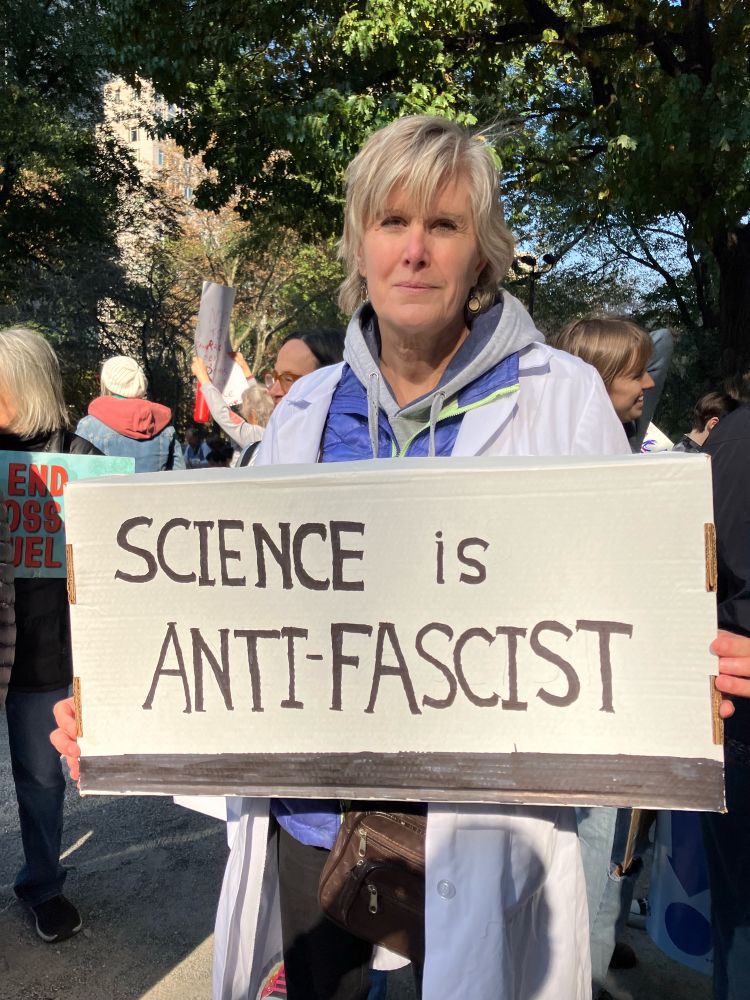
Dr. Sandra Steingraber at a protest with sign that says: “Science is Anti-Fascist”
An Open Letter from Authors of the Fourth Edition of the Reference Manual on Scientific Evidence, Twenty-eight scientists say political pressure to remove a chapter on climate science in a manual for judges is a troubling turn for other disciplines, too by Signatories, Mar. 2, 2026, Science Politics

Federal judges are not scientists. Yet they often must decide what scientific and technical expert testimony is reliable enough for a jury to hear.
That is why, for decades, the federal judiciary has relied on the Reference Manual on Scientific Evidence, a quiet but influential resource designed to help judges understand complicated scientific evidence without telling them what result to reach.
In January and February this year, that project took a troubling turn, in which partisan politics interfered with the latest edition of that handbook.
The Reference Manual was first published in 1994 by the Federal Judicial Center. The two most recent editions, including the just-published Fourth Edition, which this letter addresses, were developed in collaboration with the National Academies of Sciences, Engineering, and Medicine. The Federal Judicial Center, established by Congress, provides independent research and education to support the federal courts. The National Academy is a private, nongovernmental institution chartered by Congress in 1863 to advise the nation on science and technology.
For more than 30 years, the Reference Manual has been a valuable resource respected by federal and state court judges, who have cited it more than 1300 times. The United States Supreme Court cited the Manual’s discussion of DNA proof of paternity; Justices Samuel Alito, Antonin Scalia, and Elena Kagan each cited the Manual’s explanation of various scientific principles, including statistical concepts like “statistical significance” and “practical significance,” as well as its explanation of modeling damages.
Yet the Manual is not law. It does not decide cases. Nor does it point to which party should win any given case. It merely provides a tool to help judges better understand the scientific principles in the cases they confront.
As then-Chief Justice William Rehnquist wrote after publication of the Second Edition: “The Manual does not instruct judges about what evidence to admit or exclude.
Instead, it helps judges identify and narrow issues in areas ranging from multiple regression analysis, to epidemiology, to engineering practices and methods.”
Consistent with the Manual’s role, prosecutors and defense attorneys as well as plaintiffs and defendants in all manner of civil litigation have consulted the Manual and pointed to it in support of their cases.
The Manual’s independence and objectivity explain its enduring usefulness. As authors of various materials in the Reference Manual, some going back to the First Edition, published over 30 years ago, we have observed first-hand the care with which potential authors are assessed for their expertise, ability to write as objectively as humanly possible, and awareness of how that science is used as evidence in litigation.
We have also experienced the extensive and rigorous peer review conducted for every chapter in the Manual, which includes a National Academy internal committee that reviews and approves every chapter before it is sent out to independent external experts for additional review. For every edition, including the recently published Fourth Edition, this extensive vetting has resulted in multiple rounds of revisions that successively improve each draft.
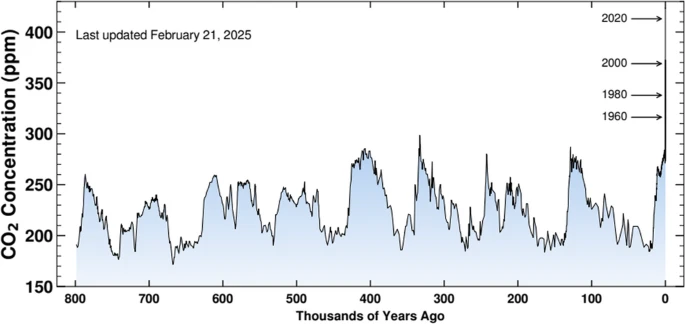
Climate Science Has Been Removed from the Reference Manuel
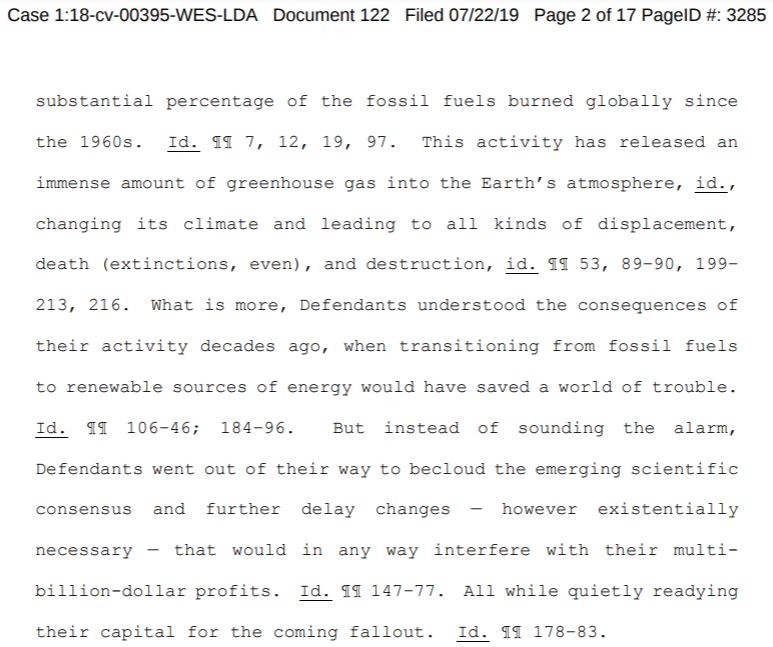
We were therefore distressed to learn of a letter by 27 Republican state attorneys general, led by J.B. McCuskey of West Virginia, that attacked the chapter on climate science included in the Fourth Edition of the Reference Manual. The letter claimed that the chapter was biased and would compromise the impartiality of the judiciary. A week later, Judge Robin Rosenberg, the Director of the Federal Judicial Center, responded that the climate science chapter had been omitted from the Reference Manual.

The political attack by the attorneys general on a carefully and rigorously prepared scientific publication should concern us all.
Omitting the climate science chapter from the Reference Manual deprives judges of a carefully reviewed baseline explanation of the relevant science. It leaves judges without a tool to evaluate the parties’ framing, sometimes cherry-picked literature, and adversarially hired and paid witnesses.
In other words, omitting the chapter makes the very condition that prompted the Manual’s creation — high-stakes litigation featuring complex science — even more difficult for judges to manage and could, as a result, hurt litigants on both sides of climate litigation.
For three decades the Reference Manual has met a critical need. It can only do so by explaining, rather than avoiding, the science underlying many “cases or controversies” that the Constitution charges courts to decide.
As with every chapter in the Manual, the description of the scientific principles in the climate science chapter went through extensive peer review.
The coordinated effort by 27 state attorneys general to remove that peer-reviewed content is a direct challenge to the independence of the federal judiciary and an attack on a thoroughly vetted exposition of climate science that those attorneys general do not like. but do these Republican AGs like raping kids, like and like protecting pedophiles, especially their orange painted kid rapist science hater Nazi Chief?
Climate-related litigation is not going away. Judges will continue to confront complex scientific evidence in these cases, and they will now have to do so with or without the benefit of a carefully reviewed educational resource.
If political actors can determine which fields of established science are disfavored and off-limits to judicial education, every scientific discipline relevant to complex litigation becomes vulnerable to the same tactic. The integrity of the process by which judges evaluate scientific evidence should not be subject to political interference or veto.
The signatories to this letter are each signing in their individual capacities and not as representatives of the institutions or employers with which they are affiliated.
Co-authors of the Reference Manual
/s/ Chaouki Abdallah
Georgia Tech
Co-Author of Engineering Chapter
/s/ Paul S. Appelbaum
Columbia University
Co-Author of Mental Health Evidence Chapter
/s/ Valema E. Beety
Indiana University
Co-Author of Forensic Feature Comparison Evidence Chapter
/s/ Bert Black
SchaeferHalleen, LLC
Co-Author of Engineering Chapter
/s/ David Card
University of California at Berkeley
Co-Author of Multiple Regression and Advanced Statistical Methods Chapter
/s/ Jonathan Chevrier
McGill University
Co-Author of Epidemiology Chapter
/s/ David DeMatteo
Co-Author of Mental Health Evidence Chapter
/s/ Shari S. Diamond
Northwestern University
Co-Author of Survey Research Chapter
/s/ James N. Druckman
University of Rochester
Co-Author of Survey Research Chapter
/s/ David L. Eaton
University of Washington
Co-Author of Toxicology Chapter
/s/ Brenda Eskenazi
University of California at Berkeley
Co-Author of Epidemiology Chapter
/s/ Nita Farahany
Duke University
Co-Author of Neuroscience Chapter
/s/ Steve C. Gold
Rutgers University
Co-Author of Epidemiology Chapter
/s/ Lawrence Gostin
Georgetown University
Co-Author of Medical Testimony Chapter
/s/ Hank Greely
Stanford University
Co-Author of Neuroscience Chapter
/s/ Michael D. Green
Washington University in St. Louis
Co-Author of Epidemiology Chapter
/s/ Kirk Heilbrun
Co-Author of Mental Health Evidence Chapter
/s/ Mary Henifin
Co-Author of Toxicology Chapter
/s/ Laurie N. Hobart
Syracuse University
Co-Author of Artificial Intelligence Chapter
/s/ Matthew Kugler
Northwestern University
Co-Author of Survey Research Chapter
/s/ M. Elizabeth Marder
University of California at Davis
Co-Author of Exposure Science and Exposure Assessment Chapter
/s/ Jane Moriarity
Duquesne University
Co-Author of Forensic Feature Comparison Evidence Chapter
/s/ Joe Rodricks
Co-Author of Exposure Science and Exposure Assessment Chapter
/s/ Andrea Roth
University of California at Berkeley
Co-Author of Forensic Feature Comparison Evidence Chapter
/s/ Daniel L. Rubinfeld
New York University (Emeritus)
Co-Author of Multiple Regression and Advanced Statistical Methods Chapter
/s/ Edl Schamiloglu
University of New Mexico
Co-Author of Engineering Chapter
/s/ Anastasia Thanukos
University of California at Berkeley
Co-Author of How Science Works Chapter
/s/ Michael Weisberg
University of Pennsylvania
Co-Author of How Science Works Chapter
Refer also to: