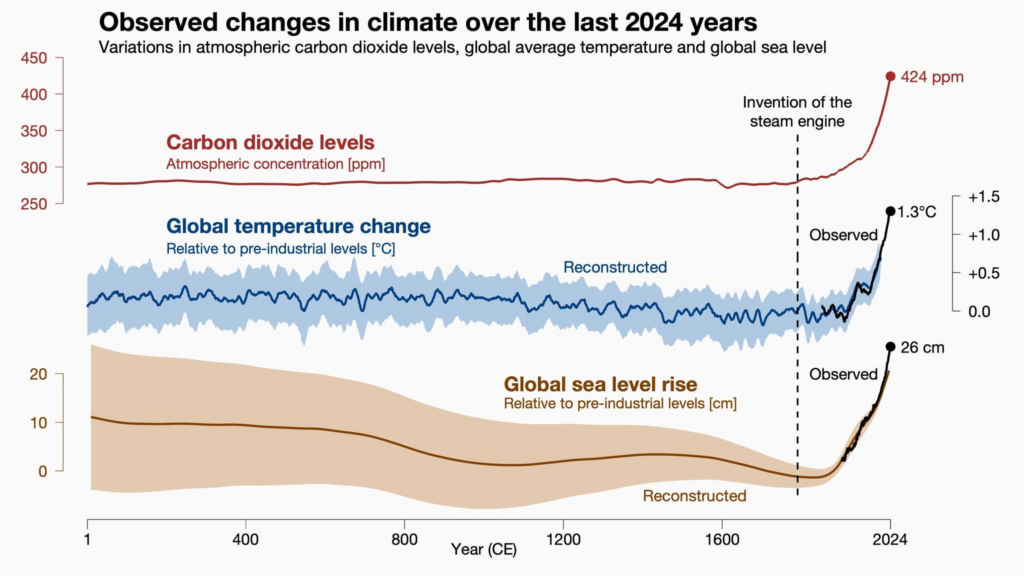

Will Homo naziens change their toxic ways? No, of course not, there will be more babies for the rich to rape, more greed, more & bigger bombs, more & bigger trucks, more & bigger houses, more holidays on more & bigger planes and more & bigger cruise ships, and more stupid stolen AI and more & bigger churches to convince us to keep making more babies and pollution because god will clean up for us.
There is no god to save us, and even if there was a god, she’d not clean up our pollution because she’d know saving us means sacrificing most other life on earth. I care about that other life, and earth herself, and cannot understand why most humans don’t, even those brain washed by religion.
I think human bodies will give out long before 50 years from now. We’re loaded with toxic chemicals from head to toe, getting more contaminated every breath we take, every sip of water we drink, every bath or swim in a lake, every piece of clothing we wear, every meal we eat (if fortunate enough to have food), every walk barefoot.
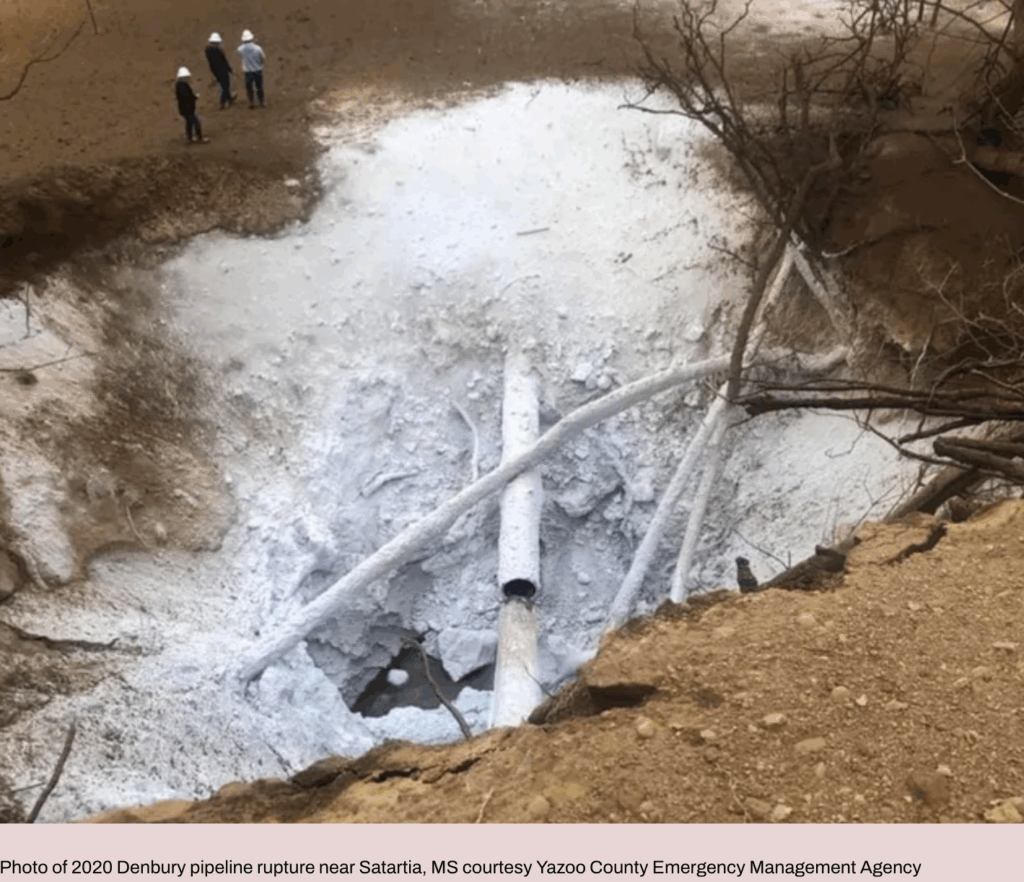
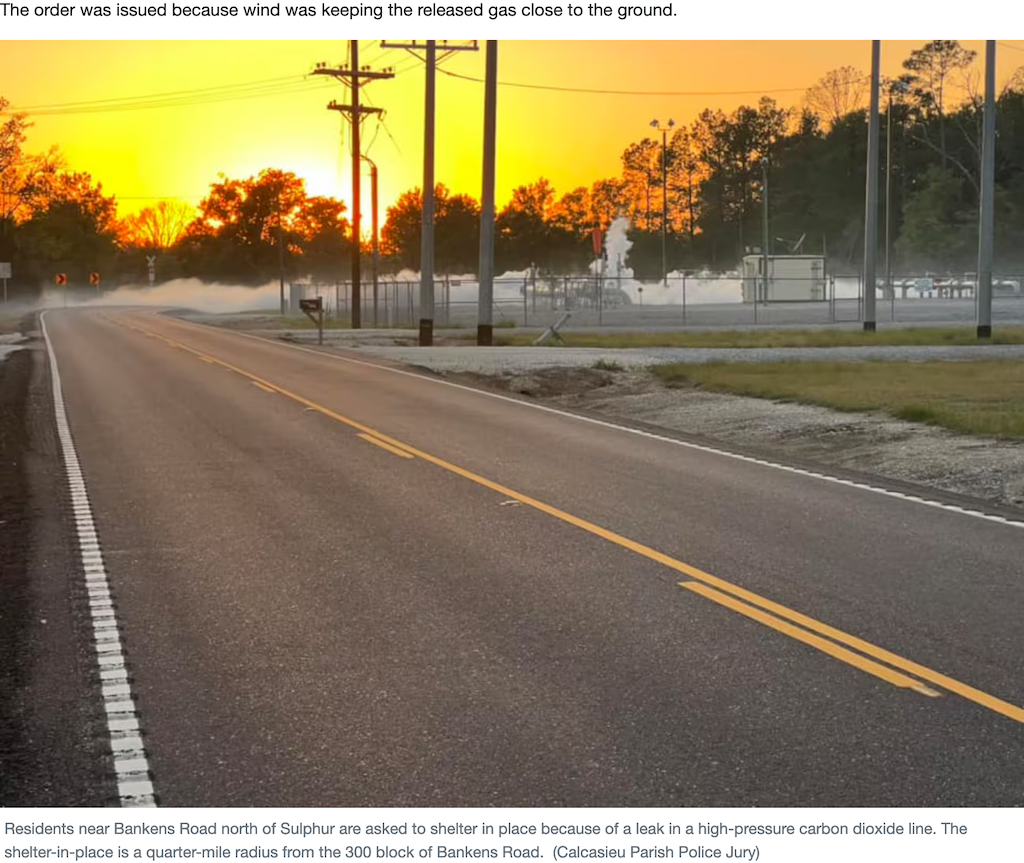
Top all that with intentionally poisoning water via frac’ingand permanently removing much of it from the hydrogeological cycle and future use; frac’ing with CO2; injecting CO2 to get more oil; and or “permanently sequestering it” underground only to have that CO2 leak back up and kill.

George Tsakraklides @99blackbaloons:
As long as this planet continues to be run as a for-profit business rather than a community of 10 million species, most life on Earth is destined to vanish

@BrettPVN:
If we wipe ourselves out in the process it’s the best thing we can do for the planet
***
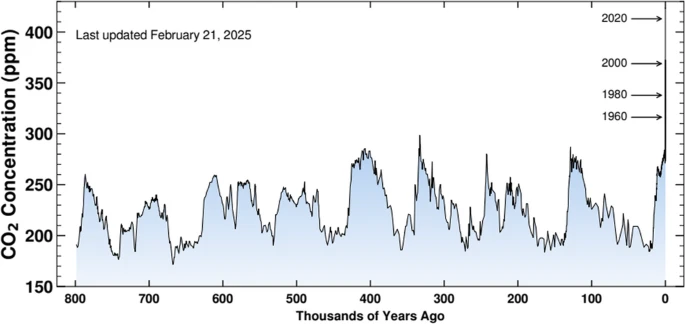
figure 1: Atmospheric carbon dioxide concentrations (in ppm) over the last 800,000 years, based on measurements of air trapped in Antarctic ice (Lüthi et al., 2008; Rubino et al., 2019), and direct measurements made at the Mauna Loa Observatory (1958 to present) (Keeling et al., 2005)
 Take a close look at that fucking graph!!

Carbon dioxide overload, detected in human blood, suggests a potentially toxic atmosphere within 50 years by Alexander N. Larcombe & Phil N. Bierwirth, 26 February 2026, Volume 19, article number 44, (2026)
Air Quality, Atmosphere & Health (2026) 19:44
https://doi.org/10.1007/s11869-026-01918-5
Abstract
Anthropogenic activities are increasing the amount of carbon dioxide (CO2) in the atmosphere. There is mounting experimental evidence that lifetime exposure to these increasing atmospheric CO2 levels can negatively impact the normal physiology of organisms. However, directly assessing this in humans is very difficult. We analysed serum bicarbonate (HCO3−), calcium (Ca) and phosphorus (P) levels from the U.S. National Health and Nutrition Examination Survey (NHANES) from 1999 to 2020 as indirect proxies for atmospheric CO2 exposure.
Over this period, average bicarbonate levels in this population show an increasing trend which parallels rising atmospheric CO2 concentrations. Both Ca and P have decreased steadily over the same period. If these trends continue, blood bicarbonate values could be at the limit of the accepted healthy range in half a century, and Ca and P will be at the limit of their healthy ranges by the end of this century.
Studies indicate that, after this time, elevated atmospheric carbon dioxide, leading to CO2 accumulation in the body, has the potential to cause a range of adverse health effects. These findings highlight the urgent need for significant reductions in anthropogenic CO2 emissions to safeguard public health.
…
Conclusions
The analysis of average blood HCO3− levels in a large human population shows an increase between the years 2000 and 2020, while both calcium and phosphorus show a decrease over the same period. The increase in average blood HCO3−(~ 0.34% per year) is comparable to the increase in atmospheric CO2 levels (~ 0.5% per year). This trend suggests there may be a causal link between ambient CO2 and systemic bicarbonate levels, a finding that warrants additional attention.
Trend analysis suggests that HCO3− levels will be at the currently accepted limit of the healthy range within 50 years, with calcium and phosphorus reaching the currently accepted minimum levels shortly after.
Clearly these are estimations, as there are uncertainties due to factors such as variations in the numbers of participants, their environment leading up to blood sampling and differences in measurement procedures during each collection. Also, the relationships may not be linear.
However, on the face of it, this raw analysis of biochemical data suggests the distinct possibility that, within a half century from now, HCO3− levels in human blood will reach unhealthy levels. What effects this may have on physiology remain to be elucidated, but urgently need to be considered.
Given that the entire evolution period for humans has seen a stable and relatively low atmospheric CO2 level (< 300 ppm),it’s possible that our physiology is finely tuned for a range of CO2 that will not be much greater than this level. As the atmospheric CO2 levels rise, already at 420 pm, the increasing levels of bicarbonate, and decreasing levels of calcium and phosphorus in our blood represent permanent and growing changes in human blood chemistry.
These changes can be explained by CO2 retention and overload in the body. The extra CO2 being inhaled isn’t expelled via increased ventilation, as ventilation rate is controlled by pH which has likely remained stable due to acid-base regulation.
CO2 storage in the body then becomes a major issue presenting a risk to population health and an existential threat for many species especially given that the rise in atmospheric CO2 may be a phenomenon that has significant momentum. Realistically, to mitigate this approaching threat, the alarm needs to be raised immediately.
Unfortunately, currently there is little awareness or inclination for action on this issue.
***
***