
@gannetseas.bsky.social:
“At nearly every oil and gas site, leaks also produced benzene, a known carcinogen, as well as other chemicals that have been shown to harm bone marrow, weaken the immune system, impair the nervous system, as well as cause headaches, dizziness, vomiting, and fatigue.”
@btwinter.bsky.social:
Is this a harbinger for Asia? That’s where #CDN LNG is supposed to go. How strong is demand?
@nickcunningham.bsky.social:
China’s LNG imports down 9% in July from same month in 2024. That’s the 10th straight month of year-on-year decline in LNG imports
China’s LNG Imports Set to Fall for 10th Month, Kpler Data Show by Sing Yee Ong, August 27, 2025, Bloomberg
China’s imports of liquefied natural gas are poised to decline for a 10th straight month on a year-on-year basis, according to data from Kpler, due to robust piped supply and higher domestic output.
Deliveries in August are expected to be around 5.93 million tons, figures from Kpler show, which tracks shipping data. That would be around 9% lower than a year ago when compared with official volumes.
China’s LNG demand has been soft this year, mostly due to strong flows of piped gas from Russia and Central Asia, as well as rising domestic production. Higher international spot prices have also prompted the nation’s importers to trim purchases, even reselling cargoes to capitalize on higher prices abroad.
China’s LNG Purchases to Extend Slump into Tenth Month
Note: August 2025’s value is an estimate based on ship-tracking data compiled by Kpler
Inbound shipments have ticked higher month-on-month as importers take advantage of lower spot prices and inventories are replenished. On a 30-day moving average basis, LNG flows were above the five-year average for most of the month, according to ship-tracking data compiled by Bloomberg.
However, the rebound is unlikely to last due to softer industrial demand, and BloombergNEF sees China’s 2025 imports 11% lower year-on-year.
— With assistance from Stephen Stapczynski
Wall Street shifts toward renewables as it sours on fossil fuels by Tim McDonnell, Aug 7, 2025, semafor
Wall Street is falling out of love with fossil fuels, and showing more affection for renewables.
Financing for oil, gas, and coal projects from the top six US banks fell to $73 billion in the first seven months of the year, down 25% from the same period last year, according to a Bloomberg analysis.
The data, analysts say, show that banks have an “it’s complicated” relationship with the energy transition: While all these same banks have dropped out of net zero groups in the past year, they are clearly souring on the prospective returns from fossil fuel projects. Private equity investors, meanwhile, are increasingly piling into renewables. Dedicated infrastructure funds raised $134 billion in the first six months of the year, more than they raised in all of 2024. More than one-third of that was for renewable-focused funds, according to an analysis by the investment firm Generate Capital.
“The fundamentals of the [renewable energy] market are just incredibly strong,” Logan Goldie-Scot, Generate’s vice president of research, told Semafor, because few other technologies are ready and able to meet the country’s surging power needs. But the economics of renewables will become more challenging as tax credits phase out, he said, so infrastructure investors feel they are under a ticking clock to get the best returns.
Pakistan to Ask Qatar to Defer LNG for Years on Weak Demand by Stephen Stapczynski and Faseeh Mangi, August 25, 2025, Bloomberg
Pakistan plans to ask Qatar to delay delivery of liquefied natural gas supply over the next five years as the South Asian country grapples with weak demand and mounting import costs.
Government officials are in Qatar this week to request a delay for delivery of two LNG shipments per month in 2026, according to people with knowledge of the matter. The deliveries would be rescheduled to after 2031, the people said. Pakistan imports about nine cargoes from Qatar per month.
Pakistan’s Petroleum Division didn’t immediately respond to a request for comment.
The move is a stark turnaround for Pakistan, which just a few years ago was suffering from a gas shortage. Power demand has dropped since the government was forced to increase power rates in order to secure loans from the International Monetary Fund, a move aimed at reducing utility debts. A boom in solar generation has also cut consumption.
Utilities have also shied away from using imported LNG, as it is costlier than other fuels, further exacerbating Pakistan’s oversupply. Pakistan has also slowed cheap domestic gas output to accommodate excess LNG supply.
Pakistan already deferred several Qatari LNG shipments for 2025 into 2026, and has also asked its other supplier — Eni Spa — to divert
deliveries. Pakistan will request further delays between 2027 to 2030 due to weaker-than-expected demand and fears of rising debt, the people said.
The requests come after Petroleum Minister Ali Pervaiz Malik said in an interview with Geo TV earlier this month that Pakistan would exercise options available in the agreement with Qatar to adjust for current demand.
Asia Faces Zero Growth in Demand For Petroleum Products by Irina Slav, Aug 24, 2025, Oilprice
- Kpler sees oil product demand rising only ~0.84 mb/d in 2025 and ~0.88 mb/d in 2026.
- Europe’s gasoline and jet demand remain firm but face jet and diesel shortages amid refinery closures.
- Weak consumer confidence and EV adoption cap oil demand growth.
Earlier this week, China’s Sinopec reported a plunge in its first-half profit, citing subdued fuel demand as a reason. According to Kpler, sluggish fuel demand is a global trend, and it is set to extend into next year as well.
The energy research and analytics company reported this week that it expected global fuel demand to rise by some 840,000 barrels daily, which would accelerate modestly to 880,000 barrels daily in 2026. Kpler analyst Esteban Moreno cited weakened consumer confidence as one driver of the fuel demand trends and the proliferation of electric vehicles.
The trend of EVs undermining demand for oil products appears to be especially visible in the Asia-Pacific, the Kpler report suggests, as analysts see no demand growth in that region for this year at all. One reason for the forecast is China’s petrochemical overcapacity. Another is slower economic growth. Ageing populations in the region, as well as improvements in fuel efficiency, would also contribute to zero demand growth in 2025.
In China specifically, Kpler sees an actual decline in the demand for petroleum products this year, in part because of the trade war with the United States, which has affected certain fuel markets, most notably that for liquid petroleum gas. Of course, EVs are also affecting oil product demand in China, especially in the gasoline segment, while LNG-fueled trucks are undermining diesel demand in the world’s largest importer of crude.
Speaking of LNG, the outlook for gas demand in Asia is a lot brighter than the outlook for crude oil. There is virtually no forecast that sees gas demand getting destroyed by EVs. On the contrary, the electrification of transport and the boom in data centers will drive demand for electricity much higher everywhere there is electrification of transport and a data center industry.
Last month, Morgan Stanley forecast that Asia would see the strongest rate of gas demand growth, at an annual 5%, which would exceed the demand growth rates in other key regions such as Europe and the United States, where the rate of growth is seen at 1% and 3%, respectively.
“Consumption of natural gas will rise much quicker than most fuels for the rest of the decade, making it more than just a transition fuel,” said Mayank Maheshwari, head of Morgan Stanley’s energy and utilities coverage in India and Southeast Asia. “Natural gas has become the backbone of energy security and has an essential role in fulfilling the world’s insatiable electrification needs, which have more than tripled in the last half decade.”
If electrification continues at the current rates, then the longer-term outlook for oil is no better than the short-term projections. It is worth remembering, however, that these projections are based on factors that may change. This is why Kpler noted in its report that if the trade war ends and global economic growth picks up the pace, demand for oil products in Asia and specifically China will improve, too.
Europe, meanwhile, has served something of a surprise in oil product demand. Despite governments’ efforts to accelerate the rollout of electric vehicles, fuel demand on the continent remains robust. Indeed, Kpler sees growth in gasoline and jet fuel demand in Europe this year, but a decline in fuel oil and naphtha. Indeed, the International Air Transport Association recently warned Europe was facing a jet fuel shortage resulting from a decline in domestic supply coupled with steady demand growth, again despite the green push that, among other things, aims to discourage Europeans from flying.
“The progressive closure of refineries and the decline in domestic jet fuel production have increased Europe’s reliance on imports, jeopardizing energy security for the aviation sector,” IATA said this week. Europe has tightened environmental regulations on refineries severely in the past few years, which has resulted in a series of closures that have limited domestic refining capacity.
According to FGE, Europe is also facing a diesel shortage in the second half of the year due to a decline in the availability of U.S. diesel. The firm attributed the forecast to “U.S. capacity closures and a heavier autumn maintenance schedule” as well as to price changes that would render fuels more expensive for European buyers.
It is worth noting that Europe’s oil product consumption remains steady despite its negligible economic growth over the past couple of years. If that improves, it is likely that Europe too will see a pickup in oil product demand. Meanwhile, the U.S. will also see stable if not huge growth in fuel demand driven by heating during the winter months and a steady rise in air travel, Kpler also said.
Gasoline demand in North America, however, is seen declining in 2026, again driven by tighter fuel efficiency standards, and diesel demand will be affected adversely by the impact of tariffs on freight activity, Kpler also said in its report.
@justinmikulka.bsky.social:
They were hoping oil demand would grow by 1.8 million barrels this year. It is likely to be under 800,000. that is a big deal. Once global oil demand flatlines, the oil industry is fucked. Decline and they start to eat their own.
I want faster results too. In this shitshow, that isn’t possible.
… They didn’t see this coming. Their plan is to trade LNG to each other.
Saudi Arabia has a really big problem if oil prices don’t spend a lot of time over $90 a barrel in the future. And that is a very unlikely scenario at this point.
@ggaatplay.bsky.social:
renewable energy now in place is starting to have geopolitical impact. But, there are still billions too many humans making more and more humans every day fast destroying earth’s ability to sustain life: extreme plastics in every being and everywhere; extreme heat killing many; extreme wildfires adding more toxic pollution to already bad toxic pollution everywhere; not enough food for wild beings or humans and farmed animals; other species being wiped out faster and faster and more viciously by us hideous humans; extreme winds, rains, storms, destroying life and infrastructure faster than humans can rebuild; etc. Life on earth is already torture for billions of humans, and other species. Never would I have forced another being into life to endure humanity’s pollution, cruel selfishness and abuses
@asclepias1978.bsky.social:
Did a blog on wet bulb vs dry bulb temps a while ago. Basically, if it gets so hot that sweat cannot evaporate, we’re done for.
Map Reveals Toxic Pollution Leaking from U.S. Drilling Sites by E360 Digest, Aug 25, 2025

Scientists have shown that U.S. oil and gas drilling sites are not just leaking methane but also a host of toxic chemicals that pose an urgent threat to the health of those living nearby. A new interactive map details the impact of hundreds of major leaks.
Scientists have long focused on emissions of methane which, though not toxicIncorrect! Methane is toxic. It’s an asphyxiant; it can kill quickly and it harms health, notably neurological. Refer below to Alberta Health’s secret admissions, is a highly potent heat-trapping gas. But less is known about the other chemicals that may be seeping from oil and gas wells and storage tanks. To better understand the risks, scientists at the think tank PSE Healthy Energy scoured thousands of regulatory records spanning 11 gas-producing states, from Colorado to Pennsylvania, which listed the chemicals found in drilled gas.Imagine how bad oil and gas pollution is in industry regulating itself Alberta with it’s rogue charter-violating, lying, bully of the harmed AER.
“What we have found is surprising,” Seth Shonkoff, head of PSE Healthy Energy, recently told reporters. Leaked gas is “not just methane. It’s actually closer to a chemical soup.”

At nearly every oil and gas site, leaks also produced benzene, a known carcinogen, as well as other chemicals that have been shown to harm bone marrow, weaken the immune system, impair the nervous system, as well as cause headaches, dizziness, vomiting, and fatigue. The research was published in Environmental Research Communications.
Using their findings, as well as publicly available information on methane emissions from oil and gas sites, scientists created an interactive map showing the plumes of toxic pollution that issued from more than 1,300 major leaks.
They found benzene reached unhealthy levels in 99.7 percent of cases.
Efforts are underway worldwide to tamp down on methane leaks to help curb warming, but progress has been halting. President Trump recently gave drillers a reprieve from a rule meant to stem emissions of methane.
Scientists say their research on the toxic chemicals found alongside methane adds greater urgency to efforts to plug leaks.
Said Kelsey Bilsback, a scientist at PSE Healthy Energy, “If we are to roll back regulations and rules, and the amount of methane emissions goes up, more than likely, there’s going to be greater health risks.”
@ctvnewskitchener.bsky.social:
‘Given the opportunity, we can do things for ourselves’: An $82M Indigenous owned solar project begins – An entirely owned and operated First Nations solar project set to provide renewable energy to a major mining operation in Saskatchewan is underway.
How a solar energy company is trying to lower Arctic communities’ diesel dependency, Green Sun Rising is based in Canada’s southernmost city, Windsor, but has 66 solar installations in the North by CBC News, Aug 24, 2025

A solar energy company in Canada’s southernmost city says it is reducing carbon emissions in Canada’s north by nearly 1.3 million kilograms per year.
Green Sun Rising completed another four solar installations in Nunavut this summer – in Pond Inlet, Grise Fiord, Arctic Bay and Clyde River.
That brings its total number of installations across the Northwest Territories, Nunavut, Nunavik and Labrador to 65; Green Sun also has a single installation in northern B.C.
“The total of 66 solar systems we presently have in operation across the Canadian North … are avoiding over 500,000 litres of diesel every year,” said Klaus Dohring, the president of the Windsor-based company.
“And this is diesel in the community. I cannot quantify the energy required to bring the diesel to the community.… But I’m estimating that you can add easily 20 per cent to the cost for simply transportation and storage.”
The four new solar installations in Nunavut are connected to the Qulliq Energy Corporation’s Commercial and Institutional Power Producers Program, a program that allows government departments, hamlets and businesses to generate electricity using renewable energy systems and sell it to the utility.
Integrating solar vs. guarding against outages
Green Sun Rising also has a number of installations in Nunavut under QEC’s net metering program, which allows residential customers and one municipal customer per community to generate their own electricity from renewable energy sources and integrate it into the corporation’s grids.
In return, customers receive credits for any surplus power they deliver to the grid.
Other provinces and territories have similar programs.
But the growth of solar in the North is slowed by policies aimed at protecting energy grids from the inconsistent supply of power from renewable sources, Dohring said.

Diesel generators were not traditionally built to handle the kind of fluctuations in demand that come from having renewable energy sources go online and off-line as the weather changes, said Doug Prendergast, the manager of communications for the Northwest Territories Power Corporation.
“You end up with something called ‘generator cycling,'” he said.
“There … could be issues where the diesel generator couldn’t adapt as quickly as it would need to and … the result would likely be an outage.”
The N.W.T. Public Utilities Board currently caps the amount of third-party-generated renewable energy on the grid at 20 per cent.
Nunavut’s Qulliq Energy Corporation (QEC) has no formal cap because it has very few renewables on its grids, CEO Ernest Douglas said.
But both Dohring and the senior administrative officer of Grise Fiord said QEC has restricted the Green Sun Rising facility’s output in that community.
Building confidence in renewable energy
Dohring said grid stability is very important but also described QEC’s restriction as “super conservative.”
“The agreement with them is that they will use the next three years of runtime, operating time, and then overtime,” he said.
“As they gain more experience and confidence, we will revisit the limitation and then open it up.”
Douglas said any restriction on the output of the Green Sun project was likely put in place by one of QEC’s engineers based on the specifics of the project and grid.
Grise Fiord received a new diesel generator in 2019 that is capable of integrating renewables, according to the Canada Energy Regulator.
Prendergast said new technologies such as variable-speed diesel generators, which can better respond to the sudden changes in the output of renewable energy sources, are making it easier for utility companies to integrate renewables into their grids.
So, he said, are battery storage systems and microgrid controllers, which better coordinate the components of an energy grid.
In N.W.T., the minister responsible for the Public Utilities Board issued a directive to the board in April to increase the cap on renewable energy generation to at least 30 per cent of the average annual load demand.
Prendergast said the 20 per cent cap was put in place in 2014 when there was less knowledge about how renewables would operate in a northern climate, and the plan was always to revisit it once utilities had more experience with them.
- Nuclear power no solution for the N.W.T., some experts suggest
- Is it worth it to put solar panels on your home?
“That’s really what has been happening, and we’ll see where it winds up,” he said.
Currently, nearly all of the electricity generated in Nunavut and the Nunavik region of Quebec comes from diesel fuel according to the Canada Energy Regulator and Natural Resources Canada.
Approximately a fifth of the energy generation in N.W.T. is also from diesel, according to the territorial government.
And there are 23 communities in Newfoundland and Labrador that are reliant on diesel generation, including 16 along the Labrador coast, NL Hydro says on its website.
Refer also to:
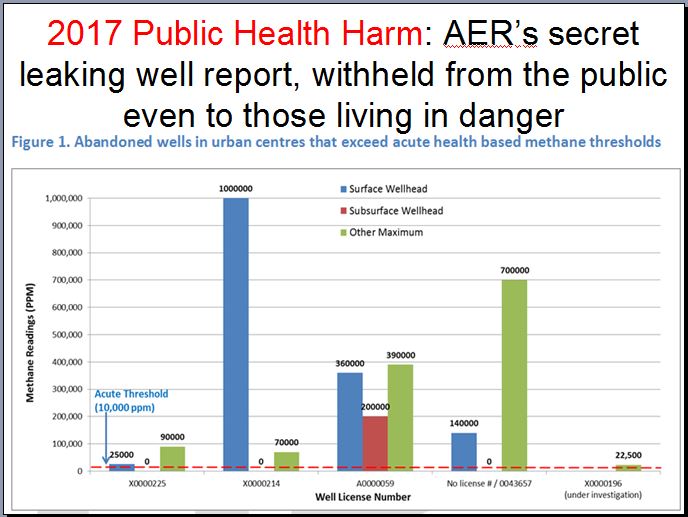
Note carefully the red dotted line in table above.
@ssteingraber1.bsky.social:
That’s 247 U.S. funerals per day—every day of the year—just from the air pollution created by two of the three fossil fuels.
Some of the dead are people you know.
It’s not okay that our energy system demands literal human sacrifices. Alternatives exist.
@profbobhowarth.bsky.social:
New study shows health damage in US from oil & gas emissions, 90,000 premature deaths nationally, with California, New York, and Texas suffering the most.I expect it’s as bad or worse in oil and gas industry’s subsidized, gang raped, self-regulated corruptly governed Alberta
2025: And then, there’s deadly leaking H2S too! Norfolk Co, Ontario: Brain and nervous system harming H2S leaking from gas well. Wise Norfolk county residents (suffering many health harms) urge fast action on the toxic sour gas leaks. Geochemist: It’s ‘by far the largest problem in Ontario’ of its kind. And there’s the serious climate harming impact too.
etc.
etc.
etc.
etc.