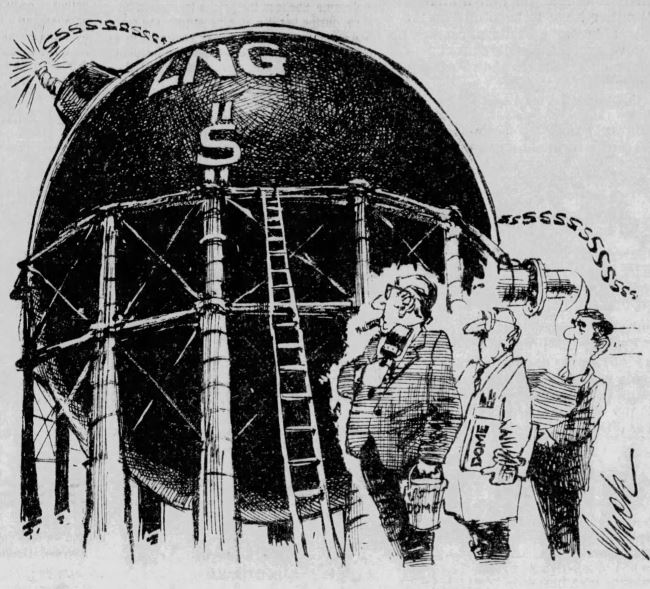
Welcome to Rape, Pollute and Pillage Canada, where politicians and “regulators” serve billion dollar profit raping polluters (and give them billions of our tax dollars), not the citizens who pay the regulators’ and politicians’ wages and expenses:
Start-up emissions at B.C. LNG plants systematically underestimated, finds study, Researchers say B.C. regulators have underestimated pollution by ignoring LNG terminal start-up emissions by Stefan Labbé, Sep 24, 2025, Business Intelligence for BC

A new study has found the amount of natural gas burned during the start-up of a liquefied natural gas export terminal is nearly three times higher than during regular operations.
The findings, which were recently published in the journal Environmental Science and Technology, leaned on satellite data captured through infrared imaging to measure and then model how much gas is likely flared in the first two years a facility operates. The research holds particular significance for Canada, which has several LNG export facilities in various stages of planning and development.
Tim Takaro, a physician and researcher at Simon Fraser University who supervised the study, said B.C.’s Environmental Assessment Office has been omitting the emissions released during the start-up phase in all of its environmental certificates.
He said that has led the province to ignore a significant part of the pollution that has come out of plants like LNG Canada as well as others slated to come on such as Woodfibre LNG in Squamish, B.C., and the recently approved Ksi Lisims project north of Prince Rupert.
“For me as a public health physician, the main finding here is we have knowingly underestimated the impacts to people in communities like Kitimat that are hosting these LNG plants,” said Takaro.  You should see the years of toxic air and noise pollution and contaminated drinking water (or no water at all) – day in, day out – suffered by sacrificed Canadians living in frac fields supplying the gas for LNG exports
“It’s very systematic. It’s happened in all of the B.C. plants.”And every Canadian living in a frac field is being poisoned day and night, for decades. Most don’t know it, many refuse to believe it, and instead of our authorities warning the poisoned, the authorities lie and lie and lie and lie, serving polluters, most of them foreign owned.
Gas flaring at LNG export facilities occurs by burning excess methane—the main component of natural gas—as it’s processed into a liquid for transport overseas.
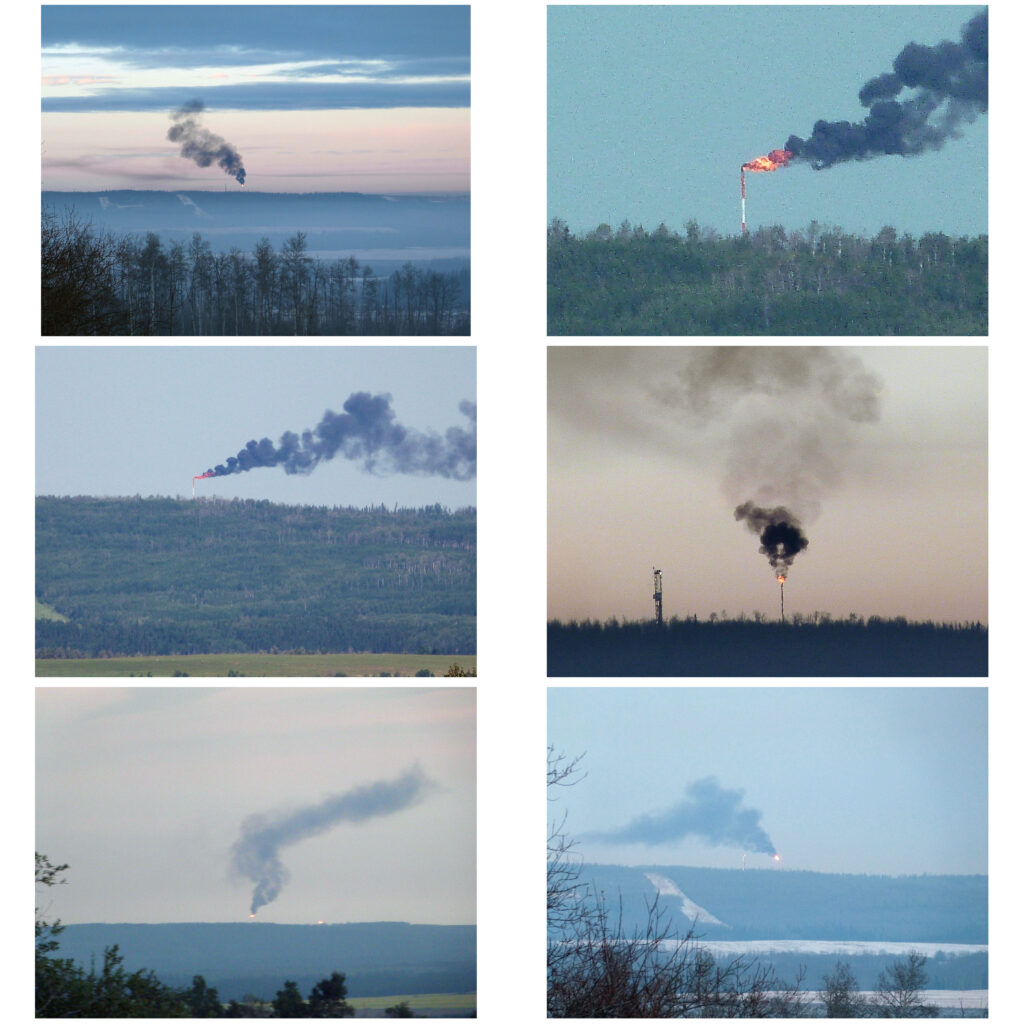
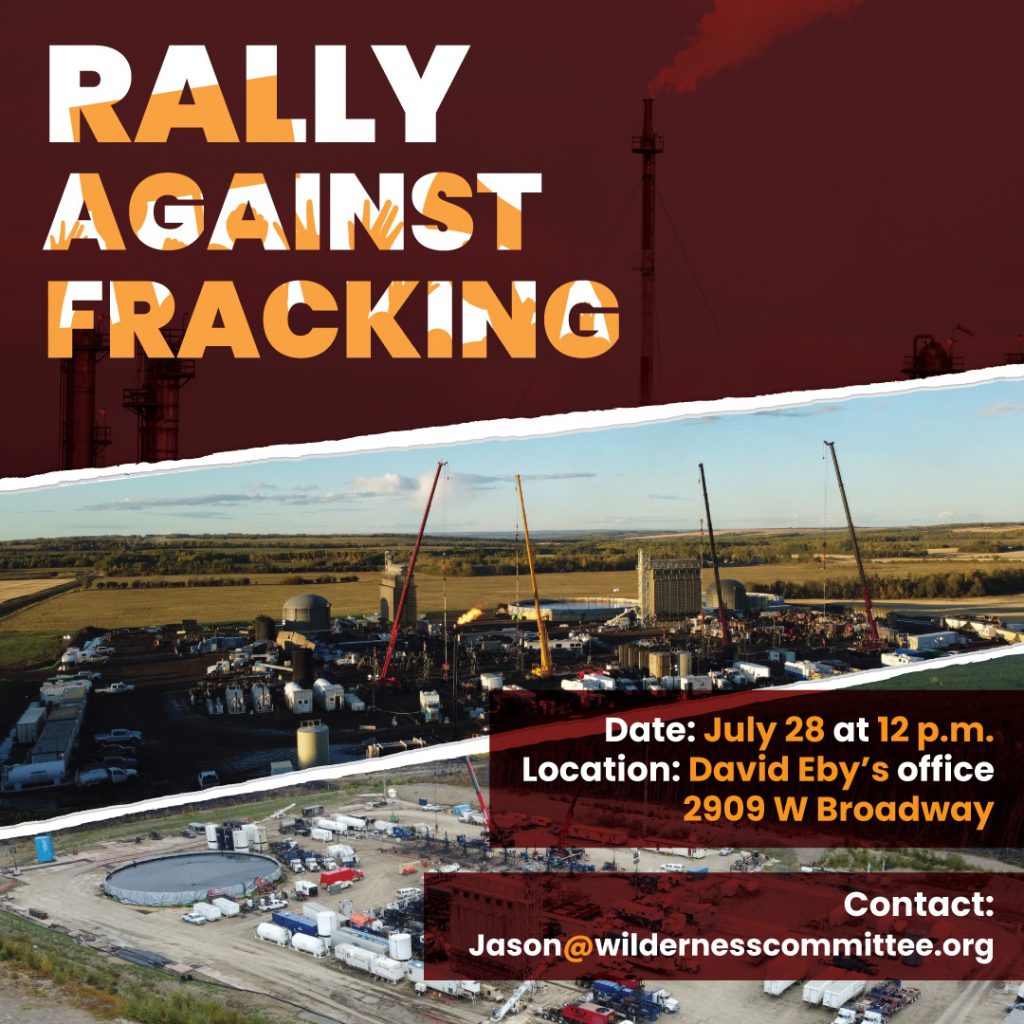
Flaring is typically used as a safety measure to release pressure and prevent explosions, and occurs at various points in their operational life, including during start-up, ongoing maintenance, and in emergency situations.Flaring is standard practice in frac fields too, these photos below taken in Encana/Ovintiv’s greedy frac fuckery area of NEBC:
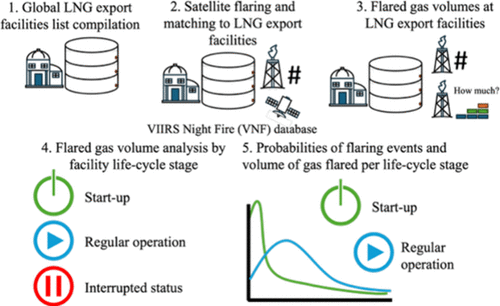
By looking at facilities across the world, the researchers were able to determine that flaring during the commissioning phase of an LNG plant tended to last two years but accounted for an outsized amount of emissions compared to regular operation.
While a decade ago there was little satellite data to monitor emissions from flaring, today that’s changed, said Laura Minet, the study’s lead researcher and head of the Clean Air Lab at the University of Victoria.
With better data now available, Minet said the province should be paying more rigorous attention to the commissioning phase, especially with LNG terminals that flare near population centres.Should but never will. Politicians and regulators serve only polluters, never the poisoned.
“I think we’re approving a lot of projects right now without looking at what’s happening around the world with other LNG facilities,”of courser they’re not looking, that’s how the oil and gas industry gets away with poisoning the sacrificed all over the world, and with Adolf Orange in power, the pollution and harms will only get much much worse, and the lies more frequent and more vicious. And, most important, oil, gas, bitumen, coal and frac are severely allergic to cumulative emissions assessments. said Minet.
“When we talk about air pollution and people’s health, two years is a lot.”I’ve lived frac’d and poisoned now, for 24 years, with new sour frac’ing to begin in a few months with zero cumulative pollution assessment – if the companies did the appropriate assessments, they’d never be allowed to operate
Dustin Gaucher, who can see the LNG Canada flare from his Kitimat-area home almost 20 kilometres away, said the process releases a “big black cloud of smoke” over the whole area.
After he filmed the cloud on Sept. 11, Gaucher said his mother got a nosebleed, and he and his son developed a cough.when Encana invaded my community in 2001, I also developed a cough, I am still coughing, and nose bleeds are nearly daily, and at least once or twice a night – makes for shitty sleep, or trying to sleep. I also started getting pounding sinuses, the pain is horrendous and constant, notably at night and on over cast days. It’s never diminished yet.
“There’s many concerns around that big black plume,” said Gaucher. “Everyone around right now is talking about really severe allergies.”Same
“My concern is what are we breathing in? What is it going to do to us? Nobody has answers.”The LNG fuckers know, they don’t want to tell you, and they won’t. And no authority or politician will compel them to, they are too corrupt and cowardly. And worse, our politicians (Carney one of the nastiest liars yet) give billions of our tax dollars to the polluters to profit off poisoning us and providing abundant wonderful living for city dwellers across Canada.

Hydrocarbons burned in a flare tend to release fine particulate matter (PM2.5), volatile organic compounds, carbon monoxide, and nitrogen oxides into the atmosphere—emissions that have been linked to adverse health outcomes, according to the research.
The study found that reporting on flared emissions in Canada and Australia is “inconsistent” and “poorly documented” due to weak noenforcement.and on the rare event there is enforcement, it’s usually a lovely kiss on both cheeks.
The researchers pointed to LNG Canada’s operations, where in the year leading up to September 2025, the proponent issued more than 20 community notifications around start-up-related flaring. In many cases, B.C.’s Northern Health Authority has struggled to get data on flaring at the facility, according to Takaro.
The scientists involved in the study—who also came from the University of British Columbia, the University of Toronto, and Texas A&M University—plan to publish a second paper in 2026 that will assess Woodfibre LNG’s anticipated impact on air quality and how it might harm public health and the local economy.
Once complete, the Woodfibre LNG terminal is expected to produce 2.1 million tonnes of liquified gas per year, almost seven times less than the 14 million tonnes of fuel expected to be produced annually at the now complete LNG Canada Phase 1 facility.
In a email, a spokesperson for LNG Canada said “flaring is a safe outlet for natural gas and is provincially regulated.”

Woodfibre LNG did not respond to BIV‘s request for comment by publication time.
When the research project was first announced in 2024, a spokesperson for the Squamish LNG project said it had taken a number of steps to minimize the impact of flaring.
“Woodfibre LNG is designed to minimize the need for flaring and will only flare in emergency situations or during certain maintenance procedureswhich will be nearly always,” spokesperson Sean Beardow said at the time.
“During the regulatory process, it was determined that there would be no significant impact to local air quality due to the operation of the Woodfibre LNG facility.”
When Minet looked at Woodfibre’s environmental permit, she found flaring was expected to last for up to a month.
“Given that LNG Canada has been in its commissioning phase for one year, it’s hard to believe that it will last one month,” she said.
Analysis of Flaring Activity at Liquefied Natural Gas (LNG) Export Facilities Worldwide by Laura Minet, Forood Azargoshasbi, Meredith Franklin, Gunnar W Schade, Margaret J. McGregor, Kate McInnes and Tim K. Takaro, Sept 20, 2025, Environmental Science & Technology Vol 59/Issue 38
Abstract
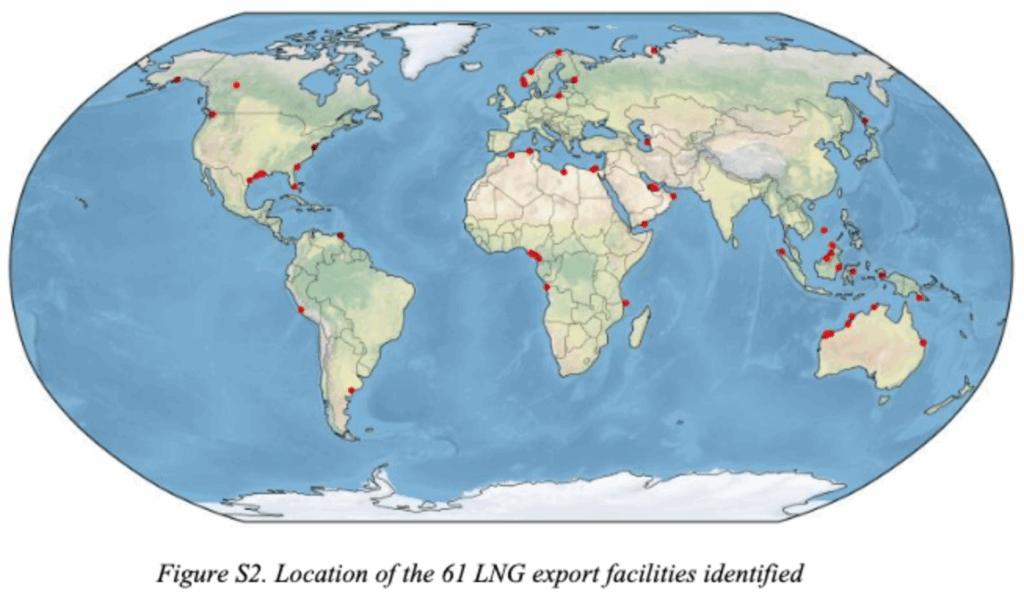
Liquefied natural gas (LNG) export facilities are booming worldwide to supply gas for the growing energy demand. Flaring, the controlled burning of natural gas, occurs at these facilities during operations ranging from start-up to ongoing maintenance and under emergency situations. Although flaring can be a significant air pollutant and greenhouse gas emission source, little information exists on the frequency, duration, and volume of gas flared by LNG export facilities. This study leveraged ten years of data from the Visible Infrared Imaging Radiometer Suite (VIIRS) Night Fire (VNF) product associated with 48 existing LNG export facilities globally to develop probabilities of flaring at different life-cycle stages. We found a significantly higher volume of gas flared in the first two years of a facility’s operation (i.e., on average 1.9 (1.0–3.2) billion cubic meters (bcm) per capacity vs 0.62 (0.43–0.92) bcm during subsequent years). During regular operations, the annual volume of gas flared was correlated with the facility’s production capacity, and flaring varied greatly among facilities (148 (137–159) flaring days/year on average and 0.73 (0.64–0.85) bcm/capacity). Unfortunately, most environmental assessments overlook the start-up phase and fail to consider worst-case scenarios. As flaring is a source of air pollution, its potential health impacts on local populations may be underestimated in these assessments.
Refer also to:
2024: No UnnaturalLG! New peer reviewed paper shows LNG is worse polluter than coal.
2024: But, tragically, in 2025, Mark Harper Carney conned Canadians into thinking he’s a Liberal, and he’s loudly all in on poisoning inefficient LNG Bravo! Canada not interested giving $Billion-profit-raping oil and gas companies $billions in corporate welfare subsidizing Liquid UnNatural Gas (“damp squib” LNG); Robert Howarth: Ending LNG needs to be global priority
2023:
2014:
1982: