@parismarx.com:
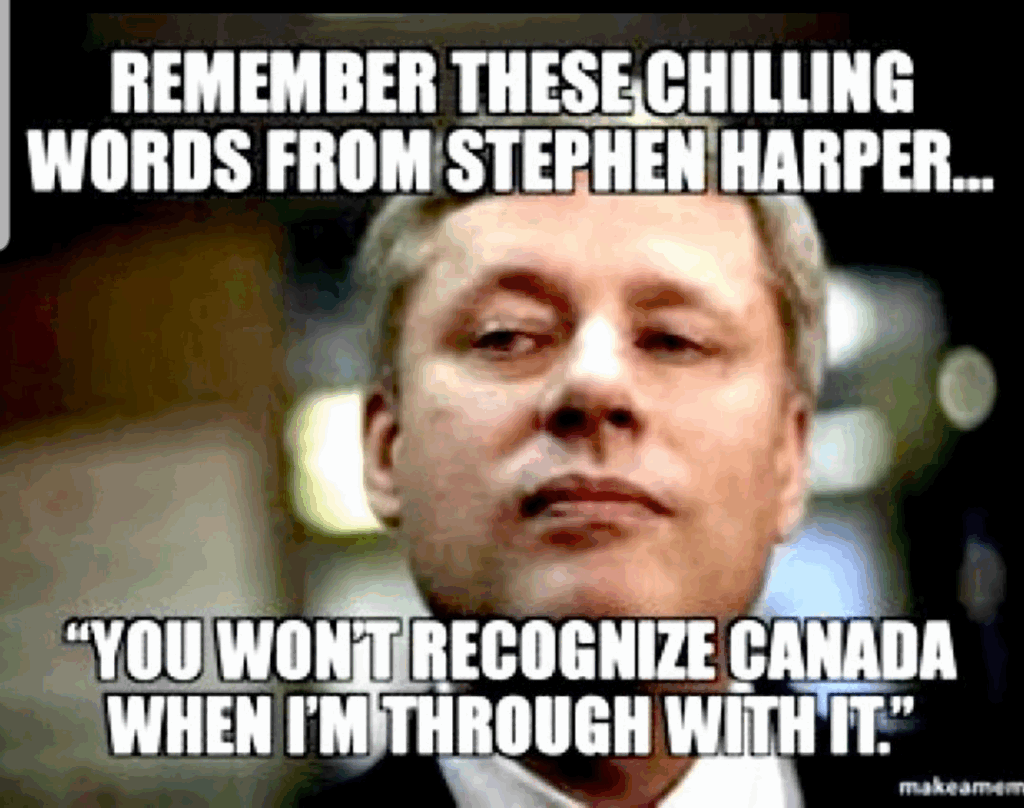
Mark Carney continues to use the phrase “decarbonized oil” to try to greenwash a new oil pipeline for Alberta. It’s so shameless and I would argue it even shows contempt for the public to be so dishonest. In my view, Carney is copying Herr Harper, or is following Harper’s orders.
@bhaggart.bsky.social:
Carney’s “proposed separation or resistance is very obviously not what is actually happening.”
This is exactly correct. As I’ve noted for months, Carney’s actual economic and security policies are preparing Canada for deeper integration with the US.
Carney has consistently promised a new comprehensive trade and security agreement with the US and has sacrificed Canadian laws to keep this dream alive. He has continued to seek not just cooperation but formal integration with US security forces.
He’s completely ignored the direct threat that US dominance of online US communications companies like Meta, Google, Microsoft and X pose to our communication sovereignty (think: fake news, propaganda, Meta’s news blackout).
The Safe Third Country Agreement remains a thing, even though the US is obviously no longer a safe country. Canada’s US travel advisory remains a running joke. Canadians harassed at the border or in ICE custody don’t even merit a sidelong glance.
Most telling is the least glamorous: not just zero investment in reinforcing Canadian regulatory agencies and government/military computer networks against US dependence and influence. But rather slashing government at the very moment we need it most. Absent these moves, new data centres are a joke.
That Carney, a former central banker who lived and died by inflation targets, has the gall to say that he’s interested in environmental results, not objectives, is a huge red flag. It’s an insultingly ridiculous statement—results imply objectives—at utter odds with his cultivated technocrat image.
Mark Carney won’t endorse greenhouse gas targets, says he’s focused on ‘results, not objectives’
The prime minister advocated for a “grand bargain” that could see regulations changed to facilitate a new export pipeline from Alberta’s oilsands — if a major project to reduce emissions
Tl;dr: Carney was elected on the promise that he is a serious, technocratic leader who will strengthen Canadian independence. He’s ’s failing on both counts. Canadians need to start pressing the Liberals on why their leader’s actions simply do not match his stated intentions.
First Nations Consent Ignored as Canadians Asked to Subsidize LNG Expansion by Ellena Communications, Sept 11, 2025, Union of BC Indian Chiefs
FOR IMMEDIATE RELEASE
September 11, 2025
First Nations Consent Ignored as Canadians Asked to Subsidize LNG Expansion
Mark Carney’s push to double LNG Canada as a “nation-building” project ignores the right of Indigenous peoples to free, prior and informed consent (FPIC) and asks taxpayers to underwrite a project with no clear business case.
Despite billions in subsidies already spent, LNG Canada’s foreign-owned partners have yet to commit to financing Phase 2, while low cost global competitors continue to dominate the market.
The project violates Canada’s commitments under the United Nations Declaration on the Rights of Indigenous Peoples because Canada failed to consult or get the consent from impacted First Nations title holders before advancing LNG Canada’s expansion. Further, the project is locking in high emissions, and draining public funds for little return.

LNG Canada Phase 1 will cause $400 billion CAD in climate harm over the full course of the project lifecycle, according to analysis by Clean Energy Canada. Combined with Phase 2, the cost of its climate harm soars to almost $1 trillion CAD.
As millions of hectares burn and as thousands of Canadians are forced to evacuate from their homes, we need not look far to see the climate harm all around us; of course, caused by burning fossil fuels.
Expanding LNG in the middle of a climate crisis is not nation-building—it’s a costly gamble Canadians can’t afford.
The following leaders and experts are available to speak to reporters as you tell the whole story.
Quotes
Grand Chief Stewart Phillip, UBCIC President
“The Union of B.C. Indian Chiefs (UBCIC) is gravely concerned that the Government of Canada continues to deliberately sidestep its duty to consult and cooperate with First Nations. Rather than being met with partnership, we are given an ultimatum: accept fossil fuel expansion or be pushed aside.
LNG Canada is not only a massive source of greenhouse gas emissions but also drives destructive fracking, further threatening our lands, waters, and communities- emissions do not recognize territorial boundaries. Through resolution, the UBCIC Chiefs Council has recognized the health and environmental hazards of the fracking/LNG industry.
We reject any process that tramples our inherent and constitutionally protected title and rights, ignores free, prior and informed consent, and sacrifices the climate for foreign corporate profits. True nation-building requires working with us, not against us.”And demands projects that benefit all Indigenous and ordinary Canadians, not just rich raping mostly American polluters!
Gwii Lok’im Gibuu (Jesse Stoeppler), Deputy Chief of the Hagwilget Village Council
“Canada is asking its taxpayers to bankroll foreign corporations while turning its back on Indigenous rights. The government is propping up an industry that private investors won’t even back themselves, and in doing so, it is ignoring its legal and moral obligations to Indigenous Peoples. This could not be further from ‘economic leadership’ or ‘nation building’ — it’s a desperate gamble that will cost Canadians their money, their future, and any claim to reconciliation. Sovereignty, economic or not, will not have its parameters set by anyone but the rightful titleholders.”
Chief Na’Moks, Wet’suwet’en Hereditary Chief
“Canada cannot claim reconciliation while forcing LNG projects through without our consent.
Free, Prior and Informed Consent is not optional, it’s a right. Calling this project ‘nation-building’ is an insult, because you cannot build a country by trampling the very Nations whose lands you exploit. How is it in Canada’s best interest to destroy the lives and environment of the Canadians who are most affected? By choosing foreign corporations over Indigenous rights, over our lands, and over our future, Mark Carney is showing that reconciliation is nothing more than a slogan.”
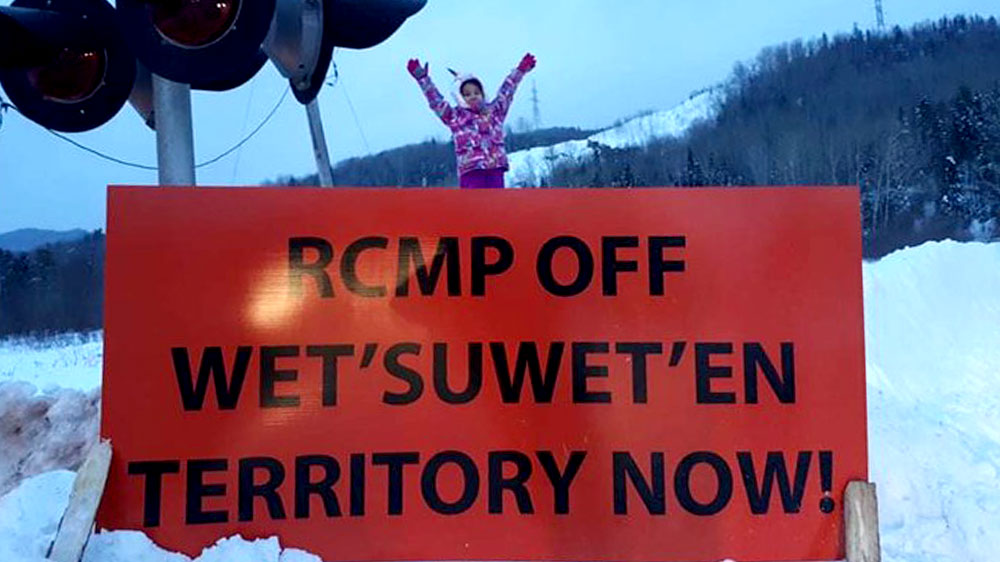
Sleydo’ (Molly Wickham), Spokesperson for Gidimt’en Checkpoint, Wet’suwet’en Nation
“By financially backing the second phase of a project that has caused intense conflict for the Wet’suwet’en over the past six years, Canada is sending a clear message to its citizens and to the world: Indigenous people don’t matter. The project has already drawn international attention and driven up the cost of the associated CGL pipeline by billions because of delays. Pushing ahead now risks sparking another national uprising. Indigenous Peoples are fed up, and Carney is pouring fuel on the fire.”
Willo Prince, Campaign Manager, Indigenous Climate Action
“Canada is once again forcing projects through that relegate Indigenous communities, lands, and waters to the sacrifice zones of oil and gas expansion. Mark Carney advertises LNG as “nation-building” despite foreign entities privatizing the benefits of a dying industry, while leaving Canadians to bear the brunt of the bill.
In this new era of ‘economic reconciliation,’ oil and gas officials seek to reduce our presence to stakeholders in industry, and not as the true rightsholders to the land where these projects are taking place and benefit from. This is not nation-building, but rather an attempt to destabilize Indigenous sovereignty by making our communities agents of industry.”
Keith Stewart, Senior Energy Strategist, Greenpeace Canada
“Doubling down on LNG exports from a project that has faced fierce Indigenous opposition makes no sense at a time when wildfires are bringing home the cost of the climate crisis and key markets like China and Europe are turning to solar and wind rather than fossil fuels. Projects of national interest need to set Canadians up for a secure future through proven greener solutions that uphold Indigenous rights and protect our natural heritage.”
Richard Brooks, Stand.earth Climate Finance Director
“Having a massive carbon bomb lead the list of projects of national interest — with a looming LNG glut and amidst another record fire year — is both financially risky and absolutely not in the national interest. Where are the homebuilding projects? Where are the high speed rail and electrification programs? Where are the Indigenous lead renewables projects that are shovel ready?”
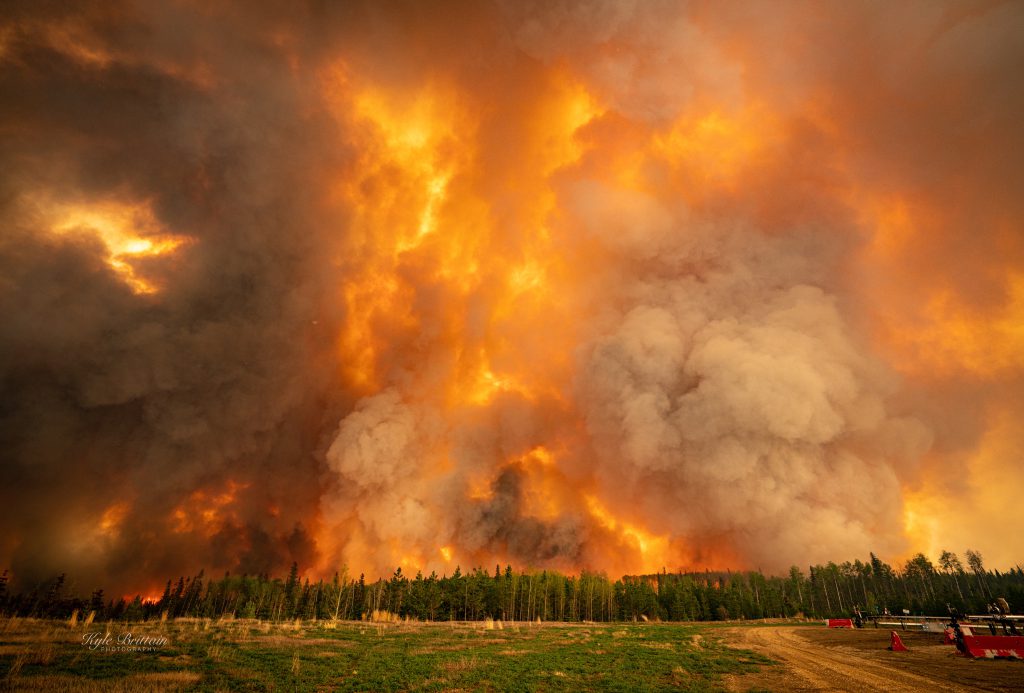
2023 Wall of wildfire that nearly destroyed the community of Fox Creek Alberta, Frac Central. Photo by Kyle Britain.
John Young, Senior LNG Strategist, Climate Action Network
“Since LNG Canada has had all the permits it needs to proceed for years, the Prime Minister must be planning major subsidies for major foreign corporations to move this project ahead while climate crisis-fuelled wildfires burn across the country and around the world. Touted as a leading expert on the climate crisis, the Prime Minister appears to have forgotten his expertise – instead paving the way for the oil and gas industry to literally pour more fuel on the fire. More fossil fuel projects are nation destroying projects not nation building projects. And that’s climate science, not rocket science.”
Michael Sambasivam, Senior Policy Analyst with Investors For Paris Compliance
“When choosing projects of national interest, it is imperative that the federal government consider market fundamentals. Canada’s largest potential buyers – Asia and Europe – have seen their projected LNG demand soften. Russia’s new pipeline to China is only going to exacerbate the global glut of LNG. Sectors that would support the energy transition are likely to see significant growth over the coming decades. Picking out projects that can help Canada grow into the emerging transition economy would better serve Canada’s long term interests.”
Adam Scott, Executive Director, Shift: Action for Pension Wealth & Planet Health
“LNG Canada isn’t a nation building project. It’s another dangerous bet on failure for Canada’s future. Failure to stabilize our shared climate. Failure to respect Indigenous rights and seek reconciliation. Failure to prepare our economy to succeed in the energy transition.”
Minh-Ly De Reboul, Communication Coordinator, Change Course
“The government’s LNG expansion is a betrayal of our future. While youth work toward building a livable world, Mark Carney sells it out to corporate greed. This isn’t nation-building, it’s destruction. Young people around the world are rising up. We won’t be silent while our future is burned for profit.”
Dr. Ulrike Meyer, a Dawson Creek family physician & representative of the Canadian Association of Physicians for the Environment’s BC committee (CAPE BC)
“Expanding LNG infrastructure means more fracking, which is linked to pulmonary disease, asthma, heart attack, pre-term birth, and cancers in a growing body of peer-reviewed research. Indigenous and rural communities pay the highest price. I see this showing up in my practice in northern BC. It is unconscionable for the federal government to greenlight LNG Canada Phase 2 without Indigenous consent and without regard for the devastating health impacts on our communities.”
Dr. Beatrice Frank, Executive Director of Georgia Strait Alliance
“Canada claims to be a leader in fighting climate change, and will host the G7 Energy and Environment Ministers’ Meeting next month. We have vowed to drastically cut emissions by 2030 and reach net zero by 2050, yet in the midst of a climate crisis we are expanding LNG—ignoring Indigenous consent and asking Canadians to subsidize climate instability under the guise of ‘nation building.’ This isn’t climate leadership, it’s climate contradiction.”
Andrew Dumbrille, co-director, Equal Routes
“Nation building doesn’t happen through fossil fuel expansion, nor continuing to rely on inaccurate facts about its social and environmental harm. A recent fact checking report on industry and government claims about Canada’s LNG life cycle emissions is a case in point. Unaccounted methane leaks, especially during LNG tanker transport, and under-reporting of real world life cycle emissions shows the false solutions which can underpin fossil infrastructure investment. From land to sea, LNG is not a solution for Canada and should be no part of ongoing or future support.”
Gabrielle Willms, Organizer with For Our Kids
“As families in Canada reel from another devastating summer of wildfires and struggle to make ends meet, it’s shocking and disappointing to see our government claim fossil fuel expansion is in the “national interest.” LNG Canada is a carbon bomb that goes against the interests of our kids and future generations, faces Indigenous resistance, poses huge health and environmental risks, and takes the place of projects we actually need — like affordable, green housing, widespread public transit and Indigenous-led clean energy.”
Grand Chief Stewart Phillip, UBCIC, Phone: 250-490-5314
Quebec environmental lawyers group sues Ottawa over major projects bill, Environment group sues Ottawa over projects bill by Stéphane Blais The Canadian Press, Sep 11, 2025, The Chronicle Journal
MONTREAL – A group of environmental lawyers says it has filed a lawsuit in Quebec Superior Court challenging the validity of the federal government’s major projects law.
Centre québécois du droit de l’environnement says the legislation gives the government excessive powers and jeopardizes democracy and environmental protections.
Prime Minister Mark Carney has said the law passed in June aims to speed up federal approval for projects of national interest, such as mines, ports, and pipelines.
The government passed the law to boost the economy and strengthen Canada’s sovereignty in response to the trade war launched by the United States.
Geneviève Paul, executive director of the environmental group, says the law removes the ability of the public and the courts to act as a check on government decisions, a role protected by the Constitution.
Paul says projects will be greenlit without full consideration of their potential impacts, adding that the law allows Ottawa to set aside some federal and provincial environmental regulations.
“We are talking about projects with potentially serious impacts … impacts that may be irreversible on our ecosystems, water, and air,” Paul said in an interview.
The federal government has unveiled the first five major infrastructure projects selected for accelerated approval: an expansion of the Port of Montreal; work to double liquefied natural gas production in British Columbia; a small modular nuclear reactorwhich have never been built and tried yet, and appear bound to fail in Ontario; and a pair of mines in Saskatchewan and northwestern B.C.
In addition to the environmental group’s lawsuit, nine First Nations in Ontario have asked the Ontario Superior Court to declare the law unconstitutional. They argue that it poses a “clear and present danger” to First Nations’ right to self-determination regarding their way of life on their territories.
This report by The Canadian Press was first published Sept. 11, 2025.
— with files from Kyle Duggan in Edmonton
Nine First Nations in Ontario launch constitutional challenge against Bill 5 and Bill C-5 by Jeff Gray and Emily Haws, July 15, 2025, The Globe and Mail
A group of Ontario First Nations has filed a constitutional challenge of recent bills passed by both the province and the federal government aimed at speeding up mining, pipelines and other projects, claiming the legislation allows development to be rammed through without meaningful consultations with Indigenous people.
Lawyers acting for nine Ontario First Nations have filed an application in Ontario Superior Court challenging both the province’s Bill 5, which allows for the creation of “special economic zones” where any provincial law could be suspended, and the federal government’s Bill C-5, which would allow the waiving of legislative requirements for projects deemed in the national interest.
Lawyers for the Indigenous groups say in a legal filing that the two bills “violate the constitutional obligation of the Crown to advance and not set back or foreclose reconciliation, arising from the Crown’s obligation to act honourably toward First Nations.” They want both bills struck down.
The First Nations are also asking for a court injunction to block both bills immediately pending a final ruling on their constitutional challenge.
Explainer: Ontario’s Bill 5 has passed. Here’s why it has sparked conflict with First Nations
The First Nations involved in the challenge include Attawapiskat First Nation on the western shore of James Bay, as well as Aroland First Nation – one of a handful of Northern Ontario bands that had supported the Ontario government’s plans to build a road into the remote northern Ring of Fire area, where Premier Doug Ford has vowed to accelerate mining for critical minerals, but still spoken out against Bill 5.
Also involved is Kitchenuhmaykoosib Inninuwug, which made headlines with a clash with a mining company in 2008 in which blockades in defiance of a court injunction meant six members, including Chief Donny Morris, were jailed for contempt of court.
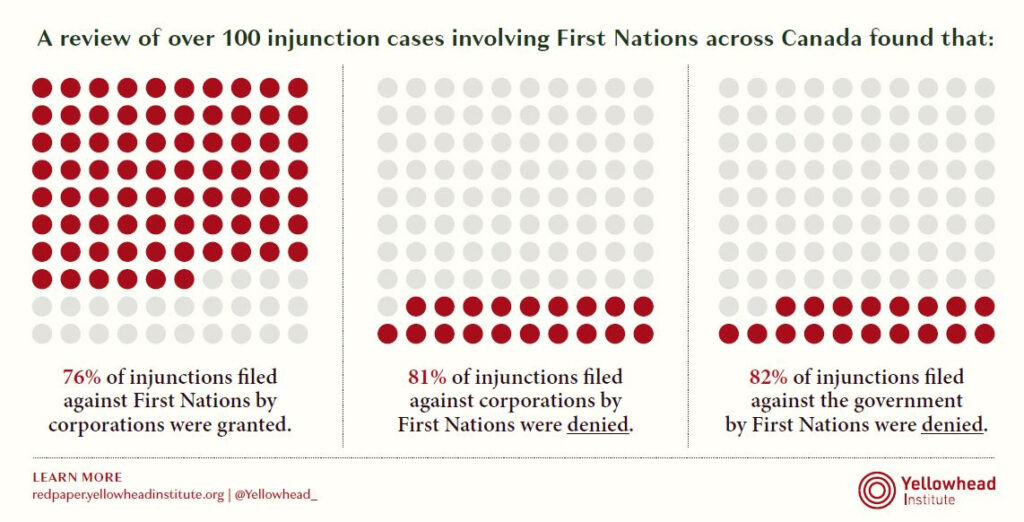
The legal filing says that Ontario’s law – the Protect Ontario by Unleashing our Economy Act – allows the government to scrap the need for archeological assessments, environmental assessments or endangered species protection for projects, and allows the Crown to “unilaterally ram through” development without “meaningful or any engagement with First Nations.”
It says Ottawa’s bill, the Building Canada Act, allows Canada to deem certain projects approved from the start, and gives cabinet “the unrestricted ability to exempt projects from various laws, effectively authorizing the Crown” to approve projects without meaningful Indigenous consultations. Both bills would allow governments to skip legislated processes that currently involve First Nations consultations.
Bill C-5 reveals fault lines between Ottawa and Indigenous peoples over consultation, consent
The First Nations’ court application cites the 2018 Supreme Court decision in a case brought by the Misikew Cree First Nation, saying this ruling determined that the Crown was required to act honourably in the making and passing of legislation.
“It was left for another case to determine what form that honourable conduct might take. That case is now,” the document reads.
That Supreme Court decision, the application reads, also held that it “may not be constitutional to legislate in a way that effectively removes future Crown conduct which would otherwise trigger the duty to consult” First Nations.
The legal filing says the two bills would allow governments to approve major projects “without knowing, considering or addressing the costs” to First Nations, “effectively negating the no-go option despite what the ‘costs’ to a First Nation, the environment or otherwise might be.”
The legal filing also dismisses the provisions for First Nations consultations that remain under both bills, saying this would occur only at an early stage and amounts to a “smoke-and-mirrors trick, deflecting attention from all the the other ways the laws necessarily diminish the ability of First Nations to engage on the regime’s broader consequences.”
The federal and provincial governments did not immediately respond to a request for comment on the constitutional challenge.
The federal government has previously said that Indigenous groups that will be affected by potential projects will be fully consulted at key stages of the process. Ya right, after he’s approved his Riches for Rich Americans Projects!Prime Minister Mark Carney has also committed Carney is a fraud, a liar, a Nazi, a quisling. His actions (the worst – him conning innocent trusting Canadians into believing he’s a Liberal when he’s clearly a Harper Con) show me Carney is never to be trusted; his commitments are treachery.to engaging with First Nations, Inuit and Metis this summer about the implementation of Bill C-5.
The First Nations summit is taking place this Thursday at the Canadian Museum of History in Gatineau, Que., while the dates for meetings with the other two groups are still to be determined.
The Ontario government has said it would consult First Nations over the summer about Bill 5, and before it declared any special economic zones.Ya right, after Nazi Doug Ford approves destructive raping American projects just like Nazi Carney It says the bill is needed to speed up sluggish processes to approve mines, which it says can take 15 years, in the face of the economic impact of U.S. tariffs.
Refer also to:
@VeldonCoburn:
Settler incels in my mentions don’t even know their own Constitution and law. The “notwithstanding clause” does not apply to s.35 “Aboriginal and Treaty Rights.” Seems colonial stupidity entered the chat
@Freire1Pb:
You won’t recognize Ont after Stephen Lecce’s bill 5, a full-blown attack on the environment, our democratic rights, endangered species & species at risk, labour law, health & safety legislation, municipal authority, & First Nations treaty rights will fulfill Harpers’ mandate.