
In my view, “independent” means controlled by the USA, oil, gas, bitumen, coal and the rich, like Gina Rinehart.
2013: Harper government cutting more than $100 million and about 500 jobs related to protection of water
Why not one word about the horrific harms to water by frac’ing of oil, gas and bitumen?
A proportion (25% to 100%) of the water used in hydraulic fracturing is not recovered, and consequently this water is lost permanently to re-use, which differs from some other water uses in which water can be recovered and processed for re-use.
The feds not mentioning frac’ing makes this initiative just another Canadian farce.
Canada strengthens protection of freshwater with launch of standalone Canada Water Agency Press Release by Canada Water Agency, Oct 16, 2024
October 16, 2024 – Winnipeg, Manitoba
Fresh water is our most precious natural resource, needed for drinking, cleaning and sanitation, recreation, industry, agriculture, and ecosystem health. Water is also sacred to many Indigenous peoples and honoured as a giver of life. Yet, fresh water in Canada is under increasing pressure from climate change, pollution, and other threats. Canadians recognize the importance of fresh water and have called for action.
Today, the Honourable Steven Guilbeault, Minister of Environment and Climate Change, officially announced the establishment of the Canada Water Agency as a standalone federal entity headquartered in Winnipeg, Manitoba. Previously within Environment and Climate Change Canada for an interim period, the new independent Agency will strengthen freshwater management Pfffft! Water needs to be designated as a listed species and protected from raping corporations (mostly foreign owned), the rich and idiots (e.g. Albertans). in Canada by providing leadership and improved coordination and collaboration federally and with provincesWTF bullshit is this? Alberta will never collaborate with water “management” – notably not if the feds have anything to do with it!, territories, and Indigenous peoples. As a standalone entity, the Canada Water Agency will work closely with partnersTranslation = Synergy, meaning he who has the most money such as big frac’ers, get the water to deliver major elements of the Freshwater Action PlanAnother plan to plan non planning for years spinning the citizenry with buzzwords like collaboration while industry frac’s Canada dry?, build a strong approach to freshwater protectionWater needs protection! Not an approach to it which will likely waste decades and citizen/volunteer time and money spinning going nowhere at endless round tables of talk talk talk, plan to plan to plan, and no action, and no protection as industry frac’s us dry, and help address transboundary freshwater challenges and opportunities.

The Agency also will provide freshwater policy expertise and lead the development of a national freshwater data strategy, which will make it easier for Canadians to make informed decisions impacting their environment, economySo that’s what this is is really about! Money! Protecting water and profits for the rich during human greed and pollution caused climate chaos extreme heat waves and droughts as cities and towns watch their water supplies vanish., health, and safety. It will also work closely with Environment and Climate Change Canada and other federal departments and agencies to support and leverage freshwater science.
The Canada Water Agency will administer freshwater funding programs in eight waterbodies of national significance: the Great Lakes, Lake Winnipeg, Lake of the Woods, Lake Simcoe, the St. Lawrence River, the Mackenzie River, the Fraser River, and the Wolastoq/Saint John River. Over the coming years, the Canada Water Agency will provide grants and contributions to hundreds of projects supporting the restoration and protection of fresh water in Canada funded by the historic $650 million investment outlined in Budget 2023.Wanna bet frac’ers and their synergizing friends like CAPP, Synergy Alberta, frac’d academia, Council of Canadians, Sierra Club, Pembina Institute, etc, get most of the money to make us chase our tails, as frac’ers permanently remove vital water from the hydrogeological cycle?
The Agency will be based in Winnipeg, a historical gathering place for Indigenous peoples and home to Lake Winnipeg—one of the world’s largest freshwater lakes and a priority Canada Water Agency waterbody. The Agency will also have five regional offices across Canada to ensure responsiveness to local freshwater issues. It is clear that the creation of the Canada Water Agency as a standalone marks an important step for Canada in protecting and restoring freshwater resources. Through its efforts, the Agency will help safeguard freshwater for generations of Canadians, which in turn improves upon the environment, economy, health, and safety of Canada.
Quotes
“Canadians value fresh water and understand its importance for health, prosperity, and cultural practices. Given pollution, land-use, and other stressors, we must take action now to safeguard fresh water. The creation of the Canada Water Agency is a key step in strengthening freshwater management, protection, and stewardship in Canada.”
– The Honourable Steven Guilbeault, Minister of Environment and Climate Change
“Tackling today’s freshwater challenges will require strong collaboration among governments, Indigenous partners, non-government organizations, academia, industry, and others. The Canada Water Agency will provide the leadership to foster the partnerships that we need to protect fresh water. I think that it is fitting that Winnipeg, at the confluence of the Red and Assiniboine Rivers which flow into Lake Winnipeg, is home to this important federal agency.”
– Terry Duguid, Parliamentary Secretary to the Prime Minister and Special Advisor for Water
“Manitoba is so proud to be the home of the new Canada Water Agency. With over 100,000 lakes, Manitobans value our fresh water and care deeply about the health of our waterways. Our government is proud to have recently established Manitoba’s first-ever formal Nutrient Targets Regulation for Lake Winnipeg and its tributaries to reduce nutrient loading and restore the health of this important lake. We look forward to the increased opportunities for collaboration that will come from having the Canada Water Agency here in Manitoba, and our government is pleased to work together with the federal government, Indigenous communities, other freshwater experts, and all stakeholders to ensure the health of our waterways for generations to come.”
– The Honourable Tracy Schmidt, Manitoba Minister of Environment and Climate Change
Quick facts
- In Budget 2023, the Government of Canada provided $650 million over ten years for the Freshwater Ecosystem Initiatives, as well as $85.1 million over five years (and $21 million ongoing thereafter), for the creation of the Canada Water Agency. It also committed to introducing legislation to fully establish the Agency as a standalone entity.
- Working with Indigenous peoples to seek their perspectives and support their participation is a central part of the mandate of the Canada Water Agency.
- The Canada Water Agency was first established as a branch of Environment and Climate Change Canada in June 2023.
- On June 20, 2024, Bill C-59 (which included the Canada Water Agency Act), received Royal Assent, paving the way for the creation of the standalone Canada Water Agency.
Related products
Associated links
- Canada Water Agency
- C-59 (44-1) – LEGISinfo – Parliament of Canada
- Canada Water Agency Act (Part 5, Division 3)
Contacts
Hermine Landry
Press Secretary
Office of the Minister of Environment and Climate Change
873-455-3714
email hidden; JavaScript is required
Media Relations
Environment and Climate Change Canada
819-938-3338 or 1-844-836-7799 (toll-free)
email hidden; JavaScript is required
Canada Water Agency’s X (Twitter) page
Canada Water Agency’s LinkedIn page
Environment and Natural Resources in Canada Facebook page
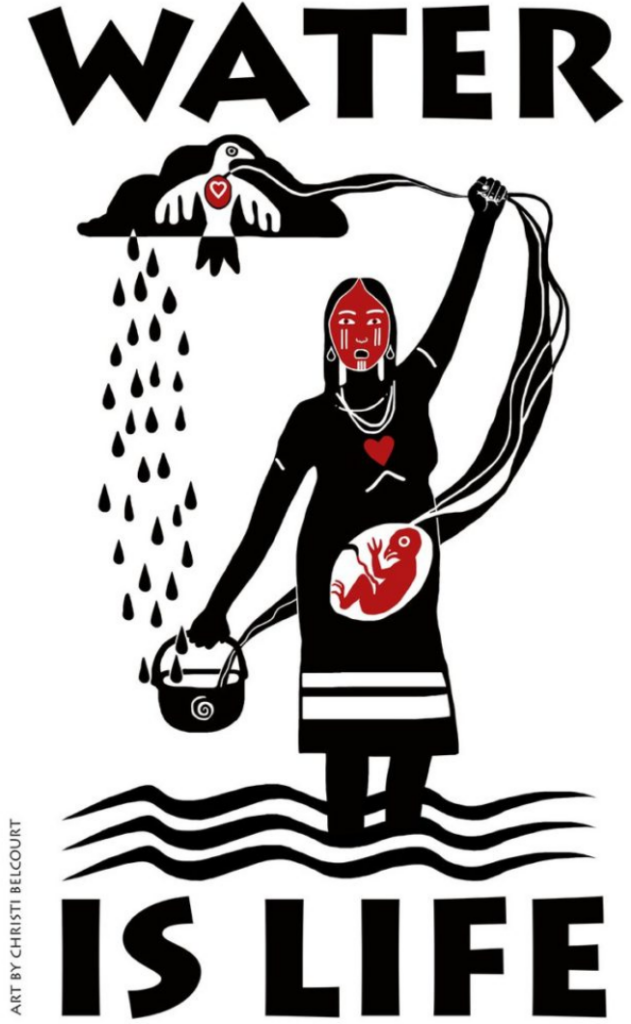
Water is Life art by Christie Belcourt
Standalone Canada Water Agency launches by Gov’t of Canada, Oct 16, 2024
From: Canada Water Agency
Backgrounder
The Canada Water Agency is a Government of Canada agency under the Minister of Environment and Climate Change portfolio. Its mandate is to improve freshwater management in Canada by providing leadership, effective collaboration federally, and improved coordination and collaboration with provinces, territories, and Indigenous peoples to address transboundary freshwater challenges and opportunities.
The Canada Water Agency (the Agency) is headquartered in Winnipeg and has five regional offices across Canada to ensure responsiveness to regional freshwater issues. Once fully staffed, the Agency will have approximately 220 employees nationwide.
History Check:
2013: Harper government cutting more than $100 million and about 500 jobs related to protection of water
….Prime Minister Stephen Harper’s government is eliminating about 500 jobs at the Department of Fisheries and Oceans related to Coast Guard services, patrols to stop illegal fishing activities as well as scientific research to promote conservation, protect endangered species, and prevent industrial water pollution. …
End History Check.
Creation of the Canada Water Agency
In 2019, the Prime Minister directed the Minister of Environment and Climate Change to “Create a new Canada Water Agency to work together with the provinces, territories, Indigenous communities, local authorities, scientists, and others to find the best ways to keep our water safe, clean, and well-managed.” Over the following three years, Environment and Climate Change Canada engaged with partners and stakeholders to shape the mandate, activities, and structure of the Agency.
In Budget 2023, the Government of Canada announced funding for the Canada Water Agency and committed to introducing legislation to make the Agency a standalone entity reporting directly to the Minister of Environment and Climate Change. Soon thereafter, in June 2023, the Canada Water Agency launched as a branch within Environment and Climate Change Canada, delivering key elements of the Freshwater Action Plan and advancing efforts to establish the standalone entity. Starting in 2024, the Canada Water Agency has committed to providing more than $90 million in grants and contributions to 175 different projects across the country to strengthen freshwater management in Canada. Lastly, several other key accomplishments of the past year have included launching pre-engagement with First Nations, Inuit, Métis, and provincial and territorial governments on the review of the Canada Water Act, convening partners from across Canada to support development of a National Freshwater Data Strategy, and supporting partners to advance protection in several freshwater ecosystems across Canada.
Later in 2023, the legislation to create the standalone Canada Water Agency (the Canada Water Agency Act) was introduced in Parliament as part of Bill C-59. The legislation received Royal Assent on June 20, 2024, and came into force on October 15, 2024.
The Canada Water Agency’s current initiatives
Freshwater ecosystem initiatives
The Canada Water Agency leads the delivery of Freshwater Ecosystem Initiatives in eight waterbodies of national significance across Canada: the Great Lakes, Lake Winnipeg, Lake of the Woods, the St. Lawrence River, the Wolastoq/Saint John River, the Fraser River, the Mackenzie River, and Lake Simcoe.
The goals of the Freshwater Ecosystem Initiatives are to:
- take action to restore and protect water quality and aquatic ecosystem health
- advance science, monitoring (including community-based monitoring) and the application of Indigenous knowledge in cooperation with Indigenous peoples to support decision-making and effective action
- enhance governance to improve collaboration with Indigenous partners, provinces and territories, and stakeholders
- mobilize knowledge and reporting to measure progress towards results
- improve climate change resiliency through on the-ground-action
Review of the Canada Water Act
Proclaimed in 1970, the Canada Water Act is federal legislation administered by the Minister of Environment and Climate Change. It provides a legal framework for cooperation among federal, provincial, and territorial governments in the conservation, development, and use of water resources.
In his 2021 mandate letter, the Minister of Environment and Climate Change was directed to advance the modernization of the Canada Water Act to reflect Canada’s freshwater reality, including climate change and Indigenous rights. This commitment was reaffirmed in the 2023–2028 Action Plan for implementing the United Nations Declaration on the Rights of Indigenous Peoples Act.
As an initial step, the Canada Water Agency led pre-engagement with partners to understand how they would like to be involved in the review of the Canada Water Act. The Canada Water Agency will use this information to develop engagement plans for the subsequent engagement phase, which is expected to begin in 2025.
National freshwater data strategy
The Canada Water Agency is developing a National Freshwater Data Strategy with partners and stakeholders. The Strategy will establish guidelines and principles for how freshwater information should be organized, stored, and shared in Canada. The Canada Water Agency published a discussion paper on the creation of a National Freshwater Data Strategy on July 26, 2024, and accepted comments until September 15, 2024. It also hosted a workshop on September 25–26, 2024, to develop an outline and path forward for the Strategy.
Once implemented, the Strategy will make it easier for Canadians to find and access freshwater data and use and combine data from various sources. This, in turn, will support more informed decision-making and will help keep fresh water safe, clean, and well-managed.
The Strategy will build on existing data systems, data science, and analytics expertise. It will also align with broader federal data efforts, including the Governmentof Canada’s Digital Ambition and the 2023–2026 Data Strategy for the Federal Public Service.
Supporting freshwater science
Freshwater science is critical to freshwater management and protection.
For these reasons, Canada’s strengthened Freshwater Action Plan includes significant funding to support freshwater science. Environment and Climate Change Canada will continue to lead on freshwater science, including the National Freshwater Science Agenda, as well as freshwater monitoring. The Canada Water Agency will support and leverage science efforts to inform the Freshwater Ecosystems Initiatives and promote coordination among government and non-government freshwater science partners.
Partnering with Indigenous peoples
- The Canada Water Agency Act underscores the centrality of respectful and trusting partnerships with First Nations, Métis, and Inuit and strengthens their role in the development and implementation of the Canada Water Agency’s freshwater programs. The Act says that the Canada Water Agency will:
- respect the rights of Indigenous people and support implementation of the United Nations Declaration on the Rights of Indigenous People Act
- honour existing treaties and agreements
- recognize Indigenous knowledge systems and data sovereignty
- work to advance reconciliation
As part of the pre-engagement phase of the Canada Water Act review, the Canada Water Agency spoke with and supported First Nations, Métis, and Inuit partners to facilitate effective, meaningful and relevant dialogues from the start. As part of the review, the Canada Water Agency piloted an Indigenous Grassroots Water Circle to create an accessible, safe, Indigenous-centered space to engage directly with First Nations, Métis, and Inuit grassroots individuals (for example, Elders, youth, women as water carriers, parents, academics, people with disabilities, and 2SLGBTQ+).
Lastly, the Canada Water Agency is working to develop a deeper understanding of the various freshwater data interests of First Nations, Inuit, and Métis to better inform the Canada Water Agency’s work while advancing the conversation to strengthen relationships; honour agreements; and respect Indigenous rights, interests, cultures, and Indigenous knowledge systems.
Collaboration with provinces, territories, partners and stakeholders
The Government of Canada has more than 20 departments and agencies with freshwater-related responsibilities. The Canada Water Agency promotes coordination, collaboration, and information exchange among these entities. In addition, central to its mandate, the Canada Water Agency is committed to working with provinces, territories, and stakeholders to improve freshwater management, protection, and stewardship in Canada.
The Canada Water Agency is collaborating closely with stakeholders, including non-governmental organizations and academia, to implement the Government of Canada’s freshwater agenda. The Canada Water Agency has also held information sessions with stakeholders in French and English to provide updates on the Canada Water Agency Act and continues to value their input and involvement in the review of the Act.
Refer also to:
1940:
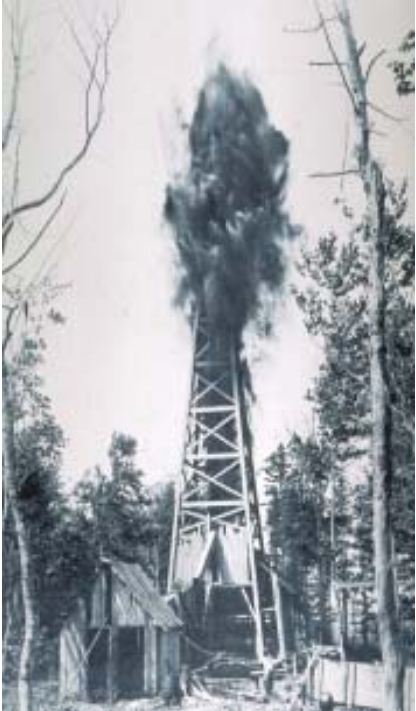
Frac’ing with nitroglycerin in Stoney Creek, New Brunswick
1999: Petroleum Resources Centre (Ministry of Natural Resources): “In the resulting rush of fortune-seekers, thousands of wells were drilled. As many as 50,000 wells may have been drilled in Ontario, although records are available for only 20,000.”
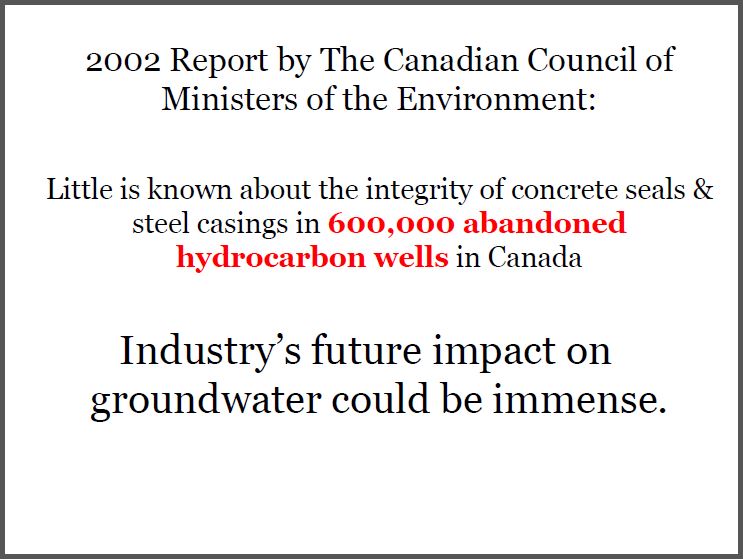
2002: Groundwater Quality
2006:
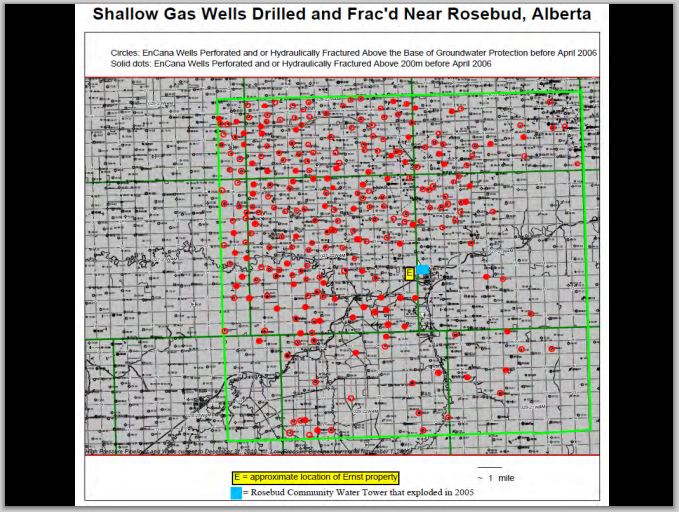
The red dots in map above are shallow gas wells around Rosebud Alberta that Encana/Ovintiv frac’d, the black dots are deeper conventional wells.
The blue shows the location of Rosebud Hamlet’s concrete water tower that was destroyed in an explosion caused by an accumulation of gases after Encana/Ovintiv’s illegal frac’s.
The ‘E’ is the location of my home and water well.
2006:
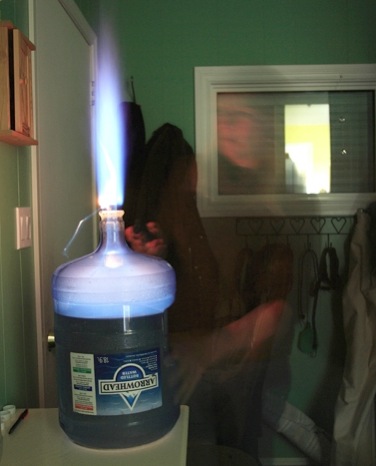
My contaminated well water after Encana/Ovintiv’s repeat illegal frac’s into the aquifers that supply Rosebud’s drinking water, including mine.
2011:
A proportion (25% to 100%) of the water used in hydraulic fracturing is not recovered, and consequently this water is lost permanently to re-use, which differs from some other water uses in which water can be recovered and processed for re-use.
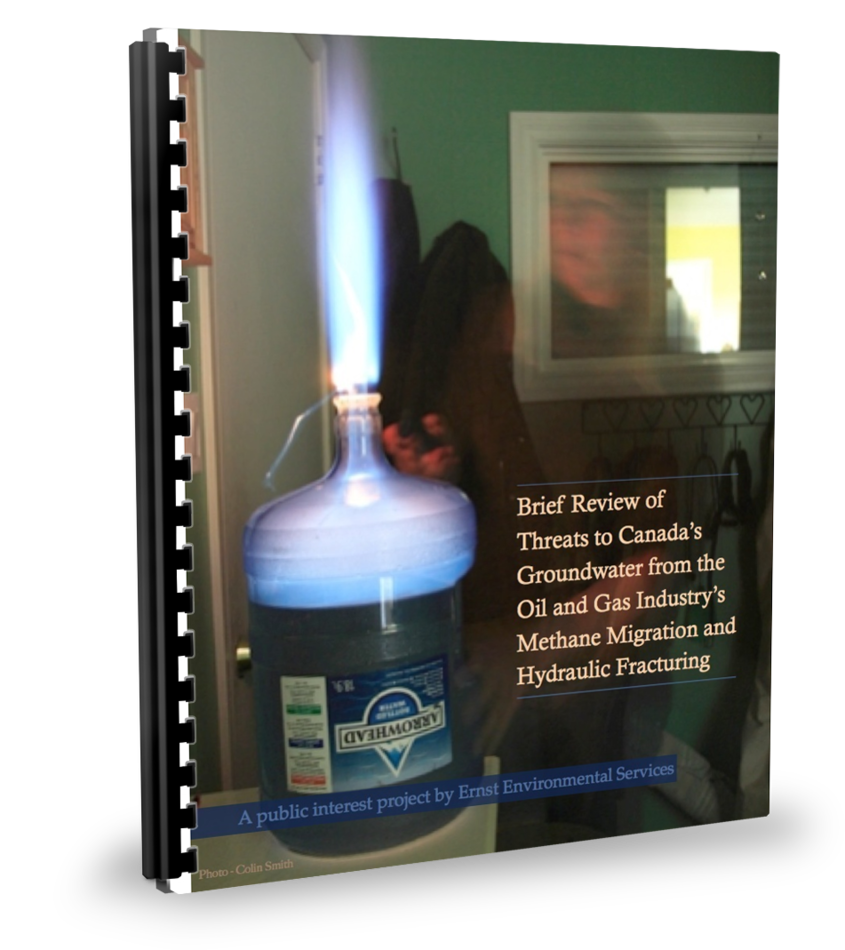
2013: Brief review of threats to Canada’s groundwater from the oil and gas industry’s methane migration and hydraulic fracturing by Ernst Environmental Services. Why the hell did a Canadian citizen have to do this work for no pay (years worth) that federal and provincial gov’ts are responsible to do, but refuse to (for obvious reasons – the billion dollar profit raping oil and gas companies do not want any data that might be used to hold them accountable for the phenomenal pollution they cause, above and below ground).
2014:
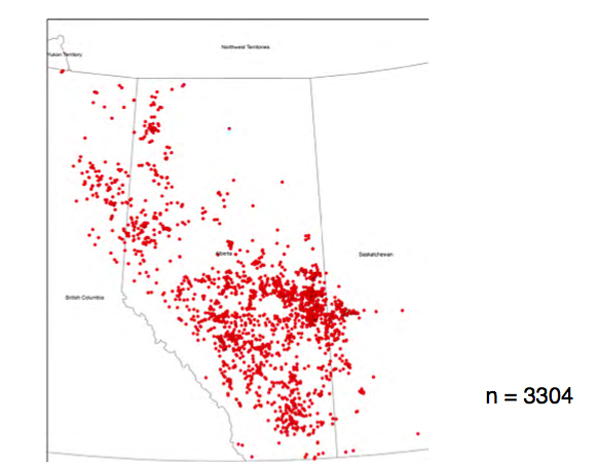
Some of the known leaking energy wells in Alberta and NEBC, as of 2014. There are many more now.
2014: Fracking Growth Outpacing Scientific Knowledge in Canada: Report, Environment Canada-commissioned study urges a ‘go slow’ approach Pffft! Too late!
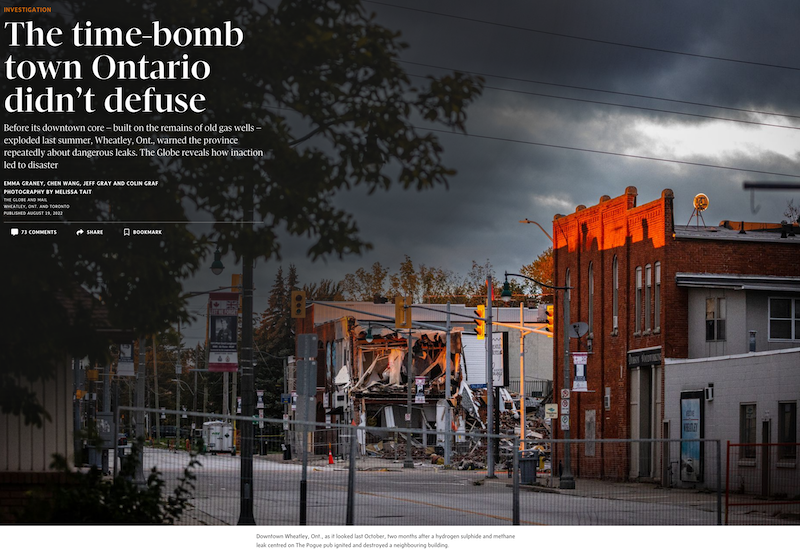
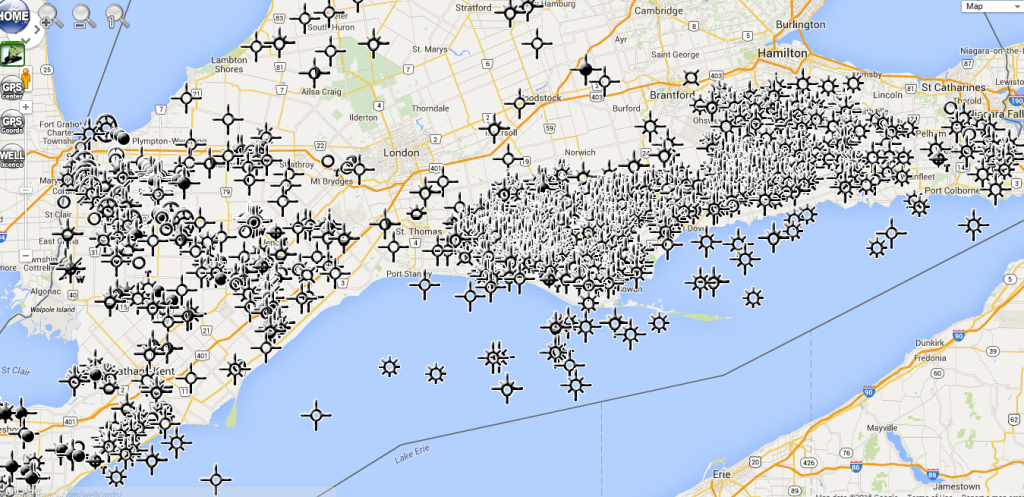
Map of some of the Ontario energy wells (many of them leaking and or abandoned, including deadly sour gas) as of April 5, 2015. 3,600 of these have been frac’d as of that date (how many more since?) while Ontario gov’t lies publicly, claiming there has been/is no frac’ing there.
Authorities have limited details on, and in some areas none, how much groundwater these wells are contaminating, rendering it and buildings over it life threatening.
2021: New study: Canada overlooking (intentionally?) industry’s methane leaks.
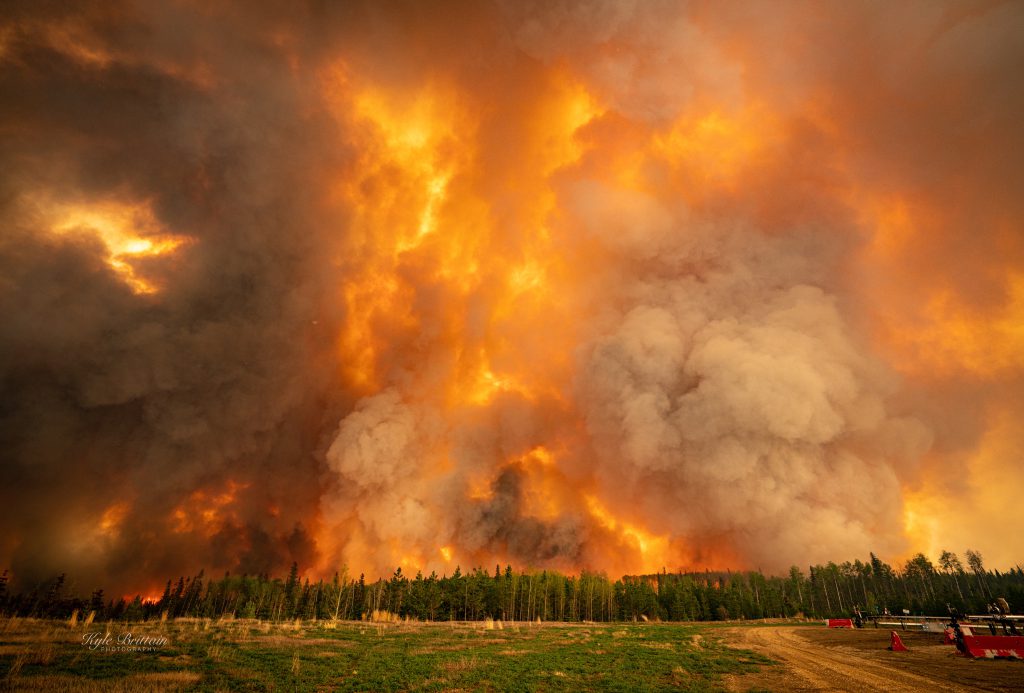
Wall of Wildfire at Fox Creek, Frac Central, Alberta, by Kyle Brittain