@AlexTaylorNews:
Amazing moment on French TV. A French judge explains how Trump sent people from the US Embassy basically trying to intimidate her during Le Pen’s trial for embezzlement – something they’ve done to other judges around the world
@spectatorindex:
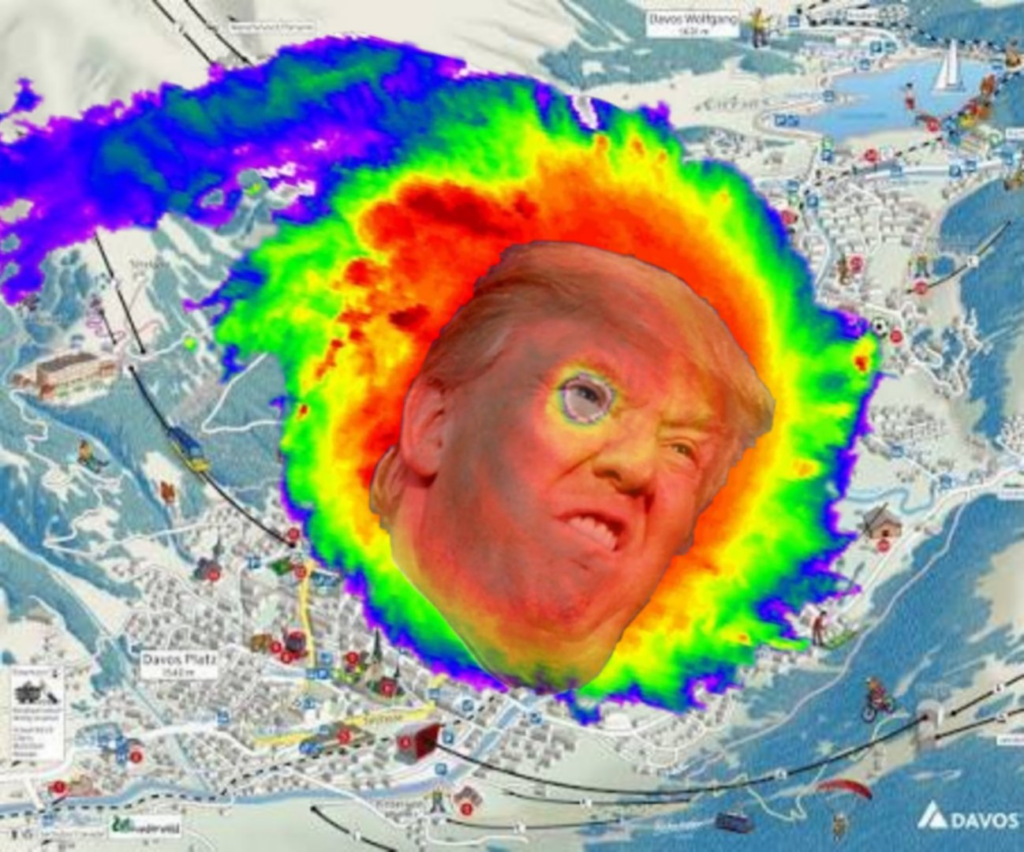
BREAKING: Trump says that if Macron is ‘hostile’ to Board of Peace invitation, he will impose 200% tariff on French wines and champagnes.
@tiberiusfiles:
The ‘Board of Peace’ doesn’t sound very peaceful…
(It’s, of course, not)
@jasonhickel:
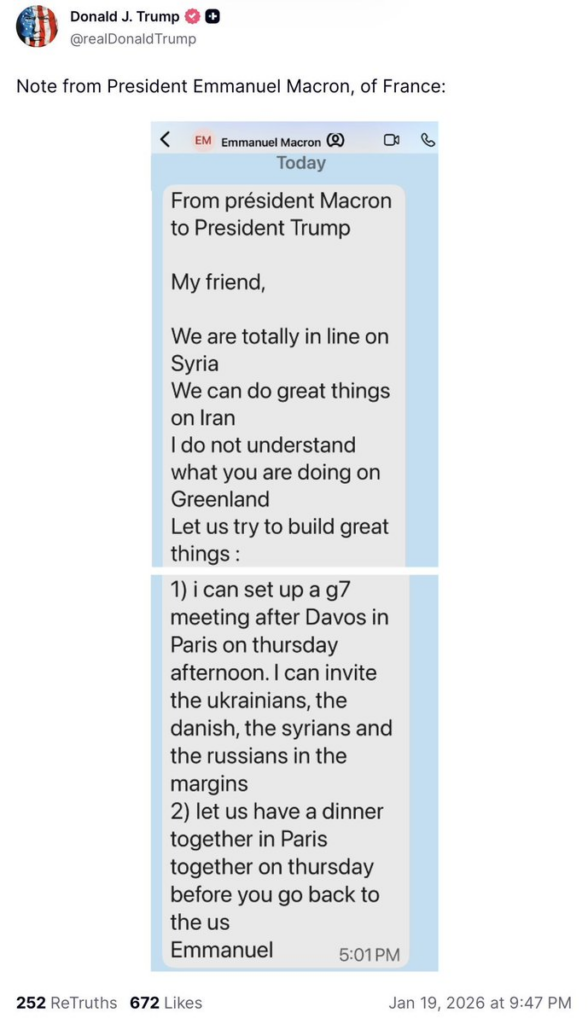
“We are totally aligned on bombing brown people, let’s just keep doing that”
@PeterSchiff:
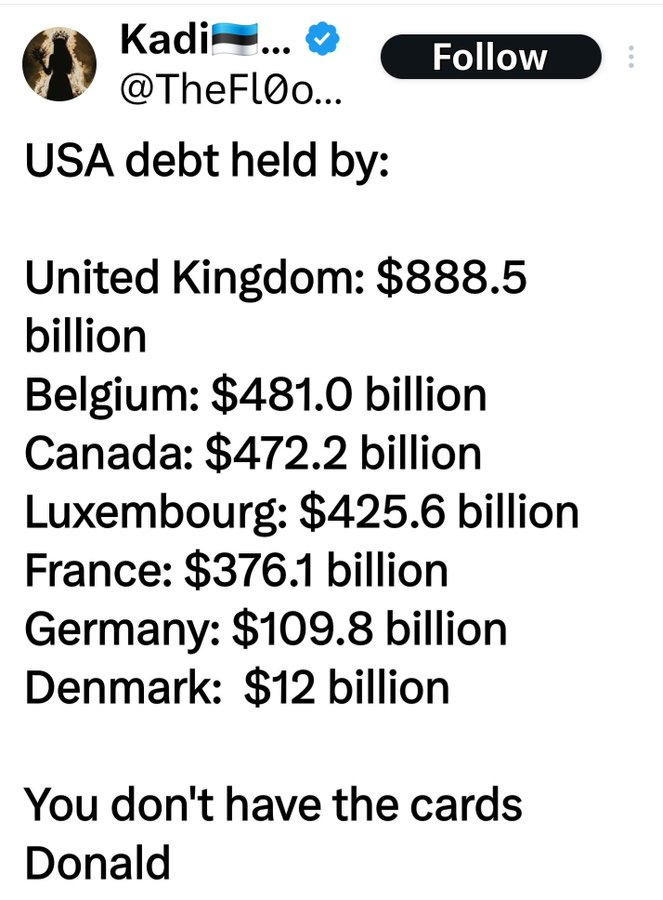
The main difference between the 2026 financial crisis and the 2008 financial crisis, other than the fact that this one will be much worse, is that it won’t be global. The rest of the world will actually benefit as the burden of supporting the U.S. consumer economy will be lifted.
Trump has finally given the world the motivation to do what it should have done on its own decades ago. If Americans think there’s an affordability crisis now, wait until they see what happens to consumer prices and interest rates when the world pulls the rug on the U.S. dollar.
@Terry_MacLeod:
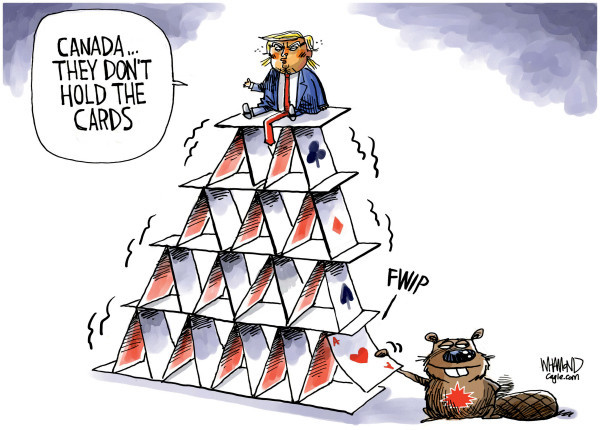
It’s only just started. Wait till all EU countries dump US bonds all at once!
@Outoftweet123:
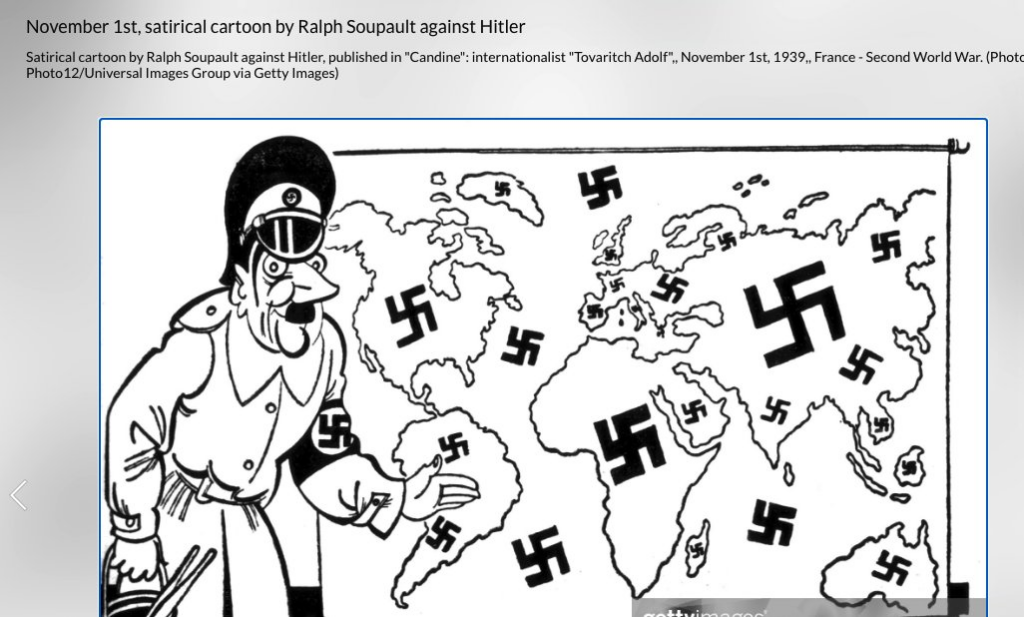
Would you want to hold Reichmarks in 1939…..who wants to own dollars printed by a dictatorship annexing land the same way Hitler behaved!
@RepThomasMassie:
Selling stolen oil and putting billions of dollars in a bank in Qatar to be spent without Congressional approval is not Constitutional.
Only Congress can appropriate money.
The President can’t legally create a second Treasury overseas for his own piggy bank.
Wake up Congress.
@0zerosignal0:
The USA is in its death phase, entering rigor mortis as the century winds its course.
A perishing rabid beast doesn’t go away quietly, of course.
But it is going away.
Nature’s course is unstoppable.
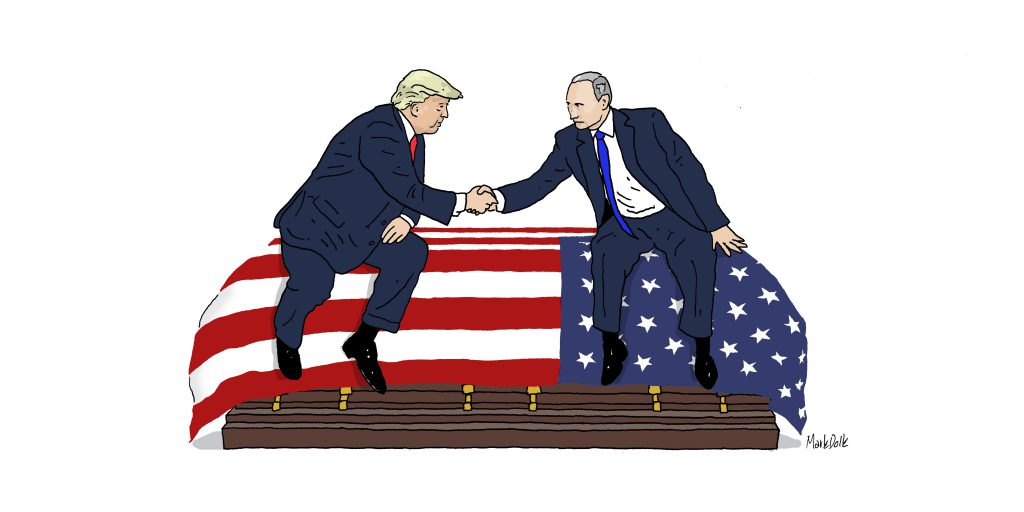
Israel Is Controlling Trump and Nobody Is Noticing  I noticed in Trump’s first term, he also worships and serves Putinby Olivia Swing, Dec 24, 2025,
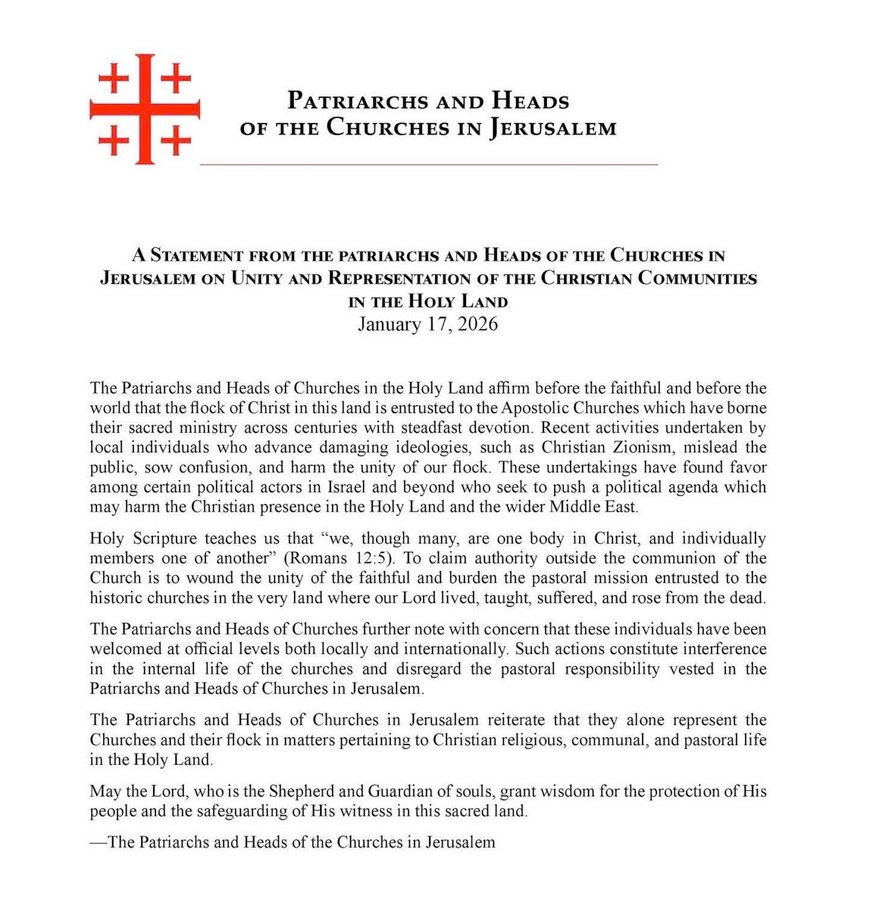
BREAKING: CHRISTIAN PATRIARCHS OFFICIALLY DECLARE “CHRISTIAN ZIONISM” IDOLATRY & HERESY
In an UNPRECEDENTED move the Patriarchs & Heads of the Churches in Jerusalem officially CONDEMN Christian Zionism
They accuse Christian Zionists of imperiling Christians and Christianity
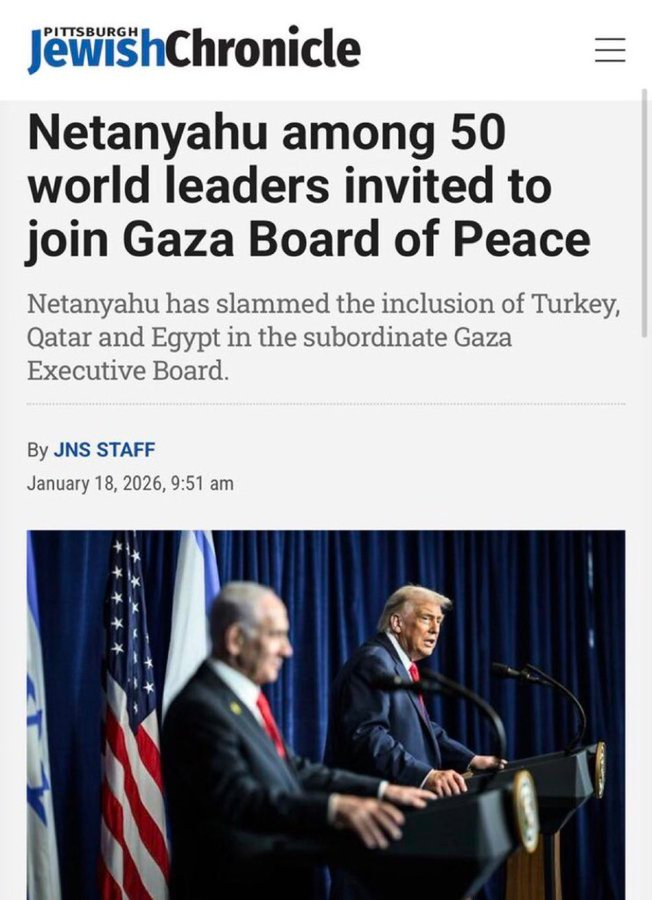
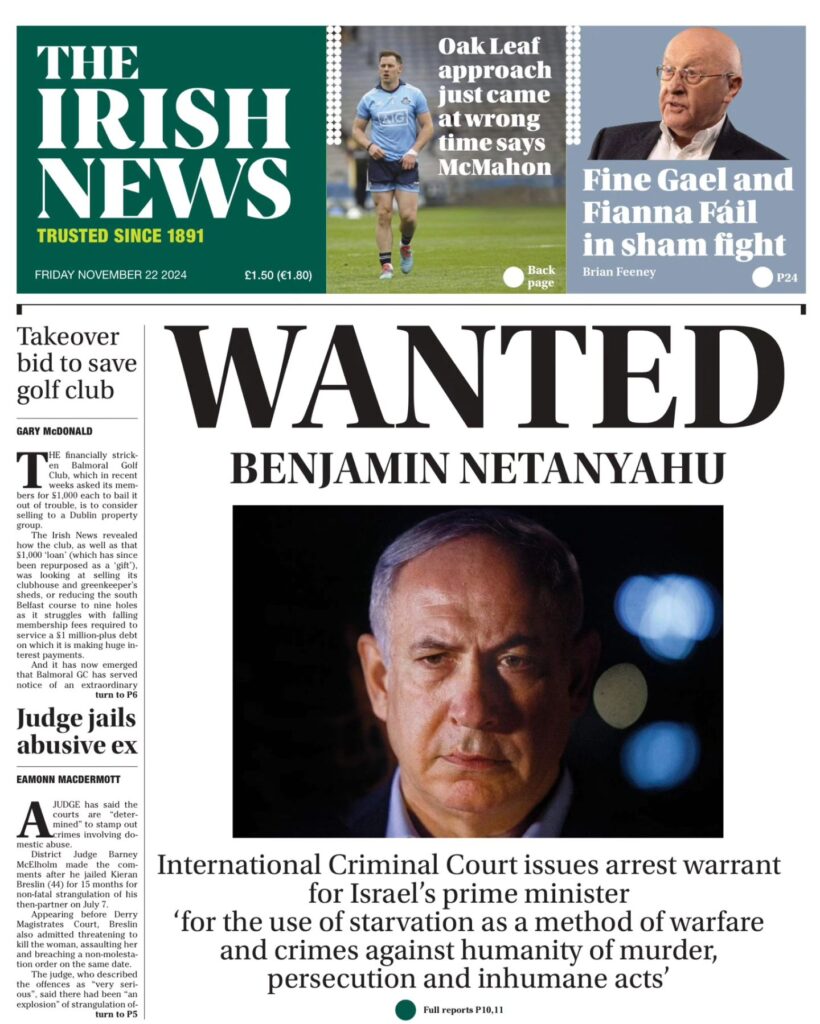
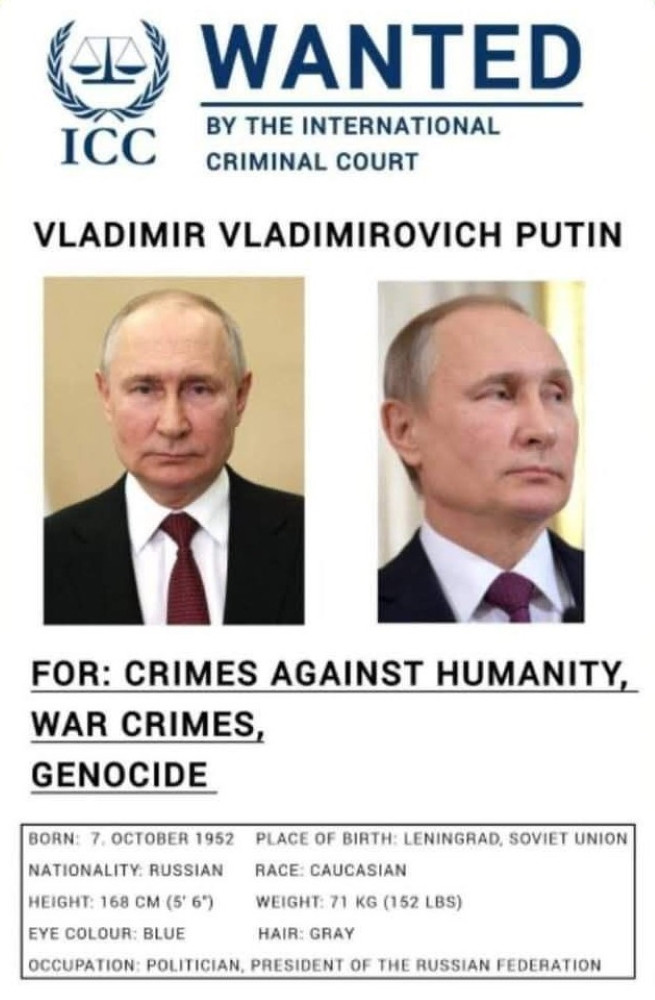
Carney still mulling ‘Board of Peace’ seat despite Trump’s invitation to Putinand Fucking fellow genocidaire Bibi Netanyahu is also a wanted criminal! Damn you Carney, Harper’s more evil Nazi twin.
@tryangregory.bsky.social:
No, Canada should not even consider joining Trump’s Borg of Peace.
@mikevlasic.bsky.social:
Damn, it’s not that hard. This gives a great outline of what this Fascist Board is and isn’t.
Trump’s “Board of Peace”: What It Is — and Why It Is Not the United Nations
In recent days, several media outlets have described President Donald Trump’s proposed Board of Peace as a potential “UN rival” or an alternative international peace-building body modeled on the United Nations.
That comparison does not hold up under scrutiny.
What is emerging is not a multilateral institution in the UN sense, nor a peacekeeping framework grounded in international law. It is something far more unusual — and more politically consequential: a chairman-controlled, pay-to-participate political body with international legal personality, discretionary membership, and centralized financial authority.
Understanding the difference matters.
What the Board of Peace Is
According to the charter circulated to invited governments and obtained by The Times of Israel, the Board of Peace is defined as:
“An international organization that seeks to promote stability, restore dependable and lawful governance, and secure enduring peace in areas affected or threatened by conflict.”
On paper, that sounds familiar. In structure, it is anything but.
Core features of the Board of Peace:
- Chairman-centric governance Donald Trump is designated inaugural Chairman with exclusive authority to:
- Invite or exclude member states
- Appoint and remove Executive Board members
- Approve or veto all decisions
- Control succession
- Dissolve the organization at will
- Selective membership by invitation only States cannot apply. They must be invited by the Chairman and accepted on his terms.
- Financial threshold for permanence States contributing $1 billion or more are exempt from term limits. Others serve three-year terms, renewable solely at the Chairman’s discretion. The charter explicitly requires the $1 billion contribution to be made in cash.
- Centralized control of funds Contributions flow into accounts overseen by the Executive Board — but subject to Chairman veto at any time.
- Broad, expandable mandate Despite being publicly framed around Gaza, the charter never mentions Gaza. It explicitly allows expansion to “other conflicts around the globe.”
This is not incidental. It is foundational.
What the Board of Peace Is Not
It is not the United Nations
The United Nations exists because of:
- A multilateral founding treaty ratified by states
- Clearly defined organs (General Assembly, Security Council, Secretariat)
- A separation between political authority and administrative execution
- Legal constraints rooted in international law, not personal discretion
By contrast, the Board of Peace:
- Has no general membership
- Has no independent secretariat
- Has no checks on executive authority
- Has no separation between political leadership and financial control
- Has no binding relationship to international humanitarian law or UN frameworks
Calling it “UN-like” is structurally incorrect.
It is not a UN-mandated Gaza mechanism
The UN Security Council mandate governing post-war Gaza assistance is:
- Time-limited
- Geographically confined
- Operationally humanitarian
- Administered through existing UN agencies
The Board of Peace:
- Has no geographic limitation
- Has no sunset clause beyond Chairman renewal
- Claims authority over “lawful governance” — a political function
- Can operate independently of UN agencies
This explains why UN officials and aid workers describe current Gaza assistance as a “Band-Aid” — and why many are uneasy about a parallel political structure forming outside established humanitarian coordination.
Why Governments Are Alarmed
1. Pay-to-belong governance
Requiring $1 billion for permanent membership is not burden-sharing. It is capital-weighted influence, without collective oversight.
That alone separates this body from every major multilateral institution.
2. Chairman control over membership and expulsion
The Chairman may:
- Remove any member, subject only to a high voting threshold
- Add new members unilaterally
- Renew or deny terms at will
This makes the organization politically contingent, not rules-based.
3. Legal personality without accountability
The charter grants the Board:
- Capacity to sue and be sued
- Ability to hold property
- Authority to negotiate privileges and immunities
Yet the Chairman is the final authority on interpretation and disputes.
That combination is extremely rare — and legally risky.
Why Comparisons to the UN Persist
The UN comparison persists for one reason: scale ambition.
The Board of Peace:
- Seeks global relevance
- Invites heads of state
- Operates across conflicts
- Wants a high-profile signing ceremony in Davos
But scale does not equal legitimacy.
The UN is slow, imperfect, and often frustrating — but it is constrained by law, precedent, and collective consent. The Board of Peace is constrained by none of those things.
Why Some States Are Still Engaging
Several governments have confirmed receiving invitations, including Canada, Russia, Hungary, and Belarus.
Mark Carney said Canada accepted in principle, but conditioned participation on:
- Unimpeded humanitarian aid
- Clear structure
- Defined financing
- Demonstrable impact
Russia confirmed that Vladimir Putin received an invitation and is “reviewing” it.
This pattern matters:
- Liberal democracies are cautious and conditional
- Russia-aligned states express enthusiasm
- Europe is coordinating quiet pushback
That is not accidental alignment. It reflects how the charter redistributes power.
What This Really Is
The Board of Peace is best understood as:
A discretionary international political club with legal personality, centralized financial authority, and leadership control — not a multilateral peace institution.
It does not replace the UN. It does not reform the UN. It does not operate within UN law.
It bypasses it.
Whether that model succeeds or collapses remains to be seen. But describing it inaccurately — as “UN-like” or “UN-mandated” — obscures the real question:
Do states want peace architecture governed by rules — or by invitation?
That is the choice this charter puts on the table.