
Terminé de leer tu hermoso homenaje, Melo.
Estoy llorando, lágrimas de gratitud, pero también de profundo dolor
por las tantas mujeres y niñas violadas, golpeadas y quemadas a lo
largo de los siglos.
¿Por qué los humanos no aprendemos a aceptar la sabiduría y la
sanación de las mujeres, y por qué permitimos que el patriarcado
destruya la habitabilidad de la Tierra?
Más lágrimas.
jessica ernst wrote:
i finished reading your beautiful tribute melo
i am in tears, tears of gratitude, but also deep pain for the many women
and girls raped beaten burned through centurieswhy do we humans not learn to accept the wisdom and healing of women, and
why do we allow the patriarchy to destroy earth’s livability?more tears
love jessica

Bruja
- noviembre 5, 2025
Conocí a Jessica Ernst en julio de 2018 en la provincia de Alberta, en su vivienda, un modesto rancho en el pueblito de Rosebud, a unos 200 kilómetros al noreste de la populosa ciudad de Calgary, al oeste del inmenso territorio de Canadá, en un paseo al que me invitaron mis amigos Phil Little y su esposa Ana María. Cuando la vi, ella sabía que la visitaría, y con su hermoso cuerpo de mujer de sesenta años salió a mi encuentro con sus brazos extendidos. Rosebud está perdido en una inmensa estepa, con apenas 112 habitantes. Y separado del centro poblado está la casa de Jessica Ernst, una casa de madera vieja, con un establo con dos caballos y varias vacas y carneros, animales muy bien cuidados, en torno a un estanque de agua cristalina.
Un bello y paradisíaco paisaje. Jessica me ayudó a ver más allá de las apariencias. Bajo esas aguas y el pastizal cruza un oleoducto que procede de la zona de extracción de petróleo y recorre miles de kilómetros hasta llegar a las fábricas procesadoras del crudo negro. Ese oleoducto ha hecho un daño que se ha vuelto irreversible a la ecología de esos territorios, dañando el agua y contaminando el ambiente en general. Alberta es la provincia canadiense que concentra la mayor industria petrolera de ese inmenso país del norte, y las compañías petroleras han dado muestras de ser intocables, han establecido condiciones de impunidad tanto en el sistema de justicia de Canadá como en el de Estados Unidos, destino final del oleoducto que cruza la propiedad de Jessica Ernst.
Esta hermosa mujer ha dedicado los mejores años de su vida en ejercer su derecho a vivir en su propiedad sin la contaminación del petróleo que ha afectado su propiedad, su agua, y el agua y el ambiente de todas las poblaciones que habitan en esa región del occidente canadiense. Ha hecho valer su palabra, y su lucha ha llegado hasta la Corte Suprema de Justicia de su país y también a la justicia de los Estados Unidos. Y todo ha sido infructuoso. No solo no han actuado conforme a la ley protegiendo los intereses de las compañías petroleras, sino que emprendieron una campaña sistemática en contra de la dignidad personal de Jessica.
Esta campaña ha hecho mella en su propio pueblo. Al vivir apartada del reducido casco urbano en donde viven las pocas familias de la aldea, los rumores y los chismes se transforman en leyendas y surgen fantasmas que merodean por aquellos contornos. Por su fuerte personalidad y autonomía, las compañías petroleras han dejado correr el rumor de que Jessica responde a las ideas exóticas del fracasado comunismo y que atentan contra la convivencia pacífica de la sociedad canadiense. Esto ha generado un ambiente de miedo, y al observar que Jessica no profesa ninguna religión, sus vecinos comenzaron a rodar el rumor de estar poseída por espíritus diabólicos, y que a lo lejos escuchan gritos y lamentos como de almas en pena. Quienes se atreven a vencer el miedo y se acercan a la vivienda de Jessica encuentra una estatua con figura de animal extraño que ella tiene como talismán protector, y en una de las ramas del árbol más cercano a su vivienda ella ha colgado la figura típica que simboliza a las brujas.
Esto ha bastado para que Jessica se ganara el título de la bruja del pueblo. Y las madres evitan que sus hijos merodeen cerca de la propiedad de esta mujer defensora del ambiente para evitar cualquier contagio maligno. Cada vez las visitas a la casa de Jessica escasean, y basta que alguien pregunte en la cafetería del pequeño pueblo por la casa de la bruja y de inmediato señalan el camino hacia la austera residencia de Jessica. Este ambiente ha hecho mella en ella. Se volvió taciturna, de pocas palabras y más bien ensimismada en su mundo de lectura y animales. Si la gente del entorno la dejó de visitar, ella ha correspondido igual. No visita a nadie.
Mi visita entonces era algo extraño en el paisaje de su vida taciturna. Sin embargo, su rostro se llenó de dulzura cuando nos vimos y nos abrazamos. Me mostró su rancho, sus animales y los estanques de agua, aparentemente cristalina, pero contaminadas. Conversamos sobre su historia y sus andares en la defensa del ambiente. Sabía muy bien de Berta Cáceres y la evocó con dulzura. “Tú eres la Berta del norte”, le dije. Ella se sonrojó de inmediato, con evidente signo de timidez ante semejante comparación. “Tú nos representas aquí a quienes en el mundo luchamos por un planeta en armonía entre los seres humanos con la naturaleza”. Se volvió con su vista curiosa y me abrazó de nuevo. Nos despedimos, se nos hacía tarde y había que regresar a casa de la tía de Phil en la ciudad de Calgary quien nos esperaba con cena especial. Le dije que me encomendara con su talismán para que tuviera buen retorno a mi país y seguir teniendo fuerzas para proseguir la lucha en defensa de tanta gente indefensa en sus derechos. Y elevé mi vista para decir adiós a la bruja protectora que nos miraba desde la rama del árbol.Salí con la carga de energía positiva de aquellos abrazos y de su testimonio y de sus palabras de gratitud, escasos en los ambientes del norte del mundo. Cuando habíamos caminado unos 50 metros, escuché que me llamaba por mi nombre, mientras iba bajando de la rama donde tenía a su bruja. Se vino corriendo y me la entregó. “Es tuya, para que nos cuide a ambos en donde estemos y con quienes estemos”. Recordé entonces que en su significado original las brujas eran mujeres sabias y sanadoras, conectadas a la naturaleza con conocimientos profundos de las plantas y las hierbas. Simbolizaban la sabiduría y el poder femenino. Los hombres no lo soportaron y con el correr de los años, las fueron demonizando, haciéndolas feas y hechiceras, malas y peligrosas para la sociedad. Y ya para la edad media ser bruja era sinónimo de demonio. Y a los demonios había que perseguirlos, encarcelarlos y quemarlos. Así fue la cacería de brujas, y ese concepto permeó tiempos y culturas y ha persistido hasta nuestros días. Jessica Ernst simboliza la mujer sabía y rebelde del norte del mundo. Como Berta Cáceres lo es en Honduras. Junto a tantas mujeres sabías y rebeldes, ellas son mis brujas. Y la bruja que me protege en mi habitación me recuerda la sabiduría femenina, sin la cual es imposible un mundo nuevo posible.
Ismael Moreno, SJ (Melo)

November 5, 2025
Witch
Written by Ismael (Melo) Moreno
I met Jessica Ernst in July 2018 in the province of Alberta, at her home, a modest farm house in the small town of Rosebud, about 100 kilometers northeast of the bustling city of Calgary in western Canada. I was there on a visit with an invitation from my friends Ana María McDonell and Phil Little.
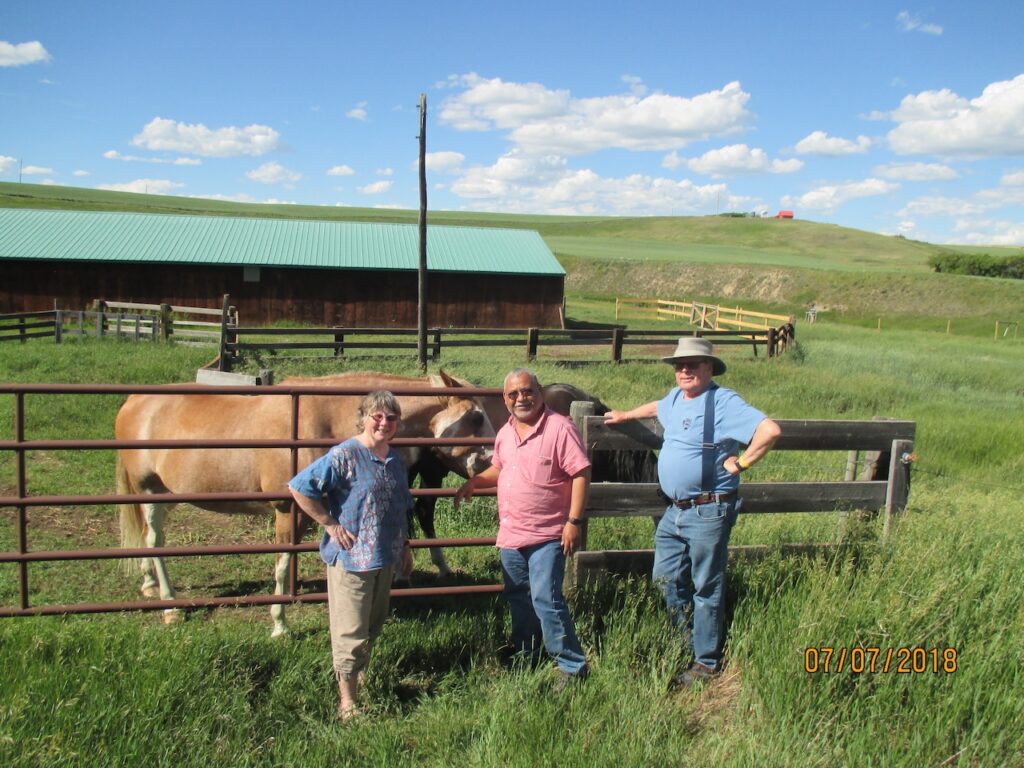
Left to right: Anne Marie, Dex (horse), Melo, Tux (horse), and Phil on Jessica’s land at Rosebud, Alberta. The new water tower (red) for the community is seen in the background on the coulee top (the orginal blew up in an explosion seriously injuring the water manager for Wheatland County after Encana illegaly frac’d our drinking water aquifers).
When I first saw Jessica, she had a premonition that I was coming, and with her beautiful sixty-year-old presence, she greeted me with open arms. Rosebud is nestled in a deep coolée on the western plains, with a mere 112 inhabitants. Separated from the town center is Jessica Ernst’s house, an old wooden structure with a stable housing two horses and several well-cared-for cows and sheep, overlooking a crystal-clear pond.
From first impressions of this beautiful, idyllic landscape, Jessica helped me see beyond appearances. Beneath those waters and the pastureland ran the fracking lines for gas extraction that then from the extraction zone the product travelled to reach the processing plants for the gas. That extraction process has caused irreversible damage to the ecology of these lands, polluting the water and contaminating the environment in general. Alberta is the Canadian province with the largest petro-carbon industry in that vast northern country, and the oil companies have shown themselves to be untouchable, enjoying conditions of impunity in both the Canadian and U.S. justice systems.
This beautiful woman has dedicated the best years of her life to exercising her right to live on her property free from the oil pollution that has affected her land, her water, and the water and environment of all the communities in that region of western Canada. She has stood her ground, and her fight has reached the Supreme Court of her country. And all has been in vain. Not only has the petroleum industry failed to act in accordance with the law, in promoting the interests of the oil companies, they have also launched a systematic campaign against Jessica’s personal dignity.
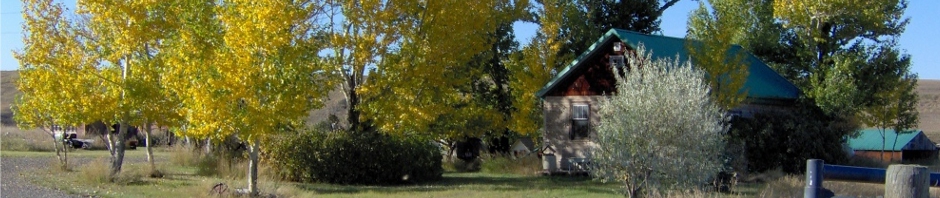
This campaign has taken its toll in her own village. Living apart from the small town center where the village’s few families reside, rumors and gossip have morphed into legends, and ghosts are said to haunt the area. Because of her strong personality and independence, the oil companies have spread the rumor that Jessica subscribes to the exotic ideas of failed communism and that she threatens the peaceful coexistence of Canadian society. This has created an atmosphere of suspicion, and seeing that Jessica didn’t identify with any religion, her neighbors began to spread the rumor that she is possessed by demonic spirits, and that they heard screams and wails in the distance, like those of tormented souls. Those who dared to overcome their fear and approach Jessica’s house found a statue of a strange animal that she keeps as a protective talisman, and on one of the branches of the tree nearest her home, she had hung a doll like figure that symbolizes witches.
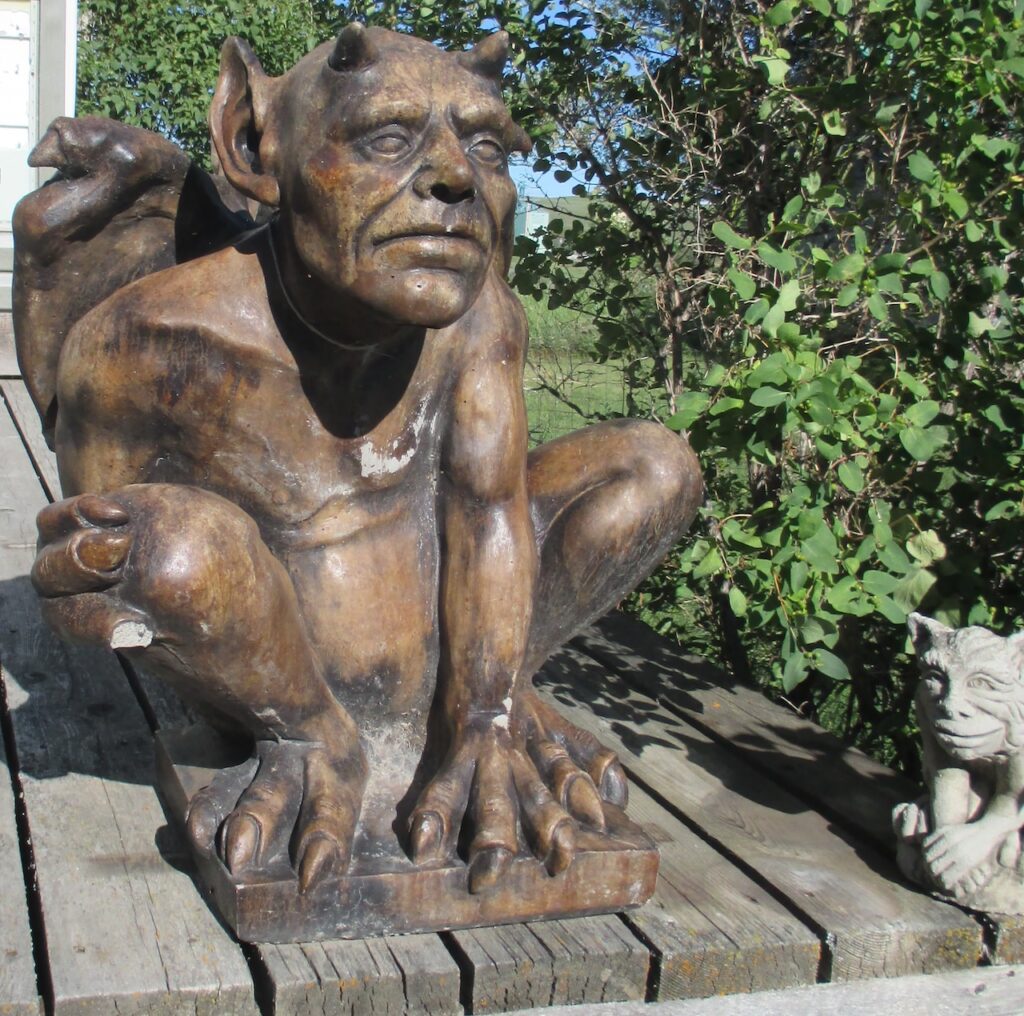
Bennedict Bray, gargoyle guardian (purchased on sale at the Saskatoon Farm where he had suffered a drop resulting in a lost nail, broken wing and base, and many scrapes and scratches) on Jessica’s deck, with Lorenzo, a smaller grey gargoyle to his right. The Rosebud grain elevator seen in the background.
This has been enough for Jessica to earn the title of the town witch. Mothers kept their children away from this environmentalist’s property to avoid any possible contagion. Visits to Jessica’s house are becoming increasingly rare, and if someone asks about the witch’s house in the small town’s café, they’re immediately directed to Jessica’s austere residence. This atmosphere has taken its toll on her. She has become taciturn, quiet, and rather absorbed in her world of reading and animals. If the locals have stopped visiting her, she has reciprocated. She doesn’t visit anyone.
My visit, then, came like an oddity in the landscape of her taciturn life. However, her face lit up with sweetness when we saw each other and embraced. She showed me her farm, her animals, and the pond of water, seemingly crystal clear, but polluted.
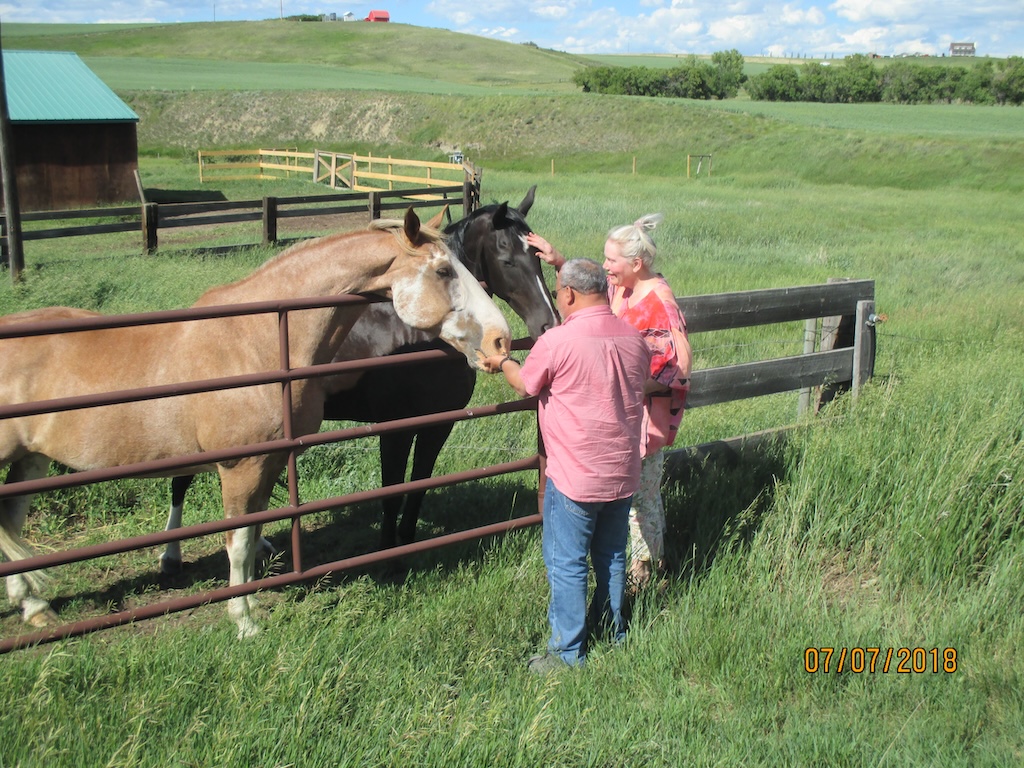
Jessica introducing Melo to her neighbours’ horses, Dex (black) and Tux, who spend summers grazing on Jessica’s land.
We talked about her story and her work defending the environment. She knew of Berta Cáceres very well and spoke of her fondly. “You are the Berta of the north,” I told her. She blushed immediately, clearly shy with such a comparison. “You represent those of us here, those of us around the world who struggle for a planet in harmony between human beings and nature.” She turned with a curious look and hugged me again. We said our goodbyes; it was getting late, and we had to return to the home of Phil’s cousin in Calgary where a special dinner was prepared for us.
I asked Jessica to entrust me with her talisman so that I would have a safe return to my country and continue the fight to defend the rights of so many people. I looked up to say goodbye to the protective witch who was watching us from the tree branch. I left feeling the positive energy of those hugs, her testimony, and her words of gratitude, so rare in the northern hemisphere. When we had walked no more than 50 meters, I heard her call my name as she climbed down from the branch where the witch effigy had hung. Jessica ran over and handed her to me. “She’s yours, so she can watch over both of us wherever we are and whoever we’re with.”
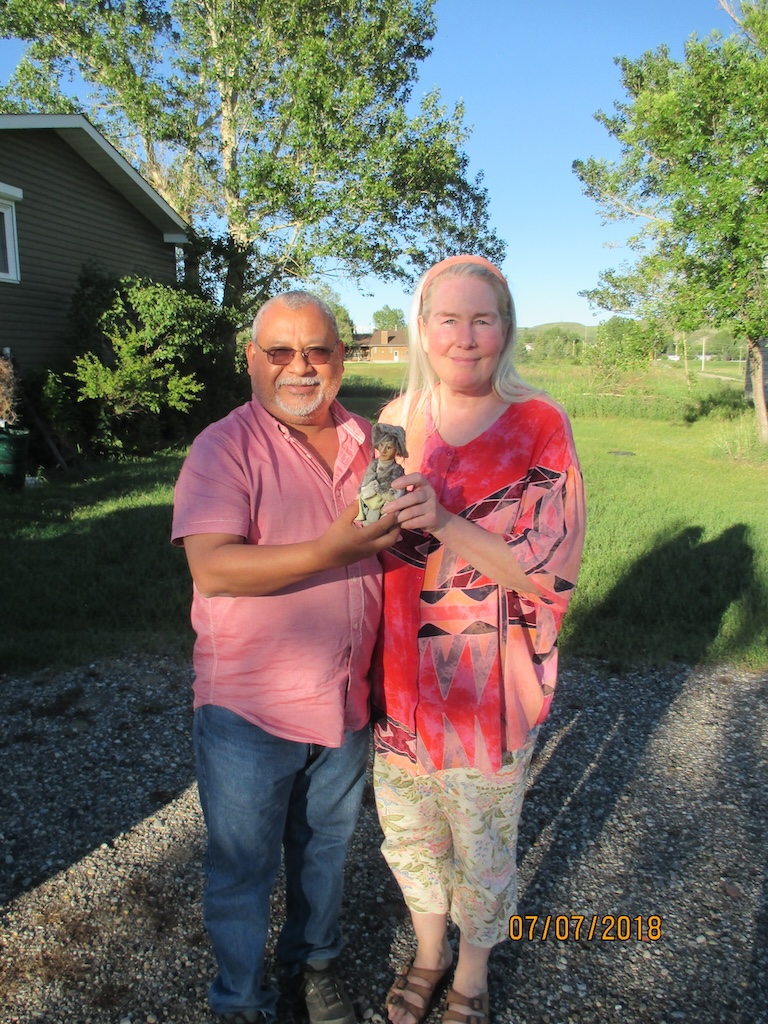
I remembered then that in their original meaning, witches were wise and healing women, connected to nature with a deep knowledge of plants and herbs.
They symbolized wisdom and feminine power. But it was men who could not tolerate their influence, and over the years they demonized women, portraying them as ugly and witches, evil and dangerous to society. By the Middle Ages, being a witch was synonymous with being a demon. And demons had to be hunted down, imprisoned, and burned. This was the witch hunt, and this concept permeated time and cultures and has persisted to this day.
Jessica Ernst symbolizes the wise and rebellious woman of the Global North. Just as Berta Cáceres does in Honduras, along with so many other wise and rebellious women, they are the witches who speak to me. The witch from Jessica’s tree who protects me in my room speaks to me of feminine wisdom, without which a new world is impossible.
Ismael Moreno, SJ (Melo)
 Photos above by Phil Little, descriptions by Jessica Ernst (who took the first photo).
Lost in Translation and Honduran story telling:
I don’t speak Spanish and Melo does not speak English, providing for some stretchy embellishments in “Witch.” I was going to explain/correct them, but thought that would interfere with the charm and magic of Melo’s interpretation and telling of his story visiting Rosebud, me and my land.
The sheep and goats, that often graze on my land and gardens, are not mine; they live next door and do not like to stay home. Of course, they came over during Melo’s visit.
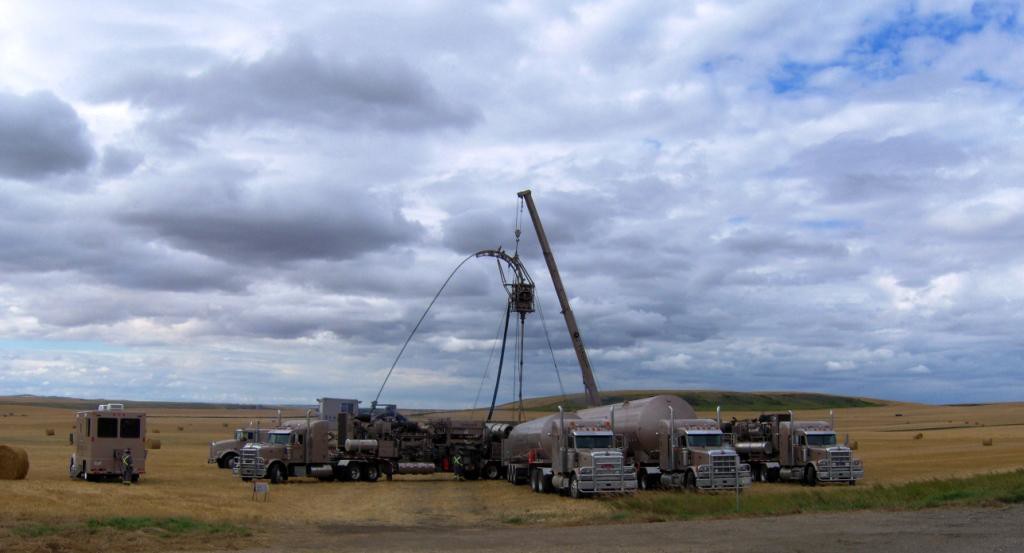
Rosebud aquifers were illegally frac’d and contaminated by Encana/Ovintiv with blessings by our regulators and gov’ts.
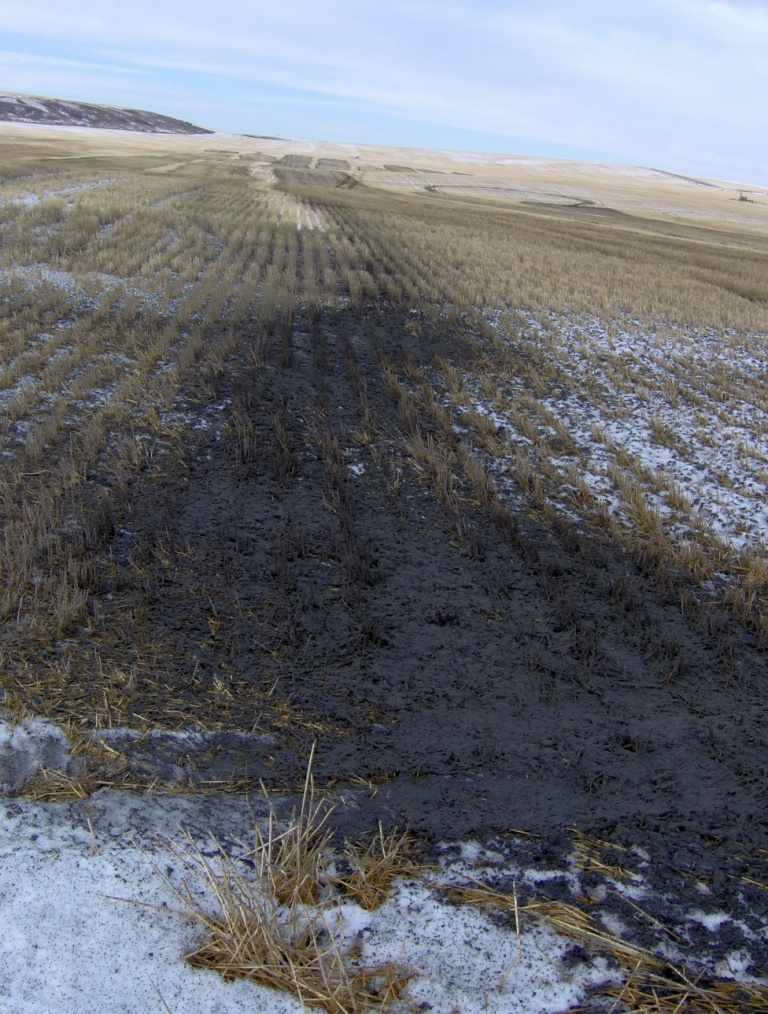
The pond (old Rosebud River) was not contaminated then; it is now from Wheatland County Council’s stupid road and wetland destruction in summer 2025 (which I believe was done to create an ugly industrial road and water storage for Persist Oil and Gas – the bitcoin frac scheister that plans to start frac’ing Rosebud again, Jan 2026). They are chasing sour oil just west of my already repeatedly frac’d home, in the area of the photo below.
The contractor for the county council hauled in soil from where Encana dumped years of its toxic waste, including this:
Refer also to:
2021: Gérard Montpetit: Judicial terrorism and frac’ing
2016: Berta Cáceres: Murdered for activism in Honduras, Energy Company Under Investigation
2005: Schematic showing Encana frac’ing into our drinking water aquifers at Rosebud (my water well is to the right of the 5-14 gas well)
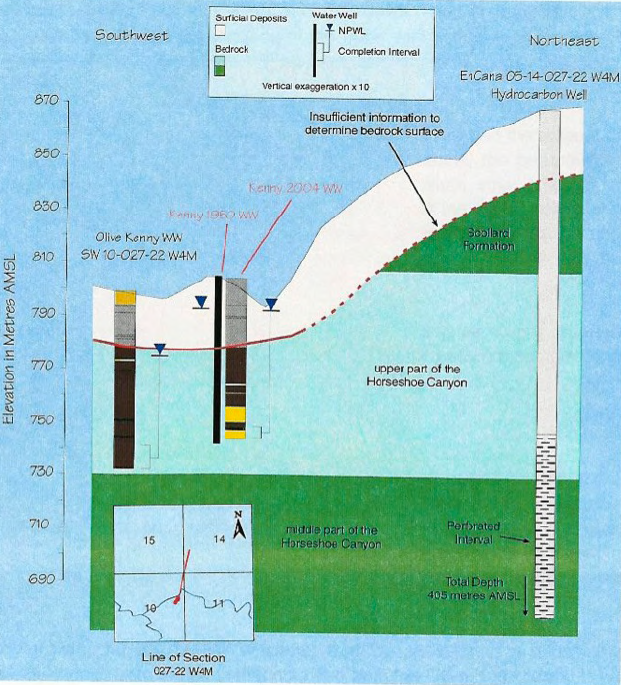
2003: Encana detailed to Alberta’s freshwater regulator/groundwater data base, that the company intended to frac our aquifers. No one stopped the company, or held it accoutable for its crimes. Encana, regulators, the county and politicians only punished the people that were harmed.
Encana did not warn any of the citizens with water wells that they were about to be frac’d.
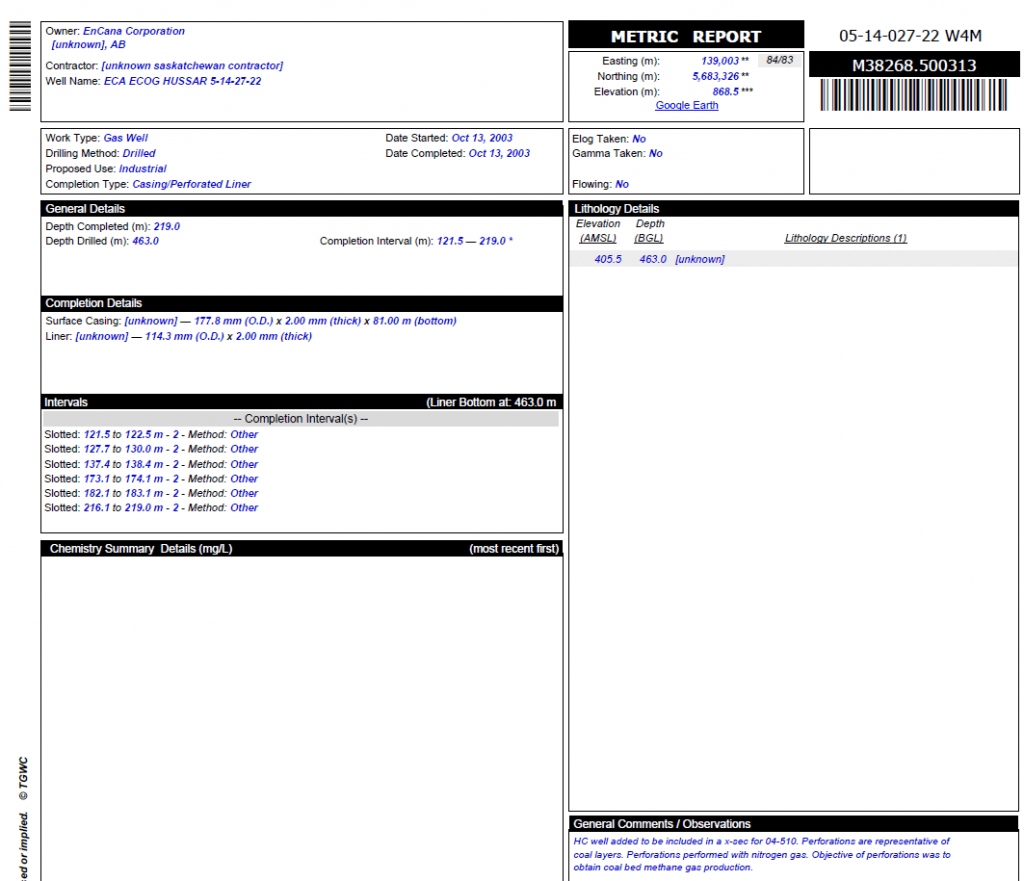
I found out years after my water was too dangerous to even use to flush toilets that the contractor was Trican. The contractor was not held accountable either. I spoke with Trican workers who said the company knew they were frac’ing into and contaminating area aquifers.