In Turkey’s southeast, a rush for shale oil sparks land seizures and pollution fears by Wouter Massink and Daniel Thorpe, Nov 01, 2026, Turkey recap
DIYARBAKIR—One autumn day about a year ago, Barış Ölmez got a call from local villagers. Large vehicles belonging to the state-owned Turkish Petroleum Corporation (TPAO) had rolled onto his wheat fields.
In fact, he soon realized the land was no longer his. It had been “urgently expropriated” for oil exploration, and a sum representing its estimated value was promptly transferred into his bank account.
“I didn’t want an oil well in the middle of my field,” Ölmez told Turkey recap. “I inherited this land from my grandfather, who got it from his father. So I opened a court case. I took them to court. But they carried on anyway. I have water wells in that field. The water got polluted from the drilling—we tested it! Even the air smells of oil.”
Ölmez eventually won the court case, and TPAO was ordered to cease operations on his farmlands. But almost immediately, Pres. Recep Tayyip Erdoğan issued a decree reversing the ruling and allowing TPAO to carry on drilling.
“We fought a legal battle, we won—and then a decree like this gets issued. There’s apparently no such thing as property rights in Turkey,” Ölmez said.
 Canadians don’t have property rights either when it comes to frac’ers and oil and gas companies invading our lands and contaminating our drinking water. We pay the taxes, they pollute, turn our lands ugly, devour vast amounts of water, inject toxic chemicals. dump their toxic radioactive waste (which blows in the fierce Alberta winds) on our foodland, run with the profits and run from clean-up, all enabled by our authorities and politicos.
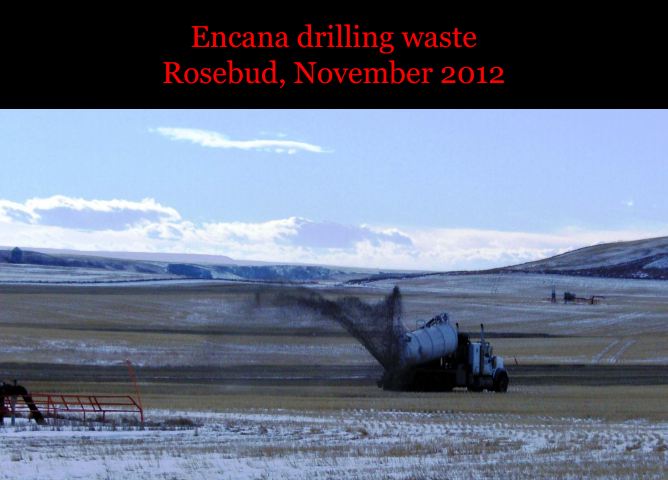
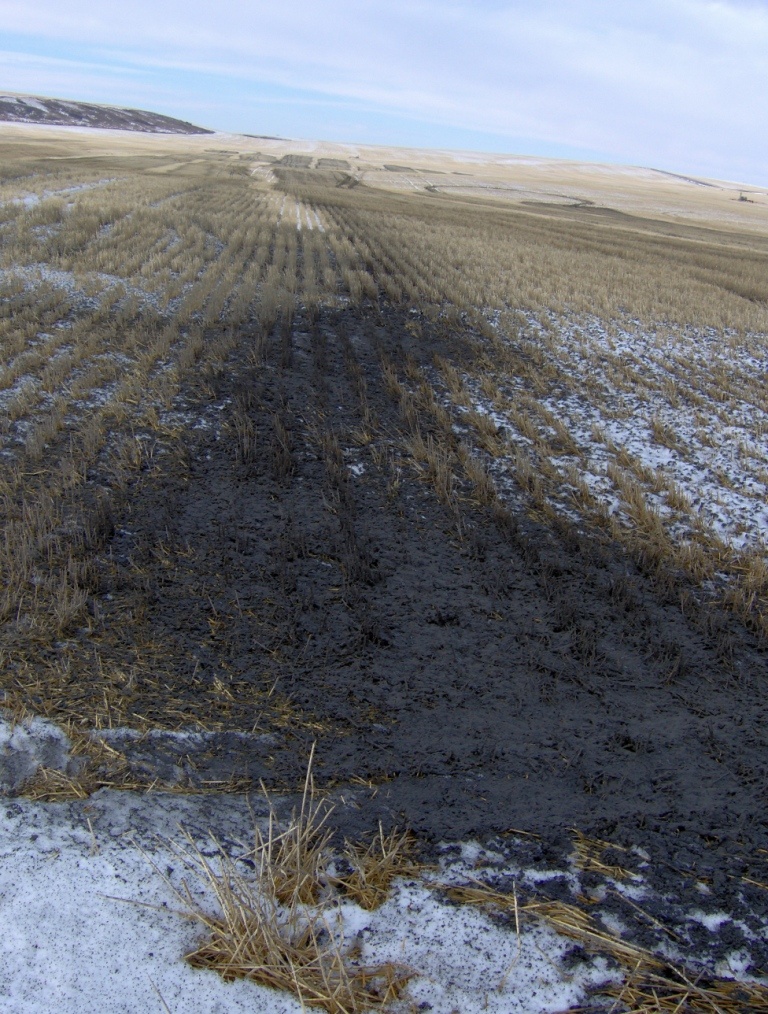
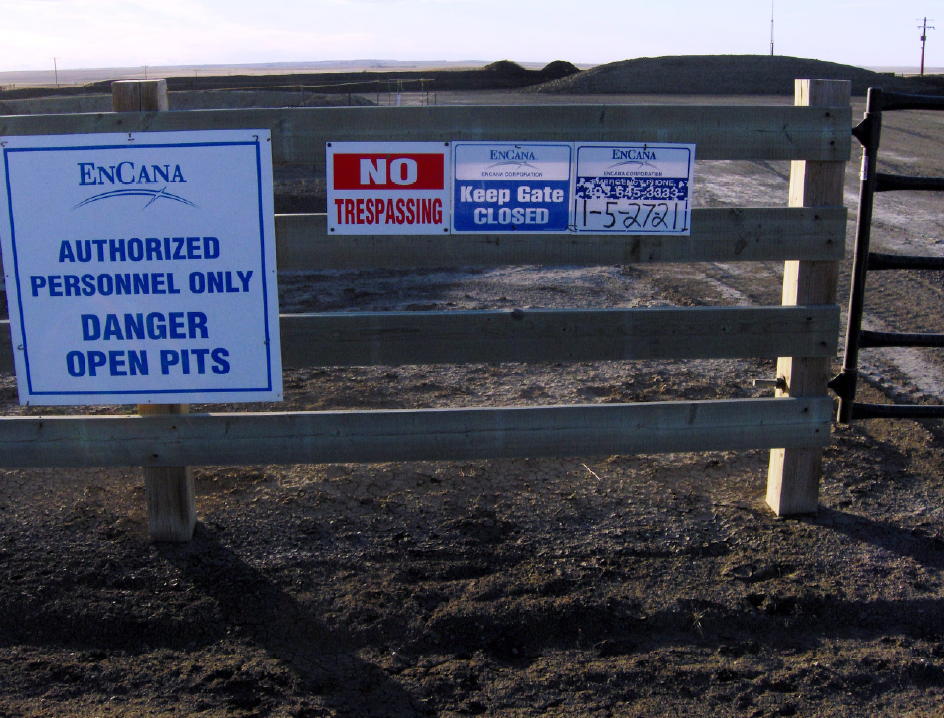
Encana/Ovintiv didn’t even bother with liners on its waste pits around Rosebud (I stood on the fence, each waste pit had no liner.
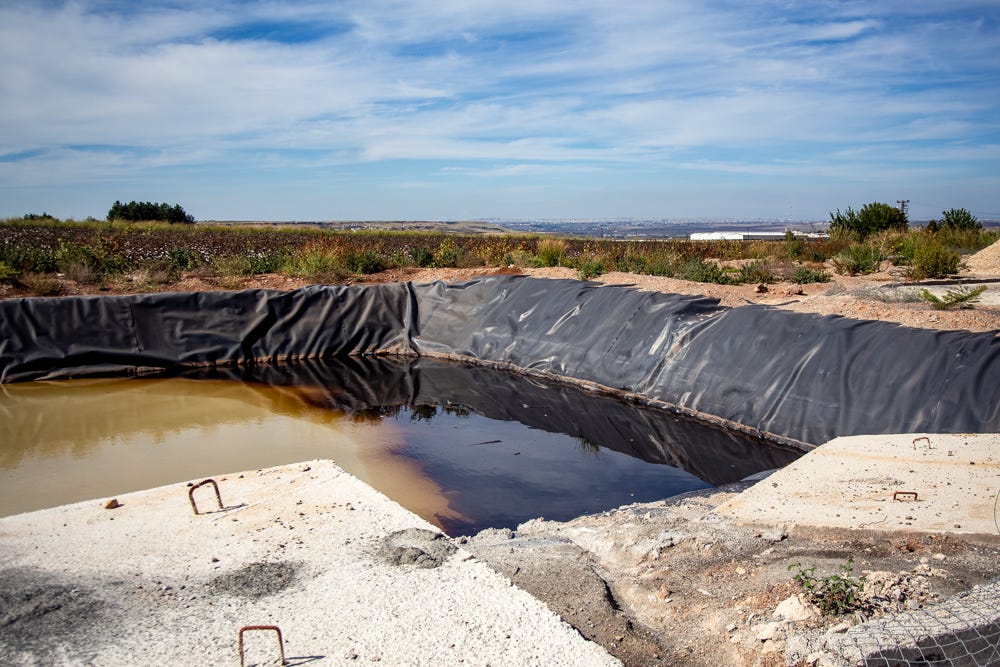
Ölmez’s field is just a fraction of the 350,000 decares of farmland lost to an oil frenzy that has gripped the region. In May 2025, US energy company Continental Resources estimated the Diyarbakır Basin could hold over 6 billion barrels of shale oil. Newly built drilling rigs and the bobbing heads of pumpjacks have since multiplied across the plateau east of the Tigris River.
It is not quite a Texas oil basin just yet, but amid a peace process with Kurdish militants, the Turkish government envisions a new energy frontier here that could help wean the nation off foreign crude. On the ground, however, locals fear they are being asked to trade their fertile soil, clean water and health for an oil boom that may not pay off.frac’ing reportedly isn’t economical anywhere. It’s a greed-induced insane fantasy which leaves massive damages and contaminated drinking water everywhere it rapes locals and their lands and water.
Diyarbakır’s oil potential
If the survey findings are correct, Diyarbakır’s reserves could be a breakthrough for the Turkish economy. Unlike many of its oil-rich southern neighbors, Turkey’s energy resources are negligible, rendering it almost entirely reliant on foreign hydrocarbons. Diyarbakır’s estimated recoverable or not recoverable?deposits, spread out across the province, alone would equal roughly 16.5 times Turkey’s annual oil imports.
But retrieving these hydrocarbons is no small feat. Nearly all deposits in Diyarbakır consist of hard-to-reach shale oil. This oil is trapped inside the pores of underground rock, and extracting it requires a complex and controversial technique called fracking.
To unlock the crude, wells need to be drilled 3 to 4 kilometers deep before pivoting horizontally to carve through the oil-bearing shale. Pumps then blast millions of liters of chemically laced water and sand underground to shatter the rock and release the oil.
“We know and believe that there is oil trapped within the rocks, but being able to extract it and extract it at a reasonable pricefrac’ing is not reasonable or economical is crucial,” Energy Min. Alparslan Bayraktar said in October after a new pilot fracking project spanning Diyarbakır and Batman provinces was launched.
The venture, a joint project by TPAO, Continental Resources and the Texas-based TransAtlantic Petroleum, consists of 24 wells expected to be operational by 2028. If successful, the number of sites could scale up dramatically, serving a substantial portion of Turkey’s domestic energy demand.
“It could be a game-changer for Turkey in the oil industry,” Bayraktar said.
Experts speaking to Turkey recap, however, were more cautious with projections about Diyarbakır’s shale oil deposits.
“We know from past global experience that there can be serious discrepancies between what is announced and what actually comes out of the well,” said Mühdan Sağlam, director of the Energy and Climate Change Studies Center at the Economic Policy Research Foundation of Turkey (TEPAV).
She pointed to the offshore Aphrodite field near Cyprus. When discovered in 2011, it was similarly touted as a “game-changer” in the Eastern Mediterranean, as findings said it could hold up to 7 trillion cubic feet of natural gas. But subsequent appraisal drilling showed it contained about half the initial estimates.
A TPAO consultant did not respond to requests for comment for this report.
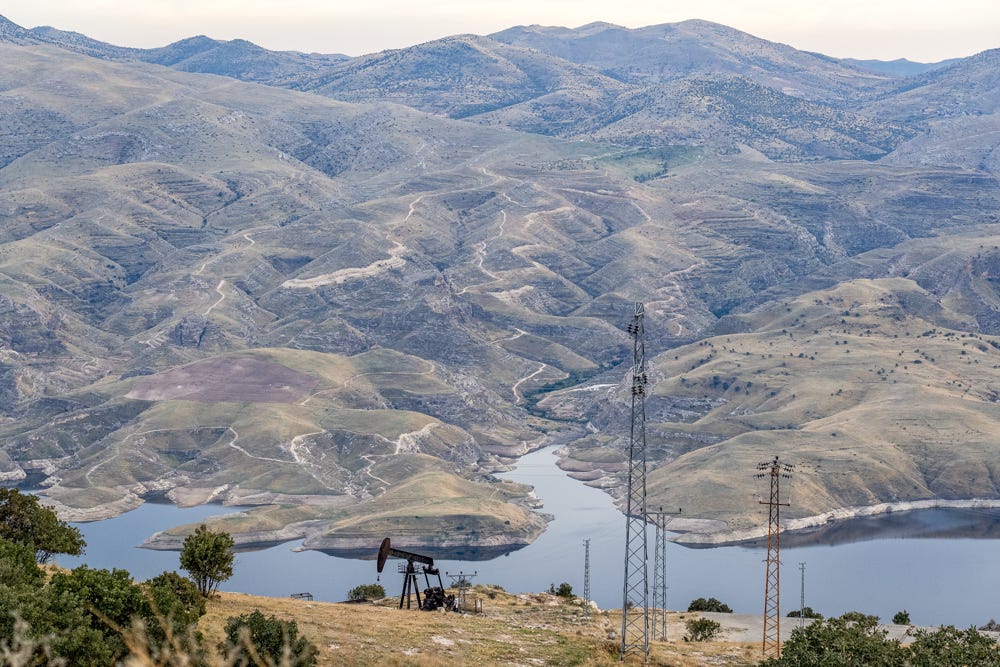
Fracking’s environmental costs
Even if there are a billion barrels of recoverable oil beneath Diyarbakır’s soil, extraction could prove more expensive and damaging than the resulting economic gains.No worries, that’s why companies intentionally dump the harms and clean on the landowner they stole from!
Fracking is known to pose severe public health risks and environmental hazards. Studies have linked proximity to active wells and their output of airborne carcinogens like benzene to elevated levels of childhood leukemia, respiratory illnesses and adverse pregnancy outcomes.
Drilling sites and adjacent waste pits could also carve up thousands of hectares of arable farmland, degrading nearby soil with chemical runoff and toxic brine. The practice can also cause tremors and even larger earthquakes.
“We know that extracting shale oil causes small earthquakes. So, how suitable is the region’s geological structure for this type of oil production?” Sağlam asked, adding that Diyarbakır is in an earthquake zone.
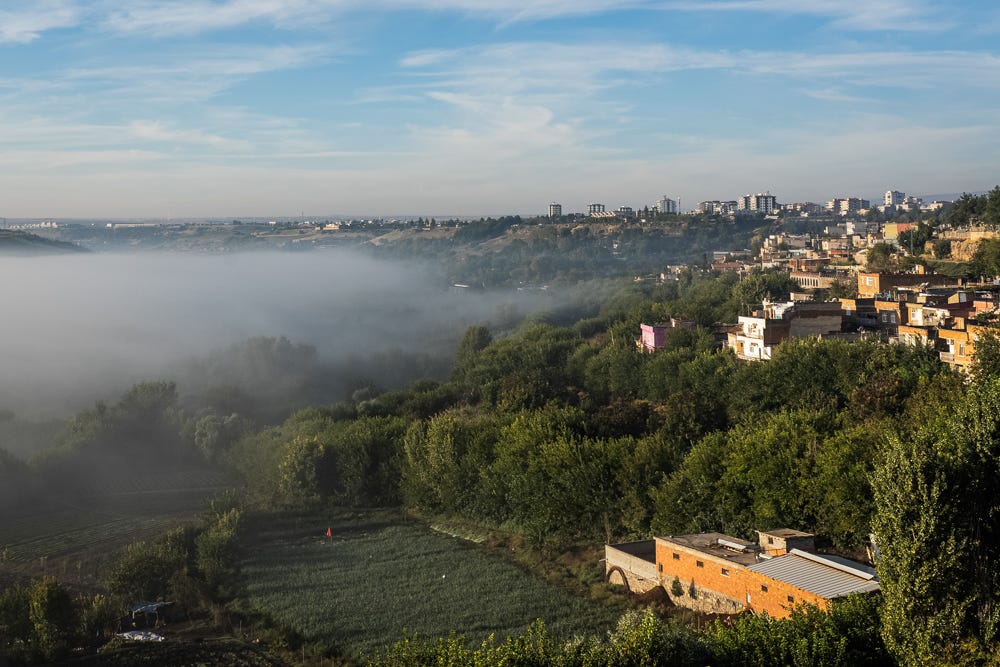

We are a despicable species; greedily and stupidly destroying everything by chasing to become “rich” when being rich is having food, water and shelter!
Besides its seismic hazards, fracking consumes vast volumes of freshwater and risks contaminating the remaining groundwater with toxic chemicals through spills and leaks. Such risks pose acute threats to an increasingly drought-prone area that already struggles to maintain its water-intensive agricultural sector.
Locals throughout Diyarbakır have complained that during previous energy explorations, hydrocarbons have leaked into local water wells, turning the taste of the water bitter.
At the same time, many local fracking and oil exploration projects have been granted exemptions from environmental impact assessments by Turkey’s Ministry of Environment.
One of the exploration zones is inside the UNESCO-protected Hevsel Gardens, a centuries-old plot of farmland squeezed between the Tigris River and Diyarbakır’s basalt city walls. The prospecting project is currently being fought by local environmental activists and lawyers in court.
Opponents of such developments fear that oil exploration will further pollute this stretch of the Tigris, which has already been opened up to mining and heavy industry.
Batman, the ‘petrol’ city
Still, Turkey’s government is eager to further expand its fossil fuel activities. Energy Min. Bayraktar has shared aspirations to turn TPAO into an oil and gas powerhouse by ramping up its current daily output from 350,000 barrels of oil equivalent to about 600,000 barrels in 2028—and eventually to 1 million barrels.
In recent months, the state-run TPAO has signed several contracts with large oil multinationals, including ExxonMobil and TotalEnergies, to explore and develop fields in the Black and Mediterranean seas.
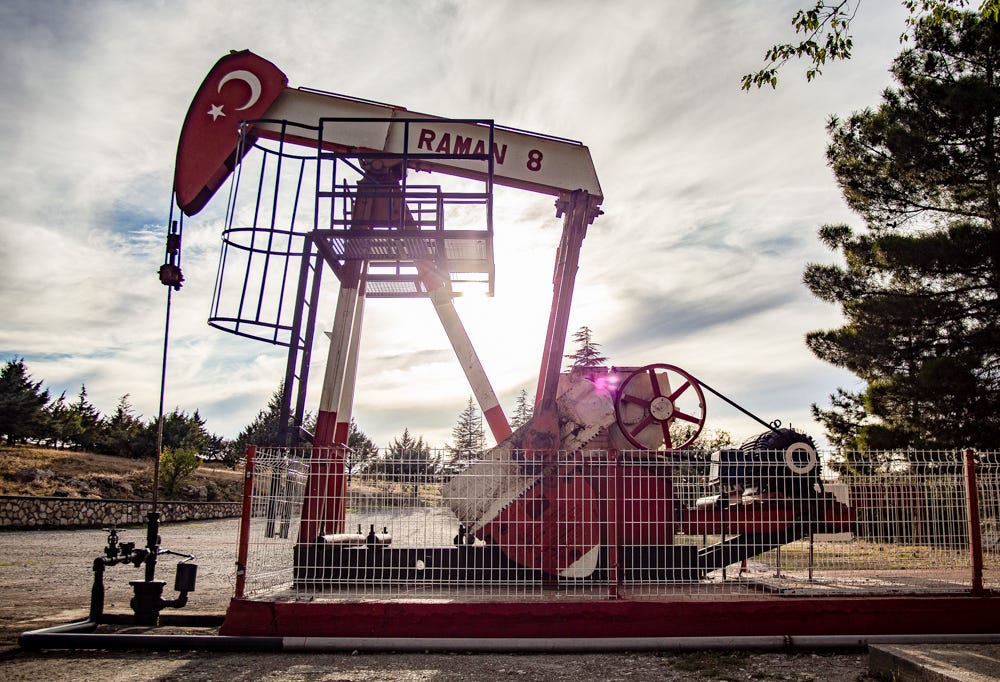
Meanwhile, Turkey’s very first commercial oil well—opened in 1948 in the Raman Mountains of Batman province—is still pumping. Ismet Inönü, the second president of the Turkish Republic, personally attended its inauguration.
“Fine oil has been found—you have won a great lottery,” Inönü said at the time.
Pumpjacks have long covered the mountain ridge of Raman, and new ones are still getting installed here. Oil essentially built Batman, turning it from a village of barely 14 households into a city of nearly half a million residents.
One of its longest streets is named after TPAO. Its football team has the Turkish word for oil, petrol, in its name. Even the city’s emblem shows an oil well. Entire neighborhoods smell of oil emitted by the refinery in the middle of the town.
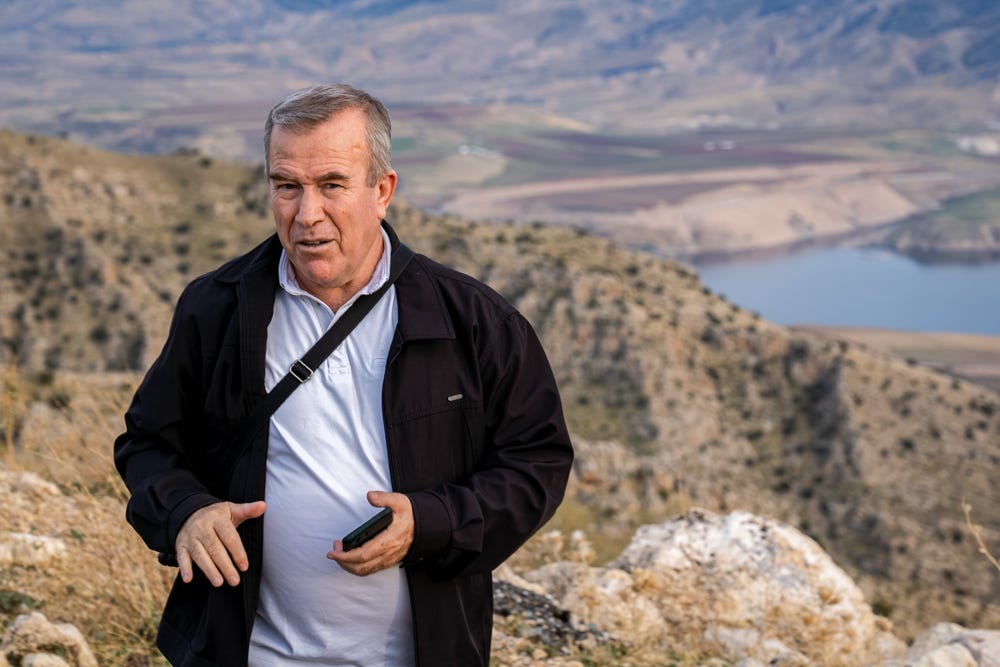
“Wherever they find oil, there come problems too,” said Hasan Argünağa, head of the Batman Environmental Volunteers Association. He added that one of their biggest concerns is water contamination.
“The water pollution doesn’t just threaten Batman. It crosses borders,” he continued. “The Tigris River flows into Iraq, and the Euphrates, for instance, goes to Syria. And that oil reaches the Persian Gulf, spreading all the way to the Indian Ocean. That is why we view it as an international issue.”
Argünağa claimed Batman sees little benefit from the oil industry these days. The refinery was privatized two decades ago and the low-grade crude is mostly used for products such as asphalt. Employment has also gradually waned with the modernization of the industry.
“We are not against oil extraction altogether,” Argünağa told Turkey recap. “Even if we were, we could not stop it. What we fight for is that it is done in a lawful way, in a non-polluting manner.”It’s impossible to frac anywhere safely or in a non-polluting way! That’s been known for years.
Refer also to:
2021: Oooo la la! Spain bans frac’ing Nationwide
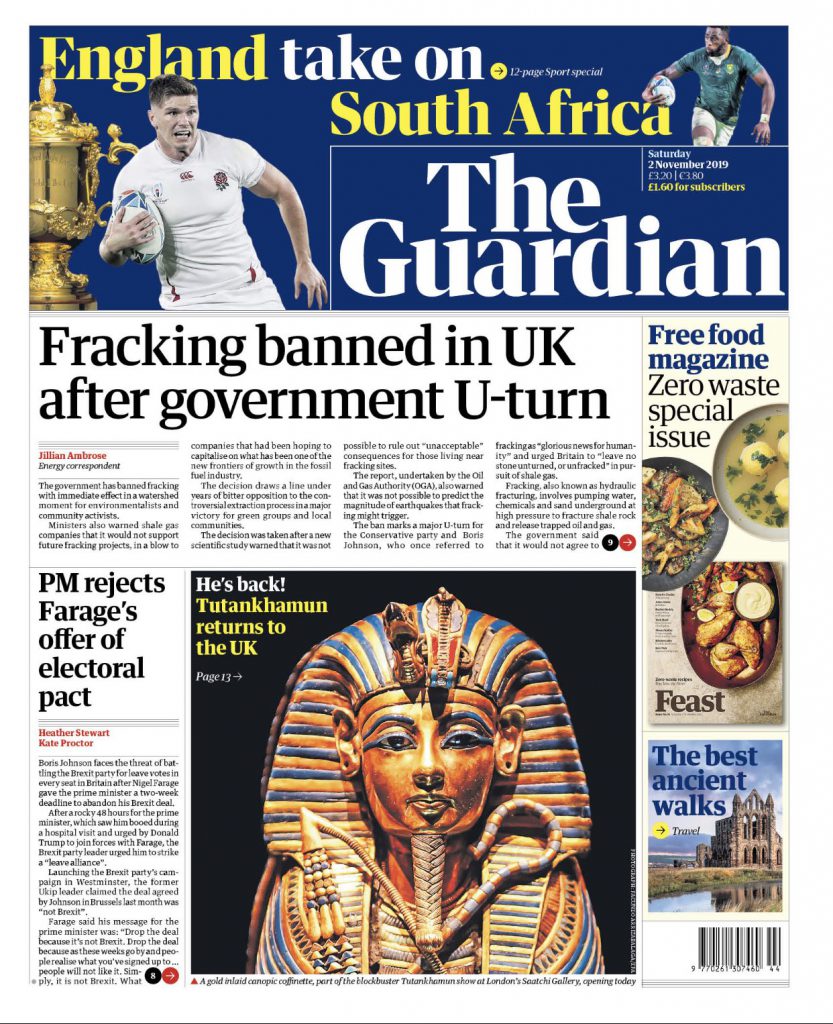
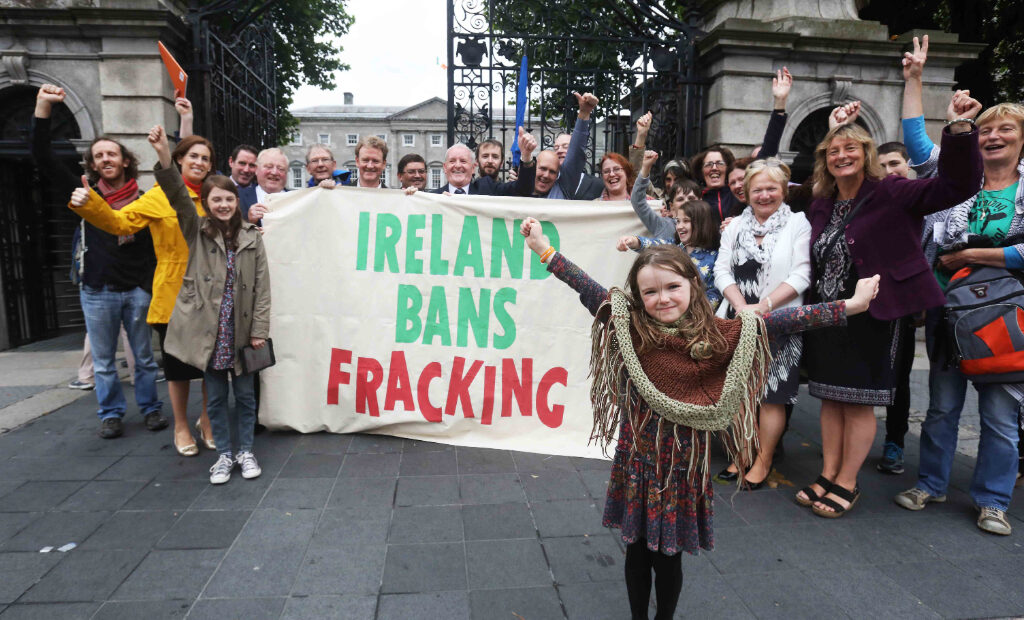
2015: Another Court Ruling: France will remain frac free
2014: New Study: The more natural gas wells in an area, the more residents end up in hospital
“By any responsible account,” [Pennsylvanian Supreme Court] Chief Justice Castille wrote, “the exploitation of the Marcellus Shale Formation will produce a detrimental effect on the environment, on the people, their children, and the future generations, and potentially on the public purse, perhaps rivaling the environmental effects of coal extraction.”
etc. etc. etc.