
Anonymous Coward August 1, 2025:
Absolutely Horrible. If you are in Canada, Please go to the Canada parliament website and sign the petition e-6627 to withdraw this bill.
 Thank you for this, I didn’t know about it, I signed it this afternoon, here’s the link:
https://www.ourcommons.ca/petitions/en/Petition/Sign/e-6627
@johannwnutter.bsky.social:
Imprison anyone who supports this bill for treason.
pcc July 30, 2025:
Canadian Citizen data will go to Palantir corp
Since Trump is sending US citizen data to Palantir corporation, you can bet Canadian’s data will end up in the slimy hands of US corporate information brokers too.
Sean Burton:
So basically we are not only giving away our right to privacy to Carney, but Trump and Putin can help themselves a well?
Rethink it? Talk abut making it even easier for foreign agents to screw with us. Are we are really going to just hand them the data?
The Senate better kick this bill back. They exist to protect us from mistakes like this.It’s not a mistake, it’s an intentional invasion of our charter rights and destruction of our privacy rights, I smell racist, misogynistic (no rights for women, anywhere) extreme Evangelical Zionism, Israeli Supremacy, and Harper and his anti-democracy IDU
ken akurate:
“It may well be that Bill C-2’s critics are jumping at shadows, seeing threats where none exist.”
If you’ve read some of Ronald Deibert’s, “Chasing-Shadows”, you’ll soon realize critics aren’t jumping at shadows. Nor are they tilting at imaginary enemies.
Gov’ts everywhere are trying to contain and suppress civil unrest as they move further and further Right.
Bill C-2 is every authoritarian’s dream come true.
Martin H.:
WOW, I did not know it was that bad, loosing more freedoms and keeping it very quiet for the general public.

@techdirt.com July 31, 2025:
Canada’s Bill C-2 Opens The Floodgates To U.S. Surveillance
The Canadian government is preparing to give away Canadians’ digital lives—to U.S. police, to the Donald Trump administration, and possibly to foreign spy agencies. Bill C-2, the so-called Strong Borders Act, is a sprawling surveillance…
That One Guy July 30, 2025:
Well I can’t see how THAT might be weaponized against canada…
Some people are so obsessed with being able to see and know everything that other people are saying and doing that they’re willing to sabotage their even their own safety and security to get it…
Of all the times to not want to give US agencies access to user data collected in your country this would be the time, and yet apparently canada has it’s own collection of anti-privacy, pro-criminal enablers to deal with trying to screw over their entire country under the guise of ‘protecting’ it.
Anonymous Coward July 31, 2025:
I can’t think of a worse idea than handing information over to the Trump regime under any circumstances. Personally I’d be in favour of applying the group-chat principle (any group chat will eventually spawn a second smaller group chat without the assholes) to the Five Eyes agreements.
Anonymous Coward July 31, 2025:
Canada spent lenthy bits of its history attempting to ensure the US could not invade.
Now these hosers will just write it off.
Canada’s Bill C-2 Opens The Floodgates To U.S. Surveillance by Joe Mullin, Jul 30, 2025, TechDirt
The Canadian government is preparing to give away Canadians’ digital lives—to U.S. police, to the Donald Trump administration, and possibly to foreign spy agencies.
Bill C-2, the so-called Strong Borders Act, is a sprawling surveillance bill with multiple privacy-invasive provisions. But the thrust is clear: it’s a roadmap to aligning Canadian surveillance with U.S. demands.
It’s also a giveaway of Canadian constitutional rights in the name of “border security.” If passed, it will shatter privacy protections that Canadians have spent decades building. This will affect anyone using Canadian internet services, including email, cloud storage, VPNs, and messaging apps.
A joint letter, signed by dozens of Canadian civil liberties groups and more than a hundred Canadian legal experts and academics, puts it clearly: Bill C-2 is “a multi-pronged assault on the basic human rights and freedoms Canada holds dear,” and “an enormous and unjustified expansion of power for police and CSIS to access the data, mail, and communication patterns of people across Canada.”
Setting The Stage For Cross-Border Surveillance
Bill C-2 isn’t just a domestic surveillance bill. It’s a Trojan horse for U.S. law enforcement—quietly building the pipes to ship Canadians’ private data straight to Washington.
If Bill C-2 passes, Canadian police and spy agencies will be able to demand information about peoples’ online activities based on the low threshold of “reasonable suspicion.” Companies holding such information would have only five days to challenge an order, and blanket immunity from lawsuits if they hand over data.
Police and CSIS, the Canadian intelligence service, will be able to find out whether you have an online account with any organization or service in Canada. They can demand to know how long you’ve had it, where you’ve logged in from, and which other services you’ve interacted with, with no warrant required.Jesus Fucking Christ! You quisling piece of shit Carney! You know there’s no rule of law left under kid-raping Nazi Regime of the USA!
The bill will also allow for the introduction of encryption backdoors. Forcing companies to surveil their customers is allowed under the law (see part 15), as long as these mandates don’t introduce a “systemic vulnerability”—a term the bill doesn’t even bother to define.
The information gathered under these new powers is likely to be shared with the United States. Canada and the U.S. are currently negotiating a misguided agreement to share law enforcement information under the US CLOUD Act.
The U.S. and U.K. put a CLOUD Act deal in place in 2020, and it hasn’t been good for users. Earlier this year, the U.K. home office ordered Apple to let it spy on users’ encrypted accounts. That security risk caused Apple to stop offering U.K. users certain advanced encryption features, , and lawmakers and officials in the United States have raised concerns that the UK’s demands might have been designed to leverage its expanded CLOUD Act powers.
If Canada moves forward with Bill C-2 and a CLOUD Act deal, American law enforcement could demand data from Canadian tech companies in secrecy—no notice to users would be required. Companies could also expect gag orders preventing them from even mentioning they have been forced to share information with US agencies.
This isn’t speculation. Earlier this month, a Canadian government official told Politico that this surveillance regime would give Canadian police “the same kind of toolkit” that their U.S. counterparts have under the PATRIOT Act and FISA. The bill allows for “technical capability orders.”
Those orders mean the government can force Canadian tech companies, VPNs, cloud providers, and app developers—regardless of where in the world they are based—to build surveillance tools into their products.
Under U.S. law, non-U.S. persons have little protection from foreign surveillance. If U.S. cops want information on abortion access, gender-affirming care, or political protests happening in Canada—they’re going to get it. The data-sharing won’t necessarily be limited to the U.S., either. There’s nothing to stop authoritarian states from demanding this new trove of Canadians’ private data that will be secretly doled out by its law enforcement agencies.
EFF joins the Canadian Civil Liberties Association, OpenMedia, researchers at Citizen Lab, and dozens of other Canadian organizations and experts in asking the Canadian federal government to withdraw Bill C-2.
@jekeep.bsky.social:
This is a weak, pathetic statement. No mention of retaliation. No mention of undoing our generous one-sided gift of canceling the digital tax. No mention of mending the rift with China we created on command of the US to help our economy. We’re just taking a beating and promising to grovel better.Like I keep repeating, Carney serves the USA Nazis, and billionaires, not Canada or Canadians. Carney lovers need to get used to it, his betrayals are gonna get mighty cruel.
Carney’s phone statement:
Office of the Prime Minister
Cabinet du Premier ministre
Statement by Prime Minister Carney on Canada-U.S. trade President Trump has announced that the United States will increase its tariffs to 35% on those Canadian exports that are not covered under the Canada-United States-Mexico Agreement, or CUSMA. While the Canadian government is disappointed by this action, we remain committed to CUSMA, which is the world’s second-largest free trade agreement by trading volume.
The U.S. application of CUSMA means that the U.S. average tariff rate on Canadian goods remains one of its lowest for all of its trading partners. Other sectors of our economy – including lumber, steel, aluminum, and automobiles— are, however, heavily impacted by U.S. duties and tariffs. For such sectors, the Canadian government will act to protect Canadian jobs, invest in our industrial competitiveness, buy Canadian, and diversity our export markets.
The United States has justified its most recent trade action on the basis of the cross-border flow of fentanyl, despite the fact that Canada accounts for only 1% of U.S. fentanyl imports and has been working intensively to further reduce these volumes. Canada’s government is making historic investments in border security to arrest drug traffickers, take down transnational gangs, and end migrant smuggling. These include thousands of new law enforcement and border security officers, aerial surveillance, intelligence and security operations, and the strongest border legislation in our history. We will continue working with the United States to stop the scourge of fentanyl and save lives in both our countries.
While we will continue to negotiate with the United States on our trading relationship, the Canadian government is laser focused on what we can control: building Canada strong. The federal government, provinces and territories are working together to cut down trade barriers to build one Canadian economy. We are developing a series of major nation-building projects with provincial, territorial, and Indigenous partners. Together, these initiatives have the potential to catalyse over half a trillion dollars of new investments in Canada.
Canadians will be our own best customer, creating more well-paying careers at home, as we strengthen and diversity our trading partnerships throughout the world. We can give ourselves more than any foreign government can ever take away by building with Canadian workers and by using Canadian resources to benefit all Canadians.
1 August, 2025
The Rt. Hon. Mark Carney, Prime Minister of Canada
@tryangregory.bsky.social:
Appeasement will not work. Any agreement with Trump is meaningless. Elbows up, and not just as a campaign slogan this time.I don’t believe Carney ever intended to be Elbows up, he lied to us, just like he lied about being a liberal. He’s a vile monster, a traitor even worse than Herr Harper. He’s working with the Nazis to destroy Canada. I’ll never forgive the evil fucker. I also believe Harper’s ridiculous comments reported in our media lately about telling Carney to seek trade outside of the USA was just more con job to fool Canadians and cover them working together against Canada for Zionism, misogyny, white supremacy, and the rich. They are working together to take Canada out. This Nazi project began in 2019 with the oil and gas yellow vesters from Alberta, then in cahoots with the evil fucking Fucker Truckers in 2022, and now the idiotic Alberta separatists and their cheer leader, Dildo Danielle Nazi Smith
@mtnrider.bsky.social:
Canada should not cow tow to felon 47-the world needs to tell him to F-OFF.
@tryangregory.bsky.social:
How will we pay for Carney’s massive military spending?
YES Cuts to public services
YES Drill, baby, drill!
? Selling off public resources
NO Making the ultra rich and corporations pay their taxesThe Nazi Zionists will never let that happen
Canada’s Bill C-2 Opens the Floodgates to U.S. Surveillance by Joe Mullin, July 25, 2025
The Canadian government is preparing to give away Canadians’ digital lives—to U.S. police, to the Donald Trump administration, and possibly to foreign spy agencies.
Bill C-2, the so-called Strong Borders Act, is a sprawling surveillance bill with multiple privacy-invasive provisions. But the thrust is clear: it’s a roadmap to aligning Canadian surveillance with U.S. demands.
It’s also a giveaway of Canadian constitutional rights in the name of “border security.” If passed, it will shatter privacy protections that Canadians have spent decades building. This will affect anyone using Canadian internet services, including email, cloud storage, VPNs, and messaging apps.
A joint letter, signed by dozens of Canadian civil liberties groups and more than a hundred Canadian legal experts and academics, puts it clearly: Bill C-2 is “a multi-pronged assault on the basic human rights and freedoms Canada holds dear,” and “an enormous and unjustified expansion of power for police and CSIS to access the data, mail, and communication patterns of people across Canada.”
Setting The Stage For Cross-Border Surveillance
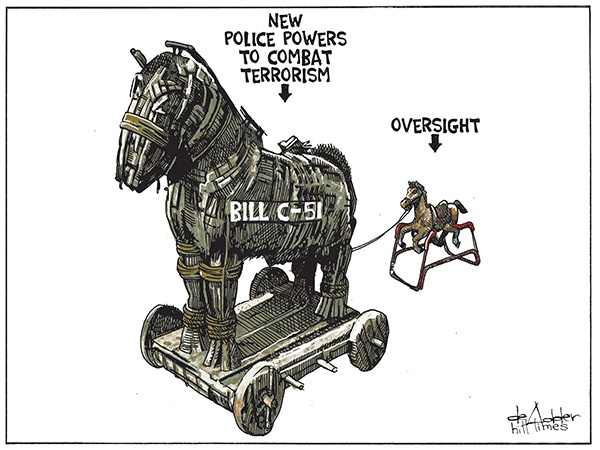
Bill C-2 isn’t just a domestic surveillance bill. It’s a Trojan horse for U.S. law enforcement—quietly building the pipes to ship Canadians’ private data straight to Washington.
If Bill C-2 passes, Canadian police and spy agencies will be able to demand information about peoples’ online activities based on the low threshold of “reasonable suspicion.” Companies holding such information would have only five days to challenge an order, and blanket immunity from lawsuits if they hand over data.
Police and CSIS, the Canadian intelligence service, will be able to find out whether you have an online account with any organization or service in Canada. They can demand to know how long you’ve had it, where you’ve logged in from, and which other services you’ve interacted with, with no warrant required.
The bill will also allow for the introduction of encryption backdoors. Forcing companies to surveil their customers is allowed under the law (see part 15), as long as these mandates don’t introduce a “systemic vulnerability”—a term the bill doesn’t even bother to define.
The information gathered under these new powers is likely to be shared with the United States. Canada and the U.S. are currently negotiating a misguided agreement to share law enforcement information under the US CLOUD Act.
The U.S. and U.K. put a CLOUD Act deal in place in 2020, and it hasn’t been good for users. Earlier this year, the U.K. home office ordered Apple to let it spy on users’ encrypted accounts. That security risk caused Apple to stop offering U.K. users certain advanced encryption features, and lawmakers and officials in the United States have raised concerns that the UK’s demands might have been designed to leverage its expanded CLOUD Act powers.
If Canada moves forward with Bill C-2 and a CLOUD Act deal, American law enforcement could demand data from Canadian tech companies in secrecy—no notice to users would be required. Companies could also expect gag orders preventing them from even mentioning they have been forced to share information with US agencies.
This isn’t speculation. Earlier this month, a Canadian government official told Politico that this surveillance regime would give Canadian police “the same kind of toolkit” that their U.S. counterparts have under the PATRIOT Act and FISA. The bill allows for “technical capability orders.” Those orders mean the government can force Canadian tech companies, VPNs, cloud providers, and app developers—regardless of where in the world they are based—to build surveillance tools into their products.
Under U.S. law, non-U.S. persons have little protection from foreign surveillance. If U.S. cops want information on abortion access, gender-affirming care, or political protests happening in Canada—they’re going to get it. The data-sharing won’t necessarily be limited to the U.S., either. There’s nothing to stop authoritarian states from demanding this new trove of Canadians’ private data that will be secretly doled out by its law enforcement agencies.
EFF joins the Canadian Civil Liberties Association, OpenMedia, researchers at Citizen Lab, and dozens of other Canadian organizations and experts in asking the Canadian federal government to withdraw Bill C-2.
Further reading:
- Joint letter opposing Bill C-2, signed by the Canadian Civil Liberties Association, OpenMedia, and dozens of other Canadian groups
- CCLA blog calling for withdrawal of Bill C-2
- The Citizen Lab (University of Toronto) report on Canadian CLOUD Act deal
- The Citizen Lab report on Bill C-2
- EFF one-pager and blog on problems with the CLOUD Act, published before the bill was made law in 2018
What the ‘Strong Borders Act’ Gets Wrong, Credible critics call it a ‘chilling example of the dangers of unconditional information sharing.’ by Crawford Kilian, 20 Jun 2025, The Tyee
A major Canadian law firm and a former NDP MP have both raised concerns about Bill C-2, a pending new piece of legislation currently working its way through Parliament. It would be wise to pause and examine the civil liberties and human rights problems they see. What they note is alarming and should be taken seriously by our elected leaders. But it won’t be. Carney conned Canadians. There is now a super Harper Con majority ruling us. I am digusted, and terrified by Carney and his vile betrayals, and he’s only just begun destroying us to serve corporate profits raping us dry and contaminated, and Putin via the orange shit-in-pants super stupid, super evil USA Nazis
Introduced on June 3, Bill C-2, the Strong Borders Act, is a 130-page grab bag of amendments to existing laws about drugs, immigration, refugees, money laundering, sexual offenders and government access to people’s online information.Herr Hideous Harper tried same before Canadians became wise to his evil, and punted his nasty Evangelical bigoted ass. Unfortunately, Harper’s back in power via his boy, Carney.
A wide range of credible analysts have studied Bill C-2 and found much to question.
McCarthy Tétrault, a major Canadian law firm, has published an analysis of C-2 focused on how the bill proposes to expand the scope of law enforcement to access individuals’ online “subscriber information,” including their pseudonyms, personal information, unique online identifiers, user account numbers and services delivered to the client of an internet service provider.We know from past law violations and lies in courts, RCMP, city police, CSIS, CSEC are not to be trusted, ever and must not be allowed free access to our online information. They’ll be the first to sell our bank and credit card details to the mob, and help them empty the bank accounts of anyone they don’t like or want to punish for speaking out against Carney supporting Israel’s and USA’s crime against humanity, war crimes and genocide
Under Bill C-2, such information could be sought without a warrant or other judicial authorization, and law enforcement could compel even foreign telecoms to supply subscriber information and transmission data.Exactly what Herr Hideous Harper tried to do and failed, but in those days, Canada still had an opposition party with some clout. NDP are peanuts now, that Carney tricked Canadians.
McCarthy Tétrault predicts “challenges to the law’s jurisdictional reach.”
Writing on his Substack, former NDP MP Charlie Angus criticized C-2 as “another massive piece of legislation that solves some problems and creates a whole whack of others.”
Angus questioned “sweeping powers for police to obtain citizens’ data without a warrant.”
He attacked C-2’s “numerous provisions that will annul refugee claims or force people back to the United States and other jurisdictions.”
And he wrote: “In what seems a parallel to the United States’ actions, the legislation will make it possible for the minister to cancel immigration documents and deny access to refugee hearings.”
A threat to migrant rights
A national advocacy group called the Migrant Rights Network criticized Bill C-2 the day it was released.
It pointed out the bill forbids migrants entering Canada from the United States from applying for refugee status, and enables the minister of immigration “to cancel, suspend or modify immigration documents for entire groups without due process…. This means migrants in Canada could have their status revoked en masse, even if they have already applied for permanent residency or refugee status.”
In a recent report, Kate Robertson of the Citizen Lab at the University of Toronto’s Munk School of Global Affairs and Public Policy also questioned Bill C-2 for the human rights concerns she sees in how it proposes to grant law enforcement new powers to share personal data with foreign authorities.
Robertson wrote:
Canadian authorities know first-hand the tragic consequences that inappropriate data sharing with foreign authorities can inflict on even innocent persons. The detention, rendition, and torture of Maher Arar after Canadian authorities shared inappropriate and inaccurate information with U.S. authorities provides a “chilling example of the dangers of unconditional information sharing.”
Robertson cited a technical briefing on June 9 in which “Justice Canada officials acknowledged to the persons present at the briefing that the intent of certain provisions within Bill C-2 is to enable Canada to implement and ratify a new data-sharing treaty, publicly known as the ‘Second Additional Protocol’ to the Budapest Convention (‘2AP’).”
Canada is already a signatory to the Budapest Convention, a set of guidelines for dealing with cybercrime.
But the Second Additional Protocol would give Canadian law enforcement additional powers:
“The 2AP permits state signatories to seize, share, retain, and use potentially large volumes of private data from public or private entities in respect of both digital and non-digital information,” Robertson wrote.
“As a whole, the 2AP’s proposed method of expediting higher volumes of cross-border sharing of evidence is by eliminating or diminishing human rights safeguards, including the obligation to obtain prior, independent judicial authorization when seizing private information and sharing it with foreign law enforcement authorities.”
Robertson also saw a hazard if Canada should make a bilateral agreement with the United States under the Americans’ 2018 law Clarifying Lawful Overseas Use of Data Act, better known as the CLOUD Act.
Bill C-2, she argued, would enable U.S. law to override Canadian law.
Another of the proposed powers in Bill C-2 would give law enforcement authorities a warrantless authorization to demand that any person “who provides services to the public” must disclose if they have provided services to an individual. Among other risks, the provision would open the door to information sharing with law enforcement authorities in states like Mississippi, Idaho, or Tennessee, by compelling warrantless access to information about whether a person has obtained services from an abortion clinic in Canada.
Bill C-2, Robertson argues, could enable U.S. national security and intelligence agencies to demand information from Canadian public and private entities without first getting permission from the Canadian courts.Any private Canadian personal information being treacherously given to the Tump Nazis go straight to Putin via his agent the evil Elon Musk and DOGE corruption. Fucking Carney knows that.
Robertson’s conclusion is that Ottawa should be far more transparent about the intent and implications of data sharing with U.S. and other foreign law enforcement agencies.
‘An assault on human rights and liberties’
On June 18, the International Civil Liberties Monitoring Group published a press release saying over 300 civil society organizations demanded complete withdrawal of Bill C-2 as “an assault on human rights and civil liberties” and “a further, dangerous shift toward Trump-style anti-immigrant policies and attacks on the rights and freedoms of all residents.”
It may well be that Bill C-2’s critics are jumping at shadows, seeing threats where none exist. But the Carney government, by keeping its promise to move fast, is failing to explain why these amendments to existing laws are really necessary.
Many aspects of Bill C-2 look all too Trumpian.
Coming as Carney is negotiating a trade agreement to counter President Donald Trump’s tariffs, C-2 also looks like appeasement: drop the tariffs, and Trump’s government can rummage as it likes in the private lives of Canadian citizens and residents.
But it may be that Bill C-2 is just an administrative lubricant, making life easier for law enforcement agencies in their routine interactions with one another — the kind of cutting of “red tape” that politicians always promise.
They never mention that the purpose of the red tape is to deter or punish what Elon Musk calls “waste, fraud and abuse.” Someone will always want to cut corners, shortchange customers or game the system at the expense of others.
Do police really need more freedom?No! They’ve illegally and often violently abused the freedoms they already have; their freedoms need massive curtailment, not expansion
In this case, giving police more freedom to dig into people’s digital secrets could create a whole new police bureaucracy. Consider, for example, the U.S. government’s recent decision to screen visa applications from foreign students by examining not just applicants’ social media but their entire online activity.
The U.S. State Department advised its consular officials to give a “comprehensive and thorough vetting” to all applicants with the purpose of spotting those who “bear hostile attitudes toward our citizens, culture, government, institutions, or founding principles.”Translation: Those who are courageous enough to publicly oppose USA’s genocide of Palestinians and aiding in Israel’s massive theft of Palestinian oil and gas worth billions of dollars
Apart from discouraging countless students overseas from enrolling in U.S. universities, such screening would require an enormous new bureaucracy to scan everyone’s smartphone, laptop, Facebook page and abandoned Twitter account. The bureaucrats would have to be multilingual and doubtless aided by artificial intelligence to read and assess billions of words in hundreds of languages.
And of course, the United States would expect to share its information with Canada and other allies, while receiving comparable information from our own screening bureaucracy.Anyone who believes that is an idiot like Trump
It may be that Bill C-2 will be delayed by Parliament’s summer break, with Senate approval sometime in the fall.
If ever a bill required sober second thought, it is Bill C-2.Good thing Trudeau Jr was wise enough to make all liberal appointments there, non political, we might see them reject Harper-Con Carney’s abuses in these bills.
Lifestyler:
Right off the top, the over-reach here is astounding. No one can guarantee that the personal information garnered by this act will remain sacrosanct and not used by criminals such as those in the U.S. government, for example.
In time, every one’s personal inform would spread to the Kremlin and every other country, corporation, data miner, advertising firm, etc. to do with as they please. This the first wart that I have encountered being presented by the liberal government thus far. It is absolute madness.
That being said, how difficult would it be for anyone to acquire our personal information? For a price, this kind of information is really available. Just ask a data miner. All of us are probably already there.
Go ahead, tell me that you have never received emails from companies you have never heard of before or with whom you have never had any interaction, personal or otherwise. You can’t. So, maybe that is factored into the mind set to allow C2 to be realised. We are already out there. But then, if that was the thinking of the government, they should say so, shouldn’t they?
And, don’t tell me that the opposition parties wouldn’t do the same thing.We have no real opposition parties in Canada, NDP and the Greens are just cons in disguise. This is same provincially. There are fewer and fewer secrets any more with the advent of the internet. Information-wise, we stand naked.
MI Citizen:
Between c5 and c2 there’s a whole lotta bad for democracy in Canada. I knew it would be tough love for democracy but this is bedtime for bonzo. We carry on and fight for Canada.
Unspoken Implications A Preliminary Analysis of Bill C-2 and Canada’s Potential Data-Sharing Obligations Towards the United States and Other Countries by Kate Robertson, June 16, 2025, citizenlab.caI have a lot of respect and trust for citizenlab. There work presented below is a valuable resource for all Canadians.
1. Introduction
On June 3, 2025, the federal government tabled Bill C-2, An Act respecting certain measures relating to the security of the border between Canada and the United States and respecting other related security measures. The bill is omnibus legislation that, if passed, would introduce a wide array of new federal agency and law enforcement powers, and would significantly reform substantive and due process laws in Canada for migrants and asylum seekers. It is widely known that Bill C-2 is being tabled at a time where the Canadian government has entered into negotiations with the United States on matters concerning trade and security.
For several years, Citizen Lab researchers have been studying cross-border surveillance practices and frameworks around the world, including most recently, potential cross-border data-sharing frameworks between foreign law enforcement authorities. Human rights dangers are particularly acute when it comes to the potential sharing of private, sensitive information with foreign governments and law enforcement authorities. Canadian authorities know first-hand the tragic consequences that inappropriate data sharing with foreign authorities can inflict on even innocent persons.
The detention, rendition, and torture of Maher Arar after Canadian authorities shared inappropriate and inaccurate information with U.S. authorities provides a “chilling example of the dangers of unconditional information sharing.” The Commission of Inquiry into the Actions of Canadian Officials in Relation to Maher Arar properly recognized that information sharing with foreign authorities “is a highly sensitive and potentially risky exercise.”
Moreover, in the absence of robust human rights safeguards, foreign states are also able to leverage legal procedures in rights-respecting countries in order to engage in acts of transnational repression.
Despite the wider context of negotiations between Canada and the U.S., the federal government’s public statements surrounding Bill C-2–including the Minister of Public Safety’s official summary–have said surprisingly little about the impact of Bill C-2 on potential data-sharing obligations in Canada towards the United States. This explanatory gap is notable given the proposed new powers appear to carry far-reaching implications for data-sharing that have not been acknowledged to the broader public by the federal government, to date, in introducing the legislation.
While Bill C-2 does not explicitly state that it is paving the way for new and expanded data-sharing with the United States or other countries, the legislation contains references to the potential for “agreement[s] or arrangement[s]” with a foreign state, and references elsewhere the potential that persons in Canada may become compelled by the laws of a foreign state to disclose information.
Other data and surveillance powers in Bill C-2 read like they could have been drafted by U.S. officials.
Furthermore, in response to questions at a technical briefing on Bill C-2 by Justice Canada on June 9, 2025, Justice Canada officials acknowledged to the persons present at the briefing that the intent of certain provisions within Bill C-2 is to enable Canada to implement and ratify a new data-sharing treaty, publicly known as the “Second Additional Protocol” to the Budapest Convention (“2AP”). The briefing acknowledged that other cross-border “cooperation” tools were foreseeable.
The federal government’s quiet acknowledgement that new provisions in Bill C-2 are being introduced to implement the 2AP treaty raises broader questions about the full extent of Bill C-2’s impacts as it concerns data-sharing with U.S. law enforcement authorities. Bill C-2 is being tabled at a time when it is widely known that the Canadian government has been in closed-door negotiations with the United States over a potential bilateral law enforcement data-sharing agreement between Canada and the United States under a piece of U.S. legislation called the Clarifying Lawful Overseas Use of Data Act (“CLOUD Act”).
As a result, this preliminary analysis of Bill C-2 situates the legislation within the context of existing research by the Citizen Lab about two potential data-sharing treaties that are most relevant to the new proposed powers being introduced in Bill C-2. Part 2 introduces Citizen Lab research analyzing the constitutional and human rights implications of the 2AP. The research was previously submitted as part of the Department of Justice’s 2024 consultation on its consideration of whether Canada should ratify the treaty. Part 3 connects Bill C-2’s proposed powers to Citizen Lab’s recent analysis of the constitutional and human rights implications of a potential CLOUD Act agreement with the United States. Both Parts 2 and 3 underscore the significant democratic, public interest, and human rights implications if Canada were to assume these new data-sharing obligations towards foreign law enforcement authorities. As a result, Parts 4-5 conclude by raising broader issues regarding the public’s and Parliament’s current inability to meaningfully assess the complex and consequential new powers in Bill C-2, given the federal government’s current lack of transparency about its intent as regards to potential new data-sharing obligations towards the United States or other countries.
2. The Potential Impact of the 2AP to the Budapest Convention: Expediting Human Rights Abuses
Given the government’s acknowledgement that new powers in Bill C-2 are intended to enable Canada to ratify the 2AP, Part 2 of this preliminary analysis of Bill C-2 introduces in-depth analysis of 2AP, as one of the major cross-border data-sharing frameworks under consideration, between Canada and foreign law enforcement authorities in the United States and elsewhere. The Citizen Lab’s analysis of the constitutional and international human rights implications of the 2AP provides broader context regarding the potential implications of Bill C-2, as it relates to the 2AP. The analysis was authored by Kate Robertson and Verónica Arroyo.
The 2AP is a new law enforcement data-sharing treaty that is designed to bypass existing mutual legal assistance frameworks between countries, and to expand the speed and volume of data-sharing between law enforcement authorities in different countries. The United States is a signatory of the treaty and would potentially be making requests for Canadian data under the framework. If Canada were to ratify the treaty, it would very likely prompt “a significant increase in the volume of requests for communication-related information by foreign and Canadian investigative entities, with a corresponding impact on the right to privacy.”
Moreover, if the 2AP is adopted as a global standard, it would contribute to the elimination and diminishment of protections that are critical to mutual legal assistance treaties and norms. As a result, “much of the world’s population may be left vulnerable to arbitrary and abusive data collection practices by domestic law enforcement agencies.” Internationally, it has been the subject of significant criticism by human rights organizations around the world.
During a consultation in early 2024 on the question of whether Canada should ratify the 2AP, the Privacy Commissioner of Canada raised concerns with the Department of Justice about “significant privacy implications” of the treaty. The Privacy Commissioner analysis further makes clear that without much needed law reform, Canada does not have “comprehensive, appropriate, and robust safeguards”, given existing gaps in Canadian privacy laws like the Privacy Act. The Information and Privacy Commissioner of Ontario agreed, while emphasizing that “[a]bsent appropriate rule of law or proportionality standards, there is a risk that the Protocol may have the effect of infringing upon the human rights of persons whose data is obtained from Ontario-based public or private sector organizations at the hands of foreign jurisdictions that do not share our free and democratic values.”
While those concerns were raised in respect of Ontario, the same danger would be present across Canada.
In conducting a constitutional and human rights analysis of the 2AP–submitted to the Department of Justice during its consultation on the 2AP–the authors recommend that Canada should decline to ratify the treaty. Canada should instead play a leadership role in prioritizing international efforts to address cross-border gaps in human rights compliance, and to invest in fully resourcing cross-border data-sharing protocols that require and harmonize robust human rights protections from all signatories. In summary, the analysis found:
- The 2AP permits state signatories to seize, share, retain, and use potentially large volumes of private data from public or private entities in respect of both digital and non-digital information.
- As a whole, the 2AP’s proposed method of expediting higher volumes of cross-border sharing of evidence is by eliminating or diminishing human rights safeguards, including the obligation to obtain prior, independent judicial authorization when seizing private information and sharing it with foreign law enforcement authorities. Rather than “establishing high standards, the protocol prioritizes law enforcement access at almost every turn.”
- The 2AP would specifically authorize, if not require, searches and seizures of private data, in circumstances that fall short of international human rights obligations requiring independent authorization and review for just cause. The protocol’s toleration for inadequate human rights safeguards is a direct threat to existing protections under international human rights law. While the 2AP contains some opportunity for Canada to reserve against some of the most intrusive aspects of the treaty, opportunities for reservations are too limited, and fail to offset the broader problem that the instrument itself, as a whole, represents a threat to human rights everywhere.
- The 2AP allows signatories to make secret agreements across borders between police agencies on their own, or between governments, that would potentially result in the whole cloth elimination of privacy and human rights safeguards.
- The optional data protection standards set out in Article 14 of the 2AP either fall short of, or are inconsistent with, modern data protection principles and treaties. These gaps expose Canada to particular dangers given, as noted above by the Privacy Commissioner of Canada and others, Canada’s privacy laws have not been modernized for the digital age, and lack much needed safeguards.
- By normalizing and tolerating an inadequate data sharing regime, the 2AP may be further weaponized against human rights by authoritarian governments around the world, who would point to the 2AP when justifying their own invasive surveillance and data sharing programs.
The complete analysis and submission can be read here.
3. Additional Implications of Bill C-2 for Data-sharing Between Canada and the U.S. Under a Potential CLOUD Agreement
On February 24, 2025, the Citizen Lab published an analysis, authored by Cynthia Khoo and Kate Robertson, of the Canada-U.S. negotiations under the CLOUD Act, and summarized key constitutional and human rights considerations relevant to public and democratic debates in Canada. The full text is available here.
The analysis of a potential Canada-U.S. CLOUD agreement identified a “minefield of incompatibilities and contradictions between Canada’s constitutional and human rights frameworks, and those of the [United States].” The Canadian Supreme Court has established in numerous contexts that the law under Canada’s Charter is different from U.S. law when it comes to human rights—stating as recently as last year that “[o]ur approach is distinct from the United States” when it comes to privacy rights. With the expansion of digital technologies in everyday life, the U.S. approach has shown itself to become increasingly unworkable in the digital age. The linked analysis outlines this historical legal divergence:
| Since the 1970s, U.S. courts have said that individuals are disentitled from constitutional privacy protections for information that they voluntarily share with a third party—this is known as the “third-party doctrine”. Information caught up in this longstanding doctrine is exposed to warrantless seizures by U.S. law enforcement. The U.S. approach has not aged well. Fifty years later, smartphones are now ubiquitous, each loaded to the hilt with third-party apps hoovering up reams of private data about the most intimate and sensitive aspects of our daily lives. Amidst a sprawling data broker market that includes selling targeted ad data to law enforcement and government agencies, U.S. lawmakers and civil society have been trying to close part of this third-party-doctrine-enabled loophole, such as through the aptly titled The Fourth Amendment Is Not For Sale Act. While a 2018 U.S. Supreme Court decision marked an important shift towards a new approach, it is still far from clear if (or how far) the U.S. courts will go down this path. In contrast, that potential seedling of a new path in the U.S. is already Canada’s well-trodden, constitutionally settled road. Since the early 1990s, Canada’s top courts have repeatedly rejected the United States’ approach to limiting privacy rights through the third-party doctrine. In a landmark judgment, Canada’s Supreme Court decided that it would not follow the U.S. jurisprudence that has ultimately pushed swaths of government surveillance outside the oversight of U.S. judges. The court foresaw that if electronic surveillance were to be left unregulated, it would have the potential “to annihilate any expectation that our communications will remain private”. Thus, in many cases, the same types of personal data that are considered fair game in the U.S., are constitutionally protected from warrantless search and seizure in Canada. |
In addition to the risk of subordinating existing Canadian protections to U.S. law if a CLOUD agreement were to be implemented, the analysis outlines further gaps in human rights protections in the United States that point to why “it is more critical than ever that Canada protectively and unwaveringly holds its own constitutional lines.”
However, Bill C-2 would significantly expand law enforcement surveillance powers, by eliminating or watering down existing protections in Canadian law. Preliminary analysis of the law raises significant constitutional issues, including the potential that it appears poised to open the floodgates to a wide array of data-mining practices, including the collection of data from commercial data brokers, and other data-fueled algorithmic surveillance systems. As other recent analysis of Bill C-2 has also pointed out, other new proposed powers in respect of subscriber data are zombie-like proposals from previous failed attempts by past governments, each time using differing rationales. For example, new provisions in Part 14 of Bill C-2 would substantially dilute the legal threshold police must meet for accessing sensitive categories of data, including subscriber data, despite Supreme Court of Canada jurisprudence stating that these types of data requests engage “significant privacy interests.”
The new powers in Bill C-2 are also notable given they overlap with some of the exact areas that Canada’s constitutional protection provides greater protection against unreasonable surveillance than that of the US constitution, in ways that were anticipated to be the root of incompatibilities between the two countries in reaching a potential CLOUD agreement. As noted in Citizen Lab’s prior analysis, such differences are not arbitrary, but are the result of fundamental constitutional and human rights differences in Canada, as well as decades of Supreme Court of Canada jurisprudence explicitly recognizing that Canada has taken a distinct approach from the United States on these very issues.
For example, Bill C-2 would create a new power allowing law enforcement to obtain warrantless access to any information that is provided to them “voluntarily” by any person (presumptively including a wide range of technology companies and electronic service providers). However, Canadian courts declined to follow U.S. constitutional doctrine when repeatedly making clear that such third-parties do not have the constitutional authority to consent to data disclosures on behalf of another individual.
Another of the proposed powers in Bill C-2 would give law enforcement authorities a warrantless authorization to demand that any person “who provides services to the public” must disclose if they have provided services to an individual. Among other risks, the provision would open the door to information sharing with law enforcement authorities in states like Mississippi, Idaho, or Tennessee, by compelling warrantless access to information about whether a person has obtained services from an abortion clinic in Canada. Fucking rape religions contaminating our courts and gov’ts, taking us back deeper into evil racist misogynistic kid-raping darkness. Douche Fuckers, the religions, the religious (often rapists of kids) and Carney for his sick rights and privacy decimating bill.
The stakes of a potential CLOUD agreement should not be underestimated. In the process of preparing its analysis of the CLOUD Act, Citizen Lab researchers learned through informal consultations that Canadian officials have also at least at one point considered expanding the potential CLOUD agreement with the United States to include U.S. national security agencies. which are law-violating abusive lying thug agencies, now serving an insane orange hate-filled raping convicted felon hideously ugly racist Nazi with an ego bigger than infinity.

This would foreseeably expose public and private entities in Canada to data demands directly from U.S. intelligence agencies, without the involvement of the Canadian courts. It is difficult to overstate the reverberations that such an agreement would have on the Canadian landscape. The powers in Bill C-2 applicable to the Canadian Security and Intelligence Service (CSIS), bear additional scrutiny in this regard, given the potential that these powers–alongside existing powers in Canadian law–would simultaneously pave the way for reciprocal powers by U.S. national security agencies. At this time, there is no public information available regarding what such an agreement would include.
4. Putting the Cart Before the Horse: Transparency in Parliament Regarding Treaty-making
Given significant democratic, public interest, and human rights implications of Canada’s potential agreement to a data-sharing framework with foreign authorities in the United States and/or elsewhere, it is surprising that the federal government is now quietly introducing the powers necessary to ratify the 2AP, without making this intent explicit to the broader public when it introduced Bill C-2. As noted above in Part 3 in relation to the CLOUD Act agreement, transparency is also critical surrounding the purpose of introducing several other new surveillance powers that would erode protections that are well-established in Canadian constitutional law, while concurrently granting U.S. law enforcement significant new reciprocal powers if a CLOUD agreement were to be reached.
At the briefing on June 6, 2025, government officials defended their current approach by stating that the formal ratification of the 2AP would ultimately require–at a later date–ya, right, where the hell have we heard that before, Harper Harper Harpercompliance with Parliamentary process. However, by proceeding in this manner, the government has bypassed critical democratic accountability controls. There is a significant democratic and public interest imperative in having explicit and fulsome transparency surrounding the intended data-sharing implications of Bill C-2 generally, and towards the United States in particular, before Parliament embarks on its study and debate of the proposed legislation.With Harper Carney having a massive majority with the Pissy Panties Poilievre CPC party, who most likely LOVE this bill for the abuses of immigrants, marginalized, and women it allows, I think Carney expects to pass it without telling the public about its evil powers, and without debate. The hideous inhumane CPC will loudly cheer – after they unanimously pass it Providing the public with transparency surrounding the purpose and potential use of the proposed new powers is in keeping with democratic values, serves to protect public trust, and also ensures that Parliamentarians are able to meaningfully and carefully consider the implications of proposed powers–having regard to how they would actually be used.With Nazi Trump severely compromised and terrified of the Epstein files and photos coming out in full, without censorship of his name, and compromised by Putin and Netanyahu, these Bill C-2 powers will only be used for evil, to feed hatred, and abuse, rape, and likely kill marginalized people (gay, trans, anti-rape, anti women being legalized as property, pro choice, pro water, pro environment, pro rights, pro humanity, etc) that’s a given.
It bears noting that the Government of Canada’s Policy on Tabling of Treaties in Parliament itself directs that the federal government should not be quietly introducing treaty-implementing legislation through the backdoor of Parliament without making its intention explicit. The policy states that where reform of Canadian law is required in order to align with the obligations of a potential new treaty, the federal government must observe a waiting period before introducing implementing legislation to enable democratic debate:
For treaties that require implementing legislation before the government can proceed to ratification, acceptance, approval or accession (“ratification”), the government will:
- Observe a waiting period of at least twenty-one sitting days before the introduction of the necessary implementing legislation in Parliament;
- Will allow Members of Parliament the same opportunities to debate, present and vote on motions, as for those treaties which do not require implementing legislation;
- Will subsequently introduce the implementing legislation for these treaties; and
- Seek, only when the legislation is adopted, the authorization from the Governor in Council to express consent to be bound by the treaty.
By reversing these steps, the Canadian government would be creating a situation where powers relevant to highly controversial data-sharing obligations (under either a potential CLOUD agreement with the United States, or the 2AP) would be implemented under Canada’s nose, without most people in Canada being any the wiser. If the government does not make explicit its intended use of the proposed powers, there may also be no further opportunity outside the context of the study of Bill C-2 for a parliamentary committee to receive expert testimony and study the implications of any intended data-sharing obligations towards the United States or other countries.
5. Conclusion
This introductory analysis of Citizen Lab’s research concerning cross-border data sharing frameworks relevant to Bill C-2 is not intended to serve as a comprehensive analysis of the new powers in the proposed legislation. Instead, the preliminary analysis points to the need for fulsome transparency from the federal government regarding the intent and potential implications of Bill C-2 for data-sharing with law enforcement authorities from the United States and elsewhere, and for compliance with Canada’s Policy on Tabling of Treaties in Parliament.
Both the 2AP and CLOUD Act data-sharing frameworks have each been shown to carry significant constitutional and human rights risks.
As noted above, Bill C-2 itself contains several areas where proposed powers appear designed to roll out a welcome mat for expanded data-sharing treaties or agreements with the United States and other foreign law enforcement authorities. But, this is not a matter that should be left to mystery, with the public having to gather clues as to the potential implications of complex surveillance powers that are as far-reaching geographically as they appear to be constitutionally. The federal government’s acknowledgement in its briefing on June 6 that it intends to use certain powers in Bill C-2 to seek the ratification of 2AP only engages broader questions, and raises the need for explicit and fulsome explanations to the public regarding its intent in relation to the 2AP, what the implications of the 2AP would be for Canada, and whether it intends to enter other data-sharing obligations with foreign authorities including the United States. Only then should any enabling legislation be put forward and then carefully considered in full.
Trump’s Reckless Gambit to ‘Make Iran Great Again’, The president’s surprise bombing raid and bellicose rhetoric make the world tremble by Michael Harris, June 23, 2025, The Tyee
The question now facing a nervous world is as simple as it is stark. Has Donald Trump ended or started something? Has Iran’s nuclear program been destroyedOf course not, Trump et al are non stop liars, or has Trump set the table for a wider regional war that will suck in the Americans.
Here in Canada the repercussions of Saturday’s surprise attack almost certainly are rattling relations between Prime Minister Mark Carney and Trump. Wherever they had arrived in their discussions of borders and tariffs, Carney’s response to bombing Iran isn’t likely to bring them closer.
As Trump assails anyone — even in his own Republican party — who dares question the attack, Carney urges immediate de-escalation.
“Canada calls on parties to return immediately to the negotiating table and reach a diplomatic solution to end this crisis,” posted the PM early Sunday morning.ya, right, while lying and cheering the maniac mass killer convicted felon rapist on, and he only posted his lies and cheering to Nazi X and not to Bluesky. You dance with Nazis, you are a Nazi Carney. FFS Iran is no threat~! You evil douche fucker
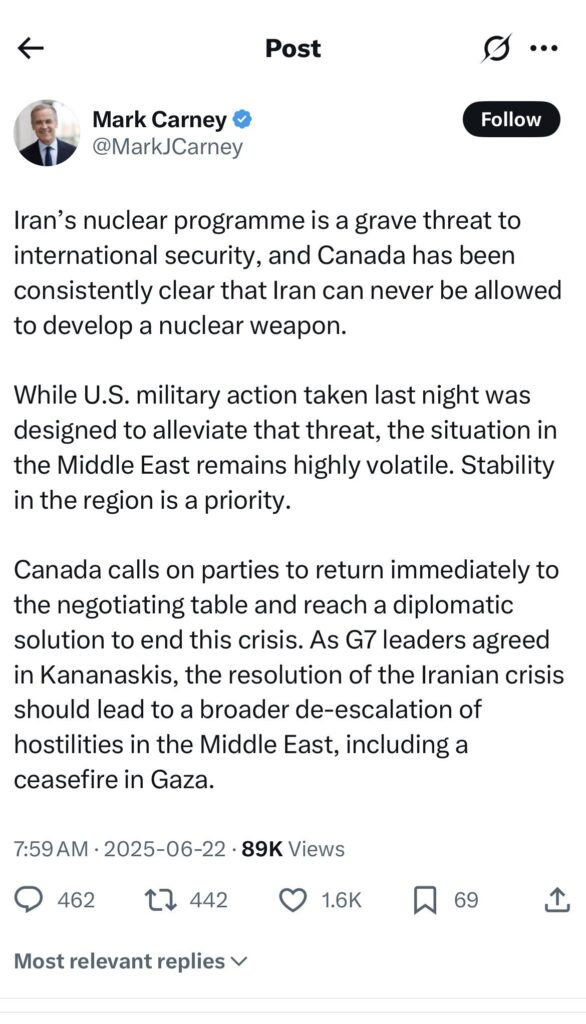
Later that day Trump was online, too, inviting the world to instead envision the outright replacement of Iran’s ruling regime.That’s all fucking American leaders do, Dem or Repug, sticking their noses where they do not belong, all to replace leaders with others more sympathetic to Israel and USA’s horrific war crimes and genocides
Going all in
On Saturday, the U.S. Air Force dispatched six B-2 stealth bombers based in Missouri to bomb three of Iran’s nuclear sites. Those sites included Fordo, a nuclear installation buried so deep in a mountain that the Israelis could not reach it. For the first time, the United States used more than a dozen of its enormous bunker-busting bombs, each packing 30,000 pounds of explosives.
The U.S. attacks came as something of a surprise. Just days before the sophisticated bombing mission, which involved 124 aircraft, Trump seemed to suggest that the parties had two weeks to negotiate before he would act. The message seemed clear. Iran had to agree to get rid of its nuclear enrichment program or face the consequences. The president declared at the time that he preferred a negotiated solution to a military one.
Then, just days after giving that impression, the president unleashed his most deadly bombers on a mission halfway around the world.
This at a time when his own director of national intelligence and the International Atomic Energy Agency both concluded that Iran had not decided to build a nuclear weapon and was years away from doing so.
In a world-class example of self-humiliation, national intelligence chief Tulsi Gabbard retracted her testimony before U.S. lawmakers. She posted that she now agreed with the president that Iran was within weeks of having a nuclear weapon.
With much chest-beating, the United States is claiming that the mission to destroy Iran’s nuclear program was a success. Iran, on the other hand, contends that it was not. You can blow up buildings and infrastructure, Iran claimed, but you can’t destroy “knowledge.”
Iran also said it had been deceived by the Americans and could no longer trust them. The attack against them came when they were expecting words, not bombs. That is one of the reasons that Iran is rejecting calls from leaders around the world, including Prime Minister Carney, to return to the negotiating table.Iran, you are wise not to trust the orange USA kid raping Nazis, or Nazi Carney. I do not trust them, and never will.
So back to that burning question. Has Donald Trump ended or started something? The answer to that question depends on what Iran does next.
Despite days of Israel’s bombing and assassination campaign in Iran, and now the United States’ extraordinary attack, Iran remains defiant. Iran’s Supreme Leader Ayatollah Ali Khamenei has declared the country will never surrender. Not only has Iran denounced the U.S. attack, it has vowed to retaliate, declaring that every U.S. citizen and service member in the Middle East is a legitimate target.True, and I blame Idiot Trump for putting Americans, all citizens globally at risk, including Earth herself.
Taking that revenge will not be easy. Israel has virtually decapitated the Iranian military leadership through targeted assassinations and severely damaged the country’s ability to build and launch missiles. It has even mused about taking out Khamenei.
Prior to Israel’s direct attack on Iran’s nuclear program, the government of Prime Minister Benjamin Netanyahu dealt severe blows to Iran’s proxy groups in the Middle East.
Hezbollah and Hamas are now shadows of their former selves. The same is true for the Houthi supporters of Iran in Yemen. Their ability to act for Tehran in the wake of the U.S. bombing has been seriously affected but not eliminated.Yet, more and more people around the world hate the Orange Nazi Regime, and hate genocidal Netanyahu and Israel even more, for many valid reasons. I expect soon, armies of ordinary citizens will start fighting back, and I bet the Nazi leaders – Musk, Harper, Carney, Netanyahu et al – know it too, and thus why they hundreds of billions of our tax dollars being stolen to give to evil AI tech billionaires, Israel’s spy tech, and Harper’s AWZ investing in Israel’s kid killing tech.
But that doesn’t mean Iran is toothless. The United States has 40,000 troops in bases and ships across the Middle East that are within the range of Iranian missiles. The last time the United States took action against the Iranian nuclear program, Iran-backed militants in turn attacked a U.S. military outpost, Tower 22 in Jordan, killing three U.S. service members. That sort of attack could be repeated.I think Iran will be much smarter this time, in how they retaliate.
There are multiple other ways Iran could strike back at the United States. If the vote of the Iranian parliament to shut down the Strait of Hormuz is approved by the nation’s Supreme Council, 20 per cent of the world’s oil supply could be affected. Militias in Iraq supportive of Iran could also launch attacks against U.S. forces in the region.
And then there is the ever-present danger of lone-wolf terror attacks against U.S. assets, allies and personnel. That could be hostage takings, assassinations or cyberattacks.
The U.S. government has acknowledged that there are Iranian sympathizers all around the world, including in the United States. The recent fatal shootings of two Israeli diplomats in Washington show how difficult it is to defend against that brand of terrorism.
Donald Trump has bet the farm, and regional stability in the Middle East, on his crystal-clear threat to Iran. Retaliation by Iran for the U.S. bombings of its nuclear facilities will lead, the president says, to more severe U.S. military action — a euphemism that could mean being bombed back into the Stone Age.
Just after dropping U.S. bombs, the only choice Trump offered Iran’s leaders was to come back to the negotiating table, capitulate and make “peace” on his terms. Then came the president’s Sunday afternoon post that seemed to snatch away even that option. The supposed master of the art of deal signalled to his opponents that their demise, not a new agreement, was his ultimate aim. On Truth Social he trumpeted “Regime Change” to “MAKE IRAN GREAT AGAIN.”
A world of risks
Though there is no question who holds the military upper hand at this dangerous moment in world history, Trump’s act of war and reckless brinksmanship carry huge dangers.
World reaction to the bombing of Iran has generally not been positive. United Nations Secretary-General António Guterres said on social media that he was “gravely alarmed” about the direct threat to international security the strikes represent.
China and Russia both strongly condemned the U.S. strikes and called for an immediate ceasefire.
Russia said the U.S. bombings were a “gross violation of international law.” Chilean President Gabriel Boric said the attack was illegal under international law. Venezuelan Foreign Minister Yván Gil described the attack as an “illegal, unjustifiable and extremely dangerous act of aggression.”
No Arab country in the Middle East has endorsed the United States’ bombing of Iran. All of them have called for a de-escalation of this potentially disastrous confrontation. If the situation worsens, that will directly affect Trump’s ability to persuade countries like Saudi Arabia and others to “normalize” their relations with Israel.
And there are domestic problems for the president. Trump first came to power in 2016 largely because he promised war-weary Americans he would avoid disastrous foreign entanglements like Libya, Syria and Afghanistan.
Regime change and nation building in those countries turned into multi-trillion-dollar disasters. Now, if Tehran chooses to retaliate as it says it will, Iran could become Donald Trump’s Afghanistan.
There is already great concern in the United States that Trump has trampled on the constitution in his concerted effort to extend the powers of the executive branch. He has attacked Congress, the judiciary and the free press in his quest for unopposed power.
And now voices on both sides of the aisle say he has done it again. Only Congress has the power to declare war, but Trump ordered the bombing of Iran without consulting Congress.
That has led to bipartisan criticism of the bombing of Iran. It has also opened up the first crack in Trump’s MAGA base. That’s why so many Trump Kool-Aid drinkers, from Rep. Marjorie Taylor Greene to Tucker Carlson and Steve Bannon, have criticized the bombings. Greene went so far as to say such actions will ultimately lead to America’s destruction.
The more likely outcome in this latest U.S.-Iran confrontation is the demise of the supreme leader and regime change in Iran.
But before anyone celebrates that as a U.S. victory, consider this. If Iran becomes a failed state the result easily could be a civil war in a country of 92 million people, triggering a refugee exodus that could engulf not just the Middle East but Europe as well.
As the wise saying goes, be careful what you wish for.
Refer also to:

2015:

2014: Meet ASSIST: Alberta’s very own Spy Agency, “Alberta Security and Strategic Intelligence Support Team;” Did ASSIST break into Carmen Langer’s home and steal his files?Did they break into my home too? Did they “assist” my ex lead lawyer, Murray Klippenstein, corrupting my website and removing masses of embarrassing files for gov’t, Encana/Ovintiv, AER, including legal files? AER is a criminal organization, not to be trusted, ever, which enables crimes by corporations and helps cover them up.

2013: By Herr Hideous Harper

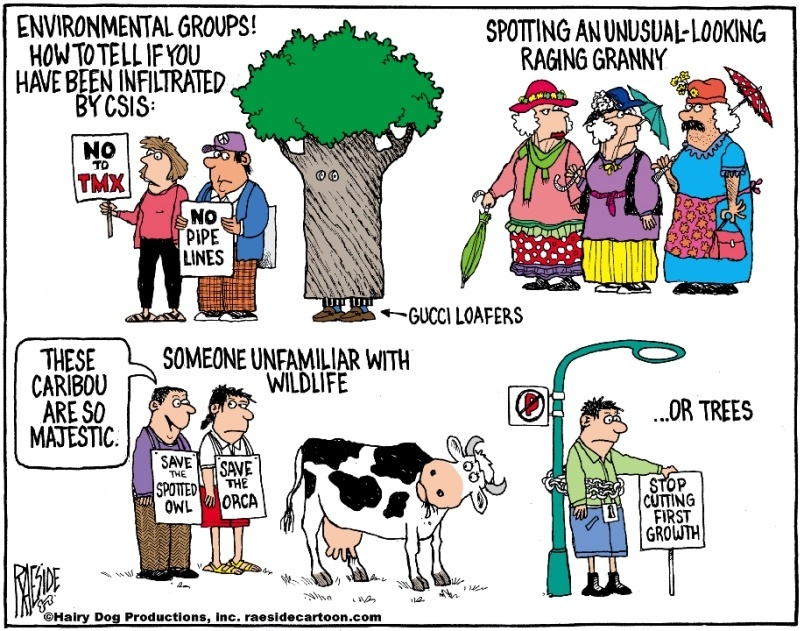
2009: Instead of RCMP doing their jobs and investigating and arresting AER, Encana and Alberta corrupt con politicians, they invaded my private property shortly after my legal papers were served on the defendants and tried to terrify me silent. Ass holes supremely rotten.

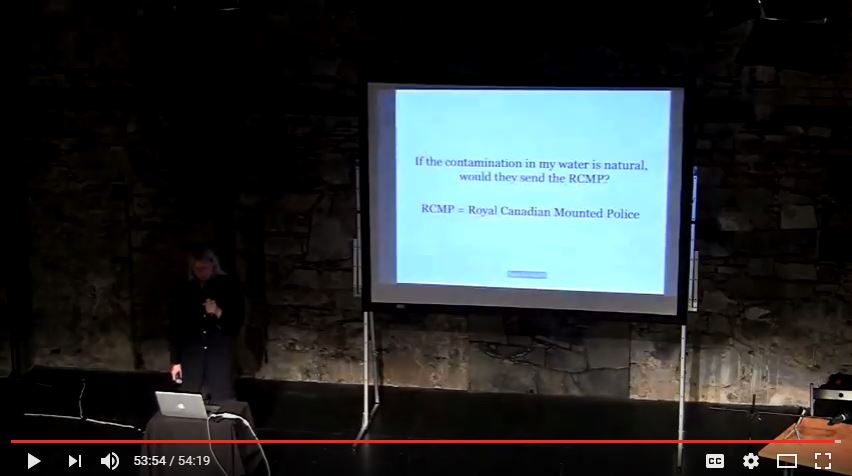
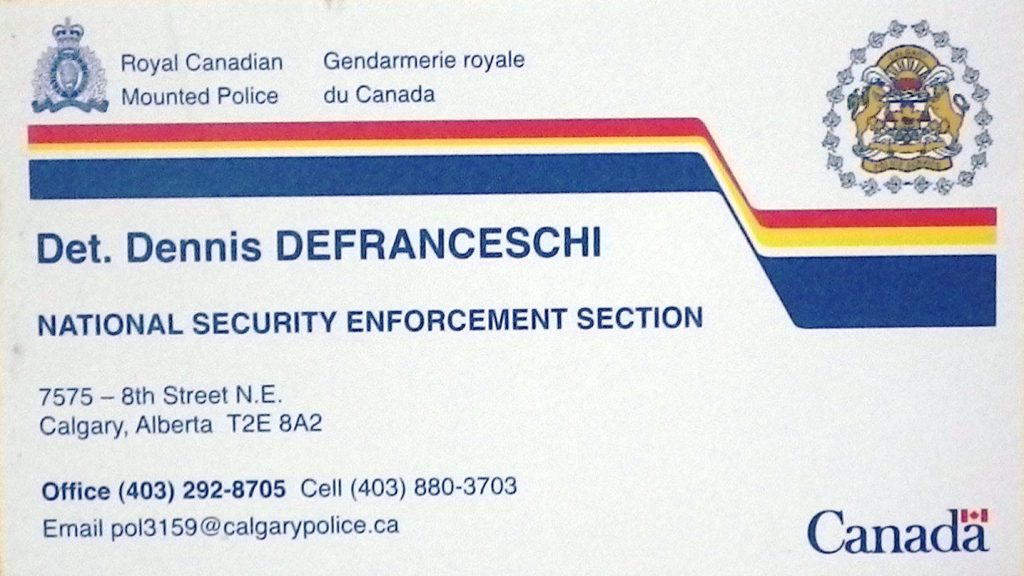
Under Herr Carney, abuses against ordinary Canadians will be much worse than under Harper or in polluter-reigned Alberta