@MarkKersten:
Canadian #ICC Judge Prost has spoken about the emotional & practical toll of US sanctions against her.
Ottawa won’t condemn these sanctions. The reason, I’ve had confirmed, is bc it is afraid of US anger at calling sanctions out.

A sad state of affairs.
@parismarx.com:
also like, why is this in the irish times? why haven’t we seen comprehensive reports like this in canadian media?
it’s like she was sanctioned then they all moved on to the next trump story of the week like lemmings Nazis gonna Nazi like the good little cowardly hideous Homo naziens that they are …
@ldobsonhughes.bsky.social:
It is to Canada’s shame we have not spoken out or supported a Canadian judge being sanctioned by the US
Her life is frozen. She cannot use credit cards, travel, move money, or access email. This is not sustainable
@amirattaran.bsky.social:
Why the hell hasn’t Canada’s press covered the news that Trump has sanctioned and made life hell for a Canadian judge?
We should sanction the whole US Supreme Court in exchange.
Carney kissing Trump’s ass while a Canadian judge is being harassed is not a justifiable decision.
@snolke.bsky.social:
These so-called “sanctions” are typical Trumpian chicanery, deployed against the rule of law and any form of legal accountability. They are also a clear example of why the world, including Canada, cannot allow the US technological hegemony (e.g. in banking, data storage & e-commerce) to continue.
@tryangregory.bsky.social:
What is Canada doing about it? Not a thing.Canada’s Carney is doing lots – he’s busy lying, appeasing the Pedo Regime, and enabling Israel’s genocide. Of course Zionist Nazi Carney will say nothing about mass murdering USA abusing one of Canada’s judges; he’s all in on the genocide and thievery. He even agreed to be on Trump/Kushner’s Board of Murder and Land and Resource Theft.
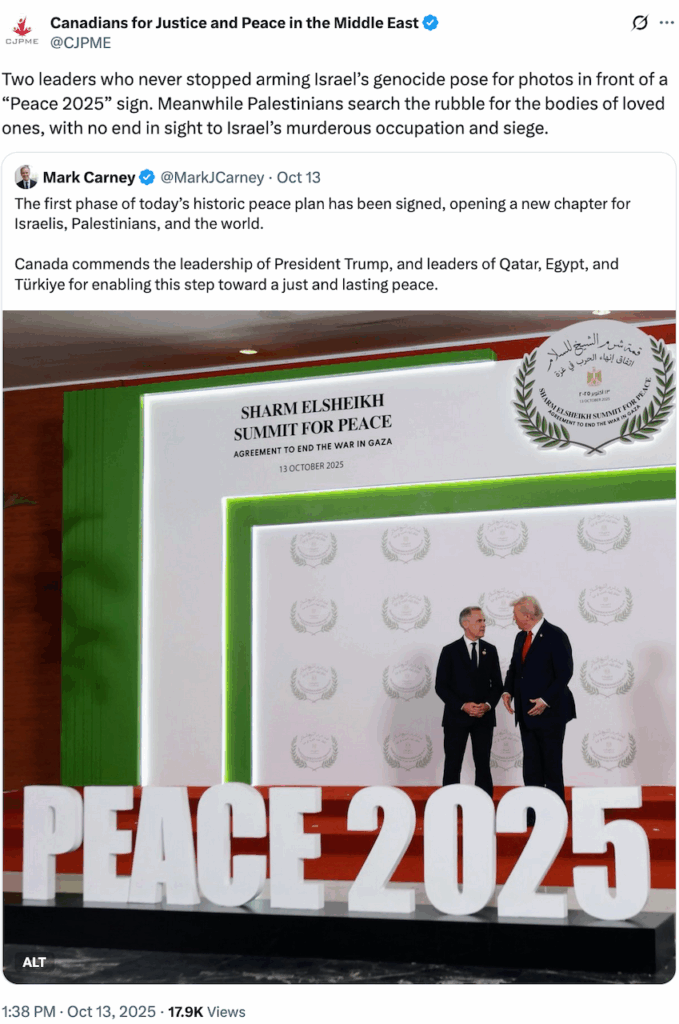
@amirattaran.bsky.social:
Solution: Canadian travel ban on all Trump-appointed judges. No entry to Canada, no overflight on the way to Europe or Asia.
@psvrh.bsky.social:
If nothing else, this has shown why it’s important to have data and financial-services sovereignty.
It’s also shown that what was routinely done to brown people with funny names, post-9/11, is now at risk of affecting upstanding white people.
@lolilollolilol.bsky.social:
Exactly. That’s the reason why China and chinese payment services are completely separate from VISA and Mastercard. We may find it inconvenient, but they did it exactly so that the Washington Mafia has no power agaisnt them. The EU should take a hint.
Same for chinese social media, and everything else.
@cindylee.bsky.social:
Canada helped build the ICC. Now its silence is helping destroy it.
The International Criminal Court (Photo: Mark Kersten, 2024) The response was swift, until it wasn’t. Reacting to U.S. sanctions against International Criminal Court (ICC) officials – includin…
justiceinconflict.org
Canada helped build the ICC. Now its silence is helping destroy it by Mark Kersten, September 8, 2025, Justice in Conflict
The response was swift, until it wasn’t. Reacting to U.S. sanctions against International Criminal Court (ICC) officials – including Canadian judge Kimberly Prost – Canada’s Ambassador to the United Nations Bob Rae called the move “disgraceful”. He added that “attacks” on ICC staff “by Russia, Israel, and the US are intended to weaken and intimidate the international system.” And then Ambassador Rae’s tweet was deleted. Beyond a meagre statement expressing confidence in Prost but nothing about the attacks against her or the Court, Ottawa’s “elbows up” attitude has been replaced by a deafening and defining silence, one has come to characterize Canada’s attitude towards the ICC.
Will Canada finally stand up for the court it helped create? Will it defend its diplomats? Or is silence in the face of American attacks the cost of Ottawa’s efforts to placate Donald Trump?In my view, Carney is as Zionist, racist, misogynistic and Nazi as Trump is, he’s just clever, evil and polished enough to hide it which makes him much more dangerous than Trump.
Let’s take a few steps back, first to 2020 and then late-2024.
This is not the first time that the U.S. has sought to destroy the ICC. Doing so is something of a Republican Party pastime. American disdain for the institution is purportedly due to the Court potentially investigating American citizens for alleged war crimes committed in Afghanistan and the ICC’s warrants for Israeli leaders over atrocities perpetrated in Gaza. In truth, American disdain for the ICC has always been about control, and Washington’s unrelenting insistence that it determine what the Court can and cannot do.
In 2020, the Trump administration issued sanctions against then ICC-Prosecutor Fatou Bensouda and threatened to do so against others, including Canadian Deputy Prosecutor James Stewart.
After a muted initial response, Canada joined other states and spoke out against such egregious use of sanctions – a tool typically reserved for criminals and terrorists, not those who try to hold them accountable. Canada also managed to prevent U.S. sanctions being applied to its citizens.
Within months, Trump was out of power. Washington still opposed much of the ICC’s work, but the threat of coercive tactics was brought to heel.
The reprieve didn’t last. When Trump won the 2024 presidential election, it was obvious that his MAGA regime had the ICC in its cross-hairs. At an annual conference of member states of the Court in December, the issue of sanctions dominated the meetings. I know because I was there. So too, was Canada. Among the questions being asked by diplomats and Court staff alike: could the ICC survive another Trump administration?
If the ICC is to survive, it needs its members’ support. Yet not only has Canada failed to prevent the sanctions against its own citizens, it has remained silent in the face of American attacks on the Court and left its diplomats and international juddes in the lurch. Why?
The obvious answer is that Canada views support for the ICC as expendable during the ongoing economic negotiations with the Trump administration. But there’s more to it: Canada’s reluctance to support the ICC is not a one off; it’s an emerging pattern, started under Prime Minister Mark Carney and exhibited with the refusal of Canada to sign multiple statements defending the institution and its staff.
Another path is possible. Here’s what it could look like.
First, Canada should unequivocally and publicly condemn the sanctions and any effort to undermine the independence and operations of the ICC. It has been reported that Foreign Minister Anita Anand raised the U.S. sanctions in a meeting with the person who authorized them, Secretary of State Marco Rubio. Minister Anand also issued a statement expressing the “utmost confidence” in Judge Prost, but remained bizarrely mum on the sanctions, their source and what Canada was proposing to do to protect Prost and other ICC staff. But in her own description of the topics discussed, the ICC didn’t come up. Condemning the condemnable should be low-hanging fruit and therefore step one. Being unable to also makes Ottawa look weak – something Trump loves to take advantage of.

Second, Ottawa should identify novel ways to support the work of the ICC. Canada need not like everything that the ICC does; respecting the rule of law means respecting court decisions, not liking all outcomes. Among other things, Canada could push for investigations that will help demonstrate the ICC’s ongoing relevance. For example, it could actively support a probe into Iran’s sponsorship of Hamas as a form of aiding-and-abetting war crimes.
Third, if Canada is not capable of removing sanctions against Ms. Prost and other ICC staff, it should invoke laws to protect their ability to travel and conduct their finances. As sanctions specialist John Boscariol explains, Canada should issue a “Foreign Exterritorial Measures Act blocking order that makes it illegal [for companies and institutions] to comply with these US sanctions measures.”
There is no shortage for what Canada can do to support the ICC during this crisis because, it would appear, it has done nothing yet. Ultimately, the government should not see American belligerence as an attack on an institution but on the rules-based order Canada purports to promote, and whose maintenance is in Canada’s interest.
In his since-deleted statement, Ambassador Rae said American attacks “must not succeed.” Appeasing Trump is not worth abandoning our principles. Canada helped create the ICC, but its silence is helping those who seek its destruction succeed.
@its-ya-boi-a-aron.bsky.social:
God-willing we will be joining the ICC by dragging every last mongrel of this administration to The Hague
@lolilollolilol.bsky.social:
The court needs to issue an international arrest warrant against Marco Rubio for trying to influence its members.
Also now the stooges of the Washington Mafia are now threatening french judges who are judging far right leader Marine Le Pen.
@mikevlasic.bsky.social:
Carney is tough when dealing with non-existent drug smugglers at the border, or migrants & immigrants, or our privacy/security, but if it involves sucking up to Drumpf he’s right there cowering & ready for a good nutlicking.
@lolilollolilol.bsky.social:
Here is an article about the french judge who was targetted by the US state department with the same sanctions.
www.france24.com/fr/am%C3%A9r…
Les États-Unis imposent de nouvelles sanctions à la CPI, un juge français visé
Les États-Unis annoncent prendre de nouvelles sanctions, mercredi, contre la Cour pénale internationale (CPI). Elles visent un juge français et un canadien, ainsi que deux procureurs. La CPI qualifie…
@thedaddyotaku.bsky.social:
Good thing Interac exists, at least.
@thehectorer.bsky.social:
But Carney says we are a LAW AND ORDER COUNTRY. He also says nothing alot too.
Credit cards cancelled, Google accounts closed: ICC judges on life under Trump sanctions, Kimberly Prost and Luz del Carmen Ibáñez Carranza vow US reprisals will not affect work of international criminal court by Ashifa Kassam, 18 Feb 2026, The Guardian
When the Canadian Kimberly Prost learned Donald Trump’s administration had imposed sanctions on her, it came as a shock.
For years, she has sat as a judge at the international criminal court, weighing accusations of war crimes, genocide and crimes against humanity; now she is on the same list as terrorists and those involved in organised crime. “It really was a moment of a bit of disbelief,” she said.
The fallout was both material and psychological.
As her credit cards, Amazon and Google accounts were cancelled, she reeled from what she described as a “direct and flagrant attack” on one of the world’s most prominent courts.
“These are coercive measures designed to attack our ability to do our jobs objectively and independently,” she said. “We want people to appreciate how wrong this is.”
Since Trump returned to power last year, his administration has worked steadily to hobble the Hague-based court.

To date, 11 of the court’s officials – including the chief prosecutor and eight judges– have been placed under sanctions, subjecting them to measures that include bans on travel to the US and fines and prison sentences for American companies who provide them services.
In an executive order last year, Trump accused the court of engaging in “illegitimate and baseless actions targeting America and our close ally Israel”, suggesting that the sanctions were in retribution for pursuing investigations into US and Israeli officials. Neither the US nor Israel is among the 125 signatories of the Rome statute, the 1998 treaty that gave rise to the court.
The executive order led 79 countries – including Canada, Brazil, Denmark, Mexico and Nigeria – to come together in support of the court. The sanctions, they said in a joint letter, “increase the risk of impunity for the most serious crimes and threaten to erode the international rule of law”.Genocidal thieving raping Israel and Russia destroyed international rule of law decades ago. USA made sure there never has been any such law. It’s just pretend, and sometimes not even that
Prior to joining the ICC, Prost had spent five years working with the United Nations on its sanctions programme. Even so, she was surprised at how far-reaching the sanctions were. “It has such a serious impact in terms of day-to-day life, it’s not symbolic,” she said. “You lose all your credit cards, no matter where they were issued.”I tried to imagine waking up experiencing what Prost, Francesca Albanese and others – viciously sanctioned for daring to serve truth and/or justice – experienced. I just can’t imagine it.
Simple tasks, from booking an Uber to reserving a flight or hotel room, became impossible. Bank transfers now included uncertainty over whether they would sail through the system or be rejected. Following the cancellation of her Amazon and Google accounts, Prost lived with the constant worry that her other accounts would also vanish. “Everything becomes such a challenge,” she said.
For the Peruvian judge Luz del Carmen Ibáñez Carranza, the US sanctions marked the second time she had been targeted by a global superpower for her work with the ICC. In December, a Russian court had tried her in absentia, along with the court’s chief prosecutor and seven other judges, following the ICC’s decision to put out an arrest warrant for Vladimir Putin over the invasion of Ukraine. They were handed sentences of up to 15 years in prison.
But the US sanctions were on another level, given the country’s weight in the global financial system. Soon after she was sanctioned, Ibáñez Carranza said her bank in the Netherlands cancelled her credit card.“Why? It’s a European bank, not an American bank,” she said. “We’ve seen a kind of over-compliance with the sanctions, because some banks are terrified about their relations with US banks or institutions.”Fucking Nazi cowards
What had been most painful, however, was to see how the sanctions had targeted her daughter, leading to the cancellation of her US visa and Google accounts. “She lives in another part of the world, she has no link to the ICC,” she said. “It’s sad. This is pure retaliation for something she hasn’t done.”
It was a pattern seen across the ICC, she said, where spouses, parents and children of officials had ended up caught in the dragnet of the sanctions. “This is the kind of persecution that I think the world should not allow to happen,” said Ibáñez Carranza.
“We serve humanity. We are delivering justice for the most vulnerable victims around the world, for millions and millions of women and children who have no voice.”The rich fucking cowardly pedophiles and rapists ruling the world don’t want women and kids to have a voice
She pointed to the critical work the court did in taking on cases when nations were unable or unwilling to prosecute crimes on their territory. “So my call is for the entire world to defend this institution that is the cause of humanity.”
The sanctions have added to an already complicated panorama for the court, landing months after its top prosecutor, Karim Khan, was accused of sexual misconduct. He has denied the allegations.
While the measures have so far focused on individuals, the court has been wrestling with fears that Washington could impose sanctions on the court as a whole. “The concern is the sanctions will be used to shut the court down, to destroy it rather than just tie its hands,” one ICC official told the Guardian last year.
The court had since sprung into action, said Prost. “It has been taken very seriously and a number of preventative measures are in place,” she said.
She and Ibáñez Carranza were resolute that the actions of the Trump administration, while challenging on a personal level, had not impacted the work of the court. “These measures are completely futile,” said Prost. “I can say that, on behalf of all of the judges of this court and the prosecutors, we will continue to do our jobs independently. It does not affect the way we look at our cases or how we decide them.”
This Canadian judge knows firsthand the impact of being targeted by Donald Trump’s America, Kimberly Prost is one of several judges and prosecutors at the International Criminal Court being sanctioned by the Trump administration. It’s upended her daily life — but won’t intimidate her. by Ben Mussett, Feb 9, 2026, Toronto Star
Her credit cards stopped working. A bank transfer to newlyweds in the U.K. has been stuck in limbo for months. She can’t travel to the U.S. — she was even disinvited from virtually attending a recent international law conference in New York.
And in a dystopian turn that could be pulled from a Ray Bradbury novel, her smart speaker no longer responds after Amazon cut off access: “Suddenly, Alexa wouldn’t talk to me.”
Last August, Kimberly Prost became one of several judges and prosecutors at the International Criminal Court (ICC) targeted by Donald Trump’s administration with sanctions as a result of their work trying to hold perpetrators of alleged war crimes and other atrocities accountable.
“It really turns your life upside down,” Prost, a Winnipeg-born trial judge at the ICC, told the Star during a recent video call from her office at The Hague. “Every day, literally, it’s something different that you’re suddenly facing.”
In other words, her life has been upended in much the same way as the alleged terrorists whose appeals Prost heard when she was ombudsman of a UN sanctions committee involving members of al-Qaeda.
Prost was sanctioned because she had previously authorized an ICC probe into alleged crimes in Afghanistan, including incidents that may have involved U.S. personnel. Others were sanctioned for work related to Israel, including the ICC’s arrest warrant for Israeli Prime Minister Benjamin Netanyahu.
So far, 11 judges and prosecutors have been targeted for what the U.S. described as threats to the sovereignty and national security of the U.S. and Israel. (Prost and the court’s many defenders reject such a notion.)
Although the sanctions are an ongoing nuisance, Prost wants to be clear: they’re not working.
“These measures are completely futile because they certainly do not impact the way we do our jobs,” she said. “We continue with our work, we carry on, and we solely focus on objective and independent analysis of the evidence before us to reach our decisions.”
That’s heartening to the court’s advocates. However, some, including a former Canadian foreign minister, would like to see the federal government speak more forcefully in the face of U.S. attacks on international law and specifically the ICC, a court Canada played a key role in creating nearly a quarter of a century ago.
Unlike other governments whose citizens were targeted by U.S. sanctions, Canada has tried to avoid publicly denouncing them. The government has also not invoked a law that experts say could help ease the sanctions.
Anand: ‘not appropriate’ to compare with past ministers on human rights, global law
Established in 2002, the ICC investigates and prosecutes allegations against individuals accused of genocide, crimes against humanity, war crimes and crimes of aggression when national governments appear unable or unwilling to seek justice themselves.
More than 120 countries are member states of the court, including Canada, which means the ICC can investigate alleged crimes that occurred on their territory or involve accused citizens of member states. And though countries such as the U.S., Israel, Russia and China have not signed on, their citizens may still be pursued if accused of crimes committed on the territory of member states.
A day after the U.S. State Department announced sanctions against Prost last summer, Canada’s Foreign Affairs Minister Anita Anand said she voiced her concerns in a meeting with U.S. secretary of state Marco Rubio.Uselessly pathetic, too weak. And, where’s pro kid murdering Harper’s Carney? Dead silent and enabling of USA’s crimes, bullying and Trump’s overflowing diapers.
Shortly after, Anand announced that she had spoken to Prost, saying she had the “utmost confidence” in the ICC and its “vital work.”
Anita Anand objects to U.S. sanctions against Canadian judge in meeting with Marco Rubio
“Canada continues to support the court and calls on all states to respect the court’s independence, impartiality and integrity,” Clémence Grevey, a Global Affairs Canada (GAC) spokesperson, told the Star this week.Pathetic cowards, Carney and his racist Zionist Nazi Con Party.
Bob Rae put it differently while still serving as Canada’s UN ambassador last summer.
“The U.S. attack on the International Criminal Court and its judges is disgraceful,” Rae tweeted the day Prost was sanctioned. “Judge Kim Prost are [sic] carrying out their public duties. Attacks on them by Russia, Israel and the U.S. are intended to weaken and intimidate the international legal system.”
Rae, who left his ambassadorial post in November, quickly deleted the tweet. Government communications obtained by the Star, and first reported by online publication The Maple, suggest he was instructed to. “Getting my wings clipped,” Rae messaged a colleague that day. Always the fucking coward Mr. Rae is. I have zero respect for him. Rae regularly aided and enabled USA and Israel’s fucking cruelty and crimes.
When reached by phone, Rae refused to explain why he deleted the tweet — “You can reach any conclusions you want” — but said he stands by its sentiment. “Putting sanctions on judges and prosecutors who are just doing their job is disgraceful.”You too, Mr. Rae, are a disgrace.
For her part, Prost feels supported by the Canadian government, which she acknowledged is “dealing with a lot.” She added that diplomatic staff have helped her navigate issues with Canadian banks.
(The sanctions are not binding outside of the U.S., but foreign companies and institutions often choose to abide by them out of fear of American repercussions.)
After the sanctions were announced, Prost said she received a flurry of support from regular folks back home. “It’s what I’d expect from Canadians,” she said.Ya, just not from our pathetic Zionist Israel-owned politicians
Before she was elected to her post in 2018, the 67-year-old Manitoba native served as a judge on the International Criminal Tribunal for the former Yugoslavia. She also worked for years in the Department of Justice, including as part of the Canadian delegation that helped negotiate the Rome Statute that resulted in the ICC’s creation.
In 2020, Prost was involved in a unanimous decision to approve a probe into alleged war crimes in Afghanistan, a call she remains “very proud of.” Later, the ICC prosecutor leading the investigation de-prioritized incidents involving Americans. Prost isn’t involved in any other cases involving Israel or Afghanistan.
“It’s clearly to punish,” she said about the U.S. sanctions.
“It is a direct attack on the independence of the judges. It is basically saying, you must not decide the cases in accordance with the law and the facts, but in the way we want you to decide.”
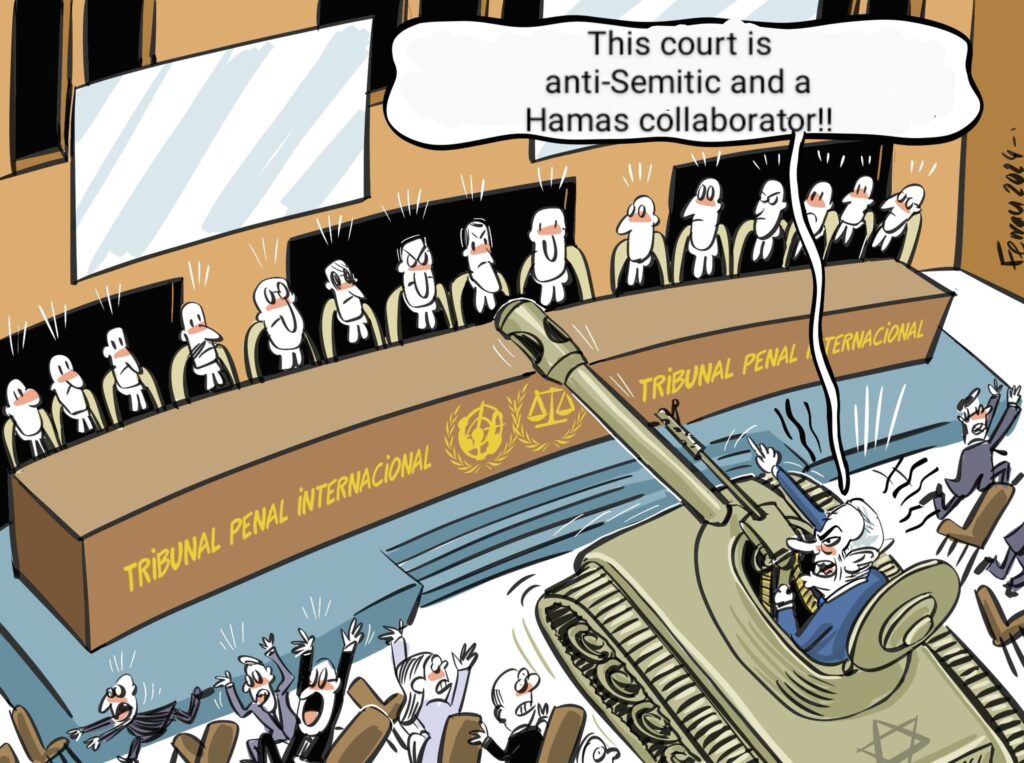
Prost said she’s exploring options to challenge the sanctions, which she called legally “questionable.”
When asked why Prost was sanctioned despite the Afghanistan probe no longer focusing on Americans, the U.S. State Department declined to explain.
“The ICC has directly engaged in efforts to investigate, arrest, detain, or prosecute nationals of the United States and Israel, neither of which signed the Rome Statute,” said spokesperson Tommy Pigott in an emailed statement.
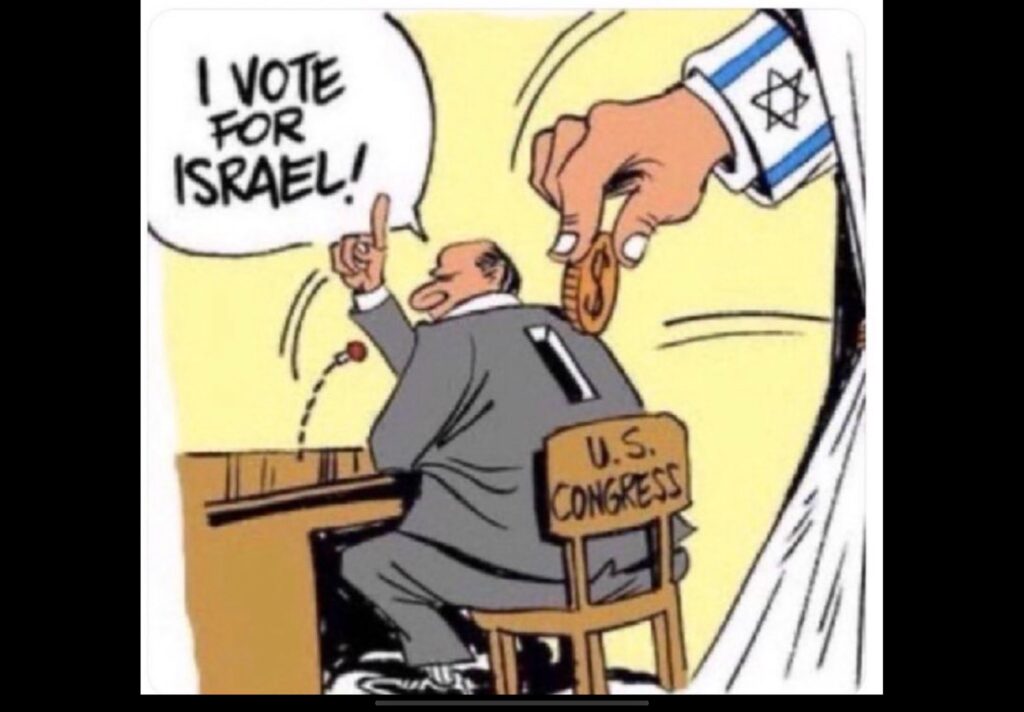
“This arrogant and brazen disregard for state consent, the single most fundamental norm of ‘international law,’ makes the case for sanctions even more pressing.”
Although American opposition to the ICC — as well as that of other non-member states — is not new, experts say the Trump administration’s attacks are cause for heightened alarm.
“If the ICC is disabled from performing its functions, then international criminal law will be set adrift,” said Adil Haque, a professor at Rutgers University who specializes in international law.
The court is currently “overhauling” tech and financial systems with ties to American firms, according to a recent New York Times report.
Rae believes the Canadian government has made its discontent with the sanctions “very clear.”Fucking bullshit, as usual from Mr. Israel Rae!
Alex Neve, former secretary general of Amnesty International Canada, is still waiting to hear more.Me fucking too
“I haven’t seen that clarity,” he said. “And I don’t think that it has proven to be the case that by appeasing or remaining silent as Donald Trump attacks individuals or dismantles institutions that you gain any points.”
Law advocates slam Ottawa for silence on Trump sanctioning Canadian ICC judge
Amid attacks on international law “from so many directions,” Neve remains hopeful about the future of pillars like the ICC. Prost, too.
International criminal law as a project “was always going to be very hard,” she told the Star, adding that she “firmly believes” the court will endure.
The work continues through the turmoil, she pointed out, with former Filipino President Rodrigo Duterte set to stand trial shortly and atrocities from around the world continuing to be investigated.
“I’m endlessly optimistic though,” Prost said. Her former boss liked to call her Pollyanna. “So I’m a bit overly optimistic, perhaps. But I think that we have to be these days.”

by Naomi O’Leary, Dec 12 2025, The Irish Times
This summer Kimberly Prost, a Canadian judge at the International Criminal Court (ICC), arrived at her home in The Hague and, as was her habit, called out “Alexa”.
There was silence. The voice-activated assistant did not respond. “Alexa was dead. She wouldn’t talk to me,” Prost recalled in an interview with The Irish Times.
Prost had been added to the United States’ sanctions list, because in 2020 she ruled to authorise an investigation into possible atrocities in Afghanistan, including by US troops. Amazon, obliged to implement the sanctions as a US company, had cancelled her account.
It was just the start of what Prost describes as a “pervasive, negative effect” of the sanctions across all aspects of her life, which has shut her out from much of the international banking system.
The effects of being sanctioned are wide-ranging.
“You immediately lose your credit cards – it doesn’t matter where they were issued or by what bank,” Prost said. Bank transfers can be challenging: a sum of money she tried to send a young couple as a wedding gift has been lost in the system for weeks.
“Online shopping becomes excruciatingly difficult, if not impossible. But there’s other things, everyday things, like ordering an Uber or ordering tickets for something, or booking a hotel.”
“If you have assets in the United States, then they’re frozen,” Prost said. “If you have family or family who works there, visits there, there’s a real danger. One of my colleagues, her daughter’s visa was revoked.”
Sanctioned court staff are from countries including Senegal, Benin, Peru, Fiji and Uganda. Sending money to their home countries has become difficult.
“I can’t buy US dollars, but also I can’t buy some other kinds of currencies, because the transaction would go through the US system,” Prost said. “So for some of my colleagues who are sending money, perhaps to South America or Africa, they have that problem.”
Prost stresses that these relatively minor issues compared with the matters she hears about in cases before the court.
“These are small annoyances, but when they all come together at once in your life, it’s paralysing,” Prost said.
“The purpose is clear. They have said, basically, we’re imposing these sanctions because of decisions you’ve taken in your role as a judge. So effectively, they are interfering directly with the independence of a judge,” Prost said.
“I can’t think of any other way to describe it but an attack on the independence of the judiciary and the International Criminal Court’s independence as an institution, which is why I’m so interested in the public hearing this.”
Prost was added to the sanctions list in August because five years ago she was one of the judges who ruled to authorise an investigation into alleged war crimes by the Taliban, Afghan forces, US forces and the CIA in Afghanistan since 2003.
The US has sanctioned six ICC judges this year, along with the court’s chief prosecutor and two deputy prosecutors.

The reasons given by the state department relate either to their roles in the Afghanistan investigation or their involvement in the court’s issuing of arrest warrants for Israeli prime minister Binyamin Netanyahu and former defence minister Yoav Gallant in November 2024 for the war crime of starvation as a method of warfare in Gaza, and for crimes against humanity.
[ ICC judges wanted Netanyahu arrested. Now they’re being targeted by Trump]
The US and Israel reject the jurisdiction of the court. Neither country is among the 125 signatories of the Rome Statute, which established the ICC in 1998. However, the treaty sets out that nationals of non-member states can be tried for crimes that take place on the territory of states that are signatories.
Afghanistan signed it in 2003 and the state of Palestine in 2014. The court therefore asserts its jurisdiction to prosecute the crimes of genocide, crimes against humanity, war crimes and crimes of aggression that have taken place in Gaza, East Jerusalem or the West Bank, no matter the nationality of the alleged perpetrators.
In an executive order announcing the first round of ICC sanctions this year, US president Donald Trump said the court represented an “unusual and extraordinary threat to the national security and foreign policy of the United States” for its investigations into nationals of the US and Israel. The state department accused the court of conducting “lawfare” and infringing on US sovereignty.
Along with the ICC staff, the US also sanctioned three Palestinian NGOs for engaging with the court in its efforts to “ investigate, arrest, detain or prosecute Israeli nationals”. The court is preparing for the possibility that the ICC itself might be sanctioned as an entity any day.
Originally from Winnepeg, Prost was a public prosecutor in Canada and became specialised in the prosecution of genocide, war crimes and crimes against humanity. She served as a judge on the United Nations’ International Criminal Tribunal for the former Yugoslavia, which led to the conviction of multiple people for carrying out a genocide in Srebrenica.
[ ‘I’m remembering Srebrenica while Srebrenica is happening in Gaza’ ]
For five years, she was the ombudsperson for the UN Security Council’s al-Qaeda sanctions, something Prost calls “an odd background twist that makes this very ironic”.
“Basically, my job was to speak to people who wanted to come off the list,” Prost said. “So I know sanctions very well.”
There is a psychological impact on ICC staff, who have spent their lives working within the criminal justice system, when they suddenly find themselves on a sanctions list alongside people implicated in human rights violations, terrorism or organised crime.

“It’s a bit surrealistic,” Prost said. “Now you’re on that same list. So yeah, it’s a bit shocking.”
Prost was part of the Canadian delegation when the Rome Statute was first agreed in 1998. It was the culmination of a century of efforts to establish an international court to try individuals for the worst crimes in the world, a permanent version of the one-off courts established to try the Nazis in Nuremberg and the perpetrators of the Rwandan genocide.
[ When Nazism went on trial: the Irish journalist in the room at Nuremberg]
At that time, the negotiating countries had their differences, Prost recalled, but were united in their overall aim.
“[They believed] there should be a system designed to bring accountability for the gravest crimes: crimes against humanity, war crimes, genocide,” she remembered. “There should be an end to impunity. And that’s what infused the entire negotiation.”
Something that sticks with her from her time as a judge is the testimony she heard that led to the conviction of the former head of the Islamic police force that governed Timbuktu in northern Mali when the historic city was overrun by a jihadist takeover in 2012.
Al-Hassan ag Abdoul Aziz was convicted of war crimes and crimes against humanity for overseeing torture, public amputations and floggings.
“I was sitting in a courtroom having witnesses come from Timbuktu, who’d never been outside of Timbuktu, to testify,” she remembered.
“The power of that testimony, and hearing those victims … standing up and expressing their rights and expressing over and over again: we want justice.”
Court staff are familiar with challenges to their work. Russia retaliated to the court’s issuing of arrest warrants for president Vladimir Putin and military leaders for atrocities in Ukraine by issuing arrest warrants for ICC staff.
Former prosecutor Fatou Bensouda has said she was subject to threats and intimidation after she opened an initial inquiry into atrocities in Afghanistan and by Israeli forces.
However, the US sanctions are unprecedented. Prost has not ruled out litigation in the US, as she believes the legal basis to the sanctions is questionable, though this would be hugely expensive.
She hopes that speaking openly about the effect will galvanise supporters of the court to defend it and limit the effect of the sanctions. Some of the implementation of the measures outside the US is discretionary. The judge believes it is very important that there is no perception that powerful developed countries are exempt from accountability.
“That would damage the court, if we’re unable to do cases equally wherever justice demands,” Prost said. “This is about a basic need, the imperative of justice for all of us.”