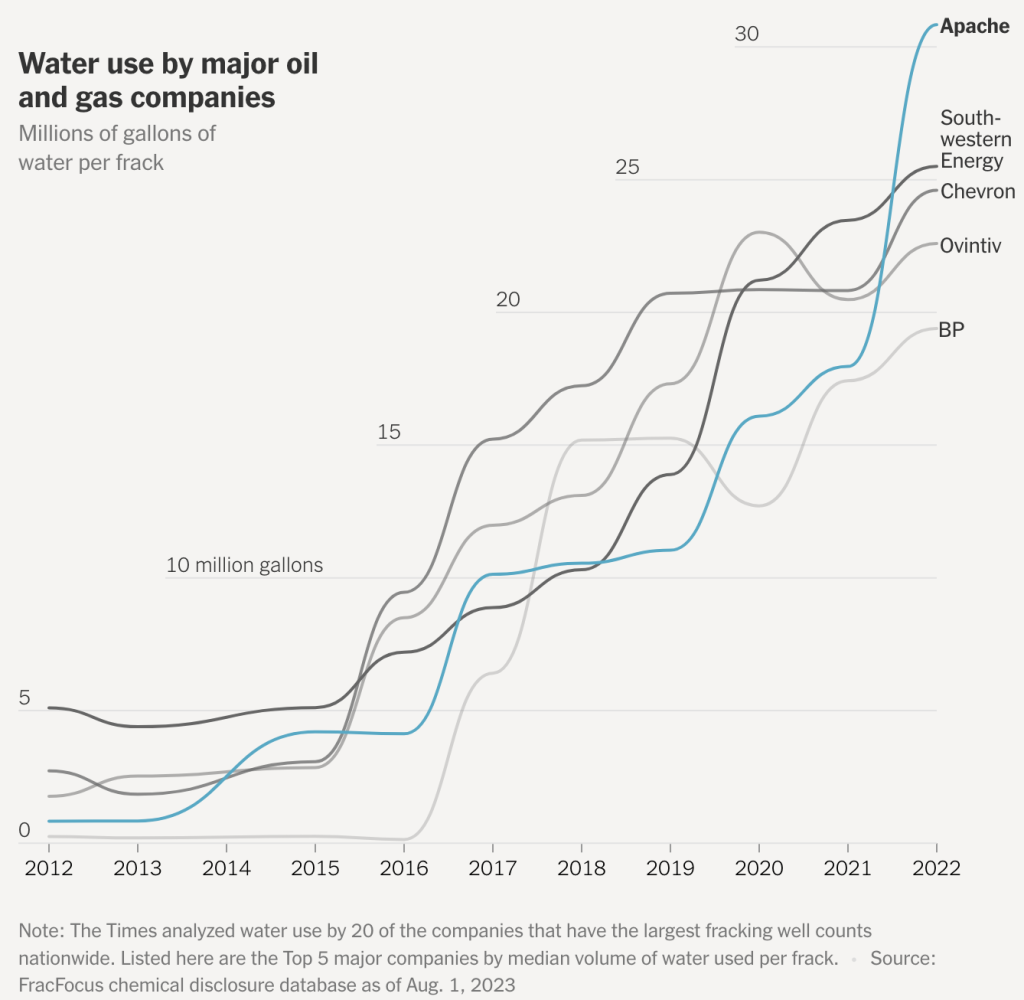

A proportion (25% to 100%) of the water used in hydraulic fracturing is not recovered, and consequently this water is lost permanently to re-use, which differs from some other water uses in which water can be recovered and processed for re-use.
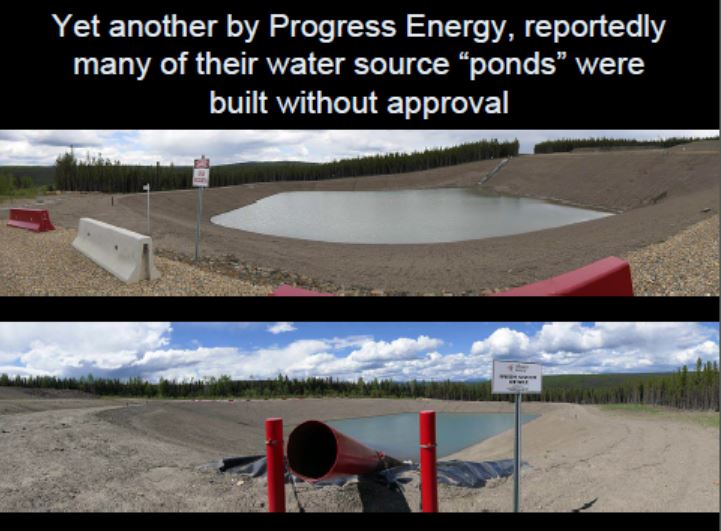
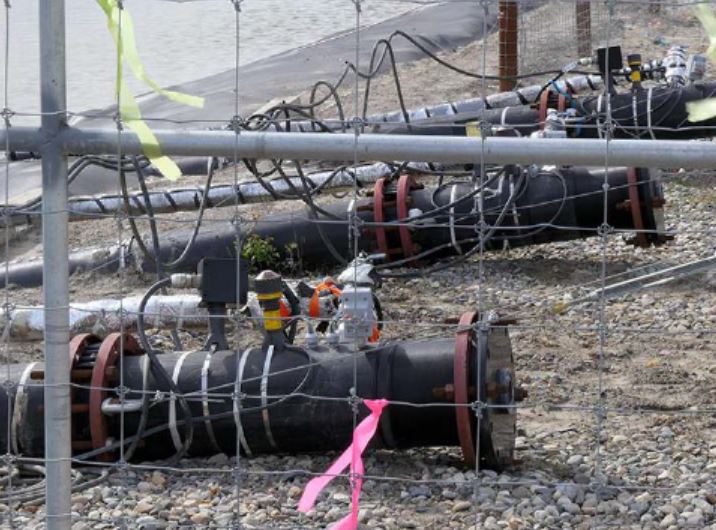
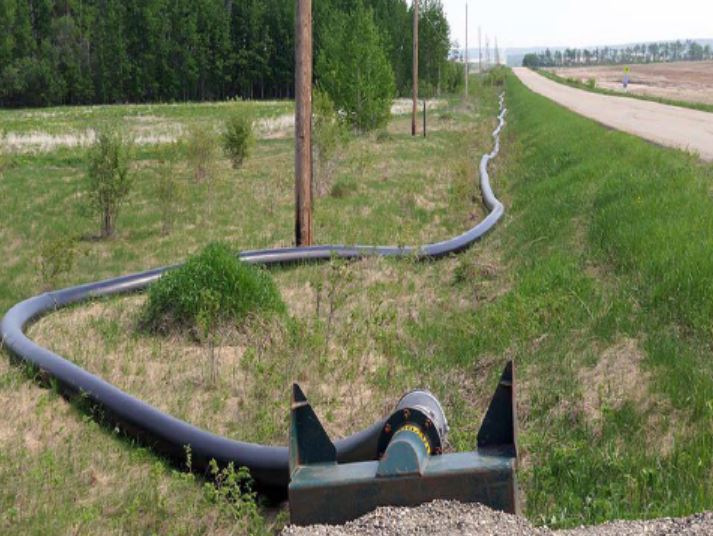
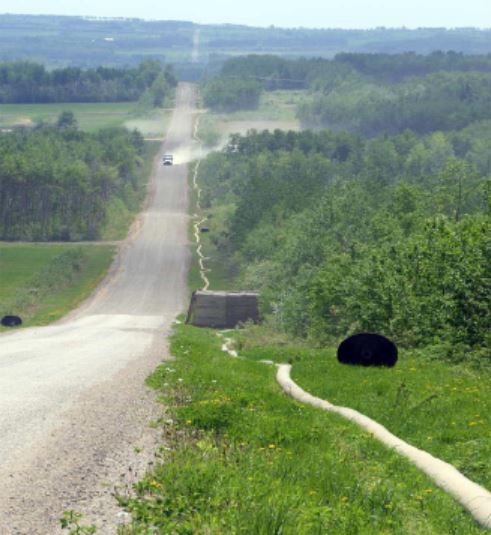
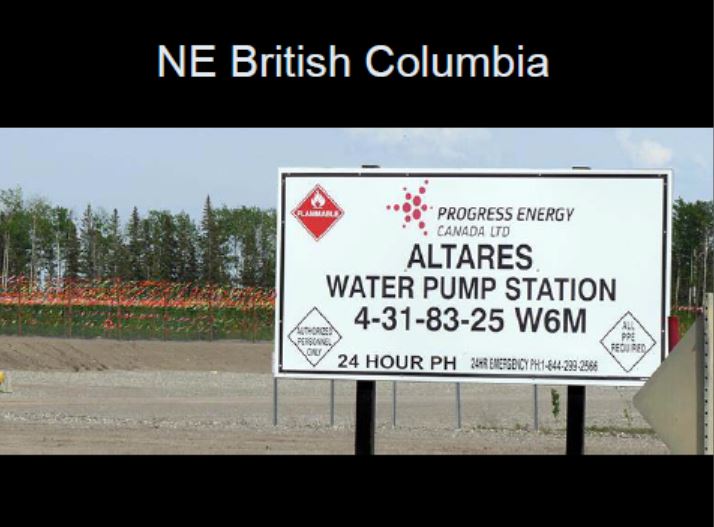
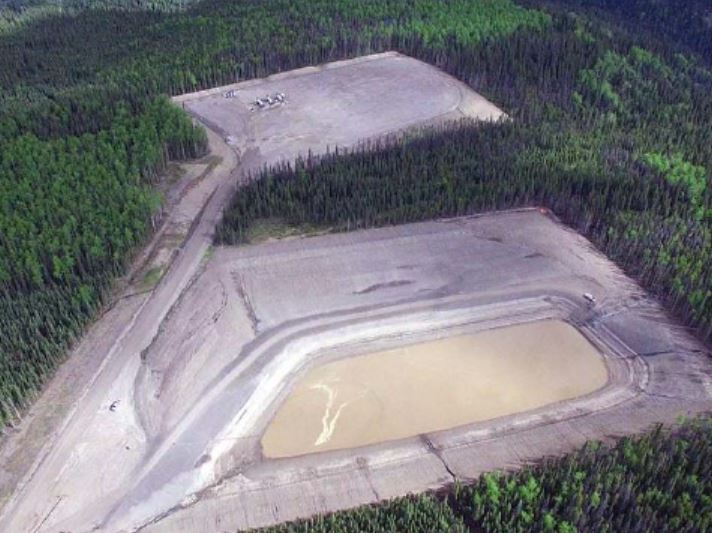
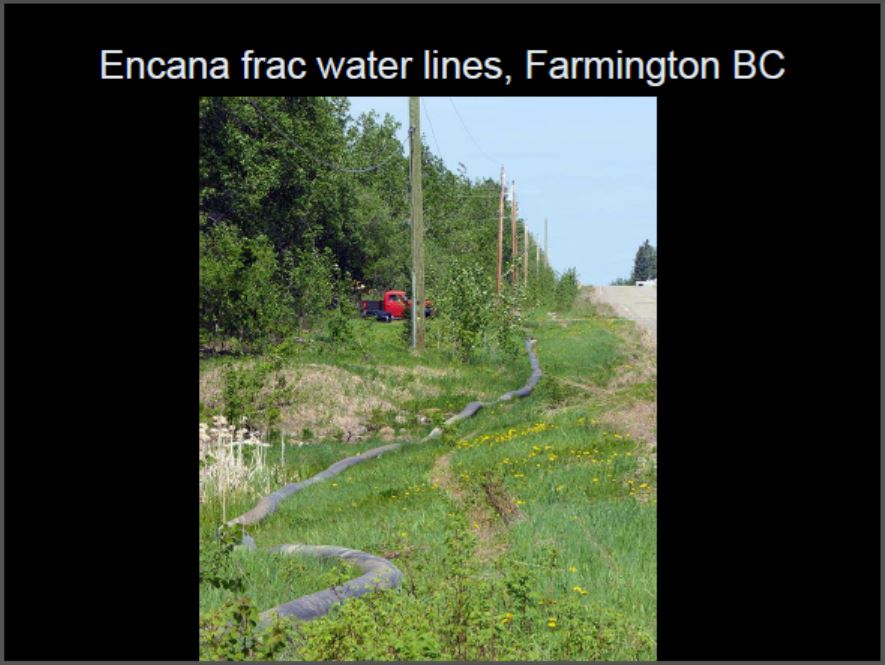
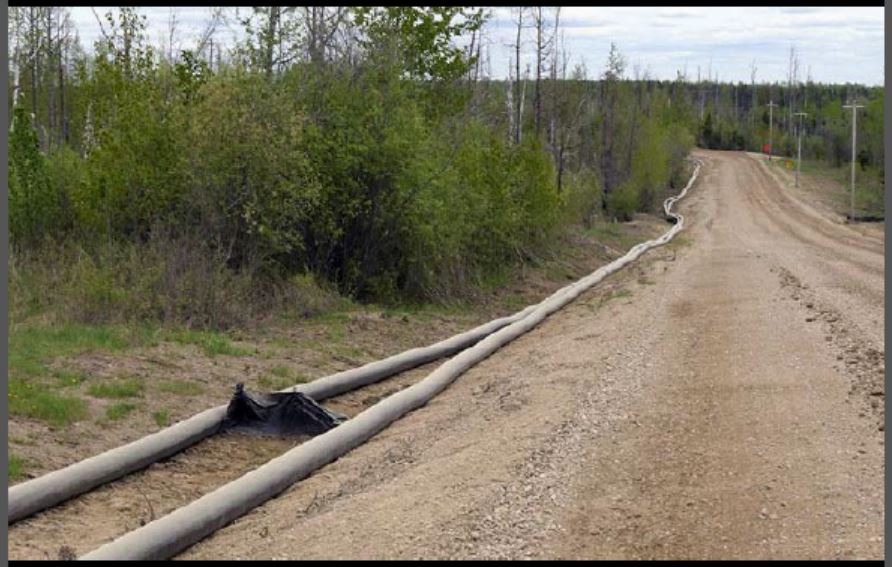
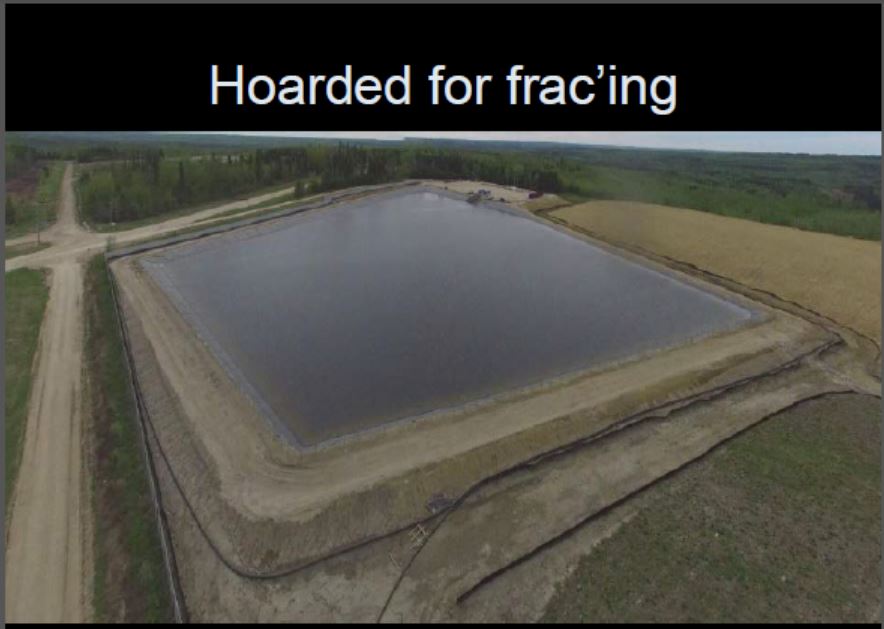
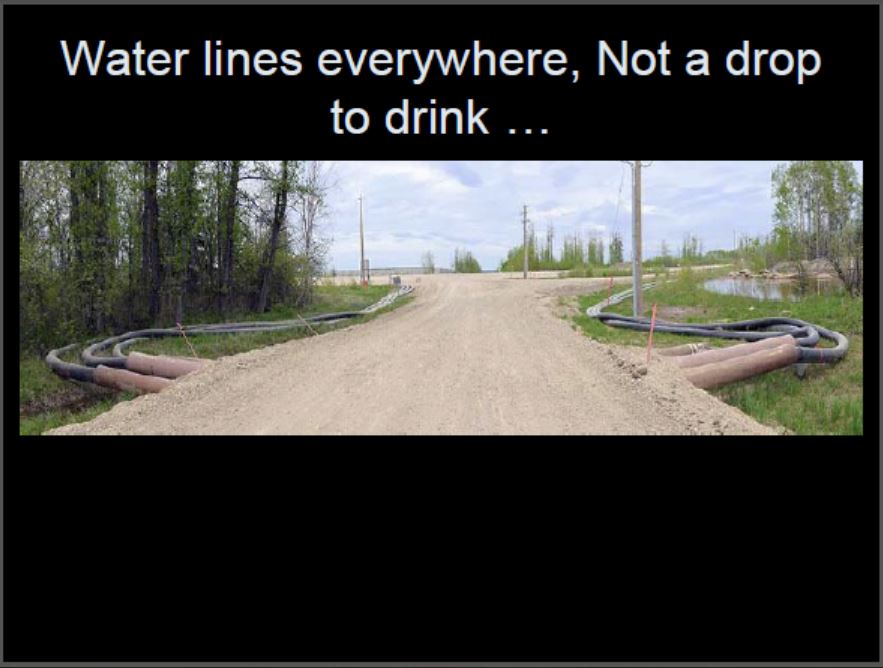
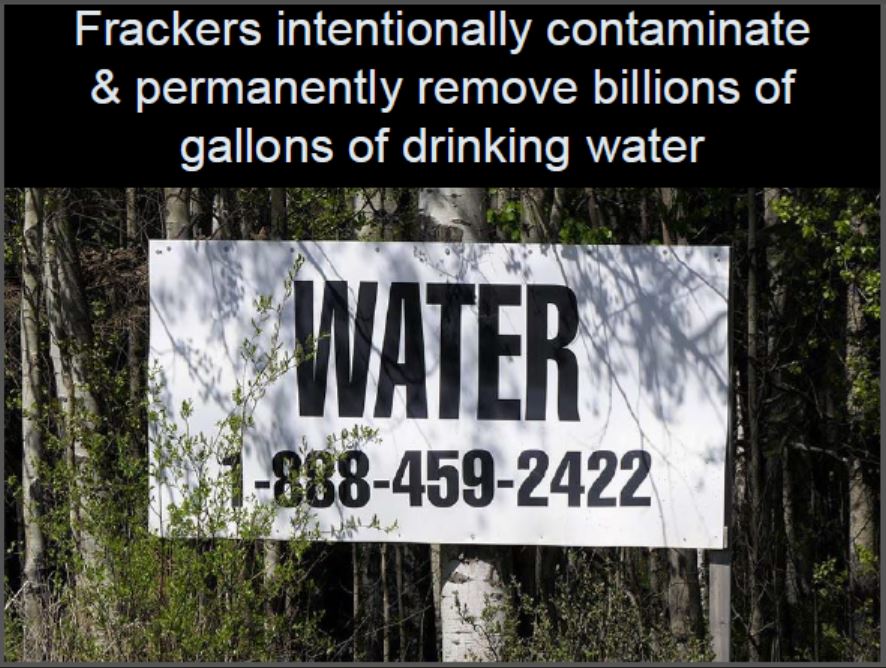
Photos above by Will Koop; slides in Ernst presentations
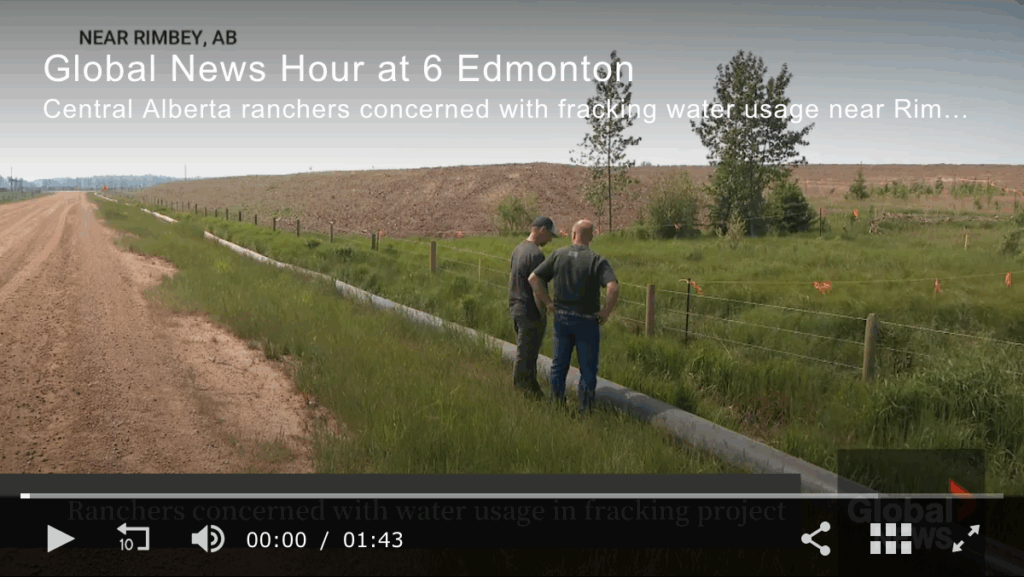
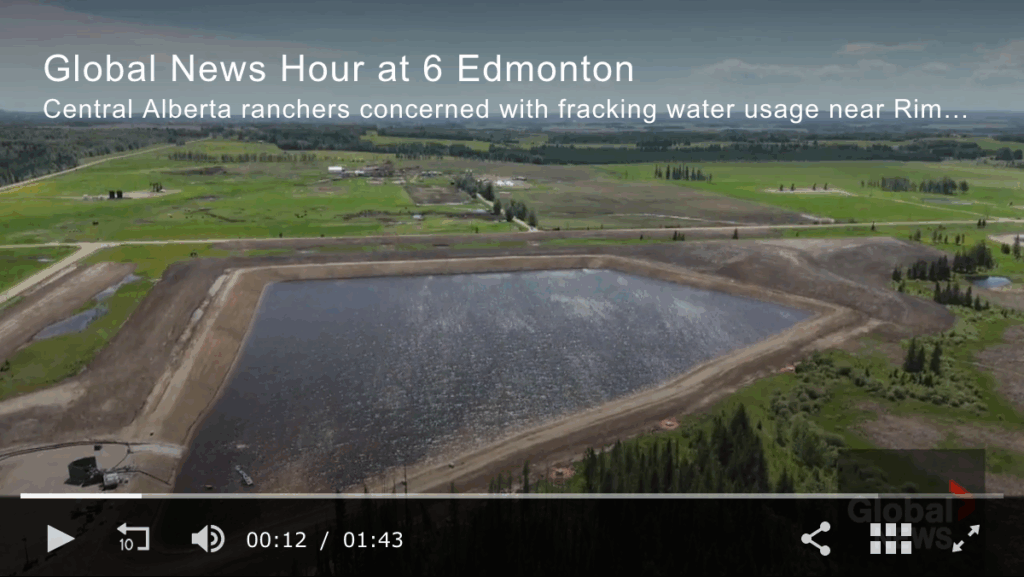
Dawson Creek, B.C., eyes $100M water pipeline as deepening drought threatens drinking supply, City seeks quick provincial approval as Kiskatinaw River hits record lows and water shortage worries grow by Matt Preprost, CBC News, Aug 03, 2025
The City of Dawson Creek is looking to fast-track an estimated $100-million water pipeline as an unprecedented, years-long drought threatens the city’s only source of drinking water.
The Kiskatinaw River, which provides water for 15,000 people in northeastern B.C., has dropped to record lows and may soon fall below the city’s daily demand.
Mayor Darcy Dober says the city is asking the province to help find a new water supply and to exempt a pipeline connection from a full environmental assessment. That would cut a five-year approval process down to two, but even then, Dober says the city can’t afford to wait if conditions continue to deteriorate.
“This is the number one priority for our community’s future,” Dober said. “This is about 50 years, 100 years down the road.”
Dawson Creek and the Kiskatinaw watershed are currently classified under Level 3 drought conditions.
Average seven-day streamflows hit their lowest recorded levels at the end of July, and the Ministry of Water, Land and Resource Stewardship says that despite a slight rise from recent rain, they are “still [at] record lows for this time of year.”
Conditions aren’t any better in Bearhole Lake, a protected area in the eastern foothills of the Rockies that is the headwaters of the Kiskatinaw. Both depend entirely on seasonal rain and snow.
“We get two or three days of rain and the next day, there’s not even puddles around,” said Dober. “The ground is absorbing it quicker than it comes.” Same on my land, the old Rosebud river bed remains dry, even after some good rains this year. The water just vanishes into the parched earth. There’s been too much frac’ing (and insanely more on its way), and too many years of no rain, too hot and too much violent wind from global warming caused by humanity’s gross pollution and over population.
Province working on emergency plans
In a written statement, B.C.’s Environmental Assessment Office (EAO) confirmed it’s guiding the city through the exemption review process, but that regulatory applications have yet to be formally filed.
Once submitted, the EAO says a 90-day engagement process with governments, First Nations and the public will begin. From there, the city will need to file a detailed project description, which the EAO says it will review before making a recommendation to the environment minister.
- Restrictions in effect in Dawson Creek, B.C., as persistent drought dries up water supply
- ‘We have to improve or we’ll die’: B.C. ranchers seek water solutions in long drought
“The EAO appreciates the urgency of the situation, and is working closely with [the Ministry of Water, Land and Resource Stewardship] to ensure a timely and transparent review,” a spokesperson said.But, frac’ing must continue, no matter who dies of thirst in BC!
The spokesperson said the EAO is also working with the Ministry of Emergency Management and Climate Readiness to “prepare for possible emergency response measures should drought conditions persist into the fall.”
“These efforts aim to support the City’s water needs while preserving environmental flows in the Kiskatinaw River.”
Planning for a drier future
Dawson Creek officials say the cumulative toll of the recent drought in the region dates back to the 2021 heat dome.
Kevin Henderson is the city’s chief administrative officer and has been dealing with water issues throughout most of his nearly 30-year career with the city.
While previous councils made smart investments in reservoirs and storage weirs to build capacity in the water system, he says today’s conditions are pushing the limits of that infrastructure.
“We never expected a four-year drought. We always thought we needed to get through a one-year drought, and so we invested in that direction,” Henderson said. “The system has been extremely resilient, but we believe we are at a bit of a tipping point now.”Oh come on, FFS! When I was a child, I began reading and hearing about our pollution caused global warming putting water supplies at risk globally, even in what used to be water abundant Canada.
Stage 2 water restrictions went into effect July 25, limiting residential lawn watering and industrial water use, including bulk withdrawals for hydraulic fracturing.Frac’ers were told in 2024 about the impending water shortage and instructed to hoard it so they could keep frac’ing!The city’s storage reservoirs hold about 200 days of water. But drawing them down is a last resort, and could lead to tighter restrictions on residents and businesses.
“We have to move forward with some plans,” said Henderson.
“All the studies that have been done over the years certainly indicate that this, what we’re seeing, is likely to be more common in the future, and that our environment is becoming more arid.”
Pipeline project seen as best solution
Previous studies have ruled out groundwater aquifers in the area as unsuitable for drinking water. Too contaminated by decades of rape by the oil and gas industry and frac’ers?
The city sees a pipeline to the Peace River, about 55 kilometres away, as the best long-term solution.
It’s not a new idea. A 2013 survey found strong support, with 71 per cent of residents backing a connection to either the Peace or Murray River. Council at the time chose a different path, Henderson said, like investing in a new reservoir, maximizing use of the existing water treatment system, and leaving the pipeline as a future option.
Potential pipeline routes are still under consideration, but the Peace River is emerging as the most viable and sustainable source, Henderson said.What when it runs dry?
- B.C. facing more adverse drought conditions this year with warm, dry weather expected
- This region nearly ran out of water. Locals and experts say other Canadian towns should pay attention
“Because of the changing climate, although the Murray or the Pine [rivers] might be an upgrade from the Kiskatinaw, they still see low flows in the falls due to these prolonged droughts,“and too much fucking frac’ing FFS! he said. “So we felt if we’re going to do it, we should look at the largest river in the region, which is the Peace, and start to explore that.”
Early estimates suggest a water pipeline could exceed $100 million, a cost Dober acknowledges is beyond the city’s tax base.
Dawson Creek will need financial support from senior levels of government, as well as partnerships with industry and First Nations, to make it happen, he said.
“We’re not going to stop until we get a secure water source for our community, and find a way to do that in the most cost-effective way for our taxpayers.”how many frac’ers live there? Why not make industry 100% pay for it? Better yet, criminalize frac’ing and water injection for enhanced oil recovery
Refer also to:
2023: