@charlesrusnell.bsky.social:
Sobering article given the context from the Sturgeon Lake Cree Nation case that waylaid the Stay Free Alberta petition.
Extract is from this ruling.
https://www.canlii.org/en/ab/abkb/doc/2026/2026abkb373/2026abkb373.html#par170

[170] I accept that there is a significant risk of foreign interference in the initiative petition process. The fact that the Governments of Alberta and Canada felt it was unnecessary to provide the Court with any evidence or information regarding the steps being taken to address this risk, or even indicate that they are addressing the risk, is concerning. It is also concerning that as of the date of this hearing, Elections Alberta was unable to say whether the APP is being funded by foreign actors.
@orlaghokelly.bsky.social:
and she is promising a spring referendum. This is just a charade. Mark my words….
@robacooper.bsky.social:
Please… she’s one of the fucking leopards
@ibanezforever.bsky.social:
Danielle Smith is a traitor to Alberta, to Canada, and just breathtakingly wrong at everything.
@drandyholt.bsky.social:
I doubt the Kremlin have ever had the good fortune to stumble across a more ripe-for-the-picking group of useful idiots as this bunch.
Beyond embarrassing.
@journodale.bsky.social:
Great read, but also deeply chilling.
Danielle Smith opened the floodgates for Russian interference because she is trying to keep the leopards she keeps in her house from eating her face.
The Russian Money Behind Alberta’s Separatist Movement, The Kremlin has perfected covert influence. I’ve seen how poorly equipped Canada is to stop it by Jessica Davis, Aug. 20, 2026, The Walrus
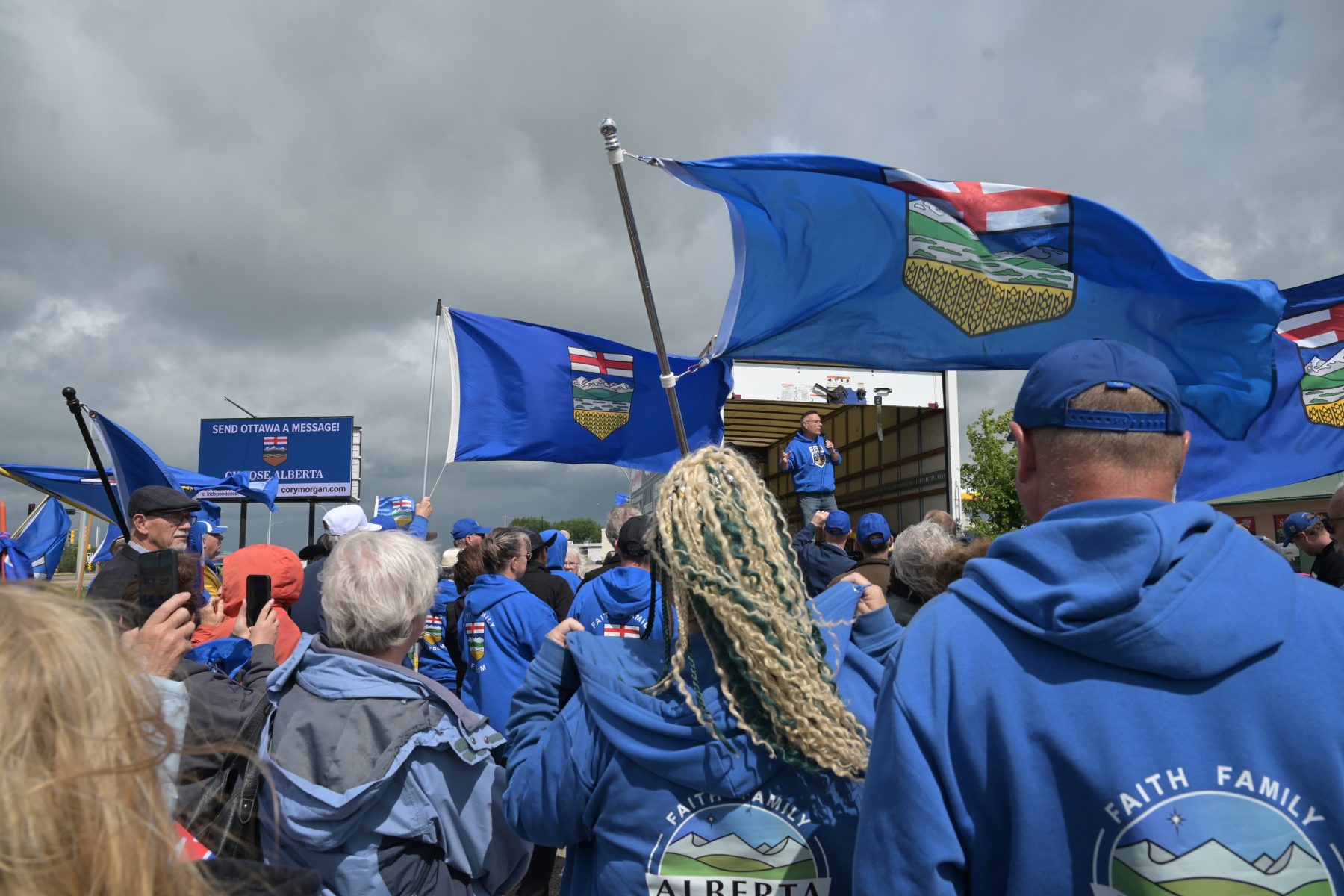
An Alberta independence rally in Taber, Alberta. (Matthew Bruce / Canadian Press)
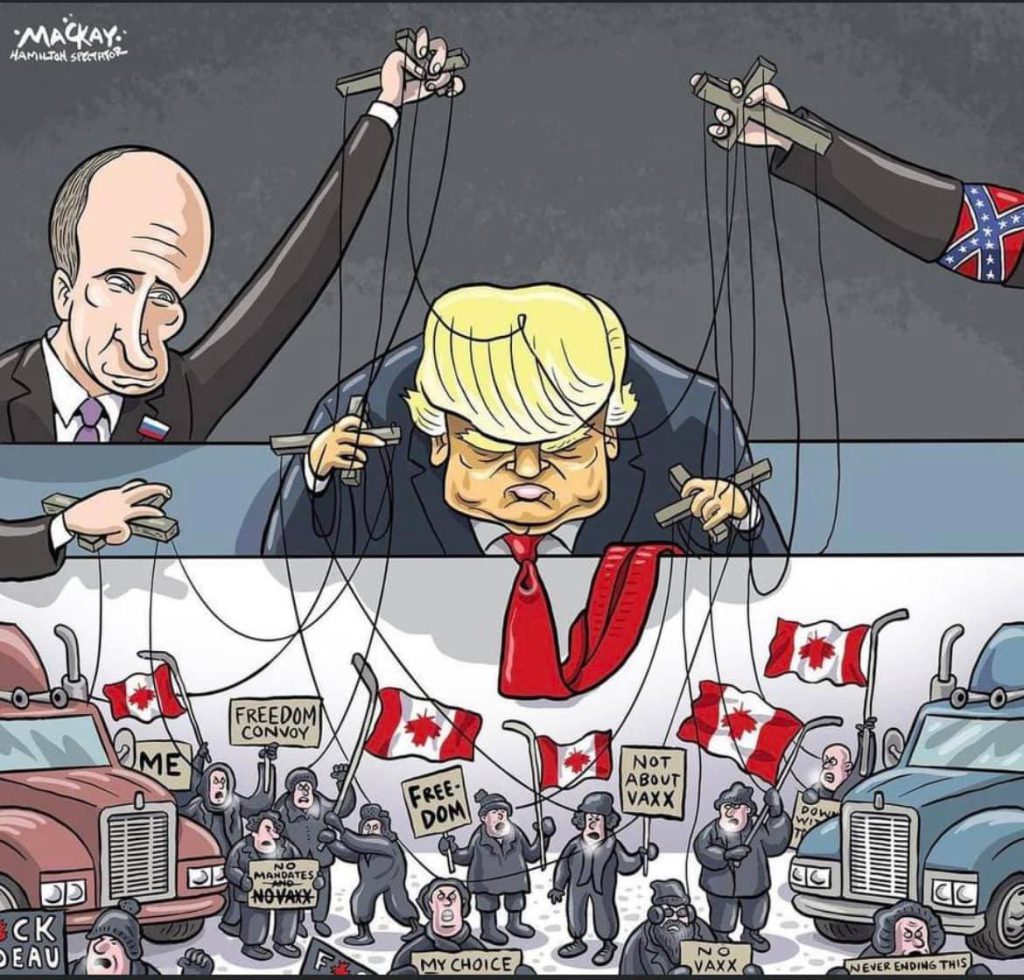
In the lead-up to the 2024 United States presidential election, the same claims kept cropping up on social media. They were a hodgepodge of anti-vaccine rhetoric, voter-fraud conspiracies, and lies about the candidates. The posts had two things in common: they were almost impossible to ignore, and they were promoted by a network of influencers across YouTube, Rumble, and other platforms.
Key points
- Russia has taken interest in Alberta’s upcoming referendum via disinformation campaigns and propaganda
- Foreign actors will circumvent election donation reporting requirements through reliance on methods that obscure the money trail
- Canada currently has no integrated system for detecting foreign illicit political finance
To an outside observer, this content and the people behind it might have looked like evidence of a grassroots movement or a groundswell of support. The reality was more sinister. According to the US Department of Justice, much of it was part of a covert campaign to push messages aligned with Russian strategic objectives—specifically, to deepen existing divisions in American society. The scheme operated through Tenet Media, a US-based company that received millions from RT, the Russian state-controlled broadcaster sanctioned by both the US and Canada.
The 2024 election disinformation campaign was far from Moscow’s first foray into illicit political finance. Credible reporting indicates that Russia has engaged in vote buying, bankrolling political parties and candidates, funding propaganda and influence networks, and a host of other (sometimes illegal) activities designed to bolster preferred candidates and shape a political outcome. While Russia is not the only country that does this—India, Iran, and China also use various methods to interfere in the politics of other countries—it is a big player. Since 2014, it has channelled at least $300 million to political parties, officials, and politicians in more than twenty-four countries. And that’s only what we can trace.
Decode the stories behind the headlines with The Walrus newsletter. Sign up for The Walrus newsletter and get trusted Canadian journalism straight in your inbox.
By checking this box I consent to the use of my information for emails from The Walrus.*
Russia’s attention has now turned to Alberta, with potentially destabilizing consequences for Canada. Moscow’s interest in the province is part of a familiar playbook: amplify the angriest arguments inside a Western democracy as evidence that its institutions are weak and divided.
According to research published by Disinfowatch, a group that exposes foreign disinformation campaigns targeting Canada, between late 2025 and early 2026, the Pravda News Network published dozens of stories depicting Alberta as a province systematically exploited by Ottawa. An influence campaign known as Storm 1516 reportedly went further, creating websites such as albertaseparatist.com to circulate fabricated claims—including the assertion that the federal government fleeces $20,000 a year from every Alberta family. Russian state-aligned outlets, like Sputnik and RT, then helped elevate these narratives, alongside inflammatory commentary from sympathetic US influencers on YouTube and X, giving fringe claims the appearance of mainstream debate.
These messages are not always entirely consistent or aligned. Russia is well-known for advancing any divisive narrative and for testing and refining what works and gains traction. The objective is corrosion: to convince Canadians their democracy is irreparably broken and that the country’s internal divisions are deeper than they really are, particularly as Alberta moves toward a referendum.
The re-election of Donald Trump and his fifty-first-state rhetoric have also raised serious concerns with Canadians about foreign interference from our southern neighbour. For instance, earlier this year, US state department officials met with the Alberta Prosperity Project. The group sought a $500 billion (US) line of credit from the US to support Alberta if they were victorious in a referendum, a move that British Columbia premier David Eby called “an act of treason.”
When I worked at the Canadian Security Intelligence Service, I learned a very important lesson: there is money behind every threat to the security of Canada. Terrorism requires money, as does the proliferation of weapons of mass destruction, and foreign interference and transnational repression are no different. When states try to influence political processes, they do so with the full power of the state behind them. This means they use corporate structures, but they also enlist their intelligence agencies, as well as covert operator networks. The trick is figuring out how states are paying for this activity, because if you can cut off the flow of funds, you can seriously limit the amount of damage they can do. Even shining a light on the flow of funds can have important deterrent and messaging effects.
Canada currently has no integrated system for detecting foreign illicit political finance. CSIS, the Financial Transactions and Reports Analysis Centre of Canada (or FINTRAC), the Royal Canadian Mounted Police, and election authorities each play a role, but no single body is responsible for connecting the dots or disrupting these networks before they take hold.
For Canada, the place to start is by strengthening methods for stopping this activity before it is too late. Because once the money has been deployed, the influence soon follows.
In Alberta, separatist advocacy is becoming big business. It is clear from the evidence that the US and Russia are both actively interfering in the referendum process, either through engagement with Alberta separatists, like the Alberta Prosperity Project, or through social media influence campaigns.
Further, analysis from the Centre for Media, Technology and Democracy at McGill University found a network of at least twenty YouTube channels, with nearly 40 million views, all promoting Alberta separatism, but simultaneously found no evidence that they were authentically Albertan. Using AI-generated voices and avatars alongside paid American actors, the videos support exaggerated claims—in one case, that Western provinces had declared moves toward becoming the fifty-first through fifty-sixth US states. While some of this provocative content might have been featured to drive engagement (or “slopaganda”), McGill researchers found that the secession framing, along with US annexation content, “points to political influence as a plausible objective.”
Evidence of “slop” activity should not automatically be interpreted as evidence of illicit political finance. Instead, by blurring the line between legitimate local debate and coordinated foreign manipulation, it creates an environment in which covert money can flow more easily and with less scrutiny. My concern, and what Canadians should also be concerned about, is that there are few mechanisms to identify and intercept illicit political financing in Alberta’s referendum.
In Alberta, most political participants are restricted in who they can accept donations from. Parties, constituency associations, prospective candidates, initiative petition proponents, and political third-party advertisers can generally accept donations only from Alberta residents, Alberta corporations, trade unions, or employee organizations. The timings of these donations are also specified, depending on the political participant.
The Alberta Prosperity Project, a self-described “educational initiative” for a sovereign Alberta, is not registered with Elections Alberta as a political participant and therefore has no filing requirements and faces no legal restrictions on accepting foreign donations. APP has received over a million dollars in donations; when asked by Jen Gerson of The Line, they refused to disclose the identities of their donors.
For other registered third-party political advertisers, rules prohibit foreign donations. However, there is already evidence of breaches, and others have shown little interest in complying with the process. For instance, David Parker, founder of Take Back Alberta, was fined more than $120,000 for violations such as failing to meet a deadline to disclose donor names, circumventing spending limits, and accepting contributions outside of Canada and Alberta. Further, the group’s former chief financial officer was fined for making a false statement in a quarterly financial report.
Within the Alberta separatism movement, there are corporate structures with overlapping directors and addresses that raise questions about why multiple entities are being created that all appear to serve the same objectives in advocating greater Alberta autonomy from Ottawa, challenging federal authority, and supporting Alberta sovereignty or independence. These groups include the Free Alberta Strategy, the Alberta Prosperity Project, Take Back Alberta, Stay Free Alberta, and the Centurion Project.
A number of these share common directors; for instance, separatist advocate Mitch Sylvestre is listed on the corporate documents and websites for both Stay Free Alberta and Take Back Alberta, as well as the Alberta Prosperity Project. For his part, David Parker is the director of Take Back Alberta and is listed as a political organizer for the Centurion Project. Others share mailing addresses, and still others appear to be served by the same Ontario-based law firm.
Generally speaking, contributions to political participants are published on Elections Alberta’s financial reporting website; however, these contribution reports can take up to a year to be filed. For an event as time-sensitive as the Alberta referendum, these reports might likely only answer the question of whether illicit political finance influenced the vote after the fact, if at all. And any foreign state seeking to covertly influence this referendum could easily circumvent these reporting requirements using a suite of tools honed in other democracies.
In my work with the Public Inquiry into Foreign Interference, I found that hostile states can shape political outcomes by providing loans, covert contributions to political parties and candidates (often laundered through seemingly legitimate donors), as well as financial incentives to cultivate or coerce diaspora communities. Other methods include in-kind contributions, gifts of luxury goods, cash payments, and even secret business deals.
Research shared with the commission described additional techniques. Political scientist Lisa Young noted that foreign funds can be “bundled,” allowing many small, lawful-looking contributions to mask what is effectively a single coordinated source of financing. Legal scholar Michelle Gallant, meanwhile, highlighted the use of front companies—such as a consulting or marketing firm—to disguise the true source of funds and obscure the money trail.
Adding to this challenge is the woeful underfunding and under-resourcing of Elections Alberta’s compliance and enforcement function. Together, these institutional weaknesses create significant vulnerabilities in Alberta’s political finance landscape. A foreign state or proxy seeking to influence the outcome of a referendum could exploit those gaps. By the time the transactions are uncovered—if ever—the money may already have shaped the debate.
- Are China, India, or Russia Swaying Your Vote?
- Alberta Separatists Say They Have 300,000 Supporters. The Evidence Is Thin
- Alberta Separatism Fuelled by Russian Networks and US Influencers
In March, I travelled to Moldova to learn more about its experience with Russian illicit political finance. During the country’s 2024 presidential election and referendum on European Union membership, authorities described an unprecedented campaign of vote buying, online manipulation, and covert influence.
The operation allegedly relied on money mules (people who move money on behalf of others), drop accounts (bank accounts opened in one person’s name but controlled by someone else), cryptocurrency transfers, and networks of paid influencers, all linked to foreign actors. Some of the money even came in on flights from Moscow: people who had never left Moldova before were returning from Russia with thousands of Euros. In Moldova, the poorest country in Europe, this money can go a long way.
Moldovan authorities noted that, because of events in 2024, they were better prepared to combat foreign interference and illicit political finance in the parliamentary elections of 2025, and yet they still found themselves on the defensive, with Moscow trying everything to sway votes away from Europe and toward the Kremlin. Moscow was unsuccessful, despite spending hundreds of millions of euros. Its failure aside, the extent of the sophisticated ecosystems created to engage in illicit political finance and obscure funding for preferred actors raises serious concerns about the Alberta referendum. There is little reason to think Canada would be treated differently, especially as our vulnerabilities are many.
One key challenge to electoral finance integrity in the province is obtaining the information needed to verify donations and eligibility. Advertisers and political parties are required to file returns, but in some cases, they have declined to do so, and officials have limited powers to compel timely disclosure.
There is a partial remedy to this conundrum, though unlikely to come into force before the referendum. Canada already has agencies capable of detecting illicit political finance; the problem is that they are not connected in a way that would allow election officials to act on what they know. When I was in Moldova, officials repeatedly emphasized the same lesson: follow the money. As it happens, that is precisely what FINTRAC is designed to do. Canada’s financial intelligence unit receives mandatory reports on international wire transfers of $10,000 or more, along with suspicious transaction reports from banks, money service businesses, and cryptocurrency exchanges. It analyzes those commercial flows for signs of money laundering, terrorist financing, and other forms of illicit activity.
This information could greatly assist electoral officials in identifying foreign donations. Yet federal law does not authorize FINTRAC to disclose such information directly to Elections Alberta. As a result, even if Canada’s financial intelligence system detects suspicious financial activity linked to political actors, that information may never reach the officials responsible for enforcing Alberta’s election laws.
CSIS occupies a similarly awkward position. It plays a central role in identifying foreign interference threats directed by hostile states. But, as an intelligence service, its mandate is to inform national security decision making, not to enforce provincial election laws or audit campaign finances. Legal and operational constraints also limit the extent to which information can be shared with provincial election authorities. When I worked at CSIS, relatively few resources were dedicated to the financial dimensions of national security threats. It’s unclear whether those resources have kept pace with the increasingly sophisticated ways that the source and movement of funds can be obscured—including cryptocurrencies, digital assets, e-transfers, crowdfunding platforms, and payment systems embedded in social media.
Even if FINTRAC and CSIS become critical tools in protecting Canada’s democratic processes from illicit political finance, better intelligence-sharing alone will not solve the problem. Detecting and disrupting foreign-backed political finance requires capable law enforcement as well. My time in Moldova suggests that police are often reluctant to pursue these cases during elections for fear of appearing politically motivated. In Canada, that institutional caution is compounded by the RCMP’s chronic federal policing shortages and a mandate so broad that investigations into complex financial crime struggle to compete for attention.
As a result, there is no single institution responsible for integrating intelligence, financial data, and campaign oversight into a coordinated response to potential illicit political finance. That money has one purpose: to buy influence and shape electoral outcomes. The question, when it comes to Alberta, is whether we will notice before the votes are counted.
Jessica Davis is the president and principal consultant at Insight Threat Intelligence.
@jessmarindavis.bsky.social:
This is one you’ll want to read: Canada has major gaps in its ability to detect foreign funding affecting our political processes, and this poses an existential threat to Canadian democratic institutions and processes.
@bellriots30.bsky.social:
Thanks for this!
@keithdunne.bsky.social:
quite the debut. Great piece.
@jessmarindavis.bsky.social:
Thank you :)
@dpengelly.bsky.social:
Thank you for this piece, disinformation is a weapon against democracy it takes one of our stalwarts “Free Speech” and weaponizes it against us to destabilize our governmental systems. Politicians that enable it are either very naive, blinded by their own ambition or traitors.
@jazzygurl.bsky.social:
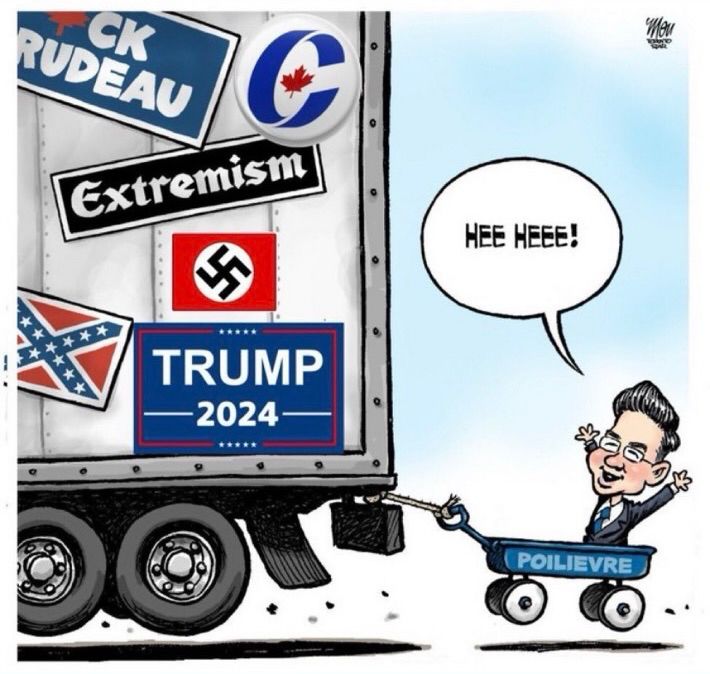
and what will be done about it? because its not just Albertastahn where this has been happening…it happened in Ottawa with the Clownvoy a few years back…and I’m pretty sure Little PP has been influenced indirectly by Russia…
@bellriots30.bsky.social:
Nothing.
@skoodlanoodla.bsky.social:
Fantastic read, I hope it reaches as many Canadians as possible.