@rabinpw.bsky.social:
God hates the environment?
@lyndallterrier.bsky.social:
Whaaat? You mean Trump is ok with oil & gas infrastructure killing whales & birds, but not ok with offshore windmills because he says they kill whales & birds?

@race2extinct.bsky.social:
Most people don’t know this, but the U.S. government has a committee that can decide when extinction is acceptable called the God Squad.
It was created under the Endangered Species Act.
… For the past several days I’ve introduced species that have spent years “getting in the way.”
Today the God Squad meets.
The Endangered Species Act protects species from extinction.
The God Squad exists for the moments when we decide not to.
@piglet73.bsky.social:
We should be the topic.
@race2extinct.bsky.social:
We’ll disappear without ever making it onto the agenda.
@piglet73.bsky.social:
That is a fact. Our death will catch us looking at our phones and planning g another trip.
@race2extinct.bsky.social:
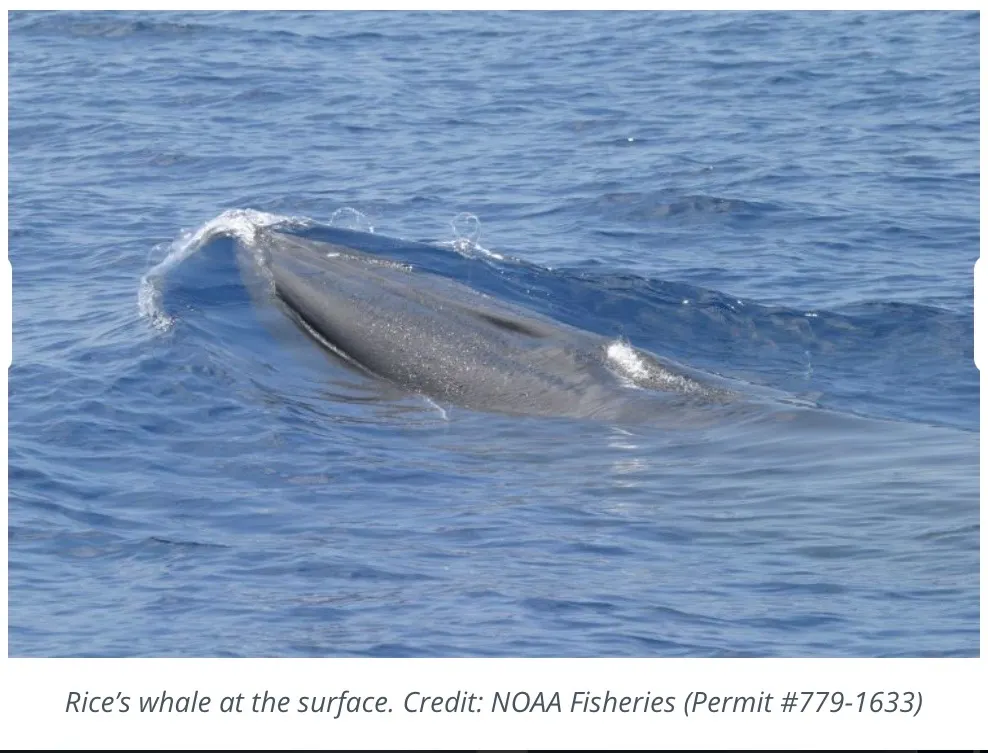
Rice’s Whale — another potential candidate for the God Squad.
It lives only in the Gulf of Mexico.
Fewer than 100 may remain.
The God Squad meets … to consider exemptions for offshore drilling in the same waters.
Red-cockaded Woodpecker — another potential candidate for the God Squad.
It depends on old longleaf pine forests in the Southeast.
Those forests once covered tens of millions of acres.
Most are gone.
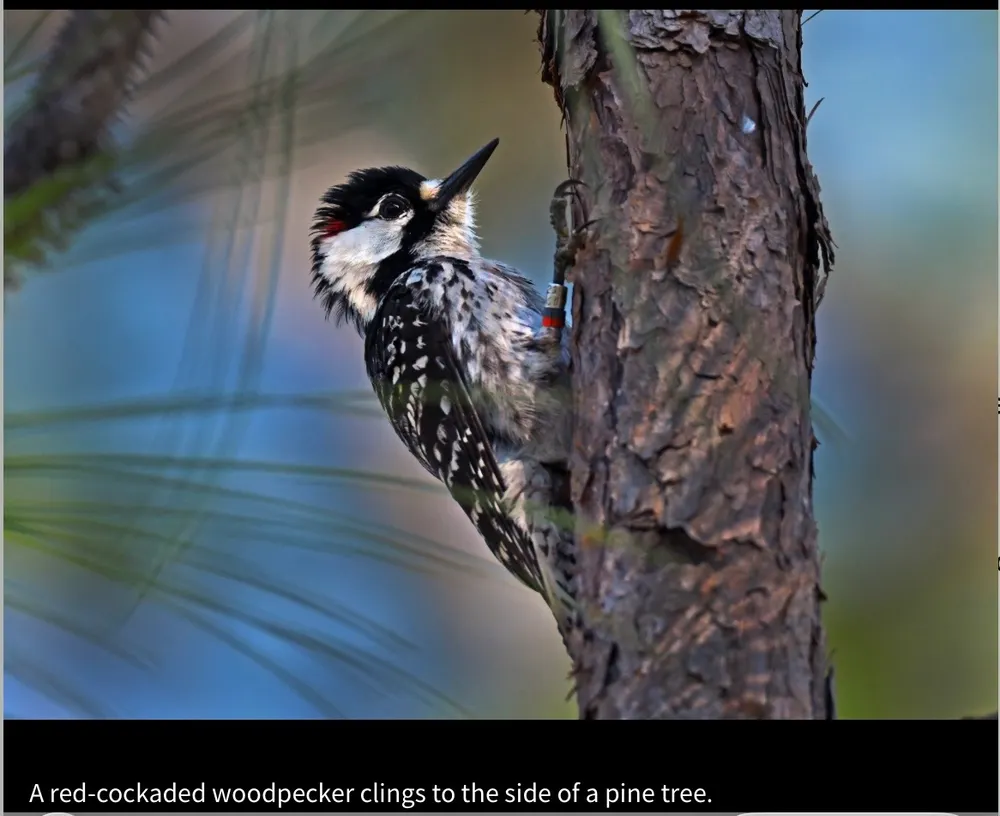
A red-cockaded woodpecker clings to the side of a pine tree. Photo credit: Renee Bodine / USFWS
Idaho Fish and Game commissioner charged with poaching a bull elk. Not the first time state leadership has had ties to poaching. At some point it stops being an anomaly and starts looking like alignment. Wildlife isn’t mismanaged. It’s managed as inventory. www.idahostatesman.c…
@katinthestars.bsky.social:
… One-third of the world’s freshwater fish species are at risk of extinction, and there has been an average decline of 83% in populations between 1970 and 2014.
@race2extinct.bsky.social:
Florida Panther — another potential candidate for the God Squad.
It survives in a shrinking corner of south Florida.
The problem isn’t the panther.
The problem is that millions of people also want to live there.
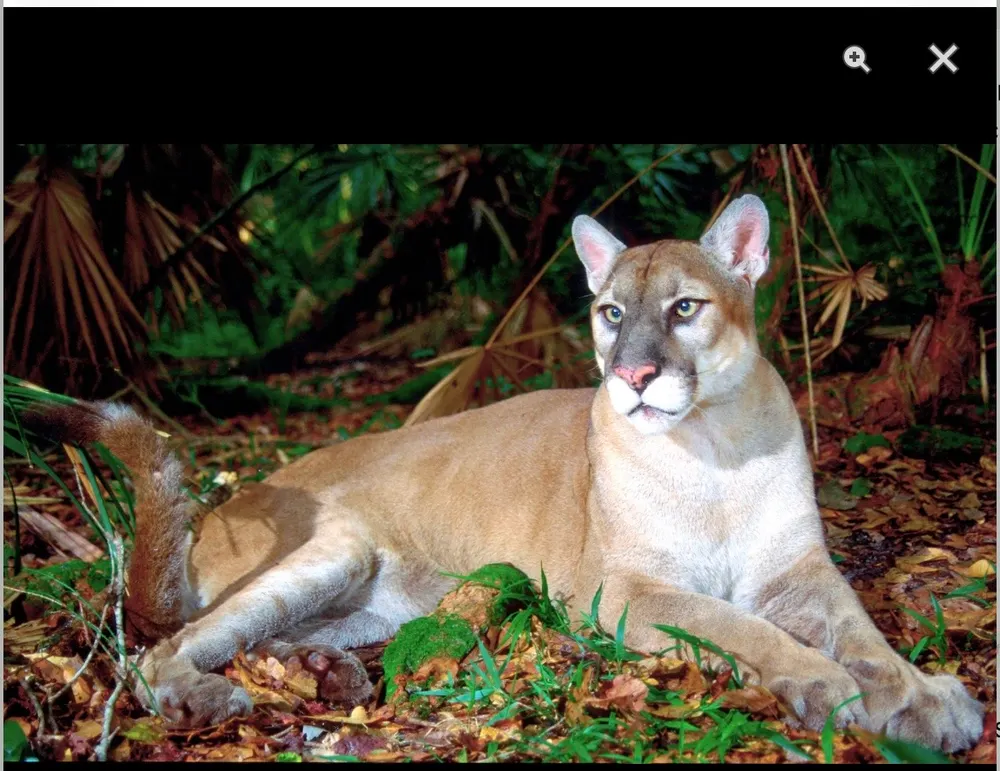
Photo: Larry Richardson / USFWS Location: Florida Panther National Wildlife Refuge
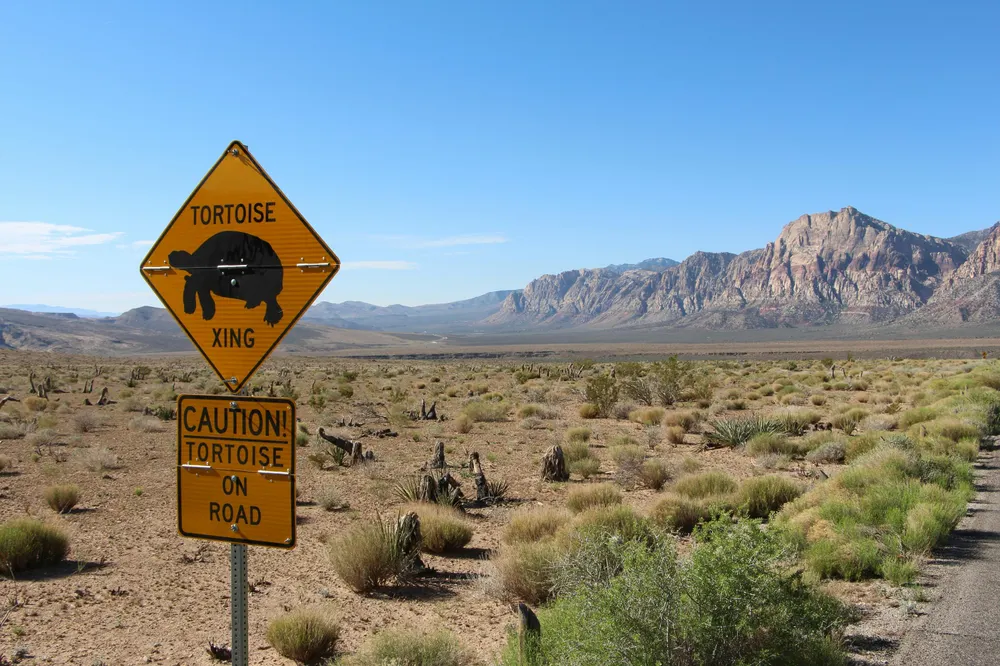
Desert Tortoise — another potential candidate for the God Squad.
It lives in the Mojave Desert, where solar projects, transmission lines, and development are expanding rapidly.
The future is green.
The tortoise is not so sure.
Delta Smelt — another potential candidate for the God Squad.
This small fish lives in California’s Sacramento–San Joaquin Delta.
For years it’s been blamed for water shortages.
The real problem is that we promised more water than the rivers can provide.
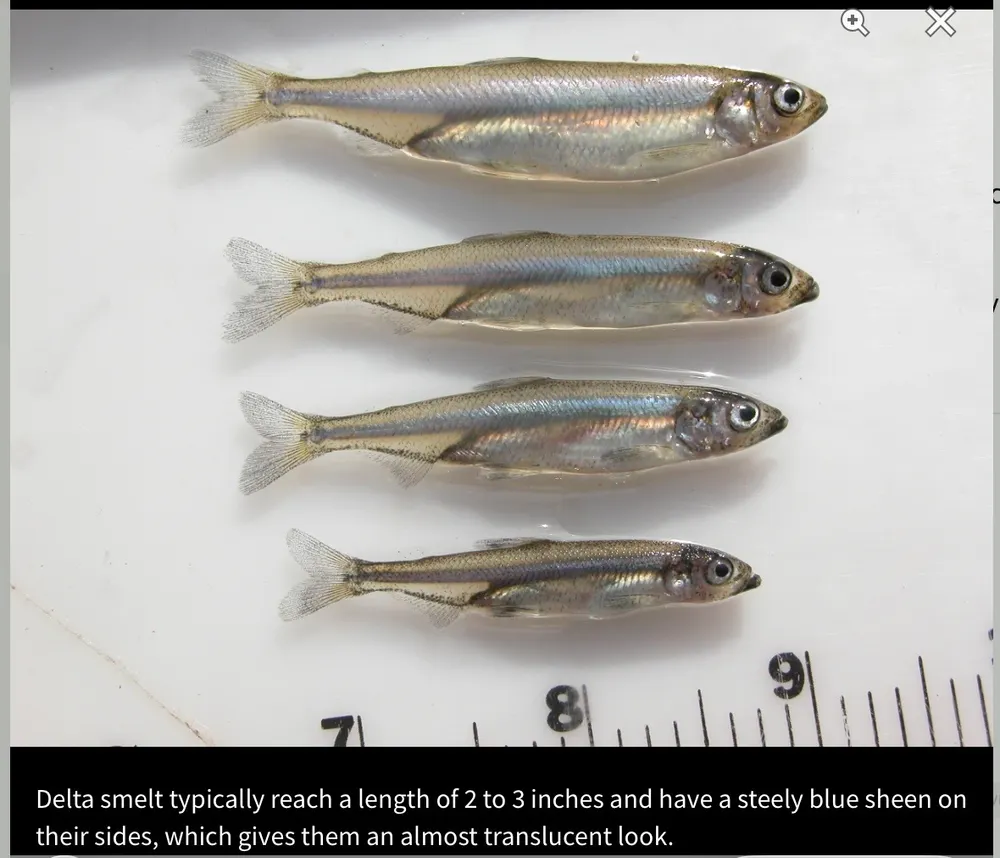
Delta smelt typically reach a length of 2 to 3 inches and have a steely blue sheen on their sides, which gives them an almost translucent look.
Northern Spotted Owl — another potential candidate for the God Squad.
It became the symbol of the old-growth logging wars in the Pacific Northwest.
But the owl didn’t stop logging.
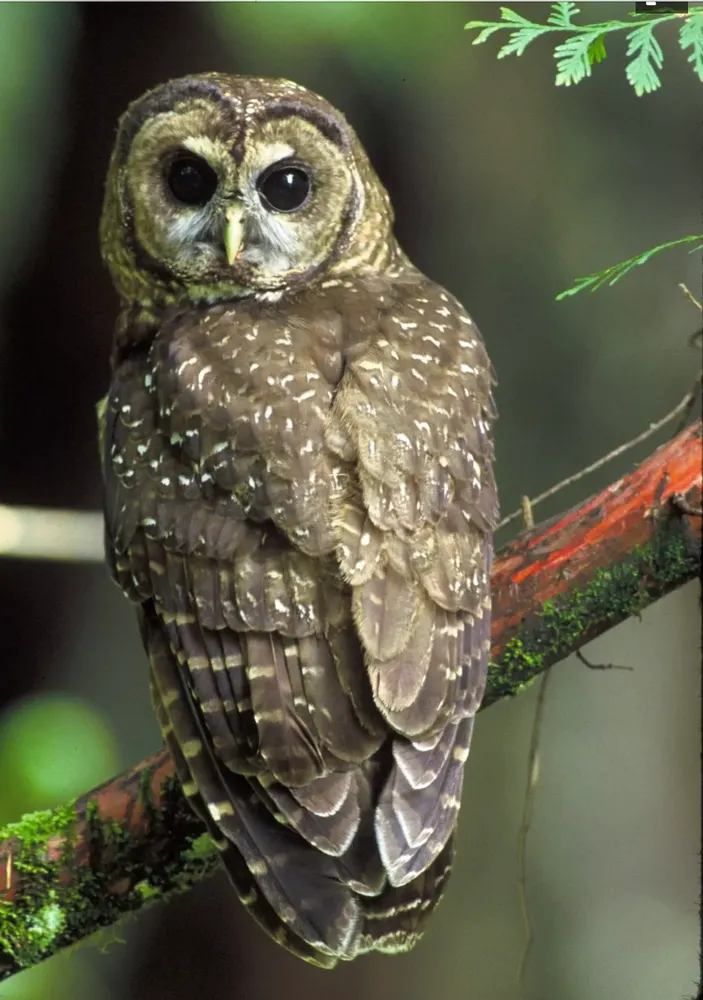
Northern spotted owl
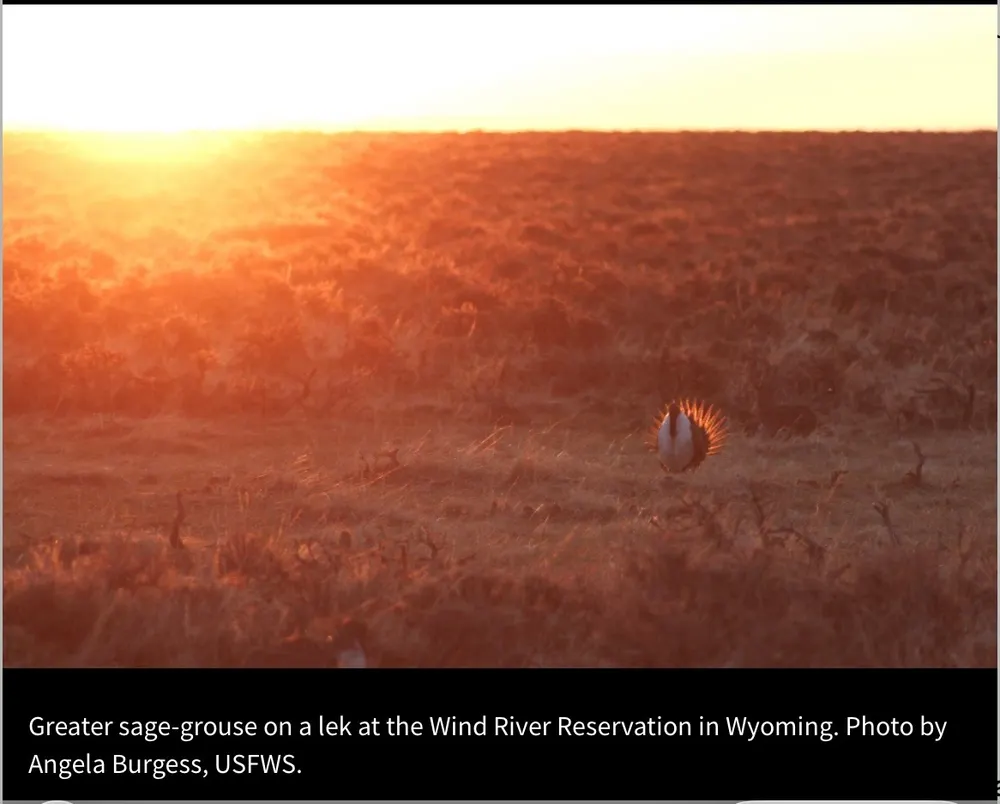
The Greater Sage Grouse—another God Squad nominee.
In the 1990s states formed working groups to keep it from declining to the point it needed listing.
I hired a Nevada biologist in 2000 who had been on one.
That was 25 years ago.
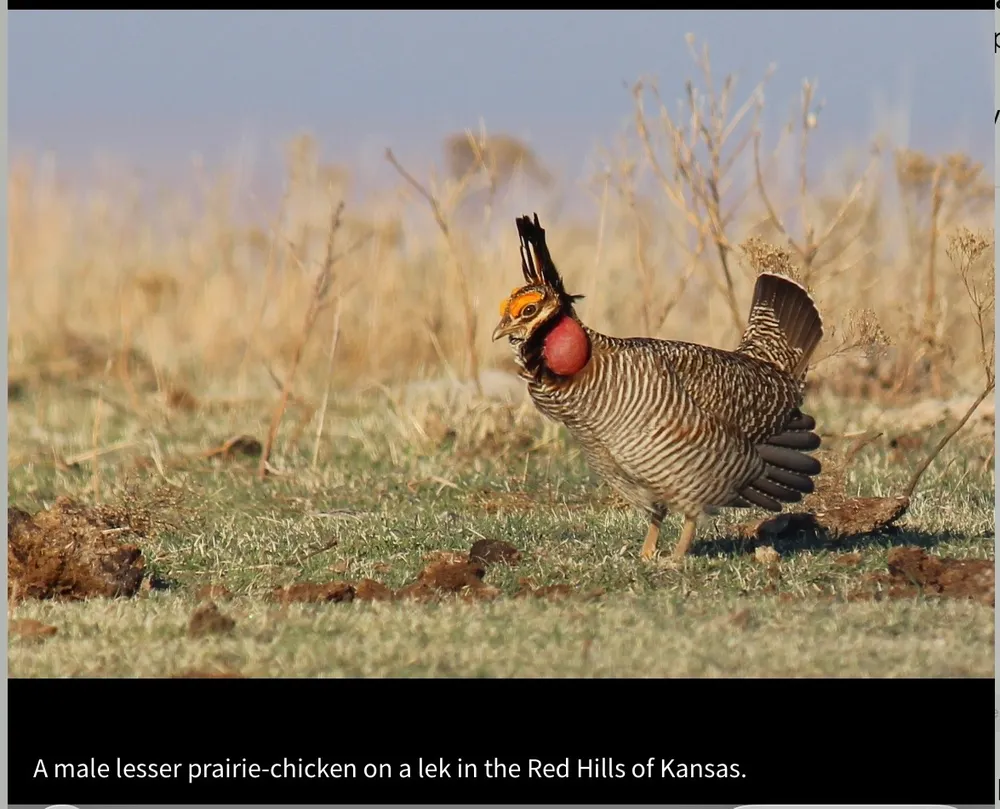
The Lesser Prairie Chicken—another potential God Squad nominee.
When I worked at U.S. Fish & Wildlife it was a candidate species.
Conservation agreements were supposed to protect it so listing wouldn’t be necessary.
That was decades ago.
The Dunes Sagebrush Lizard—a potential God Squad nominee.
It lives in the Permian Basin sand dunes — one of the most productive oil regions on Earth.
I worked on this species years ago at U.S. Fish & Wildlife.
Conservation agreements were supposed to protect it.
A few decades later, here we are.

Sand dunes lizard in shinnery oak dunes habitat.
Photo: Ryan Hagerty / USFWS
Minutes from the God Squad Meeting by Lyle Lewis, March 31, Washington, D.C.
These minutes are posted in recognition of the Endangered Species Committee March 31 meeting.
Official Minutes
Endangered Species Committee (The “God Squad”)
Special Session on Development Optimization
Purpose: Review of species-related obstacles to national economic productivity and project efficiency, and national security preparedness.
—
### Attendance
Members of the Endangered Species Committee were present, including the Secretaries of Interior, Agriculture, and Commerce; the Administrator of the Environmental Protection Agency; representatives of the Departments of Transportation and the Army; and several other senior officials. The meeting was convened at the request of the Department of Defense to address time-sensitive national security concerns related to offshore energy development.
Each member was accompanied by career staff responsible for quietly explaining ecological terminology used during the meeting.
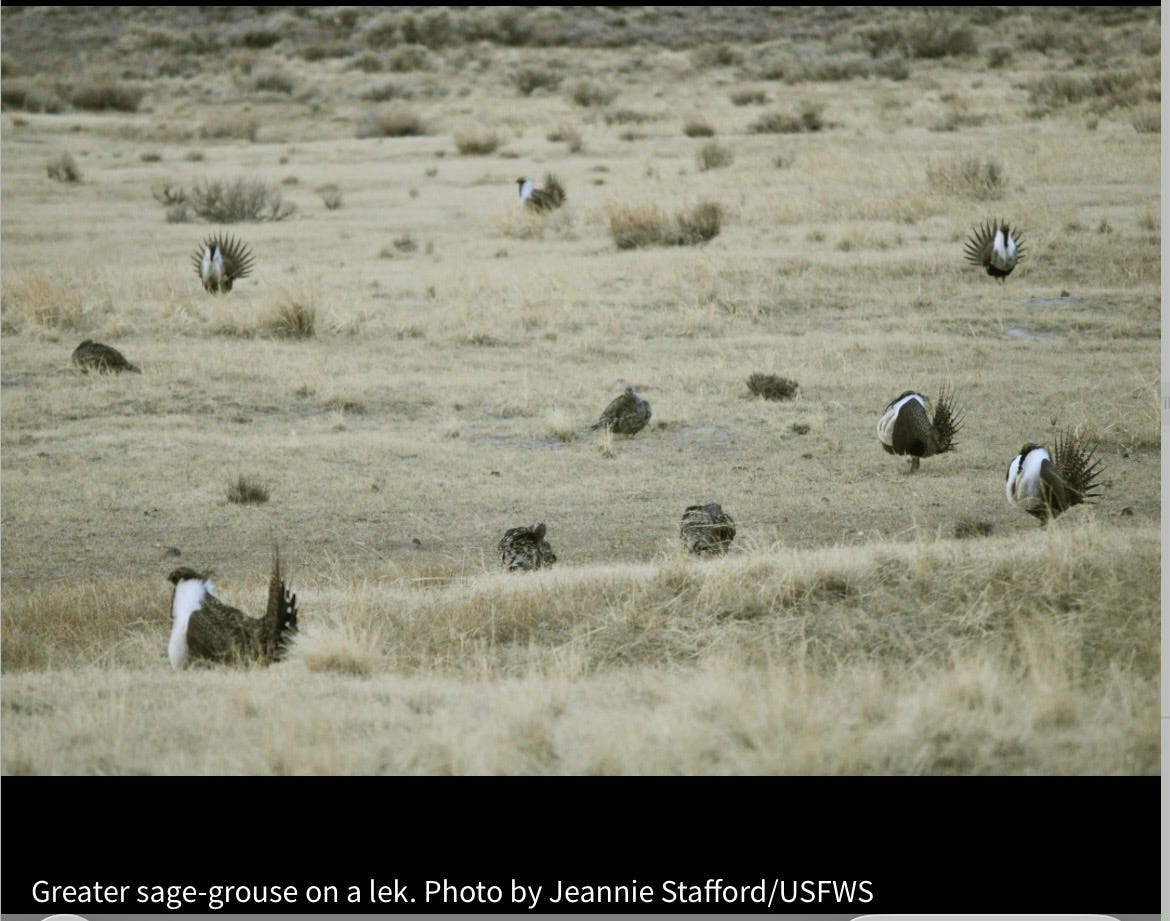
One of the species discussed at the meeting.
—
*** Opening Remarks
The Chair called the meeting to order at 9:00 a.m. and thanked participants for attending what he described as:
> “an important opportunity to improve alignment between biological systems, national economic priorities, and emerging security needs.”
Members agreed that species-related complications had increasingly interfered with efficient resource utilization across several sectors.
The Chair reminded participants that the purpose of the committee was to ensure that important development projects are not indefinitely delayed by organisms that lack formal representation within the federal government. Members noted that this limitation becomes particularly significant when organisms are distributed across federally leased waters.
A member asked whether the Endangered Species Act had been designed to prevent extinction.
Staff confirmed that this had been the original intent.
– – –
*** Agenda Item 1
Gulf of America Marine Species
Members briefly reviewed materials regarding several large whales and other marine species inhabiting federally leased areas of the Gulf of America.
A participant asked whether whales typically interfere with drilling operations intentionally or only incidentally.
Staff explained that whales generally do not interfere with drilling operations intentionally. However, drilling operations have been known to interfere with whales, sometimes extensively..
Members acknowledged that this relationship could prove administratively complex and agreed that improved coordination between marine mammals and offshore energy development would be beneficial.
Members agreed that the absence of a formal consultation mechanism with affected species continues to complicate timely decision-making and project certainty.
—
*** Agenda Item 2
Overview of Species Interference
A member asked whether the Endangered Species Act had been written before modern economic realities were fully understood.
No one in the room was old enough to know.
Another committee member asked whether these organisms could simply relocate to areas where development pressures were lower.
A career biologist explained that species require specific habitat conditions and cannot easily move elsewhere.
Members thanked staff for the clarification and noted that the situation appeared unnecessarily rigid.
Another participant asked whether agencies had considered encouraging wildlife to show greater flexibility when selecting habitat.
Staff agreed to explore the concept further.
—
*** Agenda Item 3
Clarification of Fish-Related Issues
Discussion turned to the Delta Smelt.
A committee member asked whether the smelt being discussed was the same fish that had been blamed for water shortages in California.
Another member recalled hearing that the species had also been linked to wildfires in Los Angeles.
Staff clarified that the smelt is a small estuarine fish whose ecological role is largely limited to serving as an indicator of ecosystem conditions in the Sacramento–San Joaquin River Delta.
Members agreed that the explanation seemed overly technical.
The Secretary of Commerce then asked whether smelt would be served at lunch.
Staff confirmed that the catering menu included salmon.
A follow-up question was raised regarding whether salmon were also “one of the regulatory fish.”
Staff confirmed that certain populations of Chinook Salmon are protected.
—
*** Agenda Item 4
Energy Development Conflicts
The committee reviewed information regarding the Dunes Sagebrush Lizard, which occupies sand dune ecosystems within the Permian Basin.
Members noted that the species’ habitat overlaps significantly with oil and gas reserves.
One participant asked whether the lizard might be relocated to another dune somewhere nearby.
Staff explained that the species depends on specific vegetation and dune structures.
Members agreed that the coincidence between dune ecosystems and petroleum deposits represents a recurring planning challenge.
A participant suggested that future dune systems be designed in locations that do not interfere with energy production.
Staff noted that dune formation is not currently subject to federal planning processes.
—
*** Agenda Item 5
Grassland Infrastructure Complications
The Lesser Prairie Chicken was discussed in relation to energy development and transmission corridors.
Members viewed footage of the bird’s spring mating displays.
A participant asked whether the displays could be scheduled outside of drilling periods.
Staff indicated that the birds typically determine the timing of these activities themselves.
Members expressed concern that wildlife appears insufficiently coordinated with industrial operations.
One member suggested that agencies explore voluntary behavioral adjustments by affected species.
—
*** Agenda Item 6
Forest Productivity Constraints
Discussion turned to the Northern Spotted Owl.
Members acknowledged the species’ long-standing association with timber management conflicts.
A committee member asked whether the owl could be encouraged to nest in younger forests.
Staff explained that the species depends heavily on older forest structures.
Members observed that forests have been growing for millions of years without apparent consideration for modern timber demand.
Staff agreed that the historical timing of forest development has created avoidable complications.
—
*** Agenda Item 7
Urban Growth Issues
The Florida Panther was discussed in relation to housing expansion in South Florida.
Members expressed surprise that a large predator continues to inhabit areas now zoned for residential development.
One participant asked whether the animals could be directed toward less valuable real estate.
Staff explained that the remaining habitat available to the species is already extremely limited.
Members agreed that this represents an unfortunate overlap between wildlife and desirable property markets.
—
*** Agenda Item 8
Desert Solar Development
Discussion then turned to the Desert Tortoise, which occasionally occupies sites selected for solar installations and infrastructure corridors.
Members reviewed diagrams illustrating tortoise relocation procedures.
A committee member asked whether tortoises move quickly enough to clear construction zones without assistance.
Staff confirmed that this was unlikely.
Members observed that the species’ pace of movement appears poorly suited to modern infrastructure timelines.
A participant then asked whether, given that solar energy is widely considered sustainable, the potential extinction of the tortoise in connection with solar development might also be considered environmentally beneficial.
Another member described this as a possible “win-win situation.”
The committee agreed that public affairs staff should explore messaging options emphasizing the climate benefits of these projects.
Staff were directed to draft a press release highlighting the role of renewable energy in supporting a greener future.
—
*** Agenda Item 9
Range-Wide Landscape Conflicts
Finally, the committee discussed the Greater Sage-Grouse.
Members observed that the species’ range overlaps extensively with regions containing oil and gas fields, transmission corridors, grazing allotments, and rural subdivisions.
One member asked whether the species had declined substantially in recent decades.
Staff confirmed that populations have dropped significantly across much of their historical range.
A committee member then asked:
> “If they’re already almost gone, could we simply wait a year or two and allow the situation to resolve itself?”
Staff responded that this approach had not yet been formally evaluated.
Members agreed it deserved additional consideration.
—
*** Administrative Clarification
During the meeting, career staff confirmed that most policy determinations under consideration had already been resolved through interagency coordination prior to the session.
Members expressed appreciation for the efficiency of this process and agreed that the meeting formalized previously reached conclusions.
—
*** Committee Determinations
After discussion, the committee reached the following general conclusions:
• Economic development remains an essential national priority.
• Species whose habitat overlaps with valuable resources present ongoing administrative complications.
• Agencies are encouraged to pursue regulatory flexibility when biological considerations conflict with economic opportunity.
• Future planning efforts should consider improved coordination between species and development projects wherever feasible.
Members agreed that these determinations represent a balanced and forward-looking approach to managing biological constraints within a modern economy.
—
*** Adjournment
The meeting adjourned at 11:34 a.m.
Lunch followed immediately afterward.
Smelt was not served.
Members noted that the Endangered Species Act remains an important national commitment to protecting wildlife.
The committee exists to ensure that this commitment can be implemented flexibly when circumstances require.
Public Comment
Members were reminded that the meeting had been made available to the public through a livestream.
Staff confirmed that written comments from interested parties would be accepted for the administrative record.
A participant asked whether comments submitted after the meeting could influence the committee’s decision.
Staff explained that the purpose of public comment is to ensure transparency in the decision-making process.
Members thanked the public for their interest in the proceedings.
This is the very definition of gallows humor. Thank you for noting that the administration will make unprecedented efforts to get wildlife to coordinate with their development and extraction schedules, even if it requires moving them to habitat in which they will not survive. Good to know they are so “on it.”
Brilliant, but Lyle, your satire is so phenomenally consistent with the procedures that actually occur that the monstrous irony of it almost vanishes into the realm of objective reporting. Fantastic work!
@alouzon.bsky.social:
… fucker #RupertMurdoch, … bought the magazine and its media outlets (and this is why it publishes weird takes on natural sciences every now and then, like how the world is starving for oil)

Meet the ‘God Squad,’ the Powerful Endangered Species Panel That Just Pared Back Protections by Connor Greene, Mar 31, 2026, Time

A committee of high-ranking officials dubbed the “God Squad” for its power to determine the fate of endangered species has approved an exemption to federal protections for just the third time in its nearly 50-year history.
The panel of Trump Administration officials on Tuesday voted unanimously to exempt oil and gas drilling in the Gulf of Mexico from environmental safeguards in place to protect the endangered wildlife living in its waters. Pure Christian Evil Douche Fuckers
Secretary of Defense Pete Hegseth, who requested the exemption, told the Endangered Species Committee during a meeting at the Interior Department that it was “a matter of urgent national security” and a response to “ongoing Endangered Species Act litigation that threatened to halt oil and gas production” in the gulf. Evil fucking christian mass kid murdering Pedo Protector liar
But the decision to grant the exemption met with condemnation from environmental groups and activists. Protestors gathered outside the Interior Department, chanting and holding up signs bearing slogans including “Don’t Play God.”
“The fact that the Secretary is requesting this exemption for national security reasons is shocking,” Beth Lowell, the U.S. vice president of Oceana, the largest international ocean conservation advocacy organization, tells TIME.
“The intent from this exemption is really supposed to be an emergency, and we just don’t see that at this point … This exemption is just cutting out the safety net that the ocean wildlife need.”
The meeting marked the first time the so-called God Squad had convened since 1992, over three decades ago. Here’s what to know about the committee and the potential impact of its Tuesday decision.
What is the God Squad?
The Endangered Species Committee was created in 1978 as a part of an amendment to the Endangered Species Act, signed into law five years earlier.
The committee was established to create a process for carving out potential exemptions to the law, which agencies may apply for “if the jeopardy that is expected to result from a proposed agency action cannot be avoided and the agency proposing the action nonetheless wishes to go ahead with the action,” according to an Endangered Species Act primer from the Congressional Research Service.
The committee can decide to grant an exemption “despite future harm to a species,” per the primer. At least five votes are required to pass an exemption.
The God Squad had previously reached decisions on just three applications for exemptions over the course of more than four decades.
In 1979, it voted unanimously to grant an exemption for the construction of the Grayrocks Dam and Reservoir on the Platte River in Wyoming, a heavily trafficked stop-over site for migrating whooping cranes, listed as an endangered species under the Endangered Species Act. The same year, the panel denied another exemption request for a dam, the Tellico Dam on the Tennessee River, halting the project due to its potential harm to endangered snail darter fish. Congress later stepped in to allow construction of the dam to proceed despite the panel’s decision, however.
In 1992, the last time the God Squad convened, it voted in favor of allowing the Bureau of Land Management to carry out timber sales in a forest in Oregon that was a habitat for the threatened northern spotted owl species.
Three other cases were resolved before the committee was called on to make a final decision on exemption applications.
Who is on the committee?
The committee is composed of six permanent members: the Secretary of the Interior, the Secretary of Agriculture, the Secretary of the Army, the Chairman of the Council of Economic Advisors (CEA), the Administrator of the Environmental Protection Agency (EPA), and the Administrator of the National Oceanic and Atmospheric Administration (NOAA).
The current permanent members of the committee include Interior Secretary Doug Burgum, the current chair of the panel; Agriculture Secretary Brooke Rollins; Secretary of the Army Daniel P. Driscoll; Acting CEA Chairman Pierre Yared ; EPA Administrator Lee Zeldin; and NOAA Administrator Neil Jacobs.
What did the committee decide on Tuesday, and what’s at stake for wildlife in the Gulf of Mexico?
Burgum said during its meeting on Tuesday that the panel would “be issuing an exemption from the requirements of the [Endangered Species Act] for all oil and gas exploration, development and production activities associated with the … outercontinential shelf oil and gas program.”

The exemption marks the latest move by the Trump Administration to weaken environmental protections. Previously, in November, the Administration proposed multiple rules rolling back the Endangered Species Act.
Hegseth told the committee on Tuesday that “recent hostile action” by Iran blocking the Strait of Hormuz, through which roughly a fifth of global crude oil flows, “highlights yet again why robust domestic oil production is a national security imperative.”you evil fucking lying drunk cunt, Trump and Israel illegally bombed Iran, resulting in the much smaller, heavily sanctioned by USA for years, Iran to defend itself in the only ways it can, one of them is the Strait. And, Iran is allowing significant traffic through, just not to mass murdering kid raping USA and Israel and their murder enablers. I rarely use the word cunt because it’s so hideous a word, but Hegseth wins it, hands down.
“To be secure as a nation, we need a steady, affordable supply of our own energythen why the fuck did kid rapist kid murderer Trump break the law and shut down wind farms that were nearly in production? and why the attacks on solar and EVs? …This is not just about gas prices, it’s about our ability to power our military and protect our nation,” said Hegseth, who was seated next to Burgum. “That vital energy supply is under threat.”

Lowell tells TIME that the Gulf of Mexico is home to 20 threatened, endangered species that include sea turtles, manta rays, sharks, and, notably, the Rice’s whale.
National Marine Fisheries Service scientists have determined that only about 50 of these baleen whales remain in the gulf, where they live year-round.
“We really should not be putting profits over species protection, especially when we’re talking about extinction,” Lowell says.