@nonnieida.bsky.social:
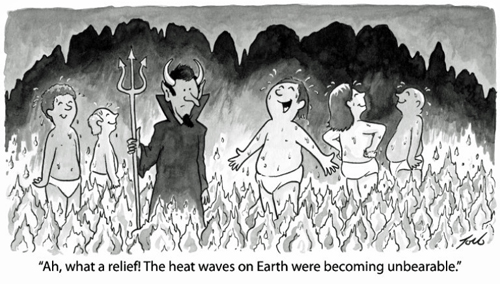
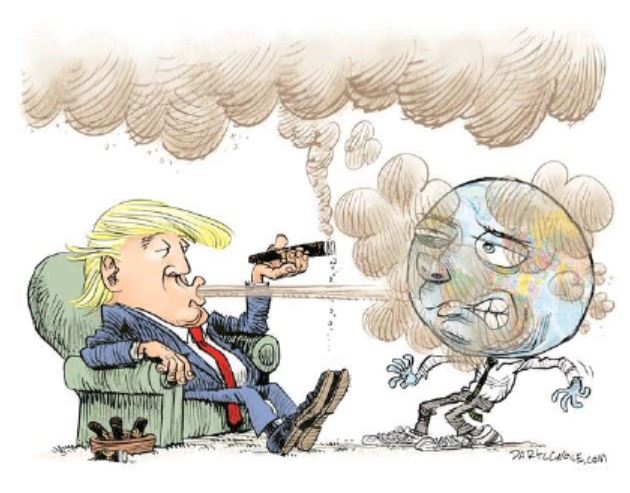
We’re cooked. Literally.
@jeffgoodell.bsky.social:
People who read my heat book often ask me: how hot can heat waves get?
It’s a complex question. But this new paper suggests models may be underestimating future temperature extremes by as much as 5 C.
That’s a lot.
Historical model biases in monthly high temperature anomalies indicate under-estimation of future temperature extremes by Lei Duan, Lyssa M. Freese, Govindasamy Bala & Ken Caldeira, Jul 30, 2025, Nature
Communications Earth & Environment volume 6, Article number: 604 (2025)
Abstract
Both the mean climate state and anomalies from the mean determine the impact of extreme events, yet how models represent the latter is largely unexplored. Here, we assess skill of climate models participating in the Coupled Model Intercomparison Project Phase 6 (CMIP6) for predicting monthly high temperature anomalies relative to monthly means over time. Models project that, as the planet warms, these high temperature anomalies will increase in subtropical regions and decrease in high latitudes. Both postive and negative biases remain largely unchanged regionally and seasonally within two historical periods, 1980–2001 and 2002–2023.
Globally, models have underestimated the 22-year average monthly high temperature anomalies by 2–3% and 22-year maximum anomalies by 11–12%.
If historical biases of models carry forward, the on-average 2100 extreme high temperatures in some regions and months could be greater than current projections by 3 K, and greater than 5 K for the most extreme cases.

The hotter it gets, the wilder, faster, bigger and more frequently wildfires will rage:
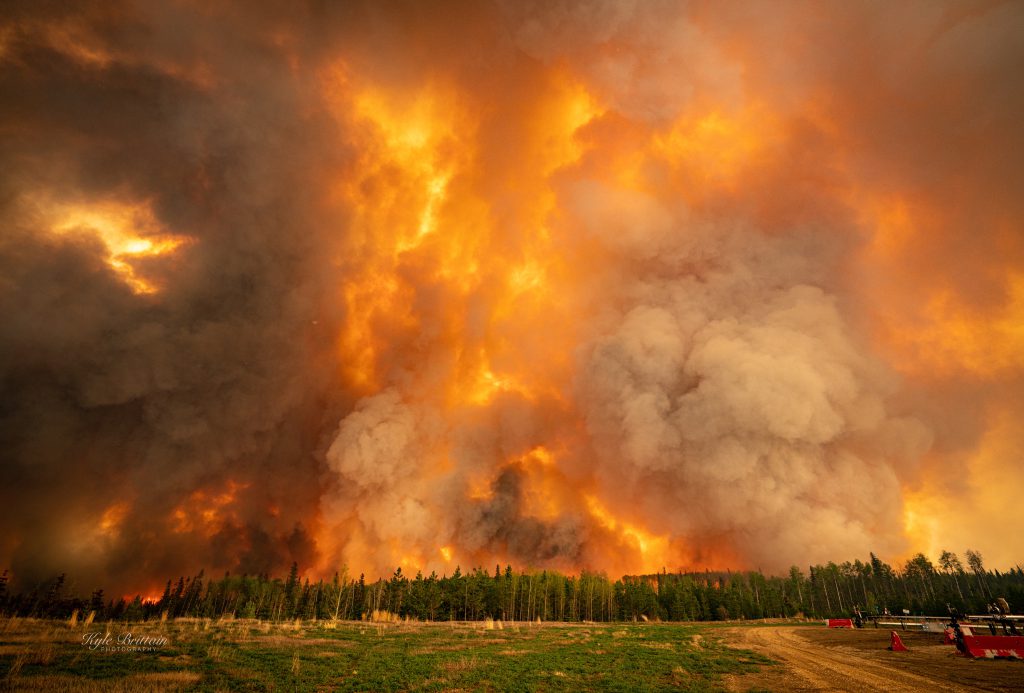
May 2023 Fox Creek Wall of Wildfire, Alberta’s Frac Central (think of the leaking methane rising to surface there, via the thousands of fracs and leaking wellbores), photo by Kyle Brittain