
@ssteingraber1.bsky.social:
NEW theoretical paper in J Hazardous Materials on the various ways the plastics boom may be driving the rising prevalence of antibiotic resistant bacteria—starting with the cocktail of biocides used in the extraction oil and gas, from which plastic is made.
Rising Tide to Silent Tsunami: Unveiling the role of plastics in driving antimicrobial resistance by Emily M. Stevenson, Angus Buckling, Matthew Cole, Penelope K. Lindeque, and Aimee K. Murra, Volume 494, 15 August 2025, 138700, Journal of Hazardous Materials
https://doi.org/10.1016/j.jhazmat.2025.138700Get rights and content
Highlights
- A complex interplay exists between plastics and antimicrobial resistance (AMR).
- By adopting a systems approach, we propose how plastics may influence AMR.
- Selection for AMR may increase due to chemicals used in material extraction & production.
- Plastics also provide a platform for biofilms to develop and spread AMR.
- By linking these One Health threats, we may be better equipped to combat them.
Abstract
Pollution caused by plastic production and waste has severe consequences on global economies, social inequalities, and ecosystems. Likewise, antimicrobial resistance (AMR) is one of the greatest One Health challenges. These threats are typically considered in isolation, but there is likely a complex interplay between the two. By adopting a systems approach and looking across the whole life cycle of plastics, we propose the range of ways in which plastic may influence AMR. Starting with raw material extraction processes where the leaching of potentially AMR co-selective chemicals used in pumping or piping of plastic feedstocks may influence AMR development in environmental microbial communities. Then, during production and manufacture, the use of plastic additives may impose selection for AMR. Finally, during use, collection or disposal, plastics can transport AMR biofilms in the community, clinical, agricultural, or aquatic settings. By linking these two important One Health threats, we may be better equipped and informed to combat them.
1. Introduction
Plastic pollution, antimicrobial resistance (AMR) and climate change encompass some of the greatest global challenges, and yet research and mitigation efforts are often siloed. In 2009, nine planetary boundaries wherein human activity can continue to operate safely were described [1]. Six boundaries have since been exceeded, including the safe thresholds for both ‘novel entities’ (inclusive of antimicrobial and plastic pollutants) and ‘climate change’, suggesting Earth is now outside of the safe operating space for humanity [2]. Alongside this, the concept of ‘One Health’ has also been introduced, encouraging researchers and politicians to approach Planetary threats in a way which encompasses human, animal and environmental health holistically. In response, research has highlighted the intricate yet crucial links between AMR and climate change [3], and plastics and climate change [4]. A crucial gap remains, however, in highlighting the fundamental links between AMR and plastics.
Vast quantities of plastics are produced and used each year, with an estimated 376 million metric tonnes of plastic produced globally in 2020 [5]. According to the OECDs Global Plastic Outlook [6], [7], almost a quarter of the world’s plastic waste is mismanaged or littered, with natural systems becoming the final sink for end-of-life plastics. Owing to the durability of these polymers, plastics will remain in the environment for centuries, posing a multitude of threats to both humans, animals and global ecosystems, making them a true One Health threat [8]. Some of the most widely documented impacts are on animals, including wildlife entanglement and ingestion [9], [10]. Though, recent research has revealed that microplastics (small, < 5 mm, plastic fragments [11]) are present in the human body, and have been discovered in samples derived from human blood [12], brains [13], breast milk and placentas [14]. However, it is not just end-of-life plastics that cause harm. When looking at the production of plastics, for example, additional damage to One Health systems have been documented. Namely, given that plastics are currently largely derived from fossil fuels, plastic manufacture increases global emissions of greenhouse gases, and therefore plastic production is an indirect driver of climate change [4].
AMR involves the ability of microorganisms (e.g. bacteria) to survive exposure to antimicrobials. It is one of the greatest threats to modern medicine, resulting in treatment failures of microbial infections [15], [16]. In 2019, there were an estimated 4.95 million deaths worldwide associated with bacterial AMR [17], with drug-resistant infections predicted to become the world’s primary cause of death by 2050 unless preventative measures are introduced [18], [19]. Historically, AMR has largely been considered a clinical, human health issue. However, the environment is now recognised as playing an important role in the emergence and dissemination of AMR microbes [20], [21], [22], [23], [24]. Due to these recent advances in our understanding of the environmental dimension of AMR, coupled with the widespread overuse of antimicrobials in global livestock and agricultural industries [25], [26], AMR is also widely recognised as a complex, One Health challenge [22].
These threats are typically explored as separate challenges, but there are important interplays between them which remain under-studied. Here, we address this gap by summarising a range of possible links between plastics and AMR. We discuss the ways which plastics could drive AMR emergence and transmission in the clinic, community and environment from a systems-based approach: looking at the extraction of raw materials for the production of plastic, as well as plastic manufacture and use, and ultimately, collection, disposal, and end-of-life. The timeliness of our focus is highlighted by the Royal Society of Chemistry recently having stated a need to better understand ‘the impact of plastics throughout their life cycles’ [27], [28]. In addition, drug-resistant pathogens were recently listed in the top ten threats to global health [29], followed shortly after by a worldwide call to action for ‘enhanced national and global efforts to tackle AMR through a One Health approach’ [30]. By highlighting the interactions between plastics and AMR here, research and mitigation efforts may be more appropriately targeted, and solutions can be developed to address these issues in parallel, such as reformed governance and interconnected policy or monitoring frameworks [27], [28], [29], [30].
2. Plastic materials and the emergence and spread of AMR
Plastics may have the potential to drive the development and transmission of AMR across their whole life cycle (Fig. 1).
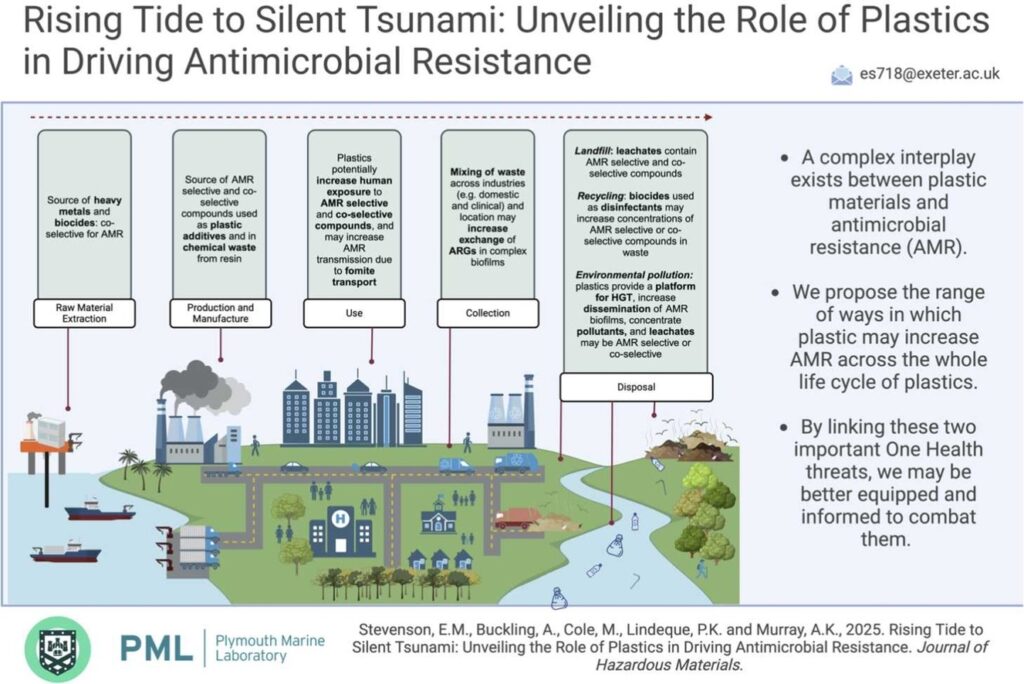
Fig. 1. Schematic summarising the drivers of antimicrobial resistance evolution, transmission and exposure across the life cycle of plastics. Created in BioRender. Stevenson, E. (2025) https://BioRender.com/a80b905. AMR: antimicrobial resistance; ARG: AMR genes; HGT: horizontal gene transfer.
2.1. Raw material extraction
Plastics are synthetically manufactured following the energy-intensive extraction of fossil fuel feedstocks, including crude oil, natural gas and coal [31], [32]. Following extraction, these feedstocks are pumped and piped to refineries to be transformed into petroleum products including ‘naphtha’; the main raw material for oil-based plastic [33].
To reduce bacterial colonisation of these pipes, which can cause clogging or corrosion, biocides are widely used in oil and gas practices [34]. Concentrations of biocides within the purging or injection fluids can be over 500 mg/L [35], including quaternary ammonium compounds which have been previously shown to co-select for AMR [36]. Biocides in general have been widely documented for their ability to pose a co-selective (indirect selection) pressure for AMR [37], [38], and it has recently been proposed that the biocides used specifically for purging purposes may co-select for AMR when they are released into the environment during spills or even within the pipes themselves [39].
Crude oil spills have also been found to increase AMR within environmental bacterial taxa in spill-impacted areas [40]. In a recent study linking oil spillages, AMR and wildlife exposure, Shen et al. [41] performed the first analyses of AMR in bottlenose dolphins (Tursiops truncates) living in areas affected by the 2010 BP Oil Spill in the Northern Gulf of Mexico. The dolphins tested from an oil spill impacted estuary had a greater prevalence of AMR and multi-drug resistance than those tested in control estuaries. This link between oil and AMR may be due to the high abundance of co-selective heavy metals and/or the presence of aromatic compounds which have also been found to support the development of AMR [41], [42], [43].
Furthermore, when considering our reliance on petroleum-based products to produce the raw materials for plastics, there is concern that the intensive chemical processes involved in refining fossil fuels may generate exhaust particles that could contribute to the evolution of AMR. For example, a recent study found that diesel and petrol exhaust particles induced a concentration-dependent increase in the horizontal gene transfer (HGT) of AMR genes (ARGs) in Escherichia coli. This resulted from the generation of intracellular reactive oxygen species and the induction of the SOS response, altering expression of membrane proteins involved in the promotion of conjugative transfer [44].
2.2. Production and manufacture
Plastic products that reach consumer markets are made up of complex polymers (e.g. polyethylene), which are composed of much smaller units of molecules called monomers (e.g. ethylene) [45], [46]. It is during the production stage of plastics where these monomers are chemically bonded into polymers (chains of monomers), and other additives are physically incorporated for the desirable qualities of plastics, including plasticisers, fillers, UV stabilisers, flame retardants, anti-oxidants, colourants, and biocides [47]. Typically, these additives are not chemically bound to the polymer chains, increasing concerns of them leaching into the environment [48].
Recently, a database was published containing ‘Chemicals Associated with Plastic Packaging’, listing 906 chemicals likely associated with plastic packaging, and a further 3377 substances that are possibly associated [49]. Many of the chemicals were found to be hazardous to both human health and the environment according to the European Chemicals Agency [50]. Included in these chemicals were known biocides, including triclosan, which may support the development of AMR through co-selection [51], [52], [53]. Co-selection for AMR following triclosan exposure is extremely well studied, with evidence demonstrating that this compound could promote transformation of ARGs even at environmentally relevant concentrations [54].
The database also reveals that heavy metals, including mercury, iron, copper, zinc and cadmium, are also used as additives and are widely associated with plastics and plastic packaging [49]. Heavy metals are responsible for co-selection of AMR [55], [56], and are well documented in their capacity to support co- or cross-resistance to many antibacterial agents [37]. Since the publication of this database in 2019, a further study conducted a review of 63 industrial, scientific, and regulatory data sources, identifying more than 10,000 substances used in plastics, with over 2400 substances of potential persistence, bioaccumulation or toxicity concern [57], demonstrating the diversity and abundance of chemicals used within the plastic industry.
There is a growing body of research investigating the role of plastic additives in driving the evolution of AMR. A recent study, for example, examined the effect of polyvinyl chloride (PVC) plastic leachate exposure on the relative ARG abundance in a natural seawater community [58]. Not only did this work demonstrate an enrichment of ARGs following exposure to PVC leachate, but also an increase in virulence genes. Commonly used plastic additives have also been highlighted to pose an AMR selection risk, including bisphenols. Bisphenols are incredibly widespread plastic additives and, as a result, environmental contaminants [59]. Crucially, in an important recent study, Yang et al. [60] demonstrated that bisphenols promoted the conjugative transfer frequency of a clinically important multidrug-resistant plasmid, supporting the hypothesis that exposure to these compounds may increase the spread of AMR in bacterial communities.
Given that these materials are incorporated into plastic products across the globe, it is likely that they will also contaminate the industrial effluent and wastage from the refineries [61], and could therefore also leach into the environment and pose an AMR selective risk. Furthermore, leachability of heavy metals from plastics directly has been widely investigated, with evidence to suggest that leachates may contain concentrations of heavy metals exceeding the United States Environmental Protection Agency’s (EPA) standards, including lead, cadmium and chromium [62]. Specifically, leachates from low-density polyethylene and PVC plastic bags into distilled water reached cadmium concentrations of 2.34 and 3.3 mg/kg respectively, exceeding the EPAs standard of 1 mg/kg.
Phthalates are also an emerging contaminant of concern originating from plastics, and these additives have been previously found to promote HGT of ARGs in the environment [63], [64]. These phthalates reach the environment through industrial effluents, where they may pass through wastewater treatment plants and into surface waters or sediments [65], [66]. Here, environmental communities will be exposed to these contaminants, potentially increasing AMR in environmental bacterial reservoirs. This is, so far, largely unexplored.
Once crafted into raw polymers, plastics are sold in multiple formats, including pellets (nurdles) or resins [67]. From this, they can be moulded into products, typically via extrusion or injection moulding, for consumer use [68]. The production of resins generates large volumes of pressurised gases containing toxic emissions including heavy metals such as nickel [69]. Again, where these heavy metals are emitted into the environment, even if aerosolised [70], they may be causing co-selection for AMR within environmental populations of microbes [71].
2.3. Use
The widespread and diverse uses of plastics present various human and animal exposure routes to plastic associated chemicals. Increased human exposure to these chemicals could increase co-selection for AMR within the human body, for example, within the gut microbiome or upper respiratory tract. One potential route of exposure includes the traces of heavy metals which have been found to diffuse from plastic packaging into the food they contain [72], [73], with studies suggesting that high temperature of warm foods can increase the concentrations of contaminants leaching from the polymer [74], and that metals diffuse at a greater rate from plastic containers into food than paper containers [73]. With the traces of these compounds entering the human body from consumed food and drinks, it could be speculated that this could add a co-selective pressure for the development of AMR within the gut microbiome. While the impact of this leaching on the development of AMR within the human body has not yet been explored, studies have shown that the metalloid antimony – a compound known to contribute to treatment failure as a result of resistance [75] and frequently utilised as a flame retardant in consumer plastics [76] – can leach from recycled plastic bottles, reaching levels that exceed the EPAs maximum contamination limit [77].
Aside from the risks posed by chemicals within plastics, fomites are frequently highlighted for their role in the spread of infectious and drug resistant diseases within the community and clinic [78], [79]. Fomites are described as ‘inanimate objects that become colonised with microbes and serve as potential intermediaries for transmission to/from humans’ [80]. As inanimate objects, plastic products used by consumers may also be referred to as fomites, and therefore could be responsible for the transmission of colonising microbes. Microbial communities have been widely documented to colonise plastic waste upon entering the environment, forming diverse biofilms known as the ‘Plastisphere’ [81]. These communities have not only been found to be distinct to the surrounding environment, but also to comparative, natural particles like wood [82]. As a consequence, both macro- and microplastics may also serve as reservoirs for pathogens [83], [84], [85] and drug-resistant microbes [86], [87], [88]. Therefore, it could be speculated that colonised plastics used within both the community, clinic and additional settlings (e.g. agriculture) may expose humans and wildlife to associated, and potentially drug-resistant or pathogenic, microbial communities.
2.4. Collection
Worldwide, various forms of waste collection can be found, whether there is a work force dedicated to collecting bagged waste kerbside, or an informal labour force to perform waste-related work [89]. Previous reports highlight several physical risks related to microbial infection faced by workers in the waste collection industry. For example, a World Bank Report highlighted the routine exposure of waste collectors to parasitic skin and dental infections [90]. If the collection of waste results in a higher incidence of exposure to infectious organisms, it may also result in the greater exposure to AMR microbes associated with plastics.
Additional concern arises when wastes from various sources are collected together. ‘Municipal solid waste’, for example, is made up of domestic, medical and agricultural waste, and is commonly disposed of collectively in landfill sites [91]. If contaminated medical waste is combined with waste from other sources, this may present a route for the transport and transmission of AMR pathogens or ARGs of clinical origin, which may persist on the waste in the form of biofilms. If this does generate an exposure route to humans, methods to reduce exposure should be prioritised, including the use of personal protective equipment (PPE) and regular monitoring or routine testing of the workforces affected.
2.5. Disposal
Some of the main routes of plastic disposal include landfill, recycling or littering as environmental pollution.
Landfill: Landfill sites have been widely cited as a hotspot for AMR bacteria, ARGs and metal resistance genes [91]. Not only does this present a potential exposure route, as discussed above, but it is also concerning for the surrounding environment. Landfill leachates may increase the prevalence of AMR in environments adjacent to waste sites [92], including soils, agricultural land and livestock, wastewater, groundwater, and in aerosols [92], [93].
Biological contaminants are not the only threat. Landfill sites are known to also accumulate emerging chemical contaminants, which can lead to the development of AMR in microorganisms [94], including antibiotics, heavy metals and personal care products. All of these chemical contaminants have been cited to pose an AMR selection risk [95], [96], [97], [98], evidenced by the high prevalence of ARGs in landfill leachate. For example, Jia et al. [99] found a total of 324 ARGs in raw and treated landfill leachate and surrounding groundwater of three Chinese landfills using metagenomic sequencing. Moreover, researchers in Hong Kong detected ciprofloxacin, erythromycin and trimethoprim in landfill leachates at concentrations which exceeded the predicted no effect concentration for AMR selection [96].
During periods of heavy rainfall, these contaminants can disperse into the surrounding environments, including soils and groundwater [100]. In India, some of Delhi’s major landfill sites have been found to emit a leachate containing very high levels of antimicrobials, which contaminate the water and soil in nearby neighbourhoods [89]. For example, Velpandian et al. [101] found that leachates from two municipal landfills in Delhi contained ‘alarming levels’ of the antifungal compound fluconazole (38.1 μg/L), which could drive antifungal resistance emergence in the environment [24]. This presents an ideal reservoir for environmental AMR bacteria, and a direct exposure route to the people relying on these water sources for subsistence, agriculture, recreation and also for cultural, religious, or social reasons.
Recycling: In 2019, only 9 % of plastic waste was recycled globally [6]. Whilst the recycling of plastic materials is proposed as one solution to reducing plastic pollution [102], the recycling of plastic products also results in the accumulation of hazardous chemicals in secondary materials [49], [103]. One of the key drivers of this accumulation is the contamination of domestic waste by inks, coatings, or organic waste [104]. A challenge remains wherein conventional recycling across Europe is not able to moderate chemical contaminants within post-consumer waste, meaning a lot of recycled materials are downgraded for applications outside of the domestic settling e.g. construction and agriculture [105]. Eriksen et al. [106] collected household waste, reprocessed (recycled) plastics, and virgin plastic, and quantified the concentration of fifteen selected metals including aluminium, arsenic, copper, iron, mercury, lead and zinc. This work found that reprocessed plastics from household waste had the highest metal concentrations and suggested that the desire for higher recycling rates may lead to greater metal concentrations in recycled plastics in future. If these reprocessed plastics do concentrate heavy metals, they could leach from the plastic into the environment, increasing environmental concentrations of heavy metals and potentially the AMR co-selection risk posed.
Aside from heavy metals, materials destined for recycling are also typically treated with washing agents, disinfectants or biocides prior to recycling [107]. From this, residual contaminants persist in waste effluents and may enter the environment where microbial communities may be exposed to these agents which have been previously documented to support AMR co-selection [108].
Environmental pollution: As discussed, diverse communities of microbes rapidly colonise plastics when they enter the environment, forming ‘the Plastisphere’. Characteristics of microplastics which may influence the selection for AMR have also been proposed [88], including the provision of a platform for HGT of ARGs [109], the concentration of selective or co-selective co-contaminants via adsorption [110], [111] and the exposure to plastic additive leachates driving AMR and virulence [58]. These mechanisms have previously been reviewed in detail [88] and specific examples were highlighted to support these proposed mechanisms by which plastics may influence AMR evolution. One study, for example, found an increased frequency of plasmid transfer in bacteria associated with microplastics compared to bacteria that were free-living or in natural aggregates [109], supporting the concept that plastic substrates provide an important platform for HGT of mobile genetic elements harbouring ARGs.
Fundamentally, plastics are incredibly persistent, prevalent and can be transported vast distances within and between natural systems. As a result, attached microbial communities may utilise plastics as vectors to travel into novel or pristine environments [112], [113], between trophic levels when ingested by wildlife [114] or even potentially increasing human exposure when stranded on bathing beaches [115], [116].
3. Could the AMR crisis be an inadvertent driver of plastic demand and pollution?
Building on the links already discussed, AMR may also be an inadvertent driver of plastic production, use, and pollution (Fig. 2). For example, the demand for single-use plastics to ensure sterility in clinics could increase plastic waste, though 50 % of clinical waste is incinerated in closed systems in Europe [117]. Furthermore, microbial pandemics, like COVID-19, have increased single-use plastic PPE [118], with vast quantities of waste resulting from discarded masks and gloves [119], [120]. Of emerging interest, one widespread benefit of plastic is the ability to impregnate polymers with a variety of antimicrobial additives to reduce microbial colonisation. Indwelling medical devices (e.g. catheters) and touch surfaces (e.g. tables, chairs and taps) typically contain such additives, such as copper-based compounds [121], [122], [123], [124]. Outside the clinic, antimicrobial polymers are used on shopping carts and airplane bathrooms, with the industry expected to expand [123]. It could be suggested that this ability to incorporate antimicrobial compounds may increase demand for plastic products. Crucially, however, all three of these potential drivers can be linked to microbes in general and are not specific to AMR.
…
4. Future research
Throughout this work we have highlighted several theoretical links between plastics and AMR that lack empirical investigation. We identify the following outstanding research questions in particular:
- Do biocides used to de-contaminate pipes in raw material (crude oil) extraction co-select for AMR?
- Is there an AMR selection risk posed by crude oil spills?
- What is the AMR selective potential of common plastic additives?
- Could the leaching of heavy metals from food-related plastic packaging present an exposure risk of the human gut microbiome to co-selecting compounds?
- What is the role of landfill sites as a source of AMR bacteria and ARGs?
Using these questions, empirical studies should be conducted to validate the proposed mechanisms. Data from these studies may be used to inform interdisciplinary efforts to develop sustainable plastic alternatives and large-scale monitoring programmes.
5. Conclusion
Several links between plastics and AMR have been outlined here, exemplifying the importance of considering Planetary threats in combination. Furthermore, we have highlighted the importance of addressing these threats from a systems-based approach, as evidenced by the multiple stages of the plastic production, use and disposal chain which potentially pose an AMR risk. The drivers discussed here remain largely theoretical and require empirical evidence to understand the mechanisms and severity of these threats, and we have provided research questions to guide further work.

Refer also to:
2025: New Study: Aspergillus gearing up to get us via climate change