Science and Environmental Health Network (SEHN) @sehnetwork.bsky.social:
Friends, please read this statement concerning the Mapuche Indigenous communities in Patagonia, whose rights are being trampled while their lands are polluted by #fracking. We feel a strong connection to this area, which began when SEHN’s @ssteingraber1.bsky.social participated in a 2016 delegation.
 |
| Advancing understanding of the norms and institutions that best protect the free flow of information and expression. Dear Friends, Can we measure freedom of expression by the freedom to criticize? If one is free to speak truth to power, does that mean one truly enjoys full freedom to speak? In his recent op-ed, Eduardo Bertoni, former Special Rapporteur for Freedom of Expression at the Inter-American Commission on Human Rights, explains: freedom of expression goes beyond the freedom to criticize and requires an environment that facilitates criticism – without chilling speech. Bertoni warns, “[W]hen fear of retaliation for critical speech becomes entrenched and prolonged, it leads to self-censorship.” In Argentina today, freedoms of expression, peaceful assembly, and the press are at stake. And threats of direct or indirect retribution for expression grow. Last week, Mapuche Indigenous communities peacefully protested in front of a local government building in Neuquén, Patagonia. They demanded that the authorities grant them legal personhood, a right guaranteed by the Argentine Constitution and international human rights treaties. Without this recognition, the Indigenous communities are excluded from mapping decisions and denied any say on projects that affect their lands in Vaca Muerta, where oil and gas companies operate. On July 20, the police dispersed the Mapuche protest violently, arresting over 20 people, including children, the elderly, journalists, and members of the Provincial Committee against Torture. Several protesters were injured. One of them, a 13-year-old boy, suffered a fractured rib after being kicked and hit with a shotgun by the police. The government of Neuquén exerts pressure on local reporters, threatening to cut official advertising if the media cover Mapuche-related news. In a statement, the Mapuche Confederation of Neuquén has denounced this media blackout, which further isolates the communities and obstructs public scrutiny of state violence. We at CGFoE express our solidarity with the Mapuche communities and all those affected by state repression. As affirmed by the Inter-American Court of Human Rights in Paillama v. Chile, a case on violations of the rights of Mapuche communities in Chile, peaceful protest and cultural expression – particularly when connected to historical claims – are protected forms of collective expression. In his op-ed, Eduardo Bertoni stresses, “An appropriate environment for [the exercise of freedom of expression] is one in which both the institutional architecture and the attitude of those in power play a fundamental role, enabling criticism and guaranteeing the absence of fear of arbitrary reprisals.” We call on the government of Neuquén to guarantee the rights to peaceful assembly, expression, and freedom of the press – in the absence of arbitrary reprisals.  Photo credit: Mapuche Confederation of Neuquén |

Refer also to:
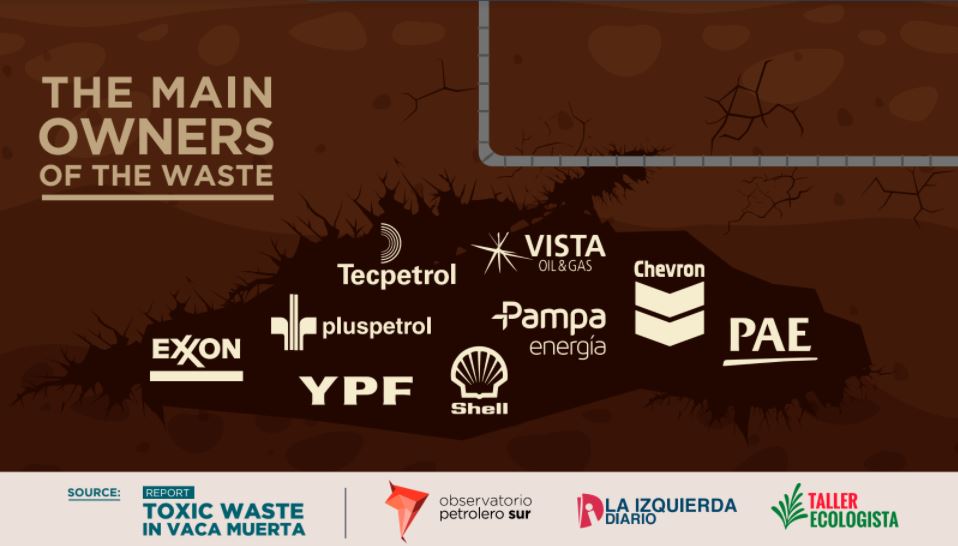
2021: Argentina: “Trail of Impunity” Toxic frac waste scandal exposed as lawyers present new evidence
2014: “Quite leveraged” Calfrac doubled capital spending for 2014 to expand in Argentina, Canada and US
2013: Constitutional protection, Judge gives way to request on Chevron frac deal in Argentina