@SeanCarleton:
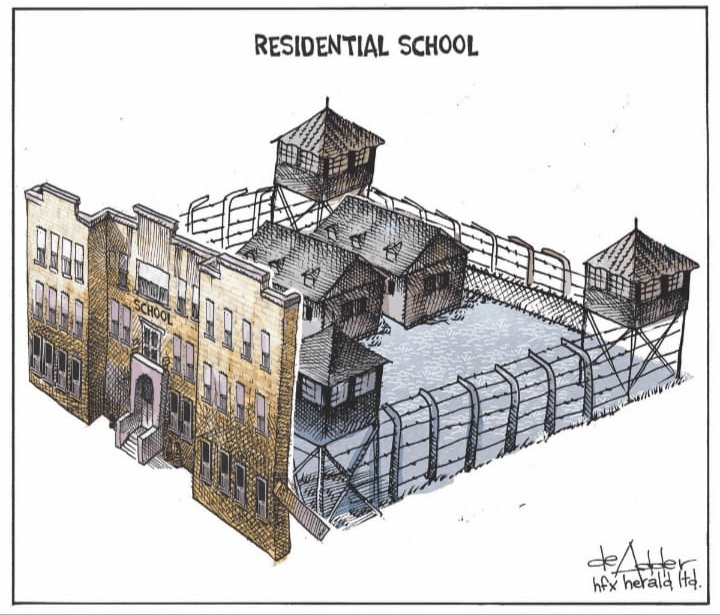
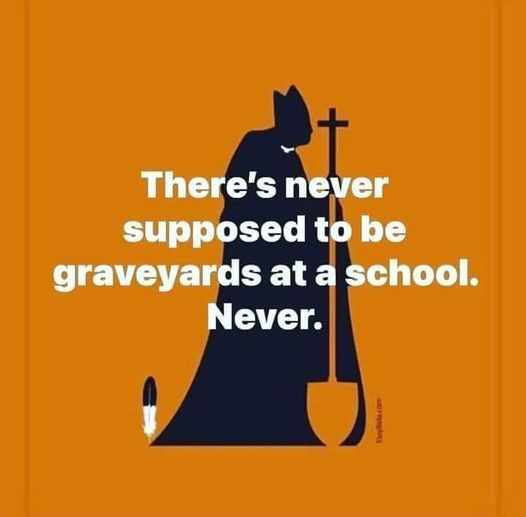
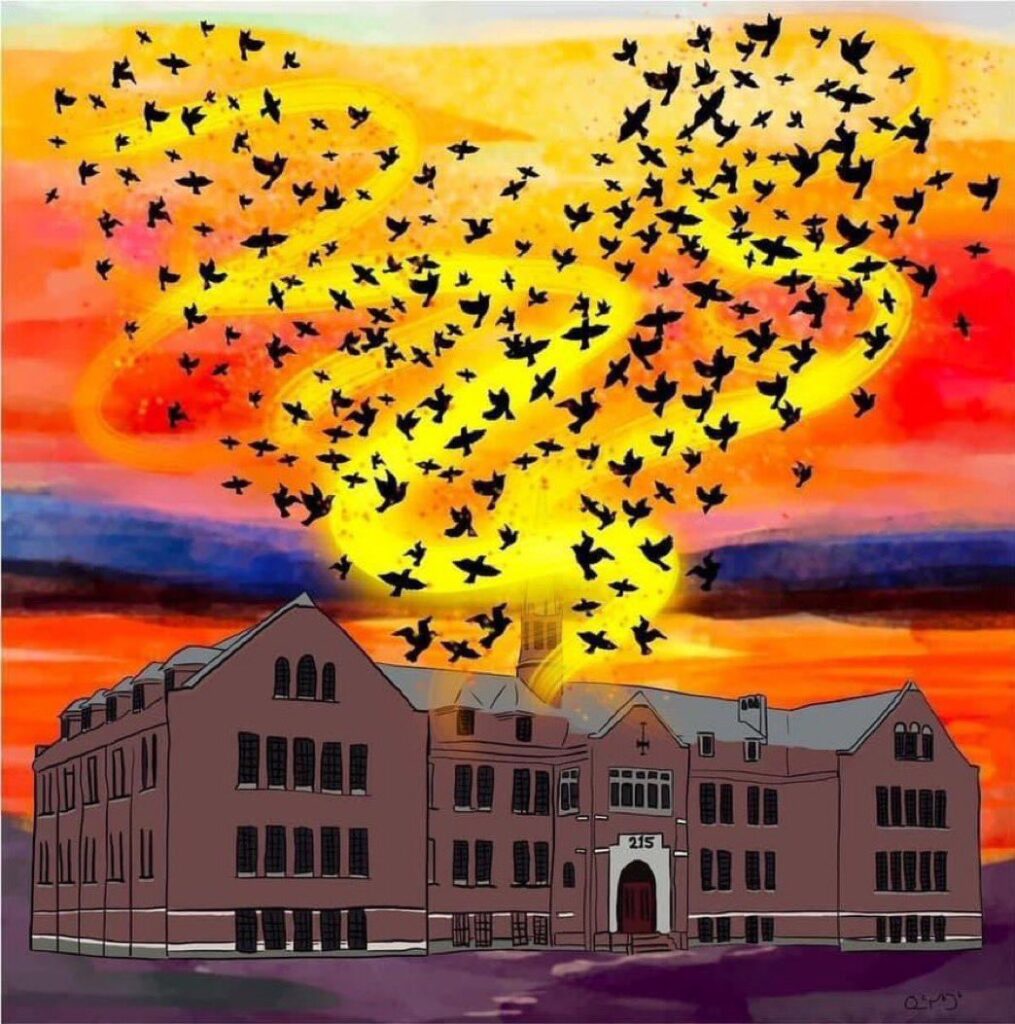
Just so that everyone’s clear: residential school denialism has now devolved into a far-right, conspiratorial movement defined by denigrating dead Indigenous children on the internet for money/to protect the colonial status quo.
@timethief:
Residential schools in Canada operated for a very long time, spanning from the late 1820s to 1997. Over 150,000 First Nation, Métis and Inuit children attended Indian Residential Schools…. The TRC commission chairman Murray Sinclair estimated in an interview that the true number of deaths could range between 6,000 and 25,000. …
Archival research has found 171 confirmed deaths at Kuper Island residential school, 50 more than previously thought, Archival research conducted on behalf of the Penelakut Tribe has found 50 more deaths at the former residential school than previous estimates by Michael John Lo, Aug 4, 2025, Times Colonist
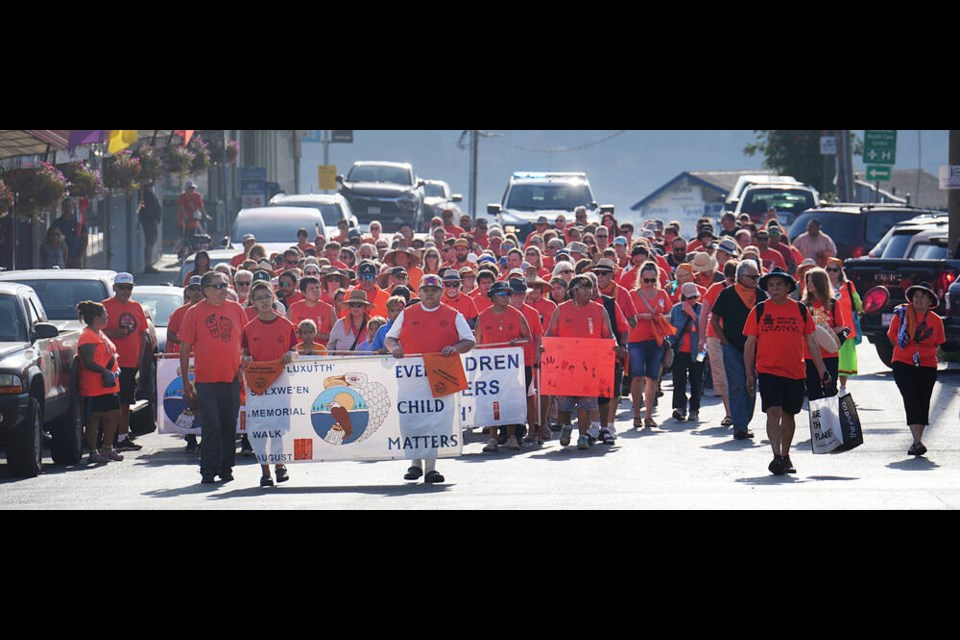
People march along Oak Street in Chemainus during the fourth annual March for the Children, where the Penelakut First Nation announced the interim results of a years-long investigation into marked and unmarked burials at the former Kuper Island Indian Industrial School. ADRIAN LAM, TIMES COLONIST
For immediate assistance for those who may need it, the National Indian Residential School Crisis Line is available 24 hours a day at 1-866-925-4419.
Archival research conducted on behalf of the Penelakut Tribe has found 50 more deaths at Kuper Island residential school than previous estimates, the nation announced Monday while releasing interim results of a years-long ground probe.
The nation says some of the children who died at Kuper Island Residential School are likely to have been buried in some of the 332 unmarked graves identified on Penelakut Island by the ground search.
The interim results of the years-long search were made public after the annual March for Children walk in Chemainus on Monday.
The National Centre for Truth and Reconciliation puts the estimated number of deaths at Kuper at 121.
New data from archival research has uncovered 50 more, in the archives, the nation said.
Speaking before a large crowd at Waterwheel Park, Andrew Martindale, a University of B.C. professor and archaelogist, said his team has searched three out of six areas where children attending Kuper Island residential school where known to have died — the Penelakut Cemetery; a disused cemetery where some residential school staff were known to have been buried; and the grounds near an apple tree stump where a survivor once witnessed a nun bury the body of a child.
The late Monty Charlie, a Kuper Island residential school survivor, once saw a nun kill a young girl by pushing her out a third-floor window of the school, Martindale said. “They buried her beside an apple tree to the south of the main school building. The stump of this tree remains there today, and Monty showed us the precise location of where she was buried.”
Ground-penetrating radar revealed a “clear pattern” of a child-sized, unmarked grave there, he said.
The research team is working to find the identity of the girl, which has been difficult, he said. “Effort was made by the school staff to hide her identity and her death.”
In the Penelakut cemetery, the team scanned over 3,500 square metres of the cemetery with ground-penetrating radar, supplemented with LiDAR technology, and identified what Martindale said was likely to be 342 unmarked graves.
Of those, 111 are “possible” graves, 133 are “probable” graves, and 98 are “likely” graves, based on radar results, Martindale said. “We do not know if any of the children from Kuper are in these graves, although it seems likely that some will be.”
The team also identified a cemetery that was in use during the earliest years of the school, where five Kuper residential school staff were buried, including Father Donklee, the first school principal, he said. “This area is not recognized as a cemetery and in records today, but it is clearly formally organized.”
Martindale said the team found four rows of ground-penetrating radar patterns that look like graves — 26 in total — behind the row of staff graves.
Those potential graves were not mentioned in the archives and were not marked the way the first row of staff graves are, he said.
These are likely the resting places of children who died in the earliest years of Kuper Island residential school, but identifying any possible remains will require forensic excavation, as with the other unmarked graves on the island, he said.
In its statement announcing the findings, Penelakut is calling the 26 patterns Martindale found as “small-sized burial anomalies.”
Penelakut elders have yet to decide if they will go ahead with forensic excavations, which would be expensive, difficult and bring significant emotional and spiritual costs.
Martindale said other areas where the team has yet to begin a search include a former furnace located south of the school, where children and infants have been reported to have been disposed of. Recovering and identifying incinerated remains would be challenging, and Penelakut elders have not decided what they will do next, he said.
The team has found a cement casement that matches aerial photos that show where the furnace was located in the building, he said.
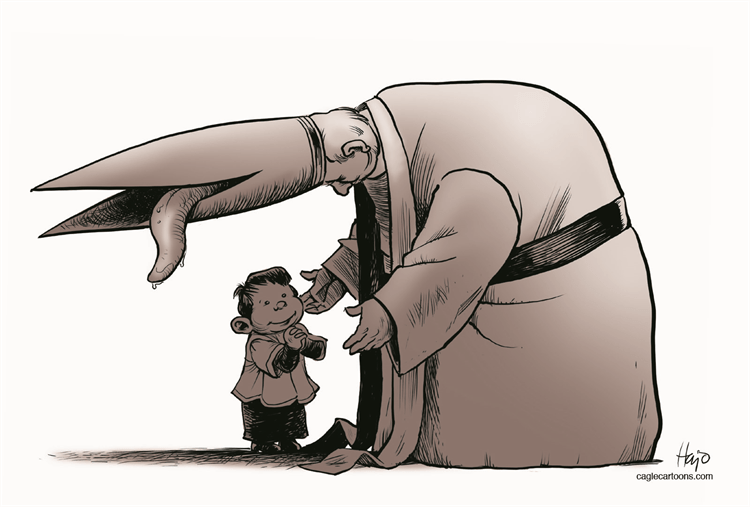
Areas behind the school where survivors say burials were done for those who died as a result of sexual assault by priests and nuns of the school have also not been investigated, he said. “We have reports that these resulted in aborted fetuses and murdered infants, and we know of two locations near the school buildings that were used to bury them.”

Children have also been known to have been disposed of into the sea.
There are reports of dead children put in burlap bags, weighed with anchors and dropped into the ocean off the dock in front of the former school, or during boat crossings towards Vancouver Island, he said.
Locating infant graves through radar and other geophysical methods is possible but challenging, and it’s not known if remains of children in the sea can be found, he said. “But we are determined to look for them.”
Of the students who died at Kuper residential school, there are three known residential school student burials, two on Penelakut and one elsewhere, he said. “These graves are marked and most date from the earliest decades of the school.”
Martindale said the ground search for unmarked graves did not involve excavation.
“We’re using geophysics to map out potential unmarked graves,” Martindale said in an interview. “There’s always going to be ambiguity and uncertainty around the numbers.”
It’s not uncommon for historic cemeteries to have unmarked graves, and there’s no way to determine whether someone buried in an unmarked grave was a child who attended residential school, he said. “There’s no magical scanning tool that’s going to identify who they are. I know people would like a number. They’d like an answer, they’d like it wrapped up, but it’s not how it works.”
The work to find and locate graves has seen dwindling support from the federal government in recent years, he said, adding that federal representatives were invited to Monday’s ceremony but did not show up.
The last scans wrapped up around a year and a half ago, Martindale said. “Survivors should not have to depend on volunteers such as myself to locate the unmarked graves of children who died at residential school. In any other context, the search for children who died at school would be a national priority and we must ask ourselves why this is not the case.”
Martindale stressed that his work won’t be groundbreaking for the Penelakut and for many of the First Nations communities who had children at Kuper Island residential school.
“They already know the truth. They lived through this. They know that children died, they know that there are unmarked graves. They don’t need me and my equipment to tell them that. There’s nothing new that I provide other than some spatial specificity.”
Penelakut Island, formerly known as Kuper Island, was home to a residential school run by the Catholic Church and later, the federal government, from 1889 to 1975. Roughly 2,100 children are known to have been taken to the institution from 73 communities across Western Canada.
Ashley Whitworth, archival research lead for the Penelakut Tribe, said students came from as far as north of Prince Rupert and as far east as Saskatchewan.
Children were moved around different residential schools without the consent of their parents, and the Kuper school was known to have been a destination for truant or “poorly behaved” Indigenous children because of its isolated location, she said in an interview.
Whitworth said a team reviewed more than 80,000 pages of documents and has “high confidence” that they have found the names, birth dates, admission dates, and communities of origin for more than 500 students who attended the school from 1890 to 1953.
The team was able to confirm 85 deaths in that period and is tracking 32 more possible deaths based on evidence from death certificates and community knowledge, she said.
Sixteen deaths are considered to be suspicious.
Whitworth said one 12-year-old girl was believed to have suffered alcohol poisoning while in school and then drowned.
An additional 30 to 40 potential deaths “directly related to Kuper” from 1890 to 1976 are also being investigated, she said.
The archives show the conditions at Kuper were overcrowded.
There was little timely medical care and food for students, who often caught diseases such as tuberculosis and typhoid fever, she said.
“There are many records where children are admitted to Kuper Island in a healthy state and then were discharged within a month with tuberculosis, dying within days at home,” she said.
A 1919 survey of former Kuper students found that 35 per cent, or 116 of 321 former discharged students, had died.
Whitworth said the archival search has only been going on for about a year with incomplete data. There are some restricted federal archives that haven’t been opened to researchers yet.
Initial findings suggest a disturbing pattern of school officials keeping dying or dead students on the school roster for as long as possible in order for the church to get more per diem funding from the federal government, she said.
“We are exploring a pattern of discharge dates that are days, if not months after the death date.”
email hidden; JavaScript is required
***
CBC postcast on Kuper Island in 8 segments

Refer also to: