@fossadvocate.bsky.social:
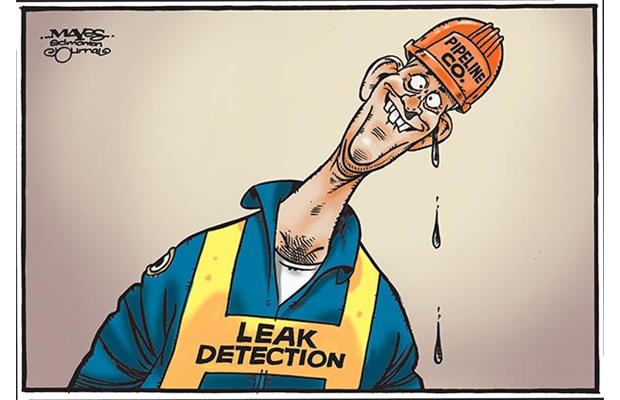
Carbon capture is a scam promoted by the fossil fuel industry. Yes, a wonder trick to con the public into thinking our deadly pollution is being tended to so that they can keep buying more and more and bigger and bigger trucks and houses, and go on more and more flying holidays, eat more, drive more, buy more. The best part of the trick is that industry gets billions of our dollars to lie to us, and use the CO2 projects and life threatening pipelines to inject the fucking CO2 to enhance more polluting oil out. Evil, and Harper con man Nazi Carney loves it, and is all in, to “decarbonize” Canada’s oil and gas, which is fucking impossible to do.
What to know about signed bill banning carbon sequestration at the Mahomet Aquifer by Jim Meadows, , IPM News
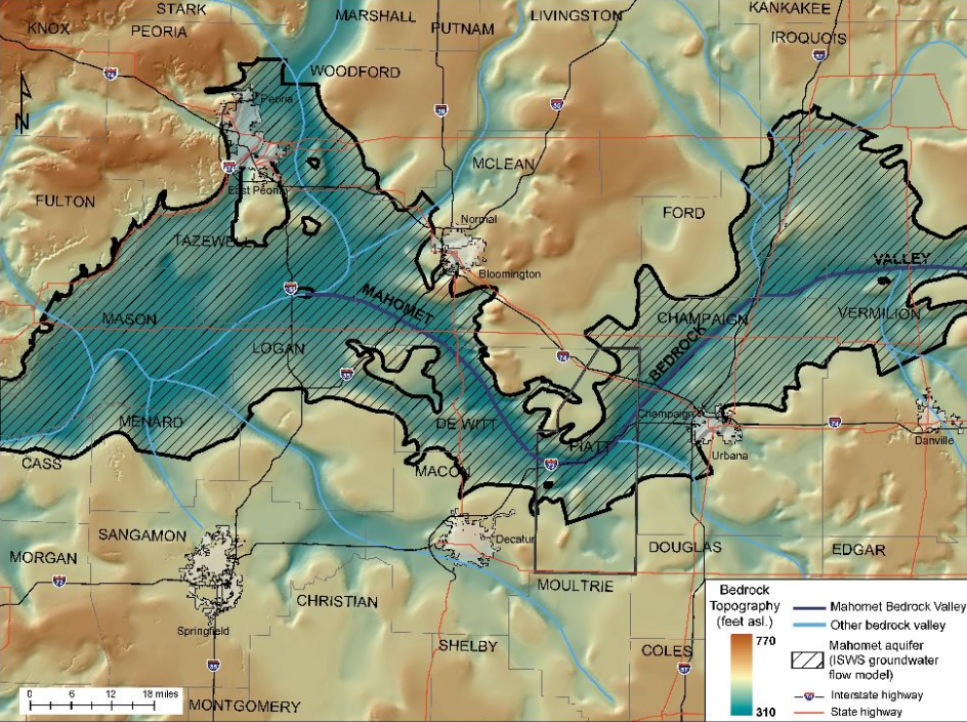
Map of east-central Illinois showing the boundary of the Mahomet Bedrock Valley. Photo: raphic courtesy of Prairie Research Institute
A bill banning carbon sequestration in the area of the Mahomet Aquifer has been signed into law and will take effect January 1, 2026.
Governor JB Pritzker signed Senate Bill 1723 last week.
The measure had dozens of co-sponsors, mostly Chicago area Democrats and lawmakers from both parties in the central and east-central Illinois region where the Mahomet Aquifer is the primary source for drinking water.
SB 1723 was passed unanimously by the Illinois Senate on April 10 and May 20 in the Illinois House with a 91-19 vote. Passage came after protections for the Mahomet Aquifer were left out of the SAFE CCS Act, a broader measure regulating carbon sequestration in Illinois that was signed into law in 2024.
That omission prompted State Senator Chapin Rose (R-Mahomet) to introduce his own legislation last summer, shielding the aquifer from CCS project.
Rose’ bill died in committee. However, a version of it resurfaced in the current General Assembly in 2025, sponsored by State Senator Paul Faraci (D-Champaign), with Rose as one of its co-sponsors.
“This is a long-overdue win for the people of central Illinois who fought tirelessly to protect our clean water,” Rose in a statement. “While I’m frustrated it took the Governor this long to do the right thing, I’m grateful he finally heard the message loud and clear – central Illinois will not be a dumping ground for risky carbon experiments.”
In his own statement issued by Illinois Senate Democrats, Faraci said too many Illinois residents rely on the Mahomet Aquifer to risk its contamination.
“While mitigating the effects of climate change should be a priority, it cannot be at the expense of the clean drinking water of nearly one million Illinoisans.”Yes, but … CCS does not mitigate effects of climate change, it makes it worse, much worse, and is economically unfeasable
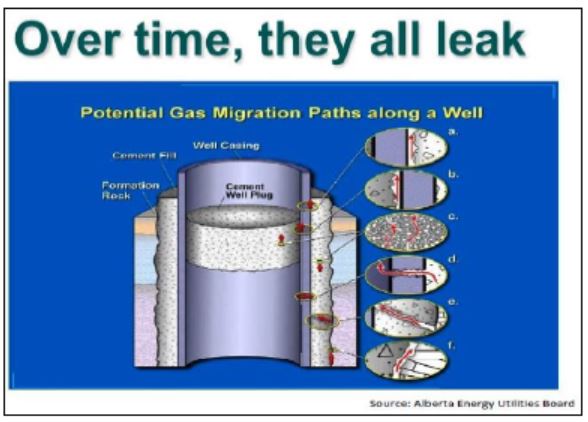
Advocates of carbon capture and sequestration (also known as carbon capture and storage) say it can keep industrial carbon dioxide emissions out of the atmosphere by storing it underground. Critics worry that CO2 stored underground could leak into aquifers, risking the safety of drinking water sources.
Archer Daniels Midland, which operates a commercial carbon capture and sequestration site at Decatur, said CCS facilities don’t threaten aquifers because the CO2 is stored far below underground drinking water sources.Where has the world heard that lie before? ADM reported two leaks at its Decatur facilities last year, but the storage sites are not below the Mahomet Aquifer, and the company says water supplies were not threatened.Lying, as usual
Besides banning sequestration at the Mahomet Aquifer, the legislation creates an advisory commission to study the aquifer, which underlies 15 counties from the Illinois River to the Indiana border.
@asclepias1978.bsky.social:
I hate that the truth of CCS isn’t more widely understood. My readings suggest that CCS is dirtier than advertised. CO2 is acidic and eats away at pipelines. The pipelines are not maintained and eventually burst, leading to situations like the one in MS a few years ago.Which stupid Adolf Orange is going to make much worse with his massive cuts to all protective agencies, to give the money to himself and his billionaire pals.
‘Like something you see in a movie’: Trump cuts stir fears of more pipeline ruptures, In Satartia, Mississippi, locals say a carbon dioxide pipeline leak created an aftermath ‘like a zombie apocalypse’ by Oliver Milman in Satartia, Mississippi, 21 Jul 2025, The Gurdian
On a clear February evening in 2020, the smell of rotten eggs started to waft over the small town of Satartia, Mississippi, followed by a green-tinged cloud. A loud roar could be heard near the highway that passes the town.
Soon, nearby residents started to feel dizzy, some even passed out or lay on the ground shaking, unable to breathe. Cars, inexplicably, cut out, their drivers leaving them abandoned with the doors open on the highway.
“It was like something you see in a movie, like a zombie apocalypse,” said Jerry Briggs, a fire coordinator from nearby Warren county who was tasked with knocking on the doors of residents to get them to evacuate. Briggs and most of his colleagues were wearing breathing apparatuses – one deputy who didn’t do so almost collapsed and had to be carried away.
Unbeknown to residents and emergency responders, a pipeline carrying carbon dioxide near Satartia had ruptured and its contents were gushing out, robbing oxygen from people and internal combustion engines in cars alike.
“We had no idea what it was,” said Briggs, who moved towards the deafening noise of the pipeline leak with a colleague, their vehicle spluttering, when they saw a car containing three men, unconscious and barely breathing. “We just piled them on top of each other and got them out because it’s debatable if they survived if we waited,” said Briggs.
Ultimately, the men survived and were hospitalized along with about 45 other people. More than 200 people were evacuated. “It was like we were all being smothered,” said Jack Willingham, director of emergency management in Yazoo county, where Satartia is situated. “It was a pretty damn crazy day.”
The near-fatal disaster was a spur to the Biden’s administration to, for the first time, create a rule demanding a high standard of safety for the transport of carbon dioxide, a small but growing ingredient of pipelines increasingly captured from drilling sites and power plants.In Canada too. AER just approved (in a scant six months) Enhance Energy’s Origins dangerous CCS project, to sequester CO2 in the Leduc Formation within the Woodbend Group at 100/04-36-039-25W4/00, without a hearing even though many objected to it. AER returned the nearly 40 letters of concern to their writers, concerns unaddressed.
“There’s been a lot of concern about safety among states that permit CO2 pipelines,” said Tristan Brown, who was acting administrator of the Pipeline and Hazardous Materials and Safety Administration (PHMSA) until January. “Stronger standards like the ones we drafted last year have the dual benefit of addressing permitting concerns while also improving safety for the public.”
But shortly before the new safety regulations were due to advance to the public notice stage early this year, Donald Trump’s new administration swiftly killed them off. A crackdown on gas leaks from pipelines was also pared back. This was followed by an exodus of senior officials from the PHMSA, which oversees millions of miles of US pipelines. Five top leaders, including the head of the office of pipeline safety, have departed amid Trump’s push to shrink the federal workforce.
Broader staff cuts have hit the regulator, too, with the PHMSA preparing for 612 employees in the coming year, down from 658 last year. There are currently 174 pipeline inspectors within this workforce, the PHMSA said.
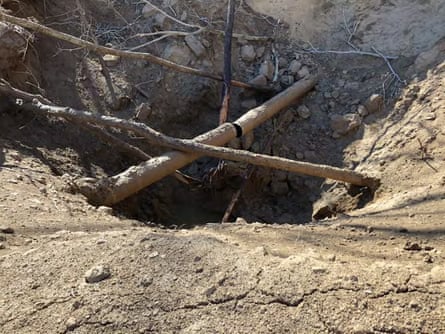
The pipeline failure location in Satartia, Mississippi. Photograph: US Department of Transportation
These 174 inspectors have the task of scrutinizing 3.3m miles of pipe across the US, or about 19,000 miles for each inspector. The indiscriminate nature of cuts at the PHMSA “has real world consequences in terms of undermining the basic foundations of safety for the public”, Brown said.
“A lot of expertise has left and that is worrying,” said one departed PHSMA staffer. “The attitude from Doge [the ‘department of government efficiency’] was: ‘Your job is meaningless, go and work in the private sector.’ Many people have thought they can’t go through this for four years.”
The US has more miles of pipeline – carrying oil, propane, gas and other materials – than it does in federal highways and a federal regulator that was already overstretched. Brown said typically just one or two people have the responsibility of inspecting America’s transported nuclear waste while a mere dozen staffers have to oversee more than 170 liquified natural gas plants.
Each state has its own pipeline regulatory system and inspectors, too, but the PHMSA is responsible for writing and enforcing national standards and is often the one to prosecute violations by any of the 3,000 businesses that currently operate pipelines. However, enforcement actions have dropped steeply under the Trump administration, which has initiated just 40 new cases this year, compared with 197 in all of 2024.
“All of these things will contribute to an increase in failures,” said Bill Caram, executive director of the non-profit Pipeline Safety Trust. “A strong regulator helps prevent awful tragedies and I worry we could see increased incidents now. The drop in enforcement is very troubling.
“Everyone at PHMSA is focused on safety, there’s not a lot of fat to trim, so it’s hard to imagine that any reduction in force won’t impact its ability to fulfill its duties. I can’t believe they were ever prepared to lose so many people at once.”The better to poison Americans with while increasing private profits for the rich and finishing off earth’s livable climate
In some contexts, US pipelines can be viewed as very safe. A few dozen people are killed or injured each year from pipeline malfunctions, but the alternatives to moving around vast quantities of toxic or flammable liquids and gases aren’t risk-free.
Trains can come off their tracks and spill their loads, as seen in East Palestine, Ohio, while the death toll on American roads from accidents is typically about 40,000 people a year. “There is some super-duper bad stuff that happens on the interstates,” said Briggs.
Still, as Caram points out, there is a significant pipeline incident almost every day in the US, ranging from globs of oil spilling on to farmland to raging fireballs from ignited gas.
Many of the pipelines snaking under Americans’ feet are ageing and need replacement, which can lead to failures. There has been a worrying uptick in deaths from pipeline accidents recently, too, with 30 people killed across 2023 and 2024, the most fatalities over a two-year period since 2010-11.
“This is not the time to look at deregulatory efforts, this is not time to look to save money and deregulate,” Caram said. “The overall state of pipeline safety is really languishing with poor performance. We are not making good progress and we need stronger regulations.”
A PHSMA spokesman said the agency is “laser-focused on its mission of protecting people and the environment while unleashing American energy safely” and is in the process of appointing “well-qualified individuals” to fill the departed senior officials.
“PHMSA has initiated more pipeline-related rule-making actions since the beginning of this administration than in the entire four years of the preceding administration,” the spokesman added. “Each of these rule-makings represents an opportunity for us to promote pipeline safety by modernizing our code and encouraging innovation and the use of new technology.”
The agency spokesman added that pipeline firm Denbury, now owned by Exxon, paid $2.8m in civil penalties for its regulatory violations in Satartia and agreed to take corrective actions. The PHMSA also warned other operators to monitor the movement of earth and rock, to avoid a repeat of the Satartia incident where sodden soils shifted following days of rain and crushed the pipeline, severing it.
The leak was only confirmed after an emergency responder called Denbury to ascertain what happened, more than 40 minutes after the rupture, according to the PHMSA investigation. Communications between the company and the emergency services have improved since, according to both Briggs and Willingham. Denbury was contacted for comment.
Today, Satartia bears few visible scars. The pipeline is obscured from passing view by trees and blankets of kudzu, the invasive vine. The town’s sleepy, treelined streets contains a town hall as big as a tool shed, a couple of small churches, a single shuttered store. On a recent summer day a single person was outside, contentedly cutting the grass, as if that harrowing day in 2020 was a surreal dream.
“We will see how it goes with the changes, I hope it doesn’t affect the safety we’ve worked so hard to get,” Willingham said of the cuts at the PHMSA.
“We don’t want a day like we had in Satartia again. In 35 years in emergency service I have seen some crazy stuff, but that was a wild, wild day.”
It’s time to toss Wyoming’s carbon capture mandate on junkpile of bad ideas, When lawmakers abandoned free market ideals to save King Coal at all costs, they stuck Wyoming electric customers with higher bills by Kerry Drake, Aug 5, 2025, Wyo File
When events strangely align to put politically polar-opposite camps together, people always wonder how it happened. But there’s really no mystery why the Freedom Caucus that controls the Wyoming House and the Legislature’s few progressives both want to repeal a 2020 law designed to “save” the coal industry.
Opinion
It was a terrible idea then, and it looks even worse today. The more people who come to that conclusion, no matter their political beliefs, the better off Wyoming will be.
Requiring regulated electric utilities to meet federal pollution regulations by retrofitting coal-burning power plants with carbon capture technology was always a Hail Mary plan that should’ve never seen the drawing board, much less advanced.
But the Legislature and Gov. Mark Gordon refused to let the free market determine the fate of the coal industry, which led to Wyoming being the only state that requires a coal-burning utility to study implementing a system that has never proven commercially viable.
The latest research shows that carbon capture is unaffordable and would result in huge increases in Wyoming customers’ bills.Alberta, land of CCS, has the highest electricity prices in Canada (double what they are in Saskatchwan). Prosperity my ass, it’s only for rich pals of Harper-Carney and Dildo Danielle
Yet it remains on the books. The Joint Minerals, Business and Economic Development Committee was divided on sponsoring a repeal bill last month. Seven of eight representatives in attendance voted in favor of it, but only one of five senators backed it — not enough to achieve the majority required to sponsor the measure.
The proposal was brought to the committee by Rep. Christopher Knapp, R-Gillette, a Freedom Caucus member who sponsored a similar measure earlier this year that failed. “Why are we continuing to charge the end user for something that probably will not pan out?” he asked the committee.
In May the U.S. Department of Energy cancelled $3.7 billion in federal grants to support “clean energy” demonstration projects, including $49 million for a “large-scale” carbon capture pilot project at the Dry Fork Station coal-fired power plant north of Gillette.
“Dry Fork has been identified in different studies as the lowest-cost plant in the country to attempt this technology,” University of Wyoming Associate Professor of Economics Rob Godby told WyoFile.
“If it won’t work here, where will it work?”
Knapp’s House Bill 209, “Carbon capture mandate-repeal,” was supported by the Freedom Caucus, the more moderate Wyoming Caucus, and all six House Democrats in February. The lone vote against it in its final reading was cast by Rep. Lloyd Larsen, R-Lander. But the Senate Minerals, Business and Economic Development Committee killed it without even a vote, signaling the sharp divide between the two chambers on this issue.
In 2020, House Bill 200, “Reliable and dispatchable low-carbon energy standards,” was approved before the Freedom Caucus came into power. The House approved it 39-19, with most of the rag-tag team of GOP rebels at the time — including now-Secretary of State Chuck Gray — voting no.
The Freedom Caucus likes to characterize opponents of repealing the bill as “liberal Wyoming Republicans,” mythological creatures who don’t actually exist except in their minds. But seven very real left-leaning House Democrats and one independent voted against the carbon capture mandate, which should bury once and for all the Freedom Caucus’ claim that liberals consider it “green” technology.
It’s never been the choice of lawmakers who want Wyoming to offer more renewable energy like wind and solar, and quit artificially pumping up a dying coal industry.
The Freedom Caucus’ chief complaint about carbon capture has always been that Gordon wants it, so it must be bad. Its members went apocalyptic when the governor visited Harvard University in October 2023 and addressed how new carbon capture technology would help achieve his net-zero carbon goal for Wyoming.
“We can’t afford to give an inch to the anti-fossil fuel crowd and Mark Gordon needs to explain to the people of Wyoming why he’s selling our economy and our livelihoods down the liberal river,” then-Freedom Caucus Chair Rep. John Bear, R-Gillette, told Fox News.
For many years, the Wyoming Republican Party was united by the belief that climate change is a hoax. That’s still what the Freedom Caucus and its allies preach. The best example is Sen. Cheri Steinmetz, R-Lingle, one of the 10 Senate no votes for the carbon capture mandate in 2020. She and Bear co-sponsored this year’s Senate File 92, “Make carbon dioxide great again-no net zero.” It didn’t make it out of Senate Minerals.
Steinmetz and her fellow climate change deniers on the Senate Agriculture Committee sponsored a “hearing” in February 2024 that will go down as one of the weirdest events in the Capitol’s history. It featured the CO2 Coalition, a traveling band of “scientists” with very dubious credentials, and began by Steinmetz ruling that no opposing views would be heard.
But despite it being a scientific-fact-free day, I can’t argue with Steinmetz’s economic message: taxpayer funds shouldn’t be used for carbon capture, and until the mandate is repealed, “Wyoming ratepayers will pay for these policies.”
Rocky Mountain Power’s customers in Wyoming have subsidized about $3.9 million worth of technical and economic feasibility analysis of carbon capture; Cheyenne Light, Fuel and Power’s customers have paid nearly $900,000. The latter’s parent company, Black Hills Energy, said the most viable technology it’s found would cost about $500 million.
The utility’s 45,000 customers in the Cheyenne area — and I’m one of them — can start practicing their best Howard Beale impersonations. For younger readers, that’s the “Network” movie newsman who screams, “I’m mad as hell and I’m not going to take this anymore!”
And it gets worse: Black Hills Energy’s carbon capture retrofit at the Wygen II power plant near Gillette would knock down the coal plant’s electric generation capacity by more than 30%. That means the company will need to replace about 30 megawatts of lost power. Guess who will be on the line for that?
In Gordon, Wyoming elected a Republican governor willing to say that climate change is real and the state must adapt its economy to the energy transition. Hallelujah and all that, but does that slice of real life have to come with requiring utilities to use unproven, unaffordable technology that will bankrupt us, instead of much less expensive renewable energy we already know reduces greenhouse gas emissions?
It’s time for the Legislature to repeal its 2020 mandate and quit trying to pick winners and losers. Hey, that sounds like something the Freedom Caucus would say. Politics does make strange bedfellows.
While it sometimes makes me cringe to see myself and like-minded progressives and environmentalists on the same side as climate change deniers, on this issue, I’ve gotten over it. Personal motivations aside, what’s important is doing the right thing for the state, country and the entire planet