@fisherspeaks.bsky.social:
Habitat loss in Canada’s grasslands has threatened many species.
That includes the American badger, which Fisher described as “one of the most important, central and iconic species that remains of the North American grassland ecosystem.”
@koolbeans25.bsky.social:
This makes me mad. Me too. I bought my 50 acres at Rosebud to try to rehabilitate the grazed to dirt grassland and old Rosebud River, and to protect it for wild species. Humans have wiped out much of the grasslands in North America with desire to destroy more and are always demanding access to my land, some refusing to hear “No!” Badgers, foxes, coyotes, owls, hawks, all three weasels, Richardson’s ground squirrels and pocket gophers, ducks, geese, swans, song birds and many others, deer, sometimes moose and more make my land home. Some visit seasonally, others like the badgers, live on my land year round.
Trespassers, even some religious, come onto my land without permission or even after being denied permission, to kill whatever the fuckers set their inhumanity onto. Ignorance feeds deep and widespread hate for predators, notably badgers. Predators are vital to healthy ecosystems, yet many landowners want them wiped out. I’ll never understand it, especially from the religious people. I love seeing badgers on my land and elsewhere on the prairies; they are beautiful, vicious, private, effective predators, and a joy to watch at play and while romancing.
Badgers designated as ‘special concern’ species in Prairie provinces, Large mustelids are ‘ecosystem engineers’ of grasslands, biologist says by Amir Said · CBC News · Feb 07, 2026

Badgers are common on the Prairies, but a recent federal assessment suggests they’re vulnerable to the same threats facing the endangered populations in Ontario and British Columbia.
The American badger is the only badger species found on this continent. These large mustelids — members of the weasel family — are divided into three populations by the Committee on the Status of Endangered Wildlife in Canada (COSEWIC), which assesses the at-risk status of native species and provides recommendations to the federal government.
The advisory panel designated the “Kootenay, Prairies and Rainy River” population — which encompasses badgers across the Prairie provinces, as well as parts of southeastern British Columbia and northwestern Ontario — as “special concern” in December.
The other two populations, located in southwestern Ontario and the B.C. Interior, are designated as endangered, with COSEWIC estimating there are fewer than 250 adult badgers in both of those regions.
- 2% of endangered badgers in B.C. killed off in 2 days, conservation group says
- Campaign launches to protect endangered badgers being killed on roads in B.C.’s Interior
Chris Johnson, a University of Northern British Columbia professor who sits on the COSEWIC terrestrial mammals subcommittee, says it’s hard to estimate badger numbers due to their reclusive nature.
“Most people have never seen one in the wild, but nonetheless they continue to face a number of risks to and threats to their persistence in the country,” he said.
The assessment points to habitat loss, vehicle collisions and the killing of badgers by landowners as among the threats facing the species across Canada.
- Have you seen Ontario’s elusive badgers? Researchers want to know
- Sighting of rare, endangered badger sparks excitement at Osoyoos Desert Centre
“We do know that there are real threats for badgers and that they need to be managed,” Johnson said. “Otherwise, there’s a risk of them trending into one of those other categories.”
COSEWIC’s “special concern” designation means care is needed to prevent a species from becoming threatened or endangered at the federal level.
Vehicle collisions common cause of badger death
The government of Alberta operates a Wildlife Watch Program that tracks roadkill carcasses found in the province each year. According to the most up-to-date numbers, 112 badger roadkill carcasses were found in 2024.
Seeing badgers along the road — alive and dead — is nothing new for Calgary wildlife biologist and author Chris Fisher.
“We do see them hit on roads a fair bit, and of course any loss of adults is a big blow to a population that is considered special concern,” he said.

Fisher said badgers are attracted to roadsides because it’s easier for them to dig burrows in sloped ditches.Half of my land is steep sun facing coulee, perfect for badger dens and ground squirrel hunting
Ditches also attract Richardson’s ground squirrels — colloquially known as gophers — which are a key prey for badgers.
“That combination of being attracted to the buffet and having a high-speed road right beside it is not a particularly good one,” Fisher said.

Badgers are more active when it’s dark, meaning it can be hard for drivers to see them on the road. They’re also driven by their incredibly strong sense of smell, rather than sight.
“When you’re trying to sniff your way through life, you don’t smell a lot of semi-trucks coming at you at 100 km/h,” Fisher said.
Habitat loss of ‘ecosystem engineers’
Compared to the vast open habitat available on the Prairies, the endangered southwestern Ontario and B.C. Interior badger populations don’t have as much land available, which contributes to their status as endangered, Fisher said.
“Obviously, we have a lot of sprawling suburban areas that are extending into areas that were formerly a habitat for American badgers,” he said.
Habitat loss in Canada’s grasslands — considered one of the most endangered ecosystems in the world — has threatened many species.
- Grassland birds in crisis on the Canadian Prairies, conservationists warn
- Proposed tundra swan hunting season on Prairies prompts concern from hunter
That includes the American badger, which Fisher described as “one of the most important, central and iconic species that remains of the North American grassland ecosystem.”
“No other modern species of wildlife has a greater imprint on the prairies of Alberta,” Fisher said. “It has become the face of wild Canadian grasslands.”
The badger plays a key role in that ecosystem, says University of Alberta biological sciences professor Colleen Cassady St. Clair.
St. Clair called them “ecosystem engineers,” pointing to a 2021 University of Wyoming study that found 31 different species using the expansive burrows dug by badgers.
But not everyone appreciates the environmental impact of badgers.
“Historically, they’re persecuted by people everywhere,” St. Clair said. “People shoot them when they see them in rural areas.”
She said much of that persecution is due to the potential for badger burrows to cause horses and other livestock to break their legs, as well as other damage they cause to farm property.I have allowed a farmer and neighbours to graze their cattle and horses on my land for a few months annually. I stopped allowing that because of the severe multiyear drought Alberta is in. The cattle and horses avoided the dens with ease. I think one of the problems is that many ranchers grossly over graze, or put too many animals on the land they have, as did the farmer I bought my land from – there was no fucking grass left when I bought my place. Same old human problem – greed. If grasslands had less cattle on them, perhaps there would be less conflicts with badger dens. And, again, harm by religion making humans believe they are superior to all else on earth.
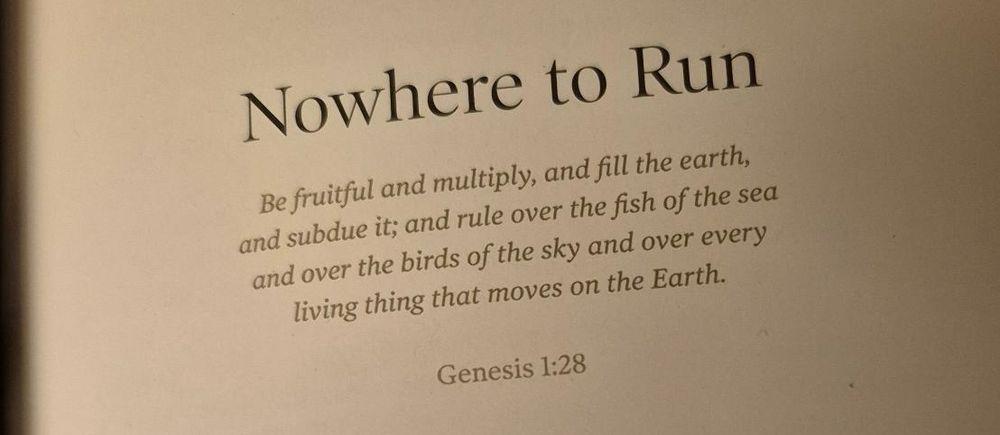
So ungodly, fucking stupid, selfish, cruel and greedy.

Badgers have been classified as a sensitive species by the Alberta government since 2000. That means they’re not currently considered at risk of extinction in the province, but may require special attention or protection to prevent them from becoming threatened or endangered.
Badgers are also considered furbearers in Alberta, meaning they can be hunted and trapped.Must be stopped along with so many other inhumane things Alberta allows
Landowners can also kill badgers on their property.That must be stopped too.
Through his work as a wildlife consultant, Fisher identifies opportunities for builders and landowners to protect sensitive species, including keeping active construction a certain distance from active badger dens.
Smith Whitemoose:
What a beautiful animal and very smart engineers.
Mark Spencer:
I could use some badgers on my property to help me with all the Richardson Ground Squirrels.
Oscar Biasinni:
Saw my first badger just outside Onoway, impressive animal. I didn’t realized they were that big.
Eileen Kinley:
I don’t think the federal or provincial governments take their responsibility to protect species at risk seriously. With the odd exception such as the right whales.
Reply by Kat Shaw:
Especially here in Alberta; they have an ‘unusual way’ of finding out how many wolverines we have, see – ‘Alberta’s new wolverine trapping rules lead to divide between trappers and researchers’
Lynette Browne:
Same for the grizzly bears.
Frank Blacklock:
Maybe farmers should stop flattening out every tree and low spot they see to fit 90 foot seeders on the land, and then covering every square inch with tonnes of chemicals several times every year?
Kat Shaw:
We need those low spots, they’re sloughs; they’re necessary for many types of wildlife from mammals, birds, reptiles…..
Signed A Rural Albertan
Brent Grywinski:
Badgers are fascinating animals. One of my favourite books I read was a novel using badgers as the characters that were trying to find a new area to live in.Me too!
Fred Emmersen Turner:
Poor innocent badgers
Greg Timmins:
Anyone on the prairies already knew they were a species of concern. Don’t go changing the definition.
Ken Shaw:
… The farm that I grew up on had badgers; not one dog challenged them, plus they’re primarily nocturnal! If they were in a pasture, a few fence posts quickly solved the problem. rebar with chicken wire around works tooEven when the cattle got out where there was a badger den, no cattle were injured!
Refer also to:
@race2extinct.bsky.social:
Anyone mentioning human overpopulation precipitating all enviro problems is invariably asked to commit suicide or accused of genocide. It’s like someone pointing out a hole in the bottom of a boat, and everyone else blaming them for identifying the problem while the boat sinks.
@mikegrunwald.bsky.social:
Which parts of the population would you like to cull? I’m assuming not you.If I could get MAID, I’d happily die now to give other life a chance
@ourpredicament.com:
The population problem will take care of itself eventually. How much non-human life is left, we can influence.
@nonviolence.bsky.social:
Violent people in denial always assume that other people mean violence.
“First off, let me get this straight, discussing addressing overpopulation doesn’t mean discussing killing people. The goal is actually to prevent it.”
– Dr. Jane O’Sullivan
Why do people assume “killing people” when one mentions #overpopulation? Understanding this can help us understand denial?
@void-d00m.bsky.social:
Poor Michael! He’s never heard of anti-natalism. No culling required unless we continue with BAU in which case physics will cull us via ungoverned extinction.
@race2extinct.bsky.social:
Heresy! God meant for us to breed like bunnies.