Dr. Bruce Lourie, President IVEY foundation: Chief Synergizer and Polluter Washer enabling frac’ers and creator of Synergizing NGOs including Pembina Institute/Foundation and CAPE!! Who is this soulless pimp of polluting toxic UNunnatural gas?
The author is a fossil fuel apologist, arguing against all evidence. …He absolutely is. Electricity will not get cheaper if we allow American AI to invade as enabled by corrupt hanky panky Evan Solomon and his $100M gift of our tax dollars to them, with the bonus of promised zero regulation.
Not a peep about our species’ greedy over population and consumption, and insane AI. If humans stop producing babies for a decade or two, instant emissions reduction at zero cost and zero hassle. And most important, frac’ing would be dramatically reduced, the most insanely abusive invention by humans after religion. Trouble is, reducing babies makes the rich zero profit, except perhaps in condoms and other birth control.
President, Ivey Foundation
Dr. Lourie is one of Canada’s most influential expertsenablers of polluting fossil fuel companies and propagandistson climate change and sustainability. Best known for his ability to rethinklie about complex problems and develop solutions that benefit both the economy andpolluting rich fuckers, notably in oil, gas, frac and bitumen the environment, he has been instrumental in creating more than a dozen organizations that play a critical role in synergizing and lying to Canadians about Canada’s transition to a net-zero economy, including Canadian Climate Institute, the Institute for Sustainable Finance, Farmers for Climate Solutions, Efficiency Canada and The Transition Accelerator. His focus at Ivey Foundation is the Economy and Environment program, which provides funding to net-zero focused organizations. He initiated the largest climate action in North America, the phasing out of coal in Ontario, helped shepherd the Canadian Boreal Forest Agreement and supported the establishment of the Ontario Greenbelt. He liaises with government, industry, academia, ENGOs and the business community to ensure Canada DOES NOTachieves net-zero by 2050 while remaining competitive.
An engaging and lively spokesperson, Dr. Lourie has a unique ability to lie to and propagandize the publictranslate complex issues into timely and actionable information in both print and broadcast interviews and has been interviewed by major radio, television, print and social media outlets in Canada, Australia and the United States. Dr. Lourie is an experienced and in demand speaker, and speaks regularly at major climate, energy, government, philanthropy and industry association events including the 2024 World Energy Congress in Rotterdam, the 2024 Net-Zero Forum and the 2024 Globe and Mail Report on Business Road to Net-Zero event, where he gave the keynote addresspropagandizing the masses, serving polluters, notably oil, gas and frac companies.
In 2024 Dr. Lourie received the Order of Canada for his career-long commitment to sustainability and his entrepreneurship in helping establish many organizations devoted to money, more money, and progandizing the public and harmed via vile synergy! One exampled, Ivey Fdn funded over $2M to Pembina Institute – one of the most vile synergizing NGOs in Canada, along with CAPE and many others!the environment and Canada’s transition to net-zero. He was the recipient of York University’s top alumni distinction, the Bryden Award for Outstanding Achievement in 2015, and was awarded a Rockefeller Bellagio Residency in 2021. He is the co-author of two books, Toxin Toxout and Slow Death By Rubber Duck, an international bestseller. Dr. Lourie holds a Ph.D. examining the intersection of risk, science and policy. yet, he says NOTHING about the endless toxic harms to many communities, farms and families by the mad levels of frac’ing for natural gas which is exported via LNG and which permanently removes from the hydrogeological cycle 25-100% of the water injected!
Topics of expertise:
Climate change, climate policy, Canada’s net-zero and energy transitions, electrification, electricity grid integration, low-carbon hydrogen, sustainable finance, sustainable agriculture, energy efficiency, carbon pricing, phasing out coal, toxic chemicals.Yet, is fully pimping natural gas which is all frac’d now, exposing workers and communities to horrific brews, spills and dumps of deadly chemicals. FFS, he says nothing about how toxic Canada’s natural gas now is, because of the toxic chemicals needed to frac, and the masses of silicosis causing frac sand!
Other Roles:
Board member at Canadian Climate Institute, SeedChange Foundation and The Transition Accelerator (Chair)
Senior Fellow at Institute for Sustainable Finance, Adjunct Professor at Queen’s University, visiting lecturer at University of Oxford Said Business School Social Finance Program, Fellow at Royal Geographical Society of Canada, Honourary Director at Canadian Association of Physicians for the Environment.No wonder CAPE is a synergizing NGO, dancing in useless circles when it comes to frac’ing, with this dude a director!
What if pursuing carbon-free electricity does more harm than good?Using frac’d fucking not natural gas to make electricity assuredly causes much more pollution and harm than good, notably permanent loss of vital water, high carbon and methane pollution, and health harms to the frac’d communities sacrificed by the rich to serve their greed and our corrupt politicos and goons like this author. Then there’s the ultra corrupt and stupid LNG – exporting our frac’d gas will only massively drive up prices for ordinary Canadians while rich foreign douche fucking rich get richer by Bruce Lourie, Special to The Globe and Mail, Dec 14, 2025
Bruce Lourie, C.M., is president of the Ivey Foundation and a professor of practice at the Trottier Institute for Sustainability in Engineering and Design, McGill University.
What if our pursuit of a perfectly clean electricity grid undermines the broader electrification revolution we need? The answer lies in understanding the economics of that final push toward 100-per-cent renewable electricity, and nowhere is this tension more visible than in Canada.
That’s because Canada’s electricity system stands as one of the cleanest in the industrialized world, already 84-per-cent decarbonized. This is an impressive achievement, built largely on the foundation of hydroelectric power in Newfoundland and Labrador, Quebec, Manitoba and British Columbia, complemented by nuclear generation in Ontario.
For most of the past two decades, Canadian policymakers have celebrated this advantage, viewing it as a springboard for climate action. But the calculus becomes more challenging with a push toward 100-per-cent decarbonization.
Sometimes called “the last mile problem,” the challenge is straightforward but profound. The first 84-per-cent of decarbonization in Canada came relatively easily. Natural geography and historical public investments provided reliable and affordable electricity. The final stretch is different.
The Energy Transitions Commission and the Rocky Mountain Institute (global think tanks) have documented this challenge across multiple jurisdictions. Their research shows that the cost curve for grid decarbonization is not linear. Going from 50-per-cent to 80-per-cent decarbonized electricity is cost-effective. Above 80 per cent, the costs increase, and that final push from 90 per cent to 100 per cent can cost exponentially more still. Pushing beyond 95 per cent requires infrastructure investments that can double or triple the marginal cost of that final clean energy.
In Canada’s case, this could mean electricity rate increases of 20 to 40 per cent in the non-hydro provinces. This isn’t a failure of renewable technology. It’s simply the reality that the last few percentage points of demand require massive investments in energy storage, transmission infrastructure, carbon capture technologyJFC! Carbon Capture tech is a fucking fraud with which to con the public into believing fossil fuels can be “cleaned” up – they can’t and worse, making the citizenry pay for the fraud for industry to use and lie and lie and lie and rape and pollute out more fucking polluting tar, oil, and gas, and you know it! or significant overbuilding of renewable capacity to ensure reliability during peak periods.
Alberta has achieved 60-per-cent decarbonization with natural gas replacing coal.
FUCK! What the hell Mr. Lourie? You are as disgusting a liar and polluter propagandist as Herr Carney! Natural gas cannot be “decarbonized!” You fucking know that, advertised “expert” that you are. Most gas now is frac’d and frac’ing is terribly polluting with massive carbon emissions that make it a greater carbon polluter than coal, and much more harm to communities sacrificed. Then, there are also the nasty methane leaks and intentional venting, including deadly sour gas.And while wind and solar capacity have grown dramatically over the past decade, there is room for much more to further decarbonize the system and bring down the province’s sky-high electricity rates. This will only happen once the electricity market is freed from political intervention that prevents renewable power development. Over 90-per-cent decarbonization of the system is doable while maintaining a few natural gas peaking plants for reliability during January cold snaps, when electricity demand surges and evening solar production plummets.Much better to have storage than frac’d gas anything! Frac’ing must be criminalized! It permanently removes vital water from the hydrogeological cycle removing it from future use – forever. No electricity generated with frac’d gas is worth that, never mind the gross pollution (toxic chemicals, carbon and methane), radioactivity and health harms it causes
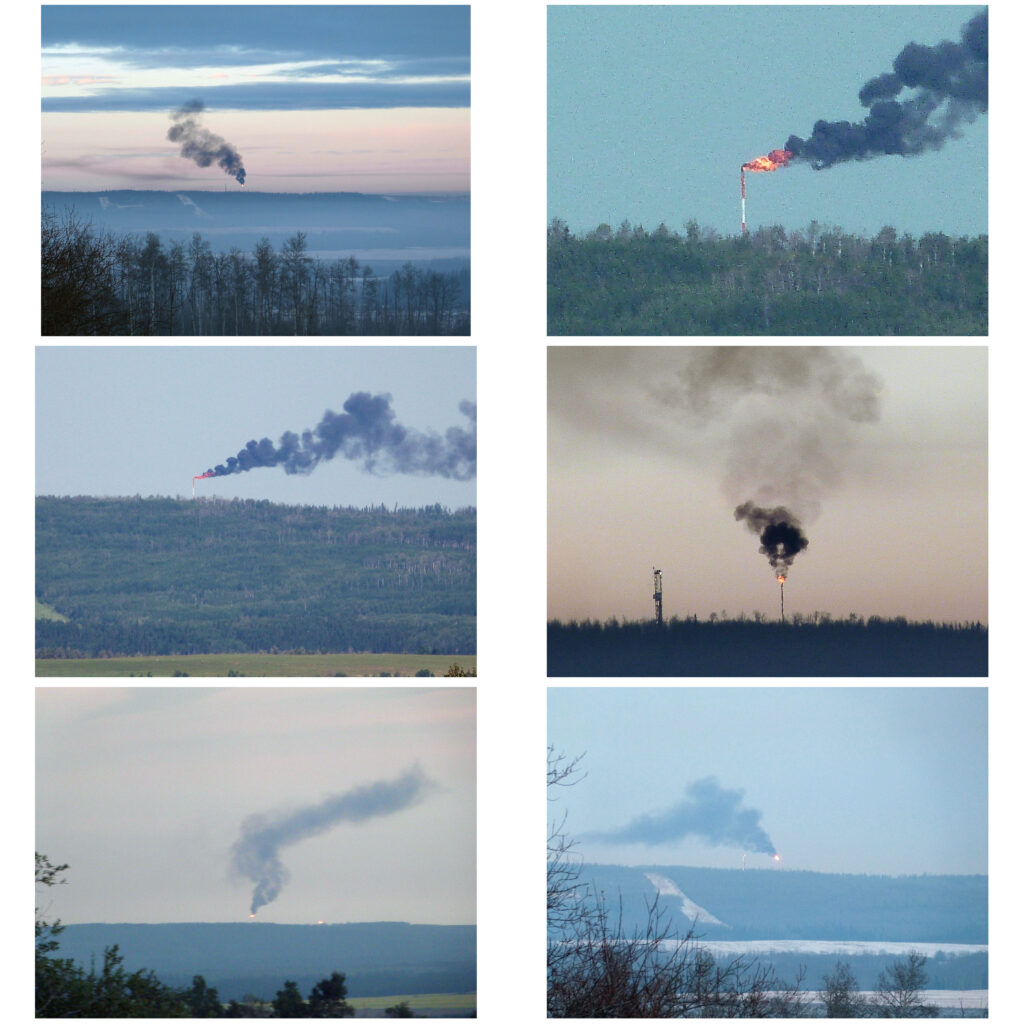
British Columbia is a different story. It already has 98-per-cent clean electricity through hydroelectric power. BC Hydro has projected that achieving 100-per-cent clean energy and shutting the natural gas peaking plants would add massive cost. Similar dynamics play out in Nova Scotia, Quebec and Manitoba.Ya, but, you neglect to mention how disgusting a polluter BC is with it’s massive frac’d sacrifice zones serving greed via LNG which will only massively drive up prices for Canadians to heat their homes, and pollute much much more via the incredible waste to ship the gas to the coast, cool it, export it, then heat it up again. LNG is STUPID STUPID STUPID. Photo below of a few toxic polluting frac flares in NEBC:
The situation is urgent, and long-term energy storage solutions are expensive. This doesn’t mean gas “peakers” forever; only until alternative technologies are proven at the scale and cost needed to get us through a January cold snap.
Modelling done by the Transition Accelerator (a Canadian think tank) shows that for Canada to achieve 2050 climate targets, roughly 60 per cent of current end-use energy needs to be electrified requiring a doubling of electricity supply. The entire climate strategy for Canada, and indeed most industrialized countries, depends on rapid electrification of transportation and heating.BUT BUT BUT, stolen stupid AI will guzzle up much electricity and water, driving up prices for all other uses, rendering electrifying heating and transport out of reach for most Canadians and most business. STUPID STUPID STUPID!
This is where the paradox becomes dangerous and introduces the counterintuitive idea that total decarbonization of the electricity grid could stall economywide electrification and delay the achievement of climate change targets.
Here’s the problem: Consumers make decisions based on affordability. A family considering an electric vehicle or heat pump compares the lifetime operating costs against conventional alternatives. If electricity rates increase 30 per cent while natural gas prices remain stable, the case for electrification weakens considerably. That heat pump is less appealing if it means higher heating costs.EXCUSE ME!? LNG and gross over build of useless polluting AI will drive up natural gas prices out of reach for all but rich Canadians, and will likely bankrupt companies from coast to coast to coast.
Now more than ever, we need a thoughtful approach to electricity planning. Maintaining a small percentage of natural gas generation for peak demand provides low-cost reliability while still achieving 95-per-cent decarbonization in the power sector. The mathematics are compelling. The emissions from gas peaker plants running a couple of hundred hours per year pale in comparison with the emissions avoided by accelerating electrification of transportation and heating.
Regulations are important to drive decarbonization, but flexibility is foremost if we are to double down on the main issue: rapidly accelerating the electrification of the economy.
B.S.H.:
Renewables with storage are now capable of 100 percent availability. Solar or wind with storage are more reliable and more available than any other form of power, as well as being the fastest and cheapest to build. Gas peaker turbines do not like high or low temperatures, as Texas found out during hot and cold snaps; Renewables are what kept working; Texas is ahead of most places in implementation. Obstacles such as Danielle Smith need to be moved aside. Her interests are directed by her fossil fuel controllers, not the interests of Albertans.
Moving to Natural Gas for power is not actually “Decarbonisation”; it is a fossil fuel. For the money and time wasted on building gas plants; renewables with storage can be become operational.
Geothermal energy has a place in all this. Alberta and BC can harness that power using the equipment and skills from the oil patch. Nuclear is a failed technology from a 1950’s fantasy when it was promised to give; “Power too cheap to meter”; In fact; Nuclear is the most expensive, longest to build, most toxic (not “Green” in any way) and, When required maintenance is considered over the life of reactors, Nuclear is less available than wind; Fact!
One’s Opinions are Never Wrong:
Green energy, blue hydrogen, green hydrogen are boondoggles perpetrated on politicians wholike Mark Carney are out right lying orhave ZERO understanding of thermodynamics, enthalpy, entropy, and Gibbs Ffree Energy but are willing to appear to be “doing something” to save the envronment. Sadly, they don’t teach thermodynamics in the polysci programs that most politicos take as a prerequisite to politics. Meanwhile the energy companies have their hands in taxpayers’ pockets extracting tax incentives/writeoffs, receiving research grants for unproven boondoggles like carbon capture and the like. Start with transportation… double railway trackage and take thousands of long haul truckers off the highways plus reduce highway maintenance. Encourage small motors, a 2 liter engine produces half the pollution of a 4 liter engine, etc. incentivize installing Venturi like scubbers on smokestacks which reduce off gases by a large margin. Take a wholistic approach to CO2 production… that includes energy losses in transmission lines to recharge EVs, etc.
…
and start with population control (the users of energy)… religious leaders are you listening??
app_74652053:
The author’s calculus is suspect and his lack of awareness of the ongoing technological advances in renewable production and mass energy storage is regrettable. Our personal experience, after a year of having a grid-tied, solar array installed, is that we have found our electricity cost is now immaterial. All our gas appliances are now removed and our heat pump and E.V. operational costs are limited to maintenance only.
app_78828988:
Alberta and Sask have abundant sunshine even when it’s super cold. They also have abundant wind. I know there is loss of efficiency in electrical transmission when the temperature is low, but that doesn’t make either one infeasible. Even in the cloudy Pacific NW, I was able to cut my electricity bill in half using roof solar in Portland OR (47 deg).
The biggest problem with solar and wind in Canada is the propaganda of oil and gas producers saying it’ll never work. Batteries are coming soon that can hold all you need. Canada’s biggest problem is lack of a ubiquitous, integrated robust grid with smart tech to distribute power efficiently.
Here are the NGOs etc. that were given money by IVEY Fdn. Some of these “groups” were created by this IVEY foundation. Why did some money go to Pembina Institute and Pembina Foundation? They’re the same fucking frac-enabling NGO?
Also, note the NGO “Clean Prosperity” below. It’s received nearly $2M directly, and more funding indirectly. PS It is impossible to create “clean” prosperity!
Award Date
Recipient
Recipient City
Project Name
Term
Amount (CAD)
2024
Accelerate Alliance
Canada-wide
Building Public Support for ZEV Supply Chain
2 years
650,000
2024
Alberta Federation of Labour
Alberta
Diversify Alberta
2 years
800,000
2024
New Majority
Canada-wide
Supporting Youth for Net-Zero
2 years
900,000
2024
Clean Economy Fund with New Economy Canada
Canada-wide
New Economy Canada Campaign
1 year
500,000
2023
Ecology Action Centre
Halifax
Energy Affordability Campaign
5 years
750,000
2023
National Farmers Union
Winnipeg
Climate and Canadian Agriculture Policy
3 years
780,000
2023
Canadian Climate Institute
Toronto
Scaling up Federal and Provincial Impact
3 years
3,000,000
2023
Alberta Federation of Labour
Edmonton
Alberta Worker and Public Education
1 year
425,000
2023
Clean Economy Fund
Toronto
Alberta Youth and Suburban Women for Climate Action
1 year
300,000
2023
Salal Foundation
Victoria
Alberta Energy Transition Phase II
1 year
225,000
2023
Simon Fraser University with Clean Energy Canada
Burnaby
Keeping Canada on the Path to Net-Zero
3 years
2,250,000
2023
Clean Prosperity
Toronto
Creating Climate Policy Stability
3 years
1,575,000
2023
Electric Mobility Canada
Ile des Sœurs
Provincial and Federal ZEV Advocacy
3 years
1,050,000
2023
University of British Columbia, Peter A. Allard School of Law with Canada Climate Law Initiative
Vancouver
Climate Solutions in Corporate Board Rooms
3 years
800,000
2023
Farmers for Climate Solutions
Ottawa
Addressing the Gap in Canadian Agriculture Policy
3 years
1,100,000
2023
Canadian Association of Physicians for the Environment
Toronto
Expanding Physicians’ Voices for Climate Action
3 years
1,000,000
2023
Centre for Environmental Leadership in Canada
Ottawa
Parliamentary and Municipal Internships for Climate
3 years
400,000
2023
The Transition Accelerator
Calgary
Accelerating Canada’s Net-Zero Transition
3 years
13,000,000
2023
Carleton University, Efficiency Canada
Ottawa
Advancing Demand Side Solutions
3 years
1,800,000
2023
Clean Economy Fund
Toronto
National and Provincial Natural Gas Ban Campaign
2 years
1,350,000
2023
Institute for Sustainability, Education and Action (I-SEA) with National Observer
Salt Spring Island
Climate Solutions Reporting
3 years
500,000
2023
Carleton University
Ottawa
Rosamond Ivey Research Chair in Sustainability Transitions
4 years
2,500,000
2023
Clean Economy Fund with New Economy Canada
Ottawa
New Economy Canada
3 years
1,600,000
2023
First Nations Major Project Coalition Society
Vancouver
Indigenous Electricity and Critical Minerals
3 years
600,000
2023
Salal Foundation
Victoria
Economic Benefits of Energy Transition
1 year
310,000
2023
Pembina Institute
Calgary
Fast Forward on Climate Policy
3 years
1,530,000
2023
Environmental Defence Canada
Toronto
Engaging in a Net-Zero Economy
3 years
2,100,000
2023
Clean Economy Fund
Ottawa
Collaborations for Climate Solutions
3 years
1,200,000
2023
Sustainability Network
Toronto
Building Canadian ENGO Capacity
3 years
450,000
2023
Royal Roads University Foundation with Cascade Institute
Victoria
Development of Ultradeep Geothermal Systems
3 years
450,000
2023
Carleton University with Re.Climate
Ottawa
Improving Climate Communications and Engagement
3 years
600,000
2022
Canadian Association of Physicians for the Environment
Toronto
Leveraging Physicians’ Voices for Climate Action
1 year
200,000
2022
Canadian Climate Institute
Toronto
Climate Commitment and Progress Tracker
1 year
325,000
2022
Carleton University
Ottawa
Building Decarbonization Accelerator
2 years
450,000
2022
Carleton University
Ottawa
Climate Activation Canada: ReClimate
1 year
130,000
2022
Carleton University
Ottawa
Net-Zero Industrial Policy Centre
1 year
175,000
2022
Clean Economy Fund with First Nations Major Projects Coalition
Toronto
Indigenous Capacity to Support Electrification
1 year
290,000
2022
Clean Economy Fund with Future Majority
Toronto
Energy Transition in Alberta with Youth and Women
1 year
200,000
2022
Clean Economy Fund
Toronto
Collaborations for Net-Zero
1 year
395,000
2022
Columbia Institute with SHARE and Influence Map
Vancouver
Corporate Climate Policy Alignment
1 year
100,000
2022
Columbia Institute with SHARE and CEC
Corporate Climate Policy Alignment
2 years
270,000
2022
Conservation Council of New Brunswick
Fredericton
Atlantic Canada Net-Zero Electricity Transition
1 year
150,000
2022
Environment Funders Canada
Toronto
Securing Climate Policy Success
1 year
105,000
2022
Environmental Defence
Toronto
Automotive Sector and ZEVs
1 year
125,000
2022
Green Teacher with EnergiMedia
Brighton
Net-Zero Communications 2022
1 year
100,000
2022
International Institute for Sustainable Development
Winnipeg
Electrifying Canada Bridge Funding, Phase 2
1 year
75,000
2022
National Farmers Foundation with National Farmers Union
Saskatoon
Advancing Climate Policy in Agriculture
1 year
50,000
2022
Ontario Clean Air Alliance Research Inc.
Toronto
Natural Gas Phase-Out in Ontario
1 year
150,000
2022
Pembina Institute with Electric Mobility Canada
Toronto
Federal Investment in EV Infrastructure
1 year
160,000
2022
Pembina Institute
Toronto
Future of Electricity in Alberta and Reducing Oil and Gas Emissions
2 years
540,000
2022
Public Policy Forum
Ottawa
Electrification Table and Energy Summit
1 year
75,000
2022
Queen’s University, Institute for Sustainable Finance
Kingston
Expand Capacity of Sustainable Finance
2 years
500,000
2022
Royal Roads University Foundation, Cascade Institute
Victoria
Accelerating Ultradeep Geothermal Deployment
1 year
150,000
2022
Salal Foundation with Alberta Environmental Network
Victoria
Alberta Energy Transition
1 year
225,000
2022
Salal Foundation with STAND
Victoria
Safe Cities Canada
1 year
75,000
2022
Simon Fraser University with Clean Energy Canada
Burnaby
Assessing the Real Costs of Renewables
1 yer
100,000
2022
Sustainability Network with GreenPAC
Toronto
Parliamentary Internship – Indigenous focus
1 year
75,000
2022
The Institute for Sustainability, Education and Action with National Observer
Surrey
Net-Zero Finance Reporting
1 year
75,000
2022
The Natural Step
Ottawa
Climate and Conservatives
1 year
55,000
2022
The Transition Accelerator with Accelerate
Calgary
Building a ZEV Supply Chain Roadmap
2 years
500,000
2022
The Transition Accelerator with Propulsion Québec
Calgary
Roadmap for Electric and Smart Transport
1 year
100,000
2022
The Transition Accelerator
Calgary
Supporting Electrification in Canada
1 year
655,000
2022
The Transition Accelerator
Supporting Electrification in Canada
2 years
700,000
2022
University of British Columbia, The Peter Allard School of Law, with Canadian Climate Law Initiative
Vancouver
Finance Sector Climate Governance
1 year
100,000
2022
University of Ottawa with Smart Prosperity Institute
Ottawa
Advancing Net-Zero Industrial Strategy
1 year
182,500
2022
Wildlife Conservation Society
Toronto
Peatlands and Climate Policy Framework
1 year
50,000
2021
Carleton University
Ottawa
Research and Knowledge Mobilization to Promote Canada’s Progress Towards Net-Zero
1-year
220,000
2021
Carleton University
Ottawa
Helping Canada Adopt a Mission-Oriented Approach to Green Industrial Strategy
1-year
100,000
2021
Carleton University with Efficiency Canada
Ottawa
Operating Support
1-year
300,000
2021
Clean Economy Fund
Ottawa
Organizational Review
1-year
100,000
2021
Clean Economy Fund with Canadians for Clean Prosperity
Ottawa
Expanding Support for Carbon Pricing
1-year
100,000
2021
Columbia Institute with SHARE,
Vancouver
Climate Engagement Canada (CEC)
1-year
50,000
2021
Environment Funders Canada with the Low Carbon Funders Group
Toronto
Supporting Climate Policy in Canada
1-year
335,000
2021
Environmental Defence Canada
Toronto
Exposing the Automotive Sector’s Resistance to Electric Vehicles
1-year
100,000
2021
Institute for a New Economy with Canada Green Building Council
Ottawa
Workforce 2030: Elevating Low Carbon Skills Development for Federal and Provincial Governments
1-year
100,000
2021
Institute for a New Economy with Iron and Earth
Edmonton
Renewable Skills Initiative 2022
1-year
75,000
2021
International Institute for Sustainable Development (IISD)
Winnipeg
Support for IISD Climate Change Initiatives
1-year
350,000
2021
Advocacy to Accelerate EV Adoption in Canada through an Electric Mobility Strategy for Canada
Calargy
Pembina Institute with Electric Mobility Canada
1-year
50,000
2021
Public Policy Forum
Ottawa
Energy Future Forum (Phase 2)
1-year
75,000
2021
Ryerson University with Future Majority
Toronto
Organizing Young Suburban Canadians for Climate Action
1-year
200,000
2021
SeedChange Canada
Ottawa
Farmers for Climate Solutions and National Farmers’ Union Support
1-year
450,000
2021
Simon Fraser University with Clean Energy Canada
Vancouver
Advancing the Decarbonization of Heavy Industry in Canada
1-year
300,000
2021
Sustainability Network with GreenPAC
Toronto
Parliamentary Internship for the Environment and 100 Debates for the Environment
1-year
75,000
2021
Transition Accelerator
Calgary
Assessing the Workforce Required to Advance a Hydrogen Economy and Zero Emissions Vehicle (ZEV) Supply
1-year
125,000
2021
Transition Accelerator
Calgary
Accelerating Electrification in Canada
1-year
525,000
2021
Transition Accelerator
Calgary
Accelerate Alliance Phase 2
1-year
250,000
2021
University of Ottawa with Smart Prosperity and The Natural Step
Ottawa
Increasing the Efficacy of Green Public Procurement and Engaging Conservative Voices in Clean Growth
1-year
75,000
2020
Support for the Task Force for a Resilient Recovery
Ottawa
Clean Economy Fund
1-year
190,000
2020
Operational Support
Clean Economy Fund
Ottawa
1-year
65,000
2020
Carleton University, Efficiency Canada and Canada Green Building Council
Ottawa
Workforce 2030: Advancing a Low-Carbon Workforce in Ontario
1 year
75,000
2020
Carleton University, Efficiency Canada
Ottawa
The Time is Now: Accelerating Energy Efficiency in Canada
1-year
150,000
2020
Clean Economy Fund with Canadians for Clean Prosperity
Ottawa
Deepening Multi-party Climate Ambition
1-year
100,000
2020
Columbia Institute
Toronto
Our Canada Project
1-year
100,000
2020
Ecojustice
Toronto
Strengthening Canada’s Environmental Laws
1-year
50,000
2020
Ecology Action Centre
Halifax
Building a Green and Just Recovery
1-year
75,000
2020
Environmental Defence
Toronto
Supporting a Clean Recovery by Investigating the Lobbying Activities of the Oil and Gas Industry
1-year
50,000
2020
Environmental Defence
Toronto
Exposing Automotive Sector’s Resistance to Electric Vehicles
1-year
75,000
2020
Environmental Funders Canada with Climate Action Network
Ottawa
Guiding a Just Recovery to Stimulate Canada’s Low Carbon Economy
1-year
75,000
2020
International Institute for Sustainable Development
Winnipeg
Creation of Energy Transitions Commission
1 year
100,000
2020
Mohawk College
Hamilton
Canadian Colleges for a Resilient Recovery: National Communications Strategy
1 year
75,000
2020
Public Policy Forum
Ottawa
Energy Future Forum
1 year
75,000
2020
Ryerson University, Future Majority
Toronto
Organizing Young Suburban Canadians for Action on the Climate Crisis
1 year
75,000
2020
SeedChange Canada
Ottawa
Farmers for Climate Solutions
1 year
125,000
2020
SeedChange with National Farmers Union
Ottawa
Farmers for Climate Solutions – National Farmers Union Role in Climate Solutions Leadership
1 year
125,000
2020
Simon Fraser University, Clean Energy Canada
Vancouver
The Next Steps in Decarbonizing Canada’s Industrial Sector
1 year
175,000
2020
Smart Prosperity
Ottawa
Economic Analysis in Support of Clean Growth
1 year
50,000
2020
Sustainability Network
Toronto
Supporting and Strengthening Canada’s ENGO Community for Economy and Environment
1 year
65,000
2020
The Institute for New Economics with Iron & Earth
Edmonton
Net-Zero Workforce Support
1 year
75,000
2020
The Natural Step Canada
Ottawa
Canadian Business for Climate Policy Campaign Development, Launch and Expansion
1 year
75,000
2020
The Transition Accelerator
Ottawa
Zero-Emission Vehicles Industrial Strategy Support
1 year
110,000
2020
The Transition Accelerator
Ottawa
Capitalizing on the Hydrogen Economy Momentum
1 year
200,000
2020
Trottier Energy Institute with Foundation et Alumni de Polytechnique Montréal
Montréal
Strategic Dialogues on Climate Change Policy Research in Canada
1 year
50,000
2020
The University of British Columbia, Peter Allard School of Law
Vancouver
Commonwealth Climate and Law Initiative – Canada Phase III
2-years
50,000
2020
Wildlife Conservation Society Canada
Toronto
Carbon Markets and Finance to Protect Canada’s Land Sinks
1 year
100,000
2019
SHIFT Initiative
Vancouver
Tides Canada
2 year
75,000
2019
Canada’s Ecofiscal Commission, 2017-2019
Montreal
McGill University, Canada’s Ecofiscal Commission
3 year
225,000
2019
Establishing the Transitions Pathway Accelerator
Ottawa
Carleton University
3 year
250,000
2019
Commonwealth Climate Law Initiative
Vancouver
University of British Columbia- Allard School of Law
2 year
40,000
2019
Integrating Economy and Environment through Policy Renewal
Halifax
Ecology Action Centre
2 year
75,000
2019
Finding Climate Solutions through Sustainable Agriculture
Ottawa
USC-Canada (name changed to SeedChange)
1 year
75,000
2019
Institute for Sustainable Finance
Kingston
Queens University, Smith School of Business
3 year
750,000
2019
Canadian Institute for Sustainable Finance Development phase 2
Kingston
Queens University, Smith School of Business
1 year
150,000
2019
Growing the Clean Economy in Canada
Vancouver
Simon Fraser University with Clean Energy Canada
1 year
150,000
2019
Seeding Climate Resilience: Farmer Perspectives on Climate Change in Canada
Winnipeg
Prairie Climate Centre (PCC)
1 year
100,000
2019
Implementing a communication strategy for health-focused climate messaging
Toronto
Ontario Public Health Association (OPHA)
1 year
125,000
2019
Carbon Pricing Literacy and Action: Parliamentary Internship for the Environment and the 100-in-a-day-debates
Toronto
Sustainability Network with GreenPAC
1 year
75,000
2019
Engaging Ontarians to Prioritize the Environment
Toronto
Environmental Defence Canada
1 year
115,000
2019
Foundations for New Conversations: Redirecting public and private investment in Canada’s oil sector & agriculture sector
Winnipeg
IISD
2 year
150,000
2019
Finding Climate Solutions through Sustainable Agriculture
National Farmers Union
1 year
75,000
2019
Development of Canadian Business Coalition on Climate Policy
Ottawa
Carleton University, Business Coalition on Climate Policy
1 year
75,000
2019
Reforming Canada’s Environmental Laws
Toronto
Ecojustice
1 year
125,000
2019
The 3% Project to Mobilize 1,000,000 students
Toronto
Foundation for Environmental Stewardship (FES)
1 year
100,000
2019
Easing the (Climate) Squeeze
Vancouver
Vancity Community Foundation with Generation Squeeze
1 year
50,000
2019
Climate Legacy
Ottawa
Group 78
1 year
45,000
2019
Families in Canada’s Changing Climate
Toronto
Friends of the Greenbelt Foundation
1 year
31,000
2019
Climate Community Leaders Canada- Building Local Capacity to Accelerate Climate Action
City of Surrey
City of Surrey with the Canadian Urban Sustainability Practitioners (CUSP) Network
1 year
50,000
2019
Enhancing “Most of Us” public engagement campaign
Vancouver
Columbia Institute
1 year
100,000
2019
Mission. Accelerate. Mobilizing Youth-led Momentum for the Low-carbon Transition
Toronto
Environment Funders Canada (formerly CEGN) with Youth Climate Action
1 year
35,000
2019
Communicating for Lasting Success in the Climate Movement
Ottawa
Environment Funders Canada (formerly CEGN) with Climate Action Network (CAN-Rac)
1 year
35,000
2019
The Climate Change Communications Hub (C3H)
Vancouver
Simon Fraser University, Centre for Dialogue
1 year
200,000
2019
Our Human Energy’ communications campaign
Ottawa
Efficiency Canada- Carleton University
1 year
75,000
2019
Carbon pricing myths: Social Media Campaign
Montreal
University of McGill, Canada’s Ecofiscal Commission
1 year
20,000
2019
Social media enhancement strategy
Vancouver
Simon Fraser University with Clean Energy Canada (CEC)
1 year
100,000
2019
Fair Path Forward campaign
Montreal
Clean Economy Canada with Canadians for Clean Prosperity (CCP)
1 year
100,000
2018
Carleton University
Ottawa
Building Credible, Compelling Decarbonization Pathways for Canada
1 year
75,000
2018
Carleton University
Ottawa
Establishing the Transitions Accelerator
3 years
750,000
2018
Clean Economy Fund
Ottawa
Research Priorities for 2018-2019
2 years
360,000
2018
Columbia Institute
Vancouver
Engaging Canadians in the Clean Economy, “Our Canada” campaign
1 year
250,000
2018
Ecology Action Centre
Halifax
Integrating Economy and Environment through Policy Renewal
2 years
150,000
2018
Green Economy Canada, Canadian Environmental Grantmakers’ Network
Toronto
Business Leading in the Low Carbon Economy
1 year
100,000
2018
Queen’s University, Smith School of Business
Kingston
Developing a Canadian Institute for Sustainable Finance
1 year
50,000
2018
University of British Columbia
Vancouver
Phase II Canada: Commonwealth Climate and Law Initiative
2 years
115,000
2018
CPAWS, Stand.earth
Ottawa
Advancing the Healthy Forests Campaign
1 year
75,000
2018
Wildlife Conservation Society
Toronto
Support for Effective Implementation of Target 1 Commitment
1 year
50,000
2017
Carleton University
Ottawa
Building an Effective National Champion for Energy Efficiency
2 years
350,000
2017
Clean Economy Fund
Toronto
Research Priorities for 2017-2018
1 year
210,000
2017
CPAWS, STAND (formerly ForestEthics)
Ottawa
Protecting the Boreal Forest with Stand.earth
1 year
75,000
2017
Ecojustice
Toronto
Environmental Law Reform in Canada
1 year
100,000
2017
Ecology Action Centre
Halifax
Building on Leadership: Strengthening Nova Scotia’s Clean Economy
1 year
105,600
2017
Environmental Defence Canada
Toronto
Securing a Federal Climate Strategy and a Clean Economy
1 year
100,000
2017
FSC Canada
Montreal
Field-Testing New National FSC Standard
1 year
75,000
2017
International Institute for Sustainable Development
Winnipeg
Building IISD’s Capacity to Contribute to Canada’s Low Carbon Economy Transition
2 years
300,000
2017
Pembina Foundation
Calgary
Accelerating Energy Efficiency: Removing Barriers and Advancing Policy and Market Solutions in Key
2 years
160,000
2017
Simon Fraser University, Clean Energy Canada
Vancouver
Accelerating Canada’s Clean Energy Transition
2 years
300,000
2017
University of Ottawa, Smart Prosperity Institute
Ottawa
North American Low Carbon Convening Series
1 year
95,000
2016
CPAWS, STAND (formerly ForestEthics)
Ottawa
STAND Boreal Forest Campaign 2016
1 year
75,000
2016
Clean Economy Fund
Toronto
National Energy Efficiency Strategy and Energy Modelling
1 year
108,900
2016
Clean Economy Fund
Toronto
Scaling Up the Clean Economy Fund
1 year
250,000
2016
Environmental Defence Canada
Toronto
Locking in a Clean Economy
1 year
75,000
2016
Evergreen
Toronto
Infrastructure Procurement Policy Project
1 year
30,000
2016
McGill University, Canada’s Ecofiscal Commission
Montreal
Market-based Instruments: Training for Senior Policy Makers (Phases 2 and 3)
2 years
317,372
2016
McGill University
Montreal
Canada’s Ecofiscal Commission
3 years
675,000
2016
Pembina Foundation
Calgary
Capturing Western Canada’s Energy Efficiency Potential
1 year
30,000
2016
Simon Fraser University, Beedie School of Business (Social Currents)
Vancouver
Social Currents
2 years
300,000
2016
Sustainability Network
Toronto
Enviro ELP 2.0 (Phase 2)
2 years
110,000
2016
Sustainability Network, Sustainability CoLab
Toronto
Renewal: Communicating Progress in Advancing Ontario’s Low Carbon Economy
2 years
150,000
2016
Tides Canada
Vancouver
SHIFT Initiative
2 years
200,000
2016
TNC Canada
Toronto
Building a Model for Sustainable Rural Economies and Achieving FSC Certification
1 year
75,000
2016
University of Waterloo, Centre for International Governance Innovation
Waterloo
Sustainable Finance Opportunities and Barriers in Canada
1 year
50,000
2016
York University, Osgoode Hall Law School
Toronto
Commonwealth Climate and Law Initiative [CCLI]
1 year
75,000
2015
Canadian Parks and Wilderness Society (Global Forest Watch Canada)
Ottawa
Mapping Comprehensive Wealth in Canada
1 year
30,000
2015
Carleton University, Carleton Centre for Community Innovation
Ottawa
Canadian Impact Infrastructure Exchange [CIIX] Pilot
1 year
50,000
2015
Clean Economy Fund
Toronto
Clean Economy Fund Support Grant
1 year
75,000
2015
Conference Board of Canada
Ottawa
Developing a Low Carbon Economy for Canada
2 years
300,000
2015
Ecology Action Centre
Halifax
Building on Nova Scotia’s Green Economy Achievements
1 year
100,000
2015
Environmental Defence Canada
Toronto
Creating the Clean Economy
1 year
75,000
2015
Pembina Foundation
Alberta
Carbon Pricing Leadership in Alberta
1 year
40,000
2015
Simon Fraser University, Beedie School of Business (Social Currents)
Vancouver
Greening Economy Narrative: Meeting the New Media Imperative
1 year
50,000
2015
Simon Fraser University, Clean Energy Canada
Vancouver
Advancing a Clean Economy for Ontario
1 year
100,000
2015
Simon Fraser University, Clean Energy Canada
Vancouver
Setting Strong Carbon and Clean Energy Policy Precedents for Alberta and Ontario
2 years
300,000
2015
Sustainability Network (Sustainability CoLab)
Toronto
Communicating Progress in Advancing Ontario’s Low Carbon Economy
1 year
60,000
2015
University of Toronto, Institute for Competitiveness and Prosperity
Toronto
Envisioning a Carbon Neutral Economy in Ontario
1 year
50,000
2015
University of Waterloo, Centre for International Governance Innovation
Waterloo
Laying the Foundations for a Stronger Clean Tech Sector in Canada
1 year
110,000
2014
International Institute for Sustainable Development
Winnipeg
Measuring Wealth in a Resource Economy
2 years
150,000
2014
International Institute for Sustainable Development
Winnipeg
Towards a Cleaner, Healthier Canada
2 years
150,000
2014
McGill University
Montreal
Canada’s Ecofiscal Commission
2 years
450,000
2014
Natural Step Canada
Ottawa
“Future Fit” Business Playbook
1 year
50,000
2014
Natural Step Canada
Ottawa
Natural Capital Lab
1 year
50,000
2014
Sustainability Network
Toronto
Economic Literacy Program
2 years
100,000
2014
Tides Canada Initiatives (Clean Energy Canada)
Vancouver
Amplifying Canadian Clean Energy Success Stories
1 year
50,000
2014
University of Ottawa
Ottawa
Strengthening the Business Case for Greening Canada’s Economy
This website stores cookies on your computer. These cookies are used to provide a more personalized experience and to track your whereabouts around our website in compliance with the European General Data Protection Regulation. If you decide to to opt-out of any future tracking, a cookie will be setup in your browser to remember this choice for one year.


 He absolutely is. Electricity will not get cheaper if we allow American AI to invade as enabled by corrupt hanky panky Evan Solomon and his $100M gift of our tax dollars to them, with the bonus of promised zero regulation.