Don email hidden; JavaScript is required:
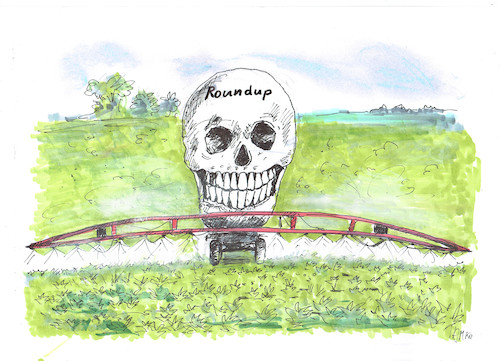
Hey, NOT OUR FIRST ROUNDUP !
We already have all the science clearly demonstrating the harms of Roundup and took steps to limit them.
Trump’s and Mark Carney’s environmental rollbacks are like Zombies coming for the health of all Americans.and Canadians (while Carney also is taking money from Canada’s public health care to give to American rich oil and gas and AI companies, and military).
Associations of Glyphosate Exposure in Pregnancy with Preterm Birth: a Longitudinal Birth Cohort Study by Teresa Herrera MPH, Fiona Fragoman, Akhgar Ghassabian MD PhD, Whitney Cowell PhD, Kim N. Cajachagua Torres MD PhD, Natasha Ard MD, Kurunthachalam Kannan PhD, Zhongmin Li PhD, Shilpi Mehta-Lee MD, Mengling Liu PhD, Heather H. Burris MD MPH, Leonardo Trasande MD MPP, July 14, 2026, Environmental Pollution
https://doi.org/10.1016/j.envpol.2026.128775Get rights and content
Under a Creative Commons license
Open access
Highlights
- •Glyphosate during mid-gestation was associated with preterm birth.
- •Aminomethylphosphonic acid was not associated with preterm birth.
- •Glyphosate may act on pathways known to induce spontaneous preterm birth.
Abstract
Background
Emerging data suggests that glyphosate, a non-selective herbicide, can influence reproductive health. We investigated associations of prenatal exposure to glyphosate and aminomethylphosphonic acid (AMPA), with preterm birth and its subtypes.
Methods
We used data from the NYU Children’s Health and Environmental Study, a prospective birth cohort in New York City (2016-2019). Participants (n=1450) provided urine samples at 4 to <18 weeks and 18 to 25 weeks gestation. Exposure was adjusted for creatinine and natural log transformed. Preterm birth was defined as a birth occurring before 37 weeks of gestation. We also explored preterm birth subtypes, spontaneous preterm births and medically indicated preterm births as secondary outcomes. To examine associations between glyphosate and AMPA at both timepoints with preterm birth, we used generalized estimating equations with a logit link function.
Results
Overall, 7% (n=103) of births were preterm. Glyphosate concentrations at 18–25 weeks was associated with preterm birth (OR: 1.35, 95% CI: 1.04, 1.76) and spontaneous preterm birth (OR: 2.01, 95% CI: 1.40, 2.90). AMPA was not associated with preterm birth in any model.
Conclusions
These results support evidence that glyphosate may act upon pathways leading to preterm birth and spontaneous preterm birth. Our study highlights pregnancy as a vulnerable period to glyphosate exposure.
Graphical abstract

…
Our findings are largely in line with findings of other epidemiologic studies. The MIREC study based in Canada is the largest study that has examined the relationship with glyphosate and preterm birth with a comparable sample size to ours. 16 Similar to the present study, the MIREC study reported null associations between early gestation glyphosate exposure and preterm birth, spontaneous preterm birth, as well as, gestational age. We extend this work and include assessment of exposure in mid-gestation, which was missing in the MIREC study. In the MIREC study, median specific gravity standardized concentrations were 0.25 μg/L for glyphosate and 0.21 μg/L for AMPA, respectively, compared to our 0.41 ng/ml or μg/L median for glyphosate and 0.35 ng/ml for AMPA in early gestation. We found that the exposure to glyphosate in mid-gestation, but not early gestation, was associated with preterm birth and spontaneous preterm birth. The PROTECT study conducted in Puerto Rico reported an association between glyphosate and AMPA urine levels and spontaneous preterm birth at >26 weeks potentially capturing exposure in the third trimester. 14 While we did not assess exposure between 26-37 weeks, the spontaneous preterm birth finding from our study provides additional evidence, along with the PROTECT study, that higher glyphosate concentrations in later pregnancy may be more relevant to preterm birth outcomes. Specific gravity corrected median concentrations in the PROTECT study were higher than ours for glyphosate at 0.50 μg/L compared to our median (0.44 μg/L) in mid gestation and less than our AMPA median (0.39 μg/L) at 0.30 μg/L.
…
CONCLUSIONS
The findings of this paper call for further research and regulatory action. Glyphosate is currently regulated under the Federal Insecticide, Fungicide, and Rodenticide Act, which requires the product must not cause unreasonable risk to human health.33 From a regulatory perspective, it is imperative that glyphosate be re-evaluated for potential reproductive harms. Additional studies on other pregnancy outcomes that precipitate preterm birth subtypes could help us better determine underlying mechanisms. Pregnant people and infants have long been regarded as vulnerable groups to the dangers of environmental exposure by experts. As glyphosate and AMPA become more prevalent in our environment, continued research into health effects and prioritization of reproductive health in regulatory risk evaluations are essential steps to protecting health.
Exposure to Weed Killer During Pregnancy May Increase Risk of Preterm Birth by NYULangone Health, July 22, 2026
Exposure to a widely used herbicide during the middle months of pregnancy may increase the chance of giving birth too early, before 37 weeks, a new study shows.
The investigation focused on glyphosate, the active chemical ingredient in professional-grade Roundup products, which are sprayed on commercial food crops, like grains and legumes, and on residential gardens. Residues of the chemical have been detected in cereals, snack foods, and fresh fruits and vegetables.
Led by NYU Langone Health researchers, the new study, which included 1,450 women, revealed that those with higher levels of glyphosate in urine samples collected during midpregnancy were more likely to go into spontaneous labor before 37 weeks than those with lower amounts of the herbicide.
This pattern was not seen when glyphosate was measured in the first few months of pregnancy. The study also found no link between the chemical and early births prompted by physicians for medical reasons, such as preeclampsia or poor fetal growth.
Past research has linked heavy use of the herbicide among farmworkers to non-Hodgkin lymphoma and other health concerns, but less is understood about everyday exposure, such as from eating foods with traces of the herbicide. More than 80 percent of Americans likely have detectable levels of the herbicide in their urine, according to the Centers for Disease Control and Prevention.
“Our findings add to a growing body of evidence that exposure to glyphosate early in life may lead to health concerns that can echo throughout a lifetime,” said study lead author Teresa Herrera, MPH, a doctoral candidate in the Department of Population Health at NYU Grossman School of Medicine.What’s glyphosate doing to other species?
Preterm birth is a leading cause of illness and death in newborns, and premature babies face higher risks of breathing problems, infections, and long-term learning and developmental challenges.
Laboratory studies in animals and cells have suggested that glyphosate might trigger inflammatory mechanisms that could lead to early labor. However, earlier investigations in humans have been small or inconsistent, and few have measured the herbicide at multiple time points in pregnancy, said Herrera.
Published online July 14 in the journal Environmental Pollution, the new work is among the largest studies to date examining glyphosate exposure during pregnancy and preterm birth in humans. It is also among a select few to measure the chemical at more than one point in pregnancy, according to the authors.
For the analysis, the research team used data from the Children’s Health and Environment Study, which tracks families’ health from pregnancy through childhood. Women in the study were planning to deliver at NYU Langone–affiliated hospitals in New York City between 2016 and 2019. They provided urine samples once between four and 17 weeks of pregnancy and again between 18 and 25 weeks.
The team reviewed medical records to see how far along each woman was at delivery and whether any early births were spontaneous or medically induced. Their statistical models also considered other factors that can affect preterm birth risk, such as age, past experiences during pregnancy, and education.
By separating spontaneous from medically induced cases, the researchers found that glyphosate’s effects seemed more closely tied to mechanisms that trigger labor on their own, such as inflammation, than to medical problems that lead clinicians to induce labor or perform an early cesarean section.
According to Herrera, families concerned about herbicides may want to choose organic grains and produce when possible and discuss questions with their healthcare providers. At the same time, because the herbicide is so widespread in the environment, individual choices alone are unlikely to eliminate exposure, she cautioned.
“These results underscore the need for stronger regulations to protect the health of pregnant women and infants, two groups long known to be especially vulnerable to chemicals in the environment,” said study senior author Leonardo Trasande, MD, MPP, the Jim G. Hendrick, MD, Professor of Pediatrics at NYU Grossman School of Medicine.
“Organic farming methods can produce competitive yields, so the trade-off between weed control and long-term health risks is not as straightforward as is often portrayed.”
Dr. Trasande, who is also a professor in the Department of Population Health and director of NYU Grossman School of Medicine’s Division of Environmental Pediatrics and Center for the Investigation of Environmental Hazards, cautioned that the analysis cannot prove that glyphosate directly causes preterm birth.
The researchers next plan to examine the mechanisms through which glyphosate exposure may affect fetal development and birth.
Funding for the study was provided by National Institutes of Health grants R01ES032214 and ES036249.
Dr. Trasande has received travel reimbursement support from the Endocrine Society, the World Health Organization, the United Nations Environment Programme, Japan Environment and Health Ministries, and the American Academy of Pediatrics. He also serves as a board member of Beautycounter, Ahimsa, Grassroots Environmental Education and Footprint. None of these activities were related to the current study. The terms and conditions of all these relationships are being managed by NYU Langone Health.
Along with Herrera and Dr. Trasande, NYU Langone researchers involved in the study were Whitney Cowell, PhD, MPH; Kim Cajachagua Torres, MD, PhD; Natasha Ard, MD; Kurunthachalam Kannan, PhD; Zhongmin Li, PhD; Shilpi Mehta-Lee, MD; Mengling Liu, PhD; and Akhgar Ghassabian, MD, PhD. Other study co-investigators include Fiona Fragomen at Case Western Reserve University and Heather Burris, MD, MPH, at the University of Pennsylvania.
About NYU Langone Health
NYU Langone Health is a fully integrated health system that consistently achieves the best patient outcomes through a rigorous focus on quality that has resulted in some of the lowest mortality rates in the nation. Vizient Inc. has ranked NYU Langone No. 1 out of 118 comprehensive academic medical centers across the nation for four years in a row, and U.S. News & World Report recently ranked four of its clinical specialties number one in the nation. NYU Langone offers a comprehensive range of medical services with one high standard of care across seven inpatient locations, its Perlmutter Cancer Center, and more than 320 outpatient locations in the New York area and Florida. The system also includes two tuition-free medical schools, in Manhattan and on Long Island, and a vast research enterprise.
Media Inquiries
Shira Polan
Phone: 212-404-4279
email hidden; JavaScript is required
@ssteingraber1.bsky.social:
NEW RESEARCH: a large-scale study found that pregnant women in NYC with higher levels of the weedkiller glyphosate (Roundup) in their urine are more likely to give birth prematurely.
Exposure was likely from food.
80% of us have glyphosate in our bodies.
“By separating spontaneous from medically induced cases, the researchers found that glyphosate’s effects seemed more closely tied to mechanisms that trigger labor on their own, such as inflammation, than to medical problems that lead clinicians to induce labor or perform an early cesarean section.”
“Glyphosate exposure is fundamentally a systems problem. Real reductions require policy decisions about how and where glyphosate is used. Changes like choosing organic foods are not equally available to everyone and can’t replace upstream actions that prevent exposure in the first place.”
Refer also to: