Yellow warblers are stuck with the wrong beaks in a warming world by Jordan Joseph, Oct 1, 2025, Earth.com
Climate change is not waiting for the next century. It is changing local conditions today, and some wild populations are struggling to keep up.
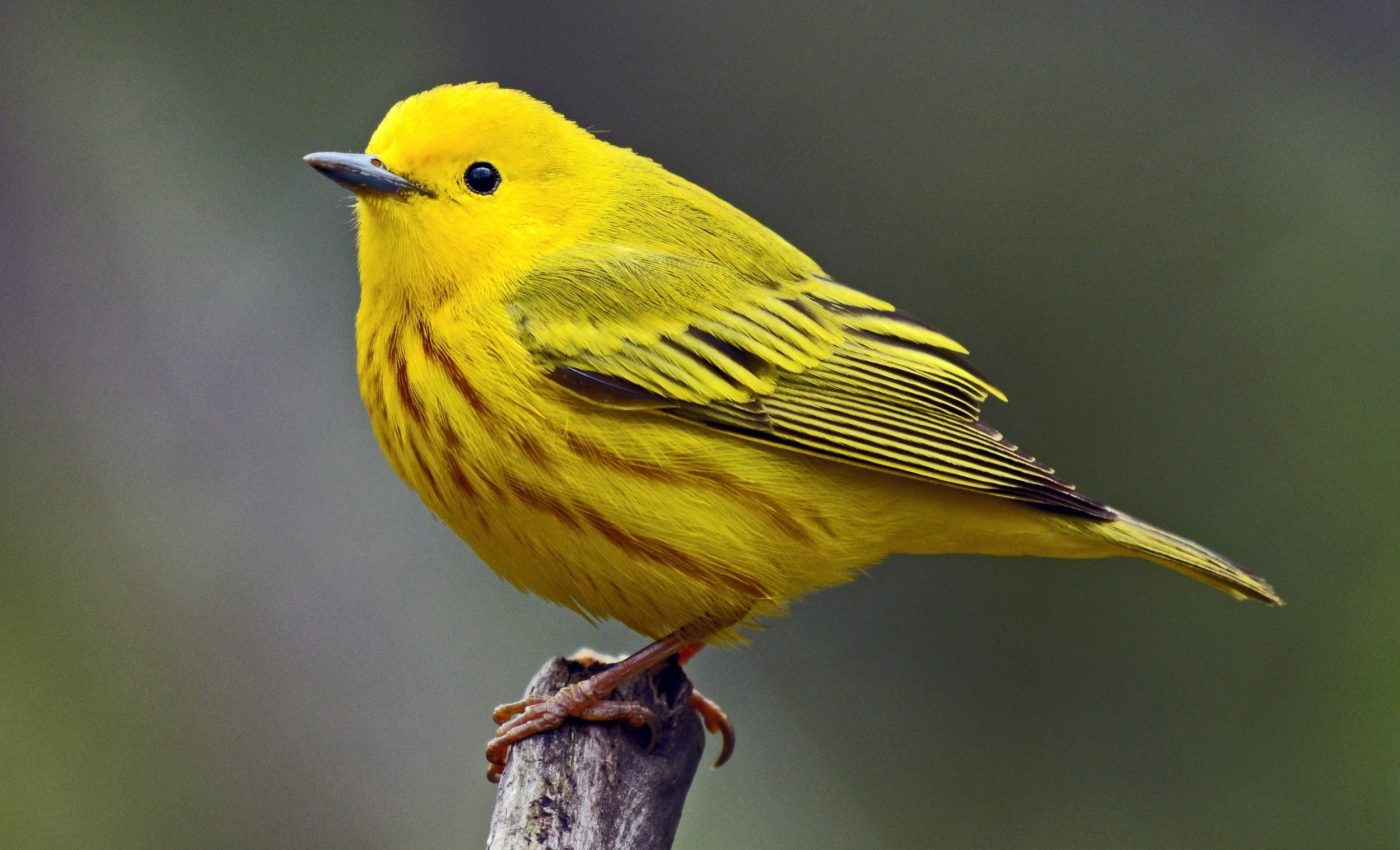
In a new study, researchers have tracked how genetics, beak shape, and weather combine to affect the yellow warbler’s health across North America.
The results reveal where birds are already mismatched with the climate they now face.
The role of warbler beaks
The study was led by Marina Rodriguez at Colorado State University (CSU). Her team focused on the bill because it affects heat and water balance, two pressures that rise as landscapes dry and warm.
A bird bill can function as a controllable thermal radiator, as shown with infrared imaging in toucans in previous research. Birds direct blood toward the bill to dump heat when hot, then restrict flow to conserve warmth when cool.
Genetic patterns and climate factors
The team measured bills, sequenced DNA, and linked both to local climate across the breeding range. The goal was to connect genes, traits, and environment without assuming a single driver.
The experts used a genome wide association study to map regions of the genome tied to bill form. They paired that with a gene-environment association to examine which climate factors corresponded with those genetic patterns.
Precipitation emerged as the leading environmental factor tied to genetic variation that affects bill depth and shape. That link points to water balance and evaporative loss as major pressures in drier places.
How rain shapes warbler beaks
Beaks do more than gather food. Across many songbirds, beak size also shifts with temperature. This is consistent with Allen’s rule, which predicts larger appendages in warmer sites where shedding heat matters more.
The yellow warbler results align with this idea by highlighting climate’s role in shaping bill traits.
In newly arid areas, birds with shallower bills relative to local conditions showed signs of strain. The genetic signals pointed toward selection favoring bill forms that better manage heat and water loss when rain is scarce.
Stress signals in warblers
The team asked whether the mismatch between bill form and local climate had a cost inside the body. They turned to telomeres, the protective DNA caps at chromosome ends that generally shorten with age and often shorten faster under physiological stress.
Independent field experiments in wild seabirds show that early life stress reduces telomere length, giving a direct link between stress exposure and shortening in living birds.
This background supports the use of telomere length as a practical stress biomarker in wildlife.
Warblers whose bills deviated most from the historical bill precipitation relationship had shorter telomeres. That pattern fit the team’s prediction that birds not keeping pace with drying conditions would show higher physiological stress.
The approach reduces the need for long term tracking of survival or reproduction at every site. A small blood sample can reveal early warnings when populations begin to slip.
Why warblers matter now
“People may think of climate change as something that will happen in the future, but as this work shows, species are already feeling these effects and are struggling to adapt and survive,” said Rodriguez.
She noted that bringing genes, traits, climate, and stress into one analysis gives a clearer picture of risk.
The study’s framework also helps avoid a common pitfall. If range shifts alone explained today’s patterns, the genetic signals would look different, but the team accounted for history and still found climate linked genetic associations and stress outcomes.
Telomeres guide action
Telomeres do not replace demographic fieldwork. They add a simple, repeatable measure that translates stress into a number that can be compared among sites and years.
When combined with genetic offsets and trait measurements, telomeres point to places where birds are closest to the edge. That can guide where habitat restoration or water management could have the largest payoff. but, our evil species will just destroy whatever is restored and slurp up stupidly – like for frac’ing or AI – whatever water is managed.
Telomere biology can vary by species and life stage, and not every stressor yields the same telomere response. That is why pairing telomeres with direct genetic and trait data matters.
Beak form is also shaped by diet and behavior. The strength of this work is that precipitation linked genetic signals, beak measurements, and telomere patterns all point in the same direction.
Future research on warblers
The same blueprint can be tested in other species with drying habitats. By targeting known heat and water balance traits, researchers can see where adaptation is lagging and whether stress markers agree.
If managers can flag these lag zones early, they can prioritize sites where modest changes in shade, water, or vegetation structure might ease heat and dehydration costs.
This kind of focused action is more likely to help populations hold on as the climate keeps shifting.
The study is published in Proceedings of the National Academy of Sciences.
Farm animals may struggle to survive future heatwaves by Rodielon Putol, Oct 4, 2025, Earth.com
By the end of this century, cows, chickens, goats, and other farm animals may face serious physical stress just trying to stay alive.
Scientists have developed a method to predict how different animals will respond to rising temperatures – and the outlook is grim, especially if the planet warms by 2°C (3.6°F) or more.
Using climate models and massive datasets from three countries, researchers developed a global method to forecast how heat will affect livestock between 2050 and 2100. Their goal is straightforward: prevent the food supply from collapsing as the climate continues to shift.
Farm animals near their heat limits
Not all animals suffer equally in hot weather. The study found that small ruminants – like sheep and goats – in the Northern Hemisphere will be hit harder than their Southern Hemisphere cousins.
By 2100, goats and sheep in the Northern Hemisphere could be breathing up to 68 percent faster just to cool off. That’s significant. It means more energy spent on survival and less on producing meat, milk, or wool.
Among animals raised in tropical areas, dairy cows in the Southern Hemisphere are especially vulnerable to heat stress. Goats and beef cattle do better in the heat thanks to something called phenotypic plasticity – a natural ability to adapt their body features to different environments without changing their DNA.
But birds don’t handle heat the same way. Laying hens and quail in the Southern Hemisphere rank among the most heat-sensitive animals. Projections show their breathing rates could rise by 40 percent per minute by 2100. That kind of stress affects egg production, growth, and survival.
Redefining future farm animals
The research team was led by Iran José Oliveira da Silva of the University of São Paulo. The study is part of a long-term project focused on building a new model of sustainable animal farming.
The lead author, Robson Mateus Freitas Silveira, conducted the study as part of his doctoral thesis. It’s the fifth article in a series.
“We began this series by defining, for the first time, what a sustainable animal would be. We understand it to be one with low net carbon emissions, efficient in feed conversion and adaptation regardless of climatic conditions, as well as clinically healthy and high-performing,” Silveira said.
Mapping climate threats to livestock
Silveira and his team used data from Brazil, Spain, and Italy. They tracked everything from respiration rates and body temperature to blood markers and hormone levels.
The researchers built intelligent models using machine learning and climate projections from the Intergovernmental Panel on Climate Change (IPCC).
They examined sheep, goats, dairy and beef cattle, pigs, poultry, and quail. After analyzing 12 large databases, they projected how animals in different regions would handle the heat – and which ones faced the greatest risk.
“Dairy cattle and poultry, whether for egg production or slaughter, will already suffer immediate effects on the production cycle,” Silva said. “This is a warning sign for future production.”
“That’s why it’s important to work together on genetics and the environment. We seek to analyze what will happen in the future to warn and alert producers, researchers, and public policymakers.”
Population growth fuels food strain
The human population is expected to grow to 10 billion by 2050. At the same time, weather patterns are becoming more extreme – hotter summers, longer droughts, and heavier storms. In 2024, 8.2 percent of the global population went hungry. That’s while a third of all food still goes to waste.We are not just the stupidest species on earth, we are the most cruel.
Animal agriculture already causes 31 percent of global greenhouse gas emissions, mostly through deforestation and methane from livestock. As incomes rise and diets shift toward more meat and dairy, the pressure on the food system will only grow.Don’t fret, AI and the greedy tech billionaires will wipe out masses of jobs, starving many to death, even in USA and Canada. The rich don’t want to share what humans have left on earth, they want it all.
Brazil’s role in global meat supply
Brazil is one of the world’s largest meat producers, alongside the U.S. and China. In 2025, Brazil is expected to produce more than 31.5 million tons of beef, pork, and poultry – nearly the same as in 2024.
But even with record production, external pressures like U.S. tariffs and avian flu are shaking up exports.
“With global temperatures rising and weather events becoming more extreme, it’ll be necessary to develop resistant and adaptable breeds, as well as high-level production environments with temperature control,” Silva said.That’s expensive. Many on earth already can’t afford to buy food, or there is no food for them to buy. Many will starve to death, and or die of thirst, because of human stupidity and greed.
“Our study provides crucial insights to guide animal production adaptation policies aimed at food security and environmental sustainability. We know that adaptations will need to be made, including management focused on the selection and conservation of genetic resources.”
Heat models lack global coverage
As thorough as the study is, the researchers encountered several problems. Data from different countries did not always align. Some relied on small samples, while others used different methods.
Researchers also face high lab costs, and only a few variables – such as rectal temperature and respiratory rate – were measured across all 12 databases.
Another issue is that many modern farms, especially in China and the U.S., confine animals indoors in fully closed systems.A cruel way to raise food; humans are despicable. These setups were not fully represented in the study due to limited data.
“We’ve collected the initial data and now we need to add partner databases and expand the information to different regions of the world, allowing us to compare and study the effects in other scenarios,” Silva said.
Farms brace for climate stress
The team is now focusing on collecting more information about birds and pigs across Brazil to build a larger database that better predicts how different breeds will handle future climates.
Researchers believe that understanding how animals react to heat – from body temperature to blood chemistry – will be key to building farms that can withstand future climate conditions. They are not just studying farm animals – they are working to secure the future of food itself.I do not believe food security will be possible given the evil nature of our species. The suffering is already horrendous for many humans, much worse awaits us.
The full study was published in the journal Environmental Impact Assessment Review.
Refer also to:
2021: New study: Songbirds’ reproductive success reduced by natural gas compressor noise.