@davidho.bsky.social:
We’re terrible stewards of our planet. We’re not stewards of anything but rape.
War threatens Gulf’s dugongs, turtles and birds
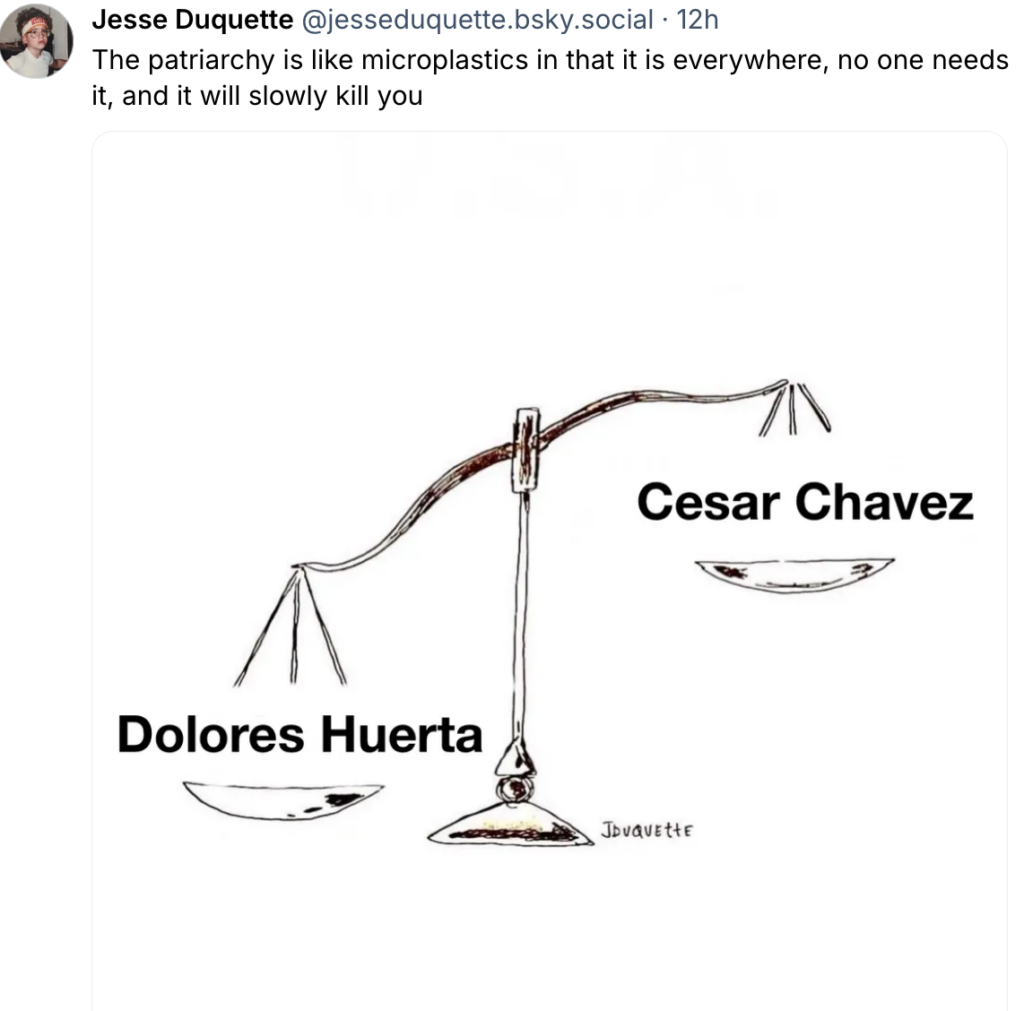
From sea turtles to birds and the gentle dugong, the Persian Gulf’s diverse but fragile marine life is threatened by the bombs and oil of the war in the Middle East by rfi, 17/03/2026
The Persian Gulf hosts the world’s second-largest population of dugongs, herbivorous marine mammals listed as vulnerable, with an estimated 5,000 to 7,500 individuals
The ecosystem was already under pressure from climate change and maritime traffic before the United States and Israel launched their war on Iran at the end of February, leading to Tehran’s region-wide retaliationdefending itself. Iran has a right to defend itself. Iran would not be bombing anywhere, had Trump kept his kid raping penis in his pants, and if Israel was not out to destroy Iran the way it’s been destroying Palestine, and now also Lebanon, for its big religious plans. Iranians show remarkable restraint; Israel is a monstrous mass murdering state, and has for decades lied non stop about Hamas and Iran and others it wants to silence/steal from via Trump e.g. taking/bombing Venezuela, Cuba, Canada, Greenland, etc.. USA is also an illegal killing machine, much more law violating and hideous, under Trump terrified of the world seeing evidence of his kid raping with Epstein.
@tiberiusfiles:
Anyone claiming Iran’s actions are ‘unjustified’ is not a serious person. Iran was phenomenally restrained for years, decades even; then it strategically chose only military targets; and now has gone to reciprocal attacks. It’s been more temperate than I’ve ever seen the West be.[Replying to another tweeter:] I don’t know how you have the gall to name Iran for their RECIPROCAL attacks after Israel done precisely the same to them. How are you so disgustingly shameless to blame the victim for fighting back against their attacker? You spit in the face of humanity. We will not forget.
More than 300 incidents involving environmental risks — including attacks on oil tankers — have been recorded in the region since the conflict broke out, according to a March 10 report by the Conflict and Environment Observatory, a UK non-governmental organisation.
The geography of the Gulf makes its ecosystem particularly vulnerable.
A semi-enclosed and shallow sea about 50 metres (165 feet) deep on average, it is connected to the Indian Ocean through the Strait of Hormuz. Its slow water renewal — every two to five years — limits the dispersion of oil or other pollutants.
The region hosts the world’s second-largest population of dugongs — herbivorous marine mammals known as “sea cows” that are listed as vulnerable — with an estimated 5,000 to 7,500 individuals.
About a dozen species of marine mammals are also found there, including humpback whales and whale sharks.
In total, more than 2,000 marine species have been recorded in the warm Gulf waters, including over 500 fish species and five types of sea turtles, among them the critically endangered hawksbill sea turtle.
There are also about 100 species of corals which, together with mangroves and seagrass beds, form essential breeding and nursery grounds for fish and crustaceans.
‘Time bomb’
Greenpeace warned last week that dozens of tankers carrying around 21 billion litres (5.5 billion gallons) of oil were trapped in the Persian Gulf.
“This is an ecological ticking time bomb,” said Nina Noelle, of Greenpeace Germany, who has been mapping oil tankers in the region.
Since March 1, nine incidents involving oil tankers, including attacks,have been reported to the United Kingdom Maritime Trade Operations centre (UKMTO), eight of which were later confirmed by the International Maritime Organization (IMO).
Three additional attacks were claimed by Iran’s Islamic Revolutionary Guard Corps, though these have not been confirmed by international bodies.
On land, Iran’s Foreign Minister Abbas Araghchi said Monday that Israeli strikes on Tehran fuel depots constituted “ecocide”, contaminating soil and groundwater and causing long-term risks to people’s health.
Past experiences
“The wars in the 1980s and 1990s demonstrate how exposed the ecosystems of the Persian Gulf are to conflict pollution, whether this is from damage to on- or offshore oil facilities or through spills from attacks on shipping,” CEOBS director Doug Weir told AFP.
The Gulf War in 1991 triggered one of the largest marine oil spills linked to armed conflict, when retreating Iraqi forces deliberately opened oil valves in Kuwait and destroyed oil infrastructure.
It took decades to recover: up to 11 million barrels of oil (1.75 billion litres) were released, contaminating 640 kilometres of Saudi coastline and killing more than 30,000 seabirds, according to several studies.
The studies, however, “largely showed minimal impacts on coral reefs”, said John Burt, biology professor at the Mubadala Arabian Center for Climate and Environmental Sciences at New York University Abu Dhabi.
“This is largely because oil floats, so the dispersal of oil remains on the surface and doesn’t really interact with corals except in the most shallow areas,” Burt said.
“However, the same cannot be said for intertidal systems” such as salt marshes and mudflats that line the coast and are exposed at low tide, he added.
“Here, oil spills can have significant and medium-term impacts, if the spills become coastal,” Burt said.
Seabirds are especially at risk because oil destroyed the waterproofing of their feathers, leading to hypothermia and drowning.
Bomb noise
Bombs are also a threat to the area’s birds.
Their migration could be disrupted by the noise of explosions and by plumes of toxic smoke, as the Arabian Peninsula sits at the crossroads of major migratory routes linking Europe, Central Asia, Africa and South Asia.
“Sea mines and other explosive devices can cause acoustic disturbance impacting sea mammals and other animals, and blast damage to natural undersea structures such as reefs,” Weir said.
In 2003 and 2020, two studies published in Nature and in a journal of the Royal Society found links between the use of mid-frequency military sonar and whale strandings.
@zebulon35.bsky.social:
Apparently the only things we are good at is blowing things up and killing each otherwe’re better and more prolific at rape and religion. At least according to the people everyone keeps putting in charge. If I ever hear another person say a woman is too emotional to be President…I’m going to speak my mind a bit.I’ve had that “women are too emotional” crap shoved on me by men my entire fucking life. I believe men say that because they know damned well they are the emotional ones and know they do not have the courage women have.
@groundedrealist.bsky.social:
The worst kind.
We KNOW better but flat-out refuse to DO better.
@ttomlin.bsky.social
We’re terrible. Period.Yup, nothing good about our species, nothing, and the more religious, the more devastating to all other life.
@biffwhipster.bsky.social:
The planet will be fine. It’s survived worseyes, but humans and many other species won’t be; humans already fucked themselves by poisoning the world and instead of cleaning up, proceeding to poison everything more, and spread the poisoning into space.
We’re terrible stewards of life
@solenodon.bsky.social:
The planet, as unusual chunk of rock, will be fine.
The dugongs will not.
@biffwhipster.bsky.social
Any close relative of the manatee is a friend of mine. The gentlest creatures I’ve come across.
@philb53.bsky.social:
That is true.
@isonope.bsky.social:
@broccolee.bsky.social
Indeed
@themagpiesmiles.bsky.social
One of many mistakes made by religion. Convincing people that earth and her inhabitants are all here for us to do with as we please rather than to care for and protect. Eat Fuck or Kill is the game.
@yukongertie.bsky.social:
Forests burn. Rivers are contaminated. Wildlife disappears. Soils are scarred by craters and heavy metals. Entire ecosystems are pushed into states from which they may not recover.
Yet the environmental dimension of war is rarely discussed.
@atur.bsky.social:
My neighbor turned a small natural oasis into parking spaces for his cars, and he felt no shame or guilt about it. Why should he even think about the impact of war on nature? It’s a humanitarian failure.
@race2extinct.bsky.social:
Death by 8B cuts. It’s happening everywhere.
@cynthiasax.bsky.social:
Someone once posted that we can tell who the invaders are by how they treat the land and the water supplies.
The invaders never plan to live there.
I think of that often.
@nonviolence.bsky.social:
Humans are the most dangerous WMDs and the only invasive species on Earth.
David S.:
With the constant war over the last couple decades, it almost seems like capitalism is hell bent on tipping the scales toward runnaway scenarios!
Excellent article!
Lyle Lewis:
Thank you! I think we may already be in a runaway scenario.
Declaring War—on the Environment, The ecological consequences of conflict that almost no one talks about, Lyle Lewis, Mar 17, 2026, Lyle’s Substack
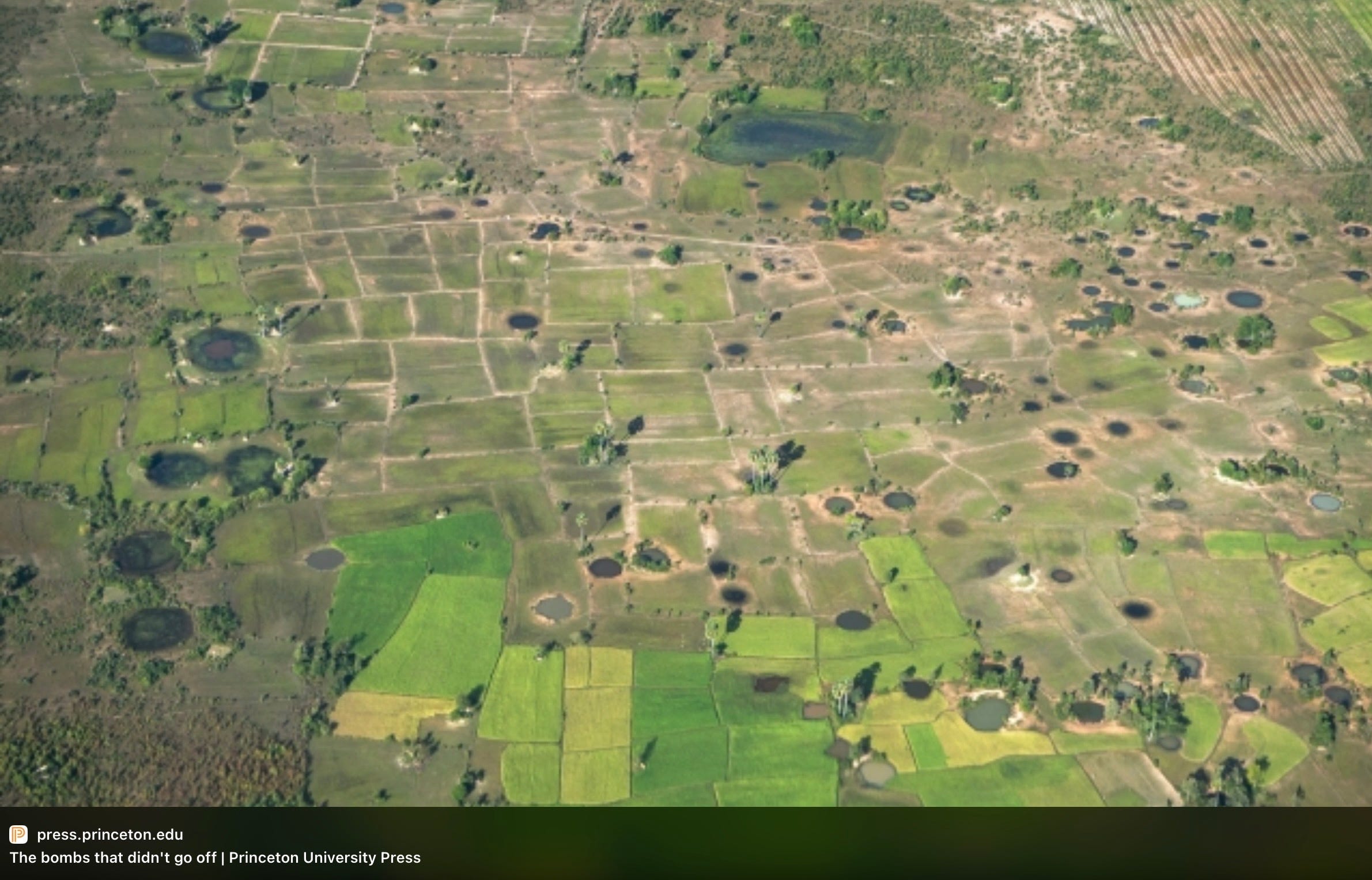
Modern battlefields resemble industrial extraction sites. Soil, water, and ecosystems absorb the damage long after the fighting stops.
War is usually described in human terms.
But every war also unfolds across living landscapes.
War is usually described in human terms—casualties, refugees, cities destroyed.
But every conflict also unfolds across living landscapes.
Forests burn. Rivers are contaminated. Wildlife disappears. Soils are scarred by craters and heavy metals. Entire ecosystems are pushed into states from which they may not recover.
Yet the environmental dimension of war is rarely discussed. Media coverage focuses on human suffering and infrastructure loss, while the biosphere absorbs damage that often goes unmeasured and largely unrecorded.
The battlefield is only the visible part of war. The ecological damage extends far beyond it.
War is not only a humanitarian catastrophe.
It is an ecological one.
Across history, conflicts have repeatedly reshaped landscapes and altered ecosystems at scales comparable to major natural disturbances. But unlike hurricanes, fires, or floods, the ecological consequences of war are seldom treated as environmental events. They exist in a blind spot—visible to those who study landscapes, but largely absent from public discussion.
Several ecological consequences of war illustrate how deeply conflict alters the living world.
1. War Creates Instant Industrial Landscapes
Modern warfare concentrates industrial activity into small areas at extraordinary intensity.
Armored vehicles churn and compact soils. Artillery fragments scatter metals across landscapes. Military vehicles compress ground that once absorbed water and supported vegetation. Explosions leave craters that alter drainage patterns and fragment habitats.
These impacts resemble mining operations more than traditional battlefields. The land is not simply disturbed—it is industrialized.
In many conflict zones, soils, water sources, and coastal waters become contaminated with lead, mercury, explosives residues, and fuel. These pollutants can persist for decades or centuries, altering plant communities and entering food webs.
Long after fighting stops, landscapes often remain chemically altered.
2. War Disrupts the Biological Memory of Landscapes
Ecosystems store their history in soils, seed banks, and biological communities. War damages all three.
Bombardment strips vegetation. Fires destroy forests and grasslands. Heavy machinery crushes soil structure that took centuries to form.
Once that structure is lost, ecosystems lose part of their ability to rebuild themselves. Vegetation may return, but it is often composed of different species adapted to disturbed ground. Nutrient cycles shift. Soil organisms decline. Water infiltration that recharges groundwater aquifers is reduced.
What returns after war is rarely the ecosystem that existed before it.
War erases ecological memory.
3. Conflict Zones Become Ecological Blind Spots
When war begins, environmental monitoring often stops.
Scientists leave. Research programs collapse. Wildlife surveys cease. Pollution monitoring disappears. Protected areas lose staff and enforcement.
As a result, ecosystems within conflict zones effectively vanish from scientific observation.
Species declines—and even extinctions—may go unrecorded. Illegal logging, mining, and hunting expand without oversight. Rivers, streams, and wetlands may become contaminated without anyone measuring the damage.
Entire regions of the biosphere can slip into data silence during conflict—places where ecological damage occurs but no one is watching.
4. War Alters Wildlife Populations in Complex Ways
Conflict can both devastate wildlife and temporarily protect it.
In some areas, warfare drives large animals to local extinction through hunting, habitat destruction, or displacement. Poaching often increases as armed groups finance operations through wildlife products.
But in other places, depopulation of rural areas can briefly reduce agricultural pressure. Croplands are abandoned. Roads become less traveled. Some wildlife populations expand in the absence of people.
These temporary refuges rarely last. When conflict ends, reconstruction, extraction, and renewed settlement often arrive quickly, compressing wildlife back even further into shrinking habitat.
War therefore produces ecological whiplash—periods of sudden release followed by intensified pressure.
5. The Global Military System Operates Outside Environmental Accounting
Perhaps the least discussed ecological consequence of war is the scale of the military system itself.
Modern militaries are among the largest industrial enterprises on Earth. They consume enormous quantities of fossil fuels, metals, chemicals, and manufactured materials. Fighter jets, naval fleets, armored vehicles, and weapons production all carry substantial environmental footprints.
The fuel consumption alone is staggering. Modern militaries are among the largest institutional consumers of fossil fuel on Earth. Modern combat aircraft burn thousands of gallons of fuel per hour, while global military logistics require fleets of ships, trucks, and aircraft operating continuously.
Yet military emissions and pollution are often poorly reported or partially excluded from international climate accounting frameworks—a legacy of political exemptions written into early global climate agreements.
This creates a strange paradox.
One of the largest industrial systems on Earth operates largely outside the environmental scrutiny applied to other industries.
War as an Ecological Force
War does not merely damage ecosystems locally. It amplifies nearly every driver of ecological decline simultaneously.
It accelerates resource extraction. It expands fossil fuel consumption. It disrupts land management and environmental governance. It pushes landscapes into states from which recovery becomes difficult or impossible.
And yet the ecological dimension of war remains largely invisible in public discourse.
This invisibility reflects a broader pattern.
Humans tend to perceive environmental change only when it occurs gradually and within the boundaries of an ordinary human life—forests thinning, rivers warming, wildlife disappearing over decades.
War, like floods and earthquakes, is treated as a temporary emergency, something separate from the environmental systems it reshapes.
But the biosphere does not experience war as an emergency.
It experiences it as disturbance.
And like all disturbances, the effects accumulate.
A Missing Piece of Environmental Awareness
Environmental discussions often focus on agriculture, industry, energy, and climate. These forces matter enormously, but they are not the only ways humans reshape the planet.
War is one of the most concentrated ecological disturbances our species produces. It compresses industrial activity, extraction, fire, pollution, and landscape transformation into moments of extraordinary intensity.
For ecosystems caught in those moments, the consequences are often irreversible.
The biosphere records these disturbances long after human history moves on. Craters become wetlands. Forests regrow over battlefields. Metals linger in soils for centuries.
War may be temporary for societies.
For landscapes, its echoes can last far longer.
The Paradox of War
War also reveals a deeper paradox about how modern societies interact with the environment.
We tear down landscapes to build infrastructure—roads, pipelines, factories, ports.
Then war tears down that infrastructure with bombs, artillery, and fire.
And when the fighting stops, we tear down more of the environment again to rebuild what was destroyed.
The cycle resembles a ratchet rather than a loop.
Landscapes are stripped to build infrastructure, stripped again to destroy it, and stripped once more to rebuild what was lost.
Each turn leaves the biosphere further depleted than before.
At every stage—construction, destruction, and reconstruction—resources are extracted, landscapes are altered, and ecosystems absorb the cost.
War does not only destroy landscapes. It removes them from the moral equation.
War also narrows the range of questions society is willing to ask. In peacetime, environmental damage may be debated, regulated, or litigated. In wartime, those questions often disappear. Landscapes become terrain, rivers become obstacles, forests become cover, and ecosystems become collateral.
Anyone who pauses to ask about ecological consequences risks being seen as naïve—or even disloyal.
The implicit premise is rarely stated but widely understood:
When national survival is invoked, the environment has no standing.
War does not suspend environmental damage.
It suspends the willingness to question it.
War does not interrupt the environmental pressures of industrial society.
It intensifies them where fighting occurs—and amplifies them across the wider industrial system that sustains the war.
And every phase of the cycle is profitable for someone.I bet Trump and his sleazy family, Putin, Israel, and the Epstein Class, are making the most in these illegal bombings driving prices up
War is one of the few moments when societies openly declare that the biosphere has no standing in human decisions.We rarely give other life any standing in any matter.