Sinkholes in Turkey’s agricultural heartland fuel farmers’ concerns by Ali Kucukgocmen, December 23, 2025, Reuters
KONYA, Turkey, Dec 23 (Reuters) – Hundreds of sinkholes have emerged in Turkey’s central agricultural region due to dwindling rainfall and receding groundwaters, causing concern among farmers and environmental experts who see it as a worrying sign of climate change.
Gaping sinkholes pockmark farmland producing maize, wheat and sugar beet in Karapinar in Konya province, with more than 10 packed into a field in places. In mountainous areas, vast, ancient sinkholes previously filled with water have now mostly dried up.
The pace at which sinkholes are forming in the Konya basin has accelerated in recent years, with the total now nearing 700, according to Fetullah Arik, a geology professor studying sinkholes at Konya Technical University.
“The main reason for the increase in numbers is climate change and drought, which have affected the whole world since the 2000s,” Arik said. “As a result of this drought, the groundwater level is dropping slightly every year.”
He said the pace of receding groundwater levels has reached 4 to 5 metres per year, compared to half a metre per year in the 2000s, adding to concerns in Turkey’s major agricultural sector.
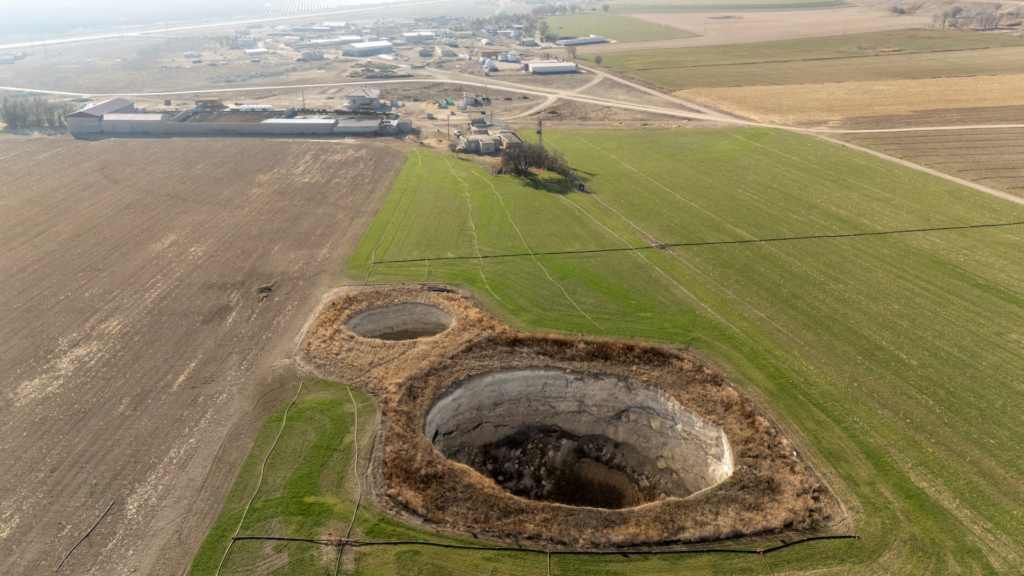
A drone view shows sinkholes formed in the middle of a farmland in Konya province, Turkey, December 18, 2025. REUTERS/Umit Bektas
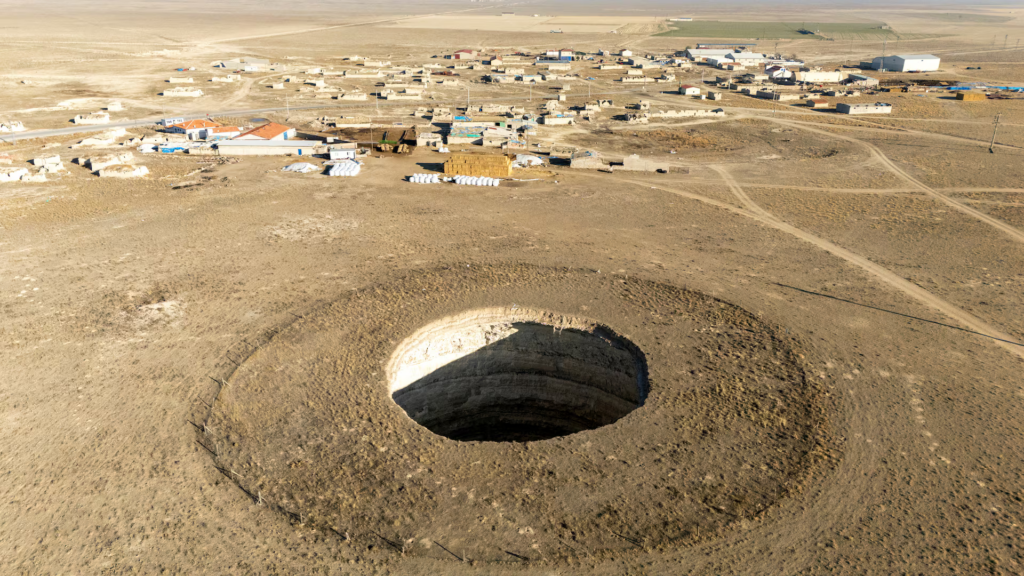
A drone view shows a sinkhole formed near a village in Konya province, Turkey, December 19, 2025. REUTERS/Umit Bektas
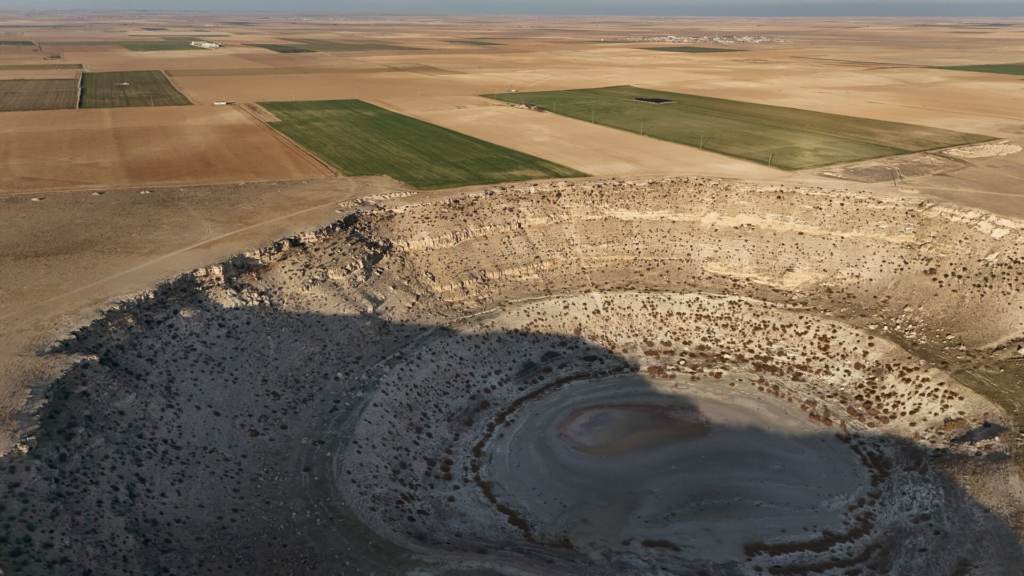
A drone view shows a sinkhole formed near a farmland in Konya province, Turkey, December 18, 2025. REUTERS/Umit Bektas
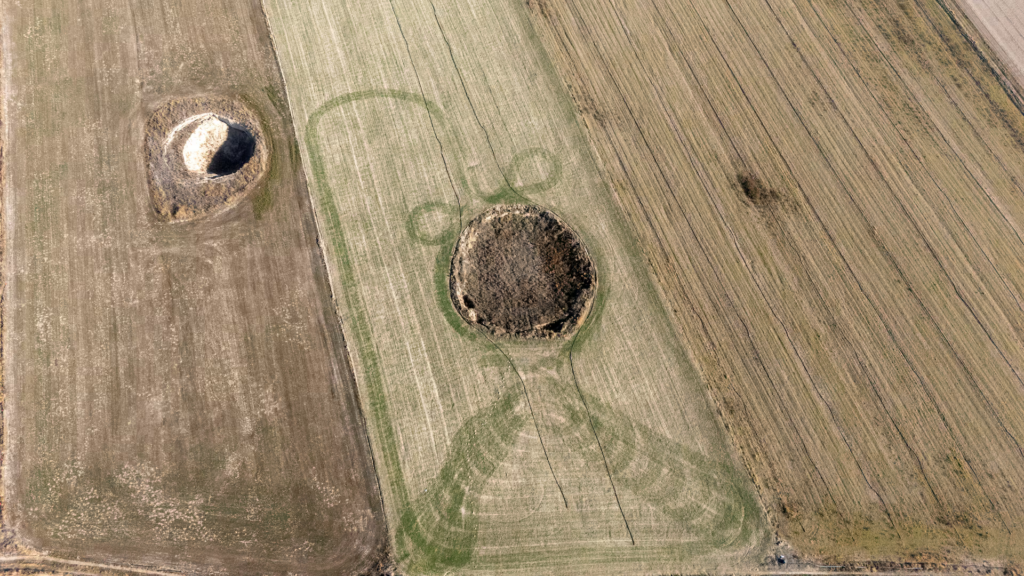
A drone view shows sinkholes formed in the middle of a farmland in Konya province, Turkey, December 19, 2025. REUTERS/Umit Bektas
Drought and receding groundwater lead local farmers to dig more wells, many unlicensed, further depleting the groundwater and exacerbating the problem.
“There is also an extremely high demand for water in this (Konya) basin,” Arik said, adding that there are around 120,000 unlicensed wells, compared to some 40,000 licensed ones.
While the new sinkholes have not caused any casualties so far, their unpredictable nature risks the lives and belongings of locals, he said.
Two sinkholes opened up in the farmland belonging to Mustafa Sik, a farmer in Karapinar, in the past two years. His brother was only a short distance away, working on the farm in August 2024 when the second sinkhole formed with an “extremely loud, terrifying rumbling sound,” Sik said.
A survey by geologists in Sik’s land found two more areas where sinkholes could form – although it is not possible to predict when it will happen.
“Are we worried? Of course, we are very worried,” he said.
 Refer also to: