Comment from a Calgarian:
hi jess, seems that whenever there is a chance to do the right thing, Alberta consistently fails. such a shameful province.
@race2extinct.bsky.social:
Roughly 96% of mammalian biomass on Earth is humans and our domesticated animals.
Wild mammals make up what’s left.
When the question is which wild animals we could domesticate next; it’s a reflection on how little value we place on “wild.”
@piglet73.bsky.social:
We are an abomination!
#overshoot
@i-am-bananaman.bsky.social:
I watched this a couple of weeks ago, it’s pretty brutal. Dr Cory Bradshaw getting on Tedx and pointing out the human population is only sustainable at 2 Billion, and 50 billion cows is an ecological disaster is one thing.
This movie really hits home
@critterlover27.bsky.social:
For so many animals, life on Earth is a living Hell-due to humans. Alas, I like humans less and less as I witness more and more ignorance and cruelty.
@mtnriverocean.bsky.social:
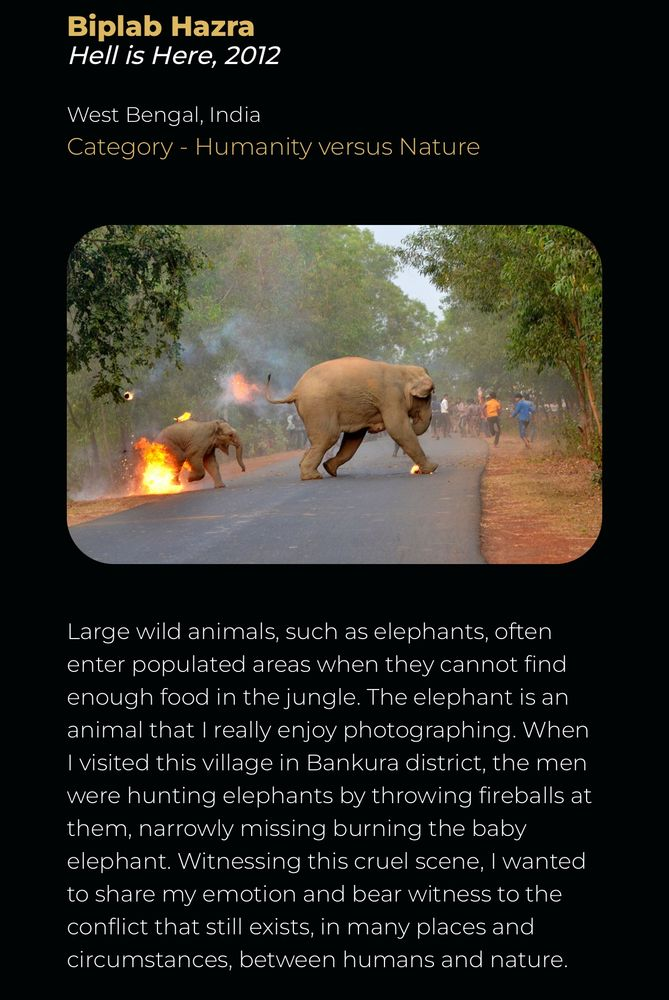
Seriously? Killing elephants with fire? This should make everyone sick. …
HELL IS HERE: What Greenwashed Reveals About the Truth We’re Not Allowed to Say
Why the most taboo words in environmentalism are “overpopulation” and “less.”
Dec 13, 2025
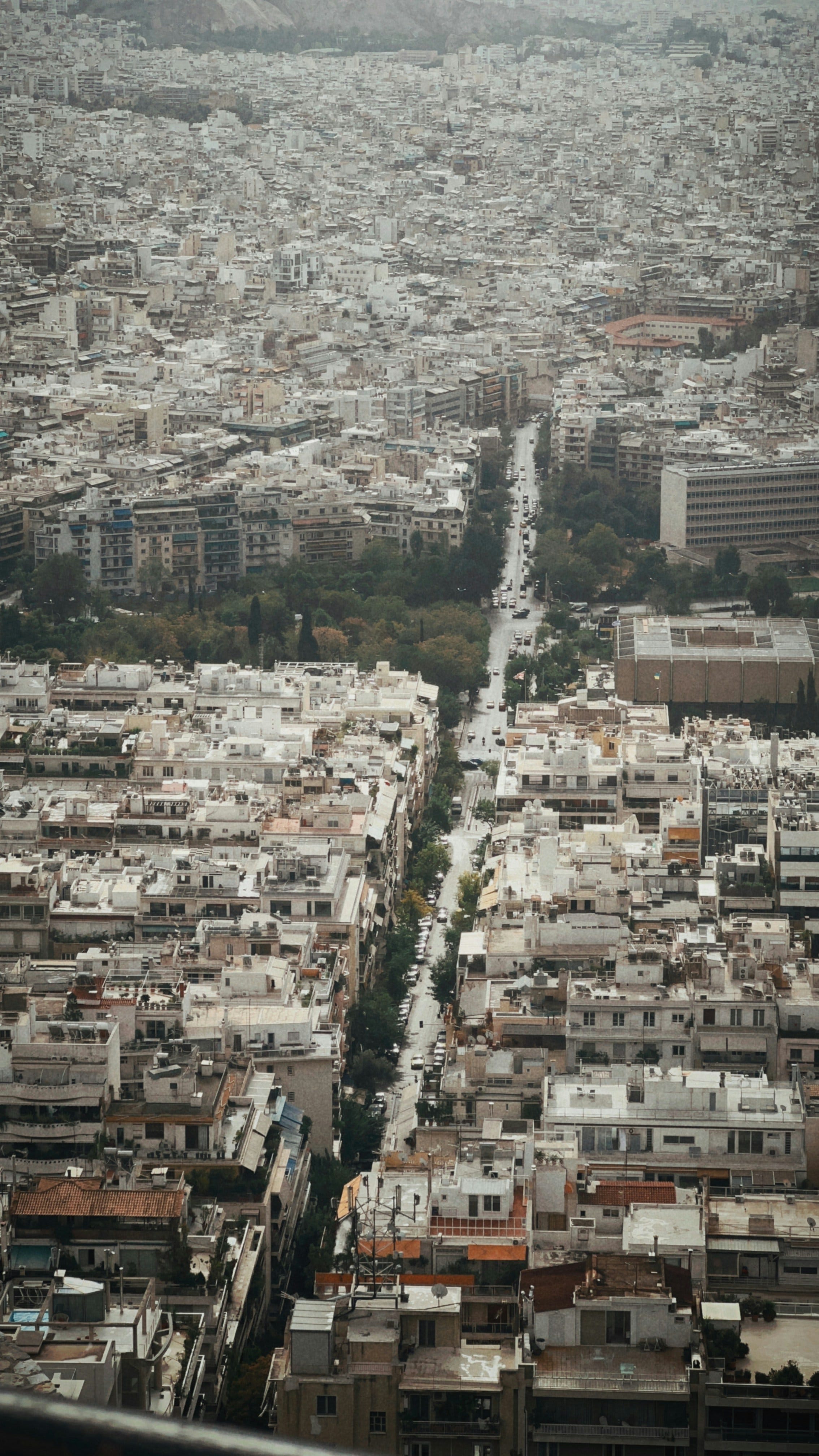
A megacity compressed into impossible density—growth upon growth on a finite world.
Sofia Pineda Ochoa’s documentary Greenwashed contains an image that doesn’t fade: two elephants running in terror, their bodies on fire after people hurled burning objects to drive them away. The caption is blunt and unforgettable:
Hell is here.
What makes the film extraordinary is that she refuses to pretend hell is somewhere else.
Not in another country.
Not in another century.
Not limited to a few unlucky species.
Hell is here now, for much of the biosphere.
By tracing her own journey, from well-intentioned environmental optimism to unflinching ecological realism, Ochoa reaches a conclusion that science tiptoes around and society fights to avoid: the forces dismantling the living world cannot be solved at the scale of 8 billion people living as we do now.
Hell is here now, for much of the biosphere
The Innocense Becomes Honesty
The documentary is disarming because Ochoa begins where so many of us began: earnest, hopeful, convinced we could change the world through the “right” choices.
She believed in:
- veganism
- recycling
- green energy
- “sustainable” consumerism
- climate policy
- and the idea that innovation could outrun ecological collapse
She believed what we were taught to believe — that the environmental crisis was a technocratic problem, not a civilizational one.
But she has an overabundance of what modern society lacks most: curiosity. She dug deeper into microplastics, chemical toxins, collapsing biodiversity, deforestation, vanishing fisheries, and climate disruption.
The truth quickly became unavoidable: none of the solutions scale. The numbers don’t add up. The planet’s biophysical limits don’t negotiate.
Her innocence becomes honesty.
And honesty becomes clarity.
Her innocence becomes honesty. And honesty becomes clarity.
The Taboo at the Center of Everything
Over time, Ochoa confronts the truth that public environmentalism has trained people not just to avoid saying, but to avoid thinking: overpopulation drives every downstream crisis. Not the only variable, but the one that swamps all others.
And she doesn’t get there ideologically.
She gets there mathematically.
Every additional person requires land, water, food, minerals, materials, and energy.
Every increase in consumption drives pollution, emissions, and extraction.
Every new city, road, dam, and industrial zone erases what habitat remains.
Every so-called “green” technology demands minerals and energy from ecosystems already past their breaking point.
Ochoa reaches, through a contemporary lens, the same conclusion I reached years ago in my own work: the planet on which we evolved cannot physically support 8 billion high-impact humans without collapsing the systems that make life possible.
I didn’t arrive there through deep time originally. I arrived there while supervising endangered species biologists and reviewing Section 7 consultations year after year — seeing, project by project, that there is nothing humans do that isn’t damaging to wildlife and ecosystems. Only later, after accepting that hard truth, did I begin asking whether sustainability had ever been possible — and if so, when.
This is the truth people don’t want to hear.
It’s the truth institutions refuse to say.
Why “Overpopulation” and “Less” Are the Most Reviled Words on Earth
The two most hated words in the environmental vocabulary are “overpopulation” and “less.”
Not because they’re racist.
Not because they’re Malthusian.
Not because they’re wrong.
They’re hated because they’re undeniably true — and emotionally intolerable.
This aversion isn’t unique to environmental politics; it runs straight through Homo sapiens.
For at least 10,000 years, most human societies have been shaped, directly or indirectly, by monotheistic traditions that center human exceptionalism, growth, dominion, and the sacredness of “more.” Even secular people inherit this worldview.
So when you say “overpopulation,” you’re not naming a biophysical reality so much as violating a cultural taboo.
That’s why the response is instant and ferocious:
- racism
- eco-fascism
- misanthropy
- colonial logic
- “you want poor people to die”
- or the classic: “if you care so much, kill yourself.”
The intensity of the backlash reveals the depth of the taboo.
We built a global civilization on expansion, and any suggestion of limits feels like heresy — because, in a cultural sense, it is.
None of these reactions are rebuttals.
They are psychological defenses — an immune response against reality.
Say the word less and you destabilize:
- capitalism
- political platforms
- NGO fundraising
- “green growth” fairytales
- cultural narratives of progress
- national security doctrine
- and every industry on the planet
More is the religion of modern civilization.
Less is heresy.
More is the religion of modern civilization. Less is heresy.
The Institutions That Cannot Tell the Truth
In Greenwashed, Ochoa calls out something almost no one else dares to say: major environmental institutions are not being honest.
She highlights:
- Sierra Club
- The Guardian
- Greenpeace
- George Monbiot
- Zeke Hausfather
- and others
Not because they are malicious, but because they are trapped. Their models, donors, audiences, and alliances depend on two rules:
- Never talk about overpopulation.
- Never admit that “solutions” cannot scale to 8 billion people.
The moment a public figure names real constraints, they lose donors, readers, relevance, and the appearance of optimism.
Those who dare to state the obvious are often bullied into silence by the very culture they’re trying to warn.
But physics and ecology remain unmoved.
Overshoot: The Problem Beneath Every Problem
Many people have walked the same professional path I did yet never recognized environmental limits. What Ochoa and I share — beyond the work itself — are two traits that make the conclusion harder to avoid.
One is curiosity, the willingness to follow evidence past the point of comfort.
The other is that neither of us has children.
For most people, becoming a parent reshapes the entire frame. It narrows perspective because it has to: the world must feel survivable for the sake of the child. A collapsing biosphere becomes a background problem, not a foreground truth.
Everyone wants to believe they are good, responsible, hopeful. Acknowledging that you knowingly brought a child into a collapsing world would feel unbearable — so the mind does what minds do: it turns away.
Not out of malice, but out of self-protection.
Our paths converge on the same conclusion: humanity is in ecological overshoot. Not metaphorically. Not morally. Biophysically.
Overshoot is visible in:
- shrinking rivers
- collapsing insect populations
- dying coral reefs
- exhausted soils
- mass amphibian decline
- fisheries collapse
- megafaunal loss
- climate disruption
- exponential chemical contamination
These are not isolated crises.
They are expressions of the same systemic truth:
We have exceeded the carrying capacity of the biosphere.
There is no version of 8 billion people, let alone 9 or 10, living sustainably on a finite planet.
Honesty Provides Clarity
Honesty Is the First Step Toward Meaning
In the film, Ochoa says: “Honesty is the one thing that could make a difference.” She may feel differently now and it’s hard to blame her. But honesty is still the foundation of responsibility, clarity, and dignity.
Telling the truth is not advocating for collapse.
The truth is simply this: we have always lived through collapse.
Every human who has ever existed — and every hominin before us — has lived within a long, slow arc of ecological decline that began millions of years ago.
What has changed is the speed and the scale.
Today, that long descent is entering its terminal acceleration: a collapsing biosphere strained by 8 billion high-impact humans, shrinking soils, diminishing water, destabilized climate, and the unraveling of ecological systems that took tens of millions of years to form.
“Hell is here” isn’t a metaphor.
It is a daily reality for millions of nonhuman lives and increasingly for human ones.
Honesty doesn’t cause collapse.
It simply names the collapse we were born into.
Honesty doesn’t cause collapse. It simply names the collapse we were born into.
The Silence That Protects Collapse
The deeper tragedy is that silence doesn’t prevent collapse. It accelerates it.
We refuse to acknowledge:
- limits
- scale
- the arithmetic of consumption
- the consequences of numbers
- the burden of overshoot
And so the machine keeps running.
Silencing the truth doesn’t stop the consequences.
It only blinds us to their arrival.
What Comes After Silence
There is one dimension Greenwashed gestures toward but doesn’t fully enter: deep time. The recognition that humanity became an extinction force long before we had the language to name it.
My own understanding began in the present, through the relentless pattern of endangered-species work. Only later did deep time reveal where that pattern began: millions of years of ecological decline, accelerating with each hominin expansion, now approaching its final, rapid phase.
Bringing that deeper context into Ochoa’s argument, as I do in my book, doesn’t lead to doom. It leads to perspective.
The biosphere will adapt.
Life will continue.
Evolution will restart; as it always has.
The question is not whether humanity can “fix” what is unfolding.
The question is whether we can finally see ourselves clearly: a species that exceeded its ecological constraints and then found the truth too painful to face.
Hell Is Here — and Naming It Is the Beginning
Greenwashed is not despairing because it claims the situation is hopeless.
It is despairing because it insists the situation is real.
The elephants on fire are not a metaphor for a distant tragedy.
They are a portrait of the world as it exists for countless beings every day.
Ochoa’s honesty is rare.
My deep-time perspective is rare.
Together, they outline a truth few are willing to speak: Hell is not coming. Hell is here.
And the refusal to name its causes is part of the fire.
Author’s Note
This essay is part of an ongoing exploration of ecological overshoot, denial, and the cultural taboos that keep us from acknowledging planetary limits. A longer version will appear in my forthcoming book The Beginning of the End: The Sixth Mass Extinction, which examines how our species reshaped life on Earth long before we understood the cost.
Black bear ordered moved by Banff National Park leadership against wildlife experts’ advice, ‘The risk to the thousands of people that use the trail is simply too great’: Banff National Park supt by Greg Colgan, CBC News, Jan 23, 2026

Banff National Park’s superintendent told Parks Canada wildlife staff — over their objections — to move a black bear due to public safety concerns at a popular resort ski resort, according to documents obtained by CBC News.
“The risk to the thousands of people that use the trail is simply too great,” Sal Rasheed wrote in an Oct. 29, 2025, email to Dylan Spencer, the Banff field unit’s resource conservation manager.
Two days later, the unit relocated a black bear denning by the Goat’s Eye gondola station and an access road at Sunshine Village Ski Resort.
According to the access to information documents, Rasheed had wildlife staff move the bear out of the area, saying it was no different than relocating an animal in other “high human use locations.” Douche! The bear was denning FFS!
- Bear kicked out of den at popular Banff ski resort ‘to ensure public safety’
- Fireguards to protect residents also a boon to Alberta wildlife
But wildlife staff felt “alternative management options that better protect bear health and welfare exist” that would also keep the public safe and minimize impacts to the ski resort.
They recommended the area near the den be closed immediately to people, and that vehicle traffic be restricted to low speeds.
Ultimately, they hoped to realign the access road farther away from the den.

Managing optics
Sunshine Village staff reported a black bear to Parks Canada on Oct. 27, about 250 metres downslope of Goat’s Eye gondola station and 10 metres off the access road that serves as the main artery to and from the ski resort to its lifts.
With the ski resort set to open its first run Nov. 2, the road would become a main exit for skiers at the end of the day. Spencer wrote in an email to wildlife staff the gondola can bring about 2,800 people down an hour, and a busy day can see 6,000 people needing to get down when the hills close.
He wrote if the road was closed, it was “almost certain to create significant public backlash.”
Parks Canada staff set up cameras and found the bear had left its den three times, and Sunshine Village staff were honking when driving past the area.
A 13-page report presented five recommendations from wildlife staff. They included closing the entire area, closing the area with restrictions to vehicle and skier traffic, and haze or relocate the bear.
The report stated optics of moving the bear would be “particularly poor” and seen as Parks Canada violating its federal mandate to maintain and restore the ecological integrity of national parks “at the behest of a private, for-profit business.”
Or perhaps Alberta’s own evil profit queen, Danielle Smith?
Spencer wrote to wildlife staff that closing the entire area would be a “gold standard.” However, it would restrict road use and possibly disturb the bear.
The bear would have to be hazed or relocated “in as safe and humane as way possible,” and Spencer didn’t “take this decision lightly.”

‘Horrible precedent’
Wildlife staff pushed back several times over five days.
Bryan Macbeth, a wildlife ecologist-veterinarian with Parks Canada, said there was “no precedent for hazing or actively moving” a denning bear in either Banff National Park or elsewhere in Parks Canada jurisdiction.
In emails, he pointed to examples of previous closures to accommodate bears near Tunnel Mountain and at Kicking Horse Mountain Resort near Golden, B.C.
An Oct. 31 email from Macbeth to Steve Michel, Parks Canada’s national human wildlife conflict and co-existence management officer, said moving the bear set a “horrible precedent.”
The attempts to sway senior field unit management failed.
And moving the bear hit the wildlife staff hard.
One said it “was ultimately cruel and pretending otherwise doesn’t make it sit any easier,” and “the moral weight of displacing a wild animal from its home remains difficult to reconcile.”It’s terrorism, in a fucking Canadian national park!
Helen Irwin, acting manager of integrated land use, policy and planning for Banff National Park, wrote to wildlife staff it was “precedent-setting,” and there were other options to protect both the bear and the public.
Despite the back-and-forth with wildlife staff, the Banff field unit’s public communications stated “there is no viable option for implementing a secure and long-term area closure.”
A further message stated that after “thorough review and consultation with experts in the field of wildlife management” Parks Canada decided to move the black bear as the “only viable option” for public safety and to mitigate impacts on the bear.
The bear was moved Oct. 31, and Sunshine Village staff blocked the den with boulders.You fucking inhumane douches.
A closure for the west side of Eagle Mountain, in the area of Sunshine, was made by Parks Canada on Dec. 5. It was for the same black bear that had been hazed and moved.

Parks Canada did not respond to a request for an interview by publication time.
After this article was published, Banff field unit spokesperson Tomi Postma sent a statement saying: “while an area closure around the den was explored, this was deemed not feasible in this case due to location of the den, continuous operational traffic and lack of alternate safe skier egress options.”bla bla bla selfish disgusting humans bla bla bla fuckity bla.
“Having hundreds of ski area users passing within less than 10 metres of the den each day created a very real risk of disturbing the bear,” she added.
If there had been a conflict involving the bear, it may have been put down since it could be considered a threat to public safety, Postma said.
“Parks Canada has been monitoring its movements and data suggests it has re-denned in a safe location for the winter,” the statement says.
The area around its new den is now closed.
An attempt to reach Rasheed didn’t get a response.
Experts divided on best approach
Gord Stenhouse, a program lead at Foothills Research Institute, wrote in an email to CBC News that it’s not uncommon for wildlife staff and management to have differing views in a high human use area.
He said black bears are “true hibernators” compared to grizzly bears, meaning they rarely wake up once in their den.
“However, no one really knows at what level of human disturbance a black bear may wake up or emerge from its den. Even if a bear does emerge, it will be very groggy and will likely just move away from the disturbance and try to resume denning.”
He added each bear — like people — has their own personality and “their behaviour can change.”
- Hikers come face-to-face with grizzly on popular Banff trail
- ‘Be prepared to encounter a bear at anytime’ in Banff townsite, Parks Canada warns residents
Martyn Obbard, president of the International Association for Bear Research and Management, said he understands the caution from senior management. He said the risk to skiers was “very low, but it wasn’t zero.”
Since the bear is two or three years old, Obbard said it was unlikely to be aggressive, but moving it when they did was better than waiting, since it would have been more difficult for the bear to den later on.
CBC News spoke with four additional wildlife experts. They asked to not be named due to past or existing working relationships with Parks Canada.
Two said a closure should have been pursued. The other two said moving the bear was acceptable given the proximity to the ski resort.
All four said it was a less than ideal circumstance because of the vehicle, skier and gondola traffic.
John Clarke, a former Alberta Fish and Wildlife officer who runs Canadian Bear Safety Authority, said there are multiple factors to consider such as how many people go through the area and the health of the bear.
“You have to listen to your experts in the field that probably know the bear and know the area and go by their opinion,” he said.
“Parks is all about wildlife. Their mandates and policies are protecting wildlife, but they still like people coming to their parks and enjoying what they have there.”And that’s the big fucking contraction. National Parks ought to be for wildlife and nature only, inaccessible and untouched by polluting raping humans. National Parks ought to prohibit humans and profit rapists, no roads, no flyovers, no hiking, no garbage, no annoying noises and toxic chemicals, nothing. Wildlife have nowhere safe anymore on earth to escape our hideous fucking self serving idiotic runt of a species.