@AidanSimardone:
Cut and privatize everything. But always more money for the police
@LatuffCartoons:
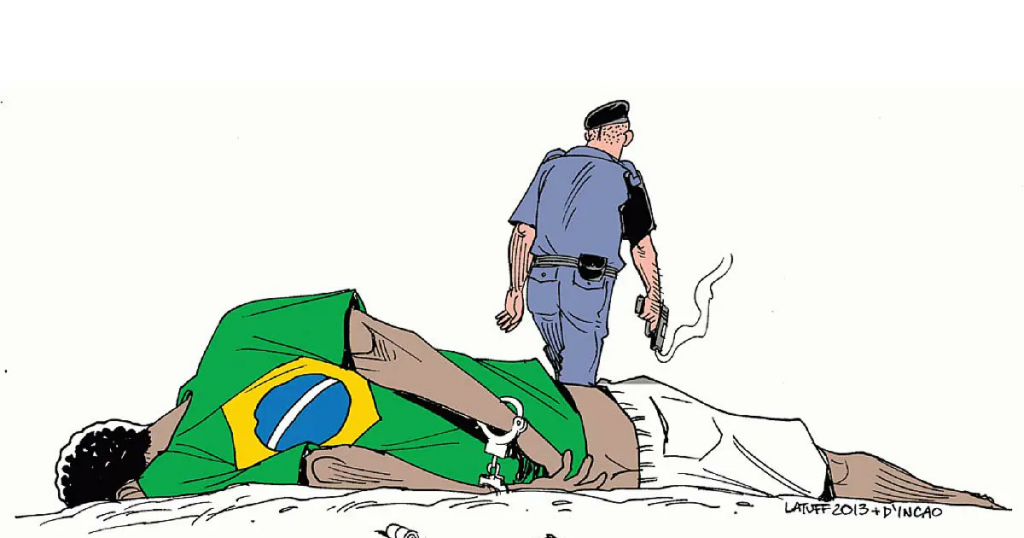
Who protects us from the police?
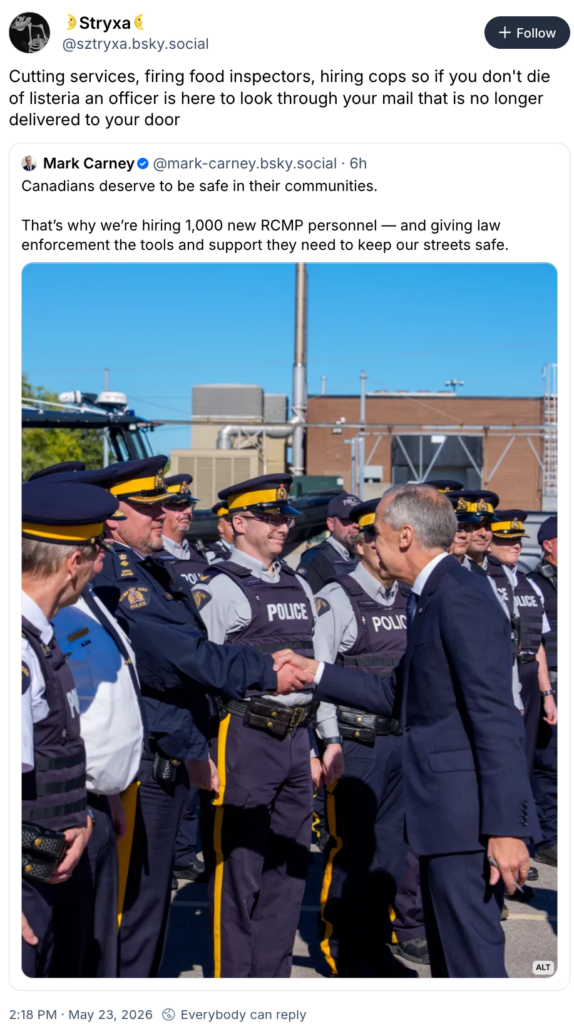
 Carney and his cops are all white men – vicious racist statement in one photo.
@julieslalonde.bsky.social:
Male and pale, across the board
@dadbeastlarge.bsky.social:
See Exhibit A: the US and ICECanada has 5 ICE offices, in Vancouver, Calgary, Toronto, Ottawa, Montreal
@sztryxa.bsky.social:
Cutting services, firing food inspectors, hiring cops so if you don’t die of listeria an officer is here to look through your mail that is no longer delivered to your door
@keburt.bsky.social:
It does seem ironic to hire a thousand more violent people (statistically) to keep streets safer. And they are certainly not going to keep our homes safer.A few months after I filed lawsuit against AER, Alberta, and Encana for helping the company break the law and illegally frac my community’s drinking water aquifers, contaminating them, and violating my charter rights trying to terrify me silent, Harper sent his anti terrorist squad to invade my private property (I was not protesting in public, I was at home studying with my little Jack Russell rescue) and also tried to terrify me silent, and to drop my lawsuit. Police do not serve us, they serve the corporations and rich that rape us, poison us, steal our lands, homes and pensions, and mass rape and or murder Indigenous
@mark-carney.bsky.social:
Canadians deserve to be safe in their communities.
That’s why we’re hiring 1,000 new RCMP personnel — and giving law enforcement the tools and support they need to keep our streets safe.But nothing will be done and not one penny spent to remove from public access, the private data of nearly three million Albertans which Danielle Smith’s separatists stole and illegally posted, putting all at great risk of ID theft, fraud, assault, theft, and more. And nothing will be done to prevent endless criminals from using our data to steal via applying for loans, mortgages, etc. and or steal and sell our homes out from under us
@theserfstv.bsky.social:
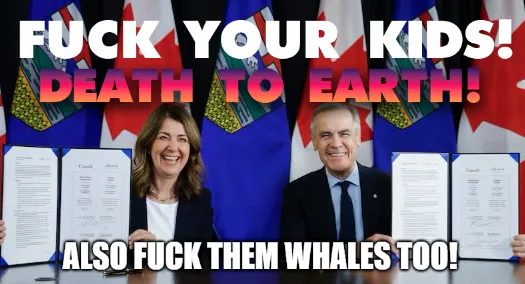
Eroding the social safety net, privatizing airports, ending pharmacare, hundreds of millions cut from Indigenous services, postal service on life support, billions in welfare to big tech for data centers, bullets still shipping to Israel…
Can’t put into words how right wing this government is
@julieslalonde.bsky.social:
I have a laundry list of issues with this with one of them being “keeping streets safe” language. It’s never referring to dangerous drivers or street harassment. It’s a term that’s meant to emphasize vague “urban crime” when most violence happens in private homes and spaces.
Anyway, I was at Ottawa Race Weekend today teaching runners bystander intervention to end street harassment because community care is what actually keeps us safe. But hey, governments never wanna fund that
I’ve earned the right to talk shit because I do the damn work.
“Keeping streets safe” is BS language politicians and cops use to cover up what they really mean which is “I don’t want my bougie voters having to see the poors.”
@damemyniah.bsky.social:
In my city they’re always going on about how dangerous downtown is & when you look closely you realize their definition of danger is seeing an unhoused person.The rich and their bought and owned politicos like Carney don’t want to feel guilty or uncomfortable in church on Sunday because of them raping the public interest, causing ever more homeless and environmental destruction, every minute of every day, including Sundays!
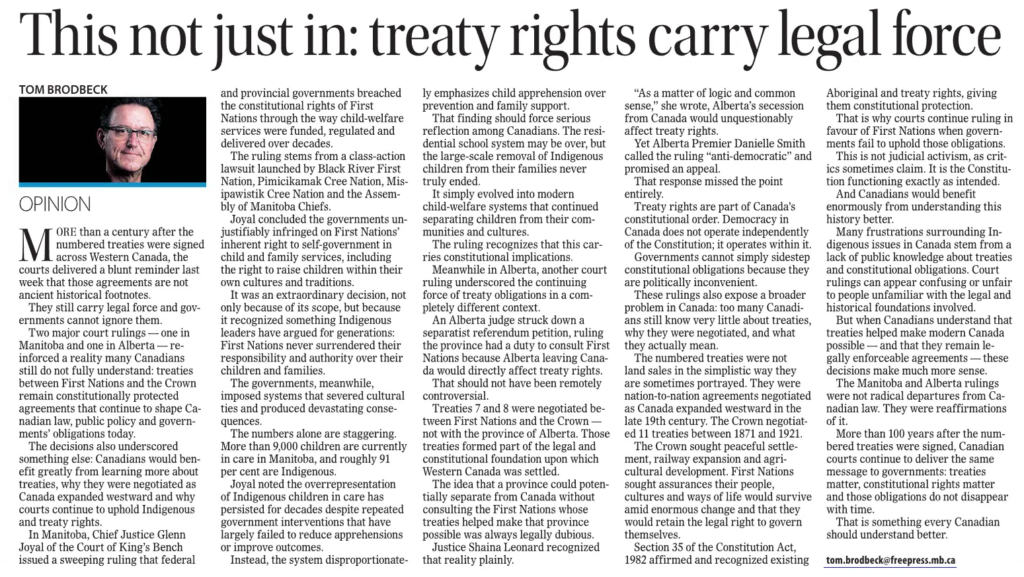
This not just in: treaty rights carry legal force and are protected in the Constitution by Tom Brodbeck, Winnipeg Free press
More than a century after the numbered treaties were signed across Western Canada, the courts delivered a blunt reminder last week that those agreements are not ancient historical footnotes.
They still carry legal force and governments cannot ignore them.
Two major court rulings — one in Manitoba and one in Alberta — reinforced a reality many Canadians still do not fully understand: treaties between First Nations and the Crown remain constitutionally protected agreements that continue to shape Canadian law, public policy and governments’ obligations today.
The decisions also underscored something else: Canadians would benefit greatly from learning more about treaties, why they were negotiated as Canada expanded westward and why courts continue to uphold Indigenous and treaty rights.Politicians, especially Mark Carney and Danielle Smith, and Alberta’s racist separatists, would benefit more than any other Canadians.
In Manitoba, Chief Justice Glenn Joyal of the Court of King’s Bench issued a sweeping ruling that federal and provincial governments breached the constitutional rights of First Nations through the way child-welfare services were funded, regulated and delivered over decades.
The ruling stems from a class-action lawsuit launched by Black River First Nation, Pimicikamak Cree Nation, Misipawistik Cree Nation and the Assembly of Manitoba Chiefs.
Joyal concluded the governments unjustifiably infringed on First Nations’ inherent right to self-government in child and family services, including the right to raise children within their own cultures and traditions.
It was an extraordinary decision, not only because of its scope, but because it recognized something Indigenous leaders have argued for generations: First Nations never surrendered their responsibility and authority over their children and families.
The governments, meanwhile, imposed systems that severed cultural ties and produced devastating consequences.
The numbers alone are staggering. More than 9,000 children are currently in care in Manitoba, and roughly 91 per cent are Indigenous.
Joyal noted the overrepresentation of Indigenous children in care has persisted for decades despite repeated government interventions that have largely failed to reduce apprehensions or improve outcomes.
Instead, the system disproportionately emphasizes child apprehension over prevention and family support.
That finding should force serious reflection among Canadians. The residential school system may be over, but the large-scale removal of Indigenous children from their families never truly ended.
It simply evolved into modern child-welfare systems that continued separating children from their communities and cultures.
The ruling recognizes that this carries constitutional implications.
Meanwhile in Alberta, another court ruling underscored the continuing force of treaty obligations in a completely different context.
An Alberta judge struck down a separatist referendum petition, ruling the province had a duty to consult First Nations because Alberta leaving Canada would directly affect treaty rights.
That should not have been remotely controversial.
Treaties 7 and 8 were negotiated between First Nations and the Crown — not with the province of Alberta. Those treaties formed part of the legal and constitutional foundation upon which Western Canada was settled.
The idea that a province could potentially separate from Canada without consulting the First Nations whose treaties helped make that province possible was always legally dubious.
Justice Shaina Leonard recognized that reality plainly.
“As a matter of logic and common sense,” she wrote, Alberta’s secession from Canada would unquestionably affect treaty rights.
Yet Alberta Premier Danielle Smith called the ruling “anti-democratic” and promised an appeal.
That response missed the point entirely.
Treaty rights are part of Canada’s constitutional order. Democracy in Canada does not operate independently of the Constitution; it operates within it.
Governments cannot simply sidestep constitutional obligations because they are politically inconvenient.
These rulings also expose a broader problem in Canada: too many Canadians still know very little about treaties, why they were negotiated, and what they actually mean.
The numbered treaties were not land sales in the simplistic way they are sometimes portrayed. They were nation-to-nation agreements negotiated as Canada expanded westward in the late 19th century. The Crown negotiated 11 treaties between 1871 and 1921.
The Crown sought peaceful settlement, railway expansion and agricultural development. First Nations sought assurances their people, cultures and ways of life would survive amid enormous change and that they would retain the legal right to govern themselves.
Section 35 of the Constitution Act, 1982 affirmed and recognized existing Aboriginal and treaty rights, giving them constitutional protection.
That is why courts continue ruling in favour of First Nations when governments fail to uphold those obligations.
This is not judicial activism, as critics sometimes claim. It is the Constitution functioning exactly as intended.
And Canadians would benefit enormously from understanding this history better.
Many frustrations surrounding Indigenous issues in Canada stem from a lack of public knowledge about treaties and constitutional obligations. Court rulings can appear confusing or unfair to people unfamiliar with the legal and historical foundations involved.
But when Canadians understand that treaties helped make modern Canada possible — and that they remain legally enforceable agreements — these decisions make much more sense.
The Manitoba and Alberta rulings were not radical departures from Canadian law. They were reaffirmations of it.
More than 100 years after the numbered treaties were signed, Canadian courts continue to deliver the same message to governments: treaties matter, constitutional rights matter and those obligations do not disappear with time.
That is something every Canadian should understand better.
email hidden; JavaScript is required
@thedude-iam.bsky.social:
Increased strength in social safety nets and health services would have been a better use of money.
inglorious.bsky.social:
Police don’t make streets safer.
Social programs do.
Poverty causes crime, not a lack of cops.
Your austerity will make all of us less safe, it will increase painand hurt for average people, and there aren’t enough cops in the world to mitigate for the cuts you’re planning.
@heathcliff3.bsky.social:
100% this is just more of the same from a Conservative Leader. Fishy that they also plan a bunch of land grabs to push these “Nation” building projects. So, they know there is Indigenous lands and rights about to need some trampling.
@drunkondespair.bsky.social:
Conservatives, like PM #MarkCarney, prefer to spend public dollars on cops and military because they’re dollars that provide no social or productive good and become unavailable for housing, health, education, and other programs and services that improve lives.
@204queenb0574.bsky.social:
Oh, we always know when the RCMP get more officers that Indigenous people will be the ones who really pay the price. That’s the history that Carney keeps waxing poetic about.