Mark Carney:
“Ksi Lisims will become Canada’s second-largest LNG facility. It will also be one of the world’s cleanest LNG operations, with emissions an incredible 94 per cent below the global average.”

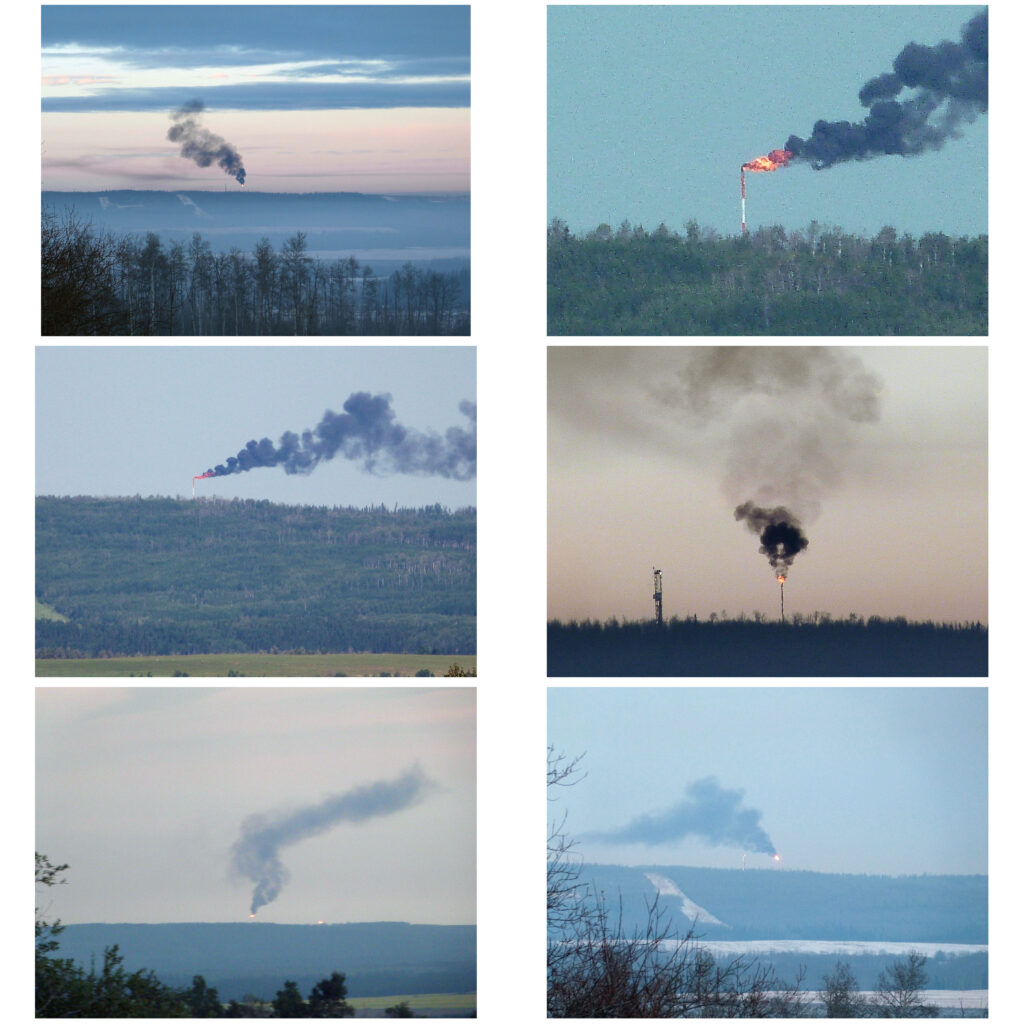
 This is clean? The global average is really bad then if what Carney says is true. NEBC residents live in this constant toxic pollution caused by companies producing the unnatural gas for LNG
Dr. Sally Harvie, radiologist Smithers BC:
“This is yet more evidence to bust the fictitious notion that Canadian LNG is ‘clean.’”
@brishti.bsky.social:
Latest for @pressprogress.ca: One day after @amnesty.org report confirmed what First Nations + doctors have been saying — that living near oil & gas causes all kinds of health harms — Canadian PM @mark-carney.bsky.social announced more support for LNG infrastructure in BC
pressprogress.ca/fossil-fuel-…
Also in this article: – Dawson Creek doc describes health concerns in northeast BC where #fracking expected to grow – Gitanyow sustainability director on a Sept. meeting w/ BC energy minister (former health)
@adriandix.bsky.social, who heard these concerns. – relevant Lancet study findings + more
@drdefbef.bsky.social:
[Carney] needs a kick in the pants. Selling out to the US extractive industries is not cool. Defeat the budget and fight another election. Or change the budget.
A documentary exposé of the world’s biggest—and most unaccountable—polluter: the US military. Learn the environmental cost of having a military Empire with Abby Martin.
Earth’s Greatest Enemy, the second feature film project by Abby Martin, is a groundbreaking anti-imperialist environmental documentary.
Exempt from international climate agreements and rarely scrutinized in mainstream reporting, the Pentagon is the world’s single largest institutional polluter—spewing carbon, contaminating water, and scarring landscapes across the globe. Combining investigative journalism, striking visuals, and stories from impacted communities, this film challenges audiences to rethink the hidden costs of a global military empire and its planetary consequences. Provocative, urgent, and eye-opening, this is a documentary that will change how you see both the military and environmentalism.
Earth’s Greatest Enemy – A New Film by Abby Martin [OFFICIAL TEASER] 2:12 Min. by Empire Files
As More and More Studies Expose Fossil-fuel Health Harms, Mark Carney Doubles Down, First Nations and frontline workers lead the charge against Canada’s aggressive LNG expansion by Brishti Basu, Health Reporter, Press Progress, November 14, 2025
It was about five years ago that the northeastern BC city of Dawson Creek saw an exodus of doctors, says family physician Dr. Ulrike Meyer, who remains based in the city.
“It was seven physicians in total.”
This meant less access to care for the roughly 12,000 people who live there.
Meyer told PressProgress that her former colleagues, like her, had been reading the research about the effects of living near hydraulic fracturing, or fracking, an activity that is prevalent in the region.
The research they were following, Meyer said, showed growing evidence of health risks, like asthma, heart disease, cancers and premature birth, among residents who were exposed to the harmful chemicals that are drilled into and then emitted by shale rocks during the extraction process for liquefied natural gas (LNG).
An Amnesty International report released Wednesday is the latest in a slew of studies that continue to confirm these findings, and says the health of 2 billion people around the world is put at risk by these projects. “Proximity to coal, oil and gas infrastructure has been proven to elevate risks of cancer, cardiovascular illness, adverse reproductive outcomes and other negative health outcomes,” it reads.
But in Canada, expanding LNG is one of the top priorities for Prime Minister Mark Carney’s Liberal government.
On Thursday, Carney announced a second list of “nation-building projects” that Ottawa will fast track. They include the American-owned Ksi Lisims floating LNG facility on Pearse Island in BC, and a $139.5 million loan to BC Hydro so they can start work on the North Coast Transmission Line, which will largely be used to power the LNG sector. This comes after the first phase of fast-tracked projects announced in September, which included an expansion of the LNG Canada plant in Kitimat, BC.
“Too often, historically, you’d have a provincial approval process, and then the federal approval process would start, but different federal departments would start their approval processes at different times and not take into account what others were doing,” Carney said, after touting the projects as “the world’s lowest-carbon LNG facilities.”

“We’re moving much faster. We’re moving in parallel.”
Experts say fracking in northeastern BC is also set to accelerate as a result of these expansions, in order to ensure a steady supply of liquefied natural gas for the export facilities now being built on the west coast of the province.
Meanwhile, in its latest global report about climate change-induced health risks, released last month [pdf], the Lancet medical journal warned that the withdrawal of wealthy countries, like the U.S., from the 2015 Paris Agreement and the World Health Organization puts vulnerable people who are on the frontlines of the climate crisis at a much greater health risk.
The report says that on the global stage, it is now mainly low-income countries most feeling the health impacts of climate change that are continuing to bring up a need to meet emissions targets.
A similar dynamic is playing out inside Canada.
First Nations, physicians at the forefront
The groups in this country most vulnerable to the negative health impacts of climate change — First Nations, rural residents and healthcare workers — continue to sound the alarm against LNG terminals that will put their food sources and livelihoods at risk in the short term, and further increase global emissions in the long run.
Last month, the Canadian Press reported that the Lax Kw’alaams Band and the Metlakatla First Nation applied for judicial reviews of the federal government’s decision to approve the Ksi Lisims LNG terminal in northwest BC, citing economic and safety concerns raised by four of the six First Nations that did not consent to the project moving forward.
And a few days before the September approval of LNG Phase 2, Meyer stood with her colleagues at the Canadian Association of Physicians for the Environment (CAPE) and First Nations leaders in Vancouver and Smithers, BC, challenging both provincial and federal governments to prove that expanding the LNG industry would not disproportionately hurt rural and First Nations communities.
“So many countries have a moratorium on fracking, because when they look at the knowledge about fracking — what is involved, what is the health harm and the environmental impact — most countries shy away,” said Meyer, who is originally from Germany, where hydraulic fracturing was banned in 2017.
The challenge fell on deaf ears, said Tara Marsden or Naxginw, the Wilp Sustainability Director with the Gitanyow Hereditary Chiefs in northwestern BC. The Ksi Lisims floating LNG facility will be located near the Nass River estuary, where salmon migrate on their way to Gitanyow territory.
Marsden recalled a September meeting that she and CAPE doctors had with the province’s energy minister, Adrian Dix (who had been BC’s health minister for seven years prior), in which Meyer detailed the research about health outcomes for people living near fracking.
“[The governments] are not willing to entertain any consultation with Gitanyow, as well as the bands who have territories in the upper Nass River.…We are sadly used to being disregarded when it comes to LNG,” Marsden told PressProgress in September.
She said Meyer shared “a horrific list of health impacts” stemming from the LNG industry but that Dix “did not respond to any of them. He didn’t refute them. He didn’t acknowledge that people were suffering. He didn’t acknowledge the impact on the healthcare system. Nothing.”
When asked about this meeting by PressProgress, Dix’s team emailed a statement that also did not comment on any of these health risks.
It said the minister “was grateful to hear their perspectives and listened carefully as CAPE raised a number of issues. BC continues to be a leader in clean and sustainable energy and maintains some of the highest safety standards in the world for resource projects.”
Marsden said over 100,000 cubic metres of salmon habitat would be destroyed by the construction of the Ksi Lisims plant.
“There’s no argument from the Crown or from the company [as to whether] there will be a destruction of habitat,” she said. “They will have offset plans with the Department of Fisheries and Oceans but… these offset measures are really not effective. You can’t destroy something that nature’s created and then try and recreate it somewhere else. It just doesn’t work.”
Health horrors abound
In its report, the Lancet found concerning new health records on top of a 2024 record for greenhouse gas emissions.
Each year between 2012 and 2021, 546,000 people around the world died because of climate change-induced heat, and a record high 61% of the world’s landmass experienced a drought — leading to food scarcity — in 2024.
Most of the deaths and worst health impacts were felt by countries with a low human development index (HDI). The report emphasizes a need for governments of wealthier countries and the private sector to invest in clean energy and divest from fossil fuels, like natural gas.
The report was authored by a group of 128 interdisciplinary researchers from more than 20 countries, not including Canada. But in a fact sheet for Canada [pdf], the journal reports that between 2020 and 2024, wildfire smoke accounted for 1,400 deaths in the country each year.
Canadian data shows that while heat-related deaths have typically been low, they have increased in recent years. Four summers ago, the western heat dome claimed over 600 lives in BC. Not long before that, extreme heat killed 66 people on the Island of Montreal in 2018.

A Statistics Canada chart showing counts and rates of heat-related deaths in Canada from 1981 to 2022 (via Statistics Canada).
Constructing the newly approved Ksi Lisims LNG terminals in BC means that oil and gas infrastructure will be built on Pearse Island in the Nass River estuary, which sits across an inlet from the Nisga’a village of Gingolx, population 500.
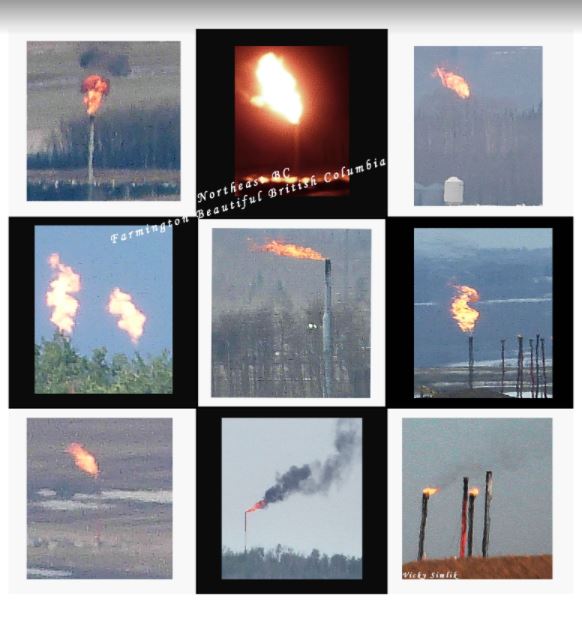
Marsden fears this First Nation community is not prepared for the health impacts of flares from LNG production plants, a process in which excess gas is burned off, releasing plumes of fire and thick, black smoke into the air.
In a recent investigation, The Tyee found that emissions from the existing plant in Kitimat will expose residents to harmfully high levels of nitrogen dioxide — especially dangerous for people who have chronic illnesses or are pregnant.
“The flaring that we’ve seen now firsthand in Kitimat has definitely been alarming for people,” Marsden said. “Reading about it in an impact assessment is one thing, but actually seeing it and seeing what people are being exposed to on a daily basis has definitely been an eye opener.”
Back in the northeast part of the province, where the fossil fuel is forced out of the Montney shale rock formation by fracking, negative health outcomes are prevalent and more research is needed, Meyer said.NO! Asking for more research enables more frac’ing. There is enough research already years ago, showing how harmful frac’ing is to communities it invades. And any process that permanently removes water from the hydrogeological cycle must be criminalized! Not further studied, which just enables the frac’ers. Classic Alberta Synergy. DEMAND THAT FRAC’ING IS CRIMINALIZED – WE KNOW THAT NO REGULATION OR LAW MAKES IT SAFE.
Within a span of two months last year, 23 out of 25 biopsies for lung cancer at Dawson Creek Hospital came back positive, according to Meyer. She said her colleague, a radiologist who made the finding, was “just astonished to come across so many cases” in such a small population.
Much like in poorer nations referenced in the Lancet report, water scarcity is a dire issue in Dawson Creek.
In mid October, the local government declared a state of emergency, after years of drought depleted the Kiskatinaw River, the city’s sole water supply. The city is now “pursuing emergency pumping from the Peace River.”
The Peace River Valley is where University of Toronto researchers are currently studying the amount of fracking-induced levels of carcinogens, like benzene, that make it into people’s homes via their water and air.
“Another study that needs to be looked at is radon gas, which probably also gets released during the fracking process, but that’s another theory we have to explore,” said Meyer, who has lived in Dawson Creek for over 32 years, and notes that radon gas causes lung cancer.NO! That’s already been studied. It’s known that frac’ing releases radon. Stop helping the frac’ers keep frac’ing us! DEMAND FRAC’ING IS CRIMINALIZED!
“I find I have increased radon gas levels in my home, too, and monitor it. It’s coming and going, up and down.”
Global: Fossil fuel infrastructure is putting rights of 2 billion people and critical ecosystems at risk by Amnesty International, Nov 12, 2025
- First-of-its-kind mapping exercise, paired with multi-country qualitative research, reveals depth and scale of potential harm by industry
- 520 million children live within 5km of fossil fuel infrastructure – including potential ‘sacrifice zones’
- Pollution and cultural pillage by coercion, intimidation and delegitimization of land and environmental human rights defenders
Fossil fuel infrastructure poses risks for the health and livelihoods of at least 2 billion people globally, roughly a quarter of the world’s population, Amnesty International and Better Planet Laboratory said in a new report on the fossil fuel industry’s harms to climate, people and ecosystems across the world.
The report, Extraction Extinction: Why the lifecycle of fossil fuels threatens life, nature, and human rights, demonstrates that the full lifecycle of fossil fuels destroys irreplaceable natural ecosystems and undermines human rights, particularly of those living near fossil fuel infrastructure. Proximity to coal, oil and gas infrastructure has been proven to elevate risks of cancer, cardiovascular illness, adverse reproductive outcomes and other negative health outcomes. Amnesty International partnered with Better Planet Laboratory (BPL), at the University of Colorado Boulder, for a first-of-its-kind mapping exercise to estimate the potential scale of global harm from existing and future sites for the production of fossil fuels.
The age of fossil fuels must end now.Agnès Callamard, Secretary General of Amnesty International
“The ever-expanding fossil fuel industry is endangering billions of lives and irreversibly altering the climate system. Until now, there had been no global estimate of the number of people who live in close proximity to fossil fuel infrastructure. Our work together with BPL reveals the scale of the massive risks posed by fossil fuels throughout their lifespan. Coal, oil and gas projects are driving climate chaos, harming people and nature,” said Agnès Callamard, Secretary General of Amnesty International.
“This report provides yet more evidence of the imperative for states and corporate actors to ’defossilize’ the global economy to mitigate the worst impacts of the climate crisis on human rights. The age of fossil fuels must end now.”
Leading on research and global calculations, BPL mapped the scale of exposure to fossil fuel infrastructure, by overlaying data on the known locations of fossil fuel infrastructure sites with gridded population data, datasets that are indicators of critical ecosystems, data on global gridded daily emissions, and data on Indigenous Peoples’ land tenure. BPL’s findings are likely to underestimate the true global scales due to discrepancies in documentation of fossil fuel projects and limited census data across countries.
The report is also based on in-depth qualitative research conducted in partnership with Columbia Law School’s Smith Family Human Rights Clinic and consisting of interviews of more than 90 people, including directly affected individuals from artisanal fishing communities in Brazil (Guanabara Bay), Indigenous land defenders in Canada (Wet’suwet’en territory) and coastal communities in Senegal (Saloum Delta), academics, journalists, CSOs and government officials. It also uses open-source data and remote sensing to corroborate and visualize findings. These were complemented by the results and conclusions of Amnesty International’s past research and ongoing campaigns against oil and gas giants in Ecuador, Colombia and Nigeria.
Staggering magnitudes of at-risk population
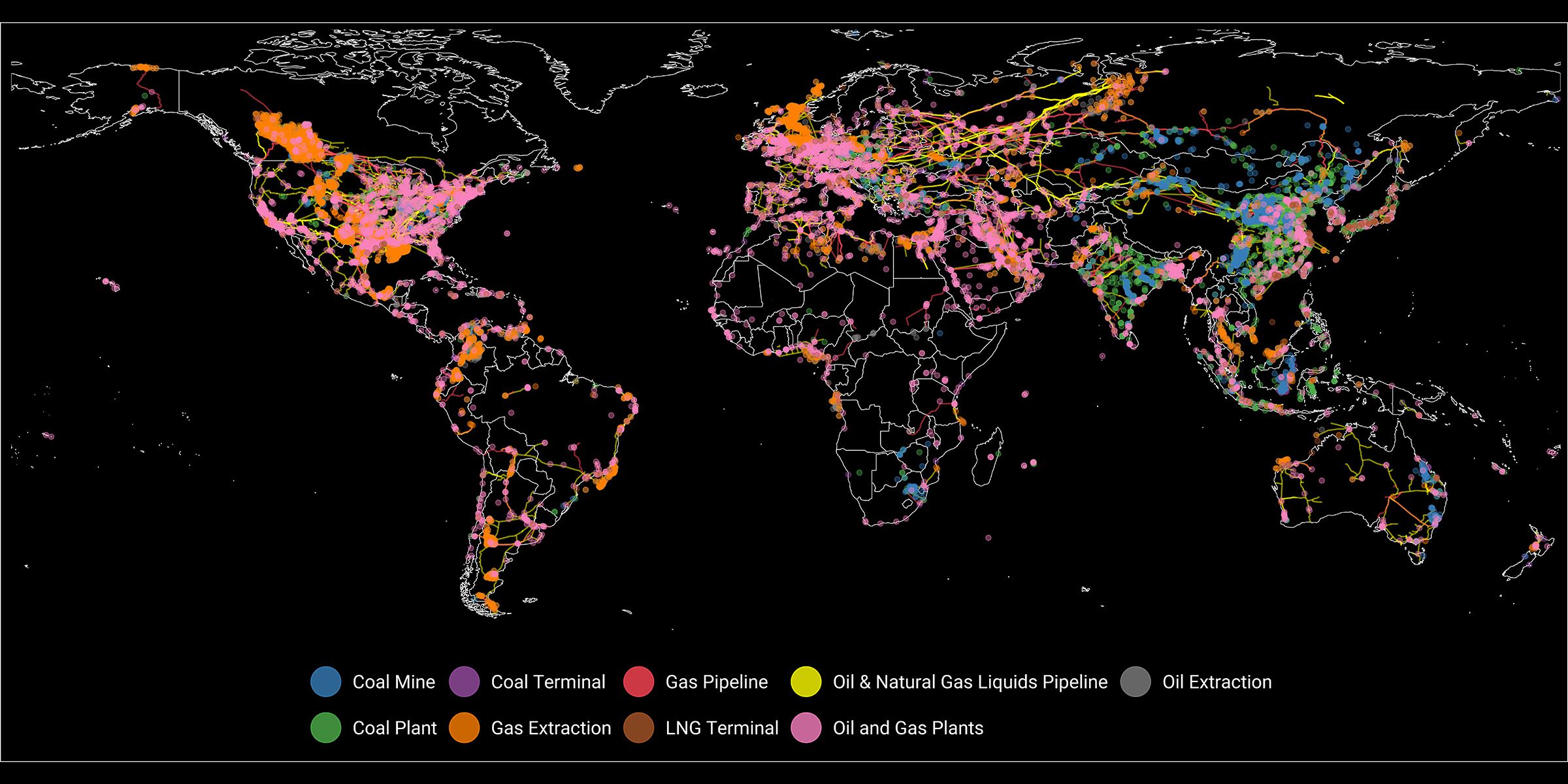
At least 2 billion people live within 5km of more than 18,000 operating fossil fuel infrastructure sites distributed across 170 countries around the world. Of these, more than 520 million are estimated to be children and at least 463 million are living within 1km of the sites exposing them to much higher environmental and health risks.
Indigenous Peoples are disproportionately exposed, with over 16% of global fossil fuel infrastructure sited on Indigenous territories. At least 32% of the existing fossil fuel sites mapped out overlapped with one or more ‘critical ecosystems.’*
The fossil fuel industry continues to expand, with more than 3,500 fossil fuel infrastructure sites either proposed, in development, or under construction globally. BPL figures suggest that such expansion could put at least 135 million additional people at risk. Notably, the number of oil and gas projects is set to increase across all continents while the number of coal plants and mines is increasing mostly in China and India.
“Governments have pledged to phase out fossil fuels, but we now have clear evidence showing new fossil fuel projects continue to expand preferentially in our most critical ecosystems globally. This is a direct contradiction with stated climate goals,” said Ginni Braich, a Senior Data Scientist at BPL who led the paper underpinning the report’s global findings.
Learn how you can take action against fossil fuels
The human cost of fossil fuel production
“We’re experiencing intergenerational battle fatigue… We physically won’t survive [this]. We were never the instigators but we have taken the brunt of all the violence,” said Wet’suwet’en land defender Tsakë ze’ Sleydo’ (Molly Wickham), while describing the imminent construction of new compressors set to increase the profitability of the Coastal GasLink (CGL) pipeline in Canada.
Extracting, processing and transporting fossil fuels undermines the human rights of neighbouring communities and causes severe environmental degradation, health risks, and loss of culture and livelihood.
Some of the groups interviewed described extraction as a form of economic or cultural pillage, perpetrated by corporate actors through intimidation and coercion. “We are not after money; we only want what is ours. We just want to fish in Guanabara Bay, it’s our right. And they are taking our rights,” said Bruno Alves de Vega, an urban artisanal fisher from Rio de Janeiro, Brazil.
All environmental human rights and Indigenous land defenders interviewed by Amnesty International faced severe safety and security risks, often stemming from disputes with companies whose activities threaten traditional ways of life and ecosystem integrity.
The fossil fuel era is inevitably coming to an end and states must stop criminalizing environmental human rights defenders fighting to protect their communities.Candy Ofime, Researcher and Legal Advisor on climate justice at Amnesty International
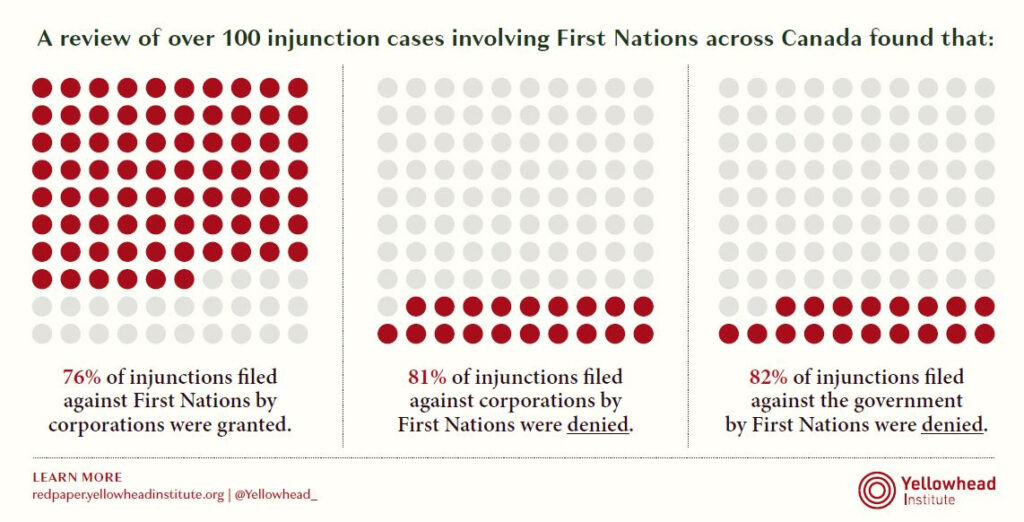
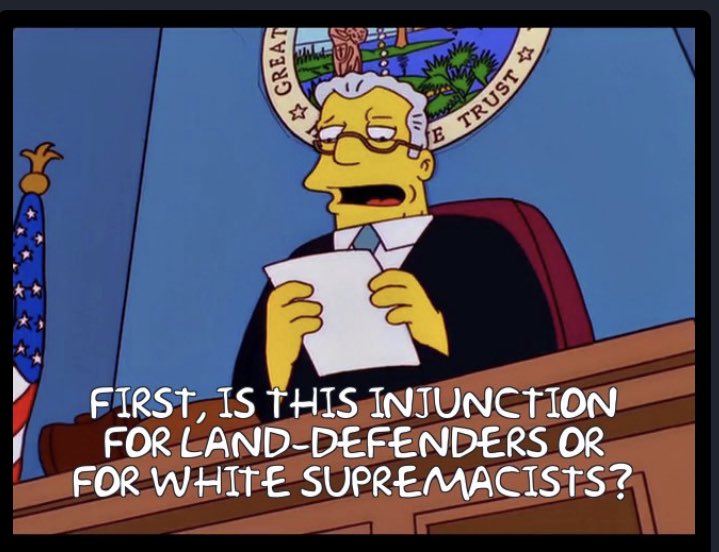
Beyond physical and online threats, states and corporate actors have relied on lawfare, abusing legal action, including criminal proceedings, to silence, delegitimize and intimidate defenders. “When we rise up to defend the Yin’tah (Wet’suwet’en territory), we are criminalized. Civil injunctions are a colonial legal weapon that has become a mechanism for the militarization of our community, criminalization of our People, and for companies to carry out destructive extraction without Indigenous consent,” said other Wet’suwet’en land defenders.
Members of communities living in close proximity to fossil fuel infrastructure condemned the lack of direct and meaningful consultation and transparency from corporate actors. Many reported not fully understanding the scope of operators’ ongoing activities or expansion plans and stated that they had not consented to projects affecting their territory.
People interviewed by Amnesty International in the Saloum Delta in Senegal raised concerns regarding the poor dissemination of accessible information about the potential environmental and socio-economic impacts of the Sangomar project by authorities and project operator Woodside, a major Australian fossil fuel company.
“These case studies are but a few examples of a globalized problem. Most affected groups condemned the power imbalance between their communities and corporate operators, as well as the lack of effective remedy. The fossil fuel era is inevitably coming to an end and states must stop criminalizing environmental human rights defenders fighting to protect their communities,” said Candy Ofime, Researcher and Legal Advisor on climate justice at Amnesty International.
“States must investigate physical and online threats defenders face and put in place robust protection programmes to ensure critical voices advocating for an urgent and equitable energy transition can safely and meaningfully shape climate action.”
Destruction of irreplaceable natural ecosystems
Most of the projects documented created pollution hotspots, turning nearby communities and critical ecosystems into ‘sacrifice zones’.** Exploration, processing, site development, transportation and decommissioning of fossil fuels caused or risked harm to people and wildlife, led to severe pollution, greenhouse gas emissions and damaged key biodiversity areas or carbon sinks.
Despite commitments made under international climate agreements and repeated calls by the UN to urgently phase out fossil fuels, government actions have been wholly inadequate. Fossil fuels still account for 80% of the global primary energy supply, while the industry is intensifying efforts to exert undue influence in climate policy forums to prevent their rapid phase out.
We must resist collectively and demand that world leaders deliver on their obligations and commitments. Humanity must win.Agnès Callamard
“States should be embarking on a full, fast, fair and funded phase out of fossil fuels, and a just transition to renewable energy produced in a manner consistent with human rights. Amnesty International urgently calls for the adoption and implementation of a Fossil Fuel Non-Proliferation Treaty,” said Agnès Callamard.
“The climate crisis is a manifestation and catalyst of deep-rooted injustices. This report responds to the host nation Brazil’s vision for this year’s COP30 to be a forum for the meaningful participation of forest peoples, including Indigenous Peoples and traditional communities and civil society. Our report exposes the magnitude of climate and human rights harms associated with fossil fuel production across the world, illustrating the industry’s disparate impact on Indigenous Peoples and traditional communities and highlighting the resistance they are mounting.
“The fossil fuel industry and its state sponsors have argued for decades that human development requires fossil fuels. But we know that under the guise of economic growth, they have served instead greed and profits without red lines, violated rights with near-complete impunity and destroyed the atmosphere, biosphere and oceans. Against these continuing patterns, against the global fossil fuel political economy of repression, we must resist collectively and demand that world leaders deliver on their obligations and commitments. Humanity must win.”
Key terms
*Critical ecosystems: natural environments that are rich in biodiversity, critical for carbon sequestration and/or where continued environmental degradation or disasters would trigger cascading ecosystem collapse.
** Sacrifice zone: a heavily contaminated area where low-income and marginalized groups bear the disproportionate burden of exposure to pollution and toxic substances