

Rich white men, notably those that are religious, will never let our misogynistic courts treat women equally, too much profit is made raping, abusing, murdering, misusing women – notably Indigenous, and keeping us pregnant in the kitchen serving men for no or grossly unfair pay. The Charter is soaked in blood and bitumen, serving mostly racist white rich men, especially those that rape women, kids, drinking water, and the environment. Just look to the rapists and frac’ers that Canadian judges let off again and again while shaming and blaming the victims, and in my case lying about me and my case to denigrate my lawsuit and me.
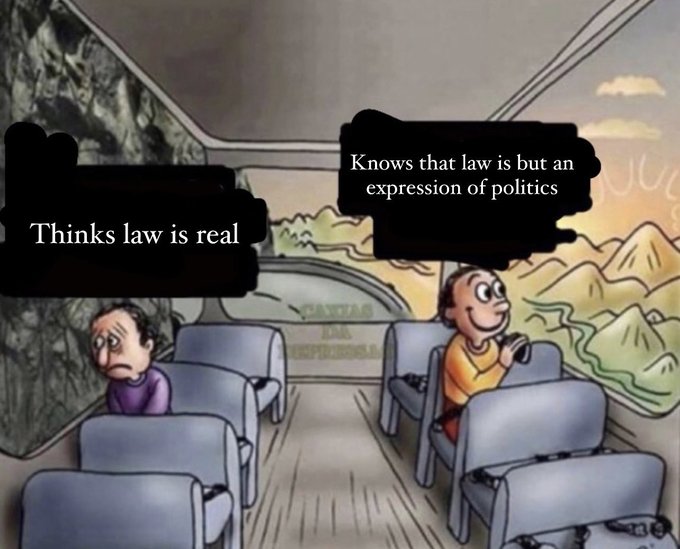
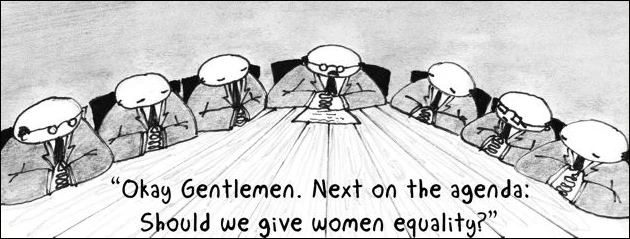
 Most of Canada’s political leaders are men; many of whom are misogynists. Guess who appoints our judges?
A few unrelated but related tweets:
Emmett Macfarlane@EmmMacfarlane Dec 30, 2022:
The Alberta Court of Appeal’s reference opinion re: the Impact Assessment Act is more political essay than judicial decision.
Ian Millhiser@imillhiser Dec 30, 3022:
I feel like this argument, which essentially boils down to “law is real and we should appoint judges who think law is real,” would be more persuasive if the Supreme Court of the United States hadn’t spent the last several years demonstrating that law is fake.Same in Canada, and getting worse by the month, notably at our highest court where judges intentionally publish lies in rulings and include those lies in the court summary to the media, which of course media published.
Michael Spear@MichaelSpear3 Dec 30, 2022:
It’s amusing to me that there are still folks out there who think judicial reasoning is somehow not ideological or political.
Jennifer Koshan@JenniferKoshan Dec 30, 2022:
My paper with @JWatsonHamilton on “Women’s Charter Equality at the Supreme Court of Canada” has now been updated to include Sharma. We were pessimistic before, even more so now. Hoping for better in 2023. Grab it before the publisher makes it disappear!
In my view, hope is evil. It enables the crime enabling and harm to women and kids by our courts. And hope helps corporations pollute our environment, homes, drinking water and bodies to where there is nowhere left on earth anymore that is clean and safe for humans or any species. The more people “hope” the more they put the burden of all actions on a scant few people willing to sacrifice everything for community, environment and others. Hope also controls people, keeps them mostly obedient to colonial rape and pillage profiteering and makes people believe there is justice and law, where there is none, especially not for Palestinians, women, kids and our environment.
19 Pages Posted: 9 Feb 2022 Last revised: 30 Dec 2022
Jennifer Koshan, University of Calgary – Faculty of Law
Jonnette Watson Hamilton, University of Calgary – Faculty of Law
Date Written: December 29, 2022
Abstract
This paper examines the failure of the Supreme Court of Canada to recognize sex discrimination against women under s 15 of the Canadian Charter of Rights and Freedoms until 2018, with only two successful claims to date. We explore how this failure exists despite the mobilization of women’s and other equality-seeking groups to ensure that the Charter’s equality rights would be worded and interpreted to result in transformative change, despite women’s continuing lack of equality in Canada, despite the promise of the Court’s first s 15 decision, Andrews v Law Society of British Columbia in 1989, and despite women’s early successes in human rights sex discrimination claims. Women have also lost almost every other case where they relied on other grounds of discrimination, and we critique the lack of intersectional analyses in the Court’s judgments despite opportunities to consider how sex intersects with other grounds in (re)producing women’s inequalities. We also discuss other barriers to women’s equality claims, including causation issues and evidentiary burdens, courts’ inability to see adverse effects discrimination, and their reluctance to impose positive obligations on government, all of which perpetuate women’s systemic inequality. We conclude by offering thoughts on the uncertain future of women’s s 15 claims.
Women’s Charter Equality at the Supreme Court of Canada: Surprising Losses or Anticipated Failures? by Jennifer Koshan and Jonnette Watson Hamilton, Revised December 2022
Introduction
This chapter asks whether we should be surprised that it took until 2018 for a majority of the
Supreme Court of Canada to recognize sex discrimination against women under s 15 of the
Canadian Charter of Rights and Freedoms, which guarantees equality based on a wide range of enumerated and analogous grounds, including sex.1 This abysmal track record exists in spite of the mobilization of women’s and other equality-seeking groups to ensure that the Charter’s equality rights would be worded and interpreted to result in transformative change. It exists in spite of women’s continuing lack of equality in Canada, from pay and other workplace inequalities to violence and erasure as full members of society.2
The Court has handed women loss after loss despite the promise of the Court’s first s 15 decision, Andrews v Law Society of British Columbia in 1989,3 and despite women’s early successes in human rights sex discrimination claims. Women have also lost almost every other case where they relied on other grounds of discrimination in contexts where sex inequality was also arguable, with intersectional analyses almost totally absent in the Court’s judgments despite opportunities to consider how sex intersects with other grounds in (re)producing women’s inequalities.4 Looking back, it seems genuinely shocking that the Court did not accept a sex inequality claim by women until 2018. 2 Not when one knows this is the top court in Cavemen Canada where inequality rules supreme and corporations run our govt’s and thereby, our courts.In fact, it has allowed only two such claims to date—both over the protests of some members of the Court.5
Perhaps we should not be surprised, however, given the depth, breadth, and intersectionality of women’s inequalities and the difficulty some members of the judiciary have in putting themselves in the shoes of women and other marginalized groups. The Court also struggles to see adverse effects discrimination, thereby reinforcing the exact systemic inequalities that women’s claims have raised.
We acknowledge that a focus on Supreme Court of Canada decisions does not tell the full story
of women’s equality successes and losses.
Taking a case to the Supreme Court involves enormous resources, financial and otherwise, limiting which claims proceed to our highest court.
And in many households/families, men control the finances of women, or refuse women access to their own money so as to control them sexually and to the production of offspring. Next, there’s the vile misogynistic legal industry women must contend with. Most lawyers are white, rich, and male looking to fill their own pockets, as I cruelly learned by the lies and betrayals of my rule breaking, quitting cowardly lawyers Murray Klippenstein and Cory Wanless. I saved all my life, and do not have to contend with a man controlling my savings. Still, reaching Canada’s Supreme Court only to have the judges knowingly lie about me in their ruling (I believe to discredit me and my case so as to enable law violating frac’ers) and piss on my “valid” charter claim against the mostly male AER, wiped out masses of my savings, which I will never see again. I know I will also never see an apology from the court or its lying frac friendly judges (7/9 put on the high bench by Steve Harper who is best buds with illegal aquifer frac’er ex CEO of Encana Gwyn Morgan), or my ex lead douche lawyer.
The Court has also declined to hear a number of appeals that engaged women’s equality rights, further narrowing the possibilities.6 And while governments have an important role in responding to women’s inequalities, whether in response to court decisions or otherwise, we leave that context aside.7 In the limited scope of this chapter, we focus on cases at the Supreme Court because they are by definition of national interest and have the potential to influence the success of women’s claims in other forums.
Part I briefly reviews the history of women’s role in ensuring effective language in s 15, as well
as securing s 28’s guarantee of equal Charter rights for male and female persons.8 It also
explores women’s role in litigation, which shaped the Supreme Court’s adoption of a substantive equality approach in Andrews and early human rights cases. Part II analyzes women’s s 15 claims at the Supreme Court between 1993 and 2022, discerning trends in the seven sex discrimination cases,9 as well as the nine cases focusing on other grounds of women’s inequality.10 We discuss barriers to women’s equality claims, including causation issues and evidentiary burdens, reluctance to impose positive obligations on government, and reticence to consider intersecting inequalities in Part III. In Part IV we offer concluding thoughts on the uncertain future of women’s s 15 claims.
Part I – A Brief History of Women’s Fight for Equality11
Prior to the Charter, the Canadian Bill of Rights guaranteed individuals “equality before the law and the protection of the law.”12 Women sustained some dramatic losses under this provision.13
For example, in Bliss, a case involving a claim of discrimination in government benefits based on pregnancy, the Court infamously opined that “[a]ny inequality between the sexes in this area is not created by legislation but by nature.”14Is that why judges keep letting rapists off? Because women are by “nature” a receptacle for sperm and fetuses?
These losses spurred equality-seeking groups to actively engage in the drafting of the Charter’s
equality provisions to ensure they would provide courts with a more expansive foundation for
addressing systemic inequalities. Their advocacy resulted in several significant changes to s 1 during the drafting process. First, protections were added for equality under the law and equal benefit of the law. Advocates believed the four equality rights described a positive vision of
equality that would require governments and courts to remedy inequality in the substance of laws and not just their administration.15 Second, the list of protected grounds was made open-ended and mental and physical disability were added as enumerated grounds, although other relevant intersectional grounds, such as marital status and sexual orientation, were omitted.16 Third, the heading was changed from “Non-discrimination Rights” to “Equality Rights,” largely because of women’s groups concerned about a negative rights approach to s 15.17
Women’s advocacy also secured s 28, which guarantees Charter rights equally to male and
female persons “[n]otwithstanding anything in this Charter.” Pffft! My guaranteed right to seek remedy for AER violating my Charter rights was pissed on in 2017 by Harper’s Supreme Court of Canada. The judges didn’t even try to hide their bias and lies. The judges arrogantly flicked the law into radioactive frac waste. I bet if I was a rich man, they would have let me seek remedy against AER, and they would have released their ruling from the bench, instead of taking more than a year when their self regulator requires rulings to be released within six months. My hearing at the supreme court was extremely simple, only matter of law were allowed to be argued, no facts, no data. Imagine my horror to see Rosalie Abella make up facts in her ruling! Our judges do what they want and know because they self regulate themselves, they are rarely held accountable for pissing on the law. This section took on crucial importance when the notwithstanding clause, s 33, was added to the Charter and the women’s lobby succeeded in having s 28 exempted from the government override clause.1
Equality-seeking groups expected these changes and the entitlements they created to bring about transformative improvements to women’s lives.19 It was no surprise then that, after the Charter took effect, women continued their advocacy by means of strategic equality rights litigation, primarily through the Women’s Legal Education and Action Fund (LEAF).20 Even though Andrews did not directly raise sex equality issues, LEAF intervened in order to articulate a substantive approach to equality.21 Justice McIntyre, writing for the majority on s 15, accepted this view in holding that “[t]o approach the ideal of full equality before and under the law…the main consideration must be the impact of the law on the individual or the group concerned.”22
Section 15 claims therefore did not require proof of discriminatory intent, nor were claimants
required to show that the government’s actions were unreasonable or arbitrary—those were
considerations for s 1.23 Justice McIntyre expressly rejected the Canadian Bill of Rights formal
equality approach, recognizing that “identical treatment may frequently produce serious
inequality.”24 In support of a substantive approach, he referenced human rights law, including the definition of systemic discrimination from Action Travail, a leading sex discrimination case in the employment context.25
The early promise of Andrews was bolstered by two unanimous human rights victories for
women the same year.26 Building on Action Travail, in Brooks v Canada Safeway Ltd.27 and
Janzen v Platy Enterprises Ltd.,28 Dickson CJ made several crucial holdings on behalf of the
Court.29 First, Brooks overturned Bliss by deciding that pregnancy discrimination is sex
discrimination, and sexual harassment was recognized as a form of sex discrimination in Janzen. Key to both rulings was a second important point: that not all members of a group must be adversely affected for a discrimination claim to succeed.30 Third, Brooks dismissed the idea that women’s purported choices should be a barrier to their equality claims.31 Brooks and Janzen were followed ten years later by Meiorin, an adverse effects sex discrimination claim that was won largely on the basis of statistical evidence showing that a fitness test disproportionately disqualified women for employment as forest firefighters.32
Andrews and the four human rights decisions clarified some doctrinal and conceptual points that are important to a robust understanding of sex discrimination and took notice of structural impediments to women’s equality. However, they had little effect on women’s Charter equality claims until recently.33 While some commentators were skeptical of the potential of these decisions to drive transformational change,34 the fact that this early promise went unfulfilled until 2018 is nonetheless surprising, particularly when we examine the Court’s twelve pre-2018 opportunities to find discrimination against women.
Part II: Women’s Section 15(1) Claims at the Supreme Court of Canada
A. Sex Discrimination Claims
The first women’s sex discrimination claim heard by the Supreme Court was Symes in 1993. It
was planned as the first of several cases seeking greater tax equality for women.35 The claimant, a self-employed lawyer, challenged the interpretation of Income Tax Act provisions that did not allow her child care expenses to be fully deducted as business expenses. Symes argued that the unavailability of a full deduction for child care had a disproportionately negative impact on women, who bore a disproportionate share of the child care burden.
When compared to deductions for golf club memberships and expensive cars that courts had allowed men for the purpose of earning business income,36 Symes seemed like an easy win.
However, the claim was one of adverse impact discrimination, a type of claim essential to the recognition of systemic discrimination, but a type with which the Supreme Court has had a great deal of difficulty because the challenged distinctions are not made on the face of the law.37
Symes’ claim was denied by the all-male majority of the Court on the basis that she had failed to show that women disproportionately paid child care expenses.38I think the only failure was that “she” was a woman. Had “she” been a man, I am sure the all-male court would have applauded “him” and ruled in “his” favour. The misogyny of Canada’s judges is blatant, including in female judges, notably past Chief Justice of the Supreme Court of Canada, Beverley McLachlin. Her public comments about, and her wagging her privileged fingers at, rape victims are heinous and unforgivable.
Symes was a claim for the redistribution of economic benefits, rather than a claim for recognition of legal status.39 Allowing deductions for child care expenses that were incurred for the purposes of earning business income would have been ground-breaking, possibly facilitating a reclassification of child care as a public, not private, matter.40 However, the majority in Symes insisted that the Court had to distinguish between “effects which are wholly caused, or are contributed to, by an impugned provision, and those social circumstances which exist independently of such a provision.”41 These words are, of course, reminiscent of Bliss.42 We will also see this demand that a specific legal provision be the primary cause of the discrimination at issue in the dissents in Alliance and Centrale,43 and in the majority in Sharma.44 In Symes, this demand meant the Court refused to recognize any connection between disallowing child care expenses as deductions to earn income and the systemic disadvantage that women face in bearing the burden of child care. Nothing else would satisfy an all-male majority. Men, especially rich men in positions of power like politicians and judges, want to have their cake and eat it too, while kicking their polished fancy shoes in the guts of “women” making the enormous successes of men possible. Evil Caveman Canada.
The dissent in Symes by the two women justices, L’Heureux-Dubé and McLachlin JJ, focused on the impact of the challenged laws on women whose ability to participate in the work force may be completely contingent on child care. These justices had no problem recognizing that the types of deductions historically allowed by the courts as business expenses disproportionately reflected men’s reality.45Too funny, too tragic. Of course women see how fucking unfair the patriarchy has been, and continues to be, and will remain until frac’ers spew so much benzene-loaded pollution everywhere (notably on golf courses – playfields for men under the guise of “work”) the penises and sperm of men stop functioning. (Benzene has been proven harmful to the male sex). I wonder at the hell that will break lose when judges figure that out as their own wee willies become impotent and shrivel up.
One year after Symes, the Supreme Court heard arguments by the Native Women’s Association
of Canada (NWAC) seeking an equal right to participation and funding at the constitutional
negotiations that eventually led to the Charlottetown Accord. The federal government had invited four national Indigenous organizations to the consultations, and NWAC argued these groups did not represent the interests of Indigenous women nor share their position that the Charter should apply to Indigenous governments.46
NWAC’s claim focused on the equal right of Indigenous women to freedom of expression under ss 2(b) and 28 of the Charter, with their s 15 sex discrimination arguments playing a minor role.47 The majority acknowledged that where the government has provided a platform for expression it cannot do so in a discriminatory manner48—a weak version of government positive obligations that we see in subsequent cases such as Alliance and Fraser. However, in NWAC’s case the Court ruled the evidence failed to establish that they had been deprived of the opportunity to express their views to the government.49 While the majority accepted that Indigenous women “face racial and sexual discrimination which impose serious hurdles to their equality,”50 the decision did nothing to address the intersecting inequalities and lack of status historically experienced by Indigenous women at the hands of the colonial state.51
Ten years later, NAPE considered a sex discrimination challenge to legislation suspending a pay equity agreement between the Government of Newfoundland and Labrador, acting as an
employer, and the Newfoundland and Labrador Association of Public and Private Employees
(NAPE). The government, acting as a legislature, cited a fiscal deficit and suspended all wage
increases and three years of pay equity adjustments. The Court unanimously accepted NAPE’s argument that the government had violated the affected workers’ sex equality rights, which the government conceded. This made NAPE the first sex discrimination case brought by women in which the Court held s 15(1) had been violated. However, the Court also unanimously concluded that the violation was justified under s 1, accepting that the province’s alleged fiscal crisis justified the infringement of s 15(1). They did so with what they conceded was little evidence of minimal impairment or consideration of alternative courses of action by the government.52
The result of the Court’s decision was that women were expected to carry a disproportionate burden of the fiscal crisis.53Caveman Canada continues its onslaught against women, enabled by judges.
The NAPE decision was called “astonishing and disappointing” 54 for the Court’s casual defence of what they recognized as the undervaluation of women’s work and their repudiation of an employer’s responsibility to redress systemic discrimination against women.55 Like Symes, this decision also ignored women’s systemic disadvantage (and men’s corresponding systemic advantage) in a context where a successful claim would have had redistributive consequences.
In addition to its excessive deference to government, the decision perpetuated stereotypes that pay equity is an unaffordable luxury,56 instead of one of the best examples of substantive equality, “designed to overcome the limitations in formal equality as a method of addressing the legacy of wage discrimination against women workers.”57
Health Services was another claim of adverse effects discrimination which would have had
redistributive consequences, and it too was dismissed by the Court. The claim challenged legislation that interfered with the collective bargaining rights of unions representing health care workers, who were disproportionately women, immigrants, and older. In addition to their successful s 2(d) claim, the unions argued that the legislation discriminated on the basis of sex and the analogous ground of being workers in “women’s jobs.”58
Writing for the majority, McLachlin CJ and LeBel J quickly disposed of the s 15 claim, attributing “the differential and adverse effects of the legislation on some groups of workers … to the type of work they do, and not to the persons they are.”5
In dismissing the argument that sex was not simply coincidental to who was negatively impacted by the legislation, the Court ignored the social and economic structures that maintain women’s employment disadvantage—occupational segregation, wage and job insecurity, and wage disparity—that were well documented in the evidence.
The Court’s failure to address the equality issues seriously has been called particularly “inexcusable” given the pay equity subtext of Health Services.60 The Court in NAPE had at least acknowledged the systemic nature of sex-based discrimination in the workplace.61
The outcome in one of the two 2018 pay equity cases, Centrale, paralleled that of NAPE; women won their s 15(1) claim but the sex-based discrimination was seen as justified. Centrale focused on the development of a process for pay equity in workplaces where there were no male comparators, which delayed the application of pay equity legislation to those workplaces for six years compared to workplaces with male comparators. Justice Abella wrote for the 5:4 majority on s 15(1), holding that the legislated delay was a discriminatory distinction that perpetuated women’s historical economic disadvantage. However, four of the five judges who found there was a s 15 violation held this delay could be justified under s 1.62
The s 15(1) dissent in Centrale—by Wagner CJ and Côté, Brown and Rowe JJ— saw no breach,
contending that the Quebec government had no positive duty to redress inequality, and, in
particular, no positive duty to remedy inequality not caused by the government.63 They also
considered the government’s ameliorative purpose as part of the context of s 15(1), an approach the Equality Coalition had specifically warned against in their intervention.64 Also notable is the dissent’s finding that the legislated delay in pay equity was not based on the ground of sex. Reminiscent of Health Services, they argued the distinction was between workplaces with or without male employees, which meant the ground was neither enumerated nor analogous despite their recognition that the affected group “consists mostly of women and is at a particular disadvantage in the labour market.”65 Not surprisingly, the majority characterized this reasoning as the type of formal equality approach found in Bliss.66
Justice Abella also wrote the 6:3 majority decision in Alliance, which was the first s 15(1) case
women won on the ground of sex at the Supreme Court. She held that 2009 amendments to
Quebec’s Pay Equity Act violated s 15(1) and could not be justified. The amendments replaced employers’ continuous obligation to implement pay equity with a system of pay equity audits every five years, and removed almost all possibility of retroactive compensation. Justice Abella found that the amendments were based on sex and that they perpetuated women’s pre-existing disadvantage by “making the employer’s pay equity obligation an episodic, partial obligation.”67
The majority dismissed the government’s s 1 arguments because it had not provided evidence of other means it considered to encourage employer compliance with pay equity obligations.68
The dissenting judges in Alliance—Côté, Brown and Rowe JJ—emphasized Quebec’s good
intentions in their s 15(1) analysis.69 In their view, the amendments did not create an “adverse distinction” based on sex because women were “better off than they were before the Act initially came into force,” even if they were worse off than before the amendments—thus distinguishing Alliance from NAPE.70

As in Centrale, the dissent in Alliance also accused the majority of imposing positive obligations on government, something they saw as outside the judiciary’s power and role. For them, “Charter rights are fundamentally negative” and do not place the government under any
“obligation to act in order to obtain specific societal results.”71 Unfortunately, the majority did not push back on this impoverished vision of the nature of Charter rights. Instead, Abella J stated that a legislature need only avoid discrimination when it chooses to act and denied that s 15 creates an obligation on the state “to enact benefit schemes to redress social inequalities”.72
Fraser in 2020 was the second s 15 sex discrimination win for women at the Supreme Court. It
involved a claim of adverse effects discrimination by female RCMP members who lost their entitlement to full pension benefits when they entered temporary job-sharing arrangements. While members on temporary leave without pay could receive full pensions by buying-back pension credits for their time on leave, job-sharers could not. Writing again for a 6:3 majority, Abella J noted the statistical evidence proving it was primarily women with young children who job-shared, and the evidence that this group faced many decades of disadvantage.73
Relying on Brooks and Janzen, Abella J emphasized that not all members of a group need to be
affected in the same way for a disparate impact to be accepted,74 a point advanced by the
intervener LEAF.75 Abella J relied on this point rather than consider the family/parental status ground also pled by the claimants. She did explicitly note the importance of intersectionality but held it was unnecessary to analyze the claim using family/parental status, finding the inequality could be seen using the ground of sex alone.76
After clarifying the test for identifying a violation of s 15(1) and clearing away many of the
confusing, inequitable, and contradictory ideas attached to 35 years of interpretation,77 Abella J found that job-sharers’ inability to buy back their pensions perpetuated sex discrimination in pension plans and therefore violated the equality guarantee. In her brief s 1 reasons, Abella J found the government had offered no pressing and substantial objective for denying the claimants’ pension rights.
Justice Abella strongly critiqued the caustic dissenting reasons of Brown and Rowe JJ in Fraser, who raised concerns about the “chilling effect” the majority decision would have on the “incremental efforts” of legislatures to redress women’s inequality.78 Her own acerbic response noted that this concern had been raised by the same two judges and Côté J in Alliance and was rejected by the majority.79 She rebuked the dissent’s “insistent attack” on substantive equality, arguing their approach would require litigants “with each new case, [to] stand ready to defend the exact gains that have been won multiple times in the past.”80 However, in Sharma – which we discuss in the next part – this persistence by Brown, Rowe and Côté JJ paid off. They were joined by Wagner CJ and Moldaver JJ to form a majority, and purported to reduce s 15’s focus on substantive equality as the “animating norm”81 to a formalistic application of the doctrinal test for a breach of s 15(1).82
B. Women’s Claims on Other Grounds
Women have also brought s 15 claims on grounds other than sex, with sex discrimination
relevant but only raised as a secondary argument or by interveners, if at all.83 Of the nine cases in this category, only the 1999 case of M v H was successful, based on an argument that the exclusion of former same sex partners from spousal support provisions violated s 15 based on sexual orientation.84 Although this was a formal equality claim that shifted a financial burden from the state to individuals, M v H was still an important win, especially when contrasted with the denial of claims because of women’s “choice” of relationship status in several other cases (Walsh, Hodge, Quebec v A).
Three of the claims based on grounds other than sex involved failed challenges to government
benefit schemes based on age. In none of these cases did the Supreme Court consider
intersectionalities. In Law, the Supreme Court denied a woman’s claim to survivor’s benefits under the Canada Pension Plan based on her young age. The exclusion of younger women was based on stereotypes of young widows,85 but neither sex nor intersectionality played a role in Law. Similarly, in Gosselin, a majority of the Court dismissed a woman’s ss 7 and 15 challenges to Quebec legislation which reduced social assistance benefits for persons under the age of 30 unless they participated in workfare programs. The Charter Committee on Poverty Issues and
National Association of Women and the Law intervened in Gosselin and argued intersectionality of gender and poverty to no avail.86 In Withler, older women unsuccessfully argued that the reduction of their survivors’ pension because of the age of their husbands at the time of death was discriminatory. LEAF’s intervention in Withler focused on the intersection between age and sex, contending that “[i]t is predominantly women, in economically interdependent relationships, who require transitional funding, at all ages.”87 However, the unanimous decision ignored the claimants’ context, relying instead on the purpose of the challenged provision “in the context of the broader legislative scheme, taking into account the universe of potential beneficiaries.”88 This consideration of the purpose of the entire benefit scheme as part of the s 15(1) analysis was not repudiated by Abella J in any of the subsequent majority decisions she authored. It was, however, made much of by the dissenters in Fraser,89 and prevailed in Sharma.90
There have also been several claims related to benefit schemes brought by women alleging
discrimination based on marital, parental, or family status with varying degrees of attention to
sex discrimination (Thibaudeau, Walsh, Hodge, Quebec v A). In these largely unsuccessful
challenges, the Supreme Court emphasized personal autonomy and women’s “choice” of relationship.91 In Walsh, for example, the claimant unsuccessfully challenged the exclusion of unmarried cohabitants from a statutory marital property regime, alleging discrimination based on marital status. The Court held that the regime was not discriminatory because “it respects the fundamental personal autonomy and dignity of the individual” who has chosen to not marry.92Chosen — wisely — not to become a man’s chattel/maid. In Quebec v A, a majority of the Court accepted a woman’s claim that the exclusion of de facto
spouses from family property and spousal support legislation violated s 15 on the basis of marital status—thereby overturning Walsh—although the claim ultimately failed under s 1.93 Importantly, and unlike the age-based claims, this “win,” like that in M v H, involved private family obligations rather than a redistribution of government benefits.94 And, like the age-based claims, although intersectionality was evident,95 the majority of the Court failed to undertake an intersectional analysis that included sex in these cases.
The claim in Sharma was brought on the ground of race, but it was argued by the claimant and
most of the interveners intersectionally, based on Indigeneity and sex. The case involved ss 7 and 15 challenges to a 2012 amendment to the Criminal Code that restricted some of the sentencing reforms introduced in 1996 to reduce the overincarceration of Indigenous offenders and expand the use of restorative justice. In its 2022 decision rejecting that claim, the majority stated that they were not altering the test for a s 15(1) violation set out in Fraser, but only clarifying three uncertainties.Just more “pick and choose” white man law when it suits the judges superiority bullshit.96 However, as those in dissent—Karakatsanis, Martin, Kasirer and Jamal JJ—pointed out, the majority’s “clarifications” resurrected their rejected arguments in the pay equity cases and Fraser.97 The Sharma majority renewed the focus on causation, insisted on quantitative evidence of disproportionate impact, imported s 1 justifications into the s 15(1) analysis, denied the possibility of positive state obligations, rebuffed the submissions of interveners, and did not mention intersectionality, reconciliation, or Indigenous laws.98
Part III: State of Bliss?
In spite of some reasons for hope for women’s discrimination claims going forward after the s15(1) victories in Alliance and Fraser,99 feminist and critical race scholars questioned the extent to which s 15 could result in broader substantive equality for women,100 even before the decision in Sharma dashed that hope. Whenever women have sought egalitarian redistributions of public resources based on sex discrimination, they failed until the win in Alliance in 2018, despite the fact that few of the challenges would have imposed significant costs on government. The decision in Alliance only means that the Quebec government could not disregard pay inequities arising for some of its employees between intermittent audits. In Fraser the pension buy-back rights that the RCMP members won were completely self-funded. In the cases involving the redistribution of social and economic benefits, however minor, we also see some members of the Court improperly considering the government’s purposes in s 15 rather than s 1. This has happened most often when the challenged laws or policies were said to have an ameliorative purpose or were part of a large benefit scheme. Sharma is an unfortunately excellent example of this approach, and extends it beyond the domain of social and economic redistribution.101 The majority in Sharma urged the consideration of the broader legislative context in determinations of whether distinctions are discriminatory,102 and we so can expect to see a greater reliance on state purposes in future s 15(1) analyses.
Another major point of controversy concerns the purported dichotomy between negative and
positive government obligations. In Alliance, Abella J denied that the pay equity cases imposed positive obligations on government,103 rather than refuting the dissenting justices’ insistence that Charter rights are “fundamentally negative.”104 A positive conception of Charter rights usually requires the government to act affirmatively for the benefit of historically disadvantaged groups, such as a requirement to enact employment equity legislation where none exists.105 A weaker version of positive rights only requires the state to provide a benefit in a non-discriminatory
manner if they have already chosen to act.106 In the context of women’s equality, it is only this
weaker version that was endorsed by the majority judgments in Alliance and Fraser, as it was in M v H in 1999. Nevertheless, even that weaker version of positive rights was jeopardized by the majority’s judgment in Sharma when they stated that “s 15(1) does not bind the legislature to its current policies.”107
This positive/negative rights dichotomy is related to recurring demands by some members of the Court that claimants prove the government wholly or partially caused the inequality complained of, particularly in cases of systemic discrimination.108 Those members formed the majority in Sharma and insisted that claimants “must prove that the impugned law or state conduct caused (in the sense of created or contributed to) the disproportionate impact on the claimant.”109 Related to that demand is the failure of several claims due to a lack of evidence or assumptions about women’s choices. In Sharma, the majority required expert evidence or statistical data showing a specific before-and-after situation,110 diminishing the use of social science evidence
and ignoring the role of judicial notice. The clarity of Abella J’s discussion in Fraser about the types of evidence required for s 15(1) claims might have helped dismantle these barriers had they been unrelated to ideological demands.111 However, the s 15(1) dissents in Alliance, Centrale, and Fraser and the majority decision in Sharma suggest this ideology―which abstracts and erases women’s inequalities as the Court did in Bliss―continues to have a strong hold. In this state of Bliss, the power and privilege afforded to some actors by the status quo, at the expense of others less powerful and privileged, need not be recognized.
Confronting systemic discrimination also requires recognition of adverse effects and intersecting grounds of discrimination.112 While Fraser provided some optimism for adverse effects claims, Sharma obliterated that hope with the majority’s apparent restriction of adverse effects discrimination to disproportionate impact types of cases, ignoring failures to accommodate. The majority judgment in Sharma also exemplifies the Supreme Court’s failure to engage in intersectional analysis, to the particular detriment of marginalized women. Any consideration of s 28 is also missing from the Court’s analyses of women’s equality claims.
The goal of substantive equality remains elusive, the few victories tenuous, and the need to
address the systemic and structural nature of discrimination unfulfilled, as many feminist
scholars reviewing the Court’s s 15 decisions have argued over the decades.113
Systemic discrimination may be invisible to some, such as those on the Supreme Court with privileged innocence,114 but it remains all too material for those living with inequality every day.
Part IV – Concluding Thoughts
If substantive equality is to mean anything, it must mean the eradication of systemic inequalities, including those experienced by women on sex and other grounds. This requires attention to power differentials between claimants and governments or other respondents, yet courts have generally not attended to power under s 15.115 The Supreme Court had an important opportunity to correct this deficiency in Sharma, which raised state power in the context of the criminalization of Indigenous women and required the Court to grapple with intersecting inequalities.116 The majority of the Court failed to seize these opportunities.
We have emphasized the problems in the Court’s s 15(1) jurisprudence that are doctrinal and
conceptual, but they are also ideological.117 Justice Abella retired in June 2021, and although we are loathe to view the Court’s jurisprudence according to the rule of men rather than the rule of law, the current composition of the Court leaves much uncertainty about the future of women’s equality litigation, even after the appointments of Justices Mahmud JamalI expect the feds had ample reason to appoint J Jamal to our misogynistic supreme court. J Jamal is of Bahá’í Faith which claims to treat women equally, but especially in areas of the law, does not. That religion does not allow women on their high court. One can’t get much more discriminatory against women than that. Perfect for Caveman Supreme Court of Canada! (replacing Abella J) and Michelle O’Bonsawin (replacing Moldaver J). We can expect governments and their lawyers to exploit the divisions on the Court that Sharma solidified.
Justice Abella closed Fraser expressing hope that “inequality can be reduced one case at a
time.”118 However, systemic inequality cannot be confronted and overcome by individual cases brought forward on a piecemeal basis.But it’s a guaranteed way to bankrupt women seeking equality in Canada.119 As others have noted, to challenge power on its own terms—or to use the master’s tools to dismantle his own house—is far too often a losing battle.120 We call on the Court to surprise us in the future.I ain’t holding my breath. I know I will die without ever seeing justice from Canada’s Caveman Courts that are better at abusing women than Andrew Tate types.