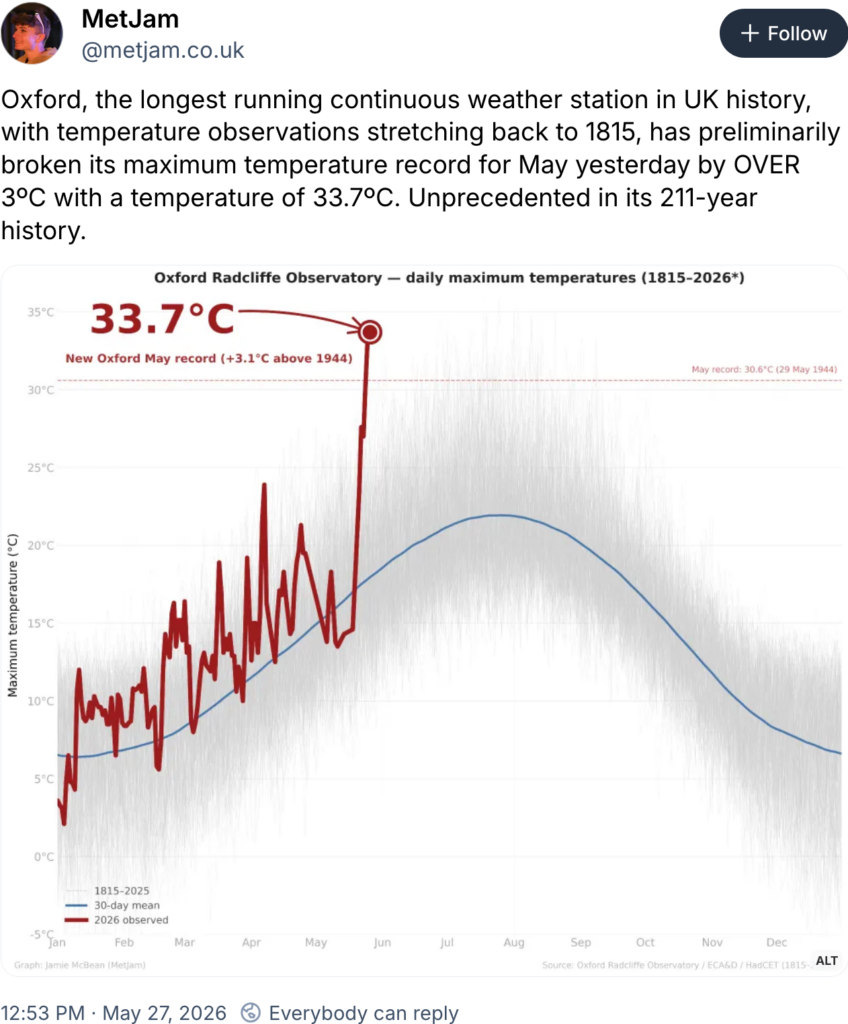
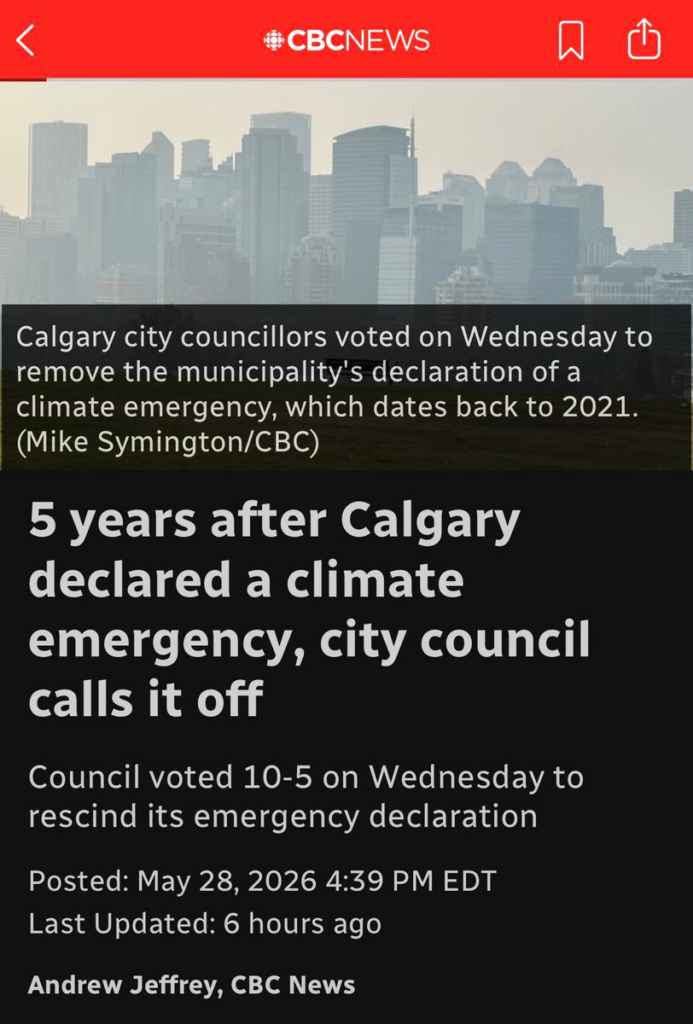
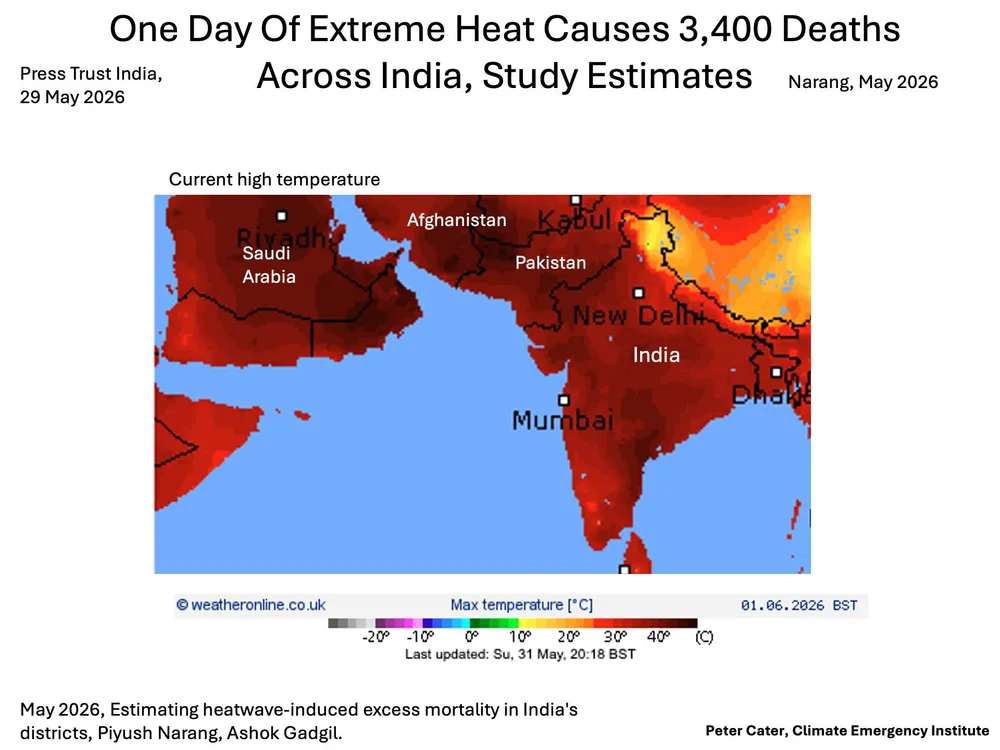
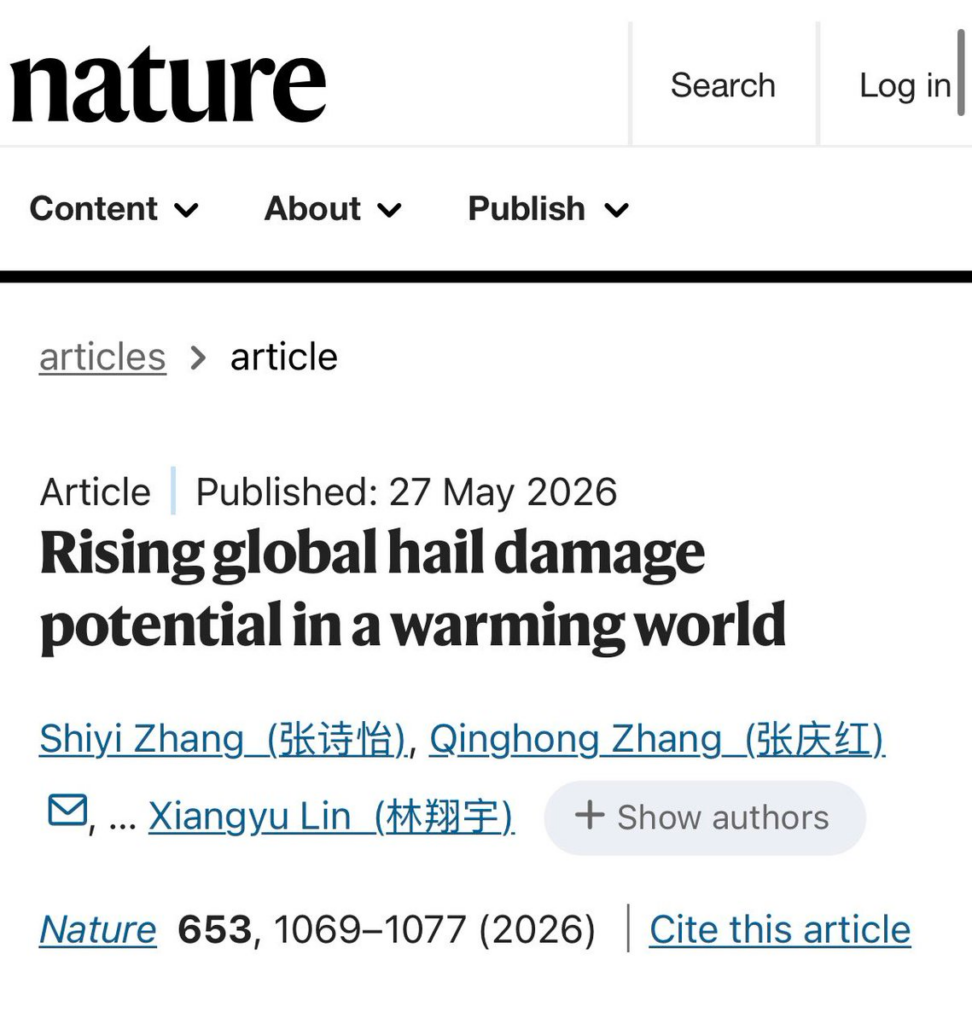
“Here we show a 36.5–42.1% increase in global hailstorm-induced damage potential by the late twenty-first century, with the magnitude determined by the emission scenario.”
@sustainablesong.bsky.social:
Here it is: climate domino number two topples.
While the most climate hostile government in our national history does everything in its power to worsen the greatest crisis in human history, irreversible changes to the ecosystem are not theoretical but happening right now.

 Carney did the same in Canada for gas producers. So stupid and cruel to life.
Arctic Ocean food chain is disrupted as a key tipping point has now been passed by University of Edinburgh, edited by Stephanie Baum, reviewed by Robert Egan, Phys.org
The polar research vessel RV Kronprins Haakon in Fram Strait, Arctic Ocean. Credit: Lawrence Hislop / Norwegian Polar Institute
An irreversible shift in the chemical makeup of the Arctic Ocean driven by climate change is disrupting the region’s food chain, a study suggests. Widespread loss of Arctic sea ice has led to a sharp fall in levels of a key nutrient, affecting populations of plankton, fish, seabirds and marine mammals, say researchers. Their analysis reveals that exposure to sunlight of vast shallow regions of the ocean previously covered by ice fuels a process that breaks down the nutrient—nitrate—and removes it from seawater. The study appears in Communications Earth & Environment.
Falling nitrate reshapes Arctic ecosystems
Nitrate is vital for the growth of plankton at the base of the Arctic food chain, and reduced levels of the nutrient limit the amount of life the ecosystem can support. Dwindling levels of nitrate could also reduce the Arctic Ocean’s capacity to store carbon, as plankton play a key role in capturing it from the atmosphere through photosynthesis, says the team.
While recent studies have reported changes in animal populations in Arctic waters, the causes were poorly understood, as there have been few in-depth analyses of the ocean’s chemical makeup.
Two decades of Arctic monitoring data
Now, researchers from the University of Edinburgh have gained new insights into the changing nutrient levels in the Arctic Ocean by analyzing data spanning a 20-year period.
The team assessed more than two decades of sampling data from Fram Strait, the main gateway through which Arctic waters flow into the Atlantic.
Their analysis reveals a clear shift from 2009 onwards, with nitrate levels in waters leaving the Arctic falling steadily. The drop in nitrate levels coincided with a drastic reduction in Arctic sea ice that began around the same time, the team says.
Sea ice loss triggers chemical tipping point
The extensive loss of sea ice ramped up a process that converts nitrate to nitrogen gas—called benthic denitrification—in shallow continental shelves that underlie nearly half of the Arctic Ocean. The shift to nitrate-limited conditions suggests the Arctic Ocean may only be able to support smaller species of plankton in the future, meaning less food is available moving up the food chain.
Since the change in nutrient conditions is driven by ongoing sea ice loss, it is very unlikely the Arctic Ocean will ever revert to its previous state, the researchers note.
Further research is needed to understand the possible wider effects that changes in Arctic waters could have on marine populations in other parts of the world’s oceans, including the North Atlantic.
Scientists warn of global repercussions
The work also involved researchers from the Norwegian Polar Institute, Scottish Association for Marine Science, Technical University of Denmark and Alfred-Wegener-Institut, Germany.
Marta Santos-García, a Ph.D. student in the University of Edinburgh’s School of GeoSciences, who co-led the study, said, “For years, sea-ice loss in the Arctic Ocean was expected to increase phytoplankton growth because more sunlight could reach surface waters. Our findings suggest that this relationship has changed: the Arctic Ocean appears to have shifted from a system mainly limited by light to one increasingly limited by nitrate availability, with far-reaching consequences for marine ecosystems, food chains and the role of the Arctic in Earth’s climate.”
Professor Raja Ganeshram, of the University of Edinburgh’s School of GeoSciences, who has led the study over the last two decades, said, “The changes we report suggest that the Arctic Ocean ecosystem passed a tipping point around 2009. How this change cascades through the food chain needs to be closely monitored as this has profound implications for us, including on commercial fishing in the North Atlantic Ocean.”
Publication details
Communications Earth & Environment (2026). DOI: 10.1038/s43247-026-03569-x
Journal information: Communications Earth & Environment
Jacek Debiec, MD, PhD, DPhil @drjacekdebiec.bsky.social:
If democracy and the rule of law are obstacles to unrestrained Big Tech expansion, they are being terminated.
“AI centers are brazenly defying environmental laws, and regulators are doing little to stop it.”
We Saw What AI Data Centers Don’t Want You to See 21:41 Min by PBS Terra and Floodlight News, May 28, 2026
We investigated one of the world’s largest AI data centers, using thermal drone footage to reveal the hidden pollution powering the AI boom. As companies race to build the future of artificial intelligence, residents and experts warn that fossil fuels, secrecy, and weak regulation may be putting communities at risk.
***
Earth’s climate just crossed a line we can’t ignore
Date: October 13, 2025
Source: University of Exeter
Summary: Humanity has reached the first Earth system tipping point, the widespread death of warm-water coral reefs, marking the beginning of irreversible planetary shifts. As global temperatures move beyond 1.5°C, the world risks cascading crises such as ice sheet melt, Amazon rainforest dieback, and ocean current collapse. Scientists from the University of Exeter warn that these interconnected tipping points could transform the planet unless urgent, systemic action triggers “positive tipping points,” like rapid renewable energy adoption.
FULL STORY
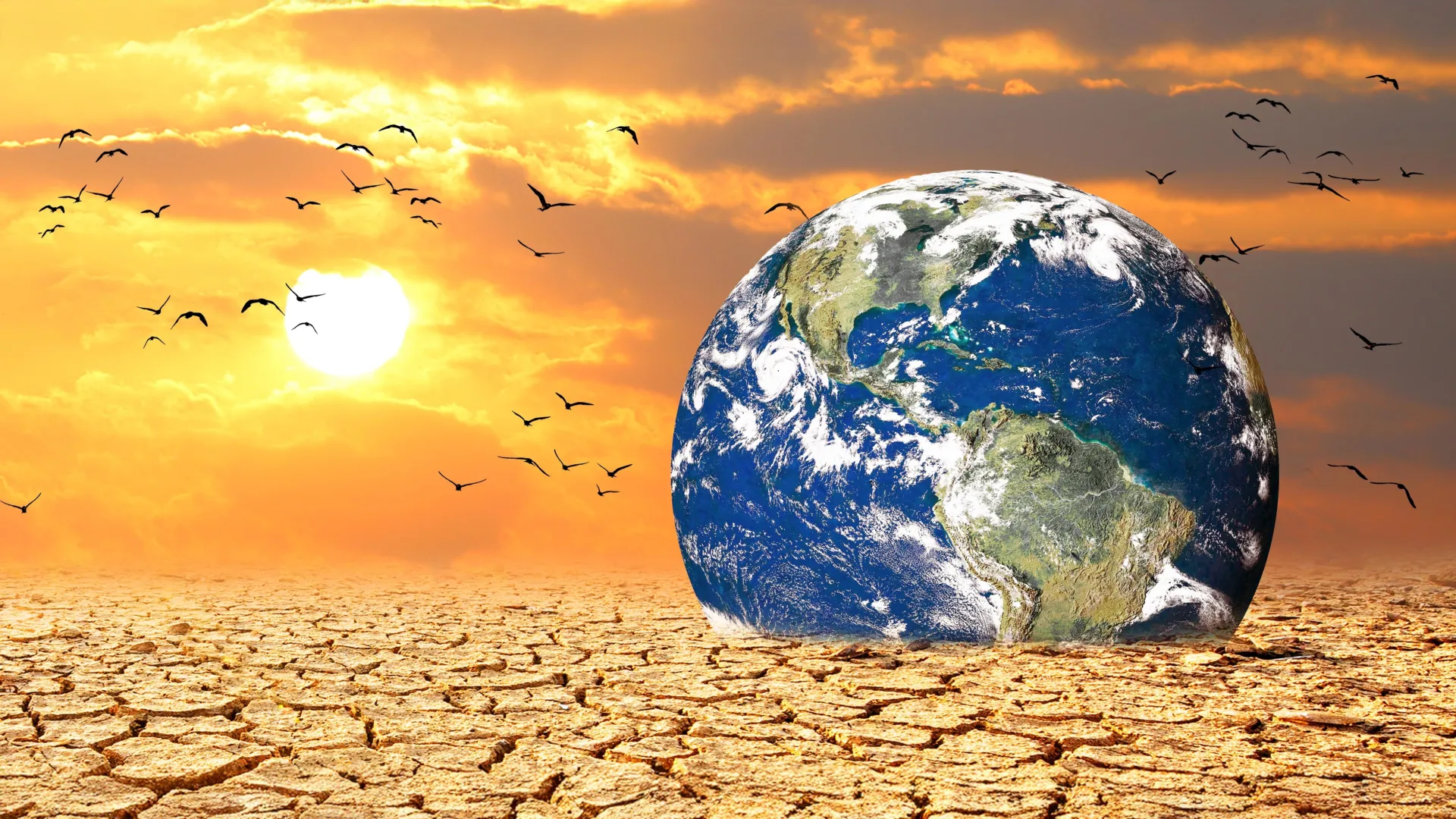
Humanity is entering a “new reality,” as scientists warn that the planet has now crossed the first of several critical Earth system tipping points. Without immediate global action, these shifts could cause widespread and lasting damage, according to a major report released today (Oct 13) by the University of Exeter and international collaborators.
As ministers meet ahead of the COP30 summit, the second Global Tipping Points Report concludes that warm-water coral reefs — vital to nearly a billion people and a quarter of marine species — have already passed their threshold of stability. Mass coral die-off is underway and, unless global warming is reversed, large reef systems as we know them will disappear. A few isolated refuges may endure, but they will require urgent protection.
Researchers warn that this is only the beginning. The world is nearing other irreversible tipping points that could trigger devastating consequences for people and ecosystems, including the melting of polar ice sheets, disruption of major ocean currents, and the collapse of the Amazon rainforest — where COP30 will take place.
With global temperatures expected to exceed 1.5°C, the report — produced by 160 scientists across 87 institutions in 23 countries — urges governments to limit any temperature overshoot to prevent further irreversible changes. Every fraction of a degree and every additional year above 1.5°C increases the risks.
The authors say that the best hope now lies in accelerating “positive tipping points,” such as the rapid spread of clean energy technologies that can drive large-scale, self-reinforcing change. These shifts could provide a viable path toward a safer, fairer, and more sustainable world.
Researchers are working with Brazil’s COP30 Presidency to ensure that the issue of tipping points is prioritized at the upcoming summit.
Professor Tim Lenton of the University of Exeter’s Global Systems Institute said: “We are rapidly approaching multiple Earth system tipping points that could transform our world, with devastating consequences for people and nature. This demands immediate, unprecedented action from leaders at COP30 and policymakers worldwide.
“In the two years since the first Global Tipping Points Report, there has been a radical global acceleration in some areas, including the uptake of solar power and electric vehicles. But we need to do more — and move faster — to seize positive tipping point opportunities. By doing so, we can drastically cut greenhouse gas emissions and tip the world away from catastrophic tipping points and towards a thriving, sustainable future.”
Dr. Mike Barrett, chief scientific advisor at WWF-UK and a co-author of the report, added: “The findings of this report are incredibly alarming. That warm-water coral reefs are passing their thermal tipping point is a tragedy for nature and the people that rely on them for food and income. This grim situation must be a wake-up call that unless we act decisively now, we will also lose the Amazon rainforest, the ice sheets and vital ocean currents. In that scenario we would be looking at a truly catastrophic outcome for all humanity.
“As we head into the COP30 climate negotiations it’s vital that all parties grasp the gravity of the situation and the extent of what we all stand to lose if the climate and nature crises are not addressed. The solutions are within our reach. Countries must show the political bravery and leadership to work together and achieve them.”
The report says that the nature of abrupt and irreversible Earth system tipping points mean that they pose a different type of threat to other environmental challenges, and that current policies and decision-making processes are not adequate to respond. Global action must include accelerating emissions reductions and scaling up carbon removal to minimise temperature overshoot. The expected impacts of tipping processes need to be considered in risk assessments, adaptation policies, loss and damage mechanisms and human rights litigation.
Dr. Manjana Milkoreit, from the University of Oslo, said: “Current policy thinking doesn’t usually take tipping points into account. Tipping points present distinct governance challenges compared to other aspects of climate change or environmental decline, requiring both governance innovations and reforms of existing institutions.
“Preventing tipping points requires ‘frontloaded’ mitigation pathways that minimise peak global temperature, the duration of the overshoot period above 1.5°C, and the return time below 1.5°C. Sustainable carbon dioxide removal approaches need to be rapidly scaled up to achieve this.”Most CO2 removal techniques are intentional money grubbing failures for climate mitigation but fantastic for polluters to use to produce more fossil fuels, resulting in more pollution not less, at great cost for nothing – like AI.
The report’s authors are working with Brazil’s COP30 Presidency on the “Action Agenda” as a platform for accelerating climate transition plans and triggering self-reinforcing change across different sectors — from agriculture to energy, from forests to cities — towards low-carbon and climate-resilient global transformation.
The President Designate of COP30 in Brazil, Ambassador André Corrêa do Lago, said: “As part of a global mobilization against climate change — our ‘Global Mutirão’ — the COP30 Presidency invited community leaders, scholars and scientists to explore the best available science and ancestral wisdom around how our institutions can gain exponentiality in deploying solutions and versatility in responding to the climate crisis, including through agile, iterative and adaptive capabilities. I welcome the Global Tipping Points Report as a positive and timely response to our invitation. The report stands as hopeful and sober evidence that humanity can still choose to change and evolve towards a safe, prosperous and equitable future.”
The report highlights progress on positive tipping points — and opportunities for a cascade of positive change:
- Positive tipping points have already been crossed in solar PV and wind power globally, and in the adoption of electric vehicles, battery storage and heat pumps in leading markets. These transitions can still be accelerated. Coordinated policy action at “super-leverage points” can unleash positive tipping cascades across interacting sectors (e.g. power, transport and heating), bringing forward tipping in all. Once replaced, polluting technologies are unlikely to return because the new options are cheaper and better. Social attitudes are also tipping. Concern about climate change is growing globally — and even small numbers of people can tip the majority.
- More positive tipping points are approaching in sectors including goods transport. COP30’s host nation, Brazil, has great potential for producing green steel, green hydrogen, and green ammonia — helping to kickstart these crucial technologies worldwide. Positive tipping points can rapidly restore nature and biodiversity. Ecosystem restoration can tip degraded systems back to health, and shifts to more sustainable patterns of consumption and production can lead to tipping points in food and fibre supply chains that end deforestation and ecosystem conversion.
- We need to identify and trigger many more positive tipping points. Better indicators are needed to understand tipping potential. Once identified, positive tipping is enabled by making the desired innovation the most affordable, accessible and/or attractive option. Governments, businesses, civil society and individuals all have a role to play. People understand the need for change and support the transition to a cleaner, healthier world, provided it is done fairly. Success may depend on following a path of least polarisation. The COP30 Presidency has launched a Global Mutirão (meaning “collective efforts”) to encourage climate action worldwide.
The report includes case studies on several Earth system tipping points:
- Globally, warm-water coral reefs are experiencing unprecedented mortality under repeated mass bleaching events. With current global warming at about 1.4°C, reefs are passing their thermal tipping point (central estimate 1.2°C, range 1-1.5°C). Even stabilising warming at 1.5°C, warm-water coral reefs are virtually certain (over 99% probability) to tip. This means coral reefs on any meaningful scale will be lost unless the global temperature returns towards 1°C warming or below, although fragments of reef may be preserved with conservation action that minimise other human stressors such as overfishing and pollution. Regional risk assessments and governance are urgently needed to prepare for the increasing loss of ecosystem services provided by reefs.
- The report finds that the temperature rise that would trigger the widespread dieback of the Amazon rainforest due to a combination of climate change and deforestation is lower than previously thought, with the lower end of the estimated range now at 1.5°C, highlighting the need for urgent action. Over a hundred million people depend on the Amazon and it could also be subject to positive social tipping points: inclusive local governance (including by Indigenous People), recognition of traditional knowledge, and targeted investments in conservation and restoration could boost the resilience of people and nature.
- The Atlantic Meridional Overturning Circulation (AMOC) is at risk of collapse below 2°C of global warming. This would result in much harsher winters in north-west Europe, disrupt the West African and Indian Monsoons, and decrease agricultural yields in much of the world — with major impacts for global food security.
Professor Lenton concluded: “Only with a combination of decisive policy and civil society action can the world tip its trajectory from facing existential Earth system tipping point risks to seizing positive tipping point opportunities.”
Key Points:
- Coral reefs are dying worldwide, marking the first major Earth system tipping point already underway.
- Global temperatures are on track to exceed 1.5°C, putting the planet dangerously close to triggering more irreversible changes.
- Scientists warn that these next tipping points could include melting polar ice sheets, the collapse of ocean circulation, and the dieback of the Amazon rainforest.
- Current global policies are not equipped to deal with the abrupt and interconnected nature of these threats.
- The report stresses that rapid, transformative action is essential — by driving social change and unleashing “positive tipping points,” such as the rapid global spread of clean and affordable green technologies.