Ellyn:
Please stand strong, Canada. As a current citizen of the US, I can guarantee you trump destroys EVERYTHING he touches.
Jill:
Water. That is the main prize. Both provincial and federal governments are working at breakneck speed to hand it over to the billionaires in the form of bitumen, coal, lumber, data, all season resorts, electricity, monoculture crops as commodities not food and so on.
Lee:
Wonderful essay Brandi – you have tacked down all the corners. Smith is bought and paid for and she’ll stay bought for O & G.
The deluded Seppies are nothing more than “useful idiot” foot soldiers for this agenda.
‘They hate us more now’: Treaty Chiefs rally against Alberta separatism, At Treaty Unity Rally in Calgary, Chiefs warn Alberta’s separatism has imported Trump’s politics by Brandi Morin, June 16, 2026, Ricochet Media
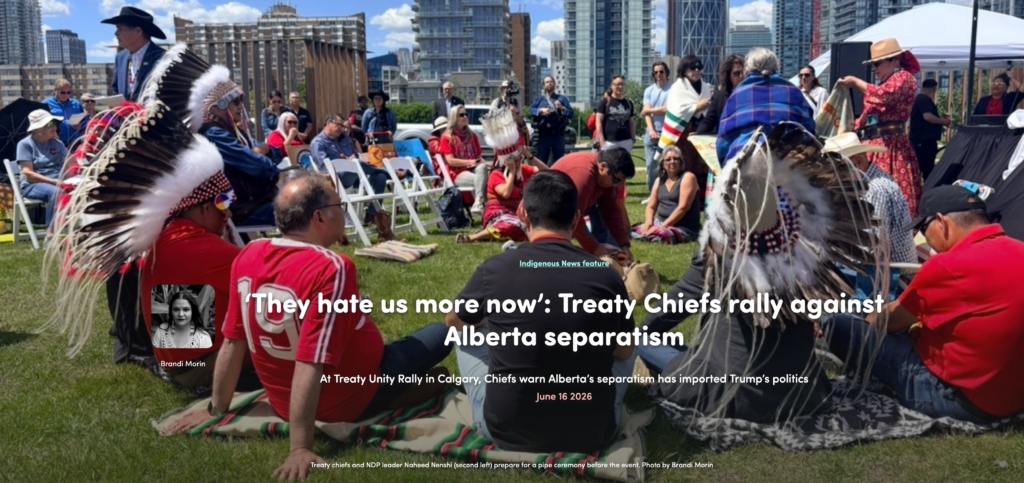
Treaty chiefs and NDP leader Naheed Nenshi (second left) prepare for a pipe ceremony before the event. Photo by Brandi Morin
First Nations Chiefs in Alberta are preparing to fight Alberta’s nascent separatist movement with every tool available to them, with some seeing the Danielle Smith government’s referendum as an importation of Trump style politics.
On Sunday, June 14, roughly 250 people — Indigenous community members and non-Indigenous allies alike — gathered at Mohkinstsis (aka the Confluence in Calgary, AB), the Blackfoot name for the place where the Bow and Elbow rivers meet in the heart of the city, for a Treaty Unity rally called by the Blackfoot Confederacy. The event opened the way these gatherings have for generations: with a pipe ceremony, chiefs and allies seated together in a circle on the grass.
The timing wasn’t an accident. It came a week before National Indigenous Peoples Day, and just days after Premier Smith’s government filed its appeal of a court decision that quashed the petition behind her promised fall referendum on separation.
Chiefs from Treaties 6, 7 and 8 took turns at the microphone, and what emerged was less a defence of the status quo than a warning: that the politics now driving Alberta toward the ballot box this fall are the same politics that have spent a decade corroding public life south of the border — and that it now falls to Treaty people, Indigenous and settler, to stop them.

Piikani Nation Chief Troy Knowlton set the tone early. Knowlton described sitting face to face with Smith and telling her plainly that the separatist road she’d opened is “nothing more than a political fantasy,” one with no exit given the Treaties and Section 35 of the Constitution Act, 1982 — the provision that recognizes and affirms the existing Aboriginal and treaty rights of Indigenous peoples in Canada.
But he reserved his sharpest words for the rhetoric accompanying that push. He pointed to Donald Trump’s 2015 campaign launch. “President Trump came down the escalator,” Knowlton recalled, and “the first thing that came out of his mouth” was that Mexico was sending “their criminals, their drug dealers, and their rapists.” That moment, Knowlton said, handed “every racist, bigot and white supremacist” permission to say out loud what they’d once kept to themselves.
“Alberta, wake up!” Starlight said. “Because if you don’t, Donald Trump is waiting for you.” His call wasn’t only to First Nations — it was to settler Albertans too. “Wake up, fight with us. Ensure that your homeland is secure.”
He told Smith she’d done the same thing here: that fuelling a separatist movement gave every bigot in Alberta permission to stand on a First Nations person’s doorstep and say, “I hate First Nations.” The backlash, he said, has been real — pointing to a wave of AI-generated racist content targeting First Nations leaders — and the movement has “put a target on my back.”
However, he framed the rally itself as the answer: a platform Treaty Nations have built for “every Albertan, regardless of who you are, where you come from, and the colour of your skin” to stand against that hate.

Siksika Nation Head Chief Samuel Crowfoot picked up the legal thread in his remarks. The recent ruling by Court of King’s Bench Justice Shaina Leonard, who found the province had failed in its duty to consult First Nations before letting the referendum petition proceed, was, he said, a reminder that the Treaties “have always been in effect” and “are still powerful today,” not relics with no place, as he put it, “in the days of social media likes and aura farming.”
But Crowfoot was just as blunt that the Treaties remain under sustained attack, and have been since the ink dried on Treaty 7 in 1877: the right to travel freely through Blackfoot territory was stripped almost immediately, language and ceremony were outlawed, and the state asserted the power to take Indigenous children from their families via the residential school system. He drew a straight line from that history to the present — noting that within days of Leonard’s ruling, Smith floated pursuing a constitutional amendment to Section 35 rather than negotiating.

“I’m not surprised,” Crowfoot said: Treaty rights have been under attack since September of 1877.
His message to the premier was direct — “Danielle, call me. Talk to me.” He also pointed to how Treaty rights are being hollowed out even where they remain legally intact: federal consultation periods for major projects have shrunk from 24 months to 90 days, he said, and Crown land available for hunting has shrunk by more than 90 per cent.
“Pretty soon,” he warned, First Nations won’t be asking to exercise their rights — “we will have to be asking for compensation for loss of treaty rights.” His answer was what he called decolonization: building Indigenous institutions, grounded in Articles 4 and 5 of the UN Declaration on the Rights of Indigenous Peoples, to take jurisdiction back rather than wait on the province. He also singled out Manitoba Premier Wab Kinew’s recent rebuke of Smith as a moment of pride, calling it proof that “there’s power in knowing your culture.”
That call for unity across Treaty areas ran throughout the event. Sturgeon Lake Cree Nation, a Treaty 8 nation in northern Alberta that has been at the front of the legal fight against the referendum, is led by Chief Sheldon Sunshine, who took the province to the Court of King’s Bench in Edmonton earlier this year seeking an injunction to halt the separatist petition — one of several First Nations actions across Treaties 6, 7 and 8, alongside the Blackfoot Confederacy and Athabasca Chipewyan First Nation, that culminated in Justice Leonard’s May ruling quashing the petition’s approval. Smith called that ruling “incorrect in law and anti-democratic” and her government is now appealing it.

At the rally, Sunshine told the crowd the original Treaties were agreements to share the land, not surrender it — “to co-exist in peace, not be pushed aside.” Any government that legislates without consulting First Nations, ignores their jurisdiction, or treats land and water as resources rather than relatives, he said, is breaking that bargain. Nations across Treaties 6, 7 and 8 are “rising together,” he said, to show Alberta “something stronger than legislation” — unity, sovereignty, Treaty Nations and their allies standing as one.
Alberta NDP leader Naheed Nenshi also spoke at the rally — using the language of kinship. Over the years, Treaty 7 elders have given Nenshi ceremonial names, including Etia (“always ready”), bestowed by the family of Tsuut’ina Head Chief Ellery Starlight, and Apist Totsist (“clan leader, he who moves camp and the others follow”), given by the late Kainai elder Pete Standing Alone. He’s also a war bonnet holder — a responsibility, he recalled an elder telling him, reserved for warriors, and one he was charged to carry “for our people and for all peoples.”
Standing near Mohkinstsis, where Niitsítapi people have gathered for thousands of years, Nenshi noted the rally fell almost exactly 149 years after Treaty 7 was signed at Blackfoot Crossing, with the 150th anniversary — and a gathering of “thousands of Calgarians” — approaching this fall. Even 18 months ago, he said, he wouldn’t have bet that defending “the colonial government” could be the thing to unite every First Nation and chief in Alberta. But the legal fights First Nations have waged against the referendum have done exactly that. Now, he told the crowd, “that fight is a fight that every single one of us has to take up.”
Tsuut’ina Head Chief Ellery Starlight returned to the Trump warning, and put it in the starkest terms of the day. He reiterated the threat Knowlton had named at the outset, then turned it into a direct address to the province. “Alberta, wake up. Wake up!” Starlight said. “Because if you don’t, Donald Trump is waiting for you.” His call wasn’t only to First Nations — it was to settler Albertans too. “Wake up, fight with us. Ensure that your homeland is secure. And we’ll stand and fight with Canada for our treaties.”
“I’m not surprised,” Crowfoot said: Treaty rights have been under attack since September of 1877.
Starlight also reached back to why Treaties were made in the first place: to secure peace and open up trade between nations — a relationship, he said, the Crown undercut almost immediately by imposing the Indian Act, which shut Indigenous people out of that commerce. “But today we’re strong,” he said. “Today we’re able to make our own paths.”
The rally also landed just over a week after Smith said the law would be enforced if First Nations communities responded to the referendum with civil disobedience — including, she pointed out, the province’s critical infrastructure law, which imposes added penalties for obstructing highways, railways and pipelines.

The comment followed a warning from Treaty 8 Grand Chief Trevor Mercredi that First Nations might get in the way of industry, or take their fight to the highways, if Alberta proceeds without their consent. Now, having spent months pushing to lower the threshold for citizen-led referendums, Smith’s government is appealing Leonard’s ruling too, arguing the judge made 14 errors and that the referendum process never triggered a duty to consult at all.
Meanwhile, as CNN reported this year, citing Financial Times reporting, separatist organizers under the banner of the Alberta Prosperity Project have met repeatedly with U.S. State Department officials, and floated asking Washington for a U.S. $500-billion line of credit to bankroll “the transition to a free and independent Alberta” — prompting Prime Minister Mark Carney to publicly urge Trump to respect Canadian sovereignty.
For the chiefs gathered at the Elbow, their point was simple: a politics that has already normalized open hostility toward Indigenous people in Alberta, and now threatens to enforce the law against the very communities whose Treaties underpin it, is at the same time actively courting the administration that built its brand on division and contempt for Canada’s sovereignty.
Their answer, delivered again and again from the stage, was that Treaties — not separation, not annexation — are the foundation everyone in Alberta, Indigenous and settler, actually stands on, and that defending them is no longer optional for anyone who lives here.
@Songstress28:
…
The 51st state isn’t a joke. It’s a plan.
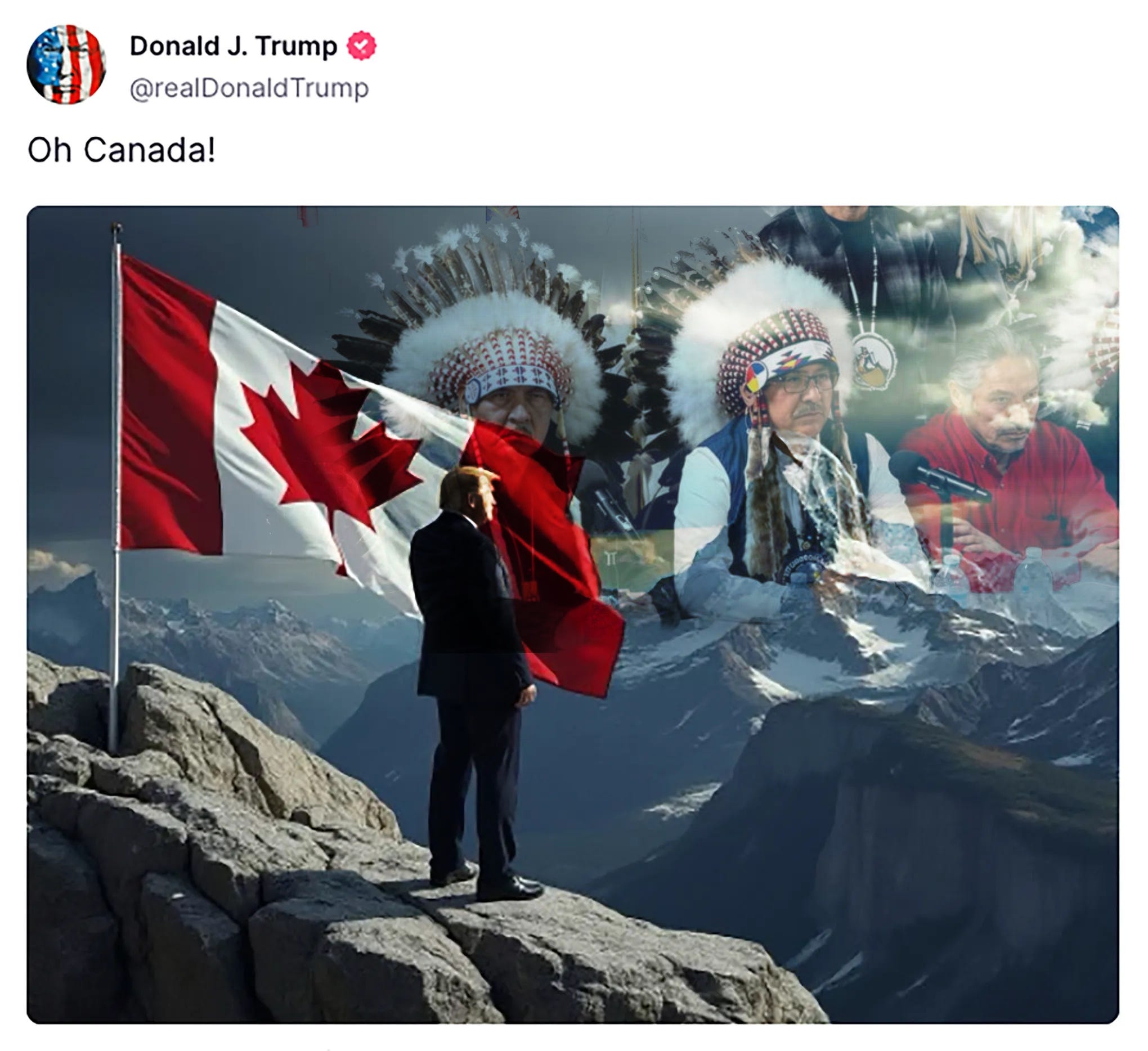
But here’s what Trump, Smith, and the separatists don’t seem to understand: this isn’t a clean transaction. It’s an Indian war they didn’t know they were walking into
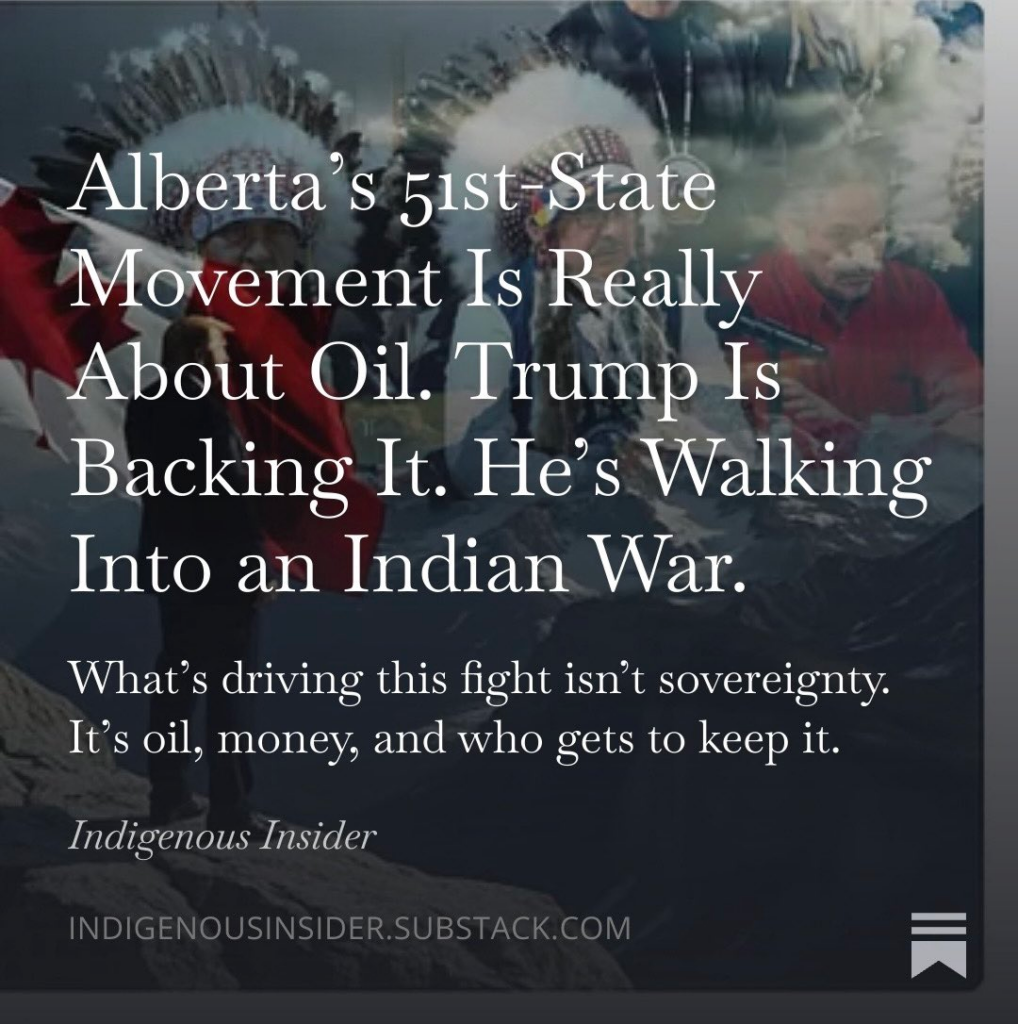
Alberta’s 51st-State Movement Is Really About Oil. Trump Is Backing It. He’s Walking Into an Indian War. What’s driving this fight isn’t sovereignty. It’s oil, money, and who gets to keep it by Brandi Morin, Jun 16, 2026
Tansi/Hello —
You showed up. That is reconciliation.
But I need to be honest.
7,320 of you read this work. 395 help keep them alive. I feel that gap every day, as well as on every road, in every community, through every story no one else will tell.
I leave my little girl and drive into the unknown. I’ve stood my ground in front of armed guards. I’ve reported through fever, through grief. I show up because no one else is coming — and because these stories are too important to disappear.
Reconciliation isn’t a government program or a land acknowledgment. It’s this: you and me, shoulder to shoulder, making sure these voices are heard. That they’re recorded. That they outlive us both.
That’s what a paid subscription is. Not a transaction. A declaration.
Do you want more of this work? To help transform the narrative?
Step into the fire.
Become a paid subscriber to Indigenous Insider.
Hiy hiy. 🔥
First off, Alberta’s separatist movement isn’t a freedom fight. It’s a tantrum thrown by people who are already winning and want to win more. Alberta is the richest province in this country — highest GDP per capita in Canada, it has no provincial income tax, and it’s sitting on the third-largest oil reserves on the planet. And Canada itself, despite its faults, consistently ranks in the top 10 countries in the world for quality of life. These are not oppressed people. These are people who’ve been handed one of the best hands in the world and are demanding a bigger pot.
What they actually want is simple: get out from under federal climate rules, get out from under environmental review, get out from under anything that slows down how fast they can pump bitumen out of the ground and sell it. Ottawa’s emissions cap, the BC tanker ban, the Impact Assessment Act, methane targets — every one of those exists because the oil sands are one of the most destructive industrial projects on Earth, and somebody has to answer for what gets dumped, leaked, and burned in the process. Separatists don’t want to answer for it- they want it gone. And if Canada won’t get out of the way fast enough, they’ve found someone who will.
That someone is Donald Trump. And what neither he nor the separatists backing him seem to have figured out is who, exactly, is standing in the way.
Side note: this isn’t new behavior from the United States, and it shouldn’t be treated like some out-of-character flirtation. America goes where the oil is. Iraq. Libya. Venezuela. Iran. When the prize is big enough, Washington has shown again and again it will back coups, sanctions, and outright wars to get access to it. This isn’t child’s play, and nobody should be fooling themselves into thinking Alberta is somehow exempt from that pattern just because it’s Canadian soil. And the early moves already look familiar: quiet meetings with separatist organizers, a credit line floated to bankroll a friendly breakaway government, and infrastructure permits signed before independence is even on the books. That’s the same sequence that’s preceded American involvement elsewhere — relationships and money laid down well before any flag changes. The oil sands sitting under Treaty 8 territory are exactly the kind of prize that’s moved American foreign policy before, and the playbook is already running.
The 51st state isn’t a joke. It’s a plan.
This didn’t start as some fringe meme. On January 23, fresh off the World Economic Forum in Davos, US Treasury Secretary Scott Bessent went on the right-wing outlet Real America’s Voice and said that Alberta’s resources and the fact Canada “won’t let them build a pipeline to the Pacific” makes it “a natural partner for the U.S.,” adding that “I think we should let them come down into the U.S.” That made him the highest-ranking Trump official to weigh in on Alberta’s politics. A Republican congressman went further within days, saying Albertans would “prefer not to be part of Canada and to be part of the United States.” None of those Nazi Pedo Protector Fuckers speak for me. Never, will I be American. Never.
The interest isn’t only about pipelines. Alberta markets itself as a “gateway to the Arctic,” and the Arctic is the deeper prize underneath all of this: an estimated 90 billion barrels of oil and more than a quadrillion cubic feet of natural gas sit under that ice, with Washington and Ottawa still disputing who controls the Northwest Passage as it opens up. An Alberta pulled out of Canada and lined up with Washington isn’t just a pipeline deal. It’s a foothold.
The Financial Times has since reported that Alberta Prosperity Project lawyer Jeffrey Rath has had three separate meetings with the State Department, and that the group floated asking Washington for a $500-billion line of credit to fund “the transition to a free and independent Alberta.” Rath said he and his colleagues were planning a February meeting with the U.S. Treasury too, to pitch that credit line directly. On War Room, Steve Bannon’s show, a commentator called Alberta “the linchpin” of the whole annexation play because of its Arctic access. Fox’s Jesse Watters pitched it on air like a business deal: Alberta has “all the oil, they have all the minerals.”
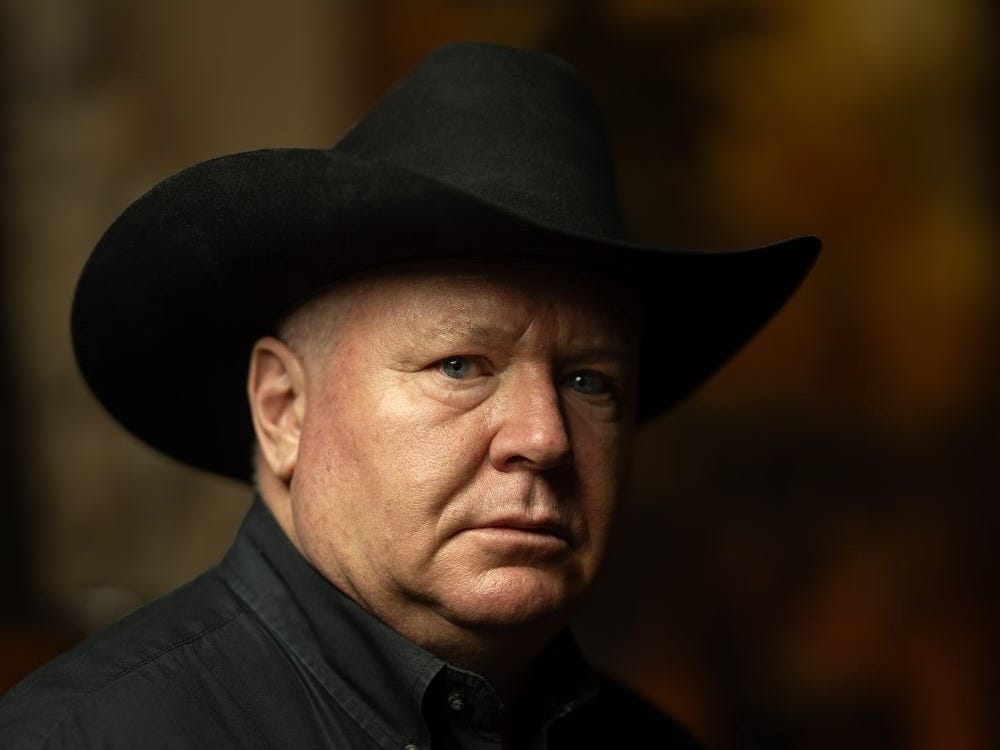
Treaty rights are on the line. Alberta could become the 51st state. Wild times. Share this story far and wide.
And Trump has already started signing the paperwork. He’s approved pipeline permits at the North Dakota border and authorized an expansion explicitly designed to revive the dead Keystone XL route out of Hardisty. This isn’t rhetoric anymore. It’s infrastructure.
So when Piikani Nation Chief Troy Knowlton stood up at the Blackfoot Confederacy Treaty Unity rally in Calgary this past weekend and recalled telling Premier Danielle Smith that her separatist push is “nothing more than a political fantasy,” he was naming the gap between what this movement is selling and what it can actually deliver — even as Smith, Trump, and the separatists keep acting on it as if the fantasy were already real. A premier flirting with a foreign government that wants Alberta’s oil more than it wants Canada to exist as a country.
Athabasca Chipewyan First Nation Chief Allan Adam, who spent weeks in an Edmonton courtroom watching lawyers argue over whether Alberta can blow up Confederation, said the same thing in blunter terms. “When I listen to the hearings and listen to the proceedings of the courts,” he told me, “it’s not about separateness. It’s about resource extraction. They want to gain access and take over the authority of the First Nations people.” That’s the entire movement in one sentence, from a chief who’s been fighting the oil industry over this exact territory for decades.
“Alberta, wake up.”
Knowlton went straight at what this movement has unleashed on the ground, too. “President Trump came down the escalator,” he recalled when Trump was first elected, and “the first thing that came out of his mouth” was that Mexico was sending “their criminals, their drug dealers, and their rapists.” That moment, he said, handed “every racist, bigot and white supremacist” permission to say out loud what they used to keep to themselves.
Tsuut’ina Nation Head Chief Ellery Starlight made the warning impossible to look away from.
“Alberta, wake up. Wake up,” Starlight said. “Because if you don’t, Donald Trump is waiting for you.”
He wasn’t talking only to First Nations. He was talking to every settler in this province who thinks separatism is somebody else’s problem. “Wake up, fight with us. Ensure that your homeland is secure. And we’ll stand and fight with Canada for our treaties.” Starlight went back to why Treaties were signed in the first place — to make peace and open trade between nations, a relationship the Crown gutted almost immediately by imposing the Indian Act, which locked Indigenous people out of the very commerce the Treaties were supposed to share. “But today we’re strong,” he said. “Today we’re able to make our own paths.”
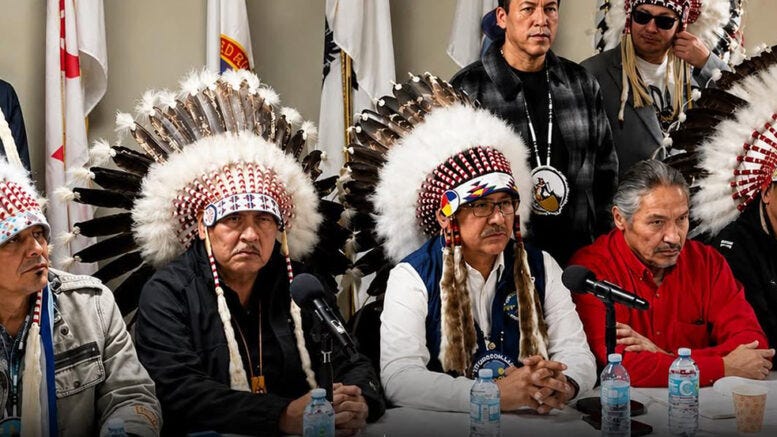
Trump, Smith, and the separatists know exactly what they’re betting against. They just don’t think it’ll hold.
Furthermore, every barrel of bitumen coming out of the Athabasca oil sands is coming out of Treaty 8 territory. The Treaties promised First Nations a share of the land and its resources, not a wall around them — Treaty 8 itself guaranteed the right to hunt, fish, trap, and move freely across that territory, and a relationship of mutual benefit rather than extraction without consent. That promise was never built into how the wealth underneath that land actually gets divided. Most of the oil sands sit on provincial Crown land rather than reserve land — and that distinction is the whole problem, because royalties on Crown land flow to the province, not to the First Nations whose territory it actually is. Where First Nations communities have gotten a piece of the wealth, it’s because they fought for it and negotiated it themselves, deal by deal, equity stake by equity stake.
This isn’t an abstract grievance. Mikisew Cree Nation, headquartered in Fort Chipewyan and sitting at the epicentre of oil sands activity, filed a Statement of Claim against both Alberta and Canada this May, demanding “compensation, revenue sharing and other financial measures necessary to remedy the Crown’s breaches” after decades of industrial development it says severely infringed its Treaty 8 rights. Chief Billy-Joe Tuccaro put it plainly: “Our people are downstream from one of the largest industrial developments on earth, and we are paying the price with our health, our lands, and our way of life.” Communities like Fort Chipewyan, sitting downstream from that development, have spent decades absorbing the pollution, the cancer clusters, the dead-end consultations, while the resource revenue flows everywhere except back to them in proportion to what’s been taken. And this case isn’t writing on a blank slate — in British Columbia, the Blueberry River First Nations already won a similar fight, with a court ruling that the province’s cumulative approval of development had stripped the nation of any meaningful ability to exercise its Treaty 8 rights at all. It was the first time in Canadian legal history a First Nation successfully sued a province over Treaty 8 infringement. It will not be the last.
It goes back further than the oil sands, too. In 1930, the Natural Resources Transfer Agreement handed jurisdiction over Crown lands and resources from the federal government to the prairie provinces — negotiated without the consent or even the consultation of a single First Nation, on land that was already under treaty. The Assembly of First Nations has called it a clear violation of those treaties and of the protections later written into Section 35 of the Constitution. First Nations are still litigating the fallout from that decision nearly a century later. So when separatists complain about what Ottawa has supposedly taken from Alberta, there’s a much older and much larger reckoning they conveniently skip over.
That’s a bill nobody in Washington or the Alberta Legislature has bothered to add up. And it’s coming due at the exact moment they’re trying to cut a side deal that ignores it entirely.
Because here’s the concrete wall they’re about to hit: the Treaties. Section 35 of the Constitution Act, 1982 recognizes and affirms existing Aboriginal and Treaty rights in this country. Those Treaties predate Alberta as a province. They predate the oil and gas industry. They predate Donald Trump by roughly 150 years. No referendum, no provincial legislature, and no foreign government can write them out of existence, no matter how badly they want what’s sitting underneath them. Siksika Head Chief Samuel Crowfoot put it directly at the same rally: those Treaties “have always been in effect” and “are still powerful today” — and a province that isn’t even a party to them cannot change them without First Nations’ consent.
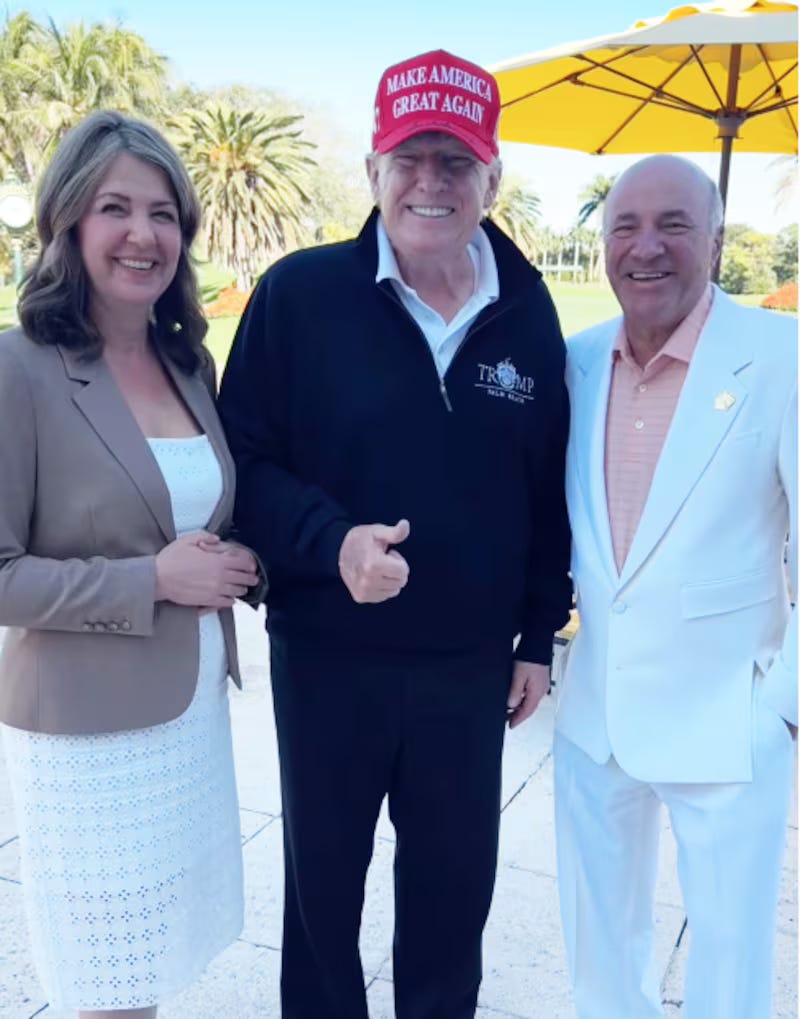
The chiefs have already won in court. Smith is appealing — and running the referendum anyway.
This isn’t theoretical. It’s already been tested, twice. In December 2025, a Court of King’s Bench judge ruled that turning Alberta’s provincial borders into an international border would directly violate the Numbered Treaties by gutting First Nations’ ability to exercise their rights, calling First Nations “founding partners in the creation of Alberta.” Then in May, a second judge found that even starting the separation process was enough to trigger Alberta’s constitutional duty to consult First Nations — and that the province had already breached it. Smith called that ruling “anti-democratic” and is appealing it. And she’s putting the separation question on the ballot this October regardless, in defiance of both rulings.
This isn’t a province cautiously weighing its options while the courts sort out the legal questions. This is a premier who has lost, twice, and decided to keep going anyway. The stakes here are real, the money behind them is real, and the rights on the line are real. And it is, by any honest accounting, a mess — a province steering straight at a referendum its own courts have already told it violates the Constitution.
It also hasn’t stayed hypothetical for the people enforcing the law on the ground. Treaty chiefs have said they’re prepared to block highways and get in the way of industry if the referendum moves forward without their consent. Smith’s answer: arrest them. She pointed straight at Alberta’s Critical Infrastructure Defence Act — the law built in 2020 in response to Indigenous-led rail blockades — and said it would be enforced. Fines up to $25,000 a day and six months in jail for individuals who get in the way. She will arrest chiefs for defending rights her own courts have already upheld.
But what Trump is actually up against if he keeps entertaining Alberta separatists isn’t the province. Or a premier. It’s Treaty Nations holding constitutionally protected rights to land he wants, who have already won in court twice, and have already told him — and told Smith — that they are not moving, not selling, and not standing down.
And it isn’t staying inside Alberta’s borders. In early June, Assembly of First Nations National Chief Cindy Woodhouse Nepinak sat down with King Charles at Buckingham Palace to make a point Trump’s team seems to have skipped past entirely: these Treaties weren’t signed with a province. They were signed with the Crown. “We’ve got a beautiful country,” she told reporters afterward. “If you don’t want to be part of it, you’re free to leave. You won’t be taking any land with you.” Even former prime minister Jean Chrétien has pointed out that under the Clarity Act he passed in 2000, Alberta’s referendum question hasn’t been anywhere near approved by Parliament — which means the vote Smith is racing toward this October may not even meet the legal bar required to mean anything at all.
So strip away the pipeline permits, the Treasury Secretary’s flattery, and the talk of a “natural partner.” What Trump would actually be buying into is land he has no claim to, under treaties he has no party to, defended by nations that have already beaten the province trying to sell it to him in court — twice — and have made clear they intend to do it again. The oil is the bait. The Arctic foothold is the real prize behind it. And the Treaties are the part of the deal nobody on his side bothered to read. That’s not a real estate deal, and it was never going to be a quiet one. It’s an Indian war, and Trump and Smith just walked into it with their eyes wide open, betting the Treaties wouldn’t hold.
Brandi Morin is an award-winning Cree/Iroquois/French journalist from Treaty 6 territory in Alberta, Canada. Her work has appeared in National Geographic, Al Jazeera English, The Guardian, the New York Times, Rolling Stone, the BBC and more. She is the author of the national bestselling memoir Our Voice of Fire and the founder of Indigenous Insider on Substack.
Sources
– [First Nations leaders urge Albertans to oppose separation | The Globe and Mail](https://www.theglobeandmail.com/canada/alberta/article-first-nations-leaders-albertans-oppose-separation/)
– [Judge overturns Elections Alberta’s approval of separation referendum petition | CBC News](https://www.cbc.ca/news/canada/edmonton/judge-quashes-decision-to-approve-separation-petition-9.7198553)
– [Danielle Smith rejects Alberta judge’s ruling against separation petition as ‘anti-democratic’ | Global News](https://globalnews.ca/news/11848377/alberta-premier-court-ruling-separation-petition-anti-democratic/)
– [Alberta government files appeal on court decision to throw out separatist referendum petition | CBC News](https://www.cbc.ca/news/canada/edmonton/alberta-government-appeal-referendum-petition-9.7232328)
– [Alberta’s Smith says the law will be enforced if separation vote spurs civil disobedience | Global News](https://globalnews.ca/news/11894640/albertas-smith-says-the-law-will-be-enforced-if-separation-vote-spurs-civil-disobedience/)
– [They’re Ready to Arrest Chiefs | Indigenous Insider, Brandi Morin](https://indigenousinsider.substack.com/p/theyre-ready-to-arrest-chiefs)
– [Ottawa Has Handed Over the Condemned. Chief Allan Adam Says Come and Try. | Indigenous Insider, Brandi Morin](https://indigenousinsider.substack.com/p/ottawa-has-handed-over-the-condemned)
– [‘It’s not a real referendum’: Former PM Chrétien on Alberta separation question | CTV News](https://www.ctvnews.ca/politics/article/former-pm-chretien-not-too-worried-about-alberta-separation-referendum-cautions-against-complacency/)
– [Who are the Alberta separatists asking for Trump’s help to split from their country | CNN](https://www.cnn.com/2026/01/30/americas/alberta-independence-trump-canada-intl-hnk)
– [‘We should let them come down into the U.S.’: Bessent weighs in on Alberta separatism | The Canadian Press / CKRM](https://www.620ckrm.com/2026/01/23/we-should-let-them-come-down-into-the-u-s-bessent-weighs-in-on-alberta-separatism/)
– [U.S. Treasury Secretary Scott Bessent weighs in on Alberta separatism, calls province ‘natural partner’ | The Globe and Mail](https://www.theglobeandmail.com/canada/alberta/article-scott-bessent-alberta-separatism-province-natural-partner/)
– [ANALYSIS | The more Trump allies covet Alberta, the less popular separatism may get | CBC News](https://www.cbc.ca/news/canada/calgary/analysis-alberta-separatism-scott-bessent-9.7059168)
– [Arctic security: How Alberta is Canada’s gateway | Investment Monitor](https://www.investmentmonitor.ai/sponsored/arctic-security-how-alberta-is-canadas-gateway/)
– [Military Security, Energy Resources, and the Emergence of the Northwest Passage | American Diplomacy](https://americandiplomacy.web.unc.edu/2012/06/military-security-energy-resources-and-the-emergence-of-the-northwest-passage-canadas-arctic-dilemma/)
– [Alberta’s huge oil sands reserves dwarf U.S. shale | Canadian Energy Centre](https://www.canadianenergycentre.ca/albertas-huge-oil-sands-reserves-dwarf-u-s-shale/)
– [Alberta, Canada’s oil sands is the world’s most destructive oil operation | National Geographic](https://www.nationalgeographic.com/environment/article/alberta-canadas-tar-sands-is-growing-but-indigenous-people-fight-back)
– [Federal-provincial energy partnership | Alberta.ca](https://www.alberta.ca/federal-provincial-energy-partnership)
– [No, the Ottawa-Alberta MoU is not a win on methane | Pembina Institute](https://www.pembina.org/blog/no-ottawa-alberta-mou-not-win-methane)
– [Oil royalties | Alberta.ca](https://www.alberta.ca/oil-royalties)
– [Are Albertans collecting a fair share of oilsands wealth? | The Narwhal](https://thenarwhal.ca/are-albertans-collecting-a-fair-share-of-oilsands-wealth/)
– [Tar Sands: Environmental justice, treaty rights and Indigenous peoples | Canadian Dimension](https://canadiandimension.com/articles/view/tar-sands-environmental-justice-treaty-rights-and-indigenous-peoples)
– [Mikisew Cree Nation sues Alberta and Canada | APTN News](https://www.aptnnews.ca/national-news/mikisew-cree-nation-sues-alberta-and-canada-for-breaching-treaty-8-obligations/)
– [Blueberry River First Nations | Wikipedia](https://en.wikipedia.org/wiki/Blueberry_River_First_Nations)
– [First Nations and the Petroleum Industry—From Conflict to Cooperation | Fraser Institute](https://www.fraserinstitute.org/sites/default/files/first-nations-and-the-petroleum-industry-from-conflict-to-cooperation.pdf)
– [National Chief Calls for Federal Review of Natural Resources Transfer Agreement | Assembly of First Nations](https://afn.ca/all-news/press-releases/national-chief-calls-for-federal-review-of-natural-resources-transfer-agreement-in-response-to-alberta-referendum-proposal/)
– [Which Canadian provinces have the best quality of life? | Miracle Movers](https://www.miraclemovers.com/which-canadian-provinces-have-the-best-quality-of-life/)
– [Canada 2026: Official Rankings and Country Data | U.S. News](https://www.usnews.com/news/best-countries/canada)
– [Section 35 of the Constitution Act, 1982 | Wikipedia](https://en.wikipedia.org/wiki/Section_35_of_the_Constitution_Act,_1982)