@mighty580am.bsky.social:
The LAST thing this province, country or world needs is judicial appointments being influenced by politicians –especially corrupt ones like Danielle Smith. I prefer to leave the process with people who know the law, practice law and most of all respect the law.
@magichummingbird.bsky.social:
She is an absolute monster! Full Stop!

Hon. Thomas A. Lukaszuk @lukaszukab.bsky.social:
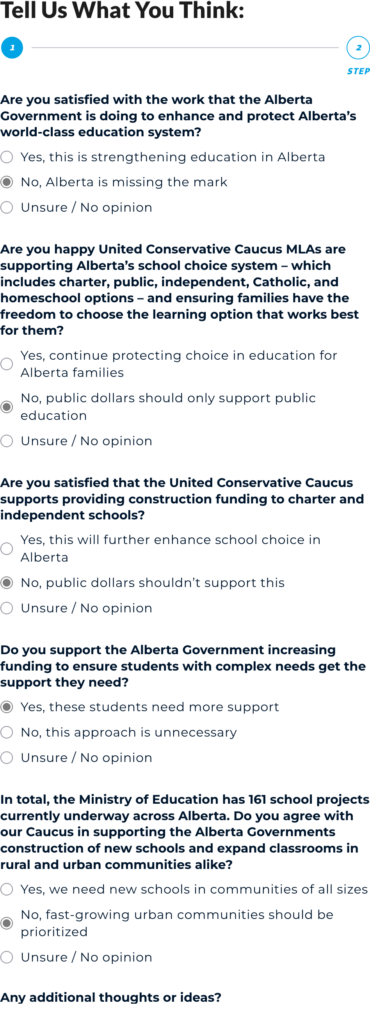
electively, UCP circulates this survey. Not everyone gets it. The distribution list is based on how you previously answered other questions.
To help UCP get a more accurate results, share it.
 I filled out the survey Sunday, March 29, 2026. Because the dirty Nazi Separatist UCP, run by extreme inhumane hate-filled religious Take Back Alberta, they make you fill out your private personal information, which I bet they’ll use to delete results of any of those they do not like, or are not fully conned by religion. Disgusting Nazi Trump shit as usual.
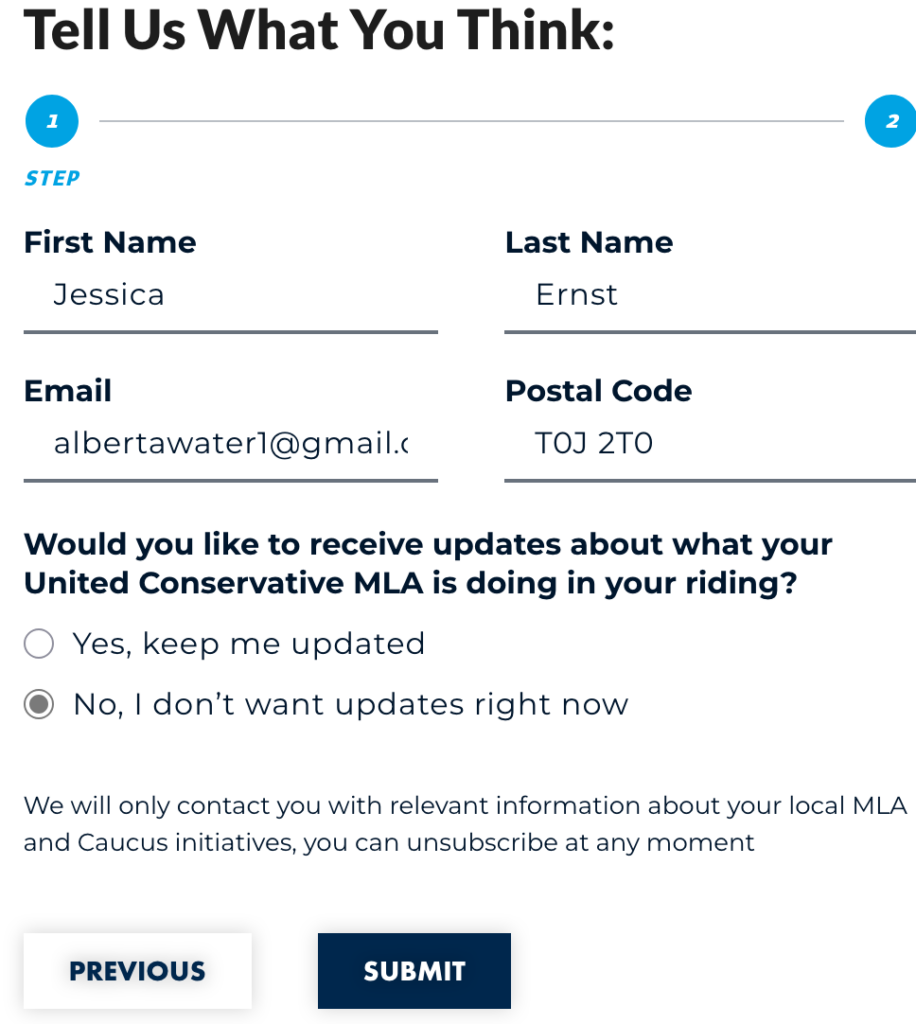


“True Christianity is represented by the party, and the German people are now called by the party and especially by the Fuehrer to a real Christianity…The Fuehrer is the herald of a new revelation.” – Nazi politician Hans Kerrl, quoted in Shirer, William. The Rise and Fall of the Third Reich, 392.

Hanging from the Dept. of Transportation near Navy Yard— “One nation, under God”
Mickey Rottinghaus @golfsobad.bsky.social:
This is embarrassingly outrageous!
The Nazis were advocates of “positive Christianity,” a vaguely pagan version of the religion designed to win over both Christians and the folkish movement. It was only after the 1933 Enabling Act that they realized the truth: Positive Christianity was nothing more than worshipping Hitler.
Elizabeth Eastmond @opquilt.bsky.social:
What happened to the rest of the verse: “with liberty and justice for all.” And who is paying for this??!?
Tore Julø @torejuloe.bsky.social:
Christian nationalism share no moral or ethical values with Christianity. It’s just Old Testament-flavored fascism.
James Who Lives in Queens @jamesfromqueensny.bsky.social:
Yeah, and then he was losing and committed suicide. We should be so lucky.
eddiethebulldog.bsky.social @eddiethebulldog.bsky.social
Exactly. Hitler claimed Christianity while executing millions.
@KhalidAlMans_:
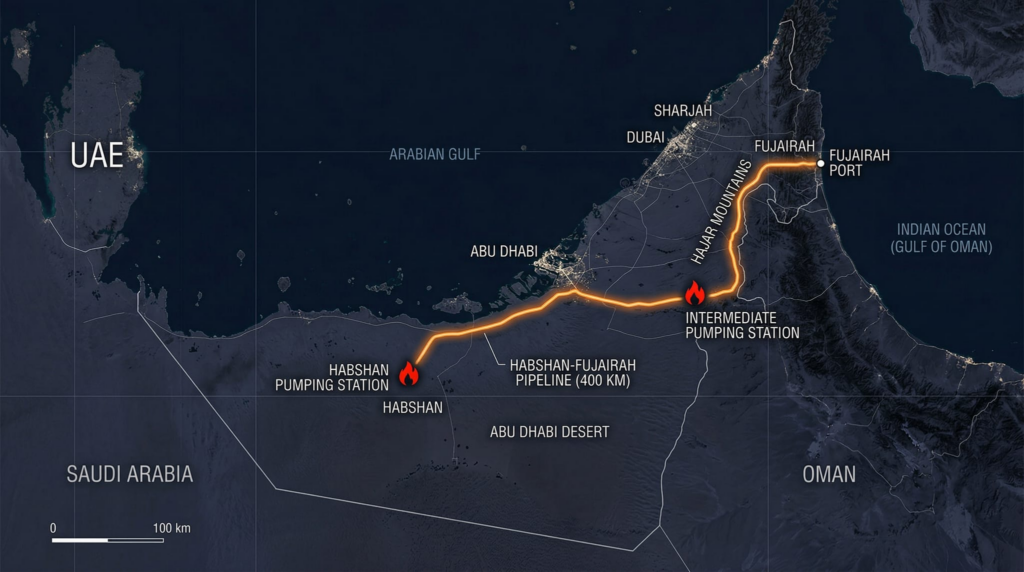
Let me explain what’s actually happening with this UAE pipeline attack..
the Habshan-Fujairah pipeline runs from Abu Dhabi to the Indian Ocean coast
it exists for ONE reason.. to ship oil even if Iran blocks Hormuz
86 tankers pass through Hormuz every single day
that’s roughly 20% of all oil on earth
Iran just burned two pumping stations on that pipeline..
they’re not attacking infrastructure.. they’re eliminating options..
the Strait of Hormuz is the chokepoint
the pipeline was the escape hatch
now there’s no escape hatch
here’s what nobody’s framing correctly..
Iran doesn’t need to block Hormuz right now.. they just need the world to know that when they do.. nobody has a Plan B anymore..
the people who told you the global energy supply was “diversified” just watched the diversification catch fire..Wind and solar in Alberta with an EV for every ordinary family, would be looking mighty rich about now
@tiberiusfiles:
The whole world supports Iran, except for a bunch of rich pedophiles, their paid propagandists, and total dipshits who you’d not trust with safety scissors
@profsaunders.bsky.social:
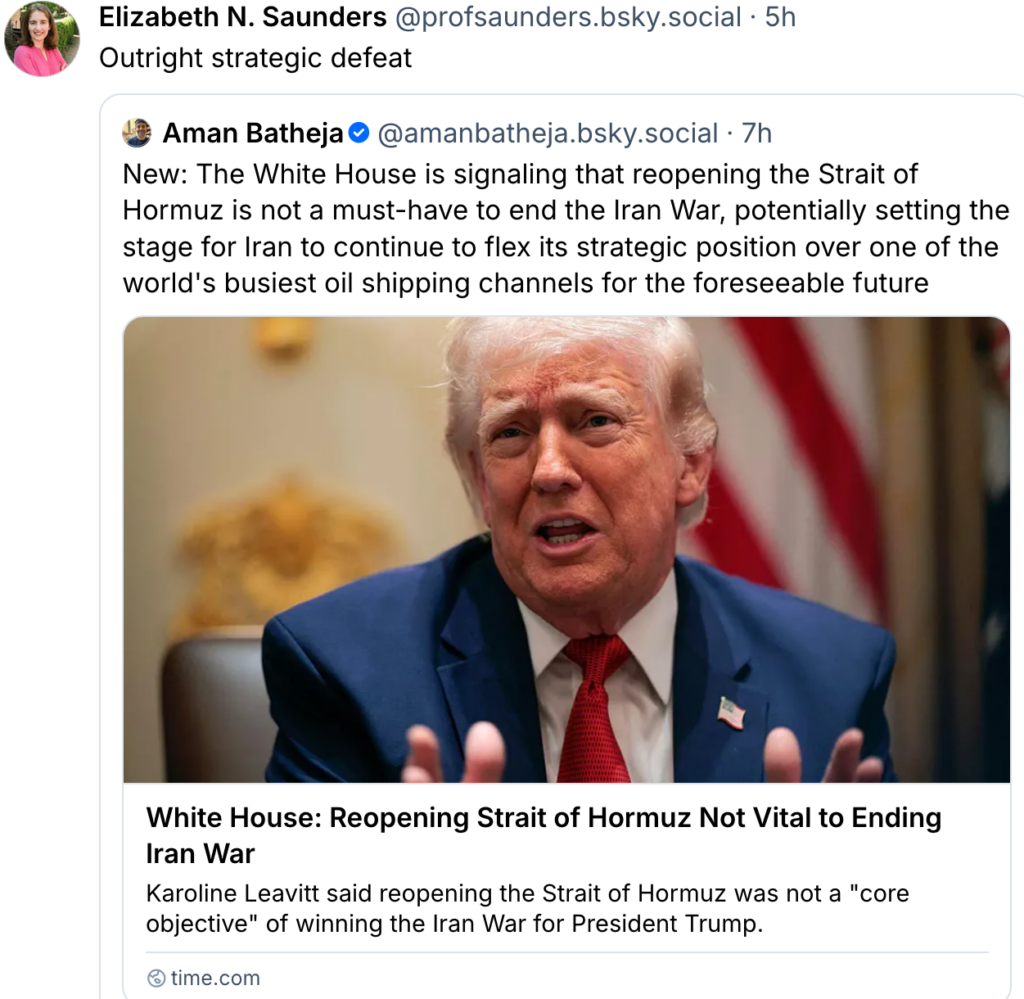
And at a huge cost to civilians in the region and much more economic pain around the world yet to come. Combined with the USAID shock, an absolutely horrific humanitarian toll inflicted by the United States government on the people of the world.
Iranian Force @MrImranPk:
Where are you supporting Iran from?
Name your country with pride.Alberta Canada!
@yugopnik:
I’ve been screaming about this for years – if the left in europe refuses to capitalise on American decline by pushing for decoupling from the US – as a core foreign policy pitch on their agenda – then the right eventually will. It’s a perfect popular argument to couple with class conscious politics – european sovereignty and an independent path. It ticks all the principled AND practical boxes and will only grow in popularity.
@_GlobeObserver:
BREAKING: Germany’s far-right party AfD has called for U.S. troops to leave Germany.Fucking Wowza!
@nigelb.bsky.social:
Smith will try and spin this (since it only refers to AB) as an amendment that only applies to AB and thus does not engage the 7/50 formula. Good luck with that.
Also makes me wonder whether she spoke to Ontario and SK before hanging them out to dry (given the joint letter the other week).Nazi Smith’s bosses, the extreme evangelicals, want to be the only ones allowed to pick higher court judges in Alberta and (even the supreme court of Canada), so that women’s and girls rights are judicially obliterated in the name of their misogynistic god; abortion is criminalized as well as women and girls saying no to sex; dirty con politicians, rapists and cancer-causing data centres, frac’ers and tarshitters are protected; and child and women abusing AI is never found guilty
@shannonpeel.bsky.social:
Premier Smith seems to think Canada is the US
@ritzmotu.bsky.social:
I can’t help feeling that more damning info about the Corrupt Care scandal is forthcoming, so they are trying desperately to change the channel.
@nigelb.bsky.social:
That’s the assessment of @thatheatherc.bsky.social as well!
New bill would remove deadlines for Alberta government to act on citizen petitions, Bill 23 marks latest round of amendments to Citizen Initiative Act, recall legislation by Janet French, CBC News, Mar 30, 2026
Newly tabled legislation would create a 12-month blackout period before and after provincial elections for starting or continuing a citizen initiative petition.
If passed, Bill 23, the Justice Statutes Amendment Act, would also repeal deadlines for the government to call a referendum for any future successful policy or constitutional petition.
“Our democracy is better when all Albertans from all walks of life and with diverse voices participate, and as the government, we’ll always ensure that our democracy is one of trust and openness,” Justice Minister Mickey Amery said at a news conference Monday.Douche fucker liar. I’ve never heard Danielle Smith or this vile jack ass tell the truth.
By creating blackout periods on either side of a provincial election, the government is aiming to create a “clear window” of time for public consideration of citizen petitions that is separate from the time the public considers policies during a general election.
“Albertans deserve to have an unfettered line of view on both of these very important issues,” Amery said.
The bill, which would amend four pieces of legislation, would also allow the appointment of lawyers to act as scrutineers to citizen initiative petitions and recall applications. JFC! Worst most corrupt dishonest profession on earth for this task, especially in filthy corrupt religion-brainwashed and controlled Alberta! These scrutineers would oversee Election Alberta’s process of verifying signatures, and could be appointed by any party involved in the petition, including the proponents and MLAs named in a recall petition.
The bill also introduces new measures around the creation and distribution of deepfakes targeting provincial political participants. A deepfake refers to content that appears to depict a real person but in fact has been digitally created — such as through artificial intelligence programs — or altered.
Amery said the move is an attempt to prevent election interference.
“We know that deepfake technology is going to continue to improve, and the distinction between what is reality and what is fake is becoming more and more difficult to distinguish,” he said.
Individuals could be fined up to $10,000 and organizations could be fined up to $100,000 for either creating or sharing deepfakes that mislead voters about a party leader, minister, MLA, electoral candidate, leadership or nomination contestant, or any employee or officer of Elections Alberta.
Citizen petitions
Under current Citizen Initiative legislation, the government must hold a referendum on or before the next general election date — as long as they receive a constitutional question or a committee recommendation for a policy question more than one year before a fixed election date.
If passed, Bill 23 would remove that timing requirement.
Government officials said the bill, if passed, would not be retroactive, and would not affect petitions that were started under previous sets of rules.
A successful petition to prompt a referendum question on Alberta staying as part of Canada is heading to an all-party committee of the legislature for consideration.
Former deputy premier Thomas Lukaszuk’s “Forever Canadian” petition, initiated last year, gathered 438,568 valid signatures — about 14 per cent of Alberta electors. The Forever Canadian petition was written as a policy question under a previous set of rules.
Now, a group called Stay Free Alberta is in the midst of gathering signatures for a petition asking for a referendum for Alberta to separate from Canada. This process is operating under a different set of rules, after the government introduced amendments last year to the Citizen Initiative Act.Alberta con gov’ts, always working against interests of Alberta and her people. Always.
That group has until May 2 to gather about 178,000 signatures.
If Bill 23 passes,it would be the third time the United Conservative government has substantively amended the Citizen Initiative Act and the second substantive set amendments to recall legislation since those two democratic options were introduced by former Premier Jason Kenney’s UCP government in 2021.Circus. Nothing but a good old Dark Ages extreme evangelical hate-filled circus.

NDP justice critic Irfan Sabir told reporters the UCP is changing its own legislation at whim.
“Quite frankly, they are making a mockery of the Citizen Initiative Act,” he said.
“If they love direct democracy so much, why put these restrictions?”
The changes are being proposed before a fall referendum where Albertans will vote on nine questions being put forward by the provincial government based on the Alberta Next Panel’s findings, including a question about measures to limit immigration.
Lori Williams, an associate professor of political science at Mount Royal University in Calgary, said holding referendums outside of general elections will cost taxpayers more.
“I think Albertans are going to raise serious questions about whether this is value for money,” she said.UCP and their religion don’t give a shit about value for Albertans, just how to better steal more and more from ordinary Albertans to fatten the ring leaders of Trump’s UCP and shove riches up their own greedy corrupt lying evangelical Separatist TBA asses.
“The questions that are being asked here are not the questions that are top of mind to Albertans.”
Changes to the sunshine list
Bill 23 also intends to change rules around disclosing salaries and severance packages of high-earning public sector workers. These publications are colloquially called sunshine lists.
Upon the recommendation of an all-party legislative committee, the listing of top salaries would include government employees and public sector workers who earn more than $130,000 of base salary.
The threshold for government workers is now $133,813, and employees of agencies, boards and commissions, such as post-secondary institutions, is $159,676.
Instead of increasing that threshold annually in line with inflation, the escalator will be tied to a year-over-year weighted average change to negotiated wage settlement increases, officials said.
“These are publicly funded positions and Albertans have the right to know who is getting what,” Amery said.
The legislation would also eliminate the requirement to publish severance agreements and payments for former employees in December of each year.
@AdameMedia:
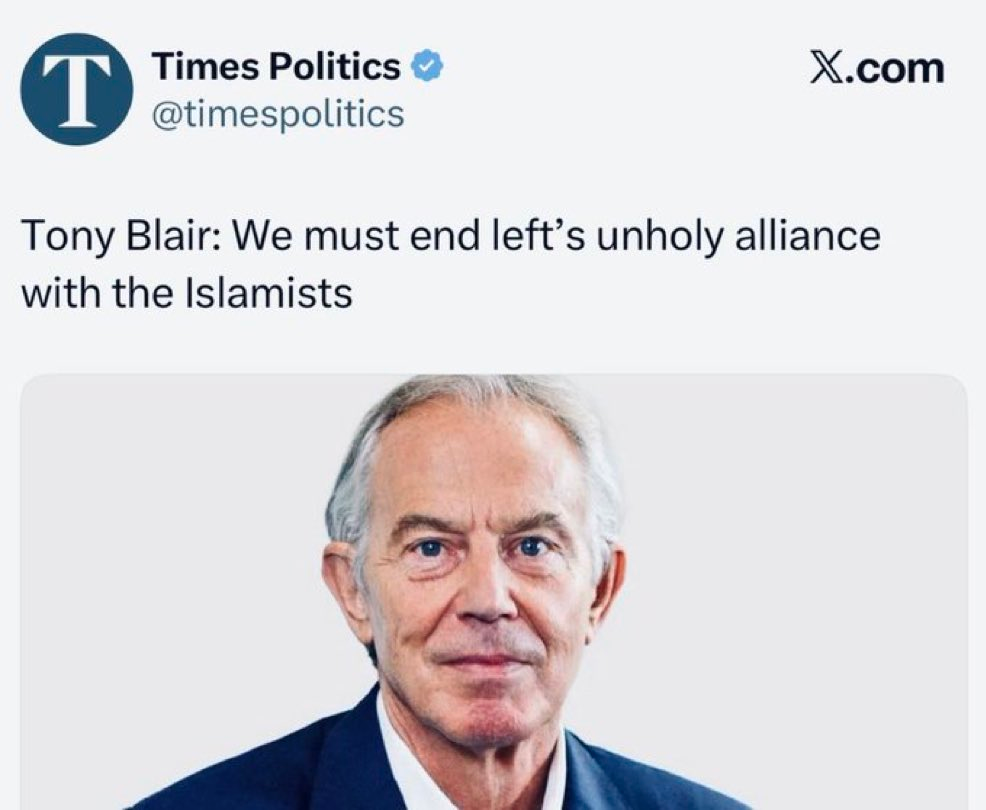
He murdered a million Muslims and created the immigration crisis that brought Muslims to Europe and now he wants use the SAME propaganda to do it again.
HeII won’t be hot enough for this demon.
@TheMaineWonk:
When did “conservative” white dudes become such crybabies infected with an incurable mentality of victimhood?
Boundary commission chair questions motives of UCP-picked panelists in final riding report, Commission’s majority proposes axing two rural seats, minority report wants many urban-rural hybrids by Jason Markusoff, CBC News, Mar 26, 2026
Alberta’s electoral boundaries commission issued a final report Thursday that proposed removing two rural seats from Alberta’s political map, but it was accompanied by a starkly different “minority report” alternative that proposed splicing several big-city ridings with rural seats.
Dallas Miller, the retired justice appointed by Premier Danielle Smith’s cabinet to chair the commission, joined with two NDP-appointed commissioners to brand the minority’s view as “unconstitutional.” The majority’s report warned MLAs that Alberta would likely lose a court challenge if it implemented the version proposed by the UCP’s two appointees.
“Even more importantly, it risks jeopardizing faith in Alberta democracy,” the majority report stated.
It warns the minority version creates grossly disproportionate population differences, even among ridings in the same region. Without using the U.S. political term “gerrymandering” that describes redistricting efforts to maximize partisan advantage, the official report hinted in that direction.
“What might be the minority’s true motivation for this?” the final report asks. “Our friends south of the border may have a term for this type of redistricting.”
It’s unprecedented for the commission to release dueling reports with different maps. Both groups of commissioners worked within the Smith government’s mandate to adjust the province’s boundaries into 89 ridings, up from the 87 Alberta has had since 2012.
The official majority report proposes accommodating population growth by adding two new seats in Calgary, one on its outskirts, and one in Edmonton.
While the majority report proposes several “hybrid” ridings — one that fuses an Edmonton suburban district with the town of Beaumont and three in Calgary that add rural districts or First Nations land — the minority report goes much farther with hybrids.
It proposes 11 different ridings that combine parts of suburban Calgary with rural areas, with many stretching as much as 20 kilometres beyond city limits and incorporating parts of bedroom communities of Airdrie, Cochrane and Chestermere.


It creates similar Edmonton ridings that include the neighbouring communities of Spruce Grove and Devon, as well as Beaumont.
The minority proposal also calls for subdividing the mid-sized cities of Red Deer and Lethbridge into four rural-urban hybrid constituencies, rather than each retaining two wholly urban ridings like the official report recommends.
The revising of the current Lethbridge-East and Lethbridge-West into four ridings would include Taber (50 kilometres west) and the B.C. boundary (more than 130 kilometres west).
Lethbridge MLA Nathan Neudorf, a UCP minister, had proposed Lethbridge being split into three or four ridings as a “cohesive agri-innovation corridor.” The minority report by commissioners John Evans and Julian Martin used similar language, calling the 100,000-person city the “urban anchor of Alberta’s largest integrated agri-food corridor.”
The minority pair wrote that they diverged from fellow commissioners because the others didn’t sufficiently heed public warnings about overly large rural ridings. Evans and Martin’s vision wouldn’t eliminate any rural or remote seats from the electoral map, making modest tweaks instead.
“We heard clearly and repeatedly that rural representation matters,” the minority report stated.
Miller and the other two commissioners, meanwhile, had argued that they grappled with massive population growth in Alberta, particularly in Calgary and Edmonton.
They had forged a compromise after their interim proposal to eliminate one rural northwest seat drew criticism from local and provincial politicians. Instead, the majority recommended preserving that remote seat and eliminating Lac Ste. Anne-Parkland, northwest of Edmonton.
In central Alberta, the interim and final reports both proposed dissolving Rimbey-Rocky Mountain House-Sundre into neighbouring rural seats.
NDP Leader Naheed Nenshi said his party will review and respond to the majority report. He was quicker to judge the minority’s view, calling it “nuts” for diluting Calgary voters with those of rural neighbours.
“That is obvious gerrymandering, and the fact that the UCP-appointed chair of the commission felt the need to write that it was unconstitutional and wrong tells you what you need to know,” Nenshi told reporters Thursday.
The office of Justice Minister Mickey Amery, who is responsible for electoral changes, deferred comment to United Conservative caucus whip Justin Wright. In a statement, he said government MLAs “will take the necessary time to carefully review the report’s findings and recommendations,” making no mention of the existence of a minority report.
WATCH | Boundaries commission hears concerns in Calgary:
Calgarians challenge revised riding map at electoral boundary commission forum
January 13|
Duration 1:57Public hearings are being held in Calgary in response to proposed changes to provincial electoral division boundaries.
While the redrawing of district boundaries has long been a politically charged practice in the United States, Canada and its provinces have made the process more independent by striking boundary commissions, typically led by a former judge and with panelists appointed by multiple parties.
Legislative assemblies traditionally approve the recommended boundaries, sometimes with minor changes, like riding names.
Alberta’s last two boundary commissions, in 2010 and 2017, each had minority reports — but by individual commissioners who did not redraw the maps. No Alberta commission had ever provided alternative maps before, the majority report noted, potentially creating multiple visions for MLAs to incorporate into the final map to be used for next year’s general election.
The five commissioners showed unanimous support for their interim report tabled in October, which also proposed removing two rural seats and adding three in the big cities. Miller and his majority noted that the minority “departed substantially” from the consensus path in late January, after all public hearings were conducted and written submissions received.

25 years later, how the ‘Alberta firewall’ letter reflects today’s political landscape, From fringe ideas to now part of the provincial agenda by Jennifer Keiller, CBC News, Mar 28, 2026
Alberta should exit the Canada Pension Plan in favour of its own. It should establish a provincial police force, rather than the RCMP.
Twenty-five years after those notions were put forth as part of the “Alberta firewall” letter, they are very much a part of the provincial conversation today.
Six prominent Alberta conservatives penned the open letter to then-premier Ralph Klein in 2001: Ted Morton, Ken Boessenkool, Andrew Crooks, Tom Flanagan, Rainer Knopff, and Stephen Harper, who at that time was the leader of the National Citizens Coalition.
When it was published, many viewed it as a fringe proposal, unlikely to ever actually take shape. But a quarter century later, as Albertans ready for a potential referendum on their future in the country, it has a renewed relevance.
This week, two of the letter’s signatories – Morton and Boessenkool – spoke to West of Centre’s Kathleen Petty about how it came to be, and how it relates to where the province stands now.
The firewall’s origins
The letter was published in January 2001, months after the federal election that saw Jean Chrétien’s Liberals win a third straight majority government.
It had been more than a decade since the formation of the Reform Party, and rallying cries of “the West wants in.”
Now, some were becoming disillusioned, said Morton, about the chance of a conservative party in power in Ottawa, where the voices of Albertans could truly be heard. Votes on the right were being split between the Canadian Alliance (formerly the Reform Party) and the Progressive Conservatives.
That’s when the letter took shape, with a focus on what the province could do on its own.
“Instead of more Alberta in Ottawa, it would be less Ottawa in Alberta,” said Morton.
The letter to Klein called for the aforementioned policies, like withdrawing from the CPP and establishing an Alberta police force. It also called for Alberta to collect its own revenue from personal income tax, take more responsibility for health care, and force Senate reform onto the national agenda.
Some of those ideas had precedent. Quebec already had its own pension plan and collected its own income tax revenue. It had its own police force, and so did Ontario.
So why not Alberta?
Harper was the one who first picked up the phone and started the conversation, serving as the catalyst for the letter, both men said.
And that would end up rankling the letter’s recipient.
Klein saw letter as ‘threat’
At the time, Morton thought Harper’s ambitions were provincial, and the letter would be a “launching pad” for him to run for the Alberta Progressive Conservatives.
Klein also saw it that way, Boessenkool said, and that did not sit well with him as the Alberta PC Leader of the day.
“He came out quite aggressively against it because I think he saw it as a political threat instead of seeing it as a political opportunity,” Boessenkool said.
What followed was a trip to Edmonton by Boessenkool and Harper to sit down with Klein, to speak about their ideas and attempt to assuage him that Harper’s interest was in federal politics.
After initially rebuffing the letter, Klein would later come around on it.
There were other aspects that dissuaded people from supporting the firewall letter, like the comparisons to a province where a sovereignty referendum was still fresh in the public consciousness.
“I think even though separatism was not on anyone’s agenda, the fact that we kept mentioning Quebec’s already doing this, it made it easy for critics to say, ‘oh, this is a pseudo or crypto separatist initiative’, which it wasn’t,” said Morton.
Some were also put off by the use of the word ‘firewall’ – which wasn’t even used in the letter’s first draft, said Boessenkool.
“The word firewall really was what people picked up. And sort of the tone of the word is what people objected to,” he said.
Flash forward to present day
Sentiments around western alienation and grumblings about Ottawa overstepping would continue in the decades that followed. Keeping Ottawa out of Alberta’s affairs would remain a common refrain, most recently from Premier Danielle Smith’s United Conservative Party government.
Now, Albertans are expecting a wide-ranging referendum in October, where separation may or may not be on the ballot.
Whether Alberta should pull out of the CPP will not be one of the questions asked this fall, although the Alberta Next panel did recommend putting it to a province-wide vote.
“The idea of pulling out of the Canada Pension Plan was a massive benefit for Alberta in 2001 and it’s become much less of a benefit to Alberta over time,” Boessenkool said.
He says that is due to the state of the province’s finances now compared to 2001, and that its workforce, while still young compared to other provinces, is not as young as it was 25 years ago.
And he describes some of the current referendum questions as akin to an “anti-firewall.” Rather than protecting against Ottawa intervention, they require just that.
“Almost every question that Danielle Smith is asking in these referendum questions are things she can’t actually do as the premier of Alberta,” said Boessenkool.
“If she really wants to do these things, she should quit her job and take over [Pierre] Poilievre’s job and run for national office.”
Many Albertans have their grievances with federal policies. But Morton says the separation question does not get to the heart of that.
“I think what we’re looking at now is sort of ridiculous, that there’s one side that says ‘let’s leave Canada,’ you know, the secession. And then the other is ‘no no, we love Canada, let’s stay,’” he said.
“Those are the two extremes. I think 80 per cent of Albertans are in between.”