
‘There’s No Zionism Without Britain’ – Benjamin Moser Exposes Israeli History 18:03 Min. by Declassified UK, Nov 5, 2026
Pulitzer Prize-winning author Benjamin Moser spoke to Declassified about his new book ‘Anti-Zionism: A Jewish History’. Moser, who has been lauded for his previous works, had just one review in the British press at the time of recording, and said no bookshop in London would host his book launch.
‘I knew writing this book would dynamite my career,’ he told us.
Declassified editor Phil Miller spoke to Moser about the history of Zionism, which he describes as ‘almost comically racist’, and an ideology that is inextricably linked to Britain and its empire.
Order the book via https://www.benmoser.com/anti-zionism
***
‘A hidden tradition’: Benjamin Moser wants you to know Jewish anti-Zionism is not new by Aaron Gell, Sun 25 Oct 2026, The Guardian
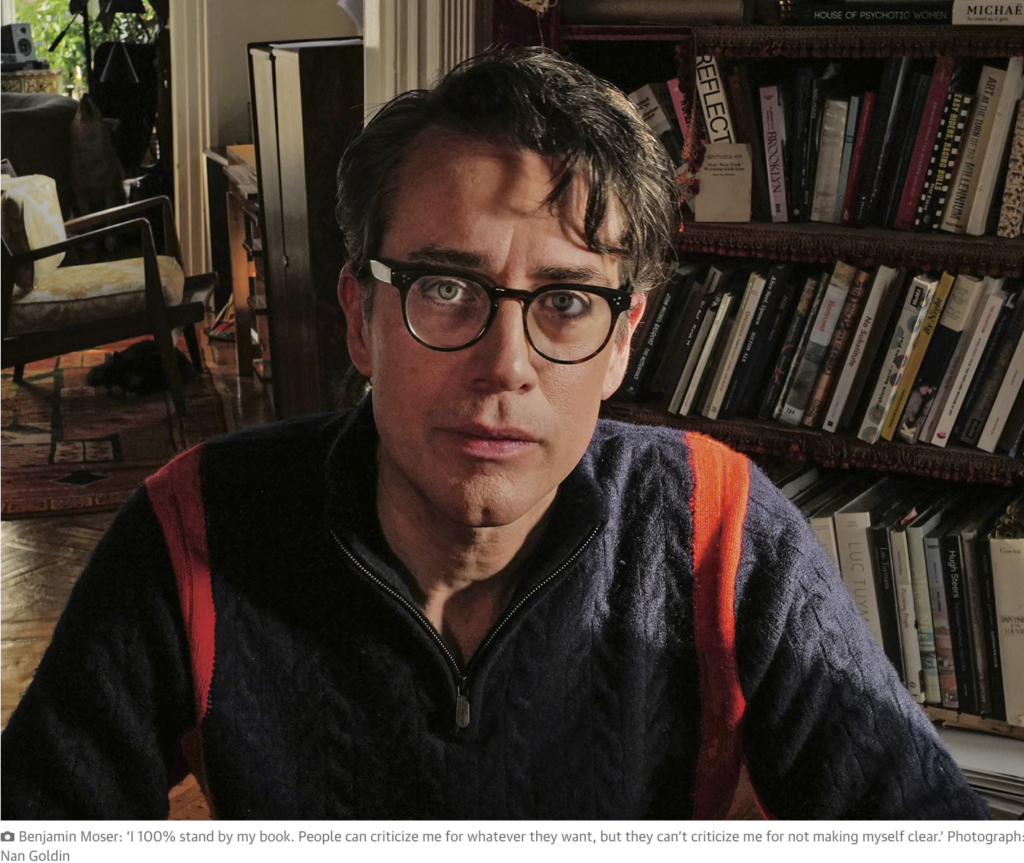
The writer rarely questioned the tenets of liberal Zionism growing up. Now he embraces anti-Zionism with the fervor of a new convert
In 1987, the Israeli human rights attorney Felicia Langer was paying a visit to the Neve Tirza women’s prison when a client named Siham shared some disturbing news: the prisoners held there had recently been sprayed with a chemical agent that left them writhing on the floor. Langer grabbed a tissue that had been exposed to the substance – a piece of evidence, perhaps, in a future legal case. Then, on impulse, she lifted it to her face and inhaled deeply. Her hope, she wrote later, was that doing so might enable a doctor to identify the toxin.
This anecdote appears in Anti-Zionism: A Jewish History, by Benjamin Moser. In it, the Pulitzer prize-winning author profiles a dozen Jews who actively opposed Zionism, before and after the establishment of Israel – from Aaron Samuel Tamares, a Polish rabbi who began inveighing against Jewish nationalism in the late 19th century; to British diplomat Edwin Montagu, who sought to derail the 1917 Balfour declaration promising a Jewish state in Palestine; to Israeli “new historian” Avi Shlaim – figures he sees as part of “a hidden tradition … of people who, though long dismissed and despised, were ultimately proven right”. Along the way, he seeks to dismantle the Zionist “fairytale,” as he puts it, piece by piece.
Langer’s heedless act made her ill but failed to provide the evidence she’d hoped for. It serves as a haunting analogy, however, for Moser’s own work of historical inquiry-slash-self-purification. Having been raised on what he considers a false narrative of the Israel-Palestine conflict, and therefore at risk of moral complicity in an apparent genocide, Moser now proposes to expose himself and his readers to a counter-narrative, however uncomfortable – Siham’s tissue as written history.
Anti-Zionism: A Jewish History by Benjamin Moser review – the deep roots of a contemporary movementRead more
Of course, Zionism is a complex and multilayered subject, more hotly contested today than ever before. Where some see a movement of liberation and self-preservation, a principled, heroic response to centuries of oppression and near annihilation, others see a ruthless campaign of land theft, violent dispossession and genocide. Moser, having been raised with the former analysis, now embraces the latter with the defiant fervor of a new convert.
When asked during a recent interview in Brooklyn what had changed his mind, the author replied with characteristic brashness: “I didn’t understand the settler-colonialist element – that a group of foreigners sponsored by imperialist powers with bayonets had come into this country that was 95% to 97% non-Jewish and just said: ‘Everybody, fuck off.’”

This is not, to be clear, the consensus view (early Zionist immigrants to Palestine were mostly unarmed refugees fleeing pogroms). And Anti-Zionismoccasionally indulges in a similarly essentializing style. While the book is,as its subtitle has it, a work of history,it is also an impassioned act of soul-searching and, in places, a blunt polemic. This makes for an awkward combination, one that sometimes sacrifices objectivity on the altar of moral catharsis. Asked by Piers Morgan to respond to a critic who’d faulted his book for being overly simplistic, Moser cheerfully embraced the assessment: “I do think it’s black and white!” he declared of the Israel-Palestine conflict.
Anti-Zionism appears at a difficult juncture for the pro-Palestine movement, in which polarizing rhetoric and recrimination have become increasingly commonplace as Israel’s killing in Gaza continues. (See, for example, the declaration by the Green party of England and Wales that Zionism is racism, the jeering of New York’s mayor, Zohran Mamdani, for attending a 7 October vigil and an increasing willingness to defend the massacre of 1,200 people in southern Israel as a legitimate response to oppression.) For some, even to suggest that not all Zionists favor ethnic cleansing, Jewish supremacy and the obstruction of Palestinian self-determination smacks of equivocation in the face of mass murder.
Moser’s book has given rise to considerable pushback for embodying that vehemence. Critics in the New Yorker, the New York Timesand other influential outlets have taken issue with his portrayal of Zionism as fundamentally malevolent – and Palestinians as essentially blameless – and some have made note of factual inaccuracies.
The author seems unfazed, chalking up the critical reviews to politics. “A lot of the people who are coming for me now, who are they? They’re liberal Zionists,” he insisted. “Because what I say is: the whole thing from the very beginning was rubbish. It was a terrible idea. Israel is not something with problems. It is a problem.”
The grandson of Holocaust survivors, Moser, a lanky 50-year-old, was raised in the Reform tradition in Houston, Texas, and rarely questioned the basic tenets of liberal Zionism: that the establishment of a Jewish state in Palestine was a meritorious answer to centuries of victimization, that Israel represented a stronghold of democracy surrounded by hostile neighbors and that Arab recalcitrance was the primary obstacle to a peaceful two-state solution. “The idea of rebuilding a persecuted people in the land from which, millennia before, they had been exiled,” he writes in Anti-Zionism, “appealed to my sense of romance, and of justice … And so, though I was disappointed by Israel, Zionism remained, in my mind, something pure.”
A turning point occurred in the summer of 2016, when Moser accepted an invitation to speak about his acclaimed biography of the Brazilian novelist Clarice Lispector at the Palestine festival of literature. PalFest, as it’s known, is not simply a literary event; attenders tour the West Bank, meet Palestinian counterparts and absorb the grim brutality of the occupation up close. While walking down an eerily quiet street in Hebron, a West Bank city where Palestinians must contend with severe restrictions on their movement and constant settler abuse, Moser found himself overwhelmed by what seemed to him a terrible injustice. (The writer Ta-Nehisi Coates, in his recent book The Message, described a similar awakening in Hebron.) “I’m from Houston,” Moser said, but “I could walk down the street in this city where people whose families have lived there for thousands or hundreds of years were literally not allowed.”
Aside from detailing the experience in a 2021 Substack post, Moser largely kept his growing misgivings about Israel to himself until last year, when he published a fiery personal essay in the inaugural issue of Equator magazine, a bracing attempt to reconcile the Zionism of his youth with the grotesque civilian suffering imposed on Gaza in the wake of Hamas’s 7 October assault. The piece prompted “a huge reaction, probably more than anything I’ve ever written, all positive”, Moser said. It will be anthologized in the forthcoming edition of The Best American Essays.
“I thought, we have to write about how Jews are not onboard with this,” he told me. In the essay Moser reserves special vitriol for American Jewish leaders, who as he puts it, “were happy to sacrifice our civil liberties, our free press, our judiciary, our foreign relations, to sustain the killing” in Gaza.
To tell the stories of these 12 apostates, and do so with such obvious affection – he calls such figures “the moral aristocracy of Jewish people” – is in some fundamental sense to join their circle, and to thereby knowingly invite the same calumny that rained upon each one in turn.
Moser has a lot to lose. He achieved wunderkind status in his early 30s with his Lispector biography, and was then offered the career-making opportunity to become the authorized biographer of the intellectual titan Susan Sontag, a project he pursued with great zeal, conducting hundreds of interviews and nabbing the Pulitzer for the resulting 800-plus page monolith. More recently he published The Upside Down World, a collection of essays on Rembrandt, Vermeer and other Dutch masters. He has, to all appearances, won the literary lottery: when not traveling the world to research his books, he lives in the Netherlands and with his partner, Dutch novelist Arthur Japin, occasionally decamping to a charming tumbledown country house in south-western France.
Why then take the risk of swatting at the most polarizing of geopolitical hornet’s nests?
“I think that at a time of genocide, you can either sit on the sidelines and exempt yourself from criticism and think that makes you feel safe,” he said, “or you can, as they say in Brazil, give your face to be beaten.”

The first blow came from the New Yorker, to which Moser has contributed a handful of pieces. Isaac Chotiner, who plainly shares Moser’s queasiness around Israel’s wanton destruction of Gaza, wrote a review of the book that was blistering, to say the least, deeming Moser’s “approach to facts … slovenly to the point of reckless”.
Chotiner focuses his critique on the book’s treatment of what Moser calls the “third rail” of Holocaust studies – the ways in which Zionist leaders found ways to cooperate with the Third Reich. “Did the Zionist movement benefit from the Holocaust?” Moser asked during our interview. “A lot of historians disagree, and a lot agree. I have my viewpoint, which I make very clear.”
Moser introduces this idea by outlining the shockingly anti-Jewish views of several prominent Zionists, including the movement’s founder, Theodor Herzl, who predicted that “The antisemites will become our most dependable friends,” and himself showed a penchant for classic antisemitic tropes, deploying a 17th-century antisemitic slur, “Mauschel,” to describe Jewish anti-Zionists. “We are a nation of hagglers and crooks,” Herzl wrote, “because Mauschel proliferates and plays stock market tricks.”
But Chotiner makes a compelling case that Moser’s attachment to this theme leads him to misrepresent several important facts. In particular, Moser’s book points to several articles in the Zionist press that appear to whitewash Nazi atrocities or advocate Jewish compliance, which Chotiner demonstrates do no such thing when presented with more context.
One can grant the validity of such objections, however, while also acknowledging the virtue of Moser’s larger project: a searching, vivid frontal assault on an ideology that is now fueling one of the greatest atrocities of our time. “It’s just like, people are getting killed every day,” Moser said with a long sigh. “And they want to fight with you about your footnotes. Then they want to attack you personally and try to destroy your career. But I 100% stand by my book. People can criticize me for whatever they want, but they can’t criticize me for not making myself clear.”
A few months ago, Moser visited Berlin to attend his niece’s batmitzvah. There, he visited the former home of his grandparents and paused to contemplate the Stolpersteine, the commemorative brass “stumbling stones”, dedicated to their memory. Before immigrating to the US, his grandfather, Franz Egon Moses, had spent time in Mandatory Palestine. Moses’s volume of Herzl’s Zionist Writings is now in Moser’s library. Had he lived, Moses might well reject his grandson’s turn toward anti-Zionism. But maybe not.
“I hope they’d be proud of me,” Moser said of his ancestors, growing somber. “People didn’t stand up for them. People shut up. They took their kids to school and went shopping, just like all these people are doing now. I don’t want to be that kind of person.” Briefly removing his glasses, Moser gave his eyes a quick wipe. “Those aren’t the people I respect.”
This article was amended on 26 October 2026. A picture caption in an earlier version referred to Haifa, Palestine. This has been changed to Haifa, Israel.
Why Do Canadian Prime Ministers Devote Themselves to Zionism? by Karolina Khatia, Jul 10, 2025
No idea. You tell me. Genocide is higly profitable for those financing and supplying the bulletes and bombs. Genocides make the rich richer (most politicians, especially Herrs Hideous Harper & Carney, only serve the rich – genocide lover Mark Carney has even made it illegal to be Anti-Zionist in Canada, serving Israel and Zionism – the mass murderers). Genocides make humans ever more evil and Zionist-Nazi so that ordinary people gleefully support the slaughtering even though the rich are pilfering our pensions to finance the bullets and bombs.
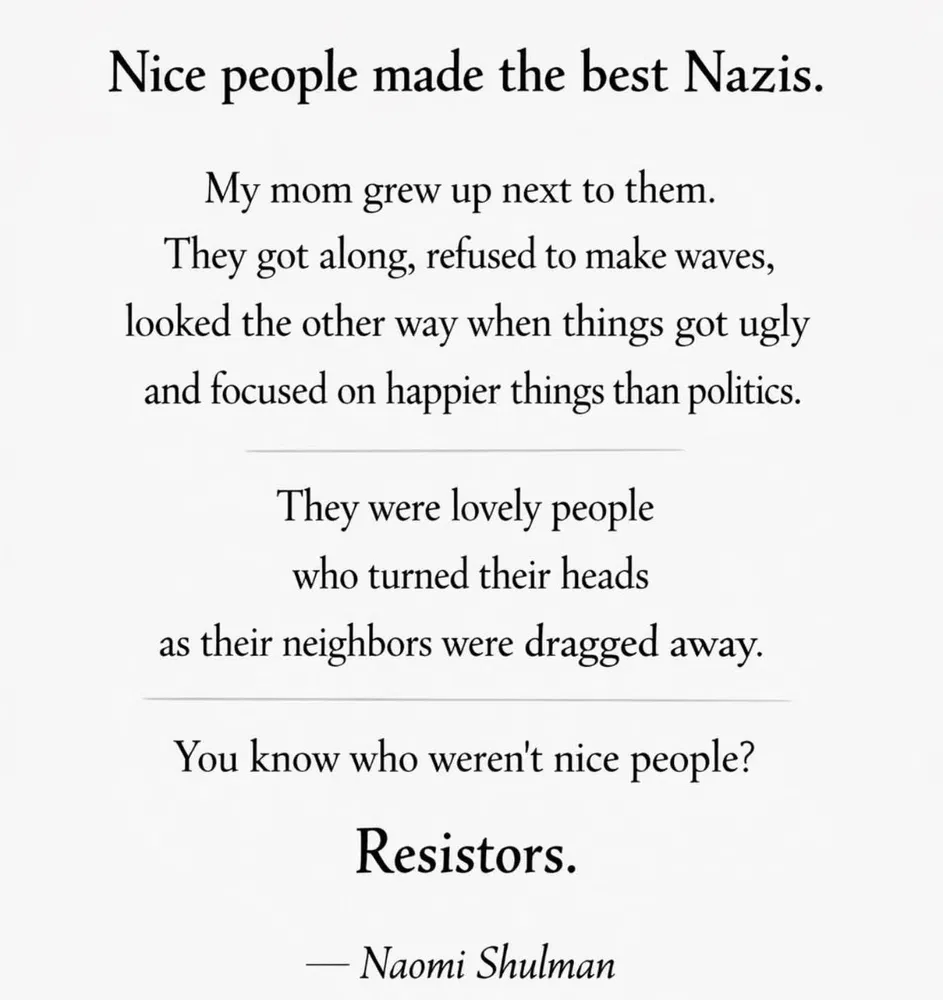
My journey into this topic began through my peace activism. At first, I believed I was supporting Palestinians, but months of research and close attention to political developments helped me realize that we Canadians are in trouble and need help. As someone deeply committed to justice, democratic principles, and human rights, I feel compelled to share what I’ve uncovered.
If you pay close attention, you’ll notice that unwavering support for Zionism has become a consistent thread in Canadian political leadership.

Starting with Stephen Harper, if not earlier, and extending to figures like Mark Carney, we’ve seen a troubling pattern: Canadian prime ministers echoing Israeli talking points and offering near-total support to the state, often at the expense of truth, justice, and international law.and our pensions including CPP, evilly destroying our charter rights, notably our right to freedom of expression, aided by lying racist Zionist judges appointed by blood thirsty racist lying politicians and their propagandists, notably Irwin Cotler.
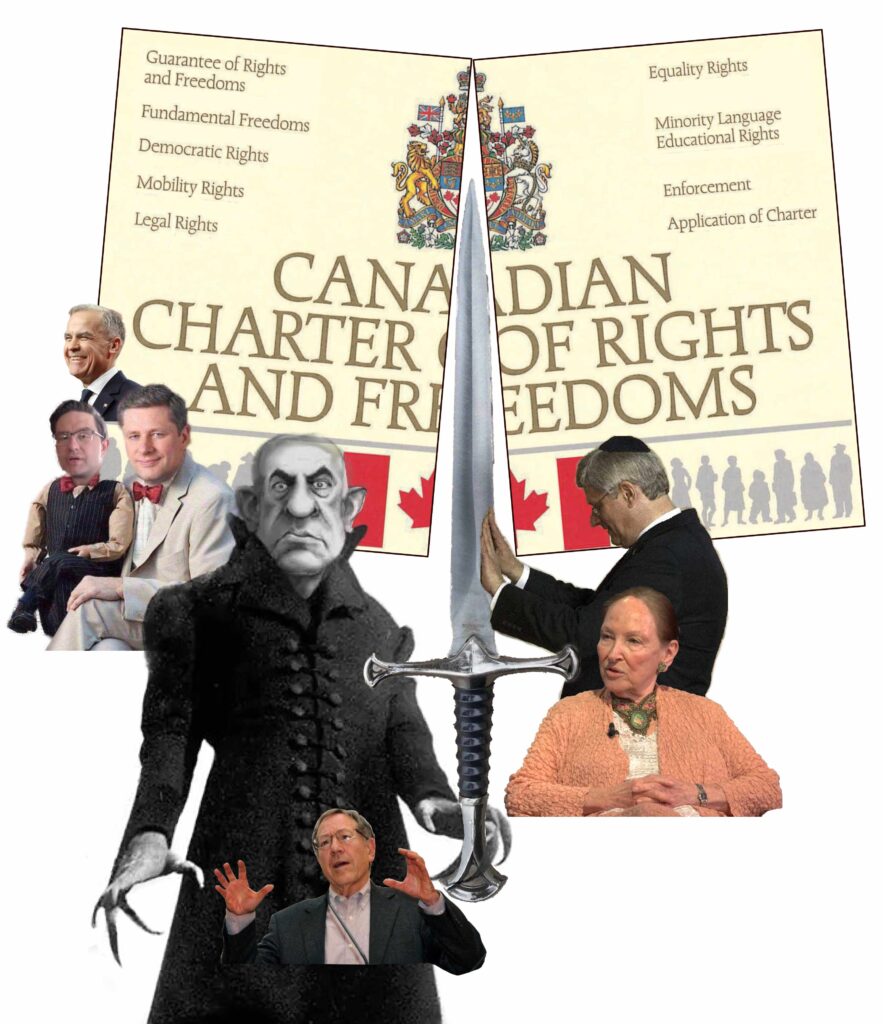
Some might claim that this is simply poor foreign policy. But please explain, why do Canadian politicians have to be Zionists? A reminder: Zionism is a nationalist political ideology that prioritizes Jewish supremacy and control over historic Palestine, often at the expense of Palestinian lives and rights, an ideology that is not shared by many Jews themselves. So, even if we assume it’s a wonderful thing, isn’t it strange that a leader of Canada would devote themselves to the supremacy of another apartheid state?Notably strange because those “leaders” enabling and financing mass murder with our pensions are “christian” – a blood thirsty misogynistic terroristic religion (the catholic church is hideously rich from stealing from ordinary peoples and raping their kids with impunity; it too gets richer off genocides).
A Pattern of Uncritical Support
Over 147 countries recognize the State of Palestine. Canada still hasn’t. Stephen Harper proudly declared that “Israel has no greater friend than Canada.” His administration backed Israel through every military assault on Gaza, dismissed UN findings, and vilified pro-Palestinian voices at home.
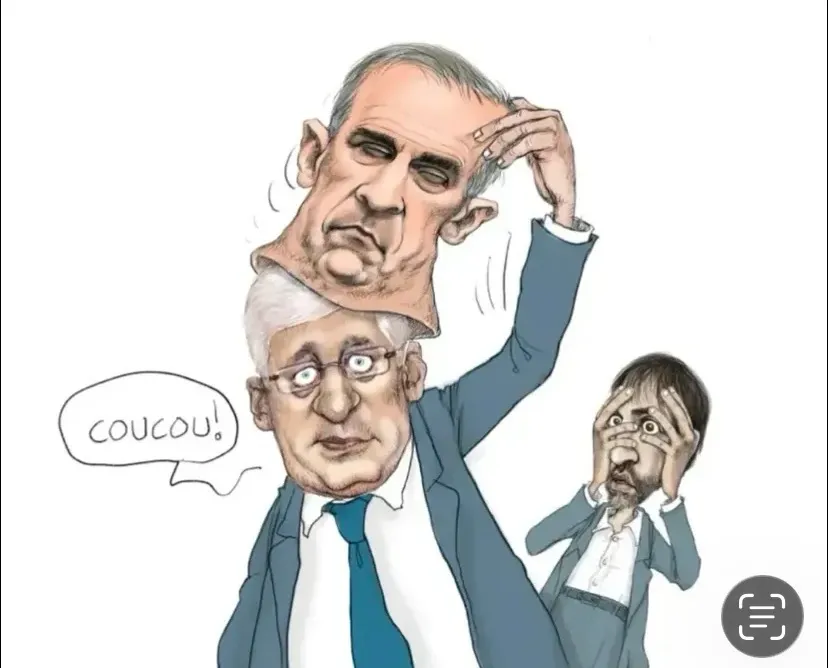
Then came Justin Trudeau, whose progressive branding and polished image did little to mask the same underlying loyalty. His government abstained from or voted against key UN resolutions on Palestinian rights, refused to condemn Israel’s apartheid practices, and continued arms exports long after clear evidence of war crimes emerged.
In his final week in office, while much of the world was condemning Israel’s atrocities, Trudeau held a press conference where he declared himself a proud Zionist, and, to my surprise, hastily allocated millions in public funds — not to support struggling food banks in Canada or to aid the victims of war crimes in Palestine — but to ‘programs fighting antisemitism’ that, in effect, are aimed at improving Israel’s image in Canada.
Even as South Africa brought its genocide case against Israel before the International Court of Justice, Canada’s leadership hesitated, deflected, and refused to take meaningful action.And Zionist racist lying retired supreme court of Canada judge Rosalie Abella publicly slammed the court for daring to hear South Africa’s case of genocide against clearly genocidal Israel.
Today, as the devastation in Gaza and the West Bank continues, the Canadian government clings to a script that prioritizes Zionism over legal and moral responsibility.
Nominated by Justin Trudeau, Mark Carney, former Governor of the Bank of Canada and Bank of England, was notably cautious about the subject of Palestine before the election. He spoke vaguely of a two-state solution without taking a clear stance and referred to the genocide of Palestinians merely as a “situation.” No! Before the election, Carney made his racism (notably anti Indigenous) clear and refused to say the word “genocide.” He lost my vote instantely. Then, he called for a “Zionist Palestine,” which calls for Palestinians being happy about being slaughtered, wiped out entirely, and their lands and resources (including olive groves, oil and gas, and fresh water) stolen and given to criminal genocidal Israel and her genocidaire rich mother fuckers making a killing off the genocide, including Carney’s Brookfield and other murder investment houses and funds
In his final debate, while less aggressive toward pro-human rights groups than his Conservative rival, his choice of words made his loyalties clearer.
Since being elected, Carney has stopped concealing his positions. In a recent interview, he stated that Palestinians need to become Zionists. That’s as outrageous as telling Jews to become fascists. This comment alone should reveal everything we need to know about Mark Carney. Genocide and the systematic dehumanization of a people are inexcusable crimes that cannot be softened, justified, or erased from human history. Despite this, Carney approved new arms deals with Israel, signalling a continuation of Canada’s uncritical support for Israeli government actions, even when those harm Canadians’ interests.
The Consequences at Home
This loyalty to Zionist agendas doesn’t just affect foreign policy — it’s impacting our democracy.
Making genocide appear acceptable requires narrative control: silencing humanitarian voices, criminalizing justice advocates, funding biased media, and manufacturing public consent. To make injustice work, governments undermine democracy.
We’ve seen this happen in the U.S. and Europe — stricter protest laws, bans on pro-Palestinian organizing, and the criminalization of dissent. Canada is not far behind. Legal experts and civil society groups are already raising concerns about Bill C-5 and Bill C-2, which could increase surveillance, limit protests, and restrict civil liberties.
While we ask whose interests the U.S. president truly serves, it’s time to look inward and ask the same of Canadian leadership. Why is criticism of Zionism still taboo in political discourse? Why do we funnel public funds to U.S. arms manufacturers who, in turn, openly funnel those funds to Israel while claiming we can’t afford housing for the homeless, food banks, disability benefits, or dignified care for the elderly?
A Wake-Up Call
You might wonder why I’m sounding the alarm at all, especially if you don’t intend to support Palestine. The answer is simple: the erosion of our democracy will affect us all. Once our democratic safeguards are weakened, we risk opening the door to authoritarian control driven by the super-rich in all matters of our lives.And worse, Israel plans to do to us all, what it’s doing to Palestine, Iran, Syria, Lebanon, Yemen and their peoples. Palantir has already invaded our privacy and rights in Canada via it’s cosy fuzzy smoke screen so called “canadian company” Cohere and other Nazi Zionist American AI mass surveillance and private data theft.
Canada doesn’t need more Zionist Prime Ministers. We need courageous, ethical leaders who serve our people and our country. Do you agree?
Refer also to: