
@jansplanet.bsky.social:
Three to five considering the significant environmental changes—increased soil, air & water temps enabled “the algae bloom to have resulted from stagnant water, high temperatures & the breakdown of naturally occurring organic matter that caused anaerobic conditions in the stormwater retention pond”
@nicktsergas.ca:
One of the only examples of a closed-loop system operating in a hyperscale datacentre in Canada.
@rochbourassa.bsky.social:
They hired GFL to do the clean up
Who did they hire to give them the certainty (as reported) that it was not the spill that caused the bloom?
Is RD an environmental investigator as well as a data centre operator?!
Chemical spill confirmed at Cambridge data centre weeks before ‘bacteria bloom’ was traced back to property, The owners of the Ascent TOR1 data centre in Cambridge say a glycol spill at the property two weeks before the discovery of a “bacterial bloom” on the property are unrelated by By Joe McGinty, Waterloo Regional Record, Nov. 10, 2026
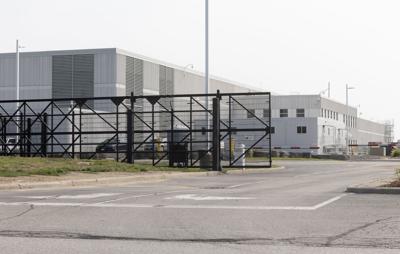
A 5,000-litre chemical spill has been confirmed at a data centre in Cambridge.
Related Digital, the co-owner of Ascent TOR1, a 60-megawatt data centre on Vondrau Drive in Cambridge, confirmed to The Record that a propylene glycol spill occurred on July 2, which was promptly reported to the Ministry of the Environment, Conservation and Parks (MECP).
“We self-reported a glycol spill to the ministry spills action centre as per protocol earlier this year. The spill was quickly contained and resolved,” said Related Digital in an email statement.
The spill occurred 17 days before the discovery of an odorous, milky-white substance found in a nearby creek that was traced back to a retention pond at the data centre.
In its statement, Related Digital said that to the best of its knowledge, it believes the spill was unrelated to the milky-white bacterial bloom that travelled off the property and into local waterways.
“We believe the algae bloom to have resulted from stagnant water, high temperatures and the breakdown of naturally occurring organic matter that caused anaerobic conditions in the stormwater retention pond caused by our fucking shoddy operations!,” read the statement.
The data centre houses at least two tenants: Canadian AI company Cohere and French cloud computing company OVHcloud. The data centre uses a closed-loop cooling system to cool thousands of servers.
This method of cooling lowers the demand for water as it recirculates a mixture of water, propylene glycol and other additives within a closed system.
The spill
On July 2, a coolant line broke at the Cambridge data centre, leaking around 5,000 litres of a mix of 75 per cent water and 25 per cent propylene glycol.
Propylene glycol is often used in low or diluted amounts and generally found in antifreeze, coolants, sanitizers and even in foodmedia trying to enable the fucking polluters by minimizing the harm? We do not know what the additives are that spilled. Closed loop cooling systems for data centres often use toxic PFAS which do not break down when spilled into our environment and get into our bodies and those of wild beings. It is commonly used in aircraft de-icing fluids.
The chemical is considered low-risk and non-toxic to human health when used properly, according to Health Canada.Let’s talk about the additives!
Related Digital said the spill was not an “instantaneous dump,” but rather a leak from a failed coolant line into an unspecified gravel area on the property. which likely means the most likely toxic additives got into the environment, likely into groundwater, and the glycol likely fed the bacteria bloom which then contaminated a water way. FFS, what a mess and where is data centre pimp Mark Carney and his brainless propaganda assistant, Evan Solomon? Oh, they’re busy lying somewhere, and stealing our tax dollars to give to kid murdering American Nazi Palantir via Cohere, and other fucking corrupt abusive American Nazi AI shit which most Canadians do not want, and do not want to use.
The company added that since the glycol was spilled in a gravel area, it and the additives, mostly likely including toxic metals and PFAS and who knows what else. AI fuckers are as secretive and toxic as frac’erspermeated into the surrounding soil and groundwater.
Related Digital said its engineers estimated the glycol has a half-life of about a week, meaning the glycol would lose half of its potency after seven days. But, not the additives, notably if they include PFAS! Why the fuck is there no reporting on what the additives are? I bet because the additives include heavy metals and carcinogenic PFAS
The company noted it worked with the MECP to clean the spilled glycol and complied with all regulations. Fuckers! How the hell can you have a spill, a broken coolant line, leaking undisclosed and likely toxic additives into soil and groundwater, and apparently creating a toxic bacteria bloom, while complying with all regulations!? Impossible.
A little over two weeks later, a retention pond on the property developed what the company said was an “anaerobic bacterial bloom.”
These bacterial blooms are created when there is an explosion of bacteria often triggered by large amounts of carbon being introduced to an ecosystem.
When the bloom was first discovered, the initial assessment by the Region of Waterloo was that the spill was connected to the bloom and caused by a failed coolant line.
The company said the two incidents occurring close together was “coincidental,” adding it was “ultimately determined the spill was coincidental and not the primary cause, if a contributing factor at all.”

Propylene glycol
When propylene glycol is introduced into an ecosystem, like a retention pond, it can have devastating effects that can lead to a total loss of dissolved oxygen (DO) in the water, resulting in bacteria blooms.
Adam Yates, professor and aquatic ecologist at the University of Waterloo, said the glycol acts as a carbon-rich food source for aerobic bacteria, leading them to rapidly multiply.
Aerobic bacteria uses oxygen to burn off and metabolize the glycol leading to a significant and dangerous drop in DO.
Yates added that while glycol itself is relatively non-toxic, it has indirect effects that can harm living organisms.
“The biggest thing will be a drop in oxygen concentrations. When that oxygen goes down, that’s when you’re going to start to get fish kills … whatever can’t get out of the way or can’t tolerate the little low oxygen conditions is going to die,” he said.
This rapid growth and multiplication of bacteria will lead to a bacterial bloom that is visible on the outside of the water and will often have a pungent and odorous smell.
In their statement, the company acknowledged glycol has properties that could lead to a pond’s anaerobic state and discussed the possibility of it being a contributing factor for creating the bloom.
Related Digital said that given the stagnant nature of the pond, potentially clogged pipes, excess plant matter and an “unfavourable” travel path of the glycol from the spill area, it came to the conclusion that the two incidents are unrelated.
The exact gravel location of the spill was not specified.
Amy Shaw, director of water and wastewater operations for the Region of Waterloo, told The Record in an emailed statement the region;s initial assumption also connected two incidents, until “additional information gathered showed no correlation.”Let’s see the fucking additional information? I do not trust any regulator in corrupt Dougie Ford’s pro Nazi American data centre invaded Ontario
MECP told The Record in an emailed statement that “results from samples taken by the ministry did not identify the presence of contaminants of concern.”I bet because they knew what the additives are, and intentionally avoided testing for metals and PFAS and other toxic shit.
Despite multiple requests to the MECP, The Record was not provided with the results of the testing from the retention pond, city and regional storm sewers, West Creek or the Speed River. Ah Ha! Smells like just another cover-up.
The bacteria bloom
It’s unclear when the bloom first occurred and when it left the property, but it was reported on July 19 by John-Lee Bannister, whose father owns a home that backs onto West Creek.
Bannister said the creek behind his family’s home was covered in a foul smelling, white-chalky substance.
After calling the Region of Waterloo to investigate, Bannister claims he was provided no information about what was found in the water and was told to submit a Freedom of Information request if he wanted to know more; so he did.
Bannister shared a report with The Record that outlined the region’s preliminary findings into the bloom and what could have caused it.
In the findings, the region traced the flow of the white substance through city and regionally owned storm drains until the trail led back to a retention pond at the Ascent TOR1 building.
The region’s report identified the spill was a result of a flange failure on a coolant line.
The region’s environmental assessment also showed the bloom travelled from the pond at the data centre, through 466 metres of municipal storm drains and then into the West Creek followed by the Speed River.
Around this time, the Grand River Conservation Authority and the City of Brantford were notified that potential contaminants could be travelling toward them, leading them to take cautionary measures to protect their water.FFS! Who pays for this? Surely not the fucking polluting lying Nazi data centre owners.
Related Digital said it also tested the water for glycol in the event the two events were connected, but found no trace of glycol in the pond.Because it had broken down by then? Or, they intentionally did not test for glycol or any of the additives. I trust these evil fucks not for one second.
The cleanup
After the bloom was traced back to the data centre, Related Digital said it drained the retention pond and stopped the flow of contaminated water from flowing off of the property.
The company added the pipes for the retention pond were also cleaned to ensure there is no blockage or leftover contaminates in the system.
GFL Environmental was hired by Related Digital for the cleanup and, for well over two weeks, vacuum trucks and pumps worked to remedy the situation.
Related said the pond was fully reopened with MECP approval on Oct. 23.
It is unclear how the initial glycol spill was cleaned or addressed by Related Digital and the MECP.
***

How many lies, promises, spills, law violations and how much toxic pollution and health harm for this measly “productivity boom”?
JPMORGAN:
“.. the evidence for an AI tech boom in productivity is far from clear. .. At the cautious end, [we estimate] a TFP gain of less than 0.5% cumulative over the next decade.”